What's the difference?
When the GWM Ora showed up in Australia last year, it seemed to rely somewhat on its divisive cutesy looks and sub-$40K entry price to draw attention - and to some extent it worked.
Convincing Australians to buy an electric car is hard enough for any car company, let alone one that doesn’t have the brand cachet of Tesla or the traditional companies.
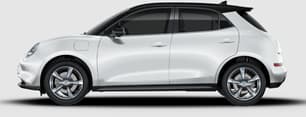
But an entry price under $40,000 doesn’t apply here, this is the GWM Ora GT: the top of the range for the small electric car.
It’s just had a massive price cut, but is it worth paying more than $10,000 over the price of a base Ora for some extra goodies when simplicity and fun styling was the original selling point?
It was the moment the Golf grew up. Just over 20 years ago Volkswagen unveiled a fire-breathing R32 variant to top the fourth-gen line-up of its already iconic hatch. With a growling atmo V6 engine, proper Haldex-based all-wheel drive, fat rubber and a pumped-up body, it instantly became the brand’s performance flagship.
And another four Golf generations later an updated ‘8.5’ version of its current ancestor, the Golf R has arrived. An equally focused, heavy-hitting AWD with just over 30 per cent more torque and close to 40 per cent more power than that snarling, original R32.
CarsGuide was invited to its local launch, including a suitably challenging drive program on road and track. So, stay with us to see if this exceedingly hot hatch can earn a spot on your performance five-door short list.
The GWM Ora is a solid electric car for the city with an extremely competitive price, balanced with some flaws that might frustrate some - Android phone owners especially. But the GT variant doesn’t offer enough to justify how much more expensive it is than the variants below.
It has a slightly lower range, no more performance (not that it needs more power), a features list almost identical to the Ultra and arguably loses its appealing cutesy looks.
While the rest of the Ora line-up has its strengths and a cute but daring design, the GT effectively offers only its bark-over-bite styling changes.
If the Ora is on your shopping list, it’s certainly worth checking out the $43,990 Ultra, or even the $40,990 Extended Range if its list of features suits you. But if you for some reason enjoy the GT’s styling, that extra spend might be worth it.
While some Golf enthusiasts will prefer the lighter, more nimble, front-wheel drive GTI, this Golf R is now an even more serious machine.
It’s a great touring car, super-sharp in the corners and good value in the context of its competitive set. Cars like Toyota’s GR Corolla and Honda’s Civic Type-R are on notice.
Note: CarsGuide attended this event as a guest of the manufacturer, with travel, accommodation and meals provided.
Yep, as a step-up from the Ora Ultra, the GT’s main selling point is its styling. For a car with a 400km driving range, it’s so non-threatening it looks like it would get beaten up and have its lunch money stolen by dual-cabs if it left the city - but cute works, just ask Mini or Fiat.
Its headlights have a splash of Porsche 911 in them. There are some angles that even look a little like someone had an Abarth explained to them then tried to draw it. More than one friend has told me it reminds them of a VW Beetle.
None of that bothers me in particular, but the GT-specific additions to the Ora make it feel like a deeply unserious car.
The fake carbon trim is tacky on a car that has no performance improvement over its base variant sibling, the red strip under the number plate looks like a tongue poking out under an overbite, the wheels look like Tony Stark designed them, and the rear ‘wing’ and diffuser just don’t feel at home.
One thing that didn’t bother me as much as I thought it would was the lack of ‘traditional’ tail-lights, instead a light bar under the rear window takes that role.
The rest of the Ora range is cute, fun, and looks at home in the city where the Ora is at its best. The GT’s features are mostly the same as the Ultra, so the extra $3000 for the GT exterior doesn’t really feel like value.
Inside, however, the design is less in-yer-face. A tidy set-up features a Mini-style row of switches (for some of the climate control) under a bar that spans the dash with the vents integrated.
The steering wheel is big, arguably too big, behind it is the 10.25-inch driver display attached to the central multimedia display. Everything’s very tidy and minimalistic inside, even the gear selector is a round dial.
It looks like a reasonably fashionable interior, but when it comes to the functionality, it starts to fall apart.
In terms of exterior design, at the front there’s a relatively mild cosmetic makeover with some changes to the headlights and the bumper as well as a horizontal line across the grille, which, along with the VW roundel, is illuminated.
From the side the ride height is 20mm lower, and cosmetically there are matt silver housings on the exterior mirrors, blue calipers behind new design 19-inch rims and in the centre of the wheel there’s an R logo rather than the traditional VW branding.
At the back, you’ve got new customisable LED tail-light clusters with welcome and goodbye effects, which can be programmed via the vehicle settings in the multimedia system, as well as a larger spoiler at the back of the roof on top of the tailgate.
Inside, the ‘big’ change is an appreciably larger central multimedia screen running new program software. It has physical touch bars along its lower edge for audio volume and climate control adjustment.
The driver’s display now includes a G-meter and GPS lap timing. The steering wheel has its own look and feel and the sports seats feature integrated headrests. There are alloy covers on the pedals and ‘Carbon Grey’ decorative inlays around the dash and doors.
It’s a classically restrained and subtly sporty design treatment inside and out.
I can see the appeal of the Ora, but there are some glaring issues that I suspect many will find frustrating over time during ownership.
I’ll start with the big one - Android Auto. Or the lack thereof. Apple CarPlay is available however, even wirelessly.
Being a car journalist in 2024 involves a lot of playing around with in-car tech, and it’s been an awfully long time since I wasn’t able to mirror my phone to a car’s central screen where those with an Apple iPhone could. About 70 per cent of the world uses a phone running Android, by the way. Mostly Samsungs, like mine, but pretty much anything else that isn’t an iPhone too.
It wouldn’t be as major an issue if there was a navigation function in the car’s native multimedia system, but there isn’t. Having only a Bluetooth connection and no map felt a little like taking a step back in time, with an old iPad tacked onto the dash. No Fruit Ninja though.
Smaller things come down to basic ergonomics. The touchscreen itself and the system on it are simple and easy enough to use, if a little unresponsive. The driver display is fairly simple and doesn’t fall too far into the trap of sub-menus on sub-menus.
Physically, the cabin is almost there - the seat and steering wheel adjustment, however, made it a little tricky for me to find a comfortable driving position.
I’m pretty much dead-on the average height of an Australian man, and the lack of tilt for the base of the seat meant no under-thigh support if I was to be the right distance to have a proper hold on the steering wheel - not telescopically adjustable, by the way.
Another interesting ergonomic fail is the placement of the drive mode select button (one of the GT’s few unique features) being to the right side of the steering column, near where you’d expect rarely-used controls like the headlight height adjust to be - or in this case a couple of centimetres from the button that kills the power to the battery if pressed while not in motion.
This caused severe embarrassment at a set of lights while searching for the drive mode switch, with no obvious way to start the car again, short of opening and closing the driver door.
Oh, and switching through the drive modes elicits a unique videogame-style chime or jingle for each mode. Gimmicky at first, potentially rather irritating after some time.
A positive of the interior layout, however, is the space in the rear seats is fairly generous for a small car - at almost six-feet tall behind my own seating position, I wasn’t lacking space to move and the seat itself is comfortable enough for a decent trip.
Behind that, a relatively limited 228-litre boot is probably less useful for a decent trip, though its 858L of space with the rear seats folded down is more handy in a pinch.
For reference, the Golf R is just under 4.3m long, close to 1.8m wide and a bit less than 1.5m tall with a 2630mm wheelbase. Right in the middle of the medium hatch footprint.
In the front there’s plenty of breathing room for the driver and co-pilot. And in terms of practicality, you’ve got big bins in the doors with room for large bottles. There’s also a box between the seats with a lid that doubles as an armrest, which also adjusts for height and length, which is nice.
If you need more, there are two cupholders in the centre console, one of which is adjustable for smaller cups, plus a long oddments tray as well as a more powerful ventilated wireless device charging tray at the front end of the console.
There’s also a decent glove box and two USB-C ports for power and connectivity.
In the back, sitting behind the driver’s seat set for my 183cm position, I have ample headroom, legroom and more than enough foot room.
That said, three abreast for full-size adults would be very squeezy. Even a trio of middle teenagers might find it a bit tight. Best as a two-seater in the rear.
Then for storage, you’ve got big bins with room for bottles. Fold down the armrest and you’ve got not one, not two, but three different size cupholders in it.
There’s a nifty double pocket set-up on the front seatbacks, each just right for a phone or hand-held game console, as well as a more conventional map pocket lower down.
There are individual ventilation outlets as well as climate control for the rear section, plus two USB-C outlets.
With the 60/40 split-folding rear seat upright the 8.5 Golf R boasts 341 litres (VDA) of boot volume, which is decent, and that number expands to nearly 1197 litres with the seat down.
There’s a load-through hatch, tie-down anchors, a 12-volt outlet, multiple bag hooks, specific lighting and storage compartments to the side.
No spare of any description, however, with a repair/inflator kit your only option.
The GWM Ora GT was once a mid-$50K car, once you got it on the road. Its former sticker price of $51,990 before on-roads has, along with every other variant in the range, been dramatically knocked into a more budget-friendly shape: $46,990 drive-away.
That’s pretty cheap for a top-spec electric car, or for an electric car in general in Australia, but it’s still $11,000 more expensive than the entry-level Ora Standard Range ($35,990 DA).
The Ora GT also shares most of the key draw cards on its features list with the Ultra.
Its panoramic sunroof, electric tailgate, heated and ventilated seats with massage function and its heated steering wheel are all available in the Ultra for $3000 less.
One of the only things the GT has in terms of functionality in the cabin is a light for the driver visor vanity mirror.
There are a couple of differences when it comes to driving functionality, and we’ll get to that in a later section of this review, but the rest of the tech in the cabin is standard across the range.
The 10.25-inch touchscreen and same-sized driver display, six-speaker sound system, wireless phone charger, electrically adjustable synthetic leather seats - it’s all in the base-level Ora.
What is missing, very notably, is Android Auto functionality. The Ora does however feature wireless Apple CarPlay.
The new Golf R is priced at $70,990, before on-road costs, which is a $500 bump from the version it supersedes. A new limited run Black Edition model, the details of which we’ll get to shortly, weighs in at $72,490.
At that money the Golf R lines up against a diverse group of properly hot hatches like the related Audi S3 ($78,800), Honda Civic Type R ($74,100), Lexus LBX Morizo RR ($76,490), Mini JCW ($56,990) and the Toyota GR Corolla ($70,490). Even higher-priced outliers like the BMW M135 xDrive ($83,600) and Mercedes-AMG A35 4Matic ($87,900).
So, the heat is on, and at 70-odd kay it’s fair to expect a decent basket of standard fruit. Aside from the performance and safety tech covered later the Golf R features list includes auto LED matrix headlights, LED tail-lights, Nappa leather-appointed trim, a leather-trimmed steering wheel, heated and ventilated front seats, three-zone climate control, 14-way electric driver’s seat (with memory), 480W nine-speaker Harman Kardon audio (including digital radio), a 12.9-inch multimedia screen (with built-in nav) and a 10.2-inch digital instrument display.
There’s also keyless entry and start, 30-colour ambient lighting, adaptive cruise, a head-up display, wireless Android Auto and Apple CarPlay, auto rain-sensing wipers, surround lighting, a (more powerful) ventilated wireless charging pad, a 360-degree overhead view, ‘Park Assist Plus’, metallic paint, fog lights and 19-inch alloy rims.
Not bad at all in the context of this category.
VW Australia has also announced an optional ‘Warmenau Package’ for the standard R - named after the location of the R division’s headquarters in Wolfsburg - for $6500 bundling up 19-inch forged alloy wheels (developed in-house by Volkswagen R, reducing the weight of each wheel by 8.0kg or 20 per cent), carbon interior trim elements and an ‘R-Performance’ titanium exhaust system from Akrapovič.
Limited to 300 examples, the Black Edition features dark accents throughout, including the wheels, badges, mirror housings, brake calipers and tailpipes, as well as darkened headlights and the lighter 19-inch forged alloys. It’s available in all three Golf R colours - ‘Pure White’, ‘Grenadill Black’ and ’Lapiz Blue’.
All four variants of the Ora have the same outputs from its front-mounted electric motor - 126kW and 250Nm. Yes, even the GT.
What the GT does have over at least the base model is a larger battery shared with the Long Range and Ultra variants, but despite having the same weights and outputs, the GT is, on paper, claimed to be a tenth of a second slower to 100km/h than the rest of the range: 8.5 seconds versus 8.4sec for the cheaper models.
This updated Golf R is powered by a 2.0-litre, four-cylinder turbo-petrol engine VW enthusiasts around the world know by its ‘EA888’ code name.
In this guise it now produces close to 245kW (+10kW) and 420Nm (+20Nm) with the maximum available across a broad plateau from 2100 to 5500rpm.
The 2.0L EA888 features a cast iron block and alloy head, with direct-injection, water-cooled exhaust gas routing to the turbo (in the cylinder head) and variable valve timing with double camshaft control.
Power goes to all four wheels via a seven-speed dual-clutch auto transmission and an all-wheel-drive system using a twin-clutch pack to manage front-to-rear drive distribution as well as torque across the rear axle.
That aforementioned larger battery is a 63kWh lithium-iron phosphate (LFP) battery, over the 48kWh unit in the Standard Range base variant.
According to GWM’s brochure, the GT’s electric driving range under WLTP is 400km, 20km less than the Long Range and Ultra (and like the acceleration time, for no obvious reason).
With a 400km claimed range and 63kWh battery, the Ora GT should return a power consumption figure of around 15.75kWh/100km, though on test we saw 16.4kWh.
GWM claims charging with 11kWh AC power will take 6.5 hours to jump from 10 to 80 per cent charge, while 80kW DC charging takes 50 minutes to do the same.
VW is proud to point out that thanks to an electronic coolant regulator unit, the Golf R’s 2.0L engine “features very efficient thermal management with a short warm-up phase” which it says reduces friction losses for better fuel consumption.
Its official combined cycle (urban/extra-urban) fuel economy figure is 8.3L/100km, which isn’t out of order for a hot rod hatch with this much performance potential.
Over the course of a 200km-plus road drive on the launch program, covering mainly twisting B-road and highway sections, we saw a dash-indicated average of 9.9L/100km.
With a 55-litre tank those figures translate to a theoretical range of around 660km, and a real-world number closer to 550km between fills.
As is the case with the GT’s outputs and features, there’s nothing to suggest the GT would be fundamentally better to drive than any other variant. Unless all those kids at school were right about red bits making cars go faster.
The Ora’s front-drive layout paired with relatively immediate electric torque delivery, however, means you probably wouldn’t want it to be much more powerful with this particular mechanical setup.
The Ora, as a city car, does its job reasonably well in standard drive modes, though its sport mode is possibly a little too eager for day-to-day affairs - and the way it quite conservatively understeers on corners suggests there’s not much ‘sport’ driving to be done in this cute EV.
The steering itself feels fairly numb (again, fine day-to-day) and becomes heavier or lighter in different drive modes, but with no real advantage - the wheel itself is also a little on the large side.
Its suspension tune is comfortable enough for the low-speed streets on which this car is likely to find itself most often, where most city cars aren’t exactly riding on clouds, though can more obviously start to feel a little underdone on rougher roads at high speed.
It’s not a light car, after all, a hatchback that weighs 1580kg and has a short wheelbase isn’t going to be a dynamic masterpiece, though it does at least feel stable enough through corners thanks to its low centre of gravity.
It’s not going to encourage any heroic driving, but it’s also more likely to deter rather than outright punish any silly behaviour behind the wheel.
The Golf R weighs in at 1517kg and Volkswagen says it will accelerate from 0-100km/h in 4.6sec, which is quick, and the car’s broad torque band makes it super-usable. The maximum 420Nm is available from 2100rpm all the way to 5500rpm.
A blue ‘R’ button on the steering wheel is your short-cut access point to various modes - ‘Eco’, ‘Comfort’, ‘Sport’, ‘Sport+’ and ‘Race’ - and in the racier settings what VW calls ‘Turbo Pre-load’ steps in. More or less an anti-lag set-up for smoother power delivery.
Even from low revs in a (manually-selected) high gear, squeeze the throttle and it quickly builds up a head of steam. Power delivery is impressively linear.
The transmission is super slick and manual shifts are rapid. Refreshingly, manual mode is exactly what it says on the tin. Select a gear with the wheel-mounted paddles and it will stay in that ratio until the rev limiter makes its stuttering presence felt.
And if you’re going into a corner under brakes just keep the left-hand paddle pulled in and the transmission will automatically cycle down to the lowest ratio available, which is handy if you’ve really got the bit between your teeth.
Even with the standard exhaust, once you’ve dialled up the sporty modes, you get that snap, crackle and pop on full-bore upshifts and on the over-run, which also enhances the experience.
Suspension is by struts at the front and multi-links at the rear, and the ‘Adaptive Chassis Control’ system monitors acceleration, braking and steering to fine-tune the set-up.
We drove on some rough B-road sections, in the wet, and the R remained surprisingly refined. Given how hard it grips and how much it communicates back through the seat of the pants it is a comfortable touring car. It’s like a GT in hatch form, eating up the kilometres without fuss or putting too much stress on the driver.
Worth noting we spent much of our time in ‘Nürburgring’ mode, accessed through the Race menu, which, no surprise, was developed on the famous Nordschleife. It’s tuned to optimise dynamic performance on undulating patchy surfaces and is a superb set-up sweet spot for the road and track.
Progressive ratio steering delivers good road feel without too many jitters coming up to your hands. And turn-in is precise without being jagged. Just point the car and it goes exactly where you want it to.
The drive system splits torque between the front and rear axles and across the rear. If, for example, it senses the car wants to turn more but might push into understeer, it calmly manages drive distribution to keep everything under control.
Tyres are Bridgestone Potenza S005 (235/35) and over even coarse chip surfaces they remain quiet and grip with admirable determination.
Braking is by ventilated discs all around and on twisting backroads we occasionally leant on them hard and they were well up to the task. A firm pedal with progressive application when getting on or easing off the brakes.
They even stood up to a race circuit pressure test without raising a sweat, because day two of the launch included a track session at Sydney Motorsport Park. And we can confirm the car is properly fast, balanced and predictable in that environment.
SMP’s dipping, then uphill, off-camber right-hand turn four highlighted the R’s grip and the sophistication of its torque vectoring set-up. We also went sliding on the skid pan in the car’s Drift mode, which biases the rear axle, and is huge fun.
In terms of lower speed manoeuvring, you’ve got a 12-metre turning circle, which isn’t vast but isn’t tiny, so be ready for that.
You’ve also got a 360-degree overhead view, which is very handy in tight spots. And if you want some extra support, ‘Park Assist Plus’ will help you slot the car into the space you’re aiming for.
Under the heading of miscellaneous observations, the sports front seats deliver solid lateral support yet remain comfortable over long periods behind the wheel.
Speaking of the wheel, it’s just the right thickness, with perforated leather at the quarter-to-three positions helping with that lovely connection to the front tyres.
As well, from an ergonomic point-of-view, working through the central multimedia screen and driver’s display is straight-forward, with the latter able to be configured via the steering wheel.
The GWM Ora’s safety features are almost all standard across the range, which is great even if you don’t opt for the GT.
This means its seven airbags (dual frontal, side chest, curtain and centre) are all standard, as well as autonomous emergency braking, secondary collision avoidance, rear cross-traffic alert and forward collision warning, lane keep assist, traffic jam assist and even a surround-view parking camera. The Ultra and GT are the only variants with a front parking sensor and auto parking assist.
The features are all there, but some finer tuning when it comes to some driver assistance could be looked at - thus the slightly lower side of the scoring scale for a car that’s ticking all the boxes on paper.
The current Golf range picked up a maximum five-star ANCAP assessment in 2022 and VW’s ‘IQ Drive’ driver assistance tech package includes highway speed auto emergency braking (AEB) with cyclist and pedestrian detection as well as junction assist, adaptive cruise control (with stop and go), intersection assist auto-braking, low-speed manoeuvre braking, lane keeping assist, lane-departure warning, blind-spot monitoring, rear cross-traffic alert, driver fatigue monitoring and tyre pressure monitoring,
The airbag count runs to nine - dual front, front and rear side, side curtain and a front centre bag. Then multi-collision brake minimises the chances of subsequent impacts after an initial crash. And as the name implies ‘Emergency Assist’ will take control to slow the car if the driver becomes unresponsive.
There are three top tethers for child seats across the second row, with ISOFIX anchors on the two outer positions.
GWM offers a seven-year/unlimited kilometre warranty, as well as an eight-year/unlimited kilometre battery warranty. The former is quite decent for the industry, the latter relatively par when it comes to battery warranties.
Five years or 150,000km of roadside assistance is also included.
The Ora’s first five services, each coming in at 12 month/15,000km intervals, are capped price, all at $99.
The Golf R is covered by Volkswagen Australia’s five-year/unlimited km warranty, which is a match for most mainstream brands, although an increasing number are nudging up to seven and even 10 years.
There’s also a 12-year corrosion perforation warranty, which is a plus, and the recommended maintenance interval is 12 months/15,000km with ‘Assured Service’ pricing averaging $840 per workshop visit over the first five years.
Three- or five-year pre-paid ‘Care Plans’ reduce that number, with the latter working out to an average of $658 per service. Far from over the top for a performance hatch like this one.