What's the difference?
If someone came to you and said, “Hey, want to drop $100,000 on this new car? It looks a bit weird, it’s from a brand you’ve probably never heard of, and by the way, it’s fully electric”, I’d understand if you had a hard time coughing up the cash.
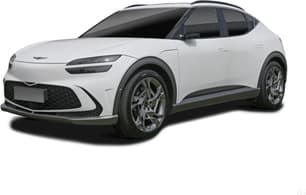
And this is essentially the ask with the Genesis GV60. Unlike BMW, Mercedes, or even Lexus, this luxury Korean brand has very little time in-market, and in Australia at least, no rich history to draw upon to lure buyers in.
If the electric era has taught us anything, though, it’s a once-in-a-generation opportunity for new names to get their foot in the door. So, is Genesis putting its best foot forward? Let’s find out.
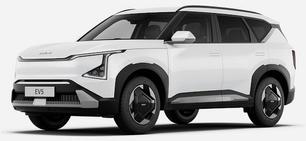
Make no mistake, you are looking at the biggest challenge the all-conquering Tesla Model Y has ever faced in Australia.
It’s the Kia EV5, a mid-size, all-electric SUV the Korean brand thinks will be its best-selling EV by some margin.
Oh, and it’s cheaper than the Tesla, by more than a little bit.
So, is this the electric SUV that might finally put an end to Tesla’s winning run in Australia?
It’s still a tall order. There’s no getting around the fact this is a lot of money to part with for a weird looking electric car from a brand so new to the luxury space.
While I wasn’t convinced going in, the way this car unites some of the best attributes of its Ioniq 5 and EV6 relations, while bringing with it such a unique look and feel, has swayed me.
I understand this car a lot better now, and this is maybe the biggest catch; you need to spend some time with this car to decide if it’s for you, because I don’t think it will be for everyone. That said, if you like what you’ve seen or read here, give it a try, you might be surprised by what you find.
The size is right, the price is right and the drive is right – three things that make the Kia EV5 a pretty formidable foe, and the kind of vehicle that might finally be able to break through the wall of the temple of Tesla in Australia.
Note: CarsGuide attended this event as a guest of the manufacturer, with accommodation and meals provided.
All of these features are impressive, but you have to be on board with the way this car has been styled. It’s a tad confronting, with its curvy, bulbous look, and an unfamiliar version of the Genesis face.
It’s not as traditionally appealing as the rest of the brand’s range, and I think it’s a bit risky. Then again, this car has to do something dramatic to slot in alongside the outrageously styled Hyundai Ioniq 5, and sporty Kia EV6 with which it shares its underpinnings.
My take: I’m not sure I love it, but there are bits I like. The ‘deconstruction’ 21-inch alloys look incredible and fill this car’s wheel arches, the Genesis signature light fittings pair nicely with the chrome highlight stripe running down the roofline, and the integrated spoiler accentuates the rear hatch.
What gets the concept car cred is those digital wing mirrors. In my time with the car they attracted the most attention from onlookers, and cement the futuristic Genesis brand theme.
An interesting factor of this car’s design is how small it looks. From the outside it looks a fraction of the size of the Ioniq 5 or EV6, and inside it feels the most like a hatch, despite the dimensions being close between the three siblings.
It may have a tight, low-slung feel, but thanks to its platform, the interior remains expansive. The light theme in our test car helps it feel airy and spacious, although my advice is to go with the darker of the three interior colour themes as it will probably age better.
Either way, the flat floor, low dash, and plentiful window space makes for an open-feeling area.
The floating centre console piece is closest in design and execution to the one in the EV6, but with its own kind of showmanship. It’s finished in a metal casing, with the highlight being the crystal gear selector.
With the car on, it exudes an ambient light and is surrounded by silver, but with it off, it flips over to become a luminescent crystal ball.
One part of me says this is completely ridiculous and over-the-top, but then so are many of the interior elements going into rival vehicles (like the Mercedes ‘hyperscreen’, for example, or BMW’s similar use of crystals for key control items, or the Lexus RZ’s holographic diamond pattern projected into its door frame) which are just as attention-grabbing for the sake of it.
There’s a lot to like, and I think importantly for buyers it’s a unique take.
Genesis has imprinted a lot of its identity in this car’s cabin, which only serves to set it apart from its rival luxury players. It won’t be for everyone, and maybe that’s okay.
If you’re familiar with any of Kia’s EV designs, and specifically the EV9, you’ll already know the Kia EV5, which looks a lot like a shrunken version of the company’s biggest electric 4WD.
But this one looks a bit smaller, a bit more familiar looking, and maybe a bit more accessible than the hyper-modern EV9.
Honestly, it looks like a contemporary, mid-size SUV that could be powered by anything.
There are a couple of EV5 design elements I really like. The first is the combination of hard edges and subtle curves, which combine really well. I also love the lighting treatment up front, which gives the EV5 a bold and unique light signature, especially at night.
Inside, it’s another story of familiarity, with a clean, high-tech cabin and Kia’s common twin-screen set-up. Actually, it’s more a triple screen, with two 12.3-inch screens, and a 5.0-inch climate monitor between them.
The materials are all nice, and they look great, but they don’t exactly melt under the touch, and that gives the EV5’s cabin a hard edge I don’t love.
I do, however, love the inclusion of some physical buttons, so you’re not pawing through the screen to access every in-car function.
And one final design quirk. I know it looks like it has an old-school bench front seat, but you can’t use it as a third seat in front. Kia says it’s just a design flourish. But it is also somewhere safe to pop your phone or other small valuables to stop them sliding about when you're on the road.
As already mentioned, the front seat is a spacious, open environment, with plenty of practicality offered for occupants.
The floating centre console offers two centre cupholders and a shallow armrest box, and while it doesn’t shift back and forth like the unit in the Ioniq 5, it does have a netted storage compartment underneath.
There are plenty of additional storage areas, including a small bay under the USB-C outlets on the floor, a set of two sunglass holders (one under the climate unit and a second in the roof), large pockets with integrated bottle holders in the doors and an interesting slide-out drawer in place of a glove box.
The back seat feels just as spacious, with plenty of width and a flat floor making it a reasonable proposition for seating three adults across. Headroom is its least appealing dimension, with the roof dipping slightly to allow for the sliding sunroof cover.
Amenities are also plentiful, with adjustable vents in the pillars, a bottle holder in the door card, or a cupholder in the armrest, a further two cupholders in the padded drop-down centre piece, hard shell map pockets on the backs of the front seats, USB-C outlets on the back of the centre console, and a huge netted storage area underneath.
Perhaps the most welcome addition, though, is the full-size household-style power outlet under the rear bench, which lets you use the rear space as a mobile office or a comfortable, air-conditioned place to read while charging.
The boot measures in at 432 litres. It’s on-par for the mid-size SUV segment, but like its Ioniq 5 and EV6 relations, the floor is quite high leading to a wide but height-limited area. To fit the three-piece CarsGuide luggage set, for example, I had to remove the roller cover.
Underneath, there’s a small area for the storage of charging paraphernalia and the tyre repair kit. A tiny frunk also exists, best for the storage of similar items.
At 4615mm in length, 1875mm in width, 1715mm in height, and with a wheelbase of 2750mm, the Kia EV5 is roughly the same size as a Tesla Model Y, so if you’re ever sat in the back of the Tesla, you’ll have a fair idea of what to expect here.
Sitting behind my own 175cm driving position, I found I had a heap of knee room, more than enough headroom, and I reckon you could fit three adults across the back seat pretty easily, too.
There are a couple of design flourishes I really like, too. The pull-down divider that separates the backseat is home to two cupholders, which isn’t unusual, but what is new to me is the unique positioning of the USB charge ports, which are in the middle-back of the front seats, right above the storage pocket, so you have somewhere to pop your phone and cable when you're charging.
There is also a deep storage draw between the two front seats. It’s just for extra storage in the Air and Earth, but in the GT-Line it’s heated and cooled, which means hot pies or cold drinks when you’re on the move.
The EV5 might be an all-electric vehicle, but it’s still a mid-size SUV, which means there are certain standards it has to hit to be taken seriously, and one of those is boot space.
Up front there’s 67 litres of space in the fruit, or frunk, while the boot holds 513L with the rear seats in place – that number obviously growing as you begin folding them flat.
It is also a hugely customisable space. There’s heaps of under-floor storage below the removable panels. There’s also vehicle-to-load capability, which takes the form of a standard power point in the boot that can use the vehicle’s battery to power pretty much whatever you want.
Finally, there are adjustable luggage hooks, so you can carry bigger or smaller bags as you wish.
For this review we’ve grabbed a top-spec GV60 AWD Performance, and the range has just received an update with some eyebrow-raising new features, which should pair with its dedicated 800-volt electric platform and wacky styling to set it apart from the luxury crowd.
How much are we looking at here? There are just two GV60 variants - a standard all-wheel drive, which costs from $107,100, before on-roads, or this car, the Performance version, which costs from $114,700.
Both grades get the same 77.4kWh battery pack, but only one gets a boosted set of electric motors.
Rivals of a similar size, price-point, and range include the BMW iX3 ($104,900), the just-launched Lexus RZ ($123,000) and the Mercedes-Benz EQC ($128,000).
This immediately makes the GV60 look like good value. Unlike its rivals listed there, it has an 800-volt architecture (allowing record fast charging times), and some unique additions.
Standard stuff at this price is as expected for a luxury vehicle and then some. The GV60 gets 21-inch alloy wheels, full LED headlights, tail-lights, and ambient interior lighting, quilted Nappa leather interior trim with suede roof lining, heated and ventilated front seats with heated rear seats and a heated steering wheel.
There are dual 12.3-inch screens for the digital dash and multimedia suite, plus wired Apple CarPlay and Android Auto connectivity, a head-up display, dual zone climate control, a fixed panoramic sunroof, flush door handles, and even fully digital rear vision mirrors.
Updates for the 2023 model year include a connected services suite, allowing phone app connectivity, emergency assistance, live traffic and weather, EV charging station search functions, voice commands, and a fingerprint scanner for unlocking and starting the car.
Elsewhere, this updated version also gets two additional airbags for enhanced safety, new brake caliper covers, a fine particulate filter for the climate control, and by far the strangest addition, a ‘virtual gear shift’ which makes the electric motors behave as though they have a traditional transmission.
The cheapest EV5, the Air, arrives in two guises, Standard Range or Long Range, and the former is something of a bargain.
It’s the only EV5 to get included on-road costs, and Kia is asking $56,770, on the road. That puts it well below the Tesla Model Y. As of right now, the single-motor Tesla is $60,868, on the road, in NSW.
Next is the Air Long Range, which lists at $61,170, before on-road costs. The EV5 Earth occupies the middle rung, at $64,770, before on-roads, while the yet-to-arrive flagship, the GT-Line, is a considerable $71,770, before on-road costs.
Air models get 18-inch alloys, LED lighting all around, roof racks and power mirrors, while inside there are cloth and synthetic leather seats, with a massage function for the driver, along with a synthetic leather steering wheel and LED interior lighting.
Tech is covered by twin 12.3-inch screens, with a smaller 5.0-inch climate screen sandwiched between them, and there’s in-built nav, a six-speaker stereo and Apple CarPlay and Android Auto.
The Earth then adds 19-inch alloys, gloss black exterior design flourishes and privacy glass, while inside, the seats are now entirely synthetic leather. You also get a second V2L connection, as well as a powered tailgate.
Finally, the GT-Line gets pretty much everything Kia could throw at it, including 20-inch alloys, auto-flush door handles, a panoramic sunroof, two-tone seats which are now billed as offering "premium relaxation", wireless phone charging, fingerprint recognition, a heated steering wheel and an augmented-reality head-up display.
The two GV60 grades share the same 77.4kWh battery pack. The standard all-wheel drive version offers a combined 234kW/605Nm, while the Performance AWD as tested puts out a massive 360kW/700Nm at its peak, using a temporary ‘Boost’ mode.
Suffice it to say this is more than enough power. It’s more powerful than (at a similar price) the BMW iX3, Lexus RZ and Merc EQC and you’ll need to spend significantly more to get into something which can best it from the traditional luxury space.
Perhaps also consider the Tesla Model Y Performance ($91,400) if going absurdly fast in a straight line is what you’re all about.
The entry-level EV5 Air is available in Standard Range or Long Range guises, both powered by a single front-mounted electric motor, producing 160kW and 310Nm.
The Standard Range will clip 0-100km/h in 8.5 seconds, while the extra weight of the bigger battery slows down the sprint in the Long Range, taking around 8.9 seconds.
The Earth is a twin-motor AWD offering, with a motor at each axle, lifting outputs to 230kW and 480Nm, dropping the sprint to a brisk-feeling 6.1 seconds. The incoming GT-Line gets the same powertrain.
Driving range for the Performance all-wheel drive is 466km, slightly less than the standard AWD version which can travel 470km between charges.
Again, it’s slightly better than you might expect from its most direct rivals, so an easy win there for Genesis. A 450km+ range is generally enough to be free from ‘range anxiety’ on almost all trips.
One of the reasons the GV60 is able to achieve a better range than its rivals with a similar battery capacity is efficiency. Like other Hyundai Group products, the GV60 is impressive.
Despite its huge power outputs, the official combined cycle energy consumption, according to the more accurate WLTP standard, is 19.1kWh/100km.
And in my time with the SUV, I managed an even better overall number of 18.9kWh/100km over several hundred kilometres of what I would consider ‘mixed’ driving conditions.
Charging is an even better story, with the 800-volt architecture underpinning this car allowing one of the fastest charging times on the market of just 18 minutes (10 - 80 per cent) on a compatible 350kW charger, provided you can find one.
On the far more common 50kW DC units you can expect a 73 minute 10 - 80 percent charge, while on the slower AC standard, the max rate is 11kW, indicating a charge time of around seven hours.
The Air Standard Range gets a 64.2 kWh lithium iron phosphate battery, weighing in at a hefty 428kg, which delivers a claimed driving range of 400km. The Air Long Range, the Earth and the incoming GT-Line all share the same 88.1kWh battery, upping the range to 555km, 500km and 470km, respectively.
So, if driving range is at the very top of your must-have list, the Air Long Range is the car for you.
All cars can take 7.0kW home AC charging, while the dual-motor versions are set up for 11kW AC charging. Fast charging. When it comes to fast charging, all models can plug into a 350kW charger, taking them from 10 percent to 80 per cent in less than 40minutes.
As someone who has spent significant time with both the Ioniq 5 and EV6, I wasn’t sure what to expect from the Genesis take on this formula. I’m happy to say, though, I was pleasantly surprised.
Yes, the GV60 is stupendously fast in a straight line, faster than any car needs to be, but it’s the subtleties which have been built into its ride and handling that make it shine.
While the Ioniq 5 is playful and comfortable, but soft enough it’s sometimes boaty, and the EV6 is hard and determined, but at times a tad harsh and heavy, the GV60 does a remarkable job of uniting the best attributes from its siblings.
The ride is hard enough to grant excellent control and a nice feel for the road, whilst still being forgiving over harder bumps and frequent corrugations. I was particularly surprised to feel its soft edge given its giant 21-inch wheels and slinky performance tyres.
An amount of give in the corners and a traction control system which allows a little slip lets you throw the weight of this car around a bit, mimicking the playful feel of the Ioniq 5. Something which you can enhance if you want by toying with the many soundscapes the GV60 offers.
One of the more surprising things which struck me about driving this EV is how relatively compact it feels. It doesn’t feel as though it has the heft of the EV6 nor the expansive feel of the Ioniq 5. Credit to the brand for making a car with the same chassis and hardware having such a distinct feel.
There’s also the bizarre 'virtual gear shift' feature which has been added for this year’s GV60 update. It makes the electric motors behave as though they’re being channelled through a torque converter transmission.
In the ‘automatic’ mode, the car provides revvy feedback and the feel of shifts between gears, while in the manual mode, the speed will be limited and the gear feedback provided by regen when you lift off, until you shift up.
Bizarre. Can I imagine using this in the day-to-day? Not really, it’s a bit annoying after a while. A gimmick, perhaps, to show your friends.
The same goes for the weird digital wing mirrors, although credit to Genesis, I became used to them quickly. I can’t say the same for the comparatively frustrating digital rear-vision mirrors fitted to Audi’s e-tron.
Unfortunately, they're standard in the GV60. I'd prefer they were optional and live without them.
Yes, it’s tech for tech’s sake. In fact, a lot of things in this car seem to lean this way, but underneath it all there’s a solid electric car, one which manages to unite some of the best features of the Ioniq 5 and EV6 while adding the unique look and feel of the Genesis marque.
First things first – I spend most of my time behind the wheel of the EV5 Earth, which though it shares its dual-motor powertrain with the GT-Line, is actually the fastest of the lot owing to the extra weight of Kia's flagship.
That means zero to 100km/h in just over six seconds, and trust me when I say this, that is more than fast enough. I know you read about EVs knocking off the sprint to 100km/h in supercar-besting times, but you don't need that sort of crazy acceleration in a family-focused mid-size SUV.
Actually, forget needing, you don't want it. The EV5 feels more than punchy enough, without shaving years off your life every time you plant your foot.
Fit for purpose, then, which is exactly how I'd describe the rest of the EV5's very good drive experience. Kia's Australian ride and handling wizards have once again had their way with the EV5, and the result is an EV that handles most everything Australian road surfaces can throw it at it with ease.
Surprisingly, it's maybe not quite as dynamically sharp as the bigger EV9, but it's always comfortable, without feeling floaty or disconnected, and it will happily grip its way around tighter corners without tipping from side to side, either.
There are a couple of small quirks, though. The first is the steering, which is definitely responsive and confidence inspiring, but it also has a kind of artificial weight or heaviness at times that feels a bit disconnected from what's happening beneath the tyres. And the cabin can be a little noisy through wind, too.
But these are small beans, really. The EV5 is comfortable and capable, and without the harsh ride or too-sharp steering that can be found in some of its rivals.
We drove it for hours across all sorts of road surfaces, and in all sorts of conditions, and found very, very little to complain about.
The GV60 comes packed with safety equipment regardless of which variant you pick, and for the 2023 model year, the brand has even added a second set of side airbags for rear occupants, bringing the total count to 10.
Active safety features include the full array of auto emergency braking (works to freeway speed and detects vulnerable road users), lane keep assist with lane departure warning, blind spot monitoring with rear cross-traffic alert (as well as a blind-spot camera in the digital dash), adaptive cruise control with stop and go, safe exit assist and driver attention alert.
With the always-online suite it also includes an emergency call feature in the event of an accident.
The GV60 was awarded a maximum five-star ANCAP safety rating to the 2022 standards.
Every EV5 gets a comprehensive safety offering, including 'Advanced AEB' that includes junction crossing, lane oncoming and lane changing alerts. There’s rear-cross-traffic alert, semi-autonomous highway cruising and a whole heap more.
If you want a blind-spot view monitor, surround-view monitor or remote park assist, you’ll need to spring for the GT-Line.
The EV5 hasn’t been crash-tested yet, but Kia will be shooting for the maximum five-star ANCAP rating.
Are you ready for a jumble of numbers? Genesis offers a five-year/unlimited kilometre warranty, eight years/160,000km for the battery, and 10 years of roadside assistance.
The eyebrow-raising stuff here though is the five years of free servicing, combined with the choice of either a five-year Chargefox subscription or complimentary installation of a home charger.
Yep, theoretically, the GV60 can be free to run for the first five years. Like Lexus, Genesis also offers a complementary loan car at service time.
I don’t think any brand can beat it right now from an ownership perspective.
The EV5 is covered by Kia’s seven-year, unlimited-kilometre warranty, and you can prepay your servicing costs, too.
Three years will set you back $980, five years is $1535 and the full seven years will set you back $2431 ($347 per workshop visit), which is category competitive.