What's the difference?
Yep, here comes another new brand.
The Australian new car market has been flooded with new car brands in recent years, not exclusively but predominantly from China. GAC is the latest, joining the likes of BYD, Deepal, Geely, GWM, Leapmotor, MG and Xpeng in an increasingly crowded market.
Quite simply, the market is now so crowded it means any new company with long-term aspirations will need to find a way to cut through. Being cheap alone won’t do it, nor will being stylish or nice to drive. No single trait will be enough, instead you will need to tick as many boxes as possible to secure any long-term security.
Which puts a lot of pressure on the Aion V, the brand’s mid-size, all-electric SUV that has just arrived in Australia. It will go head-to-head with the likes of the Geely EX5 and Leapmotor C10 at the more-affordable end of the electric SUV market. But does it tick enough boxes to make an impact? Read on to find out…
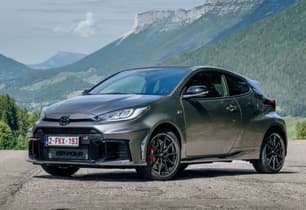
Thank the automotive gods cars like the GR Yaris still exist.
Not only are hot hatches the funnest way to drive, but in a world that’s obsessed with electric vehicles, these combustion-powered beasties remind us what we’ve got before it's gone.
The GR Yaris arrived in 2020 and won praise for its rally-car-for-the-road feel with Toyota’s high-performance division Gazoo Racing heavily modifying the docile Yaris hatch - while adding a bit of Corolla - to create this little monster.
In early 2025 Toyota added more power and torque, along with an automatic transmission for the GR Yaris and now a new variant has been launched - the GTS Aero Performance Package and this is what we are testing.
Candidly, I questioned the logic behind GAC entering the Australian market, especially now given the seemingly non-stop influx of other brands. How could it really hope to stand a chance against so many similarly priced and similarly equipped rivals?
Well, the answer is by providing a better product. The Aion V is simply a better package than many of its rivals, Chinese and otherwise, at least based on our initial impressions.
It combines value and practicality but also adds a level of driving comfort and manners its Chinese rivals can’t match.
Is that enough to guarantee success? Not at all, but it’s a strong foundation to start with and at least gives GAC a fighting chance to not get lost in the crowd.
Note: CarsGuide attended this event as a guest of the manufacturer, with accommodation and meals provided.
The GR Yaris GTS with the Aero Performance Package is a so wonderfully special with its brilliant engineering, mind-blowing dynamics and fun-to-drive nature. The new aero package makes an already angry beastie look furious, making it the perfect enhancement that's also functional.
The only lower marks here are for warranty, fuel use and practicality. But if there was a score for fun it'd be a 10/10.
One of the most notable elements of the Aion V design is the absence of a ‘GAC’ badge on the front. That’s because, while all GAC models in Australia will be sold under the one name, in its native China there are several different sub-brands. GAC Aion is the ‘new energy vehicles’ brand, focused on electric vehicles (EVs), while the smaller Emzoom SUV is part of the more mainstream Trumpchi brand that offers internal combustion engine models.
It means the three cars sold initially, and even as the brand moves forward with its expansion plans, there will likely be stark visual differences between models because they are effectively different brands. In the same way Holden ended up with a mixture of Opel, Chevrolet and GMC products in its final years.
Having said all that, the Aion V itself is an inoffensive design. It’s not as generic as some of its rivals, with some design character around the headlights and silhouette, so overall it cuts a likeable figure without being particularly memorable.
Like so many modern cars, the Aion V has a very simplistic layout inside, with more screens and less physical buttons and switches to reduce cost and complexity. There’s an 8.8-inch digital instrument display and a 14.6-inch multimedia touchscreen in the centre on the dashboard.
The GR Yaris exists so that Toyota could go racing in the World Rally Championship. As with many racing series it required Toyota to build a road-going version of their Yaris race car, also known as a homologation vehicle. It’s a good deal, they get to race, you get a race car for the road. And so the GR Yaris was born.
Wildly different from a regular five-door garden variety Yaris, the GR Yaris is a hand-built three-door hatch with a wider track, wider and lower body and the use of forged carbon and aluminium for lightweight construction.
The GR Yaris already looks very angry, but the GTS Aero Performance Pack makes it look furious. It adds a huge adjustable rear wing, fender ducts that channel air, a front spoiler lip that aids stability, a giant bonnet scoop to help release air, and rear bumper ducts to reduce drag.
The GR Yaris’s cabin was redesigned for the 2025 update and that saw the dashboard angled more to the driver much like in a race car, but it's more functional than fancy and it’s all very plain.
Still, we’re not complaining. The seats are lovely and the red stitching is a nice touch but this isn’t a Lexus. It’s supposed to favour function over form and so the design is absolutely fitting. And by function I mean dynamics and not practicality.
In terms of practicality there’s a handy space for a wireless smartphone charging pad, and that previously mentioned heated or cooled centre console box. Oddly, though, there is no traditional glove box. Instead there are just a pair of bag hooks ahead of the front seat passenger.
Space is good for a mid-size SUV, with a roomy front and respectable space in the second row. It would comfortably accommodate four adults, so would be a good option for families with older children.
As for the boot, it’s a generous 427 litres and has multiple adjustable floor heights available. Disappointingly, even though it has space for a spare, potentially even a full-size one, it only has a tyre repair kit. That might be fine in some markets around the world, but in the vastness of Australia, that is not the best option. Even a space-saver spare would be a better bet.
The regular Yaris is small, the GR Yaris is smaller at 3995mm end-to-end and with two fewer doors. As a tall person (I’m 1890mm end-to-end) the space on board is adequate up front with just enough knee, head and elbow room.
The GR Yaris is a four seater with the two rear seats accessed through the front doors. There’s not much room in there for adults and not even my lanky 11-year old would be happy in there. Still if you need to carry three other people, technically you can.
Cabin storage is limited to fairly large door pockets and two cupholders between the front seats. There is a little shelf carved into the dashboard which is great and a small glovebox below it.
Boot space is tiny at 174 litres but again this is a small car with other priorities.
Starting with the basics, the Aion V is a five-seat electric SUV priced from just $42,590, before on-road costs, for the entry-level model.
Now, not too long ago an all-electric SUV for under $45K would be a revelation and would have made an impact on this market. But there are plenty of alternatives to choose from these days at similar money, including the Geely, Leapmotor and the BYD Atto 3.
Even so, at $42,590 for the entry-level Premium and $44,590 BOC for the more-premium-than-Premium Luxury variant, that’s still very competitive pricing.
For that money you get a well-appointed mid-size SUV, with even the base model equipped with LED headlights and tail-lights, 19-inch alloy wheels, a panoramic sunroof, heated and ventilated front seats, dual-zone climate control and a nine-speaker stereo.
Stepping up to the Luxury adds partial genuine leather seats, massaging front seats and a box in the centre console that can act as a fridge and a warmer, depending on your needs.
While neither the cheapest EV nor the best-appointed, the Aion V does a nice job of offering a compelling value proposition in its competitive set.
The GR Yaris GTS Aero Performance Pack sits at the top of the model range with the six-speed manual version listing for $64,990 before on-road costs, while the automatic is $67,490. That’s $4500 more than the standard GTS without the aero pack
The aero pack significantly toughens up the look of the GR Yaris, and also improves its dynamics. So if you plan to use the GR Yaris as a track car and drive it hard and fast, the kit will help.
That's thanks to improved down force from the giant rear wing, air ducts in the fenders to improve steering under braking, a front splitter for stability, underbody cladding to maximise airflow and a bonnet scoop to help release hot air from the engine bay.
The rest of the high-performance equipment comes on the regular GTS including a Torsen limited slip differential, high performance suspension tune and 18-inch forged wheels with Michelin Pilot Sport 4S tyres.
Standard features are the same as the regular GTS and include heated GR sports front seats with suede leather upholstery, a 12.3-inch digital instrument cluster, leather-wrapped steering wheel, aluminium pedals, dual-zone climate control, proximity unlocking and push-button start.
There's also an eight-speaker, eight-inch media screen with Apple CarPlay and Android Auto, and an eight-speaker JBL sound system.
The value is actually great considering all the high-performance engineering around you in the GR Yaris, and it will save you money from being tempted to go down the aftermarket route and buy equipment that hasn't been designed for the car by the people who made the car.
There are some nice comforts, too, like the leather seats, although the media screen is small.
Both the Aion V Premium and Luxury are powered by a 150kW/210Nm electric motor, which drives the front wheels.
Aion doesn’t claim a 0-100km/h time, but it wouldn’t be quick, at least not in EV terms. If you’re looking for a ludicrously powerful electric car - this ain’t it. It’s a perfectly fine powertrain for the job at hand, but it won’t blow your socks off with its performance and will take more than eight seconds to run 0-100km/h.
It still boggles my mind how 221kW and 400Nm is extracted from a 1.6-litre three-cylinder petrol engine but here we are. The GR Yaris has this set up with this output, along with all-wheel drive.
Thanks to lightweight materials such as forged carbon and aluminium the GR Yaris weighs nothing in car terms - just 1300kg - so acceleration from 0-100km/h is a rapid 5.1 seconds.
I’ve already detailed the juicy engineering bits the GTS Aero Package is fitted with, from the limited slip diff to the adjustable rear wing, and it’s not an exaggeration to say that not many small hatches are this gifted with this kind of genius.
Our test car has an eight-speed automatic, which is easy to drive in city traffic. However, I'd opt for the six-speed manual because if you've come this far you may as well go the whole way.
The battery is 75.2kWh lithium-phosphate type, which provides a claimed range of 510km. Importantly, that figure is on the WLTP cycle, not the more lenient Chinese (CLTC) test protocol, so you could reasonably expect close to that target in the real world.
GAC claims it can accept up to 180kW charging speeds, which will get the battery from 10-80 per cent in just 24 minutes.
It also has vehicle-to-load functionality, so you can draw power from the battery for tools or appliances if you need it.
The GR Yaris is a hungry beastie that eats through its 50L petrol tank fairly quickly and then wants more. Toyota says you should see 9.1L/100km of 98 RON used in the automatic and 8.2L/100km with the manual over a combination of driving conditions.
Stop-start city driving in traffic saw fuel use increase dramatically to 13.0L/100km in the auto. According to our car's trip computer, my own testing used an average of 14.5L/100km after mainly suburban driving.
This is perhaps the area where the Aion V surprised the most. One of the most consistent qualities of these new Chinese-developed models is their incompatibility with Australia’s unique road conditions. They have a tendency to lack comfortable, controlled suspension and well-weighted and consistent steering.
That’s not the case with the Aion V, with GAC clearly taking the benefits from the partnerships it has with Toyota and Honda to learn what international markets prefer. Is this a clear standout, class-leading SUV dynamically? No. But it is above-average in the way it rides and handles.
The suspension is well resolved and feels comfortable to live with, while the steering is nice and direct, which will make navigating the cities, suburbs and open roads more easy and enjoyable.
There is still some fine-tuning that could make it better, but overall the Aion V leaves a positive first impression.
There’s been a multitude of electric cars through the test garage over the past six months and the GR Yaris is like a diamond found in a tub of Lego when it comes to driving.
So much sound. The three cylinder snarls on start up sending vibrations into the cockpit and up through the steering wheel, the transmission can be heard engaging gears, the big brakes creak as they’re released. And we’re hardly even moving yet. There’s so much theatre. It’s all real and I love it!
I even love that in the first 10 minutes of driving, a message appears on the instrument cluster asking that excessive acceleration be avoided while the engine is cool. You don’t get that beautiful inconvenience in an electric car.
But when you can excessively accelerate (on a race track of course, right?) it's wonderful and it's loud. Lift off, and the wastegate lets out a little "weeee!" in excitement.
I don't need to tell you that the GR Yaris handles better than just about anything in this price range and while the ride is firm and speed bumps feel like you’ve hit a gutter I still drove the GR Yaris every day, even to do the school run, because it is so much fun. Meanwhile my hybrid long0term test car looked lonely in the driveaway all week...
Being an automatic makes it easy to drive in traffic and the small size makes finding parking spots quick and simple.
Visibility is good, steering is excellent, the seats are big enough to accommodate me but snug enough to offer good lateral support, too.
GAC is offering the same safety equipment across both models, which is a nice touch to avoid any need to compromise.
This includes full airbag protection for all occupants, front and rear parking sensors and a 360-degree camera system.
There’s also a lengthy list of driver assistance features, including adaptive cruise control, autonomous emergency braking, forward collision warning, traffic sign recognition, emergency lane keeping assist, rear cross-traffic alert and door opening warning.
These systems could benefit from some real-world testing and calibration, because while better than some, they were still intrusive and annoying at times - most notably the driver attention monitoring.
ANCAP has not yet tested the Aion V, but it has received a maximum five-star rating from Euro NCAP, which typically carries over to the local body.
The GR Yaris has not been crash tested by ANCAP and the score for the regular Yaris can't be applied to the GR version.
Still the GR Yaris comes equipped with an array of advanced safety tech such as auto emergency braking (AEB), lane keeping assistance and a blind spot warning.
There are six airbags, two child seat ISOFIX points and two top tether anchor mounts in the rear row.
The Aion V is covered by an eight-year, unlimited kilometre warranty which is well ahead of the mainstream pack, typically sitting at five years, unlimited km. The drive battery is also covered for eight years, 200,000km and roadside assist is included for five years. Recommended service interval and costs are still to be confirmed.
But one of the biggest challenges for all these new car brands is finding space in the Australian market - literally. If you want to sell a lot of new cars you need a lot of new car showrooms and if you want to keep customers happy, you’ll need enough service centres to keep cars on the road as much as possible.
GAC has plans to have as many as 100 dealerships in the next five years, but right now it has reportedly less than a dozen. That will make servicing problematic if you do not live in close proximity to a service centre. This isn’t the work of a moment either, with so many new brands fighting for dealership real estate and staff there are only so many places GAC can set up shop.
The GR Yaris is covered by Toyota's five-year/unlimited-kilometre warranty which is lacking compared to many other mainstream manufacturers’ seven-year-plus warranties. The good news is that the engine and driveline is covered by an extra two-year warranty.
Servicing is capped at about $300 for the first six visits, although services are six months apart which means that after three years you’ll run out of capped-price servicing.
Still, Toyota’s reputation for reliability does provide some peace of mind.