What's the difference?
S FAR as makeovers go, Hollywood has nothing on the transformation of Ford's small SUV.
Based on the Fiesta supermini only sold here in sizzling ST form, but using a stretched and widened version of its platform with heavily reworked underpinnings, the strikingly styled Puma is as charming – beguiling even – as its EcoSport predecessor was awkward. And we're talking about capabilities that are more than merely skin deep here.
We're not alone in our admiration – one respected UK publication awarded the Ford a 'car of the year' gong – and after nearly a month with our range-topping ST-Line V (for Vignale), we can understand why.
But the German-engineered, Romanian-made Puma is also a complicated proposition in Australia that requires some context, because it is certainly not for everyone.
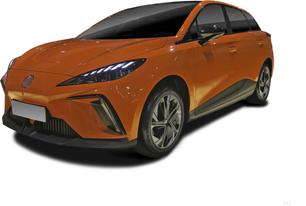
MG has been one of the fastest growing brands in the Australian market in the past five years, carving a spot for itself amongst the best-selling names.
But now it’s about to take on arguably its toughest challenge yet - selling a performance car.
MG’s success until now has been built largely on value, with its affordable MG3 and ZS SUV leading the way. The arrival of the all-new, all-electric MG4 XPower means the brand will try its luck at selling cars based on performance, dynamics and an emotional connection.
It’s not the first electric hot hatch in Australia, that distinction arguably belongs to the Cupra Born. But, MG has achieved much higher sales locally than Cupra, making it the first electric hot hatch from a mainstream brand, and that’s why it has the potential to be a game changer for the market.
If the XPower succeeds it will likely reshape the hot hatch market, which until now has been dominated by long-time players and big-name brands, including the Honda Civic Type R, Hyundai i30 N, Toyota GR Corolla and Volkswagen Golf R.
If a minimum price and maximum interior space are your priorities, then the Puma is not for you. Especially so in the flagship ST-Line V, which may seem too small and a tad cramped compared to, say, a Seltos, C-HR or ASX.
Where the Ford excels, typically, is in the way it encourages the keen driver while cosseting four occupants (and a surprising amount of their cargo). There's a poise and maturity to the way the Puma moves that puts it on a par with or even beyond some premium compact SUVs. Even the styling is a statement. If the badges (and dashboard) were covered, you might be convinced this cat is actually a Jag.
If all that is more important, then the ST-Line V is for you. The very antithesis, then, of the unassuming and unloved EcoSport the Puma usurps.
The MG4 was a game changing electric car, resetting the price benchmark while also being a very good small car in its own right. But as we discovered when we tested the rest of the range, the MG4 is a car that gets more compelling the cheaper it is. The $38,990 MG4 Excite 51 is arguably the pick of the range given its value equation.
But that’s not to say the MG4 XPower isn’t a good car. It’s a very quick car that will play the role of daily driver and weekend fun machine well. Just not quite as well as its petrol-powered rivals.
If you search for the 1998 Puma coupe, you'll see some vague similarities with its modern SUV namesake, especially in their anthropomorphic face. It's in the eyes. There are also hints of Aston Martin (DBX), Porsche (Macan) and – let's face it – Mazda (CX-3).
Yet the real achievement lies in the way Ford has managed to make a 4.2-metre-long by 1.8m wide by 1.6m high crossover look so svelte, with the resulting balanced proportions, flowing lines and taut surfacing giving the Puma quite an athletic visual presence. After the EcoSport failure, head-turning looks were deemed paramount.
The extra girth gained by widening the Fiesta's platform allowed Ford's designers to create a muscular body that could also accommodate a metre-wide tailgate opening, while beneath the cargo floor is an exceptionally deep storage box, bringing better-than-expected practicality to boot.
What really stands out about the design is… that not much stands out about the design. At least in differentiating the XPower from the rest of the MG4 line-up.
There are no pumped out wheel arches or a bigger, sportier spoiler that makes it look different in the same way a GR Corolla won’t be mistaken for a regular Corolla hatch.
Instead, the XPower has the same 'Energetic Agile' silhouette and includes the same ‘Active Intake spoiler’ at the front and the ‘Twin-Aero’ rear spoiler that’s the same as the Essence models.
There are some differences though, including more pronounced styling on the sides of the doors. It doesn’t add any performance benefit but creates a slight visual difference between the models in the range.
Surprisingly, there is very little to signify that this is the sportiest XPower model, with a distinct lack of badging - inside and out. In fact, the only visual clue that this is the XPower is on the bright orange brake calipers. Or, to be more accurate, brake caliper covers.
These are just lightweight metal covers that make the MG4 braking hardware look bigger than it really is, so it’s a bit of visual trickery from the MG designers.
Compact yet spacious, the ST-Line V's interior has strong as well as weak points.
Let's start with the latter. The most obvious connection with the Fiesta is in the Puma's dashboard, which is largely shared between the two. After all the effort expended on the design and chassis, this is somewhat disappointing. There's nothing wrong essentially with the fascia's aesthetics or functionality – it's just that the look is humdrum and dated. What's needed is something with the visual wow factor as found in the latest Peugeot 2008, especially at this price point.
Yet Ford has at least tried to put some tinsel inside this most expensive version of its smallest SUV.
Stitched perforated leather seat facings, carbon-fibre-look trim and soft vinyl coverings in key touchpoint areas bring an upmarket look and feel, backed up by a now-familiar digital instrumentation layout, a lovely flat-bottomed three-spoke steering wheel, easy and intuitive multimedia interface and a wireless phone charger. That electronic cluster, by the way, changes colour and markings but doesn't have the scope of multimedia displays of, say, Audi's Virtual Cockpit. It's comparatively rudimentary.
Conversely, there's a solidity and quietness as well, offering a level of refinement that's usually found in more-premium Euro alternatives. We weren't expecting that, though of course this is a German Ford product.
Our test car also boasted a vast glass opening sunroof, adding to the opulence. With all this gear, the ST-Line V's cabin is properly appealing.
On the practicality front, entry and egress is pretty good, the driving position is excellent (thanks in no small part to a big amount of adjustability for both the steering column and seats), the front cushions themselves are sumptuously enveloping, while wide door pockets and a big glovebox obviously come in useful. And there's a USB-C outlet in the centre cubby between the seats. How modern.
However, rear vision out is poor, there are no seat warmers and some of the lower-lying plastics are a bit drab.
The back seat isn't really suitable for people over 175cm, as kneeroom is limited and taller scalps may scrape the ceiling with the twin-pane sunroof in situ. The latter also means no overhead grab handles.
But the backrest angle and cushions themselves are fine, even for longer journeys. Just don't expect to squeeze a third adult in the back unless rubbing shoulders won't bug you. Note, too, that the rear cushion does not slide or tilt forward to allow for a lower load area when the backrest is folded down. Pity.
There is a receptacle in both doors for small bottles but no cupholders whatsoever (how can Ford call itself an American company?), or face-level air vents – though the large dash vent outputs do reach the rear. Amenities such as USBs and cupholders are AWOL; and vision out from back there is limited by the high shoulder line. Tough if you're trying to peer out. Sorry, Fido.
The Puma's overall compact footprint and rear packaging clearly suggest that this is aimed at singles, couples, or couples with smaller kids/pets to transport around.
Still, for a small SUV, the cargo area isn't bad at all. The standard floor depth is fairly generous, with a long and flat loading area, but below that is a narrower yet deeper waterproof area, while under that again is a space-saver spare wheel. Clever. Also intelligent is the luggage cover that lifts automatically with the tailgate, as per Mazda's CX-5.
For the record, cargo capacity is rated at 410 litres with the 60/40 split-fold rear seats erect – or 1170L with them folded down flat. These figures far outstrip the CX-3.
To sum the cabin experience… it's far-better than its Fiesta-sourced dashboard may suggest, while the ST-Line V treatment goes a long way in helping justify the premium. That's a win.
As with the exterior, there’s not a lot to differentiate the XPower from the rest of the line-up. No bright red Civic Type R style interior treatment here. MG has opted to carry over the minimalist design that no doubt contributes to the sharp pricing.
Probably the only notable difference is the seat trim, with the XPower model getting a combination of synthetic leather and suede for a sportier look and feel. But the rest is largely the same, which detracts slightly from its hot hatch credentials.
On the plus side, the MG4 cabin is generally a well-designed interior space, which is a positive for the XPower’s hot hatch argument, as the idea behind the ‘hot hatch’ is that it can be a practical car during the week and fun on the weekends.
There’s good room for passengers and luggage, in large part thanks to the relatively slim battery design that frees up more cabin space. Front seat occupants will enjoy the space and good visibility on offer.
Small item storage is very good in the MG4, with a pair of cupholders, a large, flat lidded tray (with one USB-C and one USB-A outlet just above) and the centre console box all fitting between the front seats.
There’s also a wireless smartphone charging pad that sits halfway up the centre fascia, next to the rotary gear selector, but it’s a shallow space so your phone will almost certainly fly out as soon as you begin cornering vigorously.
However, once again highlighting the ways MG has saved money to keep costs down, the back seat accommodation isn’t anywhere near as well appointed.
While the space is adequate for a small hatch, there are no cupholders, no air-conditioning vents and no fold down armrest for those in the back. All they have access to are some pockets on the back of the front seats, including a pair of small ones high on the seat, seemingly designed to accommodate your smartphone.
In another positive for its hot hatch practicality, there are ISOFIX points on the outer rear seats, neatly covered by leather pieces for a cleaner look when you don’t have kids.
As for the boot, the XPower measures the same 363 litres with the seats up which is unchanged from the rest of the MG4 line-up.
Disappointingly, there’s no obvious place to stow the charging cable, even though it comes in a small, neat bag. This is a worryingly common trend with these early generation EVs that shows a lack of practical thinking from the designers.
The MG4 has no under-bonnet storage either, so it feels like a few wasted opportunities for what is a bespoke EV design.
In Australia, the Puma plays in the burgeoning 'Light SUV' segment, so goes up against the ageing yet athletic Mazda CX-3 as well as Honda's HR-V, along with more recent challengers like the Hyundai Venue, Kia Stonic, Nissan Juke II, Toyota Yaris Cross and Volkswagen T-Cross. All are ready to pounce on the bestselling Hiroshima crossover.
What every one of these baby SUVs have in common is that they're based on B-segment – or supermini – platforms. However, prices and sizes do blur in this corner of the class, with larger small-car-derived rivals from the 'Small SUV' segment above, led by the Mitsubishi ASX, Kia Seltos, Mazda CX-30 and Hyundai Kona, also in the Ford's crosshairs.
Formidable opponents indeed, and just like that, the first big hurdle appears for the Blue Oval hopeful. Puma is Light SUV-sized but Small SUV-priced, with the entry-level grade kicking off from a tenner under $30,000, and before on-road costs. That's even more expensive than the VW.
This instantly eliminates it from many buyers' radars.
In contrast, a CX-3 Neo Sport starts from just $22,890. But that's with a manual gearbox, plain interior and steel wheels, whereas the Puma includes a ripper turbo engine/auto combo, climate control, a smartphone app that allows for remote vehicle location/ locking/unlocking/starting, voice-activated sat nav, wireless smartphone charging, lane-departure warning and assist, traffic-sign recognition, driver impairment monitor, 17-inch alloys and a leather steering wheel.
Along with other goodies like AEB with pedestrian alert, reverse camera, Bluetooth audio and telephony, Apple CarPlay/Android auto, digital radio, live traffic updates, fuel-saving engine stop/start, auto headlights, rain-sensing wipers, adaptive cornering fog lights, powered folding mirrors, push-button start and puddle lamps, the Puma looks and feels up-spec inside. To match most of that stuff in the CX-3 you'll need a Maxx Sport auto from $26,890.
Rising to the $32,340 ST-Line drops the Puma's ride height by just 2mm (to 164mm), but adds firmer suspension, a body kit, glitzier alloys, sports seats, a 12.3-inch digital instrument cluster, flat-bottomed steering wheel, paddle shifters and racier trim for a racier experience, though it loses the climate control for a manual air-con set-up. Strange. This grade might just be the sweet spot in the Ford's range, though it does sit about $1300 higher than the CX-3 sTouring equivalent.
Finally, the subject of this test, the ST-Line V, scores privacy glass, lashings of chrome, keyless entry/start, leather upholstery, climate control, premium audio, a powered tailgate and 18-inch alloys. All for $35,540, it's about on a par with CX-3 Akari, but lacks the latter's powered driver's seat and heated front cushions, among other items. The Mazda also goes one better with a $2000 AWD option from all mid-level grades up, as well as manual availability.
We recommend the $1500 Park Package, which ushers in adaptive cruise control with full stop/go and lane-centring tech, as well as blind-spot detection and auto parking. Premium paint adds $650, a panoramic roof $2000, roof rails $250 and a black roof $500.
Against compelling alternatives costing less, like the high-flying Seltos Sport+, CX-30 G20 Touring and Toyota C-HR Koba, the ST-Line V struggles to make sense on paper. Can the Puma's cabin and driving experience claw back its obvious price disadvantage?
While we’ll dive into performance and the headline figures of the XPower soon, there’s another number that’s arguably more impressive - the price.
The MG4 XPower is priced from $59,990 (plus on-road costs), making it only $4000 more expensive than the range-topping MG4 Essence 77.
More importantly, when compared to the likes of the $72,600 Honda Civic Type R, $68,990 Volkswagen Golf R, $64,190 Toyota GR Corolla and $57,990 Subaru WRX tS Sport the XPower is arguably one of the first EVs to achieve true price parity with its internal combustion engine rivals (although the Cupra Born starts at $59,990 so it can argue the same).
Beyond the performance upgrades we’ll detail below, that price brings a well-equipped car.
The XPower comes with 18-inch alloy wheels, LED headlights and tail-lights as well as vehicle-to-load (V2L) functionality.
It also comes with a six-speaker sound system, Bluetooth, navigation, Apple CarPlay and Android Auto, a wireless smartphone charging pad and synthetic leather and Alcantara trim.
There’s the 'MG Pilot' safety package included as standard as well, but we’ll detail that below.
The 'Hunter Green' hero paint colour is exclusive to the XPower in the MG4 range, and is reportedly inspired by an MG land speed record car the legendary Sir Stirling Moss drove in the 1950s.
A multiple international engine-of-the-year winner, the compact and lightweight, 999cc 1.0-litre twin-cam three-cylinder turbo petrol unit is the sole choice for now. Driving the front wheels via a seven-speed dual-clutch transmission (DCT), it delivers 92kW of power and 170Nm of torque.
With no all-wheel drive option, there are instead five driving modes – Normal, Sport, Slippery (for snow) and Trail (gravel) applications, working on the traction, stability and transmission algorithms to mimic some of the benefits of AWD. In the ST-Line V, a set of paddle shifters are fitted in lieu of the sadly-absent manual gearbox.
Owners of the previous-shape Fiesta S and EcoSport would be familiar with the 1.0T's smooth and strident performance, though these 2010s models used a completely different type of DCT. This was the highly-publicised Powershift, which consisted of a dry-clutch system, and was prone to a multitude of problems and failures in the petrol-powered auto versions.
In contrast, the Puma adopts a next-generation transmission dubbed 7DCT300; related to the item found in some smaller Mercedes-Benz, Renault and Nissan models, it instead employs a more-robust wet-clutch system with a higher torque threshold, so promises to be far more durable and reliable than the problematic old dry-clutch unit.
This is arguably the biggest single difference between the XPower and the rest of the MG4 line-up. Unlike the others that have a single, rear-mounted electric motor, the XPower adds a second motor on the front axle.
This has an obvious impact on the performance, boosting it from the previous best of 180kW to an impressive 320kW/600Nm.
Having motors on each axle also means the XPower is all-wheel drive, so it has little trouble transferring all that grunt to the road.
So much so that the MG4 XPower is the equal quickest hot hatch on the market (at the time of publication), taking just 3.8 seconds to run 0-100km/h; matching the Audi RS3, with its turbocharged five-cylinder engine.
The Puma's official combined average fuel consumption figure is just 5.3 litres per 100km, which works out to 121 grams per kilometre. Fitted with a 42-litre fuel tank, the potential range averages out to almost 800km between refills.
Out in the real world, we managed an exceptional 6.2L/100km, no doubt helped by an ever-eager stop/start system (which, annoyingly, kills the air-con when it extinguishes the engine; we found ourselves constantly pressing that 'off' button as the days wore on). This figure was achieved in motorway-heavy driving scenarios, albeit loaded with holiday gear and with the air-con blaring.
So, we took another, urban-focused test, in lots of slow-moving traffic situations, and averaged a still-solid 8.0L/100km.
Note, that while the Puma requires 95 RON premium unleaded, it's also perfectly happy on – and is even recommended by Ford for – the cheapest petrol currently offered in Australia, 94 RON E10 unleaded. Either way, the ST-Line V is a frugal small SUV.
Interestingly, the XPower is not fitted with the biggest battery in the MG4 range, forgoing the 77kWh version in favour of the 64kWh option.
In the ‘standard’ rear-wheel drive MG4 Excite 64 model this battery can provide up to 450km of range (on the WLTP cycle) but in the XPower that figure is reduced to 400km.
While that’s well short of the 530km offered by the long-range Essence 77 model, it’s still a respectable amount of driving range and should suit your typical hot hatch buyer, who knows performance typically comes at the expense of efficiency.
Our test drive was limited to just two days, so we didn't have the chance to live with the XPower for an extended period, but it managed to make it this reviewer’s preferred hot hatch playground on the edge of the city and back again to home with more than 50 per cent of the battery charge remaining.
This was a trip that included a lot of urban driving, some highway and then some ‘spirited’ running on the twisty road, so there’s enough range from the XPower to meet most buyers' needs.
Across almost seven hours of driving, the MG’s trip computer was claiming an average energy use of 18.6kWh/100km. To replenish the batteries, a 140kW DC charger will take just 30 minutes to take them from 10 to 80 per cent.
The V2L is another nice addition, which allows you to draw power from the battery, if needed, to run small electrical appliances.
The XPower is hardly a car for camping but, for example, if you decided to take it to a track day and want to plug in a kettle to make a hot drink, you can literally plug it into the car. Handy!
If the Puma's pricing is complicated, its cabin surprising accommodating and its real-world efficiency particularly parsimonious, then the upward trajectory of pros over cons continues with performance that's downright spirited.
Around town first. A small-displacement engine plus a turbo plus a DCT usually spell interminable spells of lag when all the driver longs for is an instant and measured response to a right foot flexing down onto the throttle.
But the Ford largely sidesteps such pitfalls. Though momentarily hesitant at take-off, the three-pot turbo does then get down to business in no time, with a sustained and satisfying surge of thrust as the revs grow, accompanied by a lusty and raspy thrum that's entirely in keeping with the Puma's track-pants appearance. And it doesn't let up either, with speed building up strongly through the gears, and much more so than the mere 999ccs suggest. Great for overtaking, or taking over a rapidly diminishing gap in the peak-hour derby.
Selecting Sport (a fiddly action that's located too far from the driver for safe eyes-on-the-road operation) lights an even bigger fire in the Puma's belly, with punchier acceleration and a very attentive transmission tune, slicing seamlessly through the seven ratios, leaving you in awe that a heart so small can possess such deep lungs.
Where the Ford really leaves an indelible mark is its enthusiasm to corner just as keenly, armed with brilliantly slick steering and a planted chassis that is set up to both encourage and interact with the driver. Minimal body roll and lots of grip from a quality quartet of Continental tyres ensure the Puma can be punted about like a sporty little hatchback, while the electronic safety tech allowing just enough leeway for lots of fun before they gently reel everything back into line.
We cannot think of a more enjoyable small SUV. And, by the way, those same driver-assist systems provide exceptionally nuanced lane-keep and adaptive cruise-control intervention – certainly they're right up there with the premium SUV brigade.
Given that our Puma wore 215/50R18 rubber, on a 'sports' suspension tune, the ride around town is commendable, with ample cushioning from the rough stuff. There is some tautness to the ride, but it isn't hard or rough; the ST-Line V walks a fine line between urban-agility and surface-decay isolation. In other words, it's commendably relaxing to travel in.
At higher speeds, some road and tyre noises do permeate through inside, and those Dumbo door mirrors do create some wind whoosh, but overall, given how dynamic the chassis is, the Puma feels grown up and sophisticated.
The real question about the XPower is not if it’s quick, because all EVs and especially those with dual motors tend to be very rapid in a straight line, but how it handles itself on a twisty road.
That’s what separates a good hot hatch from a great one, but it’s also an area EVs have struggled in, because the combination of silence, weight and just the fact they’re new and different tends to mean they lack the driving engagement of more established competition.
Hot hatches also need to play a dual role, as daily transport and weekend fun machine, so that’s another factor to consider.
So, how does the MG4 XPower stack up? Well, the unsurprising news is it’s very, very quick. The acceleration is ferocious and really shoves you back in your seat, leaving you in no doubt that it will leave most of its hot hatch rivals (with the exception of the Audi RS3) in its dust.
When the going gets twisty though the XPower feels like it lets its rivals catch back up. There are different driving modes and switching to ‘Sport’ and reducing the regenerative braking makes a notable difference to the way the XPower handles.
The steering gets heavier and it will roll and coast into corners more like a petrol-powered hatch. It makes for a very competent car, with direct steering and good road holding… but not a great hot hatch.
It lacks the engagement and excitement that the best hot hatches offer. For example, the steering gets heavier in Sport mode, but doesn’t provide any more feedback to the driver. The Bridgestone Turanza tyres do a fine job but they lack the grip of a Michelin Pilot Sport.
The lasting impression on the driver is a car that feels quick but doesn’t leave you wanting more. The best hot hatches make you want to keep on driving and driving, that’s not the case in the XPower.
As a daily driver it’s arguably better than its rivals, though, with quiet, effortless commuting potential thanks to its electric powertrain.
Tested under the 2019 Euro NCAP crash-test regime, the Puma scores a top five-star ANCAP rating.
However, this means it does not meet the more stringent frontal offset crash, side impact crash and far-side impact crash-test criteria introduced by ANCAP for 2020 model-year vehicles – despite launching in September of that year.
Safety items include dual front, front-seat side and side curtain airbags (six in total), AEB with pedestrian and cyclist detection (working between 7km/h and 80km/h), lane-departure warning, lane-keep assist, traffic-sign recognition, driver fatigue alert, rear parking sensors, tyre pressure monitors and emergency assistance. These come on top of anti-lock brakes with electronic brake-force distribution and brake assist, stability control and traction control.
As mentioned earlier, adaptive cruise control, active park assistance, front parking sensors and blind-spot detection are part of the $1500 'Park Package'. Do it.
There’s the usual passive safety features, including six airbags as well as the required stability controls, anti-lock brakes and the like, however the XPower also comes equipped with the MG Pilot suite of active safety features as standard.
MG Pilot includes autonomous emergency braking, lane keeping assist, lane departure warning, adaptive cruise control, blind-spot monitoring and rear cross-traffic alert.
Thanks to all of this safety gear, the MG4 range was awarded a maximum five-star ANCAP assessment, when it was tested in 2022.
Ford offers the industry-average warranty of five-years/unlimited kilometres. Services intervals are every 12 months or 15,000km.
There is also a capped-price servicing scheme under the 'Ford Service Benefits' banner, with the first four years/60,000km of 'A and B' logbook services pegged at $299 per visit, and then between $320 and $560, for up to 12 years.
There is also a Ford loan car program, SYNC 3 map updates and Motoring Club Membership included during that time frame.
Like every MG sold in Australia, the MG4 XPower is covered by the brand’s seven-year, unlimited kilometre warranty, which is industry standard for high-volume brands these days.
As for servicing, the intervals are also the same as the rest of the MG4 range, which means a lengthy two years or 40,000km, whichever comes first, between visits to the dealership.
That’s much longer than your typical petrol-powered hot hatch, which has more moving parts that need servicing.
In terms of costs, the XPower is ever-so-slightly more expensive compared to the rest of the MG4 line-up.
A minor service is the same $296 but a major service (which comes every second service) will cost you $962.
But even so, for the first six years you’ll only be up for $1554 in servicing costs, which is comparatively cheap amongst its hot hatch rivals, and only $76 more than you’ll pay for any other MG4.