What's the difference?
We might have been excited to see the new generation Ford Ranger and Ford Everest models in 2022, but the real star of the show for the Blue Oval brand could well be this - its first electrified model to make it to Australia, the new Ford Escape PHEV.
If you’ve seen the letters PHEV before and not understood what it meant, don’t stress - you’re not alone. It stands for Plug-in Hybrid Electric Vehicle. And what that means is that this car comes with a battery bank and electric motor, a port to plug it in and recharge it to drive on EV power only, and it also has a petrol engine to make sure you’re not stuck when you run out of charge.
I’ll run through all the details on the drivetrain below, but think of it this way - if you want a Toyota RAV4 Hybrid but want the possibility to drive on dedicated electric power for up to (and in excess of) 50 kilometres on a charge, this could be the right car for you…
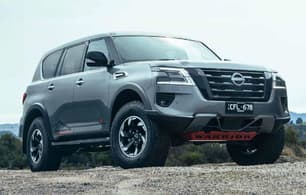
The entire 2025 Nissan Patrol range – including the Ti-based, Premcar-boosted Warrior – has undergone a cabin update.
Changes include a new bigger touchscreen multimedia system, wireless charging and an off-road monitor.
The same V8 engine remains across the range so there are no changes to power and torque.
So, do these cabin tech updates make any kind of significant difference to the Warrior package?
The Ford Escape PHEV is a good option for a customer who knows they’ll live within the parameters set by the car. That’s the case with any plug-in hybrid, really, so in that regard, this new model is hardly a standout.
And it isn’t particularly outstanding in any other way either. I personally would have appreciated it if Ford had decided to add the plug-in powertrain to the Vignale flagship model instead - that model is more about luxury than sportiness, and would better fit the character of this powertrain in my opinion.
It’s a decent addition to the brand’s SUV range, and a welcome one to the segment, though it won’t be on its own for long.
The Nissan Patrol Warrior is a very capable 4WD, it’s a refined, comfortable all-rounder with plenty of potential as a touring vehicle.
PremCar’s work here – as on the Navara – has made a good 4WD even better.
All of that conversion work, engineering upgrades and fitment of accessories is the kind of sensible work an experienced 4WDer would apply via the aftermarket. The bonus here is that it’s all factory-backed and covered by a 10-year/300,000km warranty, albeit with conditions.
If you can cope with the fuel bills, this big V8 4WD remains a refreshingly old-school style of off-roader – relying more on sheer grunt than touchy tech – and the latest round of cabin updates has added more appeal to what is already a very appealing vehicle.
I haven’t really warmed to the “I wish I was a hatchback” styling of the Escape, which has a softer-edged look to it than most of its rivals. I mean, compared to a Hyundai Tucson or Toyota RAV4, the Escape looks like a blob.
That mightn’t be an issue for you, and it’s hardly a reason not to buy the car, but I was also a bit disappointed that there’s no real specific highlights to make you realise you’re buying the PHEV model, which - at $15,000 more than the equivalent petrol version - should have something to differentiate it other than the addition of a small badge and the additional filler cap on the front quarter panel for the plug.
Even a different set of wheels would have sufficed. Alas, it’s an identical looking Escape to the petrol. That means the ST-Line trimmings, such as black highlights on the grille and bumper, side skirts, a rear spoiler, and those 18-inch wheels and lowered sports suspension.
The interior, as mentioned in the pricing section, does have a few changes over the petrol version, but they’re hardly game-changing additions.
The Nissan Patrol Warrior is 5269mm long (with a 3075mm wheelbase), 2079mm wide, 1990mm high and it has a listed kerb weight of 2858kg. It’s 94mm longer and 84mm wider than the Ti.
Though this latest round of range updates have been mostly limited to the multimedia system, that’s a-okay because this Warrior has more than enough heavy-shouldered presence on- and off-road and not simply because it’s a chunky behemoth.
While other large 4WDs, such as the Toyota LandCruiser 300 Series, have bowed to contemporary-taste pressure and become a bit softer around the edges, the Warrior retains some of the blocky stature of 4WDs past.
Inside, the interior has benefitted from the new bigger multimedia system which sits atop the dash and dominates real estate up front. The interior feels slightly fresher than in previous iterations, but still comfortably familiar.
The Ford Escape looks like it has all the bits to make a midsize SUV buyer happy. And while a fair few of the boxes are ticked, there are some elements that could be better.
The big party trick is that the second row is on rails, so you can slide it forwards or backwards to improve the space for receipt occupants or improve your boot space. The maximised cargo area is 556 litres to the ceiling, while if prioritise second-row occupant space there is easily enough room for a 182cm / 6’0” adult to fit behind someone of a similar size.
In the boot there are remote levers for the second row seats to fold down, a 12 V outlet, and a soft parcel shelf which is easy to remove, too.
During my time with the car I had the seats slid back as far as they go to maximise cabin space, though I did test out whether it was worth having them forward and the boot space was appreciably better especially for a pram and some baby stuff.
The second-row is a 60:40 split for the backrest, with the smaller portion on the driver’s side. That may sound trivial, but we had our baby seat set up behind the passenger, and had to move it to the driver’s side when we picked up a large parcel as it wouldn’t fit with the smaller portion folded down. There are dual ISOFIX child seat anchor points for the outboard positions, and three top-tether hooks.
The boot space is good too, considering it has some extra hardware to contend with under the body, there is also a space-saver spare wheel under there which is nice. However, there is no dedicated hidey hole for the charge cable, and it doesn’t come in a nice stowable bag either - just a plastic ziplock thing.
Perhaps the biggest letdown of the interior is the fact that you still get the tiny little tablet-style 8.0-inch touchscreen media display, despite there being a big 12.3-inch digital instrument cluster. The two screens almost look at odds with one another, and what’s even more frustrating is that the driver information screen cannot be configured to include the energy flow screen that you see on the smaller tablet style unit.
That means you can’t watch what’s happening between engine, electric motor and battery, or a combination where you might expect to see that - instead it can only be seen in illustrative form on the smaller central screen. Big issue? Maybe not, but if you’re an eco-conscious customer who wants to know what their car’s high-tech powertrain is doing, while also wanting to use sat nav, or Apple CarPlay or Android Auto, or change the radio station… Well, you’re out of luck.
There is a much more basic and rudimentary display on the driver info screen that shows a small icon of an engine and battery and illuminates them when each part is in use, but really, Ford should have used the real-estate of the big driver info screen better. Toyota, Kia and Hyundai know how to do it better.
The material quality is okay, but it certainly doesn’t feel like a very special environment.There are rubberised liners on the doors which don’t look terrific or feel fantastic, and why there are soft plastic elbow pads, and up high on the dashboard, it is not of the most pristine quality.
Storage is pretty good. There are bottle holders in the doors and two cupholders in the centre console, and the storage nook in front of the shift dial houses a wireless phone charger and two USB ports, plus a 12-volt plug. There is a strange little shelf section in front of the centre console bin, which is not fantastic in terms of size. There are rear bottle holders in the doors, map pockets and a flip-down arm-rest with cup holders.
That rotary dial shifter which does take a little bit of getting used to. Unlike some others, there is no ‘P’ for park button - instead you have to dial it all the way left.
The Warrior cabin is essentially a Ti interior – as such, it’s roomy and plush, with expanses of soft-touch surfaces. Due to plenty of ‘Warrior’ touches and the most recent updates as noted earlier, the cabin feels made-over yet instantly recognisable.
The centre console is no longer the confusion of buttons, dials and knobs it previously was and there are plenty of storage spaces for driver and front passenger – glove box, cupholders, bottle holders in the doors etc – as well as some concealed spaces (with pop-up lids) for keys, phone and other everyday carry gear.
Second-row passengers get comfortable seats, as well as two USB charge points, and temperature and fan controls in the back of the centre console. Those in this row also have access to the back of the centre console.
There are cupholders in the fold-down armrest, map pockets in the seat backs and bottle holders in the doors.
Second-row seats have a top tether point and an ISOFIX point on both outer seats.
Third-row seats are flat and hard compared to the other positions and, in terms of space, are better suited to children or adults for brief stints.
All three rows get air con – there are roof-mounted vents – and there are handy storage spaces in the third row, but no cupholders.
The third row has one top tether child seat anchorage point.
The rear cargo area has load tie-down points and a 12V socket, as well as tyre-changing tools under the floor. The new full-sized spare tyre is underslung at the rear.
With the third-row seats in use, boot space is listed as 467L. With the third row stowed away, there’s a claimed 1413L of cargo space. With the second and third rows stowed there’s a claimed 2623L.
It’s hard to consider the Ford Escape ST-Line PHEV to be tremendous value with a price tag of $53,440 (MSRP), especially considering it attracts a circa-$15k premium over the equivalent petrol-powered ST-Line version of the Escape. And that price will rise once more from July 1, to $54,440, as Ford says it will increase the ask due to “continued material and freight cost increases”.
But it does offer a few little extras over that petrol model in terms of standard gear, including partial-leather seat trim, a 10-way power-adjustable driver’s seat, and a 10-speaker sound system. That’s in addition to the standard kit you’d find on any ST-Line Escape, which includes 18-inch alloy wheels, LED headlights, sporty-looking front and rear bumpers, lower suspension, keyless entry and push-button start, wireless phone charging, a 12.3-inch digital instrument cluster, flat-bottom steering wheel, Ford’s 8.0-inch touchscreen media system with sat nav, digital radio, Apple CarPlay and Android Auto connectivity, and also a reversing camera and front and rear parking sensors.
There are plenty of other safety inclusions that you’d expect at this price point - check the safety breakdown below for more info.
If you need additional gear to make your ST-Line feel even more special, you can choose the ST-Line Pack option, which adds a power tailgate, heated front seats and matrix-style adaptive LED headlights. That pack costs $1950. Really, it shouldn’t be an option on this top-dollar Escape.
Other plug-in hybrid models close to the Escape PHEV include the Mitsubishi Eclipse Cross Plug-in Hybrid EV (starting from $46,990), but it’s a fair bit smaller, and so is the Kia Niro PHEV (from $46,590).
In the same size bracket as the Escape, there’s only the still-to-arrive Mitsubishi Outlander PHEV (likely to be $60,000 or more) and the MG HS Plus EV, which kicks off at $46,990 drive-away. Soon there’ll be the Mazda CX-60 PHEV, but it’ll likely play closer to the Kia Sorento PHEV (which kicks off at $80,330).
In short, there’s not too much competition, and that could play to the Escape’s advantage. But does it deliver real-world fuel economy savings that you can’t get with, say, a Toyota RAV4 Hybrid (from $36,900)? More on that below.
If your curious about colours, there are three no-cost options - Frozen White, Blazer Blue and Agate Black - while the optional premium paint options include Blue Metallic, Magnetic grey, Solar Silver, White Platinum and Rapid Red, as seen in this review, all of which will add $650 to the bill.
The Nissan Patrol Warrior is a eight-seat 4WD wagon with a price-tag of $105,660, before on-road costs.
Standard features include a 12.3-inch touchscreen multimedia system (with wireless Apple CarPlay and Android Auto and sat nav), as well as a new 7.0-inch driver dash display, wireless charging and an off-road monitor.
Other features onboard include front and rear parking sensors, a 360-degree camera view and a tyre-pressure monitoring system.
The more than $15,000 worth of carried-over Premcar conversion work, upgrades and fitment of accessories include a re-engineered version of Nissan’s 'Hydraulic Body Motion Control' (HBMC) system, a 50mm total suspension lift with new springs front and rear increasing vehicle height to 1990mm (+50mm over the Ti), and increased ground clearance to 323mm (+50mm) and wheel track to 1735mm front and rear (+40mm).
Warrior-specific suspension modifications include not only the Warrior-tuned HBMC (front and rear) but front Warrior red springs, rear Warrior multi-rate red springs and Warrior rear bump-stop.
Exterior changes carried over into this Warrior iteration include a red Warrior-branded bash plate, front Warrior-embossed bumper valance, a black grille, Patrol Warrior decals, black side mirror caps, plus an upgraded exhaust system with bi-modal valve and a unique exhaust tip.
There's also a black flare kit (with grained finish), Warrior towbar (towbar cross member, tongue, harness only, all modified to fit the new, bigger full-size spare), two rear recovery points, Warrior rear bumper valance (with grained finish) and a black chrome tailgate Warrior badge.
The Warrior wheel and tyre package is the Yokohama Geolandar 15 All Terrain tyres (295/70R18) on 18 x 9 J cast-aluminium Patrol Warrior black machined-face alloy wheels.
The Patrol Warrior has a specially modified space for a full-size alloy spare wheel.
Inside, carried-over Warrior-specific touches include an Alcantara Warrior embossed garnish, clear-coated gloss black centre console and centre multimedia fascia as well as leather-accented and Alcantara door trim.
Exterior paint choices include 'Gun Metallic', 'Moonstone White', 'Brilliant Silver' and 'Black Obsidian'.
What you get in a Warrior for the price compares favourably, especially when cross-shopped with something like a GMC Yukon Denali, another eight-seat 4WD wagon with a V8 – as its price-tag is $174,990, excluding on-road costs.
The Escape PHEV is the only model in the range to get a 2.5-litre petrol engine, which runs on the more efficient Atkinson cycle, and has a continuously variable transmission feeding power to the front wheels - that’s right, this Escape is 2WD/FWD.
The tricky bit is that it also houses a clever electric motor and generator, which is teamed to a 14.4kWh battery pack - which is big for a plug-in hybrid car.
The electric motor is capable of 96kW of power, while the petrol engine can produce up to 112kW. All told, the combined system output is pegged at 167kW, though there is no peak torque output figure. Even so, that amount of power is a sizeable number for any midsize SUV, even if this particular one weighs in at more than 1800kg.
Speaking of weight, the PHEV is the least capable towing vehicle in the Escape range. It has a maximum braked towing capacity of 1200kg, where all the others can tow up to 1800kg. Unbraked capacity is unchanged, at 750kg.
The Warrior has a 5.6-litre V8 petrol engine producing 298kW and 560Nm, matched to a seven-speed automatic transmission.
This solid combination lacks a dynamic edge, but the Warrior produces such a supremely relaxed and assured delivery of power and torque – it feels almost lazy – that you forgive it for not being the zippiest thing around.
The Patrol has full-time four-wheel drive with high- and low-range and a rear diff-lock.
Beware the PHEV fuel consumption figure. That’s a great thing to keep in mind if you’re shopping for one of these cars.
That’s because the combined cycle official figure only takes into account a mix of conditions across 100km of driving. That’s right - only the first 100km. So the best case scenario, for a car that is designed to use its battery to run emissions free until it runs out, before sparingly using the petrol engine to keep going.
As such, it is no surprise that the official combined cycle fuel consumption is just 1.5 litres per 100 kilometres, with CO2 emissions claimed at just 33g/km. That takes into account the WLTP battery range of 56 kilometres stated on Ford’s website.
For reference, I completed my test of the car with a total of 462.7 kilometres travelled, of which, the trip computer stated 292.3km was fully electric. Meaning the remaining 170.4km was driving using petrol.
The indicated energy efficiency was 20.0kWh/100km, which isn’t great against a claimed EV driving efficiency figure supplied by Ford, of 14.8kWh/100km to 15.6kWh/100km.
While the indicated fuel consumption average was 3.1L/100km, so more than double the windscreen sticker’s indicated economy.
However, when I did the maths, I used a real-world average of 3.9L/100km of petrol ($36.15 worth of petrol) and 43.2kWh of electricity (meaning a cost of $9.82 based on the NSW average energy price of $0.2274c/kWh).
So, to do 462.7km I paid $45.97. I think that’s okay, but bear in mind I included several longer trips (Sydney to Glenbrook, Glenbrook to the Southern Highlands and back, and Glenbrook to Sydney and back).
As is always the case, if your intended operation for a PHEV is to use it primarily for urban running within its EV range capabilities, you will be better off than if you push it beyond and use the petrol engine excessively.
For reference, the fuel tank size is 45 litres, which is 12L less than the petrol-only versions. It can run on E10, but only if you can find E10 that is also 95RON premium unleaded.
If you wish, there’s also an app called Ford Pass Connect, which allows you to monitor your car’s state of charge, adjust its start and finish times for recharging and even works as a key for the car to allow remote access, too.
Worth noting the maximum charge rate on a 10-amp plug at home is 2.3kW, while on public charging (which typically runs a higher amperage rate) the max rate is 3.7kW.
The Nissan Patrol Warrior has an official combined cycle (urban/extra-urban) fuel consumption figure of 14.4L/100km.
I recorded 21.4L/100km on this test. I did a lot of high- and low-range 4WDing – but the Patrol was never working hard.
The Patrol has a 140L fuel tank capacity, so going by our on-test fuel-consumption figure you could reasonably expect a full-tank driving range of about 654km.
Being the ST-Line grade, you - like it or not - have to deal with the lowered ride and sportier suspension, which makes this car ride a bit more firmly than you might want.
I found the suspension to be the biggest detracting element in terms of the drive experience – the suspension picked up a lot of the small inconsistencies in the road surface and transmitted them into the cabin. It was fidgety a lot of the time, and on road surfaces with very poor quality, it could be a bit uncomfortable.
The steering was also bit too tuned for sportiness for a car that doesn’t really need to be quite so aggressively angled that way. It took a bit of getting used to – it was somehow both twitchy on centre but not quite as responsive across the radius of lock to lock as I’d thought it might be, given the initial steering response.
Having said all that, I threw it through a couple of twisty corners and there was a nice handling balance from the chassis and decent grip from the tyres, but I did notice that - being front-wheel drive, with all that power going through the front tyres, there were some instances of it scrabbling for traction, notably on wet roads and looser surfaces but also out of offset driveways.
Other gripes included brake pedal response that was quite abrupt and very sensitive to stopping inputs.
Now, let’s consider the driving modes.
There are different drivetrain setups depending on what you plan to do. EV Auto does the thinking for you, dipping between EV, hybrid and petrol modes. EV Now prioritises electric driving. EV Later saves your battery charge for when you think you’ll need it. And EV Charge means you’ll use petrol power to drive, and also to replenish the battery pack.
The throttle response was decent in EV mode, and in hybrid mode it is nice and quiet, and it drives in a very smooth way unless you really plant your foot hard, then it can be a bit vocal - but less raucous than a RAV4 under full throttle.
The transition between the different drive modes was relatively seamless, as it will readily go between petrol or electric as required, and the four-cylinder is mostly hushed enough so that you won’t hear it too much, especially if you’re driving at higher speeds when it does.
Indeed it was relatively quiet for the most part, though the tyre noise was quite excessive at higher speeds on very coarse-chip surfaces. And in those instances I noticed I could feel the road surface through the steering wheel and the suspension, as it was quite jittery at times.
There is a low speed warning sound that is omitted below about 25km/h and it was quite handy while driving in enclosed car parks - no more accusations of creeping around silently at the shops.
Further, there are multiple drive modes, including Normal, Eco, Sport, Slippery, and Snow/Sand Assist, all of which are designed to make different situations easier to deal with. They will adjust engine transmission and steering response as well as stability and traction control limitations. I kept it in Normal, though a dabble in Sport showed that you’re allowed a bit more aggression from the powertrain in terms of acceleration.
This latest update is cabin-centric so it’s brought no powertrain changes or any improvements to 4WD mechanicals or driver-assist tech. And that’s fine because the Warrior is pretty darned impressive, as is.
On-road and on dirt tracks, it’s all smooth sailing. The Patrol Warrior is tighter and more composed than its standard stablemates, and that's mostly due to its upgraded suspension and HBMC system.
HBMC acts as a sway bar and sway bar disconnect equivalent and combines with the Aussie-tuned suspension to rein everything in when you're on bitumen and loosen everything when you're on dirt or off-road.
The Patrol as standard is a nice wagon to drive, but the Premcar work undertaken to create the Warrior – all the conversions and upgrades – have made it that much better.
On the open road you have the opportunity to appreciate just how comfortable and refined the Patrol Warrior is.
And as for 4WDing, well, the Warrior is a Patrol at heart so it has reliable four-wheel drive mechanicals, plenty of torque over a broad rev range and a rear diff lock.
There's more ground clearance in the Warrior over the Ti at 323mm (+50mm ), so approach (40 degrees) and departure angles (23.3 degrees) are an improvement over the standard Patrol.
The Warrior’s tyres – Yokohama Geolandar 15 All Terrain tyres (295/70R18) – are bigger and offer more grip, so they provide plenty of traction on terrain where a standard Patrol may struggle.
Premcar has modified the towbar position to accommodate the new bigger full-size spare wheel and tyre.
Another good thing is the fact the Patrol Warrior has two recovery points at the rear.
The HBMC system, which performs so seamlessly on-road, provides more articulation off-road, as well as a bit more wheel travel through difficult terrain.
And, as I’ve noted before on other tests, one of the impressive points about Premcar’s work here – the conversions, the modifications, the engineering upgrades and the fitment of accessories – is that it’s all the kind of common-sense upgrades an experienced 4WDer would apply to their Patrol.
But, even in something this impressive, the news is not all good.
The Warrior is a big vehicle and at 2858kg you have to drive it with that in mind, all the time. It fills the trail and with its wider wheel track, you have to be focused on wheel placement, even more so than usual.
The bi-modal exhaust is awesome, but those exhaust caps (underneath the Warrior's right-hand side step) are too vulnerable to damage.
They compromise the vehicle's ramp-over angle, so you have to drive with careful consideration, especially if the Warrior rocks even slightly to the right-hand side going up or down a steep rocky hill, because there’s a risk of grinding those exhaust tips against rock steps, dirt or a tree stump.
The Patrol is a towing platform of note and towing capacities remain as 750kg (unbraked) and 3500kg (braked).
The Warrior's GVM (gross vehicle mass) at 3620kg is 120kg more than the Ti Patrol’s.
Standard safety equipment for the Escape PHEV is on par with the majority of rivals in the class.
It has front autonomous emergency braking (AEB) with pedestrian detection (not cyclist detection, though), adaptive cruise control, lane departure warning and lane-keeping assist, blind-spot monitoring and rear cross-traffic alert, driver fatigue monitoring, traffic sign recognition and a rear-seat occupant reminder system that’ll chime in to tell you to check the back seat before you get out.
There are six airbags - dual front, front side and full-length curtain airbags, but unlike some newer rivals there is no front centre airbag to prevent head clashes.
The Nissan Patrol range does not have an ANCAP safety rating because it has not been tested.
That said, as standard it has dual front airbags, front-side and curtain airbags that cover all three rows, as well as two ISOFIX points and two top tether points in the second row.
Driver-assist tech includes AEB, rear cross-traffic alert, lane-departure warning/intervention, blind-spot warning/intervention and adaptive cruise control.
As with the rest of the Ford range, you get a five-year/unlimited kilometre warranty on the car, while the battery pack has its own eight-year/160,000km warranty plan.
And just like most other models in Ford’s range, there is a lifetime capped-price servicing plan, with the first four maintenance visits (due every 12 months/15,000km, whichever occurs first) incurring a $299 fee, which is cheap for the class.
You also get up to seven years of roadside assist if you service your car with Ford’s dealers.
All new Patrols have a 10-year/300,000km warranty when the vehicle is serviced with Nissan and the Premcar work is covered for the same amount of time – with the same conditions applied.
Five years of roadside assistance also applies – with the same conditions.
Servicing is scheduled at 12 month/10,000km intervals, and capped price service rates apply for five years. That means each of the first five services will cost you $499.