What's the difference?
We might have been excited to see the new generation Ford Ranger and Ford Everest models in 2022, but the real star of the show for the Blue Oval brand could well be this - its first electrified model to make it to Australia, the new Ford Escape PHEV.
If you’ve seen the letters PHEV before and not understood what it meant, don’t stress - you’re not alone. It stands for Plug-in Hybrid Electric Vehicle. And what that means is that this car comes with a battery bank and electric motor, a port to plug it in and recharge it to drive on EV power only, and it also has a petrol engine to make sure you’re not stuck when you run out of charge.
I’ll run through all the details on the drivetrain below, but think of it this way - if you want a Toyota RAV4 Hybrid but want the possibility to drive on dedicated electric power for up to (and in excess of) 50 kilometres on a charge, this could be the right car for you…
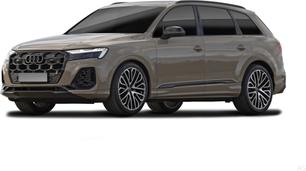
The updated Audi Q7 is a bit of a game of ‘spot the difference’ - but even though it’s far from a new generation, the update is more than just some shiny new bits.
While the brand’s first SUV is still in its second generation, a bit of modernised design and some tech tweaks are aimed at keeping it in line with rivals, even as it nears a decade on sale.
As well as the new features, there’s also a new variant bound for Aussie showrooms. So, is it still up to the task?
The Ford Escape PHEV is a good option for a customer who knows they’ll live within the parameters set by the car. That’s the case with any plug-in hybrid, really, so in that regard, this new model is hardly a standout.
And it isn’t particularly outstanding in any other way either. I personally would have appreciated it if Ford had decided to add the plug-in powertrain to the Vignale flagship model instead - that model is more about luxury than sportiness, and would better fit the character of this powertrain in my opinion.
It’s a decent addition to the brand’s SUV range, and a welcome one to the segment, though it won’t be on its own for long.
Overall, changes to the Q7 aren’t quite revolutionary, but that’s okay because it was already a fantastic large SUV.
The fact Audi has kept the price around the same mark and introduced a cheaper entry-grade should be welcome news for prospective buyers.
But even the existing variants are capable and impressive family haulers… and now they’re just that little bit better.
Note: CarsGuide attended this event as a guest of the manufacturer, with travel, accommodation and meals provided.
I haven’t really warmed to the “I wish I was a hatchback” styling of the Escape, which has a softer-edged look to it than most of its rivals. I mean, compared to a Hyundai Tucson or Toyota RAV4, the Escape looks like a blob.
That mightn’t be an issue for you, and it’s hardly a reason not to buy the car, but I was also a bit disappointed that there’s no real specific highlights to make you realise you’re buying the PHEV model, which - at $15,000 more than the equivalent petrol version - should have something to differentiate it other than the addition of a small badge and the additional filler cap on the front quarter panel for the plug.
Even a different set of wheels would have sufficed. Alas, it’s an identical looking Escape to the petrol. That means the ST-Line trimmings, such as black highlights on the grille and bumper, side skirts, a rear spoiler, and those 18-inch wheels and lowered sports suspension.
The interior, as mentioned in the pricing section, does have a few changes over the petrol version, but they’re hardly game-changing additions.
The phrase ‘evolution not revolution’ is applicable here, cliche as it is, with the Q7 having been given a Botox-style lift at the front end.
The standard matrix LED headlights have a higher lighting signature than before, with the lighting elements leading into the lines down the shoulder of the SUV.
The grille now features a hexagonal honeycomb insert, the vertical line styling is now a thing of the past and the functional side vents are a little more aggro.
Overall, it’s a sharper look that brings the Q7 up to date with Audi’s current design language, down to the more angular wheel choices.
At the rear, the new tail-lights are ‘joined’ via a chrome strip spanning the rear, and the lower bumper (with real exhaust exits) has had a refresh.
Audi’s new CI badging (or ‘corporate identity’, pretty sexy stuff) is also present, which includes a new typeface for the ‘Q7’ badge at the rear, which is no longer italicised and is separate from the red ‘S line’ rhombus.
The four rings badge is also flatter and is white with black outlines, rather than a three-dimensional chrome badge.
Inside, the changes are more than skin-deep. In fact, the skin is the same, you’d be hard pressed to notice anything different about the Q7’s interior between pre- and post-facelift without diving into the electronics.
The Ford Escape looks like it has all the bits to make a midsize SUV buyer happy. And while a fair few of the boxes are ticked, there are some elements that could be better.
The big party trick is that the second row is on rails, so you can slide it forwards or backwards to improve the space for receipt occupants or improve your boot space. The maximised cargo area is 556 litres to the ceiling, while if prioritise second-row occupant space there is easily enough room for a 182cm / 6’0” adult to fit behind someone of a similar size.
In the boot there are remote levers for the second row seats to fold down, a 12 V outlet, and a soft parcel shelf which is easy to remove, too.
During my time with the car I had the seats slid back as far as they go to maximise cabin space, though I did test out whether it was worth having them forward and the boot space was appreciably better especially for a pram and some baby stuff.
The second-row is a 60:40 split for the backrest, with the smaller portion on the driver’s side. That may sound trivial, but we had our baby seat set up behind the passenger, and had to move it to the driver’s side when we picked up a large parcel as it wouldn’t fit with the smaller portion folded down. There are dual ISOFIX child seat anchor points for the outboard positions, and three top-tether hooks.
The boot space is good too, considering it has some extra hardware to contend with under the body, there is also a space-saver spare wheel under there which is nice. However, there is no dedicated hidey hole for the charge cable, and it doesn’t come in a nice stowable bag either - just a plastic ziplock thing.
Perhaps the biggest letdown of the interior is the fact that you still get the tiny little tablet-style 8.0-inch touchscreen media display, despite there being a big 12.3-inch digital instrument cluster. The two screens almost look at odds with one another, and what’s even more frustrating is that the driver information screen cannot be configured to include the energy flow screen that you see on the smaller tablet style unit.
That means you can’t watch what’s happening between engine, electric motor and battery, or a combination where you might expect to see that - instead it can only be seen in illustrative form on the smaller central screen. Big issue? Maybe not, but if you’re an eco-conscious customer who wants to know what their car’s high-tech powertrain is doing, while also wanting to use sat nav, or Apple CarPlay or Android Auto, or change the radio station… Well, you’re out of luck.
There is a much more basic and rudimentary display on the driver info screen that shows a small icon of an engine and battery and illuminates them when each part is in use, but really, Ford should have used the real-estate of the big driver info screen better. Toyota, Kia and Hyundai know how to do it better.
The material quality is okay, but it certainly doesn’t feel like a very special environment.There are rubberised liners on the doors which don’t look terrific or feel fantastic, and why there are soft plastic elbow pads, and up high on the dashboard, it is not of the most pristine quality.
Storage is pretty good. There are bottle holders in the doors and two cupholders in the centre console, and the storage nook in front of the shift dial houses a wireless phone charger and two USB ports, plus a 12-volt plug. There is a strange little shelf section in front of the centre console bin, which is not fantastic in terms of size. There are rear bottle holders in the doors, map pockets and a flip-down arm-rest with cup holders.
That rotary dial shifter which does take a little bit of getting used to. Unlike some others, there is no ‘P’ for park button - instead you have to dial it all the way left.
Audi has changed the layout and added new apps in the main 10.1-inch multimedia touchscreen, though fortunately it still has shortcuts to all the Big Dogs in terms of functions: media, navigation, phone, etc.
On top of that, everything is still in big, easy-to-see (and press) blocky buttons on the main screen.
The 8.6-inch screen below also still has climate controls readily available, and there are still physical buttons for a bunch of functions including drive modes.
The wide 12.3-inch driver display also remains familiar, though now has a higher resolution and more functionality in terms of on-road help and safety - which we’ll come to later in this review.
Aside from the tech, ‘spacious’ is an understatement when it comes to the big Audi’s cabin. In the front seats especially, the Q7’s central tunnel and dashboard are easy to reach without feeling like an enclosure as they wrap around the front passengers.
However, if I had to level one criticism at the usefulness of the Q7’s front row, it would be that despite there being physically plenty of room, storage is at a premium.
For something this big, there aren’t many places to put items that aren’t your phone or a drink.
There are door card holders for bigger bottles, some space for small items, and the cupholders of course, but the space under the central armrest including the phone charger is stingy.
Fortunately, the second row is not lacking space and is modular in its adjustability. Occupants can move seats, adjust their angle, and even sort out the middle seat separately.
Depending on how high up the variant chain you go, separate climate controls for the middle row and the panoramic sunroof help create a comfortable and roomy feeling.
The second row can also be tucked up behind the front row for easier access to the third row, which (if the second row is slid forward a tad) is just spacious enough for an average adult to be relatively comfortable for a short trip.
The third row seats are able to be folded or raised with switches that are accessible from the side doors or the (electric) tailgate, where there’s also a switch to lower or raise the rear suspension by 55mm to aid loading.
On that, the Q7 has a claimed luggage capacity of roughly 295L with all seats up, 780L with the third row folded down and 1908L with the second row lowered.
It’s hard to consider the Ford Escape ST-Line PHEV to be tremendous value with a price tag of $53,440 (MSRP), especially considering it attracts a circa-$15k premium over the equivalent petrol-powered ST-Line version of the Escape. And that price will rise once more from July 1, to $54,440, as Ford says it will increase the ask due to “continued material and freight cost increases”.
But it does offer a few little extras over that petrol model in terms of standard gear, including partial-leather seat trim, a 10-way power-adjustable driver’s seat, and a 10-speaker sound system. That’s in addition to the standard kit you’d find on any ST-Line Escape, which includes 18-inch alloy wheels, LED headlights, sporty-looking front and rear bumpers, lower suspension, keyless entry and push-button start, wireless phone charging, a 12.3-inch digital instrument cluster, flat-bottom steering wheel, Ford’s 8.0-inch touchscreen media system with sat nav, digital radio, Apple CarPlay and Android Auto connectivity, and also a reversing camera and front and rear parking sensors.
There are plenty of other safety inclusions that you’d expect at this price point - check the safety breakdown below for more info.
If you need additional gear to make your ST-Line feel even more special, you can choose the ST-Line Pack option, which adds a power tailgate, heated front seats and matrix-style adaptive LED headlights. That pack costs $1950. Really, it shouldn’t be an option on this top-dollar Escape.
Other plug-in hybrid models close to the Escape PHEV include the Mitsubishi Eclipse Cross Plug-in Hybrid EV (starting from $46,990), but it’s a fair bit smaller, and so is the Kia Niro PHEV (from $46,590).
In the same size bracket as the Escape, there’s only the still-to-arrive Mitsubishi Outlander PHEV (likely to be $60,000 or more) and the MG HS Plus EV, which kicks off at $46,990 drive-away. Soon there’ll be the Mazda CX-60 PHEV, but it’ll likely play closer to the Kia Sorento PHEV (which kicks off at $80,330).
In short, there’s not too much competition, and that could play to the Escape’s advantage. But does it deliver real-world fuel economy savings that you can’t get with, say, a Toyota RAV4 Hybrid (from $36,900)? More on that below.
If your curious about colours, there are three no-cost options - Frozen White, Blazer Blue and Agate Black - while the optional premium paint options include Blue Metallic, Magnetic grey, Solar Silver, White Platinum and Rapid Red, as seen in this review, all of which will add $650 to the bill.
Four variants are available in the Audi Q7 line-up, excluding the performance-bent SQ7. Well, at the time of the launch event, one of those four is yet to arrive, that being the new entry-grade Q7 45 TFSI which starts from $108,815, before on-road costs. TFSI being ‘Turbo Fuel Stratified Injection’ or Audi-speak for ‘turbo-petrol’.
It’s joined by a diesel-powered 45 TDI which starts from $117,284, before on-roads. But ‘entry-grade’ for the Q7 doesn’t mean skint on goodies, both coming in with standard gear like leather-appointed upholstery with heated electrically adjustable front seats, an electric folding third row, wireless phone charging, screens and tech galore, matrix LED headlights, 20-inch wheels, adaptive air suspension, and a slew of safety features including some new stuff, but we’ll get to that later.
The matrix LEDs are one of the main new bits of kit, though a daytime drive route meant not getting to put those to use. They’re pretty, though…
The 45 grades can be upgraded with the $3900 'Premium Package' to add 21-inch alloys, four-zone climate control, black exterior styling and coloured interior ambient lighting.
Stepping up from the 45s are the 50 TDI S line and 55 TFSI S line, which together at $136,815 each form the next rung up from entry.
They’ve got 21-inch wheels and an S line exterior pack along with tinted privacy glass to tell them apart from the entry 45s from the outside, but inside there’s four-zone climate control, ambient lighting, a Bang & Olufsen sound system, a head-up display and proper leather upholstery for the seats.
Australian 50 TDIs and 55 TFSIs come standard with an S line interior pack that includes sports seats, leather steering wheel and shifter, aluminium inlays and door trim, plus black headlining and floor mats with contrast stitching.
There are two option packs at this level: the $4200 'Luxury Seat Package' adds S sports seats that feature an integrated headrest, Valcona leather with diamond stitching, ventilation for the front seats and heating for the second row’s outboard seats.
Then there’s a 'Premium Plus Package' for $5500 which brings 22-inch alloys, sport-tuned adaptive air suspension, dynamic all-wheel steering, a black exterior styling pack and power-assisted closing doors.
Given the update is all up relatively minor, prospective buyers will be pleased to know the same can be said for the pricing changes - even a year ago, the prices for the Q7 variants that were on sale at the time were within a couple of thousand dollars of where they are now.
The Escape PHEV is the only model in the range to get a 2.5-litre petrol engine, which runs on the more efficient Atkinson cycle, and has a continuously variable transmission feeding power to the front wheels - that’s right, this Escape is 2WD/FWD.
The tricky bit is that it also houses a clever electric motor and generator, which is teamed to a 14.4kWh battery pack - which is big for a plug-in hybrid car.
The electric motor is capable of 96kW of power, while the petrol engine can produce up to 112kW. All told, the combined system output is pegged at 167kW, though there is no peak torque output figure. Even so, that amount of power is a sizeable number for any midsize SUV, even if this particular one weighs in at more than 1800kg.
Speaking of weight, the PHEV is the least capable towing vehicle in the Escape range. It has a maximum braked towing capacity of 1200kg, where all the others can tow up to 1800kg. Unbraked capacity is unchanged, at 750kg.
The four drivetrain options for the Q7 line-up are split between the two ‘grades’, with the 45 TFSI and TDI powering the 'entry-level' cars and the 50 TDI and 55 TFSI as the feature-packed variants.
The most affordable option is the 45 TFSI, which runs a 2.0-litre, four-cylinder, turbo-petrol engine making 185kW and 370Nm.
Like all variants in the Q7 range, the 45 TFSI engine powers all four wheels via an eight-speed automatic transmission. Audi claims the 45 TFSI will hit 100km/h in 7.3 seconds, if that’s your thing when it comes to three-row SUVs.
The rest of the line-up is powered by different versions of the brand’s 3.0-litre V6, all turbocharged, and all with 48-volt ‘mild hybrid’ (MHEV) tech aiming to increase efficiency.
The 45 TDI is, of course, a turbo-diesel 3.0-litre V6 that makes 170kW and 500Nm, also sending power and torque to all four wheels via the same style transmission. Audi says this one knocks over 100km/h in 7.1 seconds.
Similarly, but with more power and torque, the 50 TDI is also powered by a turbo-diesel unit as the name suggests. This one puts out 210kW and 600Nm, making it likely the best choice for towing and such even though all V6 variants boast a 3500kg braked towing capacity. The 50 TDI’s figure to hit 100km/h is a claimed 5.9 seconds.
Finally, the 55 TFSI makes 250kW and 500Nm, and boasts a 5.9-second claimed 0-100km/h time.
Beware the PHEV fuel consumption figure. That’s a great thing to keep in mind if you’re shopping for one of these cars.
That’s because the combined cycle official figure only takes into account a mix of conditions across 100km of driving. That’s right - only the first 100km. So the best case scenario, for a car that is designed to use its battery to run emissions free until it runs out, before sparingly using the petrol engine to keep going.
As such, it is no surprise that the official combined cycle fuel consumption is just 1.5 litres per 100 kilometres, with CO2 emissions claimed at just 33g/km. That takes into account the WLTP battery range of 56 kilometres stated on Ford’s website.
For reference, I completed my test of the car with a total of 462.7 kilometres travelled, of which, the trip computer stated 292.3km was fully electric. Meaning the remaining 170.4km was driving using petrol.
The indicated energy efficiency was 20.0kWh/100km, which isn’t great against a claimed EV driving efficiency figure supplied by Ford, of 14.8kWh/100km to 15.6kWh/100km.
While the indicated fuel consumption average was 3.1L/100km, so more than double the windscreen sticker’s indicated economy.
However, when I did the maths, I used a real-world average of 3.9L/100km of petrol ($36.15 worth of petrol) and 43.2kWh of electricity (meaning a cost of $9.82 based on the NSW average energy price of $0.2274c/kWh).
So, to do 462.7km I paid $45.97. I think that’s okay, but bear in mind I included several longer trips (Sydney to Glenbrook, Glenbrook to the Southern Highlands and back, and Glenbrook to Sydney and back).
As is always the case, if your intended operation for a PHEV is to use it primarily for urban running within its EV range capabilities, you will be better off than if you push it beyond and use the petrol engine excessively.
For reference, the fuel tank size is 45 litres, which is 12L less than the petrol-only versions. It can run on E10, but only if you can find E10 that is also 95RON premium unleaded.
If you wish, there’s also an app called Ford Pass Connect, which allows you to monitor your car’s state of charge, adjust its start and finish times for recharging and even works as a key for the car to allow remote access, too.
Worth noting the maximum charge rate on a 10-amp plug at home is 2.3kW, while on public charging (which typically runs a higher amperage rate) the max rate is 3.7kW.
As you might expect, diesel versions of the Audi Q7 are claimed to use less fuel than their petrol counterparts, so let’s start with those.
The 45 TDI boasts a claimed 7.0L/100km consumption figure, while the 50 TDI is a little higher at 7.1 litres. Both have 75-litre fuel tanks, and should therefore theoretically get more than 1000km out of a fill.
On to the petrol models, the four-cylinder TFSI 45 has a claimed 9.3L/100km efficiency figure and the V6 TFSI 55's number is 9.0L/100km.
Given the nature of the driving and groups sharing cars during the launch event, we’ll wait until we’re next in a Q7 for a longer time before doing our own efficiency test.
Being the ST-Line grade, you - like it or not - have to deal with the lowered ride and sportier suspension, which makes this car ride a bit more firmly than you might want.
I found the suspension to be the biggest detracting element in terms of the drive experience – the suspension picked up a lot of the small inconsistencies in the road surface and transmitted them into the cabin. It was fidgety a lot of the time, and on road surfaces with very poor quality, it could be a bit uncomfortable.
The steering was also bit too tuned for sportiness for a car that doesn’t really need to be quite so aggressively angled that way. It took a bit of getting used to – it was somehow both twitchy on centre but not quite as responsive across the radius of lock to lock as I’d thought it might be, given the initial steering response.
Having said all that, I threw it through a couple of twisty corners and there was a nice handling balance from the chassis and decent grip from the tyres, but I did notice that - being front-wheel drive, with all that power going through the front tyres, there were some instances of it scrabbling for traction, notably on wet roads and looser surfaces but also out of offset driveways.
Other gripes included brake pedal response that was quite abrupt and very sensitive to stopping inputs.
Now, let’s consider the driving modes.
There are different drivetrain setups depending on what you plan to do. EV Auto does the thinking for you, dipping between EV, hybrid and petrol modes. EV Now prioritises electric driving. EV Later saves your battery charge for when you think you’ll need it. And EV Charge means you’ll use petrol power to drive, and also to replenish the battery pack.
The throttle response was decent in EV mode, and in hybrid mode it is nice and quiet, and it drives in a very smooth way unless you really plant your foot hard, then it can be a bit vocal - but less raucous than a RAV4 under full throttle.
The transition between the different drive modes was relatively seamless, as it will readily go between petrol or electric as required, and the four-cylinder is mostly hushed enough so that you won’t hear it too much, especially if you’re driving at higher speeds when it does.
Indeed it was relatively quiet for the most part, though the tyre noise was quite excessive at higher speeds on very coarse-chip surfaces. And in those instances I noticed I could feel the road surface through the steering wheel and the suspension, as it was quite jittery at times.
There is a low speed warning sound that is omitted below about 25km/h and it was quite handy while driving in enclosed car parks - no more accusations of creeping around silently at the shops.
Further, there are multiple drive modes, including Normal, Eco, Sport, Slippery, and Snow/Sand Assist, all of which are designed to make different situations easier to deal with. They will adjust engine transmission and steering response as well as stability and traction control limitations. I kept it in Normal, though a dabble in Sport showed that you’re allowed a bit more aggression from the powertrain in terms of acceleration.
Aside from the mild-hybrid now standard on the Q7’s V6 models, there’s not a whole lot to report on in terms of new tricks or surprises from behind the wheel.
But that’s okay, because it means the Q7 remains a supremely comfortable and capable large SUV.
Our test route consisted of plenty of rural driving, with a combination of surfaces that would in some family haulers see the suspension and maybe even steering show cracks in their ability - but the Q7 remains composed.
Given its weight and size, it can feel a little hefty around sharper corners, but the Q7 in these variants (i.e, not its performance-focused SQ7 sibling) isn’t built to be hustled like that.
It feels like the kind of air-suspended loungeroom-on-wheels that would be at home barreling down the autobahn at 180km/h and being completely undramatic about it.
Still, this model shares some moving parts underneath with the likes of the extremely capable Porsche Cayenne, and while the Q7 isn’t quite a giant hot hatch, the sound foundations shine through dynamically.
Of course, when it comes to powertrains, there isn’t really a wrong answer, each engine fits a purpose.
If you’ll ever need to tow (and you can at up to 3500kg braked), the low-down steady urge of the 50 TDI is probably your best bet, but even the 45 TDI is a solid choice for long-range motoring.
The petrol models will better suit those in city situations, and while they never feel truly urgent, the 55 TFSI isn’t without some impressive push for something of this size.
Standard safety equipment for the Escape PHEV is on par with the majority of rivals in the class.
It has front autonomous emergency braking (AEB) with pedestrian detection (not cyclist detection, though), adaptive cruise control, lane departure warning and lane-keeping assist, blind-spot monitoring and rear cross-traffic alert, driver fatigue monitoring, traffic sign recognition and a rear-seat occupant reminder system that’ll chime in to tell you to check the back seat before you get out.
There are six airbags - dual front, front side and full-length curtain airbags, but unlike some newer rivals there is no front centre airbag to prevent head clashes.
The Q7 is a maximum five-star car according to ANCAP, but the list of safety features is dozens long.
The highlights include adaptive cruise assist, lane assist and side assist, surround view cameras and new traffic sign recognition plus warnings for approaching cyclists and the like.
In fact, Audi claims there are more than 30 active safety features, and almost all of them are standard across the range. The only one that isn’t is 'Parking Assist' with 'Park System Plus', as Audi calls it - the base 45 TFSI is only equipped with Park System Plus and not Park Assist.
Basically, the 45 TFSI can’t take over the task of parking itself, while the others can.
It’s all handled through radars, cameras, and sensors and when you’re on the road functionality is relatively unobtrusive which is a plus!
For reference, the Q7 has eight airbags including dual-frontal, side-chest airbags for front and second row outboard passengers, plus side head-protecting or curtain airbags for both rows.
On top of that, there are ISOFIX points not only in the second row, but also in the third, totalling five spots all up.
As with the rest of the Ford range, you get a five-year/unlimited kilometre warranty on the car, while the battery pack has its own eight-year/160,000km warranty plan.
And just like most other models in Ford’s range, there is a lifetime capped-price servicing plan, with the first four maintenance visits (due every 12 months/15,000km, whichever occurs first) incurring a $299 fee, which is cheap for the class.
You also get up to seven years of roadside assist if you service your car with Ford’s dealers.
Audi’s five-year/unlimited kilometre warranty is pretty standard for a premium brand, but five years of free roadside assist and the ability to add a package to extend the warranty both add a little extra to the deal.
For the Q7, a five-year servicing plan is $3820, while the $4370 'Audi Advantage' plan adds two years to the warranty, two more services, and two more years' roadside assist.