What's the difference?
Yes, this is the car that Ferrari said it would never build. In fact, Ferrari Chief Design Officer, Flavio Manzoni told this very publication (albeit way back in 2015) that "Enzo Ferrari would turn in his grave" should the company ever make something other than a two-door sports car.
But I'd advise you not to get too hung up on all of that. Times change, and the automotive world is a very different place compared to five or 10 years ago.
So, yes, this is the first Ferrari SUV (even if the brand steadfastly refuses to call it one). And it’s the first prancing horse with four doors and four seats.
But it’s also the only SUV on the planet (at least, that I’ve ever heard of) that’s powered by a properly screaming naturally aspirated V12 petrol engine.
So, is this Purosangue the world’s most super SUV, and thus worthy of its iconic badge? Or does it only detract from the brand’s impressive performance legacy?
Let’s go find out, shall we?
The truly great thing about great wealth - I mean like, drop $1 million on a new Rolls-Royce with a casual yawn and a mouse click wealth - would be how great it is not having to do anything for yourself.
Personally, I would hire a chef, so I’d never have to cook again, and a pilot to fly my private jet, so I’d never have to catch pneumonia while flying 34 hours to Ibiza with strangers to do my weird job (oh, and if I was rich I wouldn’t have to work anyway), and in theory I might even hire a chauffeur for those odd times when I didn’t want to drive myself in one of my fleet of beautiful cars.
All right, so I can’t even imagine that last one, but the most interesting fact I gleaned while in Spain, tirelessly testing the new Rolls-Royce Cullinan Series II, is that even the ridiculously rich are falling out of love with not driving these days.
Perhaps, being tech-savvy types, they can see the end of driving and the rise of autonomy coming and they want to make the most of it while they still can. But according to Rolls, the percentage of its buyers who sit in the back rather than in the driver’s seat has flipped entirely over the past 15 years.
Back in the day, 80 per cent of Rolls owners were back-seat passengers, blowing cigar smoke at the back of a chauffeur’s head, while 20 per cent actually drove their expensive motors.
Today, the number who drive themselves has soared to 80 per cent, and apparently that’s not just because it would feel weird being chauffeured around in what is now the most popular Rolls-Royce by far - the Cullinan SUV.
The other big change, apparently, is that the average age of a Rolls-Royce buyer has also dropped, from 56 to the low 40s. And that means more buyers with kids, and gold-plated prams and other associated dross, which means they need bigger Rolls-Royces, family-sized SUV ones, which again helps to explain why the Cullinan now makes up as much as half of all the brand’s sales in some markets.
And why the arrival of this, the facelifted, tweaked and twirled Series II version of a car that was greeted cynically by many in the media when it arrived (“one group was not sceptical, and that was our clients,” as a Rolls spokeswoman delightedly pointed out) is such a big deal.
Write the Purosangue off as nothing more than another SUV-sized cash grab at your peril. It's not just the easiest-to-live-with Ferrari ever made, but also, and indisputably, an actual Ferrari, regardless of its body shape.
Note: CarsGuide attended this event as a guest of the manufacturer, with travel, accommodation and meals provided.
The Cullinan might not be the most beautiful or traditional Rolls-Royce, and it’s a shame modern success means providing an SUV option to everyone, but it’s still a remarkable machine, either to drive or just to sit in. It remains not just a marvel of engineering, but a marvellous of engineering. Hats doffed, old bean.
Note: CarsGuide attended this event as a guest of the manufacturer, with travel, accommodation and meals provided.
The word ‘SUV’ is a bit like Voldemort around Maranello — as in, he who shall not be named. And if I’m totally honest, I thought the brand’s refusal to acknowledge what they’ve so obviously made here was just marketing guff to protect its performance heritage.
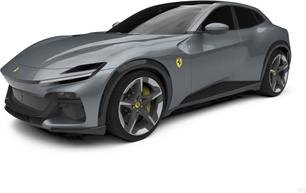
But seeing the Purosangue in the metal has shifted that view a little. Sure, it will compete with models like the Lamborghini Urus, but it doesn’t exactly look like an SUV, does it?
In fact, and this would likely be another dirty word in Ferrari land, it almost looks more like a hot hatch, what with its short rear overhang, swollen body styling and the positioning of each wheel in the furthest possible corners.
But more than that, the Purosangue looks elegant. Aggressive, sure, but still somehow a little understated. And for mine, that’s a huge tick in the positive column.
Unlike some of its competitors, the Purosangue looks like it was designed by adults, for adults, and not by cordial-addled children.
There’s no active aero at work here, with the airflow instead built into the design. Like the openings at either side of the front end, which channel air past the front tyres, or the positioning of the rear spoiler, which pushes air down over the rear windscreen so effectively there's apparently no need for a rear windscreen wiper.
Traditionally, interiors have not been Ferrari’s strongest suit, but the Purosangue is a comfortable and premium space to spend time, and the seats and the steering wheel especially, look fantastic.
The tech, though, isn’t perfect. Some of it (like the haptic Engine Start button) is an awesome addition, but while the twin screens for driver and passenger look good, the technology is a little clunky, and simply not as smooth as using a single, centrally mounted screen.
It is something of an achievement when a team of designers manage to make a facelifted version of a vehicle less ugly, daunting and disappointing than the original.
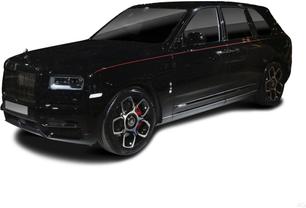
I thought the first Cullinan, launched five years ago, looked like a London black cab that had been mounted and inseminated by a double-decker bus. Big? Sure? Impressive? Yes. Beautiful? Only if you think Boris Johnson is sexy.
There was a lot of chat at the launch about the changes made for Series II, but in summary they tried to make it look more… like a boat, according to Exterior Design Lead Henry Clarke.
“We don’t look for speedy, overcomplicated lines, we take our inspiration from the luxury world, and it’s often from yachts, it’s that same sense of scale and grandeur, that’s the key to the timelessness of a Rolls-Royce,” he explained.
“We’re not focused on the world of automotive design, and if you look at the Cullinan it has that ethos you think of with a yacht, that strong, vital bow and then everything rearwards, the back of a yacht, has an elegance and grace to it.”
Fair enough, but what I appreciated was that they’ve squared the front end off a bit more, by outlining the grille, adding some gills beneath it and putting in some natty DRLs, and then rounded off the rear a little as well, so that it looks less… awful.
Indeed, after a couple of days of staring at it (and particularly admiring how good it looks in your rear-view mirror when behind you), I did come around to its looks. Certainly a lot more than last time.
And strangers driving past seemed to really like it, because they keep smiling and clapping at me.
Not the kind of thing you’d normally care about in a Ferrari review, I know, but then this isn’t a normal Ferrari.
So, let’s focus on the back seat for a moment. The Purosangue is a strict four seater. Asked why not just install a bench backseat for more family-friendly practicality, the brand had a quality answer locked and loaded.
The reason, it says, is because a car in this price bracket needs to instil a sense of dignity in every seat, and by installing three across the back row, you don’t just ruin the middle seat, but the two window seats as well, because then everyone is uncomfortable.
It make sense, right? Even if I still harbour suspicions that, by installing just the four seats in the Purosangue, it moves it just a little further from that dreaded SUV tag.
Either way, there is more space in the rear of the Purosangue than you might expect by looking at it. Each rear seat rider can stretch out, with more than enough head and legroom.
And while there, they can access their seat functions and climate control settings through a nifty pop-up rotary dial (front seat riders get one, too).
The rear doors open automatically with a long pull on a lever at the base of the window. Ferrari says the rear-hinged doors serve two purposes, the first being that they allow easier access to the rear seats, and the second being that they look much cooler than regular, boring doors.
The engineers, though, concede making them a reality was a nightmare, with the brand replacing three fastening points with a single massive hinge that emerges from the rear of the body.
There’s more practicality on offer here, too, courtesy of a 473-litre boot space (and more if you flatten the back seats), with a flat load space, and hidden storage beneath it.
The Purosangue measures in at 4973mm in length, 1589mm in height, and 2028mm in width, and it rides on a new spaceframe chassis bespoke to this model.
In terms of being a vehicle you might actually use - and keeping in mind that if you can afford one of these you’ve also got at least a half dozen other choices - every day, the Cullinan is the pick of the Rolls-Royce enclosure.
From the big boot space - 600 litres with the seats up, 1930 litres with them down - and its lovely little Viewing Suite, through the spacious rear relaxing zone to the absurdly comfortable and plush front seats, there’s a sense of grandeur about the whole Cullinan experience.
You can opt for a champagne fridge between those rear seats, if you like, or you can just lie back and stare at the blinking pins of light in your 'Starlight Headliner' and imagine that each one of them represents one of your millions, smiling down at you.
It’s a lovely place to be, in short, and with its super-thick double glazed glass, coated with an acoustic layer on top of that, and carpets thick enough to keep out road noise on their own, it’s also a very pleasantly quiet one.
How much the Purosangue actually costs is something a moot point. Officially, it starts at $728,000, before all your on-road costs.
But Ferrari says every Purosangue will go through its personalisation, 'Atelier' or 'Tailor Made' programs, meaning no two vehicles will be exactly alike, adding significant cost to the sticker price.
But perhaps the biggest issue is that you can’t actually buy one. Ferrari paused orders globally in November last year as it realised its factory capacity had been exhausted by demand.
Right now, all it can say is that, should you want one, you should speak to your dealer, while warning that average global wait times are in excess of 18 months.
Further complicating matters is the fact the brand has issued a production cap on the Purosangue, with the SUV not to exceed 20 percent of Ferrari’s total production volume.
The idea is two-fold. One, Ferrari’s production capacity is limited, and so freeing up space on a factory line isn’t easy. And two, unlike its Italian competition, Ferrari wants to remain Ferrari, not the Purosangue company.
So, this newcomer will produce incremental growth without dominating the entire line-up.
The brand is holding triple-figure orders and expressions of interest in Australia, and though it’s not sure how many cars we’ll actually get, they will begin arriving before the end of the year.
Ferrari in Australia is also yet to confirm exactly what local customers will get, but standard fare internationally includes 22-inch (front) and 23-inch (rear) alloys, leather-and-Alcantara seating (now made from 68 percent recycled materials) in both rows, twin screens (one in the instrument cluster for the driver, and another mounted in the dash directly in front of the passenger), standard Apple CarPlay and Android Auto, a 21-speaker Burmester stereo, automatic-opening rear doors and an automatic boot, seat and steering wheel heating, and an in-seat massage function.
You also get an engine that could power a small city, but let’s circle back to that, shall we?
Value? Price? What are these things you speak of, little plebeian person? Such is the disdain for such things at Rolls-Royce that they wouldn’t even tell us what the Series II is going to cost when it lands in Australia later this year.
The people who can afford one don’t much care, of course, but for the rest of us, who like to shake our heads and make low, whistling noises, you can bet the price will rise just a little from where it was with the original Cullinan - and that was $705,000 for the basic car, or closer to $795,000 for the sportier, and blacker, Black Badge variant.
In terms of value, it’s hard to grasp that any car could cost that much, but for a Rolls buyer the equation is very different. They don’t need a Rolls, no-one does, but it makes a nice change from buying art works, gold or small countries.
In terms of features, it has almost too many to mention, but let’s pause on the marvellous massage seats, the bespoke sound system, entirely unique to this case and built by Rolls itself, with incredible levels of detail, the Rolls umbrellas tucked into each door and the very lovely 'Viewing Suite'.
This consists of two pop-up seats in the rear, with a little champagne and canapés table in between, where “you can watch your children play football”.
Try that in Australia, at the rugby league, and you’ll be covered in half-time oranges and abuse spittle in no time. Stick to the polo, perhaps.
Nothing but Ferrari’s best here, with a mid-front mounted V12 engine providing the power, and plenty of rapid forward momentum.
This naturally aspirated 6.5-litre monster produces a total 533kW at 7750rpm and 716Nm at 6250rpm – and climbs to a screaming 8250rpm.
It channels that power to all four wheels via an eight-speed dual-clutch automatic, and a compact and front-mounted power transfer unit that calls the front tyres into action.
It’s a clever solution that allows the Purosangue the grip of all-wheel drive when you’re in fourth gear or below, reverting to rear-wheel-drive at higher speeds.
The reasoning is that you get the lower-speed grip without requiring a heaver permanent AWD solution.
There are more clever things at play here, too. Like a new 'Active Suspension' system that replaces the need for anti-roll bars with motorised adaptive dampers.
Each corner has an electric actuator that can then individually stiffen or soften the suspension as required to keep the Purosangue flat when cornering, or supple on bad road surfaces.
You can also lift or lower the ride height slightly, including for launch control which flatness the Purosangue for maximum aero slipperiness.
Rolls-Royce has committed to being a fully EV brand by 2030, so it’s a safe bet this Series II Cullinan will be the last one offered with its storming, staunch V12 engine.
Indeed, Rolls hinted the only reason it hung around in this version is that this is only a mid-life face-lift for the Cullinan, and the car that replaces it will arrive on an entirely new, all-electric platform.
As good as the EV Roller, the Spectre undeniably is, driving this old-school Cullinan with its 6.75-litre twin-turbocharged V12 making the kind of thumping, torque-thick, nothing-is-too-much-trouble acceleration is a hoot.
It’s not loud, but it’s just loud enough that you can enjoy its deep, brassy tones, and it’s got plenty of power in reserve to hurl even this 2.75-tonne machine past lesser vehicles with ease.
There are two Cullinans to choose from, of course, with the base model providing a very pleasant 420kW and 850Nm or the sportier Black Badge version (Rolls calls it the brand’s “alter ego”) with 441kW and 900Nm.
If there’s a fly in this Ferrari’s ointment, we’ve found it. Big V12 engines mean big fuel use, and the Purosangue will require a claimed 17.3L/100km on the combined cycle.
Be warned, though, the Ferrari’s accelerator calls to your right foot like a siren song luring sailors to the rocks, and should you get aggressive with it, I’d suspect your fuel figures to be even higher.
The C02 emissions are pegged at 393g/km.
You might expect a lower score than seven for this section, and I take your point. But for mine, you're buying a vehicle with a huge V12 engine, so you probably know what you're in for, right?
Rolls-Royce claims the Cullinan will provide you with between 16 litres per 100km and 16.8L/100km, but I believe you’d have to drive it quite steadily to achieve even that quite appalling figure.
Twelve cylinders, 2.75 tonnes, you do the math, but it's interesting to note that with a nearly full tank - and we’re talking 100 litres of fuel - my distance to empty was looking like barely more than 500km - that’s an EV-like number.
There’s a reason most supercars aren’t daily drivers, and it’s not always just a financial one.
It’s because they’re the most specialist tools in the automotive toolbox, usually engineered to attack race tracks and alpine roads, but not the school run or bumper-to-bumper traffic.
But you put up with it — the too-firm ride, the questionable ergonomics — because when you do land upon the kind of road your car was built for, any other inconvenience vanishes like traces of smoke from a chimney.
Which is exactly what makes the Purosangue such an interesting proposition, because here is a Ferrari that will likely be driven more, and for longer spells, than any Ferrari to have come before it, but it still needs to excite the senses on the right road.
So has Ferrari pulled it off? In a word, yes.
Honestly, when you’re just tootling around it’s easy to forget you’re driving a supercar.
That V12 engine falls silent, the exhaust is almost non-existent (owing largely to the sound deadening of the cabin – to really hear this beast at full roar you want to crack a window, or find a tunnel), and the suspension (each driving mode has two suspension settings, medium and soft, allowing for some serious fine-tuning of the ride comfort) floats across most road surfaces.
It feels much like any other premium SUV, and not one with a nuclear power plant lurking just ahead of the dashboard.
Because there is a Hyde to this Jekyll, and it arrives when you dial up the sportiness, or get a little too heavy with the accelerator. Then that big V12 roars into life, along with the exhaust, and suddenly you’re very much behind the wheel of Ferrari once again.
Engage launch control and you can feel the Purosangue hunker down, dropping lower onto the wheels and readying for action. Flatten your right foot, and 100km/h arrives in a claimed 3.3 seconds, with 200km/h flashing by in 10.6 seconds.
But there is a quirk here, and that is that the Purosangue doesn’t always feel blisteringly fast. It's powerful, sure, and plenty quick, too, it's just that somehow it doesn't always feel quite as fast as the spec sheet suggests.
Maybe it’s the theatre, or all in my mind, but I reckon the best way to experience the all-out performance is by taking over the gearing yourself, and listening to the machine-gun-popping of the rev limiter before squeezing the paddle shifter, to truly feel like you're unlocking every ounce of performance on offer.
Is it the sharpest Ferrari ever built? Obviously not, and even a carbon-fibre roof can’t compensate for the over 2.0-tonne weight here.
But I promise, should you find yourself on a twisting road, the Purosangue can paint a supercar-sized smile on your face just the same.
The steering isn't quite as sharp as it might be in a true supercar (I suspect its been softened to make the Purosangue more comfortable on freeways and over longer distances), but it still inspires plenty of confidence, while the the rear-wheel-steering helps tuck you nearly into corners before that big engine drags you out the other side, that operatic exhaust bellowing along with you.
A real Ferrari? You bet.
The first word that comes to mind when describing the experience of driving a Rolls-Royce the size of a small housing estate is 'intimidating', because it's one of those cars where you take a few deep breaths before setting off (while muttering “please don’t crash it”) and then some sharp intakes of breath the first few times you find cars coming towards you on a narrow road, of which there are many on Ibiza where we were summoned to drive it.
I followed a panicked young man from India who had never driven a Rolls, nor a left-hand-drive car before, and boy, he sure looked intimidated, even if he didn’t ever get above 30km/h.
The incredible thing about the Cullinan, however, is how quickly it relaxes you and how astonishingly light and easy it is to drive. The steering feels almost absurdly light at first, you really can drive it with just one finger, two if you’re feeling cautious, but once you get used to it it just feels very Rolls-Royce.
The whole brand lives on the idea of effortlessness, wafting over the world, and the much-touted 'Magic Carpet Ride', and it really does deliver that sense of ease. You’re almost as relaxed at the wheel as you are in the rear seat (and the massage functions only make you feel more so).
Speed humps do upset the Cullinan, but only a very little, and you’re aware when the car finds broken surfaces, but only distantly so. It feels like someone is dealing with bumps and imperfections in a far-off-place, perhaps the car’s basement, and it shouldn’t worry you too much.
When traffic annoys you, you can just make it disappear by engaging your whumping V12 engine and making the world go briefly blurry.
Attempt to throw the Cullinan through sharp bends at speed, however, and it reacts in much the same way you’d expect the cruise ship it somewhat resembles to.
There’s a bit of body roll, but it’s all quite polite and a sense that if you need to drive like that, perhaps you should go and get one of your other cars.
The Black Badge version does feel just a trifle sportier than the base Cullinan but we’re splitting very grey and expensively coiffed hairs here.
The overall experience is one of grand relaxation, imperiousness and a certain touch of superior glee.
The Ferrari Purosangue has not, and surely will not, be independently crash tested, but does arrive with a pretty stacked suit of safety kit, including AEB, adaptive cruise control, lane keeping assist, blind-spot monitoring, rear cross-traffic alert, traffic sign recognition and hill descent control.
The Rolls-Royce Cullinan SUV has not been ANCAP tested, but it feels safe because it’s bigger than a tank. It has eight airbags - driver, front passenger, two curtains, driver side, front passenger side, two rear passenger side), and a full-suite of active-safety tech including Forward Collision Warning and Automatic Emergency Braking.
Every Ferrari arrives with a three-year, unlimited kilometre warranty, with the option of extending coverage for up to seven years at the point of purchase.
Also available is Ferrari's 'Power20' coverage, which covers the engine, gearbox, transmission and all other major mechanical and electronic components for 20 years from the point of purchase.
The recommended service interval is 12 months/20,000km, and there's also a seven-year capped-price servicing program, called '7-Year Genuine Maintenance', which allows you to prepay for all your servicing needs.
Questions about service intervals and warranties seem to confuse the people at Rolls, as if none of their customers have ever bothered to ask.
Yes, you would think servicing would be free when you’re pushing a $1 million price tag, and that the warranty would be for life, particularly considering the low mileage on these things, but it is, in fact, just a four-year servicing and warranty offer for Australian customers of this vehicle. So that means an unlimited-mileage warranty, including all services, for the first four years (at which point you obviously buy a new one). "Rolls-Royce Motor Cars will offer a service inclusive package but no pricing available yet and this will not be required until the fifth year of ownership."