What's the difference?
Deepal is a recent arrival in Australia but its parent company Changan Automotive is one of China’s largest state-owned automotive manufacturers which was established in the 1950s.
Deepal Automobile Technology (to use its full name) is one of several brands under the Changan corporate umbrella targeting different market segments across passenger and commercial vehicle lines.
Deepal’s focus is on full-electric vehicles with an expanding Australian line-up comprising a compact SUV (S05), mid-sized SUV (S07) and a groundbreaking large SUV (E07) it calls the Multitruck.
We recently spent a week in the E07 to find out if it’s not only practical for family duties but also if its unique design offers genuine workhorse ability to validate its ‘truck’ credentials.
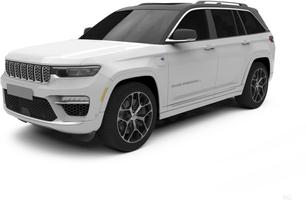
Jeep Australia's first plug-in hybrid, the Grand Cherokee 4xe, has arrived at a time when the company’s sales figures need a decent shot in the arm.
Though it’s seemingly spearheading a large and extra-large SUV hybrid push into the Aussie market, with the likes of a Toyota LandCruiser 300 Series hybrid on its way, the marque’s debut PHEV is only available here in the range-topping Summit Reserve spec, and only as a five-seater.
So, does the 4xe have enough of a jump on any large SUV hybrid rivals – including a rumoured but postponed Ford Everest hybrid – and is it enough to give the brand a much-needed boost?
Read on.
The Deepal E07 is not a truck, so tradies need not apply. However, for couples and families it's a generously equipped and luxurious EV with a unique electronic approach to a reconfigurable interior, albeit with practicality partly compromised by its fastback styling. So, only car buyers will determine if this is a short-lived automotive curiosity, or a bold new direction for SUV design.
A wise man* once said "Being first can sometimes feel like being wrong" and perhaps that's how it is with the 4xe, but at least Jeep Australia is giving the large SUV hybrid realm a good ol' try.
* Former CarsGuide Big Kohuna, Glen Knowles.
The company's first plug-in hybrid, the Grand Cherokee 4xe, is not perfect by anyone's standards, however, it is a definite move in the right direction.
It's a quiet and refined drive, it retains the brand's renowned 4WD capability, and even its hefty price-tag likely won't dissuade Jeep loyalists from giving it a go.
The E07 rides on a 3120mm wheelbase with 5045mm overall length, 1996mm width and 1680mm height, so compared to the segment-leading Ford Everest it’s larger in wheelbase, length and width but not as tall. It also has active air suspension with adjustable ground clearance and ride firmness.
The exterior styling, which can best be described as a fastback SUV, disguises the electronic interior transformations that largely occur behind its privacy glass. Our example’s black paint ensures it looks smaller and less conspicuous than its generous dimensions would suggest.
Its spacious and airy interior is enhanced by the panoramic sunroof. It has a futuristic look and feel, although the optional bright orange nappa leather trim may be too garish for some. It was also showing light staining and scuffmarks, so perhaps not a practical choice for families with young kids.
Its 2320kg tare weight and 2930kg GVM provides 610kg of internal load capacity. That should comfortably cater for the weight of five large adults, with their belongings shared between the 131-litre front boot (aka frunk) and the rear luggage area which offers 524 litres or just over half a cubic metre of load volume with the glass dome closed and rear bulkhead upright.
This is a modest load volume compared to conventional seven-seat large SUV rivals (with their third rows folded) like the Isuzu MU-X (1119L) or Ford Everest (898L), which is largely due to the E07’s fastback design.
It’s also rated to tow up to 1500kg of braked trailer but Deepal doesn't quote a GCM rating so we don’t know how much weight it can legally carry and tow at the same time, which is a surprising omission for a vehicle claiming to be a truck.
Push a button and the rear glass dome retracts forward into the roof to expose the rear luggage area to the great outdoors (a nice space for tethered dogs to ride in). Push more buttons and the tailgate opens, the rear bulkhead window slides down and both the bulkhead and rear seat fold forward and flat to create more than 1.6 cubic metres of internal load volume, which again is modest compared to conventional large SUV rivals.
And if you’re a tradie or other service provider needing to carry bulky tools and equipment, the E07 lacks the basic requirements of a truck when the interior is in this flat-floor configuration.
For example, it can theoretically carry up to 500kg or half a tonne of cargo plus driver without exceeding its GVM limit. However, there are no load anchorage points provided on the B pillars and the strongest anchorages in the rear luggage area are only rated at 50kg each. And there’s no cargo barrier provided (or available as an accessory) behind the front seats to protect the driver and front passenger.
We also noted when using the E07 to haul gardening tools and equipment that the trailing edge of the metal roof was low enough to require deflating the tyre on our wheelbarrow to just squeeze under it (see image), so tall loads would be an issue.
And although the E07 can be driven in this fully open configuration, if the cargo is large enough to stop closure of the glass dome and you get caught in the rain, the luxurious nappa leather trim could get wet. So, we don’t expect to see one of these ‘trucks’ replacing a Ranger or HiLux for tradie duties any time soon.
Front of cabin storage includes big bins in each front door but there’s no glove box or overhead glasses holder. The two-tiered or ‘floating’ style of centre console has a large storage tray at floor height while the upper level provides two USB-C ports, wireless phone charging, a pair of cupholders and a large box with padded lids that provide comfy elbow rests.
The large rear doors open wide to access a bench seat which for a fastback body style is surprisingly accommodating, even for tall people. I’m 186cm and when seated behind the driver’s seat set in my position I have ample foot, knee and headroom.
Even those in the middle seat can ride in comfort, enhanced by a spacious flat floor with no transmission tunnel to straddle. The 60/40-split backrests can also recline but with the trade-off being less legroom given the base cushions must slide forward to achieve this.
Rear seat storage includes bins in each door, pockets on both front seat backrests and two cupholders which appear when the centre seat backrest is folded forward to serve as an armrest.
The rear of the centre console also has a USB-C port and small touchscreen that allows rear passengers to adjust various comfort settings.
The rear luggage area has numerous hooks for securing light duty straps or load nets plus a 12V accessory socket and a domestic three-pin plug outlet for the 6.6kW V2L (vehicle to load) inverter to power a variety of devices and appliances.
The Jeep Grand Cherokee Summit Reserve 4xe PHEV retains the regular model’s level of functionality but adds a reasonably classy touch to everything.
All seats offer adequate comfort, support and room.
There are plenty of storage spaces, cupholders etc, and charging points - two USB-A and two USB-C plus a 12V socket in the front and two USB-A and two USB-C plus a 230V point in the back.
Controls are generally easy enough to locate and operate although some buttons are positioned in awkward places – including drive-mode buttons under the steering wheel – and it sometimes takes a few finger-stabs at the multimedia touchscreen to get to where you want to go in the operating system.
In terms of packability, the rear cargo area has a listed 1067 litres of space, and, with the second row folded and out of the way, that space opens up to 2004 litres.
The Deepal E07 is available in a choice of drivetrain specifications comprising a single-motor RWD entry-level model with 252kW/365Nm for a list price of $64,900, plus on-road costs, or premium dual-motor AWD ‘Performance’ variant with 440kW/645Nm for $73,900.
Our test vehicle is the single-motor RWD, finished in 'Obsidian Black' which is one of three colours available including 'Hematite Grey' and 'Quartz White'. Its eye-catching orange nappa leather-appointed seat trim is an extra cost option in preference to the standard black nappa trim.
There’s currently no competitor in the ‘Large SUV Under $80K’ segment in which the E07 competes that can match its electronically reconfigurable interior, which appears to draw inspiration from the futuristic ‘Transformers’ movie franchise (see Practicality).
Our example comes standard with numerous luxury appointments including 21-inch alloy wheels with 265/45R21 tyres but no spare (repair kit only), heated door mirrors with auto-dipping and memory settings, panoramic sunroof with electronic sunshade, roof rails, rear privacy glass, active grille, LED headlights/DRLs/tail-lights and lots more.
The sumptuous interior, with smart key access and start, offers a head-up display, heated steering wheel with power adjustment/position memory, eight-way power adjustable driver and front passenger ‘zero gravity’ seats with heating/ventilation/massage/position memory/courtesy functions, power tailgate, dual-zone climate, rear seat recline/heating/ventilation/massage, wireless phone charging, integrated dashcam and a handy 6.6kW V2L (Vehicle to Load) inverter to power numerous devices and appliances.
There’s also a large 15.4-inch touchscreen which controls vehicle functions (see Driving) and the multimedia system with premium 18-speaker sound and wireless Apple and Android connectivity.
The five-seat Jeep Grand Cherokee Summit Reserve 4xe PHEV has a MSRP of $129,950 (excluding on-road costs).
Standard features include a 10.1-inch multimedia system (with Apple CarPlay and Android Auto), a 10.25-inch digital instrument cluster, 19-speaker audio system, quilted Palermo leather-trimmed seats, air suspension and 21-inch alloy wheels.
It also has a heated steering wheel, 12-way power-adjustable seats and four-way power lumbar adjustment with memory for driver and front passenger, driver and front passenger seat massage function and heated and ventilated seats (driver, front passenger and rear outboard passengers).
A Mode 2 charging cable is also included.
An 'Advanced Technology Group' pack is available as a $5500 option and that includes a head-up display, a 10.25-inch screen for the front passenger, wireless phone charger, and night vision camera.
Exterior paint options include 'Bright White', 'Diamond Black', 'Silver Zynith', 'Velvet Red', 'Baltic Grey', 'Rocky Mountain', 'Midnight Sky' and 'Hydro Blue'.
The Jeep Grand Cherokee Summit Reserve 4xe PHEV has a 2.0-litre four-cylinder turbo-charged petrol engine, two electric motors (one on each axle) and a 17.3kWh battery.
Combined engine and electric outputs for power and torque are 280kW and 637Nm, respectively. The 4xe has it over any of its stablemates equipped with the 3.6-litre Pentastar V6 petrol engine because that yields 210kW and 344Nm.
The 4xe has an eight-speed automatic torque-converter transmission and regenerative braking.
Drive modes include 'Hybrid' (with combined engine and electric motor providing “maximum instant torque and impressive acceleration”, according to Jeep), 'Electric' (“zero emissions”) and 'eSave' (aims to save battery power).
There are a few options available when it comes time to charge the 4xe.
The 4xe vehicle has a Mode 2 charging cable so you can charge it at home in less than 10 hours, according to Jeep.
With a full charge, the 4xe has a claimed driving range, on electric charge alone, of 52km.
Jeep reckons a Mode 3 (wall box) single-phase electric vehicle charger will fully charge the 4xe in less than three hours.
If out and about and looking for a charge, a 4xe driver can use the onboard 'UConnect' system to locate an appropriate public charging station.
It has a WLTP estimated driving range of up to 550km (510km for the dual-motor AWD) and like its sibling draws energy from a 90kWh lithium-ion propulsion battery beneath the floor.
Deepal claims a maximum AC (Type 2 plug) charge rate of 7.0kW can fill the battery from 0-100 per cent in 13 hours while DC (CCS2 plug) fast charging at the maximum 240kW can do 30-80 per cent in just 15 minutes.
When we collected the test vehicle, the touchscreen was displaying 95 per cent charge and an estimated range of 524km. We covered 219km during our usual mix of suburban, city and highway driving, with 45 per cent charge and 245km remaining.
We did an overnight charge at home using the AC Type 2 cable and after 14 hours at a glacial 1.6kW the battery charge increased from 45 to 63 per cent, adding an extra 100km of range (346km).
We added another 80km to achieve a total distance of exactly 300km, after which the touchscreen was claiming average consumption of 15kWh/100km. So, based on our real-world figure, a range of 500km or more from a single charge is credible.
As mentioned, the 4xe has a listed electric-only driving range of 52km.
On our official test day, we drove just under 50km on a full electric charge and then the rest of the trip was courtesy of the good ol’ petrol engine.
Jeep's official figure for the combined cycle is just 3.2L/100km, but that's predicated on keeping the hybrid battery charged at all times. On fuel-only we recorded 11.6L/100km.
The 4xe has a 72-litre fuel tank (you need 95RON premium to fill it), so going by that on-test fuel-consumption figure, you could reasonably expect to get a driving range of about 620km out of a full tank.
Add an approximate electric range of about 50km on a full charge to that figure and you have a total estimated driving range of 670km.
The E07 offers plenty of personalisation including four drive modes, a ‘super’ power saving mode and multiple adjustments for acceleration, steering, braking, regenerative braking, suspension height and ride firmness.
It has a spacious and comfortable driving position but the view takes some getting used to given there’s no conventional instrument cluster. You rely only on the head-up display for key info like road speed, traffic sign recognition, indicator direction etc.
Steering column stalks provide some basic functions like gear selection and indicating/headlight flashing but many settings like wipers, lights, climate control, audio etc are controlled by the central touchscreen.
This can be very distracting while driving, given the need to accurately place your fingertip on a virtual button or slider each time you need to change a setting. Yes, it has ‘Hey Deepal’ voice assistance, but physical dials and buttons would be quicker and easier.
The E07 is otherwise nice to drive with its near silent powertrain and low tyre/wind noise combined with good steering feel, strong braking and sure-footed handling with an air-cushioned ride. Its electric air-con was also impressively cold when daytime temperatures reached the mid-30s.
While the single motor and RWD can’t match the performance of its dual-motor AWD sibling, our test vehicle’s smooth and spirited acceleration in the sub-7.0 second 0-100km/h zone is more than ample for family duties with the added benefit of a longer driving range.
We’re all time-poor, right? So, why should I take up your time and rattle on about the 4xe for a thousand words when I can get the essence of it across to you, the reader, in a few sentences? Call me, Mr Thoughtful.
This is generally a big, quiet and refined, easy-steering large SUV, but it feels bulky at times and tends to be quite fussy on irregular surfaces, exhibiting a jittery ride on even brief sections of light corrugations on dirt tracks.
The 4xe’s PHEV set-up is smooth and highly responsive on-road and you can switch between the aforementioned drive modes to suit the circumstance.
Driving range on electric only is listed as 52km. I only recorded a total distance of just under 50km, and it’s a very quiet and smooth drive while relying on electric power.
It regenerates power rather quickly down big hills and via braking, but we’d exhausted all electric charge by the time we’d reached our 4WD test track.
As expected, this Grand Cherokee tackled every off-road challenge without any strife.
The air suspension, set to full off-road height, is a bonus.
Our 4WD test track consists of difficult set-pieces, including one small steep rocky hill that I’ve seen heavily modified vehicles struggle to conquer and, to the Jeep’s credit, it climbed the incline, no sweat.
The 4xe’s efforts were only ever hampered by its 'all-season' Continental CrossContact tyres (275/45R21) which are much better suited to blacktop driving and the fact the 4xe costs upwards of $129,950 and I didn’t want to risk any damage to it.
The 4xe has a listed wading depth of 610mm but our test track was dry so I never had the chance to do any water crossings.
The Grand Cherokee has a solid enough rep as a towing vehicle but, take note, the 4xe is rated to tow 2722kg.
The E07 is yet to be tested by ANCAP but comes with an exhaustive menu of passive and active features including eight airbags, autonomous emergency braking (AEB) with pedestrian and cyclist alert, lane-keeping, front/rear cross-traffic alert with autonomous braking, tyre pressure monitoring, traffic sign recognition, front/rear parking sensors, 360-degree camera, adaptive cruise control, reverse tracing assistance and much more. The rear bench seat is equipped with dual ISOFIX child seat anchorages while the original two top-tethers have recently expanded to three to meet ADRs.
The Jeep Grand Cherokee Summit Reserve 4xe PHEV has the maximum five-star ANCAP safety rating from assessment this year.
Safety gear includes AEB with pedestrian detection, blind-spot monitoring with rear cross-traffic alert, adaptive cruise control, lane-keep assist, driver monitoring, traffic sign recognition, intersection collision assist, and a surround-view parking camera.
The Summit Reserve spec brings with it 'ParkSense' parallel and perpendicular park assist and (low-level autonomous) 'Active Driving Assist'.
It has eight airbags including front, side, and knee (for driver and front passenger), sides (for second-row passengers) and full curtain airbags.
The E07 RWD comes standard with a seven-year-/140,000km warranty plus a separate eight years/240,000km warranty covering the propulsion battery. There’s also 12 months of complimentary roadside assistance.
Scheduled servicing is every 12 months/20,000km whichever occurs first. Capped pricing applies to the first seven scheduled services up to seven years/140,000km totalling $2955, or an average of $422 per service.
Deepal has a small but expanding national dealership network comprising around 14 locations, with each also providing vehicle servicing.
The Jeep Grand Cherokee Summit Reserve 4xe PHEV has a five-year/100,000km warranty and a lifetime roadside assist service.
Servicing is set at 12-month/12,000km intervals and capped price servicing keeps what you pay for each appointment at $399 for the first five.