What's the difference?
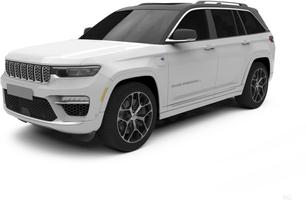
Jeep Australia's first plug-in hybrid, the Grand Cherokee 4xe, has arrived at a time when the company’s sales figures need a decent shot in the arm.
Though it’s seemingly spearheading a large and extra-large SUV hybrid push into the Aussie market, with the likes of a Toyota LandCruiser 300 Series hybrid on its way, the marque’s debut PHEV is only available here in the range-topping Summit Reserve spec, and only as a five-seater.
So, does the 4xe have enough of a jump on any large SUV hybrid rivals – including a rumoured but postponed Ford Everest hybrid – and is it enough to give the brand a much-needed boost?
Read on.
Segment-bender, model-mash-up, mold breaker, franken-ute: there are many odd ways to describe the new electric Deepal E07 large 'SUV'.
I prefer to think of it as the mullet haircut of cars — business up front but a party at the back — but Deepal has settled on Multitruck to describe its new SUV-ute mash-up.
There isn’t anything like this vehicle on sale in Australia right now. The most similar vehicle on the global stage would be the Tesla Cybertruck, but the E07 is smaller and much less gaudy.
We got to have our first taste of the new adventure ready machine on Australian roads, and this is what you need to know.
A wise man* once said "Being first can sometimes feel like being wrong" and perhaps that's how it is with the 4xe, but at least Jeep Australia is giving the large SUV hybrid realm a good ol' try.
* Former CarsGuide Big Kohuna, Glen Knowles.
The company's first plug-in hybrid, the Grand Cherokee 4xe, is not perfect by anyone's standards, however, it is a definite move in the right direction.
It's a quiet and refined drive, it retains the brand's renowned 4WD capability, and even its hefty price-tag likely won't dissuade Jeep loyalists from giving it a go.
The Deepal E07 is a breath of fresh air. It’s exciting to see a vehicle zig when others zag.
It’s not just a conversation-starter, it is well priced, stacked with gear and has some potent performance. Not to mention that rear end has some real-world practicality, even if it isn’t quite a ute.
That is bolstered by a long warranty and a capped-price servicing program to take the risk out of trying a new brand.
It isn’t the sharpest driving machine out there, the safety tech is still annoying and having all the controls in the multimedia screen is infuriating.
Also, there are question marks on if buyers really want or need that fraken-ute rear end.
Time will tell if this car is fad like the mullet haircut or a real-world game changer.
Note: CarsGuide attended this event as a guest of the manufacturer, with meals provided.
The E07 stands out from the crowd. It’s design will turn heads and you’ll have strangers coming over for a sticky beak at all times.
It’s a big beast at more than five metres long and close to two metres wide. That puts it in Toyota LandCruiser territory.
The biggest talking point is the rear. What looks like a liftback is actually a retractable roof that converts it to an open tray at the touch of a button.
You can have it open with the rear seats folded flat or the rear seats up and the glass divider still in place to keep the world at bay.
Outside of the rear end, it's a futuristic-looking car with squished LED headlights, flush door handles and a closed-off front end typical of modern electric cars from China.
Inside it borrowed cues from Tesla with its minimalist design with next to no buttons and only a big central screen.
The interior quality feels good, with premium materials covering all surfaces.
The Jeep Grand Cherokee Summit Reserve 4xe PHEV retains the regular model’s level of functionality but adds a reasonably classy touch to everything.
All seats offer adequate comfort, support and room.
There are plenty of storage spaces, cupholders etc, and charging points - two USB-A and two USB-C plus a 12V socket in the front and two USB-A and two USB-C plus a 230V point in the back.
Controls are generally easy enough to locate and operate although some buttons are positioned in awkward places – including drive-mode buttons under the steering wheel – and it sometimes takes a few finger-stabs at the multimedia touchscreen to get to where you want to go in the operating system.
In terms of packability, the rear cargo area has a listed 1067 litres of space, and, with the second row folded and out of the way, that space opens up to 2004 litres.
There are two sides to this story.
The convertible back makes it one of the only true dual-purpose vehicles, but let’s not oversell its capabilities.
It only has a payload of 300kg and only has a 1500kg braked towing capacity, so it's not tradie spec.
It is probably best suited for throwing a few surfboards in the back or mountain bikes and heading off to a remote spot where you can sleep in the car in relative comfort.
There is no rugged ladder frame underneath, but it can do a bit of light off-roading in all-wheel-drive guise.
Ground clearance of 223mm is good and it can wade up to depths of 600mm.
It has a vehicle-to-load function that allows you to power appliances, which boosts its potential as a campsite companion.
Inside it has spacious cabins with oodles of head, leg and shoulder room in both rows. That is thanks to its more than three-metre wheelbase — the distance between the front and rear axle that determines how spacious a cabin is.
There are rear air-con vents and USB charging ports for both rows, and the rear seats can tilt backwards for sleepy young-uns.
The boot capacity is 524L, or 1654L with the rear seats folded. A front boot under the bonnet is 131L.
One of my biggest gripes is that nearly every function of the car is controlled through the big multimedia screen.
There are shortcuts and app-like tiles that make it easier to navigate, but it’s still a hassle to dive into the menu to change side mirrors and other functions usually controlled via physical buttons.
Tesla set the precedent by moving all its functions into the screen and other tech-focused EVs have followed suit, but it smacks of cost savings rather than improving the user experience.
The five-seat Jeep Grand Cherokee Summit Reserve 4xe PHEV has a MSRP of $129,950 (excluding on-road costs).
Standard features include a 10.1-inch multimedia system (with Apple CarPlay and Android Auto), a 10.25-inch digital instrument cluster, 19-speaker audio system, quilted Palermo leather-trimmed seats, air suspension and 21-inch alloy wheels.
It also has a heated steering wheel, 12-way power-adjustable seats and four-way power lumbar adjustment with memory for driver and front passenger, driver and front passenger seat massage function and heated and ventilated seats (driver, front passenger and rear outboard passengers).
A Mode 2 charging cable is also included.
An 'Advanced Technology Group' pack is available as a $5500 option and that includes a head-up display, a 10.25-inch screen for the front passenger, wireless phone charger, and night vision camera.
Exterior paint options include 'Bright White', 'Diamond Black', 'Silver Zynith', 'Velvet Red', 'Baltic Grey', 'Rocky Mountain', 'Midnight Sky' and 'Hydro Blue'.
The E07 is available in two grades: a single-motor rear-wheel-drive version and a dual-motor all-wheel-drive variant.
Prices start at $64,900 plus on-road costs for the rear-wheel-drive variant and jump to $73,900 for the dual-motor version.
That’s a very reasonable price for a large electric vehicle, but as it has no real competitors it has the segment and price point to itself.
The only difference between the two variants is the addition of the second motor that brings some serious potent performance.
Both are fully loaded with a laundry list of standard gear.
The E07 rides on monster 21-inch alloy wheels, has LED lighting front and back, a hands-free power tailgate and auto folding side mirrors.
Inside there is a 15.4-inch multimedia screen that is incompatible with wireless Apple CarPlay and Android Auto, and there is a wireless device charger and USB-A and -C ports front and back.
A monster head-up display — which projects information on the windscreen in front of the driver — replaces the driver display, with no instruments in front of the driver.
This is joined by power-adjustable front seats that are wrapped in supple Nappa leather. The front seats are heated, ventilated and have a massage function.
This is topped off with 256-colour ambient lighting and an 18-speaker stereo.
There is self-levelling air suspension that has three height levels, with the tallest providing a healthy 223mmm of ground clearance.
There is some cool tech such as camping mode and a relax mode. The latter fully reclines the front seats, closes the panoramic roof blind and plays some sleep-inducing sounds such as rain noise. Camping mode is similar and allows for you to sleep in the car overnight.
The Jeep Grand Cherokee Summit Reserve 4xe PHEV has a 2.0-litre four-cylinder turbo-charged petrol engine, two electric motors (one on each axle) and a 17.3kWh battery.
Combined engine and electric outputs for power and torque are 280kW and 637Nm, respectively. The 4xe has it over any of its stablemates equipped with the 3.6-litre Pentastar V6 petrol engine because that yields 210kW and 344Nm.
The 4xe has an eight-speed automatic torque-converter transmission and regenerative braking.
Drive modes include 'Hybrid' (with combined engine and electric motor providing “maximum instant torque and impressive acceleration”, according to Jeep), 'Electric' (“zero emissions”) and 'eSave' (aims to save battery power).
There are a few options available when it comes time to charge the 4xe.
The 4xe vehicle has a Mode 2 charging cable so you can charge it at home in less than 10 hours, according to Jeep.
With a full charge, the 4xe has a claimed driving range, on electric charge alone, of 52km.
Jeep reckons a Mode 3 (wall box) single-phase electric vehicle charger will fully charge the 4xe in less than three hours.
If out and about and looking for a charge, a 4xe driver can use the onboard 'UConnect' system to locate an appropriate public charging station.
Both versions can be called potent, but the all-wheel-drive is express.
The rear-wheel-drive version uses a single electric motor to make 242kW and 365Nm, and the all-wheel-drive variant adds a second motor to make a combined 440kW and 645Nm.
That extra grunt drops the E07’s 0-100km/h time from 6.7 seconds to about four seconds.
As mentioned, the 4xe has a listed electric-only driving range of 52km.
On our official test day, we drove just under 50km on a full electric charge and then the rest of the trip was courtesy of the good ol’ petrol engine.
Jeep's official figure for the combined cycle is just 3.2L/100km, but that's predicated on keeping the hybrid battery charged at all times. On fuel-only we recorded 11.6L/100km.
The 4xe has a 72-litre fuel tank (you need 95RON premium to fill it), so going by that on-test fuel-consumption figure, you could reasonably expect to get a driving range of about 620km out of a full tank.
Add an approximate electric range of about 50km on a full charge to that figure and you have a total estimated driving range of 670km.
Both variants use a circa-90kWh Nickel-Manganese-Cobalt (NMC) battery, which is a big unit by EV standards.
It delivers a WLTP-verified driving range of 550km in the RWD version and 510km in the AWD.
The E07’s charging speed is also at the top end of the spectrum.
It has a max DC charge rate of 240kW, which Deepal said can replenish the battery from 30 to 80 per cent in 15 minutes.
AC charging is capped at 7kW, which is below other EVs that can max out at 11kW.
Our test was too limited to conduct a proper real-world test.
We’re all time-poor, right? So, why should I take up your time and rattle on about the 4xe for a thousand words when I can get the essence of it across to you, the reader, in a few sentences? Call me, Mr Thoughtful.
This is generally a big, quiet and refined, easy-steering large SUV, but it feels bulky at times and tends to be quite fussy on irregular surfaces, exhibiting a jittery ride on even brief sections of light corrugations on dirt tracks.
The 4xe’s PHEV set-up is smooth and highly responsive on-road and you can switch between the aforementioned drive modes to suit the circumstance.
Driving range on electric only is listed as 52km. I only recorded a total distance of just under 50km, and it’s a very quiet and smooth drive while relying on electric power.
It regenerates power rather quickly down big hills and via braking, but we’d exhausted all electric charge by the time we’d reached our 4WD test track.
As expected, this Grand Cherokee tackled every off-road challenge without any strife.
The air suspension, set to full off-road height, is a bonus.
Our 4WD test track consists of difficult set-pieces, including one small steep rocky hill that I’ve seen heavily modified vehicles struggle to conquer and, to the Jeep’s credit, it climbed the incline, no sweat.
The 4xe’s efforts were only ever hampered by its 'all-season' Continental CrossContact tyres (275/45R21) which are much better suited to blacktop driving and the fact the 4xe costs upwards of $129,950 and I didn’t want to risk any damage to it.
The 4xe has a listed wading depth of 610mm but our test track was dry so I never had the chance to do any water crossings.
The Grand Cherokee has a solid enough rep as a towing vehicle but, take note, the 4xe is rated to tow 2722kg.
The E07 is a big beast, weighing in at 2440kg for the AWD, and the RWD is about 100kg lighter.
Even that fancy air suspension can't hide that bulk. On smooth city streets and well-maintained motorways, the E07 is very pleasant and comfortable. But on pockmarked and undulating country roads travelling at the sign-posted 80km/h or 100km/h, it rocks and rolls considerably.
The monster 21-inch wheels are likely part of the problem, too.
After looking at my phone in the passenger seat for 20 seconds I started to get car sick… I wasn’t the only person who had that feedback.
Switching to sports mode sharpened it up a little, but the comfort mode was far too soft.
There is a custom mode where drivers can find a happy medium.
The E07 did recover much better over small imperfections, though.
The steering was well-weighted and direct, and the brake and accelerator pedal had a good feel to them with sharp responses that inspire confidence.
We spent most of our time in the all-wheel-drive variant.
It’s fast and brutally quick off the mark, but it doesn't suplex you back into your seat like some electric cars do. Instead the power delivery was more linear, with excellent traction control and no wheel slip.
Deepal has gone the extra mile and added quality Michelin EV tyres that improve grip through corners and reduce noise into the cabin.
The E07 was remarkably quiet inside, even by EV standards, with noise and tyre roar kept to a minimum.
The Jeep Grand Cherokee Summit Reserve 4xe PHEV has the maximum five-star ANCAP safety rating from assessment this year.
Safety gear includes AEB with pedestrian detection, blind-spot monitoring with rear cross-traffic alert, adaptive cruise control, lane-keep assist, driver monitoring, traffic sign recognition, intersection collision assist, and a surround-view parking camera.
The Summit Reserve spec brings with it 'ParkSense' parallel and perpendicular park assist and (low-level autonomous) 'Active Driving Assist'.
It has eight airbags including front, side, and knee (for driver and front passenger), sides (for second-row passengers) and full curtain airbags.
Deepal has packed the E07 with safety gear and driver aids.
It has eight airbags, ISOFIX anchor points for the two rear window seats, and a top-tether anchor for all three back seats.
There are front and rear parking sensors, a 360-degree camera and a transparent chassis view that allows you to see underneath the vehicle.
Deepal has ticked all the driver aid boxes with autonomous emergency braking with cyclist and pedestrian detection, lane departure warning and lane-keep assist, rear cross traffic alert with auto braking function, blind-spot detection, speed sign recognition and over speed alert, door open warning, rear passenger alert, safe distance alert and adaptive cruise control.
It’s nice to have all that tech, but it is over-sensitive and you end up just turning it off, which defeats the purpose of having them in the first place.
The E07 hasn’t been crash tested yet, so there's no ANCAP safety rating to report at this stage.
The Jeep Grand Cherokee Summit Reserve 4xe PHEV has a five-year/100,000km warranty and a lifetime roadside assist service.
Servicing is set at 12-month/12,000km intervals and capped price servicing keeps what you pay for each appointment at $399 for the first five.
Deepal covers the E07 with a strong but not market-leading seven-year/160,000km warranty, and the battery is guaranteed for eight years/240,000km.
It also has a tempting seven-year/140,000km capped-price servicing program that requires visits every 12 months or 20,000km, with the former on the shorter side for an EV. The RWD costs $2954.59 over the full term, compared to the AWD's $3143.90. Both outlays are competitive.