What's the difference?
For many, Chevrolet’s repositioning of the engine in its Corvette from the nose to behind its passengers was a shock, although Chevy had seemingly been itching to make the shift since showing its XP-880 Astro II concept car close to 60 years ago.
But the idea of an electric motor in ‘America’s Sports Car’ was probably even more confronting.
However, when you add the critical detail that the petrol-electric hybrid E-Ray version of the current C8 Corvette puts out 488kW (655hp) and 806Nm, surely fears the end is nigh for muscle car enthusiasts ebb away.
The C8 ‘Vette has been with us for five years, blurring the line between traditional US-style performance and mid-engine Euro exotics, maintaining good ol' boy naturally aspirated V8 power but locating it between the axles, and in the E-Ray, hooking it up with a chunky electric drive unit up front.
There are potential changes on the horizon, with the even more thunderous Corvette Grand Sport X hybrid lurking in the wings. But right now, this is Chevrolet’s hybrid hero.
Could this cut-price supercar be your next four-wheeled piece of mechanical pride and joy?
In mid-2018, to coincide with its global launch, CarsGuide was invited to a hush-hush, behind-closed-doors preview of the Aston Martin DBS Superleggera.
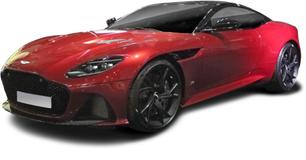
Hidden within a maze of black velvet drapes at a low-key, inner-city Sydney location sat the famous British brand’s new flagship, a stunning 2+2 GT with the performance, dynamics and luxurious quality to match its exotic looks and $500K+ price tag.
On that day, for whatever reason, I never thought the opportunity to steer it would come my way. But two years later, almost to the day, the key to this ‘Sabiro Blue’ beauty was mine.
The DBS Superleggera sits at the top performance coupe table, mixing it with Bentley, Ferrari, and Porsche’s finest. But maybe you already have one (or more) of those. Which begs the question, does this imposing V12 machine do enough to qualify for an extra space in your garage?
The Chevrolet Corvette E-Ray offers hypercar-level performance, aggressive design and brilliant dynamics at a bargain-price relative to similarly-configured Euro exotics. Blending raw V8 grunt with front-axle electric power it delivers an exhilarating drive experience.
While things like ingress and egress are a challenge and warranty coverage is modest, the car’s immense capability makes it an attractive option for anyone wanting a high-performance mid-engine machine without the astronomical price tag of a ‘traditional’ supercar.
The Aston Martin DBS Superleggera is an instant classic, likely heading over a high-end auction block in years to come with a final price far higher than the 2020 ask. But don’t buy it as a collector's item, although it is a beautiful object. Buy it to enjoy. Stunningly fast, thoroughly engineered, and beautifully made, it’s a phenomenal car.
If you asked primary school me to draw a ‘supercar’ I’d likely hand you a roughly hewn, multi-coloured wedge in Egyptian frieze-style 2D that could be interpreted as a prescient rendering of the current Corvette E-Ray.
GM has confessed that a big part of its motivation for going mid-engine with the current-gen Corvette is to help it appeal to a younger target market (maybe not under-10s) and Chevrolet has enthusiastically embraced the low nose, wide high-tail stance. You’re not going to miss it.
The E-Ray, like its track-focused Z06 sibling, is longer (+58mm) and wider (+92mm) than the standard Corvette Stingray, with huge air intakes in the nose and deep gills behind the doors.
Its distinctly angular design retains enough Corvette DNA to keep the C8 in the family. The headlights are reminiscent of the C7 that preceded it and the dual tail-light design is a neat reinterpretation of that signature element. A clear engine lid showcases the longitudinally mounted V8’s bright red engine cover.
Far from a clean or curvaceous shape, the E-Ray is all business with function driving its fighter jet form. And that carries over to the interior with the driver-focused cockpit making no apologies for concentrating almost exclusively on the person behind the wheel.
Multiple screens wrap around the instrument binnacle with the flat top and bottom steering wheel affording a clear view of them all.
The jagged lift-up gear selector controls would be right at home in an F-22 Raptor and despite the layout’s relatively fussy look it works super-well ergonomically, with clearly marked buttons (haptic and physical) easy to sight and operate.
The term Superleggera (Italian for Superlight) is normally associated with Italian automotive coachbuilder Carrozzeria Touring, which has historically applied its fine eye and hand-crafted aluminium body technique to a host of local brands, including Alfa Romeo, Ferrari, Lamborghini, Lancia, and Maserati.
As well as some American, German, and British liaisons, the latter covering classic Aston Martin and Lagonda models through the 1950s and ‘60s (your Silver Birch DB5 is ready for you 007).
But rather than hand-beaten aluminium, here the body panel material is carbon-fibre, and the look and feel of this DBS is the product of Aston Martin’s head of design, Marek Reichman (his name might sound German, but he’s a Brit through-and-through), and his team at the brand’s Gaydon HQ.
Based on the DB11 platform the DBS is a fraction over 4.7m long, just under 2.0m wide, and less than 1.3m tall. But it’s only when you’re close to the Superleggera that its intimidating muscularity comes into focus.
A giant, black honeycomb grille defines the car’s face, and the single-piece forward-hinging ‘clamshell’ bonnet includes a raised central section defined by longitudinal strakes either side, with deep vents above the front axle line to aid the exhaust of hot air from the engine bay below.
Broad ‘shoulders’ around the front wheel arches are balanced by powerful rear haunches to give the car a beautifully proportioned and imposing stance. But there’s scientific function behind this purposeful form, too.
The Aston vehicle dynamics team went all out with wind tunnel testing, Computational Fluid Dynamics (CFD) modelling, aerothermal and performance simulations, as well as real-world track testing to refine this car’s aero efficiency.
The DBS Superleggera’s overall drag coefficient (Cd) is 0.38, which is commendably slippery for a brawny 2+2 GT. But it’s the fact that in parallel with that number it’s able to generate a humongous 180kg of downforce (at 340km/h VMax) that’s remarkable.
The aero trickery includes a front splitter and airdam working in unison to accelerate airflow under the front of the car, delivering downforce and cooling air to the front brakes.
From there the ‘open stirrup and curlicue’ device at the top of the front wheel wells vents air to reduce lift, and create vortices which reattach the aero wake from the front wheels to the side of the car.
The ‘C-Duct’ starts with an aperture behind the rear side glass funneling air through the underside of bootlid to a subtle ‘Aeroblade II’ spoiler at the rear of the car. A close to flat underside also feeds air to an F1-inspired double diffuser under the rear end.
No gaudy wings or giant spoilers, just a subtly effective and thoroughly engineered aero profile.
Slim but distinctively Aston Martin LED tail-lights combine with a series of horizontal character lines across the rear to enhance the car’s visual width, and giant 21-inch dark rims fit the car’s proportions perfectly.
Slipping behind the wheel is the full hand-in-leather glove experience. The broad dashtop is split by a vaguely teardrop shaped centre stack with the classic ‘PRND’ transmission buttons and an illuminated push-button starter in the centre.
The compact instrument binnacle, housing a configurable digital display, imparts a quiet sense of purpose, and the Mercedes-AMG sourced media system, complete with rotary control dial, feels familiar. Overall, simple, subtle, yet hugely impressive.
Practicality is a relative concept when you’re looking at a two-seat, mid-engine sports car, which means the Corvette E-Ray is not functional in the Kia Carnival sense. But there are some concessions to the need to store things inside it.
In terms of storing people, getting in and out of a C8 Corvette isn’t exactly straightforward. The car sits close to the ground, which despite decent door apertures, means to gain access you’re lowering yourself across and into the heavily bolstered seats using an ungainly, vaguely yoga-style technique. Same goes on exit with more than a little grunting required to hoick yourself out of the car. Not an easy proposition for a daily driver.
Once inside, headroom for me at 183cm is good and for storage there are slim pockets in the doors (with no scope for bottles), two cupholders in the centre console and an oddments tray ahead of them. The glove box is a good size, a lidded box between the seats houses USB-A and USB-C outlets and there’s an awkward-to-use upright wireless phone charging slot between the seat backrests.
Boot volume is 204 litres, unless you’ve removed the roof panel and clipped it into its storage position there. A surprisingly easy process, by the way. If that’s the case you’ll be leaning more heavily on the 142-litre frunk. Overall storage capacity of around 350L is pretty handy for a car of this type.
Not surprisingly, given the scale of this car’s wheel and tyre package, there’s no spare. The Michelin Pilot Sport 4S tyres are run-flats.
And substantial practicality points go to the front lift system which, via the press of a console button, rapidly raises the car’s nose by 50mm to help avoid driveway and speed bump scrapes.
The notion of practicality doesn’t naturally align with a 2+2 GT, but a wheelbase measuring 2805mm means there’s enough space between the axles to provide generous accommodation for front seat occupants at least.
And the usual compromises presented by long coupe doors are reduced by the DBS’s swinging slightly up as they open, and down as they close. A genuinely useful touch.
The driver and front seat passenger are snug but not cramped, which feels right in this context, and they’re provided with a lidded central box, which doubles as an armrest between the seats.
Flick the switch and its power-operated top slides back in stages to reveal two cupholders and a general storage space with a 12V power outlet, two USB-A ports, and an SD card input at the rear.
There’s a small coin tray in front of the multimedia dial in the centre console and long door pockets, but bottles will be a struggle unless you’re happy to lay them on their side.
The ‘+2’ seats scalloped out of the rear bulkhead, look super cool (especially with our car’s Triaxial quilt trim) but for anyone in the vicinity of average adult height they’ll feel distinctly inadequate.
Legs or a head aren’t viable options so this space is best reserved for the kids. And there are two 12V sockets in the rear to help keep their devices charged, and them calm.
Boot volume is a useful 368 litres, and the aperture curves forward at the top which helps with loading larger cases, but remember the rear seats don’t fold.
There are small lockers hidden in the back wall, one containing a flat tyre repair kit, so don’t bother looking for a spare of any description.
In the US the Corvette E-Ray is offered in three imaginatively titled trim levels - 1LZ, 2LZ and 3LZ in coupe and power-folding hardtop convertible form.
Australia takes the top-spec 3LZ coupe only, priced at $292,990, including GST and LCT but before on-road costs.
If your heart’s set on a full-convertible Corvette you’ll need to opt for the non-hybrid Stingray ($232,990, BOC), but the coupe’s targa-style, lift-out roof panel gets you most of the way there, anyway.
Aside from the safety tech we’ll get to shortly, that figure gets you a heap of standard fruit, the highlights including:
Other, similarly-configured ways to accelerate from 0-100km/h in less than three seconds cost twice as much as the E-Ray. Ferrari 296 GTB? Prepare to part with $604K. Lamborghini Temerario? You’ll need to cough up $534,169. Porsche 911 Turbo S Coupe? It’s $577,300.
On that basis, this Corvette is a supercar bargain.
The DBS Superleggera is like a finely tailored suit. Impressive, but not flashy, while the finish is impeccable, the materials used are top-shelf, and attention to detail is remarkable. And like anything that’s been carefully crafted and largely hand made, the price is substantial.
Before on-road costs like registration, dealer delivery charges, and compulsory insurance, this Aston will set you back $536,900.
The $500K ballpark contains some heavy-hitting competition, the most closely aligned being Bentley’s 6.0-litre W12-engined Continental GT Speed ($452,670), the 6.3-litre V12-powered Ferrari GTC4 Lusso ($578,000), and Porsche’s 3.8-litre twin-turbo flat-six 911 Turbo S ($473,900). All 2+2s, all insanely fast, and bristling with luxury features.
So, aside from the safety and dynamic tech detailed later in this review, what does this special DBS deliver in terms of standard equipment?
First, there’s the Aston Martin, nine-speaker premium audio system (including 400W amp and digital radio, but no Android Auto or Apple CarPlay), a multimedia system managed via an 8.0-inch LCD screen and console touchpad/dial controller system (sourced from Mercedes-AMG), satellite navigation, a Wi-Fi hub, and a 360-degree camera with ‘Parking Distance Display’ and ‘Park Assist.'
Standard upholstery across the seats, dash, and doors is ‘Caithness’ leather (Aston says a dry-drumming process gives it a particularly soft feel) combined with Alcantara (synthetic suede) and ‘Obsidian Black’ leather on the faceted (think square-ish) sports steering wheel, finished off with the DBS logo embroidered into the headrests.
The ‘Sports Plus’ performance seats (with memory) are 10-way electrically-adjustable (including lumbar) and heated, the steering wheel adjusts electrically, ‘interior jewellery’ (trim elements) are ‘Dark Chrome’, and cabin inlays are ‘Piano Black.’
Also included are a configurable digital instrument display, dual-zone climate control, keyless entry and start, rain-sensing wipers, cruise control (not adaptive), auto LED (high and low beam) headlights and DRLs, as well as LED tail-lights and dynamic indicators.
The ‘Exterior Body Pack’ consists of gloss-finish carbon-fibre across the rear bumper, bootlid flap spoiler. rear diffuser, and front splitter, and the standard rims are 21inch forged ‘Y spoke’ alloys, with (big) dark anodised brake calipers behind them.
All up, a subtle and exclusive approach to an equipment package that’s as much about the overall quality of the car’s design, engineering, and execution as it is about individual features.
But on the subject of features, ‘our’ car was kitted out with a series of special options, namely: Bang & Olufsen audio - $15,270, ‘Leather colour option special’ ‘Copper Tan’ (metallic) - $9720, contrast stitching - $4240, vented front seats - $2780, power seat bolsters - $1390, Triaxial quilting - $1390, headrest embroidery (Aston Martin wings) - $830.
That’s $35,620 worth, and there were still other boxes ticked, like a colour keyed steering wheel, smoked rear lamps, plain leather headlining, ‘Shadow Chrome’ rims, even an umbrella in the boot... but you get the idea.
And if you really want to personalise the car, ‘Q by Aston Martin’ offers a collection of “unique enhancements beyond the scope of the core option range.” Then ‘Q Commission’ opens up a bespoke, atelier-style collaboration with the Aston Martin design team. Possibly an entirely custom car, or just machine guns behind the headlights.
The Corvette E-Ray is powered by a mid-mounted 6.2-litre, naturally aspirated ‘LT2’ V8 featuring dry sump lubrication, a billet steel crank, forged conrods and variable valve timing for 369kW (at 6450rpm) and 637Nm (at 5150rpm).
It sends drive to the rear wheels via an eight-speed dual-clutch auto transmission with (carbon) paddles on the steering wheel for manual shifting.
A single 119kW/170Nm electric motor on the front axle contributes to total outputs of 488kW/806Nm and delivers ‘eAWD’.
Claimed 0-100km/h acceleration time is a sizzling 2.9 seconds.
The DBS Superleggera is powered by an all-alloy, 5.2-litre twin-turbo V12, featuring dual-variable camshaft timing and direct-injection to produce 533kW (715hp) at 6500rpm and 900Nm from 1800-5000rpm.
In line with the personal nature of this car’s build, a brushed metal plaque sits on top of the engine, proudly stating ‘Hand built in England’, and noting that a final inspection was carried out (in our case) by Alison Beck.
Drive goes to the rear wheels via an alloy torque tube and carbon propshaft to a (ZF-sourced) eight-speed automatic transaxle, incorporating a mechanical limited-slip differential, with manual shifts available via wheel-mounted paddles.
The Corvette E-Ray’s official fuel consumption figure for the combined (urban/extra-urban) cycle is 11.5L/100km.
The car’s Active Fuel Management system is able to subtly drop four cylinders under light loads, a small V4 (rather than V8) light on the dashboard the only clue this sleight-of-hand trick has been performed.
Auto stop-start is also standard, although we admit to switching it off (via a haptic button on the dash) most of the time. And purely in the name of science and fully exploring the car’s performance potential we may have leaned into the E-Ray’s dynamic abilities more than once.
Overall, across a week of mainly city and suburban running with some freeway sections thrown in, we recorded an on-test average of 13.5L/100km, which is still more than acceptable for this type of performance car.
Brim the 70-litre tank with minimum 95 RON premium fuel and using our real-world figure you can expect a driving range of around 520km.
The E-Ray features a 1.9kWh lithium-ion battery, self-replenished from coasting and braking, allowing an EV-only (and neighbour-friendly) ‘Stealth Mode’ for four to six kilometres at a maximum of 72km/h.
And there’s a ‘Shuttle Mode’ (not suitable for public roads) which also engages just the front axle on electric power for moving silently around a driveway or into a garage to a speed of 24km/h.
Claimed fuel economy for the combined (ADR 81/02 - urban, extra-urban) cycle is 12.3L/100km, the DBS emitting 285g/km of CO2 in the process.
In just under 150km with the car, covering city, suburban and freeway running (as well as a sneaky B-road session) we recorded an average of 17.0L/100km, which is a sizeable number, but kind of expected for a roughly 1.7-tonne, V12-powered meteor on wheels.
Stop-start is standard, minimum fuel requirement is 95 RON premium unleaded, and you’ll need 78 litres of it to fill the tank (which translates to a real world range of approximately 460km).
Let’s get the acceleration thing out of the way. The Corvette E-Ray is obscenely fast. If you’re determined to bend the space-time continuum, it’s keen to assist.
Claimed 0-100km/h time is just under three seconds but on a closed track using launch control we’ve previously recorded a time of 2.4sec, which is hypercar territory.
The big V8’s furious roar is amplified by the standard performance exhaust and the dual-clutch auto is a slick, positive, high-quality unit. Manual shifts via the wheel paddles are rapid-fire.
Suspension is by forged alloy double wishbones front and rear with magnetic adaptive damping standard, the latter allowing you to dial in Sport, Touring, Track and Weather modes as well as two customisable settings - MyMode for everyday driving and the performance-focused Z Mode.
Weather optimises the car’s systems for slippery conditions, as its name implies, and Track is best left for the circuit as it’s unbearably harsh on anything less than a billiard table smooth surface. Sport is more liveable but the pick is Touring which retains the car’s fundamental agility while providing excellent compliance.
Shudder over patched suburban roads in Sport then switch to Touring to illustrate an amazingly forgiving ride.
Despite its aluminium-rich space frame, the E-Ray still weighs in at 1800kg but it responds like a lightweight. The steering is brilliantly precise without being overly sharp and road feel is superb. In terms of cornering, the C8 Corvette is the quintessential apex predator.
Thanks in no small part to an electronic limited slip differential the E-Ray puts its power down on corner exit with impressive force and grip from the monster Michelin Pilot Sport 4S rubber is prodigious.
The tyres measure 275/30x20 at the front and no less than 345/25x21 at the rear, bearing in mind a current F1 car’s rear tyres are 375mm across the tread.
Brakes are also professional grade with carbon ceramic rotors (398mm fr / 391mm rr) clamped by Brembo six-piston alloy calipers at the front and four-piston units at the rear. While some carbon set-ups need to be at a high temperature for optimal performance there are no such worries here. The E-Ray washes off speed with prodigious yet satisfyingly progressive power.
Worth noting if you’re a track day demon, there’s an ‘Enhanced Performance Data Recorder’ and ‘Performance App’ that jointly provide everything from side-by-side video analysis and graphical data displays to tyre temp and pressures and even coaching tips.
‘Performance Traction Management’ also allows you to fine-tune traction and stability controls to suit specific track conditions.
Under the heading of miscellaneous observations; the GT2 seats are grippy yet supremely comfortable, an 11.1m turning circle is sizable and over-the-shoulder rear three-quarter vision is limited, although there’s enough camera coverage to minimise the problem for parking.
Once you dip under three and half seconds for the sprint from 0-100km/h strange things happen to your field of vision. Faced with that kind of acceleration, it instantly narrows, your brain instinctively focusing attention on the road ahead because it senses something borderline unnatural is going on.
Claiming just 3.4sec for the DBS Superleggera to hit triple figures (and 0-160km/h in 6.4sec!) we felt obliged to validate the number, and sure enough peripheral vision blurred into nothingness as this brutal machine delivered its shock and awe performance.
And the aural accompaniment is suitably intense, thanks to the electronically-controlled (stainless steel) exhaust, with active valves and quad tail pipes, orchestrating the brilliantly guttural and raucous ‘sound character.’
Pure pulling power is immense with all 900Nm of maximum torque available from just 1800rpm all the way to 5000rpm. Mid-range urge is prodigious, and Aston claims the DBS Superleggera will blast from 80-160km/h (in fourth gear) in 4.2 seconds. That’s a number I didn’t verify, but I’m not going to doubt it.
It might share essentially the same bonded aluminium chassis, but thanks to its carbon-rich bodywork the DBS Superleggera is 72kg lighter than the DB11, with a ‘dry’ weight (no fluids) of 1693kg. The engine is also set low and far back in the chassis, to the point where it’s actually a front-mid location, delivering a 51/49 front/rear weight distribution.
Suspension is double (forged alloy) wishbone front, multi-link rear, with adaptive damping standard, and there are three set-up stages available via the flick of a switch on the left-hand side of the steering wheel.
On the opposite side of the wheel a similar mode control allows you to cycle through ‘GT’, ‘Sport’, and ‘Sport Plus’ settings, tuning various functions including the throttle map, exhaust valves, steering, traction control, and shift response. Steering is speed-dependent electrically-assisted.
Brakes are professional grade vented carbon ceramics, with thumping 410mm rotors at the front clamped by six-piston calipers, and 360mm discs at the rear sporting four piston calipers.
Managing this car’s phenomenal thrust as it morphs into lateral g-force, is a surprising experience. Of course, it grips like a Trump handshake, with a specific ‘A7’ version of Pirelli’s ultra-high performance P Zero tyre on a 21-inch forged alloy rim at each corner.
The 265/35s at the front are big, and monstrous 305/30s at the rear deliver a strong mechanical connection with the road. But it’s the car’s steering and overall agility that’s unexpected.
It doesn’t feel like a beefy 2+2 GT. And while it’s not in the 911’s league when it comes to response and dynamic feedback, it’s a long way down that road.
I found Sport and the middle suspension setting to be the backroad sweet spot, and with the seven-speed auto in manual mode the lightweight DBS simply lights up.
Shifts on the way up the ratios via proper alloy paddles in manual mode are rapid and precise, and the car remains stable and balanced, yet entertainingly athletic in enthusiastic cornering.
When squeezed hard on initial application carbon ceramic brakes don’t ‘bite’ in the same way steel discs do, but the system’s ability to rapidly wash off speed, while the car remains in a steady state, is exceptional.
At the same time, shifts down through the gears are accompanied by a variety of aggressive pops and bangs (a feature of Sport and Sport Plus modes) and the DBS points accurately yet progressively into a bend.
Road feel is excellent, the sports front seat is grippy and comfortable, and the car’s ‘Dynamic Torque Vectoring’ (via braking) system chips in to ensure understeer is kept in check.
In a more sedate mode, thanks largely to the active dampers, the Superleggera is surprisingly comfortable around town, despite the big rims and low-profile rubber.
Under the heading of ‘random thoughts’, the simple interior layout (including the spot-on digital instrument cluster) is great, the auto stop-start is a little jerky on restart, and including the front air dam, ground clearance under the nose is only 90mm, so be mega-careful in and out of driveways, or prepare yourself for the sound of scraping carbon (happily avoided this time around).
No surprise, given the Corvette’s relatively low volume, it hasn’t been assessed by ANCAP but active (crash-avoidance) safety tech includes:
The airbag count is four, front and side for driver and passenger, which is fair enough for a two-door sports car.
For the record, no child seat top tether or ISOFIX anchor for the passenger seat.
The Aston Martin DBS hasn’t been assessed by ANCAP or Euro NCAP, but the ‘expected’ array of active safety tech is in place including ABS, EBD, and BA, as well as traction and stability controls.
There’s also blind spot monitoring, a tyre pressure monitoring system, a 360-degree camera with ‘Parking Distance Display’ and ‘Park Assist.’
But more recent crash-avoidance tech like active cruise control, lane-departure warning, rear cross-traffic alert, and most notably, AEB, are missing in action.
If an impact is unavoidable there are eight airbags to help protect you - dual-stage driver and front passenger, front side (pelvis and thorax), front knee, as well as two-row curtain.
Both rear-seat positions offer top tethers and ISOFIX anchors for secure baby-capsule or child-seat location.
GMSV’s warranty cover for the Corvette sits at three years/100,000km which is woefully under-done, even in the context of high-dollar sports cars.
For example, Aston, Ferrari, Lambo, McLaren and Porsche, while still at three years, offer unlimited-kilometre cover.
Service is recommended every 12 months/12,000km, the average annual price for the Corvette coming in at around $1100 over the first few years, largely because the first and every second service thereafter is a major one, including things like a transmission fluid change.
That’s way lower than most mid-engine Euros and it’s important to note service price will vary according to the car's use, different state and territory labour rates and other factors.
There are around 55 GMSV dealers in Australia focused on capital cities as well as major regional and rural centres.
In Australia, Aston Martin offers a three-year/unlimited km warranty, with 24-hour roadside assistance included for the duration.
Servicing is recommended every 12 months or 16,000km, whichever comes first.
Aston also offers extended service contract options, renewable after 12 months, including features like transfers and accommodation in the event of a breakdown, and coverage while the car is being used at official Aston Martin events.
There’s also a collection and delivery service (or courtesy car) to sweeten the servicing deal.