What's the difference?
BYD has made a big impact in a short space of time in Australia and the arrival of this all-new mid-size SUV opens the door for an even bigger future.
BYD has taken the fight to Tesla in the electric vehicle contest, and while still some margin behind the American brand the Atto 3 and Seal remain amongst the most popular rivals to the Model 3 and Y, respectively.
At the same time it has out-sold established brands including Honda, Skoda and Renault, as well as fellow Chinese newcomers LDV and Chery.
Now BYD has its sights set on upsetting the established order in one of the biggest segments in the Australian market - mid-size SUVs.
The Sealion 6 is not a name that rolls off the tongue but it does leave an impression, as does the car, as we discovered when we drove it.
Few cars have had the sheer staying power of the Suzuki Swift.
Except for a four-year hiatus as the original Ignis from 2001, the Japanese supermini has been a segment mainstay since 1983, winning over consumers worldwide as an inexpensive, economical and reliable yet fun option in the Toyota Yaris class.
In Australia, its impact has been even more profound, providing Holden with its famous “beep-beep” Barina for two early iterations from 1985, while also introducing us to the pocket rocket decades before the Volkswagen Polo GTI, with the Swift GTi of 1986.
Now there’s this – the sixth-gen model in 41 years if you exclude that Ignis – doing what the little Suzuki has always done: offering buyers a great budget alternative. But this time, in this new-electrification era, where precious few attainable choices remain.
Is it any good? Let’s dive straight in.
So, should Toyota, Tesla, Hyundai and others be worried about the arrival of the Sealion 6 and BYD’s new DMi powertrains? Yes, but not because it represents any major breakthrough in technology or dynamic prowess.
Instead, the strength of the Sealion 6 is how average it is. It may not be the obvious class-leader in any particular area, but it does a good job in almost every measurable aspect and doesn’t possess any major flaws.
Yes, there are still questions about the long-term dependability of BYDs but that’s a risk any new owner will need to accept. But the very sharp pricing should tempt plenty of buyers to take that chance and continue BYD’s steady upwards trajectory in the Australian market.
So, there you have it. A brief look at the new, sixth-gen Swift.
Better where it needs to be, the supermini survivor still remains competitively priced, with loads of new efficiency and safety tech that buyers will appreciate.
But, most of all, the Suzuki still feels, drives and rewards like the old model used to. It just does so with more sophistication.
As inexpensive city cars continue to fade, the new Swift continues 41 years of providing a fun, affordable and dependable solution, in a vibrant and desirable package.
This is one area where BYD has a mixed record. Not to be unkind or create an international incident, but the Chinese car industry has a history of not being totally original with all of its automotive designs.
However, things are improving and the Sealion 6 is a good example of the Chinese industry learning to develop its own style. While there are some subtle hints from European models, overall it’s a smart-looking mid-size SUV with some character to it - rather than being a bland imitation of something else.
One area where the Sealion is a cut above its competition is its size, being longer than and wider than the RAV4, Mitsubishi Outlander and Nissan X-Trail.
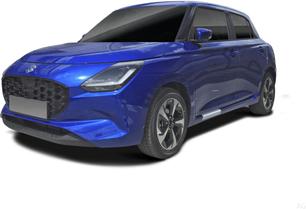
At first glance, the new one looks a lot like the old one. Short overhangs, long wheelbase, upright A-pillars, that signature 'floating' roof. This could be nothing else but a Swift.
Obviously, though, every single panel has changed, resulting in a stronger, quieter and more aerodynamic body.
Helping communicate this is a new and very definite crease line added to create a more-pronounced shoulder. The bonnet seems to be more clamshell-like and the nose is squarer, too. Indeed, everything about the overall styling seems to be more upright.
Debate is already raging in some circles. Is the new Swift too fussy? Too conservative? Has it lost the playful boldness of the proceeding version's gently-sculptured sides and hidden rear-door handles? Are the proportions slightly out now? Has the previous design integrity and oneness of vision been diluted? Does the 2017 predecessor look better?
Underneath, the platform is essentially the same, while overall dimensions are largely identical except for a 20mm stretch and 25mm roof lift. Length, width, height and wheelbase numbers 3860mm, 1735mm, 1520mm and 2450mm, respectively.
Happily, the aesthetic changes inside are likely to please rather than perplex, and even delight rather than divide opinion.
That external size translates to a roomy cabin, which also has some flair to the design but thankfully a bit more restrained than the smaller Atto 3 - which is a bit over-the-top in this reviewer’s opinion.
The element that sticks out immediately is the large central touchscreen which, like other models in the range, can rotate either vertical or horizontal, depending on your preference.
I don’t understand the point of this, because when rotated vertically it impacts your forward vision and can interfere with the air conditioning vents; and I can’t even see it with my polarised sunglasses.
It simply makes more sense horizontally, but I guess all carmakers are looking for catchy gimmicks these days. But while it may seem like a cool party trick it remains somewhat confusing to me, like one more thing to go wrong. But maybe I’m just getting old and grumpy.
What I do like and think is a great idea is double smartphone charging pads in the centre console. And overall the design of the cabin feels well thought out and has plenty of useful storage areas.
The seats are fine, a little flat and the fixed headrests are irritating, but overall they’re soft and supportive enough.
The key in the second row seating is the amount of space, with the extra length of the Sealion 6 compared to its rivals showing up with more knee room in the back for families with growing teenagers or those who need to carry their adult friends.
There’s also a pair of USB ports in the back too, so everyone can keep their electronics charged.
The boot is a good size, measuring 425 litres on paper, and has a nice long and wide floor. But some of that space is thanks to the lack of a spare - so that counts against it in my book.
From a packaging perspective, the latest Swift carries on from before, and that’s no bad thing. It remains exceptionally roomy as well as practical.
To that end, entry and egress are easy, there’s a sense of spaciousness thanks to deep windows, a high ceiling and lofty seating, while the latter also helps provide an agreeable driving position. Storage and ventilation are provided in abundance.
For many people, the dash redesign reflects a big change in attitude, having finally grown up and away from the previous cheap and cheerful look. Highlights include pleasing seat fabrics, interesting textures and a sense of quality craftspersonship, within a stylish and sweeping design. After 41 years, the Swift has matured gracefully.
It’s also worth pointing out the super-clear analogue instrumentation dials, supported by a digital speedo and configurable trip computer data; actual buttons for the heating and air-conditioning system and – joy of joys – a handbrake lever.
Plus, if you want to turn off the various beeps from the driver-assist systems, physical buttons are but a simple press away. No distracting sub-menu searches within fiddly touchscreens here, thanks.
Except if you want to change the volume because you’ll need to prod the screen after all. The knob is always the better option, Suzuki.
What else? The rear bench area is a little plain but surprisingly roomy for this class of light car. Probably more so than a Corolla provided back in the early 2000s, with a decent level of cushy support for two people or three at a squeeze.
Given the extra specification, even the cheapest grade is all the Swift you’ll need. A sign of a democratic car.
But keep in mind the base variant no longer comes with a driver’s seat adjuster, passenger vanity mirror and multiple USB ports found in the Plus and GLX versions, while it is alone with a clammy plastic rather than leather-sheathed steering wheel rim.
At least cargo capacity edges up, by 23 litres to 265L (VDA), and that’s just under the luggage cover, thanks to some clever repackaging of a now-lower boot floor and internal tailgate panels. Drop the rear backrests and that expands to 569L.
Note, however, that for the Swift to achieve its sensationally low kerb weight that starts from just 919kg (up around 50kg), it now uses a fiddly and frankly-inadequate tyre repair kit. Thankfully, Suzuki offers that space-saver spare, at extra cost (and mass) of course.
Still, keeping those kilos low pays high dividends when it comes to performance and economy.
Price is key to BYD’s success in Australia. Quite simply, the Chinese brand has undercut its rivals and consumers have responded to that, unsurprisingly in these tough economic times. The Sealion 6 follows the same path blazed by the Atto 3, Dolphin and Seal, offering plenty of vehicle for your money.
BYD Australia has kept it really simple, offering just two models - Dynamic and Premium - with very similar specification and separated primarily by powertrains.
The Dynamic is a less powerful, two-wheel drive option, while the Premium gets more grunt and all-wheel drive; but we’ll detail that later.
Both the Dynamic and Premium come with 19-inch alloy wheels, power-operated tailgate, a panoramic sunroof, powered front seats that are heated and cooled, a 15.6-inch touchscreen, Infinity premium audio, two wireless phone chargers and wireless Apple CarPlay and Android Auto.
The only non-powertrain difference between Dynamic and Premium is a head-up display on the latter model.
One noticeable absence from the Sealion though is a spare tyre. There’s not even a space-saver, just a tyre repair kit, which is disappointing and out of touch with the unique demands of the Australian market.
The Dynamic is priced from $48,990 (all prices exclude on-road costs), while the Premium starts at $51,990.
To put that into context with its competition, the Toyota RAV4 Hybrid range begins at $42,250 for the GX and stretches to $51,410 for the range-topping $51,410.
While, if you’re looking at an electric alternative, the Tesla Model Y currently starts at $55,900. The most direct rival, however, is the Mitsubishi Outlander PHEV which is only available with all-wheel drive and stretches from $57,290 to $73,790 across five variants.
So. Why are there so few affordable city-sized superminis like the Swift?
Just 10 years ago, the Swift had at least 25 rivals under $25,000. Today that’s phonetically as well as literally down "t(w)o" "three" – namely, the ageing but still-surprisingly-spry Mazda2 and intriguing all-new MG 3, as well as Australia’s sole sub-$20K new car, Kia's darling Picanto.
Many of the Class of 2014 have since morphed into pint-sized crossover hatchbacks like Suzuki’s soon-to-be-discontinued Ignis, the Hyundai Venue and Kia Stonic. And if you must, there are also the cheerless MG ZS and ancient Mitsubishi ASX biggish-small SUVs – but they’re cheapo for a reason.
Unlike the latest Swift... which, from $24,490 drive-away, is more than reasonably cheap, since it introduces some electrification tech across the whole range, while still being around the same price as the old base GL.
This now makes the new Swift Australia’s cheapest 'hybrid'.
Granted, despite wearing the Hybrid badge on every grade, it’s just a mild hybrid system, but one that provides extra electrification to usefully boost performance and economy for the all-new powertrain and revised transmissions. More on all that later.
What else? The base Swift at last gains LED lights, telescopic as well as tilt steering adjustment and important driver-assist safety like Autonomous Emergency Braking (AEB), along with lane-support systems, adaptive cruise control and rear parking sensors.
Also included now are keyless entry/start, a 9.0-inch touchscreen as part of a new multimedia set-up, wireless for Apple CarPlay (but not for the Android Auto), a digital radio, heated mirrors, traffic sign recognition, auto high beams and an alarm.
And there's more. The entry-level Swift Hybrid is also class unique in offering a manual gearbox. Good on you, Suzuki.
Not for you? Don't worry, because the Hybrid auto that is expected to be the bestseller starts from $26,990, drive-away. For the record, that’s only about $1000 more than the equivalent old version but with all that extra gear to boot.
But, beware, the base-model Hybrid alone lacks a few items that may or may not have been standard in the outgoing Swift, such as a driver’s seat-height adjuster, leather-wrapped steering wheel, privacy glass, alloy wheels, front passenger vanity mirror, front-seat map pockets, multiple USB charging outlets and a spare wheel (though you can pay extra for one as the wheel-well remains).
All of the above, except the missing spare, are included in the new Hybrid Plus auto grade, from $28,490 drive-away, along with heated front seats and additional driver-assist tech like a blind-spot monitor. We’ll get into more detail in the Safety section below.
Finally, there’s the Hybrid GLX auto, with its wireless phone charger, folding exterior mirrors, steering wheel paddle shifters, climate control, glossy alloys and more from $29,490, drive-away.
Sadly, the terrific old GLX 'BoosterJet' three-cylinder turbo is no more, and there might not even be a new Swift Sport to continue the GTi hot-hatch legacy.
Still, Suzuki’s managed to keep the entire range under $30K drive-away, despite big changes inside and out. Let’s check those out.
While BYD has made its name in Australia as an all-electric brand it has always referred to itself as a 'new energy' company, and the Sealion 6 (and upcoming Shark ute) are why.
That’s because these feature BYD’s new 'Dual-Mode Intelligence' (DMi) powetrain - a hybrid system to you and me.
As mentioned above, the biggest difference between the Dynamic and Premium models is the powertrain, with two reasonably different systems.
The Dynamic is powered by a 78kW/135Nm 1.5-litre four-cylinder petrol engine, paired with a 145kW/300Nm electric motor - making for a combined system output of 160kW/300Nm. Notably, this powertrain only drives the front wheels.
In contrast, the Premium has an all-wheel drive set-up, combining a turbocharged version of the petrol engine (good for 96kW/220Nm) with a pair of electric motors, one on the front axle and one on the rear to produce a combined output of 238kW and 550Nm.
Both models get the same 18.3kWh ‘Blade’ battery, which is BYD’s proprietary technology underpinning all of its models and is attracting attention from other brands.
For reference, the Outlander PHEV has a 20kWh battery, Nissan’s X-Trail e-Power has a 2.1kWh battery, while the more conventional RAV4 Hybrid has just a 6.5Ah battery.
If there’s one area where Suzuki shines, that’s in making sweet little engines, and the new, chain-driven, 1197cc 1.2-litre mild hybrid three-cylinder petrol unit is no exception.
Now, on paper, 61kW at 5700rpm and 112Nm at 4500rpm may seem slightly lacking. A Mazda2 manages to make nearly 35 and 30 per cent more power and torque, respectively.
But the Swift's new 'ISG' integrated starter/generator/electric motor unit delivers an additional 2.3kW and 60Nm.
Combined with the hatchback's comparative lightness, it makes for a sufficient power-to-weight ratio of between 63 and 66kW per tonne.
Or, in other words, it provides some welcome extra low-down muscle.
Drive is naturally sent to the front wheels, via either a light-yet-positive shifting five-speed manual gearbox, or new CVT auto. Both have been heavily revised in their new roles serving the mild-hybrid powertrain.
There are multiple modes to drive it in, including electric only, with the Dynamic able to go up to 92km on a single charge, while the Premium manages a claimed 81km.
However, it's important to note these are the NEDC standards and not the more real-world like WLTP, so you may not achieve those in practice.
The claimed fuel consumption is an impressive 1.1L/100km for the Dynamic and 1.4L/100km for the Premium although again achieving those in the real world will take some effort.
With a 60-litre fuel tank BYD claims the Dynamic has a driving range of just over 1000km, while the Premium can manage around 960km.
It's also worth noting the Sealion 6 comes equipped with vehicle-to-load charging which means you can draw power from the batteries to run small electronic devices if you need to.
It’s a bonus feature that may or may not be of use, but is one of those things that may come in handy one day to get you through a camping trip or a BBQ at the park.
The latest Swift’s maturity does not end with its suave cabin presentation.
Prioritising high economy and subsequently low pollution, this Euro 6d-rated three-pot hybrid powertrain promises an astonishing combined fuel-consumption average of just 3.8 litres per 100km for the manual, and slightly more for the CVT at 4.0L/100km.
The results are 78 and 80 grams per kilometre of carbon dioxide emissions, respectively, along with around 970km between refills of the meagre 37L fuel tank.
These facts somewhat ease the pain of the need for more-expensive 95 RON premium unleaded petrol instead of the regular brew. High-tech solutions do require superior fuel, after all.
With just 70km on our ultra-tight test car’s odometer, the trip computer’s 6.7L readout is likely no indicator of the frugality we’re expecting to come.
So, how are such low consumption figures attainable? Along with better aerodynamics and a low kerb weight, the latest Swift Hybrid’s ISG hybrid unit generates supplementary electricity under acceleration, to ease the engine’s reliance on petrol.
It also recharges the 12-volt lithium-ion battery that lives beneath the front passenger-seat floor off-throttle via regenerative braking.
Note that the Suzuki never drives purely on electricity.
We drove the Sealion 6 Dynamic and despite having the less powerful powertrain it feels good on the road. The DMi system offers good performance, with quiet acceleration off the mark and a good integration between the petrol engine and electric motors. We haven’t driven the Premium yet, so we can’t make any comment on how different it feels.
It’s hard to make a definitive call on the Sealion PHEV powertrain because, like every plug-in hybrid, its greatest strength relies on how the owner operates it.
If you don’t charge the battery every day or so, you’ll just end up lugging around a battery and electric motor for little benefit. However, if you do keep the battery topped up, you can do most of your urban commuting without needing to turn the petrol engine on, which should result in some very low fuel consumption figures.
The company clearly knows this, which is why BYD Australia is offering a complimentary home charger to the first 3000 customers who order a Sealion 6.
Not only will that encourage sales but it will also help owners become evangelists for PHEVs in the future, because they’ll have the best possible experience.
So, a large part of its strength or weakness rests on the owner’s behaviour and that’s something we can’t assess.
As for the rest of the driving experience, the ride comfort is fine. It can’t match the class-leaders for compliance or dynamics, but the Sealion feels pleasant to drive around the urban environment and on the freeway at speed.
Biggest criticism is the steering is very, very light. While that makes parking easier, it feels so light you get very little feedback from the front wheels so it can feel vague at times.
Overall the driving experience is best described as fine. It doesn’t have any major vices but neither does it set any new benchmarks.
No Swift since 2004’s new-millennium redesign has been anything less than fun to punt around. A focus on driving pleasure and superior dynamics has helped make each version a cut-above most rivals.
Losing the smooth old 1.2-litre four-cylinder engine in the name of low consumption and emissions is a noble move. But how does this translate out in the real world, especially with a Swift fan behind the wheel?
It's mostly great, actually.
Losing a cylinder results in a slightly less creamy power delivery, especially as it’s accompanied by a distinctive three-cylinder exhaust-note thrum. But that’s still in keeping with the Swift’s endearingly sporty character.
Better still, even with all the examples we tested showing barely more than delivery mileage on the odometer, there seems to be more than enough grunt to please driving enthusiasts.
While not wanting to tax engines that weren’t even run-in yet, the charming revvy eagerness and instant throttle response remains, along with a discernible extra kick when accelerating away from standstill.
Even being so new, our Swifts proved to be lively, lusty and surprisingly rapid performers. We can’t wait to test run-in examples!
The five-speed manual is deliciously well-oiled and precise, immersing the driver into the Swift experience on another level compared to the CVT auto, which still manages to impress by responding quickly and effortlessly, without feeling laggy or droney. A lot like the old version.
Suzuki is making a lot of noise over how agile yet comfortable the newcomer’s handling and ride qualities are, as a result of improved rigidity and noise-dampening measures.
The Swift’s MacPherson-style front struts and torsion beam rear suspension systems have been revised with stronger and quieter mounts for better performance, while the electric steering has been retuned for greater feel and linearity.
The result? Even our limited time behind the wheel revealed tactile and precise steering, composed handling and extraordinary isolation from the road below for a car barely weighing 950kg (at most).
Combined with the nuanced driver-assist safety tech that rarely interrupted the fun, the latest Swift is a cheerfully animated, nimble and rewarding experience... and one that stands out all the more for evolving while so many other like-minded rivals like the Ford Fiesta have sadly fallen away.
Bravo, Suzuki. Generation Number Six remains the enthusiast driver’s choice, and a hybrid bargain to boot.
Both Sealion 6 variants come equipped with autonomous emergency braking, front and rear cross-traffic alert/braking, 'Forward Collision Warning', 'Rear Collision Warning', lane departure warning/prevention, blind-spot detection, traffic-sign recognition, door-opening warning, trailer stability control, auto high beam, a 360-degree monitor, adaptive cruise control as well as front and rear parking sensors. Plus, it can even detect if you’ve left a child or pet inside the car.
ANCAP had not crash-tested the Sealion 6 at the time of publication, but with its comprehensive list of safety items it should tick most of the boxes when it comes to protecting its occupants and pedestrians.
The latest, sixth-generation Swift has yet to be crash-tested by ANCAP.
Even the base Hybrid now includes driver-assist safety like AEB that includes night and day pedestrian and cyclist detection as standard, along with lane-departure warning, lane-keep assist, 'Weaving Alert' (a driver-drowsiness warning prompt), rear parking sensors, traffic-sign recognition, a reverse camera, automatic high beams and adaptive cruise control.
You’ll need to go Hybrid Plus for rear-cross traffic alert and blind-spot warning tech, though.
Note that Suzuki does not supply information about the AEB and other driver-assist tech’s operating parameters.
Also fitted are six airbags (dual front, dual front side and curtain), electronic stability control, anti-lock brakes with electronic brake-force distribution and brake-assist.
The rear seats also contain a trio of child-seat tether anchorages, as well as an outboard pair of ISOFIX attachments.
BYD is a small company but has partnered with mycar service centres to make maintaining your Sealion 6 easier. The Sealion is covered by BYD's six-year/150,000km warranty as well as its 10-year capped price servicing plan.
Service intervals are every 12 months/20,000km and prices range from $265 up to $1184 for the major eight year/160,000km tune up. Over the first five years, in keeping with most of its rivals, you’ll be paying $1648.
As I’ve written in previous BYD reviews, the biggest question mark hanging over the brand is arguably its long-term prospects. Quite simply, the brand is still too new to know how well it will perform on the used car market.
We also can’t tell you how it will hold up from a reliability point-of-view. We’re not suggesting there’s any doubt over its quality, but each car brand must prove itself reliable and dependable over time, and BYD hasn’t had that time yet.
Suzuki offers an industry-average five-year/unlimited kilometre warranty and roadside assistance.
Service intervals are every 12 months or 15,000km, while basic capped-price servicing is available, with the website showing pricing for the first five years and 100,000km averaging $391 per workshop visit.