What's the difference?
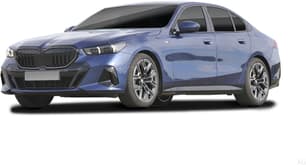
More than half a century of 5 Series pedigree has led BMW to this, the first electric version of its venerable sedan, the i5.
It's true that electric cars come with benefits that suit the realm of luxury (or at least executive) motoring like their effortless acceleration and near-silent operation, so this new G60 5 Series has the potential to be the best yet in its ‘i5’ form.
But there are rivals, well-liked ones at that, which BMW must contend with to snatch the spot at the top of the large premium sedan ladder technically held currently by the Porsche Taycan in terms of sales - though Mercedes’ E-Class would lead if its electric cousin EQE’s sales were combined.
So, with names like that to go up against, BMW better have brought its A-game.
Luxury vehicles are better because of the quality, reliability and care that Lexus has brought since 1990, upending the status quo like no other brand before.
The ES, however, has been an outlier.
Inexplicably inferior to the far-cheaper Toyota Camry on which it’s long been based on, the bloated mid-sized “Executive Sedan” series created especially for America ignored “The Relentless Pursuit of Perfection” ethos that Lexus originals like the LS, IS, LFA and even the most-recent NX have striven for.
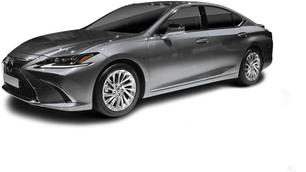
The eighth-generation ES redesign, however, is different, despite remaining Camry -ased, with an extended, beefed-up body and platform, multi-link rear suspension featuring adaptive dampers, an advanced new operating system that drags connectivity into this decade and an electric option.
Suddenly, the ES is poised to lure Polestar 2, Tesla Model 3 and Mercedes-Benz CLA buyers with a high-quality electric vehicle (EV) from Japan brimming with technology, refinements, space and features, at a price that cannot be ignored.
Has the ES finally understood the Lexus memo?
There’s no getting around the i5 being a rather expensive offering. More than $150,000 to get into an electric sedan that’s not much faster than a hot hatch is a big ask, but there’s plenty to enjoy about the 5 Series.
Things like its heated leather seats shouldn’t be the reason you’re willing to spend so much on a sedan when a $50,000 hybrid SUV will score you the same, instead it’s the fact the 5 Series is a delight to drive and hasn’t lost the feeling of prestige the badge has earned over the last half a century.
In terms of value - if speed isn’t your focus and you’re less of a gadget-type-operator when looking at cars like this - the 520i has the style and comfort you’d need and at $100K less than the M60.
And in terms of large electric sedans, the i5 eDrive40 is cheaper than a Porsche Taycan (by a little) or an Audi e-Tron (by a lot). The Genesis G80 Electrified is the closest cheaper rival, by about $10K, or the less powerful Mercedes EQE is similarly priced at $154,900.
Essentially, if you’re looking at a 5 Series, it might be worth considering if you really need it to be electric, but if so, there aren’t many alternatives in its category for the price.
Note: CarsGuide attended this event as a guest of the manufacturer, with meals provided.
Since launching in Australia in 1992, the ES has always felt like what it clearly was: an overpriced and overblown Camry that never quite drove well enough to justify its premium positioning.
It felt sub-Lexus in most of the ways that mattered.
The ES350e, however, builds on the Camry basics with unique styling, packaging, steering, suspension and powertrain, while evolving the technology and luxury with the times.
A few ergonomic missteps aside, this is by far the best version ever, and an exceptional value proposition to boot.
In EV guise at least, four decades and eight generations in, the ES has finally come of age.