What's the difference?
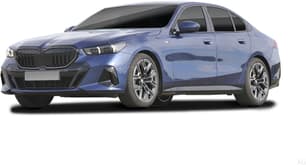
More than half a century of 5 Series pedigree has led BMW to this, the first electric version of its venerable sedan, the i5.
It's true that electric cars come with benefits that suit the realm of luxury (or at least executive) motoring like their effortless acceleration and near-silent operation, so this new G60 5 Series has the potential to be the best yet in its ‘i5’ form.
But there are rivals, well-liked ones at that, which BMW must contend with to snatch the spot at the top of the large premium sedan ladder technically held currently by the Porsche Taycan in terms of sales - though Mercedes’ E-Class would lead if its electric cousin EQE’s sales were combined.
So, with names like that to go up against, BMW better have brought its A-game.
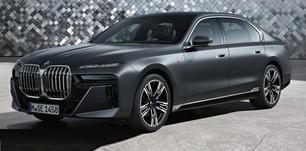
The BMW 7 Series is Munich’s flagship, the car that fans of the blue and white roundel respect as peak plush motoring.
Now, for the seventh 7 Series, BMW has brought electric power to the table in the form of the i7 in order to stay ahead of the curve.
It’s still joined by a petrol-powered variant here in Australia, the 740i, which is a mild hybrid and shares a lot of the luxury specifications of the i7 - including a properly impressive rear seat theatre screen.
But is it forward-thinking enough to fend off the likes of the Mercedes EQS?
There’s no getting around the i5 being a rather expensive offering. More than $150,000 to get into an electric sedan that’s not much faster than a hot hatch is a big ask, but there’s plenty to enjoy about the 5 Series.
Things like its heated leather seats shouldn’t be the reason you’re willing to spend so much on a sedan when a $50,000 hybrid SUV will score you the same, instead it’s the fact the 5 Series is a delight to drive and hasn’t lost the feeling of prestige the badge has earned over the last half a century.
In terms of value - if speed isn’t your focus and you’re less of a gadget-type-operator when looking at cars like this - the 520i has the style and comfort you’d need and at $100K less than the M60.
And in terms of large electric sedans, the i5 eDrive40 is cheaper than a Porsche Taycan (by a little) or an Audi e-Tron (by a lot). The Genesis G80 Electrified is the closest cheaper rival, by about $10K, or the less powerful Mercedes EQE is similarly priced at $154,900.
Essentially, if you’re looking at a 5 Series, it might be worth considering if you really need it to be electric, but if so, there aren’t many alternatives in its category for the price.
Note: CarsGuide attended this event as a guest of the manufacturer, with meals provided.
While the new 7 Series won’t visually appeal to everyone, nor is it at the forefront of spirited driving dynamics, it’s hard to argue that it isn’t fit for purpose.
Its rear theatre screen and lounge layout might seem gimmicky at first, but it’s difficult to think of a more comfortable way to be transported on wheels short of putting a chassis under your loungeroom. Even then, you’d have to ask someone for a massage.
This is one of those cases where a car becoming larger isn’t such a bad thing, and BMW should feel like it’s achieved, seemingly, what it set out to do in building an electric limousine that doesn’t fall short in range or dynamics.
If BMW can bring this level of refinement down to its more affordable models, its electric future is looking promising.
Note: CarsGuide attended this event as a guest of the manufacturer, with meals provided.