What's the difference?
In an era where internal combustion power appears to be rapidly disappearing into the rear-view mirrors along comes Audi, casually wheeling out a new RS5.
But the pride of Ingolstadt hasn’t completely sidelined its e-tron-style electrification, because while a fire-breathing 2.9-litre twin-turbo-petrol V6 sits under this newcomer’s bonnet, it’s now supported by a grunty electric motor in its eight-speed auto transmission and another on the rear axle to manage torque vectoring.
The result is mega-power and massive torque with all-wheel-drive quattro grip offered in four-door sedan and Avant wagon form.
And CarsGuide was invited to a launch drive program on Tasmania’s east coast, home to some of the best driving roads in the country, with a quick fang around the Symmons Plains race circuit included.
Time to see what this new, plug-in hybrid, 630hp beast has to offer.
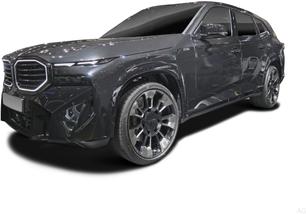
BMW’s new XM is a tricky customer to pigeon-hole. Yes, it’s a huge, super-lux SUV and, yes, it’s all-wheel drive and features a station-wagon layout.
But it’s also a M-car and that infers super high performance. Weighing in one the wrong side of 2700kg, however, makes that a difficult task for any engineer.
This car also left us wondering if perhaps the glory days of M Division sports cars and coupes might behind it and SUVs like this one represent the road ahead.
But fear not: The CEO of M Division himself, assured us that the XM is a showcase for what an M badge can do, rather than a mission statement for the brand.
So, with that in mind, does this car have the wow factor that places it somewhere between peak oligarch and a motor-show concept car? Does it move the goal posts for big luxury SUVs? Does it even matter that it’s a plug-in hybrid?
Audi says this car’s shift to a plug-in hybrid powertrain represents a “defining moment” for Audi Sport enhancing the RS5’s character and performance.
After this first drive we can only agree. Its power, driving dynamics, refinement and quality apply a fierce blowtorch to the belly of its European hot rod rivals.
Note: CarsGuide attended this event as a guest of the manufacturer with travel, accommodation and meals provided.
It’s pretty obvious the XM is designed to impress people with big wallets and an appetite for a techy experience that’s also not without a few green credentials. The ability to motor around as a fully-electric vehicle for up to 80km or so is a big plus and the electric-ballroom interior vibe is hard to ignore, as well.
But from our perspective, the full-fat, twin-turbo V8, while offering startling performance, is perhaps a lost opportunity to follow some of BMW’s competitors into the engine-downsizing space. Then again, when you floor the throttle and 2700kg hurtles forward like a big dog on a short chain, you can see where BMW is coming from.
Perhaps the biggest letdown is the ride quality – or lack of it. While it’s understandable BMW wanted the most dynamic version of the XM it could manage, the end result plays against the vehicle’s otherwise long suit of hyper-luxury. Doubtless, BMW would argue that to soften the chassis would have been to introduce a chink into a no-compromise product. But, perhaps, sometimes a sensible compromise is the way forward.
The new RS5 sedan and Avant wagon are beautifully proportioned, with big rims and rubber, pumped guards and a visual balance that matches a close to 50/50 front to rear mechanical weight distribution.
Instantly recognisable as an Audi, big ticket elements include a huge 3D honeycomb grille, front wheel-arch exit vents, a rear spoiler on both versions and RS-specific OLED tail-lights with a chequered flag signature.
Beauty is always in the eye of the beholder but I think this car exudes equal parts sophistication and menace.
Inside, the RS5 is all business, from the configurable multi-screen displays (including a lap analysis tool) to the flat bottom and top steering wheel as well as the beautifully sculpted seats and obvious attention to detail.
The driver’s the main event here and the interior treatment extends the exterior’s intense personality perfectly.
There’s nothing subtle about the way the XM looks. It probably pulls up just short of brutalist (or maybe not) but even those who find its slabs and angles attractive have to admit that it’s bold.
The now-trademark giant nostrils set the mood and the rest of the exterior suggests some kind of armoured transport for presidents rather than wheels for the school run. Doubtless, this will hardly be seen as a fault by those in the market for such a thing.
The real surprise here is that the XM does not share a bodyshell with any other production BMW. Sure, the V8 petrol engine and wheelbase are common to other BMW and M models, but the sheet metal is the XM’s and the XM’s alone. That in itself, is quite a statement of intent.
In terms of space and practicality, in the front, at 183cm tall I’ve got plenty of breathing space.
And for storage, there are pockets in the doors big enough to hold large bottles as well as a couple of cupholders in the centre console.
A tray ahead of the gearshifter is for wireless charging but if your phone isn’t in there it doubles as an oddments tray and there are two USB-C ports and a 12-volt socket inside it.
There’s a fairly shallow lidded storage box between the seats which doubles as an armrest between driver and passenger and there’s a medium-size glove box.
In the back, I’ve got plenty of foot and legroom although without too much effort I can touch my head on the roof lining, so I’d call that marginal.
For storage, there are decent bins in the doors, big enough for bottles. There’s a pull-down armrest in the centre, again with a pair of cupholders.
There are netted pockets on the front seatbacks, adjustable air vents with temperature control as well as another pair of USB-C outlets to keep everyone happy and charged up in the back seat.
Boot space is passable for a car of this size, with the sedan offering 331 litres VDA with five seats up and the Avant wagon at 361L in the same configuration.
Both feature a 40/20/40 split-folding rear seat for extra flexibility and space - 1170L with the second row folded in the sedan and 1302L in the wagon.
There are tie-down anchors, bag hooks as well as numerous extra storage spaces and braked trailer towing capacity is a handy 2.1 tonnes.
But there’s no spare wheel of any kind. A repair/inflator kit is your only option, which in this market, isn’t good enough.
Given the vast exterior dimensions and a weighbridge ticket the wrong side of 2700kg, it may come as a surprise to learn that the XM is strictly a five-seater with not even an optional third row.
That said, the uber-SUV Lexus LX in flagship, Ultra Luxury, trim offers just four seats in deference to the VIP clientele it’s pitched at, but also comes complete with reclining rear seats and a passenger’s side footrest which the XM can’t match.
Staying in the rear seat, there’s lots of legroom and plenty of space under the front chairs for feet. A lot of that is down to the wheelbase the XM shares with the BMW X7, and even behind a tall driver, there’s lots of space. In fact, compared with a BMW X5, there’s a full 150mm of extra legroom.
The pew itself flows into the door trims for a lounge effect which looks great with the contrasting light-coloured trim, and the centre arm-rest folds down to reveal a pair of cupholders. Extra storage space can be found in fold-out pockets in the rear of each front seat which also house a small, lidded panel that opens to reveal USB ports and power sockets. Dual-zone climate controls are also part of the rear-seat experience.
The gee-whizz stuff hasn’t been ignored, either, and the prismatic roof lining is nothing if not a talking point. But would a panoramic sunroof have been of more value to many buyers? The ambient lighting is a nice touch, too.
Up front, the view is dominated by the giant, twin curved animated dashboards. They deliver information and lots of it, to the point where it can almost seem a bit overwhelming.
The head-up display helps simplify things, but there’s absolutely no doubt there’s a lot going on in this cabin. Again, this is modern luxury motoring, but it remains that the menu system will take time to learn, even if the touchscreen function gives you an option on how you control things.
Multi-adjustable front seats are part of the deal and there’s an M-spec steering wheel which is heated. And although it features plenty of buttons, isn’t as daunting perhaps as the multi-spoked equivalent in some high-end AMGs of late.
The stereo system is also worthy of a mention, being a Bowers & Wilkins unit with roof mounted speakers and no less than 1500 watts of power. Digital radio is part of the package.
Even though it doesn’t offer a seven-seat option, luggage space in the rear of the XM is hardly class-leading. Cargo volume with rear seat up is 527L and 1820L with it folded.
Much of the wheelbase is devoted to rear-seat stretching room and although the batteries for the electric motor are positioned under the rear seat, the floor of the cargo area seems quite high.
Before we get behind the wheel, it’s prudent to check in on cost-of-entry.
Sitting at $179,827, before on-road costs for the sedan and $182,827, BOC for the Avant, this third-generation RS5 is a relatively modest, roughly seven per cent step up in price from the second-gen Coupe and Sportback models it replaces.
Obvious rivals include fellow Bavarian, the BMW M3 (from $169,600) as well as the Mercedes-AMG C63 S E Performance ($193,100) with the Alfa Romeo Giulia Quadrifoglio (from $174,200) lurking in the shadows.
Aside from the performance and safety tech we’ll get to shortly, standard equipment highlights include:
Suffice it to say this machine meets the market when it comes to included features.
The XM is one of those 'no options' vehicles. That is, you pay the basic price, you get one with the lot. The aged leather and even the optional 23-inch wheels and tyres are no-cost options, so it’s clear where BMW is aiming the thing.
As well as the plug-in driveline, all-wheel drive and all the M driving focus, the XM features plenty of tech including massaging front seats, heated seats all around, a high-end stereo, heated and cooled cupholders, four-zone climate-control, wireless phone charging and twin, curved info screens for the driver measuring 12.3 and 14.9 inches. The novel roof lining also features 100 pin-point LEDs for effect.
The cost of such detailing is a not insubstantial $302,200. That figure does, however, undercut two of its main rivals, the Lamborghini Urus ($395,888) and the Aston Martin DBX ($356,512).
It’s also worth mentioning that the XM is not even BMW Australia’s most expensive model; in fact, it’s fourth on the ladder.
The RS5 is powered by an updated version of the previous model’s all-alloy 2.9-litre, twin-turbo petrol V6 engine which produces 375kW/600Nm all on its own.
It features direct-injection and variable geometry turbos as well as variable intake and exhaust cam timing. And now it’s supported by an electric motor integrated into the eight-speed auto transmission that tips in 130kW/460Nm.
A mighty combination with overall outputs of 470kW/825Nm. Enough to propel either version of this car from 0-100km/h in a blistering 3.6 seconds.
Here’s where the XM starts to justify its price-tag. While the use of an electric motor to boost a petrol engine has allowed some manufacturers to reduce the capacity of the latter, no such restraint has been shown for the XM. Instead, it gets the full 4.4-litre, twice turbocharged V8 that we’ve come to know and love from this brand.
It’s not that this is the engine’s first date with hybrid technology, but the mild hybrids that have come before it can’t match the XM for sheer brutality when both power units are unleashed.
The petrol V8 can muster up 360kW and 650Nm which, when boosted by the electric motor, jumps to a total of 480kW (combined) and 800Nm.
While the petrol engine drives through an eight-speed torque-converter automatic, the electric motor also drives through the transmission, an arrangement that is a bit different to some hybrids which use the petrol engine for the rear axle and the electric motor to drive the front wheels.
Of course, the requirement for the XM to feature permanent all-wheel drive, regardless of what power unit is running at the time, forces this layout.
Speaking of all-wheel drive, The XM’s version of BMW’s 'xDrive' layout has been specifically tuned for this vehicle and includes torque vectoring as well as a limited-slip rear differential.
The system has the ability to vary the torque split front to rear, with the default rear-bias giving a more sporting feel on good surfaces. An active rear differential also helps give the car a rear-drive feel.
As well as modes for 'Hybrid', 'Electric' and 'eControl' modes, the XM sticks with the M tradition of offering two M buttons which can be configured to set the parameters for steering, driveline, chassis and, in the case of the hybrid XM, the degree of braking regeneration offered.
Four-wheel steering is also part of the XM’s repertoire and, interestingly, there’s no air suspension here; just conventional steel springs.
But it does feature an electrically-adjusted anti-roll bar system which aims to strike a happy medium between what the driver wants and the road conditions demand.
Claimed combined cycle (urban/extra-urban) fuel economy is a miserly 4.2L/100km for the sedan and 4.4L for the Avant, which is amazing for a car with this much performance potential.
But it’s worth noting that number rises to (a still impressive) 10L/100km when the battery’s depleted.
On an enthusiastic section of the launch drive we saw an average of 17L/100km which dropped to 7.0L on a cruisier section.
What’s more, thanks to a 25.9kWh lithium-ion battery, it can cover 78km in EV-only mode at up to 140km/h if you’re game.
Charging capacity is 11kW AC, for a full top-up in two and a half hours and minimum fuel requirement is 98 RON premium unleaded.
With the battery fully charged you can expect a combined cycle range of around 1200km, which is more than useful.
A 25.7kWh lithium-ion battery provides the power for the electric drive. It’s mounted under the rear seat and can produce a purely electric range of between 82 and 88km (based on WLPT test protocols).
Charge time from a conventional wall-box is said to be about four hours but, interestingly, the XM has no provision for DC fast-charging.
Fuel consumption (combined cycle) is an EV-typical 2.7 litres per 100km, which equates to a low 61g/km of CO2.
Once you’ve depleted the battery on a highway journey, expect the petrol V8 to consumer somewhere between eight and nine litres per 100km at cruising speed.
Using EV mode means zero-emission operation but, as with any electric car, how the power is generated to recharge it determines its real-world green-ness.
This RS5 has 40 per cent more power and 40 per cent more torque than the model it replaces, which was no slouch. It is properly fast.
We gave it a red-hot go on the circuit and the car remained predictable, balanced and sharp.
The drivetrain, including the quattro all-wheel-drive system, centre diff and torque-vectoring across the rear axle keeps everything in hand and quietly turns you into a superhero.
The eight-speed auto transmission is a conventional torque converter type, and it’s quick on the up-change but it’s half a beat slower to pick up a ratio on the down-shift relative to a dual-clutch. Not much in it, but it’s there.
So, we’ve established this car’s fast; capable of accelerating from 0-100km/h in 3.6 seconds. But if you want full weapons-grade in an instant while cruising, try pressing the bright red Boost button on the steering wheel. Everything immediately goes to maximum and for 10 seconds you’ve got it all.
The RS Sport exhaust is an active, variable system, tuned specifically for the RS5, constantly adjusting according to your driving style.
Cruise along and it remains quietly civilised, but pin the throttle and all of a sudden you’re hearing that wonderful growl from the V6 engine.
Suspension is by multi-links at the front and the rear and there are dual-valve adaptive dampers all around. The car rides very nicely with three set-up choices - Sport, Balanced and Comfort.
We were in Balanced most of the launch drive program on fairly coarse B-roads as well as some main highways and we were surprised by the (285/30) Pirelli P Zero R tyres and how quiet they are. Exceptionally grippy on the circuit but very quiet on the open road.
And wind noise is minimal. So, as a GT this car is very comfortable, quiet and refined.
The steering is progressive rate and speed-dependent and it is just beautiful. Accurate and feelsome, you’ve got a great connection with the front wheels without any undue feedback coming up to your hands.
You can feel this car’s roughly 2.4-tonne weight, but it always feels buttoned-down, agile and responsive.
The Dynamic Torque Control system complies with the classic swan on the lake syndrome. Serene and calm on the surface but furiously doing its thing underneath. It keeps everything on track, almost magically.
It delivers 8.0kW and 40Nm, acting as a high‐voltage actuator within the rear transaxle, redistributing torque differences between the rear wheels within milliseconds.
And the quattro system features a redesigned centre diff with integrated preload function for continuous torque distribution, delivering sharper response during rapid throttle transitions.
When it comes to slowing, the brakes are professional grade. You’ve got dinner plate-size ventilated rotors (420mm fr - 400mm rr) and 10-piston callipers up the front.
You can stand the car on its nose as it washes off speed rapidly and progressively with fantastic pedal feel.
Under the heading of miscellaneous observations, the sports front seats look and feel fantastic. Comfortable after hours behind the wheel. But also, when you’re pushing on the open road, or really having a go on the circuit, their side bolsters are just right, providing enough support without pinching you or proving uncomfortable.
While any M car is supposed to be rapid and dynamic, it’s also true that the over-arching perception of big SUVs is that they’re comfortable and plush. None of which explains the ride in the XM.
Regardless of how you fiddle with the settings, the ride is always brittle. Those big tyres with their minimal sidewall somehow manage to find every crack and join in the road, and it’s these sharp-edged imperfections that thump through to the cabin the most vocally.
It’s enough to make you wonder who this car is going to appeal to. Will it take to race tracks? Almost certainly not. So the whole point of these suspension settings might be a bit lost on some people.
Performance, meanwhile, is insanely rapid for something that could pass as a bulk carrier. The biggest giveaway to the mass is the transmission’s earnest attempts to keep everything moving by feeling a bit hyperactive on downshifts.
Using the ratios is always going to be the strategy, but with all that torque, maybe it’d be nice sometimes for the trans to hang on to a taller gear and let the boost blow it towards the next corner.
The sound track? Polarising. Even if it doesn’t convince you that Hans Zimmer (who developed the various electronically-synthesised noises the XM makes) should stick to winning Oscars, the augmented sounds are background noise rather than the main event here.
Even the petrol V8’s naturally stirring backing vocals have been electronically tweaked with debatable results.
That said, it’s nice to have something to listen to that isn’t the insistent tyre roar which becomes even louder on coarse-chip surfaces.
Steering effort is light but there’s not a lot of feedback in terms of actual feel. In fact, it’s borderline detached and only the sheer speed of the rack confers any athleticism.
Also, the rear steering seems to come in a few milli-seconds after the front has started to turn. And for all that all-wheel-steering agility, this is never a car that shrinks around you.
The RS5 has not been assessed by ANCAP, but all the expected safety boxes are ticked, including but not limited to:
There are eight airbags, sadly not including a front centre bag. But for child seats there are three top tethers across the second row with ISOFIX lower anchors on both outboard positions.
The numerous advanced driver assistance systems (ADAS) are effective without being overly intrusive. Not always an easy balancing act to achieve.
As well as the usual passive safety features, the XM also hides the latest active safety gear. In fact, BMW reckons the XM has more driver assistance than any other M car before it.
Those elements start with the 'Driver Assistant Professional' which bundles active cruise-control with stop-go ability, steering and lane-keeping control, automatic speed limit assist and active navigation.
Parking assistance is also featured which incorporates a reversing assistance function, front, rear and panoramic camera views with a 3D view built in.
BMW’s 'ConnectedDrive' includes an emergency call function in the event of a crash or other emergency.
No ANCAP assessment so far.
The RS5 is covered by Audi’s five-year, unlimited km warranty, which lags the mainstream market but is still par for the course at the top end.
The traction battery is covered for eight years/160,000km and there’s a 12-year corrosion warranty.
Service interval is 12 months/15,000km and a five-year service plan is $3650 which isn’t outrageous for this kind of car in this part of the market.
Audi has more than 50 dealerships across Australia covering every state and territory as well as key regional and rural centres.
Like a lot of manufacturers, BMW knows consumers can be leery of EV tech when it comes to the cost of battery replacement. So, as well as the five-year/unlimited-kilometre warranty on the whole vehicle, there’s also eight years or 160,000km of cover for the high-voltage battery.
Servicing intervals are based on how the car has been used and it will inform the owner when a service is required.
A servicing package is included in the purchase price and BMW even throws in three years of roadside assistance.