What's the difference?
In an era where internal combustion power appears to be rapidly disappearing into the rear-view mirrors along comes Audi, casually wheeling out a new RS5.
But the pride of Ingolstadt hasn’t completely sidelined its e-tron-style electrification, because while a fire-breathing 2.9-litre twin-turbo-petrol V6 sits under this newcomer’s bonnet, it’s now supported by a grunty electric motor in its eight-speed auto transmission and another on the rear axle to manage torque vectoring.
The result is mega-power and massive torque with all-wheel-drive quattro grip offered in four-door sedan and Avant wagon form.
And CarsGuide was invited to a launch drive program on Tasmania’s east coast, home to some of the best driving roads in the country, with a quick fang around the Symmons Plains race circuit included.
Time to see what this new, plug-in hybrid, 630hp beast has to offer.
Being a true Jack of all trades in the car world is rare.
Generally speaking, a vehicle is either capable or comfortable. Attractive or aerodynamic. Practical or performance orientated. And problems arise when cars try to do all those things well, all at the same time.
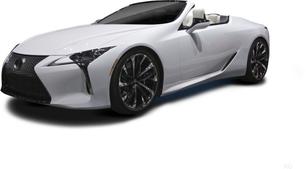
Which make the Lexus LC 500 Convertible such an interesting proposition. Because it is, without doubt, stylish, and lavishly equipped. It’s also rather large and rather heavy. All of which is perfect for cruising the Bondi foreshore.
But it’s also equipped with a thumping V8 engine and a throaty exhaust that sounds like bricks in a blender on the overrun. It’s stiffer than the LFA supercar, and plenty powerful, which should deliver one of Lexus’ sportiest-ever drives.
So can the LC 500 really do it all? Let’s find out.
Audi says this car’s shift to a plug-in hybrid powertrain represents a “defining moment” for Audi Sport enhancing the RS5’s character and performance.
After this first drive we can only agree. Its power, driving dynamics, refinement and quality apply a fierce blowtorch to the belly of its European hot rod rivals.
Note: CarsGuide attended this event as a guest of the manufacturer with travel, accommodation and meals provided.
Stunning to behold, and even more so to listen to, the LC 500 Convertible with no doubt turn as many heads as its owners surely want it to. It's not the final word in performance, but it's a lavishly equipped transporter none the less.
The new RS5 sedan and Avant wagon are beautifully proportioned, with big rims and rubber, pumped guards and a visual balance that matches a close to 50/50 front to rear mechanical weight distribution.
Instantly recognisable as an Audi, big ticket elements include a huge 3D honeycomb grille, front wheel-arch exit vents, a rear spoiler on both versions and RS-specific OLED tail-lights with a chequered flag signature.
Beauty is always in the eye of the beholder but I think this car exudes equal parts sophistication and menace.
Inside, the RS5 is all business, from the configurable multi-screen displays (including a lap analysis tool) to the flat bottom and top steering wheel as well as the beautifully sculpted seats and obvious attention to detail.
The driver’s the main event here and the interior treatment extends the exterior’s intense personality perfectly.
It’s eye-catching, the LC 500, if big, bolshy convertibles are your thing, and especially viewed front-on, where the aggressive nose design ends in a sharp crease in the mesh grille. I love the headlight design, too, which bleeds back into the body work, but also merges with the vertical light cluster that bookends the grille.
The side view is all shining alloys and sharp body creases, too, leading to an oversized boot that stores the fabric, aluminium and magnesium roof structure, which drops or raises in 15 seconds at speeds of up to 50km/h. The design fits into what Lexus calls an “impossibly small space behind the seats”.
Inside, it’s a snug but luxurious space, wrapped largely in leather and equipped with a wealth of technology. It’s a point we’ve made before, but why Lexus perseveres with its trackpad infotainment control technology is beyond us, but there’s no denying the cabin of the LC 500 is a wondrous place to spend time.
We particularly like the integration of the centre screen, which is recessed beneath the leather-wrapped edge of the dash. While some look like an afterthought, this appears to have been included in the broader design philosophy.
In terms of space and practicality, in the front, at 183cm tall I’ve got plenty of breathing space.
And for storage, there are pockets in the doors big enough to hold large bottles as well as a couple of cupholders in the centre console.
A tray ahead of the gearshifter is for wireless charging but if your phone isn’t in there it doubles as an oddments tray and there are two USB-C ports and a 12-volt socket inside it.
There’s a fairly shallow lidded storage box between the seats which doubles as an armrest between driver and passenger and there’s a medium-size glove box.
In the back, I’ve got plenty of foot and legroom although without too much effort I can touch my head on the roof lining, so I’d call that marginal.
For storage, there are decent bins in the doors, big enough for bottles. There’s a pull-down armrest in the centre, again with a pair of cupholders.
There are netted pockets on the front seatbacks, adjustable air vents with temperature control as well as another pair of USB-C outlets to keep everyone happy and charged up in the back seat.
Boot space is passable for a car of this size, with the sedan offering 331 litres VDA with five seats up and the Avant wagon at 361L in the same configuration.
Both feature a 40/20/40 split-folding rear seat for extra flexibility and space - 1170L with the second row folded in the sedan and 1302L in the wagon.
There are tie-down anchors, bag hooks as well as numerous extra storage spaces and braked trailer towing capacity is a handy 2.1 tonnes.
But there’s no spare wheel of any kind. A repair/inflator kit is your only option, which in this market, isn’t good enough.
It’s not, really. But then, what were you expecting?
As mentioned above, the interior feels snug for upfront riders, but not in a bad way. More that elements of the interior feel like they’re reaching out to greet you, leaving you with the impression of being tucked into the cabin.
Backseat riders are out of luck, though, with the seats really only reserved for emergencies. Legroom is tight, and while Lexus promises the roofline is about on-par with the Coupe, it’s not going to be a comfortable journey.
The LC 500 Convertible stretches 4770mm in length, 1920mm in width and 1350mm in height, and it rides on a 2870mm wheelbase. It will sit four at a pinch, and provide 149 litres of luggage space.
There are two ISOFIX attachment points in each of the rear seats, as well as top-tether points.
Before we get behind the wheel, it’s prudent to check in on cost-of-entry.
Sitting at $179,827, before on-road costs for the sedan and $182,827, BOC for the Avant, this third-generation RS5 is a relatively modest, roughly seven per cent step up in price from the second-gen Coupe and Sportback models it replaces.
Obvious rivals include fellow Bavarian, the BMW M3 (from $169,600) as well as the Mercedes-AMG C63 S E Performance ($193,100) with the Alfa Romeo Giulia Quadrifoglio (from $174,200) lurking in the shadows.
Aside from the performance and safety tech we’ll get to shortly, standard equipment highlights include:
Suffice it to say this machine meets the market when it comes to included features.
It costs $214,000 - and that’s rather a lot of money - but unlike some premium and luxury cars, with Lexus, once you’ve handed over the cash, that’s it. There’s no tempting option list to lure you into parting with even more of your hard earned.
And I mean that literally - Lexus proudly proclaims that “there is no option list” for the LC 500 Convertible, so suffice it to say it arrives with plenty of gear.
Take a deep breath…
You get 21-inch two tone alloys, triple-stack LED headlights, keyless entry, retractable door handles and rain-sensing wipers outside, while inside, you’ll find dual-zone climate, leather-accented seats which are heated and ventilated, neck-level heating for when the roof is down, a heated steering wheel and sports pedals.
The tech stuff is handled by a 10.3-inch centre screen with Apple CarPlay, Android Auto and on-board navigation, both of which are controlled via Lexus’ impossible-to-kill touchpad. There’s a second, 8.0-inch screen for the driver, and the lot pairs with an impressive 13-speaker Mark Levinson stereo.
There’s also a heap of safety stuff, but we’ll come back to that in a moment.
If that’s not enough for you, you can spring for the Limited Edition, which is $234,000 for each of its 10 available examples. It arrives in a unique Structural Blue hue, with a white leather interior with blue highlights. It is designed to be the most blue of blues, too, with Lexus saying the paint colour was the result of a 15-year research project. Which sounds like a thrilling way to spend a decade and a half.
The RS5 is powered by an updated version of the previous model’s all-alloy 2.9-litre, twin-turbo petrol V6 engine which produces 375kW/600Nm all on its own.
It features direct-injection and variable geometry turbos as well as variable intake and exhaust cam timing. And now it’s supported by an electric motor integrated into the eight-speed auto transmission that tips in 130kW/460Nm.
A mighty combination with overall outputs of 470kW/825Nm. Enough to propel either version of this car from 0-100km/h in a blistering 3.6 seconds.
It’s a lusty power plant, this one, and not something you immediately expect to find in a luxurious Lexus convertible.
The 5.0-litre V8 produces 351kW and 540Nm - 260kW of which arrives from 2000rpm - and it sounds like a God of Thunder as it’s doing it.
It pairs with a 10-speed automatic and sends all that grunt to the rear tyres, with Lexus’ Active Cornering Assist and a mechanical limited-slip differential helping you to not make a mess of things when tackling corners.
Claimed combined cycle (urban/extra-urban) fuel economy is a miserly 4.2L/100km for the sedan and 4.4L for the Avant, which is amazing for a car with this much performance potential.
But it’s worth noting that number rises to (a still impressive) 10L/100km when the battery’s depleted.
On an enthusiastic section of the launch drive we saw an average of 17L/100km which dropped to 7.0L on a cruisier section.
What’s more, thanks to a 25.9kWh lithium-ion battery, it can cover 78km in EV-only mode at up to 140km/h if you’re game.
Charging capacity is 11kW AC, for a full top-up in two and a half hours and minimum fuel requirement is 98 RON premium unleaded.
With the battery fully charged you can expect a combined cycle range of around 1200km, which is more than useful.
Remember when I said it was lusty V8? When has that ever been good news for fuel use?
Lexus reckons you’ll get 12.7L/100km on the combined cycle, but the temptation of all that grunt will pretty much ensure that never happens. Emissions are pegged at 290g/km of C02.
The LC 500 Convertible’s 82-litre fuel tank only accepts 98RON fuel.
This RS5 has 40 per cent more power and 40 per cent more torque than the model it replaces, which was no slouch. It is properly fast.
We gave it a red-hot go on the circuit and the car remained predictable, balanced and sharp.
The drivetrain, including the quattro all-wheel-drive system, centre diff and torque-vectoring across the rear axle keeps everything in hand and quietly turns you into a superhero.
The eight-speed auto transmission is a conventional torque converter type, and it’s quick on the up-change but it’s half a beat slower to pick up a ratio on the down-shift relative to a dual-clutch. Not much in it, but it’s there.
So, we’ve established this car’s fast; capable of accelerating from 0-100km/h in 3.6 seconds. But if you want full weapons-grade in an instant while cruising, try pressing the bright red Boost button on the steering wheel. Everything immediately goes to maximum and for 10 seconds you’ve got it all.
The RS Sport exhaust is an active, variable system, tuned specifically for the RS5, constantly adjusting according to your driving style.
Cruise along and it remains quietly civilised, but pin the throttle and all of a sudden you’re hearing that wonderful growl from the V6 engine.
Suspension is by multi-links at the front and the rear and there are dual-valve adaptive dampers all around. The car rides very nicely with three set-up choices - Sport, Balanced and Comfort.
We were in Balanced most of the launch drive program on fairly coarse B-roads as well as some main highways and we were surprised by the (285/30) Pirelli P Zero R tyres and how quiet they are. Exceptionally grippy on the circuit but very quiet on the open road.
And wind noise is minimal. So, as a GT this car is very comfortable, quiet and refined.
The steering is progressive rate and speed-dependent and it is just beautiful. Accurate and feelsome, you’ve got a great connection with the front wheels without any undue feedback coming up to your hands.
You can feel this car’s roughly 2.4-tonne weight, but it always feels buttoned-down, agile and responsive.
The Dynamic Torque Control system complies with the classic swan on the lake syndrome. Serene and calm on the surface but furiously doing its thing underneath. It keeps everything on track, almost magically.
It delivers 8.0kW and 40Nm, acting as a high‐voltage actuator within the rear transaxle, redistributing torque differences between the rear wheels within milliseconds.
And the quattro system features a redesigned centre diff with integrated preload function for continuous torque distribution, delivering sharper response during rapid throttle transitions.
When it comes to slowing, the brakes are professional grade. You’ve got dinner plate-size ventilated rotors (420mm fr - 400mm rr) and 10-piston callipers up the front.
You can stand the car on its nose as it washes off speed rapidly and progressively with fantastic pedal feel.
Under the heading of miscellaneous observations, the sports front seats look and feel fantastic. Comfortable after hours behind the wheel. But also, when you’re pushing on the open road, or really having a go on the circuit, their side bolsters are just right, providing enough support without pinching you or proving uncomfortable.
It’s a tough nut to immediately crack, the LC 500 Convertible.
It feels like it really wants to be a super-accomplished performance car, and on longer, more sweeping bends it is, with that thick flow of power ensuring you simply surf through corners before rocketing out the other side, the air filled with that growling exhaust note as your right foot finds its way to the carpet.
But on the tighter stuff, there are some factors that play against it. The suspension feels sorted and that engine is always willing to deliver, but for mine, the steering and brakes felt a little disconnected from the experience, not inspiring much in the way of late-braking confidence. And then there’s the sheer two-tonne-plus weight of the thing, which can’t be totally hidden, even by Lexus’ best wizardry.
Don’t get me wrong, it’s very capable, even on surprisingly tight stuff. It’s just that there’s something of a disconnect between car and driver.
That’s not a bad thing, really. Are you really buying a premium convertible to attack a mountain pass? Probably not. And keep it flowing through corners and the LC 500 Convertible will keep a smile painted on your face, owing mostly to wave of torque you can ride to your destination.
Hovering your foot over the accelerator must surely be what the President feels like whenever he stands near the nuclear football, with that big V8 always ready to turn on the fireworks.
Away from the red mist, you’ll find the LC 500 Convertible positively flows from destination to destination, the 10-speed gearbox - which can feel flustered at pace - seamlessly flicking through its options, and the ride in its most comfortable settings disposing of most road imperfections before they enter the cabin.
The cabin is also very cleverly insulated, not just when the four-part roof is up, but also when it’s down, with the climate and ambience of the interior largely unaffected by what’s going on in the outside world.
The RS5 has not been assessed by ANCAP, but all the expected safety boxes are ticked, including but not limited to:
There are eight airbags, sadly not including a front centre bag. But for child seats there are three top tethers across the second row with ISOFIX lower anchors on both outboard positions.
The numerous advanced driver assistance systems (ADAS) are effective without being overly intrusive. Not always an easy balancing act to achieve.
The Lexus LC 500 Convertible arrives with six airbags, a reversing camera with guide lines, parking sensors, and the usual suite of traction and braking aids, but there’s much more to the safety story, too.
The more high-tech stuff includes parking sensors, pre-collision assist with AEB, lane keep assist, blind-spot monitoring, rear cross-traffic alert and active cruise, as well as bespoke convertible safety gear, like active roll bars that deploy when the car is in danger of rolling over, protecting the occupants beneath that soft roof.
The RS5 is covered by Audi’s five-year, unlimited km warranty, which lags the mainstream market but is still par for the course at the top end.
The traction battery is covered for eight years/160,000km and there’s a 12-year corrosion warranty.
Service interval is 12 months/15,000km and a five-year service plan is $3650 which isn’t outrageous for this kind of car in this part of the market.
Audi has more than 50 dealerships across Australia covering every state and territory as well as key regional and rural centres.
Lexus vehicles are covered by a four-year, 100,000 kilometre warranty, and the LC 500 Convertible requires servicing every 15,000kms.
Lexus's Encore ownership program includes pick-up and drop-off servicing, but the new Encore Platinum level for owners of its more exclusive models unlocks even more stuff.
One is a new On Demand service, which allows owners to book a different style of car when heading off on a holiday or business trip. The loans are available in your state or somewhere else in Australia if you're travelling, with your car waiting for you at Qantas Valet for you when you arrive.
The On Demand service is available on four occasions over your first three years of ownership (which is also the length of the Encore Platinum membership).