What's the difference?
For a small SUV that technically starts under the $40,000 mark, the 2024 Volkswagen T-Roc has a fair bit going for it.
It’s still in its first generation, but updates have made some parts of the T-Roc feel properly up to speed. And the parts that haven’t? Well, maybe that’s not such a bad thing.
We’re driving the mid-spec Style 110TSI, which sits above the base CityLife, but below the R-Line. Then of course, there’s the wicked R variant.
But is this a Euro that could replace your trusted Japanese small SUV?
Subaru has always been a good fit for Australia.
Since the '90s, when the brand made a big splash with its rally derived Impreza and Liberty, Subaru’s rugged appeal has suited Australia’s tough conditions and recreationally adventurous buyers.
Cars like the Forester and Outback solidified the brand’s place amongst SUVs before SUVs were really a thing, and the XV is the logical progression of the Impreza range, slotting nicely into the brand's offerings of lifted all-wheel-drive wagons.
It’s been a few years since the XV launched, however, so can its latest 2021 update keep it in the fight in a quickly evolving and notoriously competitive segment against many newer rivals? We’ve taken a look at the whole range to find out.
So that’s the T-Roc, a bit of Euro style that’s still priced to take the fight to some small SUVs from Japan or Korea.
Is it the cheapest style-forward small SUV you can get? No, but it’s far from the expensive end of things.
Plus, if you can resist ticking some option boxes, it beats some value-focused rivals and looks good doing it.
If the feeling of a sturdy fit-out and a confidence inspiring drive is important to you, I reckon the T-Roc should be an entry on your shopping list.
Even years on from its initial launch and with only subtle changes to its main range, it’s really to Subaru’s credit that the XV feels just as capable and modern as any of its rivals.
This is not to say it’s perfect. We can’t recommend the base model, the maths don’t really work out on the hybrids, the only available engine is breathless, and it has a small boot.
But the XV’s excellent safety suite, driving dynamics, all-wheel-drive capability, quality finish and comfortable interior mean it’s hard not to be charmed by this little lifted hatch.
Our pick of the range? While the 2.0i-L is great value, we’d recommend you splurge to the 2.0i-Premium to get the full safety suite and extra garnish.
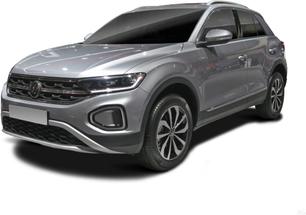
The T-Roc subtly stands out without being garish, avoiding becoming part of the highway or suburban camouflage without relying on extreme design decisions.
For example, the LED daytime running lights that wrap around the shapes below the LED 'I.Q' headlights where vents would otherwise be on the R performance variant are quite cute.
In fact, the whole front end of this small SUV has a friendly look, even if there’s nothing specific that’s particularly exciting about it.
This 'Petroleum Blue Metallic' colour is a $700 option, but anything other than white costs extra.
However, the black roof two-tone look is a standard for the Style, as are the black mirror caps and its 18-inch alloys.
There are roof rails up top, tinted privacy windows for rear passengers and for the rear window and a sloping roofline at the rear that adds a touch of ‘sport’ to the silhouette along with a small spoiler at the top.
The key to the XV’s fun and adventurous appeal is perhaps the fact that it’s not really an SUV at all. It’s rather obviously a lifted version of the brand’s Impreza hatchback, and this is to its credit.
It’s simple but tough, cute but capable, and really everything many consumers are looking for when it comes to a small, all-wheel-drive SUV. Not only does this design philosophy (of lifting wagons and hatches rather than creating bespoke “SUVs”) match Subaru’s family of products, but the ride height, plastic claddings, and tough-looking alloys offer hints of the all-wheel-drive capability that lies beneath.
Little has changed for the 2021 model year, with the XV most recently receiving a tweaked grille, updated front bumper, and a new set of alloy wheels. The XV range is also available in a fun array of colours, which Subaru hopes will help it win more of a youth vote. As an added bonus, none of the colour choices carry an extra charge.
The interior of the XV continues the fun and adventurous theme with Subaru’s signature chunky design language noticeably different from its rivals. My favourite element of this has always been the bumper-car steering wheel, which feels great in your hands in its leather-clad finish, but there are also nice soft claddings throughout the doors and big seats with nice bolstering and design.
While we like how big and sharp the main 8.0-inch screen is, if there’s one thing Subaru gets wrong it’s how busy the whole cabin package is. The visual assault of three screens seems unnecessary, and as much as I like the wheel, it is also completely adorned in somewhat confusingly labelled buttons and toggles.
Still it’s an attractive, fun, and unique design amongst its small SUV peers. Subaru fans, at least, will be sure to adore it.
Inside the T-Roc is a bit of an interesting dichotomy.
Some of what’s in here is ‘old-gen’ Volkswagen stuff, but it still holds up today against even some recently introduced models.
The dichotomy is that while it’s very usable and slick, some of its materials and surfaces let it down a touch.
The good points are that the cabin tech is a perfect level of physical and digital. The buttons and controls are easy to use and feel solid and even though the climate controls could be more physical, they’re still good as far as touch panel style controls go.
The older VW gear is arguably better than a lot of what’s found in newer models where some use of touchscreens and haptic panels has drawn negative feedback from customers.
The multimedia software managed via the 8.0-inch touchscreen is more simple and sensible than the new version, plus the Digital Cockpit Pro display for the driver is clear and, importantly, customisable. It’s a similar cockpit system that used to seem quite impressive in high-end Audis.
But what doesn’t feel very high-end is some of the plastic and the decisions around function in the rest of the space.
The leather on the seats is not a cheap option box to tick at $3450, but it feels a little cheap to the touch. It’s a tad hard and even has a bit of a rough look to it.
That option also makes them heated and electrically adjustable, though, which is welcome in winter. Otherwise, cloth seats without the optional leather or heating would be absolutely fine, and that means you get a storage space under them, too.
This central space between the driver and front passenger, too, is a little awkward with the cupholder placement. It’s behind the shifter meaning a tall bottle will be in the way and it’s got slightly odd sizing for bottles or cups with nothing to stop them wobbling.
I am, however, a fan of the angled-away phone slot under the climate controls to minimise phone screen visibility (and distraction) and the traditional shifter itself is welcome.
Look up, and (in our test car) there’s an optional ($2000) panoramic sunroof there. It’s yours if you want it, and it does have an electric blind, but some Japanese and Korean cars at this price point get that as standard.
An average-sized adult will find the second row is spacious enough and relatively comfortable. There’s an armrest, dual-directional vents and two USB-C ports.
Behind that, boot space is generous at 445L with the seats up thanks to an adjustable floor, which is very useful for tall items and even manages to fit a space saver spare tyre under it.
It’s a total of 1290L with the split-fold seats down, too, though they’re not super flat with the adjustable floor down.
In some ways the XV is very impressive when it comes to its interior practicality, but in other ways it disappoints.
The front seats offer heaps of room for adults with good adjustability, and while the seating height is very high by default, there’s still lots of headroom and adjustability, with the added benefit of a very commanding view of the road for such a small SUV.
As mentioned, the doors, dash, and transmission tunnel are all clad in soft materials, and front passengers also benefit from no less than four USB ports in every grade except the base 2.0i, a huge centre console box, comfortably large bottle holders in the centre with a removable divider, a small bay under the climate unit that also houses a 12v outlet and auxiliary input, and a single large bottle holder in the doors with a small adjoining bin.
A surprise comes in the rear seats, which offered enough head and knee room for a particularly tall friend of mine. It’s rare for the small SUV segment to offer such space, but behind my own (182cm tall) seating position I had ample airspace for my knees and decent airspace for my head too, even despite the Premium and S grades having a sunroof fitted.
Rear passengers get a flip-down armrest with bottle holders, a small bottle holder in the doors, and pockets on the backs of the seats. The seat cladding is just as good as it is in the front, and the width in the rear seats is notable, however the centre seat suffers from the existence of a tall transmission tunnel to facilitate the all-wheel-drive system, and there are no adjustable air vents or power outlets for rear passengers either.
Finally, one ongoing weak point for the XV is the amount of boot space on offer. Boot capacity is 310-litres (VDA) for non-hybrids or 345 litres for hybrid variants. This is decent when compared to smaller light SUVs but definitely leaves room for improvement when it comes to the XV’s main small SUV competitors.
Space can be boosted to 765L in non-hybrid or 919L in hybrids with the seats down (again, not great), and the hybrid model loses the underfloor space-saver spare wheel, instead leaving you with a very compact puncture-repair kit.
The specific Style test vehicle being reviewed here is priced at $38,890, before on-road costs. But it's worth noting a new example of the Style will cost you $39,790 at the time of writing, as its price has since ours was 'delivered'.
While the Style features some older VW fitout, it comes with a decent list of features.
A set of 18-inch wheels, self-levelling headlights (with cornering function), some cute LED DRLs plus chrome highlights with black contrast trim are the best way to spot a Style from the outside.
Inside, there’s an 8.0-inch touchscreen for multimedia paired to the driver’s 'Digital Cockpit Pro' display.
The multimedia screen is last-gen VW gear, but that’s not a bad thing.
There’s also dual-zone climate control with an allergen filter, ambient lighting, a six-speaker sound system, wireless phone charger and wireless Android Auto and Apple CarPlay.
There are a few options on our test car that nudge the price up quite quickly, like the metallic paint, leather upholstery, sunroof, plus the keyless entry or ‘Easy open and close package’.
All this brings the total price as-tested to $45,640, before on-roads.
The good news is you don’t need to tick all, or any, of those options for this to still be a compelling option.
Subaru’s pricing strategy is an interesting one. Generally, the brand’s entry-level models are priced above rivals, but top out well below them. For 2021 the XV range has four variants, two of which are available with the hybrid-drivetrain option.
The entry-level XV 2.0i ($29,690) sits above the entry-level Hyundai Kona ($26,600), Kia Sportage ($27,790), and Honda HR-V ($25,990). Keep in mind, the XV range is all-wheel drive by default, which is a value boost, but the unfortunate news is that we’d recommend you ignore the base XV altogether.
Included on the base 2.0i are 17-inch alloy wheels, a 6.5-inch multimedia touchscreen with wired Apple CarPlay and Android Auto connectivity, a 4.2-inch supervision cluster and 6.3-inch function screen, basic air conditioning, a single USB port, basic cloth seats, halogen headlights, standard cruise control, and some more basic trimmings. Not only is this car the only one with the more basic multimedia screen, but crucially it misses out on any of Subaru’s excellent EyeSight safety suite.
The starting point for your XV journey, then, should really be the 2.0i-L, starting at $31,990. The 2.0i-L ups the interior to include a dazzling 8.0-inch multimedia screen, improved interior trimmings with premium cloth seats and leather-trimmed steering wheel, dual-zone climate control, extra USB ports, and adaptive cruise control as part of the EyeSight safety suite.
Next up is the 2.0i-Premium at $34,590, which adds a sliding sunroof, heated wing mirrors, built-in navigation, a front-view camera, and the full safety suite with blind-spot monitoring, rear cross traffic alert, and rear auto emergency braking. This variant is now the best value, as it offers the full set of safety items previously only available on the top-spec car at a lower price.
This brings us to the top-spec 2.0i-S with an MSRP of $37,290, which adds LED headlights with auto high-beam assist, a side-view camera, leather interior trims with extended premium cabin upholstery and chrome finishes, auto power folding wing mirrors, leather-appointed seat trim with heated front seats and an eight-way power-adjustable driver’s seat, 18-inch alloy wheels, and extended functionality for the all-wheel-drive system.
Finally, the 2.0i-L and 2.0i-S can be chosen with the “eBoxer” hybrid drivetrain option, wearing MSRPs of $35,490 and $40,790 respectively. They mirror the specification of their 2.0i counterparts while adding silver exterior accents and a pedestrian-alert system. They also trade out the space-saver spare wheel in favour of a puncture-repair kit, due to the presence of an under-boot-floor lithium-ion battery system.
The engine in the T-Roc - as with most Volkswagens - does what it says on the tin. Essentially, a 110TSI means there’s 110kW of turbocharged VW happening, in this case a 1.4-litre four-cylinder that also makes 250Nm of torque.
It’s paired to an eight-speed torque converter, which will be music to the ears of those who have been scorned by older VW dual-clutches.
It drives the front wheels only, and there’s no hybridisation or 48-volt system.
The XV now has two drivetrain options in Australia. One is the carryover 2.0-litre petrol engine, now with a smidge more power, and a hybrid version of the same layout with an electric motor housed in the continuously variable transmission. There is no manual variant in the XV range.
The 2.0i models produce 115kW/196Nm, while the hybrid produces 110kW/196Nm from the engine and 12.3kW/66Nm from the electric motor. All variants are all-wheel drive.
The hybrid system is powered by a lithium-ion battery pack under the boot floor, and in practice functions a bit differently from Toyota’s popular system.
We’re sure Subaru die-hards will be dismayed to know a version of the XV packing the larger Forester’s 2.5-litre petrol engine (136kW/239Nm) will not be making it to Australia for the foreseeable future.
A lack of electrification in a relatively small engine and a traditional drivetrain shouldn't scare you too much, in this case.
Combined cycle fuel consumption is a claimed 6.3L/100km. On test in mostly urban areas or for spirited driving we saw the fuel use rise a little higher than that but not by as much as you might think.
After a mix of primarily urban, some highway and a stint of dynamic test driving, the trip computer admitted to a figure of 8.1L/100km.
It’s not such a great story for the hybrid variant here, as even on the official numbers it only saves a tiny amount of fuel.
The official/combined number for 2.0i variants is 7.0L/100km, while the hybrid variants trim this to 6.5L/100km.
In practice it only got worse on my test. Over similar driving conditions consisting of several hundred kilometres over the course of a week, the 2.0i-Premium non-hybrid produced 7.2L/100km, while the hybrid actually used more fuel at 7.7L/100km.
It’s worth noting we’ll be holding on to the hybrid for a further three months as part of a long-term urban test. Check back in to see if we can trim this number down to something closer to its claim in the coming months.
All XV variants can drink base-grade 91RON unleaded and 2.0i variants have 63-litre fuel tanks while hybrids make use of a 48-litre tank.
The T-Roc is essentially a previous-generation Golf-turned-small SUV in terms of its platform, and that’s a great thing for anyone who likes driving.
The Golf 7.5 was a benchmark for everyday driving as far as hatchbacks are concerned, and even though the current Mk8 might be a bit more up to date, the T-Roc’s use of the platform it rides on is practical and fun.
It’s not as nimble as a Golf, but the T-Roc in front-drive Style guise, with a responsive turbocharged engine and no all-wheel drive system weighing it down, is not only more dynamically capable than most rivals, it’s also easy to access that capability.
The 1.4-litre engine feels well-tuned for its two modes accessible through the shifter - calm but not lazy in ‘Drive’ and eager but not thrashy in ‘Sport’.
It works well with the transmission on the move, picking right gears fairly accurately, though there are paddles behind the wheel for those who prefer to take charge.
The drive modes are also more customisable than just those on the shifter, with 'Individual' selections for steering and drivetrain able to be used rather than the standard 'Eco', 'Normal' or 'Sport' full-system modes.
While the steering wheel itself is a little thick and the feedback, while adequate, isn’t the most telling, it’s accurate and inspires confidence in cornering.
The T-Roc handles turn-in and exits well, even soaking up bumps and not becoming unsettled when braking.
Its safety systems are relatively subtle, and the active cruise control is well sorted, though the automatic braking at car park speeds can be overzealous. Something I’ve experienced in VW Group models several times over the years.
The main culprit for the T-Roc was a shrub beside my driveway that, while not touching the car, would set off the automatic braking system. Still, better than letting the car roll back if there was a proper obstacle or someone who could be hurt in the way.
Aside from that, the Volkswagen T-Roc is fun and easy to drive, and the work that’s gone into that puts its price into perspective a little more.
There are more expensive cars available that are less impressive, some even disappointing.
No matter which XV you choose, you’ll be getting a very comfortable and easy-to-steer small SUV, and the drive experience has only improved with this year’s updates.
The XV’s newly re-worked front suspension and tall ride height make for a package more than capable of dealing with anything the suburbs will throw at it. This is the kind of car that scoffs at speed bumps and potholes.
The steering is light enough to be comfortable, but provides just enough feedback to keep it engaging, too, and the always-on all-wheel-drive system provides a sense of constant security in corners and even on loosely sealed or wet surfaces.
The XV has better SUV cred than almost every other car in its class on the capability front, enough at least to make it a decent companion for seeking those unsealed campgrounds or vantage points.
Where it’s not as good is its engine options. We’ll get to the hybrid in a moment, but the standard 2.0-litre engine is underpowered for a relatively heavy small SUV, with the added burden of all-wheel drive, and it feels it. This engine doesn’t have the follow-through of its turbocharged rivals and is very thrashy when much is asked of it.
This experience isn’t really helped along by the rubbery-feeling continuously variable automatic transmission, which is at its best in stop-start traffic. It strips the fun out of trying to drive this car with a bit more vigour.
Unlike Toyota's hybrid alternatives, the hybrid XV isn’t a significantly different experience behind the wheel. Its electric motor doesn’t really have enough strength to get it up to speed, but it does assist when it comes to acceleration and coasting to help take the stress partially off the engine. The XV also doesn’t provide a hybrid indicator like Toyota does, so it’s much harder to understand the effect your accelerator input is having on the motor.
The centre screen does display the energy flow, though, so it is good to have some kind of feedback that the hybrid system is helping on occasion.
Hybrid variants also add something called “e-Active Shift Control”, which uses input from the car’s sensors and all-wheel-drive system to better tune the hybrid assistance to the CVT. In general driving terms, this lets the electric motor pick up the slack of the petrol engine when it's most needed in the corners and in low-torque instances.
On a final note, all of these moments of electrical assistance do make the hybrid versions notably quieter than the non-hybrid ones. I still wouldn’t recommend choosing the hybrid on its driving experience alone, but it will be interesting to see how Subaru can build on this technology in the future.
In 2017, ANCAP gave the T-Roc five stars for safety. For most people, that says enough, plus the list of features the SUV comes with is fairly comprehensive even in the Style.
While its rating is getting on in years, the only real downside to the T-Roc’s age when it comes to safety is it only having six airbags - front and side for the front passengers, plus curtain airbags for front and rear passengers.
But the list of tech isn’t lacking, with driver fatigue detection, pedestrian monitoring, parking bay and parallel parking assistance, pedestrian monitoring, side assist, rear cross-traffic alert and lane assist.
The XV has an excellent safety suite so long as you avoid the base model 2.0i. Every other variant gets at least the forward-facing and unique stereo camera safety suite, which Subaru dubs ‘EyeSight’.
This system provides auto emergency braking up to speeds of 85km/h capable of detecting pedestrians and brake lights, it also includes lane-keep assist with lane-departure warning, adaptive cruise control, and a lead vehicle start alert. All XVs get an excellent wide-angle reversing camera.
Once you get to the upper-mid-grade 2.0i Premium, the safety suite is upgraded to include rear-facing technologies, including blind-spot monitoring, rear cross traffic alert, and rear auto braking. The Premium gets a front-facing parking camera, while the top-spec S grade gets a side view camera as well.
All XVs come with the expected stability, brake, and traction controls, as well as a set of seven airbags, making for a maximum five-star ANCAP safety rating to the 2017 standards.
Volkswagen’s five-year/unlimited kilometre warranty is pretty standard for a premium-leaning brand, with VW also offering roadside assistance for the warranty period.
In terms of servicing, VW offers care plans of three years or five years, covering servicing for $1515 or $2770 respectively. That's an average of $505 or $554 per workshop visit.
Otherwise, servicing costs at 12-month/15,000km intervals can cost from $470 for some to $1104 to the biggest service if you don’t go with the locked-in package.
Subaru remains on par with other Japanese automakers, with a five-year and unlimited-kilometre warranty promise. There’s 12 months of roadside assist included, and the XV is also covered by a capped-price servicing program for the life of the warranty.
Services are required once every 12 months or 12,500km, and while this is a welcome improvement on the six-month intervals this car used to have, these visits are far from the cheapest we’ve seen with an average price of nearly $500 per year.