What's the difference?
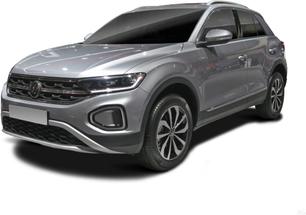
For a small SUV that technically starts under the $40,000 mark, the 2024 Volkswagen T-Roc has a fair bit going for it.
It’s still in its first generation, but updates have made some parts of the T-Roc feel properly up to speed. And the parts that haven’t? Well, maybe that’s not such a bad thing.
We’re driving the mid-spec Style 110TSI, which sits above the base CityLife, but below the R-Line. Then of course, there’s the wicked R variant.
But is this a Euro that could replace your trusted Japanese small SUV?
Brand Finance self-effacingly describes itself as "the world's leading independent branded business valuation and strategy consultancy". And adds that it regularly picks apart the current and future value of more than 3500 brands across multiple market sectors around the world.
These London-based boffins reckon Delta trumps American Airlines, Real Madrid has knocked off Manchester United, and Haval is a more powerful SUV brand than Land Rover or Jeep. So, no surprise Haval promotes the research on its Australian website.
Just to split hairs, Land Rover leaps to the top of the rankings when it comes to overall value, but in terms of an upward trajectory and potential for future growth, Brand Finance says Haval is the one.
The irony is you probably wouldn't know a Haval if it ran into you, which obviously isn't good in any sense, but a factor of the Chinese Great Wall subsidiary's relatively brief time, and so far, limited sales in the Australian market.
One of three models released in late 2015 to launch the Haval brand locally, the H2 is a small, five-seat SUV competing against a hot bed of more than 20 established players including the segment-leading Mitsubishi ASX, ever-popular Mazda CX-3, and recently arrived Hyundai Kona.
So, is Haval's potential reflected in its current product offering? We spent a week living with the sharply priced H2 City to find out.
So that’s the T-Roc, a bit of Euro style that’s still priced to take the fight to some small SUVs from Japan or Korea.
Is it the cheapest style-forward small SUV you can get? No, but it’s far from the expensive end of things.
Plus, if you can resist ticking some option boxes, it beats some value-focused rivals and looks good doing it.
If the feeling of a sturdy fit-out and a confidence inspiring drive is important to you, I reckon the T-Roc should be an entry on your shopping list.
How you define value will determine whether the Haval H2 City is the right small SUV for you. In terms of metal for money it delivers heaps of space, a reasonable standard features list and adequate safety. But it's let down by mediocre performance, sub-par dynamics and a surprising thirst for (premium) unleaded. Brand Finance may rank Haval high on the power index, but the product needs to climb a few rungs higher before that potential's realised.
The T-Roc subtly stands out without being garish, avoiding becoming part of the highway or suburban camouflage without relying on extreme design decisions.
For example, the LED daytime running lights that wrap around the shapes below the LED 'I.Q' headlights where vents would otherwise be on the R performance variant are quite cute.
In fact, the whole front end of this small SUV has a friendly look, even if there’s nothing specific that’s particularly exciting about it.
This 'Petroleum Blue Metallic' colour is a $700 option, but anything other than white costs extra.
However, the black roof two-tone look is a standard for the Style, as are the black mirror caps and its 18-inch alloys.
There are roof rails up top, tinted privacy windows for rear passengers and for the rear window and a sloping roofline at the rear that adds a touch of ‘sport’ to the silhouette along with a small spoiler at the top.
Inoffensive but uninspiring is a blunt yet fair summation of the Haval H2 City's exterior design, especially when you think about rivals like the dramatic Toyota C-HR, edgy Hyundai Kona, or funky Mitsubishi Eclipse Cross.
The nose is dominated by a huge, slatted and chromed grille with bright metal mesh behind it, and vaguely Audi-of-10-years-ago shaped headlights either side.
The lighting treatment is elaborate with projector halogen main beams and reflector halogen high-beam units surrounded by a dotted-line string of LEDs looking uncomfortably like aftermarket inserts available via your online auction site of choice.
Standard fog-lights are recessed into a blacked-out area under the bumper, with another line of LEDs, functioning as DRLs, below that. And just to complicate matters, the upper LEDs only illuminate with the headlights, while the lower units come to life when the headlights are off.
A sharp character line runs along the H2's flanks from the trailing edge of the headlights to the tail, with an equally distinct swage line running from front to back, narrowing the car's mid-section and accentuating the bulge of its wheelarches, filled adequately by standard 18-inch multi-spoke alloy rims.
The rear is similarly reserved, the only hint of flash confined to a roof-top spoiler, cool typeface chosen for the prominent Haval badging across the hatch door, and a diffuser with chrome exhaust tips poking through either side.
Inside, the look and feel is early noughties plain, The dashtop is a nice soft-touch material, but there are lots of buttons and old-school analogue instruments combined with a media and ventilation interface that might have been acceptable on a mainstream model 20 years ago.
Don't even think about Android Auto or Apple CarPlay. The tiny LCD screen (sitting below a CD slot) wins the smallest, most basic graphics award. A miniscule scale reflecting the manual air-con's temperature setting is a particular low-light.
A small 3.5-inch screen between the tacho and speedometer displays fuel economy and distance information, but frustratingly no digital speed read-out. Standard cloth trim has a distinctly synthetic but tough feel, while the polyurethane plastic steering wheel is another throwback.
Sure, we're at the budget end of the market here, but be prepared for low-tech design combined with cheap and cheerful execution.
Inside the T-Roc is a bit of an interesting dichotomy.
Some of what’s in here is ‘old-gen’ Volkswagen stuff, but it still holds up today against even some recently introduced models.
The dichotomy is that while it’s very usable and slick, some of its materials and surfaces let it down a touch.
The good points are that the cabin tech is a perfect level of physical and digital. The buttons and controls are easy to use and feel solid and even though the climate controls could be more physical, they’re still good as far as touch panel style controls go.
The older VW gear is arguably better than a lot of what’s found in newer models where some use of touchscreens and haptic panels has drawn negative feedback from customers.
The multimedia software managed via the 8.0-inch touchscreen is more simple and sensible than the new version, plus the Digital Cockpit Pro display for the driver is clear and, importantly, customisable. It’s a similar cockpit system that used to seem quite impressive in high-end Audis.
But what doesn’t feel very high-end is some of the plastic and the decisions around function in the rest of the space.
The leather on the seats is not a cheap option box to tick at $3450, but it feels a little cheap to the touch. It’s a tad hard and even has a bit of a rough look to it.
That option also makes them heated and electrically adjustable, though, which is welcome in winter. Otherwise, cloth seats without the optional leather or heating would be absolutely fine, and that means you get a storage space under them, too.
This central space between the driver and front passenger, too, is a little awkward with the cupholder placement. It’s behind the shifter meaning a tall bottle will be in the way and it’s got slightly odd sizing for bottles or cups with nothing to stop them wobbling.
I am, however, a fan of the angled-away phone slot under the climate controls to minimise phone screen visibility (and distraction) and the traditional shifter itself is welcome.
Look up, and (in our test car) there’s an optional ($2000) panoramic sunroof there. It’s yours if you want it, and it does have an electric blind, but some Japanese and Korean cars at this price point get that as standard.
An average-sized adult will find the second row is spacious enough and relatively comfortable. There’s an armrest, dual-directional vents and two USB-C ports.
Behind that, boot space is generous at 445L with the seats up thanks to an adjustable floor, which is very useful for tall items and even manages to fit a space saver spare tyre under it.
It’s a total of 1290L with the split-fold seats down, too, though they’re not super flat with the adjustable floor down.
At 4.3m long, 1.8m wide, and just under 1.7m high the Haval H2 is a big small SUV, and there's plenty of room inside.
Up front, storage runs to a bin (with sliding top) between the seats, two large cupholders in the centre console and a lidded oddments tray in front of the gearshift, as well as a sunglass holder, average-sized glove box and door bins with room for bottles. You'll notice the pennies saved with non-illumination of the sunvisor vanity mirrors.
Rear seat passengers pick up generous head, leg, and importantly, shoulder room. Three large adults across the back will be tight but do-able for short trips. Kids and young teenagers, no problem.
A centre fold-down armrest houses neatly integrated dual-cupholders, there are bins with space for bottles in each door and map pockets on the front seat backs. No adjustable air vents for backseaters, though.
Connectivity and power runs to two 12-volt outlets, a USB-A port and an 'aux-in' jack, all in the front.
Although a strong seller in the small SUV segment, the Mazda3's Achilles heel is its modest 264-litre boot, and while the H2 exceeds that number, it's not by much.
The Haval's 300-litre capacity is way less than the Honda HR-V (437 litres), Toyota C-HR (377 litres) and Hyundai Kona (361 litres). But it's enough to swallow the bulky CarsGuide pram or three-piece hard suitcase set (35, 68 and 105 litres), and (as with all contenders in the segment) a 60/40 split-fold rear seat increases flexibility and volume.
If you're into towing, the H2's limited to 750kg for an un-braked trailer and 1200kg braked, and the spare tyre is a full-size (18-inch) steel rim shod with narrower space-saving (155/85) rubber.
The specific Style test vehicle being reviewed here is priced at $38,890, before on-road costs. But it's worth noting a new example of the Style will cost you $39,790 at the time of writing, as its price has since ours was 'delivered'.
While the Style features some older VW fitout, it comes with a decent list of features.
A set of 18-inch wheels, self-levelling headlights (with cornering function), some cute LED DRLs plus chrome highlights with black contrast trim are the best way to spot a Style from the outside.
Inside, there’s an 8.0-inch touchscreen for multimedia paired to the driver’s 'Digital Cockpit Pro' display.
The multimedia screen is last-gen VW gear, but that’s not a bad thing.
There’s also dual-zone climate control with an allergen filter, ambient lighting, a six-speaker sound system, wireless phone charger and wireless Android Auto and Apple CarPlay.
There are a few options on our test car that nudge the price up quite quickly, like the metallic paint, leather upholstery, sunroof, plus the keyless entry or ‘Easy open and close package’.
All this brings the total price as-tested to $45,640, before on-roads.
The good news is you don’t need to tick all, or any, of those options for this to still be a compelling option.
At the time of publication, the Haval H2 City was carrying a drive-away price tag - $19,990 for the six-speed manual version and $20,990 for the six-speed auto (as tested here).
So, you're getting a lot of metal and interior space for your money, but what about the standard features taken for granted in the H2's main competitors?
Included in that drive-away price are the 18-inch alloys, keyless entry and start, reverse parking sensors, (manual) air-conditioning, cruise control, front and rear fog lights, LED daytime running lights, ambient interior lighting, heated front seats, rear privacy glass, and cloth trim.
But the headlights are halogen, the audio is four-speaker (with Bluetooth and single CD player), the safety tech (covered in the Safety section below) is relatively basic, and 'our' car's 'Pewter' (silver metallic) paint is a $495 option.
Equivalent entry-level competitors from Honda, Hyundai, Mazda, Mitsubishi and Toyota will set you back between five and $10k more than this H2. And if you're happy to live without features like a media touchscreen, digital radio, leather accented wheel and gearshift, rear air vents, reversing camera, etc, etc, etc, you're onto a winner.
The engine in the T-Roc - as with most Volkswagens - does what it says on the tin. Essentially, a 110TSI means there’s 110kW of turbocharged VW happening, in this case a 1.4-litre four-cylinder that also makes 250Nm of torque.
It’s paired to an eight-speed torque converter, which will be music to the ears of those who have been scorned by older VW dual-clutches.
It drives the front wheels only, and there’s no hybridisation or 48-volt system.
The Haval H2 City (as tested) is powered by a 1.5-litre direct-injection, turbo-petrol, four-cylinder engine driving the front wheels through a six-speed automatic transmission.
Peak power (110kW) arrives at 5600rpm, with maximum torque (210Nm) delivered at 2200rpm.
A lack of electrification in a relatively small engine and a traditional drivetrain shouldn't scare you too much, in this case.
Combined cycle fuel consumption is a claimed 6.3L/100km. On test in mostly urban areas or for spirited driving we saw the fuel use rise a little higher than that but not by as much as you might think.
After a mix of primarily urban, some highway and a stint of dynamic test driving, the trip computer admitted to a figure of 8.1L/100km.
Claimed fuel economy for the combined (ADR 81/02 - urban, extra-urban) cycle is 9.0L/100km, the 1.5-litre turbo four emitting 208g/km of CO2 in the process.
Not exactly outstanding, and over roughly 250km of city, suburban and freeway running we recorded 10.8L/100km (at the bowser).
Another rude surprise is the fact the H2 requires 95 RON premium unleaded fuel, of which you'll need 55 litres to fill the tank.
The T-Roc is essentially a previous-generation Golf-turned-small SUV in terms of its platform, and that’s a great thing for anyone who likes driving.
The Golf 7.5 was a benchmark for everyday driving as far as hatchbacks are concerned, and even though the current Mk8 might be a bit more up to date, the T-Roc’s use of the platform it rides on is practical and fun.
It’s not as nimble as a Golf, but the T-Roc in front-drive Style guise, with a responsive turbocharged engine and no all-wheel drive system weighing it down, is not only more dynamically capable than most rivals, it’s also easy to access that capability.
The 1.4-litre engine feels well-tuned for its two modes accessible through the shifter - calm but not lazy in ‘Drive’ and eager but not thrashy in ‘Sport’.
It works well with the transmission on the move, picking right gears fairly accurately, though there are paddles behind the wheel for those who prefer to take charge.
The drive modes are also more customisable than just those on the shifter, with 'Individual' selections for steering and drivetrain able to be used rather than the standard 'Eco', 'Normal' or 'Sport' full-system modes.
While the steering wheel itself is a little thick and the feedback, while adequate, isn’t the most telling, it’s accurate and inspires confidence in cornering.
The T-Roc handles turn-in and exits well, even soaking up bumps and not becoming unsettled when braking.
Its safety systems are relatively subtle, and the active cruise control is well sorted, though the automatic braking at car park speeds can be overzealous. Something I’ve experienced in VW Group models several times over the years.
The main culprit for the T-Roc was a shrub beside my driveway that, while not touching the car, would set off the automatic braking system. Still, better than letting the car roll back if there was a proper obstacle or someone who could be hurt in the way.
Aside from that, the Volkswagen T-Roc is fun and easy to drive, and the work that’s gone into that puts its price into perspective a little more.
There are more expensive cars available that are less impressive, some even disappointing.
Cold weather and internal-combustion engines are usually firm friends. Lower ambient temperature means denser air entering the cylinder (even under the extra pressure of a turbo), and as long as more fuel arrives at the same time, you'll have a bigger bang and more power.
But the H2 City's 1.5-litre four must have missed the memo, because cool morning start-ups result in a distinct reluctance to proceed at normal pace.
Sure, there's forward motion, but pinning the right-hand pedal to the floor won't shift the speedo needle much above a brisk walking pace. Unsettling.
Even after a few minutes, when things settle into a more predictable pattern, this Haval hovers at the sluggish end of the performance spectrum.
Not that any of the compact SUVs it competes with are rocketships, but you can generally expect a turbo-petrol engine to serve up a decent dose of low-down grunt.
However, with a maximum output of 210Nm delivered at a relatively high 2200rpm the 1.5-tonne H2 won't be threatening the land speed record anytime soon.
Suspension is strut front, multi-link rear, with the H2 City riding on (235/55x18) Kumho Solus KL21 rubber, and on typically pock-marked and bumpy urban roads ride quality could be better.
The steering displays some nervousness on centre, which combines with a lack of road feel and a mildly disconcerting top-heavy sensation in cornering. It's not that the car lurches or suffers from too much body roll; more that something isn't quite right in the front-end geometry.
On the upside, although firm, the front seats are comfortable, the exterior mirrors are nice and big, overall noise levels are moderate, and the brakes (vented disc front / solid disc rear) are reassuringly progressive.
On the downside, the media system (such as it is) is woeful. Plug your mobile device (mine's an iPhone 7) into the car's single USB port and you'll be met by a 'Loading-USB error' message, the heating and ventilation read-outs on the letterbox slot screen are a joke, and to top it all, select reverse and the audio cuts out altogether.
In 2017, ANCAP gave the T-Roc five stars for safety. For most people, that says enough, plus the list of features the SUV comes with is fairly comprehensive even in the Style.
While its rating is getting on in years, the only real downside to the T-Roc’s age when it comes to safety is it only having six airbags - front and side for the front passengers, plus curtain airbags for front and rear passengers.
But the list of tech isn’t lacking, with driver fatigue detection, pedestrian monitoring, parking bay and parallel parking assistance, pedestrian monitoring, side assist, rear cross-traffic alert and lane assist.
In terms of active safety the H2 City ticks the 'cost-of-entry' boxes, including ABS, BA, EBD, ESP, rear parking senors, tyre-pressure monitoring and emergency brake hazard lighting.
But forget about more recent systems like AEB, lane keeping assistance, blind spot monitoring, cross traffic alerts or adaptive cruise. And you don't get a reversing camera.
If a crash is unavoidable the airbag count runs to six (dual front, dual front side, and dual curtain). And there are three child restraint/baby capsule top tether points across the back seat, with ISOFIX anchors on the outer two positions.
The Haval H2 scored a maximum five-star ANCAP rating in late 2017, a rank it would not replicate when assessed against 2019's more challenging criteria.
Volkswagen’s five-year/unlimited kilometre warranty is pretty standard for a premium-leaning brand, with VW also offering roadside assistance for the warranty period.
In terms of servicing, VW offers care plans of three years or five years, covering servicing for $1515 or $2770 respectively. That's an average of $505 or $554 per workshop visit.
Otherwise, servicing costs at 12-month/15,000km intervals can cost from $470 for some to $1104 to the biggest service if you don’t go with the locked-in package.
Haval covers all new cars it sells in Australia with a seven year/unlimited km warranty with 24-hour roadside assistance provided for five years/100,000km.
That's a strong statement from the brand, and well ahead of the major players in the mainstream market.
Service is recommended every 12 months/10,000km, and no capped-price servicing program is currently in place.