What's the difference?
It was the moment the Golf grew up. Just over 20 years ago Volkswagen unveiled a fire-breathing R32 variant to top the fourth-gen line-up of its already iconic hatch. With a growling atmo V6 engine, proper Haldex-based all-wheel drive, fat rubber and a pumped-up body, it instantly became the brand’s performance flagship.
And another four Golf generations later an updated ‘8.5’ version of its current ancestor, the Golf R has arrived. An equally focused, heavy-hitting AWD with just over 30 per cent more torque and close to 40 per cent more power than that snarling, original R32.
CarsGuide was invited to its local launch, including a suitably challenging drive program on road and track. So, stay with us to see if this exceedingly hot hatch can earn a spot on your performance five-door short list.
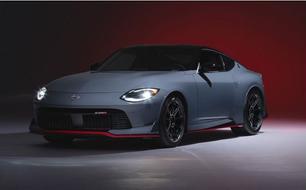
The Nissan Z is a real blueblood.
With Datsun, Nissan introduced the world to Japanese cars via a gruelling round-Australia rally in 1958 that had the country captivated. Within 10 years the 1600 made them respectable, but it was the 240Z of 1970 that also made them desirable.
Seven generations later, today’s RZ34-series Z – along with the Toyota/Subaru GR86/BRZ and Mazda MX-5 – embodies that nation’s tradition of affordable yet charismatic sports cars.
They’ve always been ripe for modifying as well, with Nissan leaning on its performance arm Nismo for 40 years. Which is exactly what the Z Nismo is all about, stepping up to take on the Toyota GR Supra, BMW M240i and Ford Mustang GT.
The old 370Z Nismo was a true corker. Let’s find out if this one does the family proud.
While some Golf enthusiasts will prefer the lighter, more nimble, front-wheel drive GTI, this Golf R is now an even more serious machine.
It’s a great touring car, super-sharp in the corners and good value in the context of its competitive set. Cars like Toyota’s GR Corolla and Honda’s Civic Type-R are on notice.
Note: CarsGuide attended this event as a guest of the manufacturer, with travel, accommodation and meals provided.
The Nismo turns up the wick just enough to justify its $20K premium over the brilliant regular Z.
Visual changes inside and out are one thing, but with tangible boosts in performance, handling and braking – with no detriment to ride quality or comfort – as a result of properly engineered upgrades, the RZ34 version deserves its place in Nissan’s sports car hall of fame.
Note, though, that good as it is, the Nismo is also a potent reminder of how solid a foundation the standard Z also is… especially in manual gearbox guise.
In terms of exterior design, at the front there’s a relatively mild cosmetic makeover with some changes to the headlights and the bumper as well as a horizontal line across the grille, which, along with the VW roundel, is illuminated.
From the side the ride height is 20mm lower, and cosmetically there are matt silver housings on the exterior mirrors, blue calipers behind new design 19-inch rims and in the centre of the wheel there’s an R logo rather than the traditional VW branding.
At the back, you’ve got new customisable LED tail-light clusters with welcome and goodbye effects, which can be programmed via the vehicle settings in the multimedia system, as well as a larger spoiler at the back of the roof on top of the tailgate.
Inside, the ‘big’ change is an appreciably larger central multimedia screen running new program software. It has physical touch bars along its lower edge for audio volume and climate control adjustment.
The driver’s display now includes a G-meter and GPS lap timing. The steering wheel has its own look and feel and the sports seats feature integrated headrests. There are alloy covers on the pedals and ‘Carbon Grey’ decorative inlays around the dash and doors.
It’s a classically restrained and subtly sporty design treatment inside and out.
Reinterpreting a classic via retro styling isn’t always successful – hello, 2001 Ford Thunderbird – but what Nissan has achieved with the RZ34, given it’s a pastiche of several Z greatest hits from the ‘70s, ‘80s, ‘90s and today, is truly masterful design.
Take the cab-backward silhouette, long nose and short wheelbase; it somehow manages to deftly capture the spirit of previous Z generations, without looking like a bad caricature.
Points especially go to the stunning nose and tail treatments that evoke both the ‘70s 240/260/280 as well as the sadly long-forgotten Mid-4 II concept car of 1987.
Slightly longer than the regular model, the Nismo’s nose is meant to evoke the early ‘70s Japan domestic market Fairlady ZG, with the G denoting “Grand Nose”. Fun fact: Fairlady first appeared on the 1960 Datsun roadster as deference to the Broadway musical (and later Audrey Hepburn film, presumably) ‘My Fair Lady’.
Anyway, besides scraping speed humps and driveways, the Nismo’s elongated front bumper promotes improved engine cooling and better aero flow, as do the side sills, larger wraparound three-piece spoiler and redesigned rear bumper/diffuser. The wider-yet-lighter back wheels are 10mm wider. And a glossy red stripe runs along the underside like Anna Nicole Smith’s lipstick.
Does it all look better than the simpler, purer regular Z? No. But they perform better. And isn’t that the point of a Nismo?
For reference, the Golf R is just under 4.3m long, close to 1.8m wide and a bit less than 1.5m tall with a 2630mm wheelbase. Right in the middle of the medium hatch footprint.
In the front there’s plenty of breathing room for the driver and co-pilot. And in terms of practicality, you’ve got big bins in the doors with room for large bottles. There’s also a box between the seats with a lid that doubles as an armrest, which also adjusts for height and length, which is nice.
If you need more, there are two cupholders in the centre console, one of which is adjustable for smaller cups, plus a long oddments tray as well as a more powerful ventilated wireless device charging tray at the front end of the console.
There’s also a decent glove box and two USB-C ports for power and connectivity.
In the back, sitting behind the driver’s seat set for my 183cm position, I have ample headroom, legroom and more than enough foot room.
That said, three abreast for full-size adults would be very squeezy. Even a trio of middle teenagers might find it a bit tight. Best as a two-seater in the rear.
Then for storage, you’ve got big bins with room for bottles. Fold down the armrest and you’ve got not one, not two, but three different size cupholders in it.
There’s a nifty double pocket set-up on the front seatbacks, each just right for a phone or hand-held game console, as well as a more conventional map pocket lower down.
There are individual ventilation outlets as well as climate control for the rear section, plus two USB-C outlets.
With the 60/40 split-folding rear seat upright the 8.5 Golf R boasts 341 litres (VDA) of boot volume, which is decent, and that number expands to nearly 1197 litres with the seat down.
There’s a load-through hatch, tie-down anchors, a 12-volt outlet, multiple bag hooks, specific lighting and storage compartments to the side.
No spare of any description, however, with a repair/inflator kit your only option.
So, just as the exterior is an anthology of past Z car stylings, the same also applies inside.
A mishmash of new and old as well, they also marry together harmoniously – after you’ve bent and contorted yourself inside nice and snug, on the racy yet not-too-unforgiving set of Recaro bucket seats.
The Z’s signature sloping roof and rising window line; a trio of dials that have been a hallmark of the series since the 240Z, a thin three-spoke steering wheel; a physical hand brake and a pair of old-school seat base angle adjuster knobs just like in sports cars from 20 years ago betray the Nissan’s ageing DNA.
But they set the mood, like hearing a favourite old track, though one remixed by a contemporary DJ to a modern beat.
Which means that you’ll be able to view whichever artist you like through the 8.0-inch touchscreen, either via Bluetooth audio streaming, Spotify or some such app.
Easy to decipher and simple to navigate (though no imbedded GPS is fitted), the Z’s dashboard also offers the essential surround-view parking camera (given how limited vision is as you’re sat so low with not much glass to peer out through), amongst a host of vehicle functions. You’re also privy to extremely useful blind-spot alert thoughtfully placed inside the car by the mirror mounts, four cupholders if you count the door-sited ones and surprisingly generous storage. Practicality, thy name is Fairlady.
For lightness and sensible packaging, we understand why Nissan’s sports coupe is strictly a two-seater proposition – and certainly a roomy enough one for the lucky pair at that.
However, it’s a shame Nissan doesn’t offer a 2+2-seater option in the form of a pair of occasional jump seats behind, as per the old Datsun days, as there seems to be just enough space for smaller folk – though as a pair of shelves, that area did prove very useful during our week with the Nismo.
Issues? Along with a sheer lack of grace entering and exiting the Z, poor overall vision and 350Z-era switchgear that are now old enough to drive themselves, finding the right driving position eluded this particular 178cm tester. The seats do a great job keeping you firmly fixed in place, and of course the wheel tilts and telescopes, but those pair of knobs were forever being twirled and fiddled with.
Oh, and simultaneously unlocking and opening the doors was also confounding, due to exterior door handles and pressure sensor not designed for Homo Sapien hands.
Further back, and as in the two previous generations Zeds, a brace bisects the luggage area. Rated at 241 litres VDA, it is wide and flat but a wee bit shallow. At least it adds another level of practicality and is big enough for those weekends away.
There’s no cover (though seeing what’s inside isn’t easy) and no spare wheel of any size is fitted.
Meanwhile, on the other side of the Nismo…
The new Golf R is priced at $70,990, before on-road costs, which is a $500 bump from the version it supersedes. A new limited run Black Edition model, the details of which we’ll get to shortly, weighs in at $72,490.
At that money the Golf R lines up against a diverse group of properly hot hatches like the related Audi S3 ($78,800), Honda Civic Type R ($74,100), Lexus LBX Morizo RR ($76,490), Mini JCW ($56,990) and the Toyota GR Corolla ($70,490). Even higher-priced outliers like the BMW M135 xDrive ($83,600) and Mercedes-AMG A35 4Matic ($87,900).
So, the heat is on, and at 70-odd kay it’s fair to expect a decent basket of standard fruit. Aside from the performance and safety tech covered later the Golf R features list includes auto LED matrix headlights, LED tail-lights, Nappa leather-appointed trim, a leather-trimmed steering wheel, heated and ventilated front seats, three-zone climate control, 14-way electric driver’s seat (with memory), 480W nine-speaker Harman Kardon audio (including digital radio), a 12.9-inch multimedia screen (with built-in nav) and a 10.2-inch digital instrument display.
There’s also keyless entry and start, 30-colour ambient lighting, adaptive cruise, a head-up display, wireless Android Auto and Apple CarPlay, auto rain-sensing wipers, surround lighting, a (more powerful) ventilated wireless charging pad, a 360-degree overhead view, ‘Park Assist Plus’, metallic paint, fog lights and 19-inch alloy rims.
Not bad at all in the context of this category.
VW Australia has also announced an optional ‘Warmenau Package’ for the standard R - named after the location of the R division’s headquarters in Wolfsburg - for $6500 bundling up 19-inch forged alloy wheels (developed in-house by Volkswagen R, reducing the weight of each wheel by 8.0kg or 20 per cent), carbon interior trim elements and an ‘R-Performance’ titanium exhaust system from Akrapovič.
Limited to 300 examples, the Black Edition features dark accents throughout, including the wheels, badges, mirror housings, brake calipers and tailpipes, as well as darkened headlights and the lighter 19-inch forged alloys. It’s available in all three Golf R colours - ‘Pure White’, ‘Grenadill Black’ and ’Lapiz Blue’.
Nismo is short for Nissan Motorsport. It’s like what AMG means to Mercedes or HSV was to Holden. Which means, of course, that Australians love this sort of thing.
Last year, as limited editions, the first 100 Z Nismos sold out in under an hour, according to Nissan. Now it’s back more permanently, still from $94,000 before on-road costs, but without quite the exclusivity.
But, don’t worry. You still get the Nismo body kit and leather/Alcantara-clad cabin treatments, stronger performance and track-focused chassis upgrades, which include extra bracing, sharper steering, beefier suspension, bigger brakes and GT-R-spec wider wheels, compared to the regular Z. More on the engineering changes later on.
There are also Recaro sports seats, Nismo-branded digital instrumentation and steering wheel, additional drive modes and red trim highlights.
These come above the regular Z items like keyless entry/start, an 8.0-inch touchscreen, surround-view reverse camera, (wired-only) Apple CarPlay/Android Auto, Bluetooth connectivity, an eight-speaker Bose premium audio, active noise cancellation tech, dual-zone climate control, artificially amplified exhaust note and wider-yet-lighter 19-inch alloy wheels.
Note, however, that going Recaros means ditching the regular Z’s seat heating and electric adjustment including lumbar support. And there’s no spare wheel in either grade… just a tyre-repair kit. Boo.
For your $100K-driveaway, from an equipment perspective anyway, the Nismo does stretch the value argument almost to breaking point, so it’s a good thing that the Z still looks so good. And there’s lots of beautiful engineering underneath that pretty skin too.
This updated Golf R is powered by a 2.0-litre, four-cylinder turbo-petrol engine VW enthusiasts around the world know by its ‘EA888’ code name.
In this guise it now produces close to 245kW (+10kW) and 420Nm (+20Nm) with the maximum available across a broad plateau from 2100 to 5500rpm.
The 2.0L EA888 features a cast iron block and alloy head, with direct-injection, water-cooled exhaust gas routing to the turbo (in the cylinder head) and variable valve timing with double camshaft control.
Power goes to all four wheels via a seven-speed dual-clutch auto transmission and an all-wheel-drive system using a twin-clutch pack to manage front-to-rear drive distribution as well as torque across the rear axle.
Nissan sure knows how to make a great six-cylinder engine.
The Nismo’s internal combustion engine in question is the VR30DDTT – a twin-turbo V6 making four per cent more power and around 10 per cent more torque compared to the one found in the regular Z.
Power jumps 11kW and torque a handier 45Nm to 309kW @ 6400rpm and 520Nm between 2000rpm and 5200rpm respectively, providing extra punch as well as a slightly superior power-to-weight ratio of around 184kW per tonne.
That’s up 2kW/tonne, despite the Nismo gaining around 50 kilos, to 1680kg.
This has been possible thanks to extra turbo boost, revised ignition timing, improved cooling systems and updated engine management software.
Driving the rear wheels is a Mercedes-Benz based nine-speed torque-converter auto. Upgraded and retuned for track use, it includes a Sport+ mode providing speedier shift responses. Aided by the new launch control function, we managed a tidy 4.5 seconds from standstill to 100km/h.
Sadly, though, there’s no manual option as per the regular Z.
What else is unique here? Underneath, the platform might date all the way back to the 350Z of 2003, but Nismo has really worked some of its magic.
Along with the retuned dampers, everything else has been stiffened up – including the anti-roll bars, springs, bushes and even the steering rack mounts – to help deliver more controlled and linear steering. There’s extra underfloor bracing at the front, centre and rear of the car, thicker brake rotors and model-specific Dunlop SP Sport Maxx GT600 tyres that are wider at the back, on gloss-black RAYS alloys.
Continuing to use a double-wishbone front and multi-link rear suspension set-up, the Z’s front/rear weight distribution is 56/44 front/rear.
Now, the Nismo was our favourite version of the previous 370Z by some margin. How does it all square up in RZ34 guise?
VW is proud to point out that thanks to an electronic coolant regulator unit, the Golf R’s 2.0L engine “features very efficient thermal management with a short warm-up phase” which it says reduces friction losses for better fuel consumption.
Its official combined cycle (urban/extra-urban) fuel economy figure is 8.3L/100km, which isn’t out of order for a hot rod hatch with this much performance potential.
Over the course of a 200km-plus road drive on the launch program, covering mainly twisting B-road and highway sections, we saw a dash-indicated average of 9.9L/100km.
With a 55-litre tank those figures translate to a theoretical range of around 660km, and a real-world number closer to 550km between fills.
Not surprisingly, the Z Nismo needs to drink from the 98 RON premium unleaded petrol fountain.
Nissan reckons owners should expect to average 10.4L/100km (for 242 grams per kilometre of carbon dioxide emissions) on the combined cycle (and 15.0 and 7.7 L/100km for the urban and extra-urban ratings respectively.
This figure is almost half a litre worse than the non-Nismo Z’s 9.8L/100km result, but still substantially better than the six-speed manual base grade’s 10.8L, despite the latter being some 33kg lighter.
With a sizeable 62L tank, you might be able to average just under 600km between refills.
For the record, we achieved 11.9 litres per 100km in a mix of urban, freeway and performance driving which is not too bad at all given how often we fanged this thing.
The Golf R weighs in at 1517kg and Volkswagen says it will accelerate from 0-100km/h in 4.6sec, which is quick, and the car’s broad torque band makes it super-usable. The maximum 420Nm is available from 2100rpm all the way to 5500rpm.
A blue ‘R’ button on the steering wheel is your short-cut access point to various modes - ‘Eco’, ‘Comfort’, ‘Sport’, ‘Sport+’ and ‘Race’ - and in the racier settings what VW calls ‘Turbo Pre-load’ steps in. More or less an anti-lag set-up for smoother power delivery.
Even from low revs in a (manually-selected) high gear, squeeze the throttle and it quickly builds up a head of steam. Power delivery is impressively linear.
The transmission is super slick and manual shifts are rapid. Refreshingly, manual mode is exactly what it says on the tin. Select a gear with the wheel-mounted paddles and it will stay in that ratio until the rev limiter makes its stuttering presence felt.
And if you’re going into a corner under brakes just keep the left-hand paddle pulled in and the transmission will automatically cycle down to the lowest ratio available, which is handy if you’ve really got the bit between your teeth.
Even with the standard exhaust, once you’ve dialled up the sporty modes, you get that snap, crackle and pop on full-bore upshifts and on the over-run, which also enhances the experience.
Suspension is by struts at the front and multi-links at the rear, and the ‘Adaptive Chassis Control’ system monitors acceleration, braking and steering to fine-tune the set-up.
We drove on some rough B-road sections, in the wet, and the R remained surprisingly refined. Given how hard it grips and how much it communicates back through the seat of the pants it is a comfortable touring car. It’s like a GT in hatch form, eating up the kilometres without fuss or putting too much stress on the driver.
Worth noting we spent much of our time in ‘Nürburgring’ mode, accessed through the Race menu, which, no surprise, was developed on the famous Nordschleife. It’s tuned to optimise dynamic performance on undulating patchy surfaces and is a superb set-up sweet spot for the road and track.
Progressive ratio steering delivers good road feel without too many jitters coming up to your hands. And turn-in is precise without being jagged. Just point the car and it goes exactly where you want it to.
The drive system splits torque between the front and rear axles and across the rear. If, for example, it senses the car wants to turn more but might push into understeer, it calmly manages drive distribution to keep everything under control.
Tyres are Bridgestone Potenza S005 (235/35) and over even coarse chip surfaces they remain quiet and grip with admirable determination.
Braking is by ventilated discs all around and on twisting backroads we occasionally leant on them hard and they were well up to the task. A firm pedal with progressive application when getting on or easing off the brakes.
They even stood up to a race circuit pressure test without raising a sweat, because day two of the launch included a track session at Sydney Motorsport Park. And we can confirm the car is properly fast, balanced and predictable in that environment.
SMP’s dipping, then uphill, off-camber right-hand turn four highlighted the R’s grip and the sophistication of its torque vectoring set-up. We also went sliding on the skid pan in the car’s Drift mode, which biases the rear axle, and is huge fun.
In terms of lower speed manoeuvring, you’ve got a 12-metre turning circle, which isn’t vast but isn’t tiny, so be ready for that.
You’ve also got a 360-degree overhead view, which is very handy in tight spots. And if you want some extra support, ‘Park Assist Plus’ will help you slot the car into the space you’re aiming for.
Under the heading of miscellaneous observations, the sports front seats deliver solid lateral support yet remain comfortable over long periods behind the wheel.
Speaking of the wheel, it’s just the right thickness, with perforated leather at the quarter-to-three positions helping with that lovely connection to the front tyres.
As well, from an ergonomic point-of-view, working through the central multimedia screen and driver’s display is straight-forward, with the latter able to be configured via the steering wheel.
Nissan does plenty of things really well, and the Nismo is no exception.
Firing up the VR30DDTT 3.0-litre twin-turbo V6 is also a reminder of how brilliant the brand’s six-cylinder engines are. They tingle all the right sensory areas, starting with the baritone rumble at idle.
What a portent of what’s to come!
Nismo’s massaging of the engine, combined with upgraded clutch packs and a retune of the nine-speed auto’s software, results in stronger, hungrier and angrier acceleration, no matter which of the three driving modes you’ve selected. Even in Normal, the Nissan leaps off the line. In Sport, its appetite for speed is palpable. In Sport+, this thing is eating up the tarmac. Somehow, in an EV era where 4.5s to 100 is ho-hum, the (electronically enhanced but who cares) guttural exhaust bellow seems to amplify the action and thrills.
And spills. For five of our seven days together, the heavens poured. Now, in Normal mode, the Nismo was as benign and controlled as you’d hope in wet conditions, the driver-assist tech metering out just enough torque and braking to seamlessly keep the car humming along. Ever-present but always nuanced, they’ll help make your commute a safer and more relaxing one.
Selecting Sport loosened things up markedly, with the driver needing to be ready to counteract with steering, seating and throttle, though still with a safety net to keep the car from going totally out of whack; Sport+, meanwhile, is not for amateurs or the distracted. This is serious, tail-wagging waywardness that should only be fully explored with experience and care.
Later in the week, Launch Mode in Sport+ on cold but dry bitumen also requires super concentration, as we discovered attempting to extract the fastest acceleration time. Sideways in a straight line at 100km/h-plus is not for the faint hearted.
Beyond all-out performance and drama, the Nismo soars with weighty yet linear and precise steering, resulting in satisfying, hunkered-down handling that is the hallmark of a great sports car. Really tight turns can be taken at impressive speeds, but there’s about 1.7 tonne of muscle to manipulate, so the real fun can be found blasting along a snaking set of more open corners, where the Z’s inherent thrust, poise and grip come into play, all to the symphony of that bi-turbo V6.
That the suspension can feel both firm and supple at the same time is another arrow in the Nismo’s bow.
Nissan isn’t pretending this is anything but a rousing and rapid grand tourer with track aspirations, so the fact there’s also comfort and sophistication to be enjoyed just shows the sheer bandwidth of this particular Z.
Downsides? There’s always a wall of sound, be it mechanical or noise intrusion from the rubber and/or bitumen. The Nismo is rarely quiet. The extended front spoiler seems to summon up speed humps and bumps you never knew existed. The adaptive cruise control’s inability to resume in heavy stop/start traffic betrays this car’s 350Z-era tech. And the lack of a manual transmission, we reckon, is a missed opportunity for an even greater degree of interactive sports car driving.
Still, the Nismo delivers exactly what the brand promises, and continues to improve a firm favourite for speed and drama.
But the gap between Nismo and regular model is smaller than the one that existed in the preceding 370Z, which means that – if $100K driveaway is too steep – you’re already driving something elevated in the standard Z. Particularly if you yearn for a manual.
It’s all good.
The current Golf range picked up a maximum five-star ANCAP assessment in 2022 and VW’s ‘IQ Drive’ driver assistance tech package includes highway speed auto emergency braking (AEB) with cyclist and pedestrian detection as well as junction assist, adaptive cruise control (with stop and go), intersection assist auto-braking, low-speed manoeuvre braking, lane keeping assist, lane-departure warning, blind-spot monitoring, rear cross-traffic alert, driver fatigue monitoring and tyre pressure monitoring,
The airbag count runs to nine - dual front, front and rear side, side curtain and a front centre bag. Then multi-collision brake minimises the chances of subsequent impacts after an initial crash. And as the name implies ‘Emergency Assist’ will take control to slow the car if the driver becomes unresponsive.
There are three top tethers for child seats across the second row, with ISOFIX anchors on the two outer positions.
There is no Euro NCAP or ANCAP crash-test rating for the Nissan Z Nismo
Standard safety features include AEB with pedestrian detection (though no operating parameters could be found about this system), 'Predictive Forward Collision Warning', lane departure warning, blind spot warning, rear cross-traffic alert, high beam assist, tyre pressure monitoring sensor, traffic sign recognition and adaptive cruise control with full-stop (but no resume) functionality.
What’s missing? There is no active lane-keep assist tech to nudge you into line, and you won't find parking sensors nor a front-centre airbag.
But the Z does have dual frontal, side chest and head-protecting airbags, a surround-view camera, anti-lock brakes with electronic brake-force distribution and brake assist, stability control, traction control, hill-start assist, front and rear parking sensors, LED headlights with light sensitivity and rain-detecting wipers.
There is also a child seat tether point on the passenger seat, but the Nismo ditches the other Z’s ISOFIX alternative.
The Golf R is covered by Volkswagen Australia’s five-year/unlimited km warranty, which is a match for most mainstream brands, although an increasing number are nudging up to seven and even 10 years.
There’s also a 12-year corrosion perforation warranty, which is a plus, and the recommended maintenance interval is 12 months/15,000km with ‘Assured Service’ pricing averaging $840 per workshop visit over the first five years.
Three- or five-year pre-paid ‘Care Plans’ reduce that number, with the latter working out to an average of $658 per service. Far from over the top for a performance hatch like this one.
Your wallet’s pretty secure as well.
Like all Zs, the Nismo is subject to a warranty period of five years with unlimited kilometres, while service intervals are fixed at every 12 months or 10,000km – whichever occurs first. There is also five years of roadside assistance.
Nissan also provides pre-paid maintenance plans that can save up to $245 over three years, as well as capped-price servicing. At the time of publishing, the capped-price service appointments cost between $347 and $950 depending on the year of ownership.