What's the difference?
Straight off the bat, let's just acknowledge that there's nothing new about the Toyota Kluger large SUV for 2025 – but that might not be a bad thing.
In a world where there seems to be some new fangdangled piece of car tech out there that works on paper but not in reality - like keyfobs that don't unlock the car properly, or multimedia systems that are just too darn smart for their own good.
There is something quite charming about the familiar specs and on-road comfort of the mid-spec Toyota Kluger GXL seven-seater we're family testing this week. In true Toyota style, it has a healthy mix of the tradition thrown in with workable technology.
It's newer seven-seat SUV rivals might try to tell you that the old Kluger is starting to fall behind, but is it? Or will simplicity win out for tired parents who just want an SUV to do what it says it will?
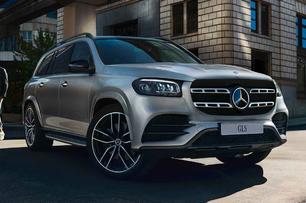
It’s fair to say Mercedes-AMG GLS63 buyers really want it all; good looks, cutting-edge technology, seven-seat practicality, leading safety and V8 performance to name a few key desirables. And, lucky for them, the new model is finally here.
Yep, the latest GLS63 is yet another exercise in excess, leaving very little to be desired by its buyers. Indeed, it ticks almost every box when it comes to a utility vehicle that well and truly puts the sports in Sports Utility Vehicle.
But, of course, this raises questions over whether or not the GLS63 is trying to do too much. And given this model does a whole lot more than its predecessor, these questions need to be answered again. Read on.
The Toyota Kluger GXL Hybrid has been the ultimate SUV this week, as it fits my gear and family in comfort, the on-road handling is excellent and the fuel usage makes owning this long term actually feasible.
This is a great example of a mid-spec seven-seater that is both functional and comfortable. There’s lots to satisfy here and even though it hasn’t been updated, it may be a case of ‘if it aint broke, don’t fix it’.
The GLS63 is an intimidating beast from afar, but it rewards its occupants in almost every way. Yep, there really isn’t a box it doesn’t tick without serious compromise, such is its breadth of capability.
If there was ever a Swiss Army Knife of cars, the GLS63 is definitely a contender for the title, one that makes it very hard to wipe the smile off your face. Just make sure you can fit it in your garage first…
The Kluger epitomes what a large SUV was originally meant to look like. A big body and with enough ground clearance to earn the tag, but the shape is all long lines and gently curving panelling and that makes it look sleek rather than rugged.
Make no mistake, the Kluger is large at 4966mm long, 1930mm wide and 1755mm tall. It's only only 24mm shorter in its length than its big 4WD Toyota Prado cousin. It's size and road presence assures you that it's capable, but it's not trying to convince you it's a 4WD.
Despite not seeing any design updates, the Kluger still feels relevant and more than holds its own when it comes to kerbside handsomeness.
On the inside, the black synthetic leather trims, softly padded touchpoints and interesting dashboard make the cabin both pleasant to look at and spend time in.
The 12.3-inch multimedia display looks lovely with its clear graphics, but it’s still nice to see some traditional elements - like the gear selector, analogue instrument cluster (with a 7.0-inch digital display) and lots of buttons and dials to play with.
Interestingly, there isn’t a traditional transmission tunnel, which means you get a practical flat floor in the middle row and, thus, more legroom for middle seaters.
It's a forgiving cabin that lots of different drivers will find something to like in.
If the GLS63 was a Marvel superhero, it would undoubtedly be the Hulk. Simply put, it has road presence like few others. In fact, it’s frankly menacing.
Of course, the GLS is already pretty intimidating due to its sheer size and blocky design, but the GLS63’s full-fat AMG treatment takes it to another level.
Naturally, the GLS63 gets an aggressive body kit, with its purposeful bumpers, side skirts and rear spoiler serving as instant reminders of what you’re dealing with, but it’s AMG’s signature Panamericana grille insert that really hammers home the point.
Around the side, the GLS63’s 22-inch alloy wheels with staggered tyres (front: 275/50, rear: 315/45) make their presence known, positioned below the wheelarch extensions.
That said, some fun’s also had at the rear end, where the GLS63’s diffuser element integrates the foreboding sports exhaust system with quad tailpipes very neatly.
The focused Multibeam LED headlights also look the part, while the opposing LED tail-lights tie everything together outside quite nicely.
Inside, the GLS63 stands out from the GLS crowd with its sports steering wheel with Dinamica microfibre accents, and multi-contour front seats, which are covered in Nappa leather alongside the armrests, dashboard and door shoulders and inserts.
Of note, the doors bins are unfortunately of the hard plastic variety, which is very disappointing in a vehicle that costs this much. You would expect that cow hide would also been applied to them, but alas it isn’t.
The GLS63’s black headliner serves as an obligatory reminder of its sporting intent, and while it makes for a dark cabin, metallic accents are prominent throughout, while the optional trim (our test vehicle had carbon-fibre) mixes things up, alongside the ambient lighting.
And let’s not forget the GLS63 is still loaded with plenty of cutting-edge technology, including a pair of 12.3-inch displays, with one the central touchscreen and the other the digital instrument cluster.
Both are powered by Mercedes’ class-leading MBUX multimedia system and feature Apple CarPlay and Android Auto support. This set-up arguably remains the best there is today thanks to its speed and breadth of functionality and input methods.
The Kluger is both practical and comfortable for passengers as each row gets a great amount of head- and legroom – yes, even third-rowers, but the low level of amenities in that row will render it a 'sometimes seat' for adults or older kids.
The 208mm ground clearance, wide door apertures and low-sitting seats makes it a very easy SUV to get in and out of, even for kids. The access to the third row is also good as the 60/40 split middle bench seat can be slid forward.
The electric front seats offer lots of adjustments, including lumbar support on the drivers side, but both seats get heating. They’re also well-padded and quite comfortable on a longer journey.
The outboard seats on the middle row offer the most comfort as they have longer under-thigh support, but the entire row benefits from heavy padding and the seat backs can recline.
The third row offers a curious 60/40 split and is wide enough for two adults to not be squished like sardines.
Although the Kluger is a seven-seater, families will be bummed that there are no child seat anchor points in the third row. But the middle row has two ISOFIX child seat mounts and three top-tether anchor points. It is more than wide enough to accommodate three seats side by side and you’ll have enough room for the front passenger when a rearward facing child seat is installed, too.
Individual storage is above average for the class, but the front row gets the best of it. There are two handy shelves built-into the dash, a glove box, a deep middle console (that swallows my arm) and cubbies in the centre console that include a phone cradle and two cupholders. There's also a sunglasses holder and little cubby beside the driver's knee.
In the middle row, you get two map pockets, two cupholders in a fold down armrest, and a drink holder in each door. While the third row gets a couple of cupholders.
Amenities are well-rounded for the most part, with the three-zone climate control and well-positioned directional air vents in the roof for the back two rows. Middle-rowers also get reading lights and two USB-C ports.
Technology is easy to use and looks great as the 12.3-inch display uses the same multimedia system as Lexus. The built-in satellite navigation is simple to set up and shows clear directions with lots of route customisations available.
There is wired Android Auto and wireless Apple CarPlay, but you do have to initially connect the CarPlay via a cable.
Rounding out the cabin is the great-size boot that offers 241L with all seats in use, but that can jump up to 552L when the third row is stored.
The level loading space makes it easy to slide larger items in and out of, and there’s a handy underfloor storage compartments for smaller items. You get a full-size spare tyre underneath the car and a powered tailgate in this model.
Measuring 5243mm, 2030mm wide and 1782mm tall with a 3135mm wheelbase, the GLS63 is an upper-large SUV in every sense of the term, which means it’s also very practical.
For example, cargo capacity below the load cover is decent, at 355L, but stow the 50/50 power-split-folding third row via the boot and it’s very good, at 890L, or drop the 40/20/40 power-split-folding middle bench, too, and it becomes a cavernous 2400L.
Better yet, the boot’s aperture is almost square, and its floor’s flat, while there’s no load lip to contend with, making loading bulkier items even easier. Up to four tie-down points are also on hand (depending on seating configuration) to secure loose cargo.
Under the false floor is the space-saver spare, which is to be expected, but what isn’t expected necessarily is the fact there’s also enough room there for the cargo cover when it’s not in use, which would be the case if six or more passengers are regularly onboard.
Moving into the power-sliding second row, the GLS63’s practicality is once again brought to the fore, with up to six-plus inches of legroom available behind my 184cm driving position.
There’s also two inches of headroom with the panoramic sunroof in situ, not to mention just enough toe-room. The GLS63’s small transmission tunnel and sheer width also mean three adults can be seated on the middle bench with few complaints.
Amenities-wise, the second row has map pockets on the front-seat backrest and a small fold-down cubby below the rear climate controls, with it containing two slots for smartphones and a pair of strategically placed USB-C ports.
The rear door bins can take one large bottle each, while a fold-down central armrest is also on hand, featuring a shallow tray and retractable (and flimsy) cupholders.
Alternatively, the $2800 Rear Seat Comfort Package fitted to our test vehicle subs in a tablet that can control the multimedia system, a wireless smartphone charger and a small cubby into the former, as well as a heated/cooled cupholder atop the rear of the centre console.
In the third row, it’s not quite as roomy if you’re an adult. With the middle bench in its most accommodating position, my knees still brush up against its backrest, which is to be expected given it’s primarily designed for children. I also have an inch of headroom there.
Nonetheless, getting in and out of the third row is relatively easy as the power-operated middle bench tumbles forward and provides just enough space to make entry and exit somewhat graceful.
When seated, rear occupants are treated to two USB-C ports and one small cupholder each, so they’re arguably taken better care of than those in the middle.
Child seats are well and truly accommodated, with four ISOFIX and five top-tether anchorage points fitted across the second and third rows, although the latter will inevitably prove to be a much tighter fit.
The driver and front passenger are still taken care of, with a front cubby taken up by two heated/cooled cupholders, a wireless smartphone charger, two USB-C ports and a 12V power outlet, while their door bins take one large and one small bottle each.
In-cabin storage options include the large central storage bin, which hides another USB-C port, while the glovebox is on the smaller side, with about a third of it taken up by the fragrance, which is pumped into the cabin to ensure the interior always smells its best.
You have to love a simple three-grade line up with variant names that aren't hard to say! The Kluger starts with the base GX, mid-spec GXL and then the flagship Grande model.
All Kluger models share the same all-wheel-drive hybrid powertrain, and our test model is the mid-spec GXL, which is priced from $70,440 before on-road costs.
Its price positions it in the middle of its seven-seat hybrid rivals; the Hyundai Santa Fe Elite ($65,000 MSRP) and the Kia Sorento GT-Line AWD ($73,330 MSRP), but it should be noted that the Sorento hybrid is only offered in one high-spec grade level and the Kluger can’t always match the Sorento’s plush features.
The GXL is still fairly well-specified and includes eight-way powered front seats with heating, adjustable lumbar support (driver's seat), black synthetic leather upholstery, a powered tailgate, rain-sensing wipers, dusk-sensing LED headlights, keyless entry/start and a full-sized spare tyre.
There is also 12 months of complimentary access to Toyota Connected Services, which allows you remote access, via the myToyota Connect app, to safety and security features, multimedia connect and driving insights.
The other technology is well showcased in the 12.3-inch multimedia display that has touchscreen functionality, in-built satellite navigation, wired Android Auto, wireless Apple CarPlay, Bluetooth and digital radio. You also get a single USB-A port, three USB-C ports, two 12-volt sockets and three-zone climate control.
Priced from $255,700 plus on-road costs, the GLS63 commands a $34,329 premium over its predecessor, although buyers are arguably getting more bang for their buck than before, even if it does sit well clear of the two other GLS variants: the $147,100 GLS450 and $153,900 GLS400d.
Standard equipment not already mentioned in the GLS63 includes regular metallic paintwork (our test vehicle was finished in Selenite Grey), dusk-sensing lights, rain-sensing wipers, power-folding side mirrors with heating, soft-close doors, roof rails, rear privacy glass and a power-operated tailgate.
Inside, keyless entry and start, augmented reality (AR) satellite navigation with live traffic, digital radio, a 590W Burmester surround-sound system with 13 speakers, a head-up display, a panoramic sunroof, heated seats (including middle outboard) and armrests, cooled front seats with massaging functionality, power-adjustable seats, a power-adjustable steering column, temperature-controlled front cupholders, five-zone climate control, stainless-steel pedals and an auto-dimming rearview mirror feature.
With BMW not offering an X7 M (although the slightly smaller $209,900 X5 M Competition is available) and the $208,500 Audi RS Q8 really from the segment below, the GLS63 does not have a direct rival in the Upper-large SUV segment.
In fact, the $334,700 Bentley Bentayga V8 is actually the model that comes closest to the GLS63 when looking for a seven-seater with a similar level of bent-eight performance.
All Kluger grades are all-wheel-drives with a smooth continuously variable transmission. They share the same 2.5-litre four-cylinder hybrid powertrain that produces up to 184kW of power. Toyota does not quote a combined torque output.
At first look, these outputs may look underwhelming, but the on-road experience has shown that it’s more than enough to move the Klugers big body around without it feeling underpowered.
The Kluger has a braked towing capacity of up to 2000kg, which means you can hook up most of your weekend adventure toys!
The GLS63 is powered by a familiar 4.0-litre twin-turbo V8 petrol engine, with its version producing a thumping 450kW of power at 5750rpm and 850Nm of torque from 2250-5000rpm.
This unit is mated to a nine-speed torque-converter automatic transmission and AMG’s fully variable 4Matic+ all-wheel-drive system with torque vectoring and a rear limited-slip differential.
This set-up also features Mercedes’ EQ Boost 48V mild-hybrid system, which actually gives a 16kW/250Nm electric boost in short bursts, such as when accelerating off the line.
Speaking of which, the GLS63 sprints from a standstill to 100km/h in just 4.2 seconds, while its top speed is electronically limited to 250km/h.
The Kluger may be massive but it has an excellent combined fuel cycle usage of just 5.6L/100km because of its hybrid powertrain.
Combined with its large 65L fuel tank, you should see a theoretical driving range of up to 1160km, which is really good for a family SUV and rivals diesel models of the same size.
I’ve been super pleased with the fuel usage of our test model because despite doing quite a few long distance trips, which is where hybrids are usually the most inefficient, I’ve managed a real world usage of only 5.8L/100km! That is a great result.
The Kluger only accepts a minimum 95RON unleaded premium petrol.
The GLS63’s fuel consumption on the combined-cycle test (ADR 81/02) is 13.0L per 100km, while its carbon dioxide emissions are 296 grams per km. All things considered, both claims are unsurprisingly high.
In our real-world testing, we averaged a fearsome 18.5L/100km over 65km of driving, split between highways and country roads, so not your usual mix. A very heavy right foot definitely influenced that result, but don’t expect to do too much better in a normal run.
For reference, the GLS63’s 90L fuel tank can be filled up with 98RON petrol at a minimum.
The engine can sound like it’s under pressure, but that doesn’t translate to underwhelming power delivery. The GXL has enough grunt to make it a comfortable open-roader that’s confident on hills and overtaking.
The steering is light for such a big SUV, but with its 11.4m turning circle, it’s every parents dream when doing the school run or navigating small lanes or parks for after-school activities. It’s almost stupidly easy to drive and feels much smaller than what it is, even in the city.
Visibility is mostly good because of the large windows, but the B-pillar is larger than I’d like and I found myself checking my blind spots carefully.
The ride comfort is really good and suspension is forgiving on the worst of the bumps without feeling like it floats on the road. Road noise is low, even at higher speeds, but occasionally you get a weird wind whistle through the air vents.
Even those usually put off by a large SUV, should find this comfortable to get around in. Parking it is the only time you really notice its bulk. While the reversing camera is great quality, a 360-degree view system would have been much better.
Frankly, the GLS63 has absolutely no right being as capable as it is. It’s a really big bus that’s legitimately convinced it’s a sports car half its size.
Being a GLS variant, the GLS63 has independent suspension consisting of four-link front and multi-link rear axles with air springs and adaptive dampers, but its party trick is the addition of active anti-roll bars.
In what feels like magic, the GLS63 is simply not intimidated by corners, despite having massive dimensions and a considerable 2555kg (kerb weight) to deal with.
The active anti-roll bars make the GLS63 so much easier to drive fast through the twisty stuff, almost eliminating body roll, taking one key variable out of the equation for the driver. Active engine mounts are also fitted, helping to settle things even further.
The electric power steering on hand is also good. It is speed-sensitive and has a variable ratio, which basically makes the set-up more direct when it needs to be. It’s typically light in hand, too, until one of the sportier drive modes is engaged and extra heft is added.
So, handling is scarcely believable, which means the ride must be compromised, right? Yes and no. With the adaptive dampers in their softest setting, the GLS63 is very compliant. In fact, we’d say it feels luxurious when compared to other high-performance SUVs.
That said, our test vehicle was fitted with the optional 23-inch alloy wheels ($3900), which look the part but expose sharp edges and other road imperfections, not to mention generate noise easily heard inside. Naturally, feedback is exacerbated in the sportier drive modes.
Anyway, there’s more performance, and the GLS63 has the rest in spades. Its engine is a powerhouse in every sense of the word. It’s so powerful, in fact, that it hilariously hunkers down off the line or when suddenly accelerating at low speed.
Thanks to the mild-hybrid system, wads of torque is available from the get-go, making for a highly responsive driving experience, even in those rare moments when the engine isn’t on song.
While not as characterful as some of the other members in the 63 series, the GLS63 still makes some thoroughly entertaining noises, with its sports exhaust system popping like mad while on the overrun.
All of this ability is very well and good, but you need to be able to pull up quickly, and the high-performance braking package (400mm front and 370mm rear discs with six-piston fixed callipers and single-pot floating stoppers respectively) mercifully does exactly that.
The Toyota Kluger has a maximum five-star ANCAP safety rating from testing done in 2021 and scored highly across its individual assessment scores. However, it only features seven airbags, which is a bit low for a car of this size, but the curtain airbags extend to the third row, which is good.
The Kluger has lots of safety equipment, including daytime running lights, hill-start assist, seatbelt warning (all seats), lane departure alert, lane-keeping aid, traffic sign recognition, rear cross-traffic alert, blind-spot monitoring, a reversing camera (with guidelines) and front and rear parking sensors.
The Kluger does miss out on family friendly safety items, like child-presence alert and side exit assist. The adaptive cruise control isn’t as well tuned as I’d like as it doesn't hold it's speed all that well, slows down too soon behind a vehicle, and sometimes can be sluggish to return to a normal speed once a vehicle has left its 'radar'.
The GXL has AEB with car, pedestrian, cyclist and junction turning assist and is operational from 10-80km/h (up to 180km/h for car), but it is usual to see that starting point sit closer to 5.0km/h.
Neither ANCAP nor its European counterpart, Euro NCAP, have awarded the GLS range a safety rating, but it’s fair to assume it would perform well in testing.
Advanced driver-assist systems in the GLS63 extend to autonomous emergency braking with pedestrian and cyclist detection, lane-keep and steering assist (including emergency), adaptive cruise control, active blind-spot monitoring, rear cross-traffic alert, traffic sign recognition, driver attention alert, high-beam assist, tyre pressure monitoring, hill-descent control, hill-start assist, park assist, surround-view cameras and front and rear parking sensors.
Other standard safety equipment includes nine airbags (dual front, front-side, curtain and rear-side plus driver’s knee), anti-skid brakes (ABS), electronic brake-force distribution (EBD) and the usual electronic stability and traction control systems. Yep, it doesn’t leave much to be desired on the safety front.
The Kluger is offered with Toyota’s five-year/unlimited-kilometre warranty, but that can be extended to seven years if you service on time and with a Toyota service centre, which makes it competitive against some rivals.
There’s a five-year capped-price servicing program available, with services costing just $285, which is cheap for the class. Servicing intervals are reasonable at every 12 months or 15,000km, whichever occurs first.
As with all Mercedes-AMG models, the GLS63 comes with a five-year/unlimited-kilometre warranty, which currently sets the standard for the premium market. It also comes with five years of roadside assistance.
The GLS63’s service intervals are relatively long, at every 12 months or 20,000km (whichever comes first). Better yet, it’s available with a five-year/100,000km capped-price servicing plan, but it costs $4450.