What's the difference?
The Suzuki Jimny is back with a tech refresh and very minor update after a year-long pause in production.
The line-up now has an updated autonomous emergency braking (AEB) system – so that system is now compliant with Australian Design Rules standards – as well as adaptive cruise control, lane departure prevention, and front and rear parking sensors.
My test vehicle – the entry-level Jimny Lite – also gets a new 7.0-inch touchscreen with Apple CarPlay and Android Auto as part of this latest line-up refresh.
So, does the updated base-spec Jimny – which now costs $1500 more than it did before – represent best value for money in this Zook range?
Read on.
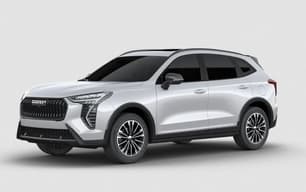
The new GWM Haval Jolion Lux sits second from the bottom in the Jolion line-up but offers a longer features list than most of its competitors. A boast that stands it in good stead from the outset.
But the question is how do those features perform in the real world? In this review we unpack how the new Jolion handles urban life.
The Suzuki Jimny Lite is the most basic of the Suzuki Jimny line-up but that’s not a bad thing.
It’s ordinary on-road, it’s on the wrong side of small – especially in terms of cargo-carrying ability – and it’s still an exercise in driver-adaptability because it’s basic, bouncy and requires a lot of effort to keep it driving in a straight line.
But the Jimny is a lot of fun off road and even on sealed surfaces. It is go-kart-like in terms of everyday suitability and comfort, but its day-to-day drivability has received a healthy boost by way of those new driver-assist technologies and the updated AEB.
If you’re willing to give into the fun and cop a few compromises along the way, then you won’t be disappointed, because the Jimny is a tonne of fun.
The GWM Haval Jolion Lux offers affordability in a modern, attractive package. However, the execution of some of its features isn’t always convincing. So yes, it’s sharply priced but it also feels underdone in some respects which doesn’t necessarily equate to value. But if affordability is at the top of your priority list and one or two shortcomings doesn't mean the end of the world, this could be the urban SUV you're looking for.
The Lite is, like the rest of the Jimny line-up, retro-cool and classic with a striking straight-up-and-down appearance sure to draw more admiring glances than sneering ‘WTF?!’ looks.
The three-door Suzuki Jimny is 3650mm long (with a 2250mm wheelbase), 1645mm wide, 1720mm high, and it has a kerb weight of 1100kg.
The Jimny has it over any rivals in this category when it comes to exterior design.
The Jimny’s interior is plain and practical. It has cloth seats, expanses of durable plastic and an overall utilitarian look and feel.
It is spartan inside, but this all-pervasive no-frills approach best suits the Jimny's simple spirit.
The Jolion is now longer and wider than it's rivals at 4472mm long, and 1874mm wide. The next largest 'small' SUV is the Kia Seltos at 4385mm long and 1800mm wide which does the Jolion a whole lot of favours for internal passenger space and kerb-side appeal.
The Jolion looks substantial and well-shaped, with enough bells and whistles in the design to keep it fresh; like the swoopy LED DRLs at the front and a curvy behind that’s accentuated by a black spoiler.
The interior has interesting features, like the rotary-dial gear selector, push-button starter and minimalist button panel that sits below the large technology screen.
The dashboard juts out into the cabin and the low-key design is too pared back for my taste. But the cabin looks nice and new with lots of tactile accent panels and shiny screens.
There is still too much plasticky-looking styling to elevate it properly, but for its grade level this is almost luxurious.
Functionality is highest on the agenda with the Jimny rather than any attempt at a semblance of plushness.
Having said that, it is comfortable inside, but it is very basic, which is actually part of its charm though some people may rapidly grow weary of its bare-bones interior.
The big news in this small 4WD is the fact it now has a new 7.0-inch touchscreen with wireless Apple CarPlay and Android Auto. That screen is too small but the hands-on controls everywhere else remain one of the refreshingly simple aspects that is easy to like about the Jimny.
There’s also now a 4.2-inch digital driver display between the analogue dials and that includes a speedo, as well as fuel-consumption and driving range details.
With the three-door Jimny's second-row seats in use, boot space is listed as 85L. With the second row stowed away, there’s a claimed 377L of cargo space.
Payload is a claimed 350kg and gross vehicle mass is 1450kg (the Jimny is 1100kg) so there’s not a lot of flexibility in terms of how much camping gear, dogs, or Abba CDs you can pack into this diminutive 4WD.
While others may offer more in terms of comfort and general amenities, the Jimny still wins out for day-to-day durability.
It's a running theme but the practicality of the Jolion doesn't always land. However, what it does well, it does very well.
Take the access and space for passengers. Both rows offer class-leading head- and legroom for its occupants, even middle seaters should be happy considering the transmission tunnel isn't tall.
Despite the manual passenger seat being set too high and both seats lacking lumbar support, front seaters still enjoy the most comfort. The heated front seats are also a pleasant surprise for the grade level, although their function is buried deep within the multimedia system and I mostly forgot about them.
The rear seat is fairly hard and doesn't offer much side bolstering, although the middle armrest helps to secure outer passengers in corners.
Storage is solid throughout the cabin with a reasonably sized glove box that can hold a thick manual, middle console and dedicated phone shelf, as well as a second phone 'slot'.
There is a sunglasses holder (sunnies rattle when stored, though) and a cubby underneath the centre console that can hold a small handbag but anything stored might interfere with the USB ports housed there.
There are two cupholders up front but you can't fit two cups side by side. Two cupholders, a couple of map pockets and storage bins finish up the storage in the back seat.
The boot capacity sits at 337 litres and while large enough for a good grocery haul it falls on the lower end for the class. By comparison, the Kia Seltos offers 433L.
Now, on to what the Jolion doesn't do all that well. It's new 10.25-inch multimedia screen and 7.0-inch digital instrument cluster look the part - all shiny and new-looking - but their usability falls somewhat short.
The media touchscreen is responsive but a punish to use on the go as most functions, including climate control, are accessed via the screen. A few dedicated buttons would be welcome, so changing bits on the road doesn't leave you flustered.
The digital instrument cluster isn't customisable and is set to a dark display screen with a typeface that looks blurry on some key displays, especially the speedometer.
There is a rather large and in-your-face driver monitoring camera installed on the A-pillar which feels too much like you're under surveillance while driving (not a fan, clearly).
Charging options include four USB-A ports and a 12-volt socket but that's it and it would be good to see a newer, faster USB-C port somewhere in the car.
A feature the Jolion does get right is the wired Apple CarPlay as it maintains a steady connection and is very quick to set up. The Lux also has wired Android Auto.
You don't get a powered tailgate and you might miss it as the boot lid is fairly heavy.
The Lite is the entry-level Jimny and as such has a manufacturer recommended retail price of $31,990 (excluding on-road costs).
Standard features in the Lite include a 7.0-inch multimedia touchscreen, Apple CarPlay and Android Auto, updated AEB (with 'Dual Sensor Brake Support II' so the system now complies with the mandatory ADR 98/00 regulation), as well as the inclusion of lane departure prevention, adaptive cruise control, front and rear parking sensors, and traffic sign recognition.
It also has the usual Jimny gear: 15-inch steel wheels, halogen headlights and a rear-view camera.
Exterior paint choices include white as standard and jungle green (on this test vehicle) which is a premium/metallic paint and comes at an additional cost of $745.
The Jimny represents decent enough value against potential rivals, such as the Renault Duster 4x4, Mahindra Scorpio, and the GWM Tank 300, although you're buying a vibe more than any substantial amount of gear or comfort.
The Jolion line-up consists of six variants and the model on test here is the Lux, which sits second-from-the-bottom.
Its $29,990, drive-away, price tag positions it as one of the more expensive options compared to its nearest rivals with the MG ZS Excite the most affordable at $25,083, drive-away and the Mitsubishi ASX ES next at $27,990, drive-away.
Despite a similar specification, the Kia Seltos Sport+ FWD is hamstrung on price as it sits a way up the price ladder at $38,890, drive-away, but comes with the longest servicing schedule.
Premium equipment for the Lux includes synthetic leather upholstery, an electric driver's seat, heated front seats, dual-zone climate control, keyless entry and start, a 360-degree view camera system and rear parking sensors.
Other standard features include a 7.0-inch digital instrument cluster, four USB-A ports, a 12-volt socket, a 10.25-inch touchscreen multimedia system and (wired) Apple CarPlay and Android Auto.
A fixed cargo cover and temporary spare tyre round out its features list. Not bad at all considering it's almost a base model but the usability of those features can be hit or miss.
This entry-level Suzuki Jimny has the same 1.5-litre four-cylinder petrol engine as the rest of the line-up, producing 75kW at 6000rpm and 130Nm at 4000rpm, and it has a five-speed manual transmission.
The Jimny is always zippy, manoeuvrable and punchy off the mark simply because it is so small and light, however, it feels underpowered on the open road and strained at highway speeds.
It has a part-time four-wheel drive system with high- and low-range, and off-road traction control.
While it’s far from offering the best power and torque outputs, even in the small 4WD realm, the Jimny is so light that there’s enough here to work with.
The Jolion Lux has a 1.5-litre, four-cylinder, turbo-petrol engine that produces 105kW of power and 210Nm of torque.
The Lux is a 2WD and has a seven-speed dual-clutch automatic transmission which isn’t always smooth with its gear changing but power is sufficient if you don't expect it to be zippy.
The Suzuki Jimny has official fuel consumption of 6.4L/100km (on a combined cycle).
I recorded 7.2L/100km on this test but, as always, I did a lot of high- and low-range 4WDing.
The Jimny has a 40L fuel tank so, going by my fuel figures, a full tank should give you a driving range of about 550km.
The Haval Jolion Lux has an official combined (urban/extra-urban) fuel cycle figure of 8.1L/100km and based on its 55L fuel tank, theoretical driving range is around 680km, which is respectable for a little SUV.
My real-world usage came in at 7.8L/100km after mostly open-road driving, with a smattering of urban stuff. Overall, it's a solid result.
It may come as no surprise to any of you who have actually driven a Jimny but it is rather ordinary on road.
It's a small vehicle and quite light so it does get buffeted by passing traffic, thrown around by any wind stronger than a mild breeze, and this Zook’s ride and handling are barely the right side of atrocious.
But – and it’s a big BUT – the Jimny is still a lot of fun to drive, even as wild as it is on-road, and it absolutely comes alive when you hit the dirt.
Being light and nimble may detract from the Jimny's performance on sealed surfaces, but those characteristics help immensely when you go 4WDing in this little car.
It is highly manoeuvrable – it is very agile around the bush through tight tracks and up tight wheel-rutted hills – and it’s incredibly easy to find and maintain the correct driving line in the Jimny because it is so small and there's a tyre at each corner so you know where your wheels are positioned at any one time.
Low-range gearing is good and there's a nice spread of torque across a decent rev range. Traction control is reasonably well calibrated, although it is a little choppy in application now and then.
Basic but crucial physical aspects, such as the Jimny’s off-road angles, are well suited to off-roading with approach, rampover and departure angles clocking in at 37, 28 and 49 degrees respectively. Those help to make this little vehicle a champion in the dirty stuff.
Ground clearance is listed as 210mm but feels like more and while wading depth is not listed, it’s fair to say it’s about the 300mm mark.
Warning: the three-door Jimny is bouncy because it's so small, light and quite tall for its size, and has a narrow wheel-track.
It is very tippy and bouncy and you do get bumped around a lot but that's kind of the point of off-roading in the Jimny. It’s a barrel of laughs purely because it is such a dialled-in and driver-focused experience.
But those characteristics may rapidly become tiresome and tiring for some people who have grown accustomed and attached to more comfort and cushioning in modern vehicles.
This is a very capable off roader and it’s one of the few vehicles you can drive straight out of the showroom and have a tonne of fun in, in the dirt, but it is somewhat let down by its showroom-standard tyres (Dunlop Grandtrek AT20 195/80R15). Replace those with some more aggressive all-terrain rubber and Roberto’s your uncle.
As mentioned earlier, payload is 350kg, GVM is 1450kg.
Towing capacity is 350kg (unbraked) and 1300kg (braked) so you’re limited in how much you can drag with the Jimny, but that's okay because I don’t think too many people are buying a Jimny because they have to tow a caravan, horse float or boat. They’re buying it because it’s a shedload of fun off-road and the Jimny has that factor in abundance.
The Jolion's on-road experience is underwhelming and unsophisticated most of the time. It's strictly an A to B style car, which will work well for some people.
The power and its delivery are okay but this car doesn't get close to zippy and its well of performance feels decidedly shallow on the open road.
The engine whines loudly when trying to get up to speed and its gear changes can come a tad too swiftly, especially between first and third.
The accelerator and brakes are touchy, and until you get used to them the Jolion can feel a little jerky in the city. But the steering is on the right side of firm and that at least feels direct and responsive.
Suspension is hard and you get all the bumps which also translates into a loud cabin. Your senses take a battering on a longer trip and kids in the back will ask you to repeat yourself.
The Jolion is redeemed somewhat by an excellent 360-degree view camera system but you miss out on front-parking sensors.
It’s small enough that it’s not hard to park and for an urban dweller that is a big plus as it's quite suitable for a dash to a busy shopping centre car park.
The current Suzuki Jimny does not have an ANCAP safety rating, because its three-star rating expired in December 2024.
It has six airbags (dual frontal, side chest-protecting and side head-protecting (curtain) airbags), AEB, lane departure prevention, adaptive cruise control, and front and rear parking sensors.
Other small 4WDs have the maximum ANCAP rating and offer more comprehensive driver-assist and safety gear suites than the Jimny.
The Jolion has a maximum five-star ANCAP rating from testing done in 2022 and has seven-airbags, including a front-centre bag.
Standard safety equipment is good for the grade level and includes blind-spot monitoring, driver attention alert, tyre-pressure monitoring, forward collision warning, LED DRLs, rear cross-traffic alert, lane departure alert, lane keeping aid, traffic sign recognition, an intelligent seatbelt warning, adaptive cruise control, a USB outlet near the interior mirror for a dashcam, a 360-degree camera view system and rear-parking sensors.
Despite featuring a robust safety list a running theme has emerged this week. Everything sounds good on paper but the execution is another matter.
Its not enough to just have all of these safety systems in place, they also have to work well for everyday driving. And some of the systems are annoying and intrusive.
There are lots of bings, bongs and chime alerts from the driver monitoring system, traffic sign recognition tech and lane keeping aids.
You also get nonsensical text boxes displayed on the multimedia screen asking non-binary (open) questions requiring a yes or no response.
For families, you get two ISOFIX child seat mounts and three top tethers across the back seat but two seats will fit best.
The Jolion has AEB (operational from 1.0 to 85km/h) including pedestrian, cyclist and back-over detection. It's usual to see this type of system operating from 4.0km/h, so that's excellent.
The Suzuki Jimny has a five-year/unlimited-kilometre warranty.
Suzuki offers the first service at two months/2000km for free, then under the capped-price servicing program, your Jimny is scheduled for a service every 12 months/15,000km at an average cost of $453.
Those costs are okay for something in the small 4WD realm.
The Jolion is offered with an excellent seven-year/unlimited km warranty.
There is a five-year capped priced servicing program and services average $310 which is mid-range for the class.
The first service is before 10,000km but thereafter, servicing intervals are at every 12-months or 15,000km, whichever occurs first.