What's the difference?
You really can’t please everyone, can you?
It seems like just about every example of the wildly, ridiculously, immensely popular Suzuki Jimny barely had time for the suspension to settle as it parked in the showroom before it was being snapped up and rolled out for a customer - in fact plenty of Jimnys probably never saw a showroom floor, such was the length of the waiting list.
But even then, you all wanted a bigger version of the Jimny. It’s never enough is it?
Fine, says Suzuki, here’s an even more easy-to-live-with version of the adorable 4X4 that everyone wants, and these examples will probably continue to fly off the shelves too.
But is the XL just that - a Jimny with two extra doors? Or is there more to it than that?
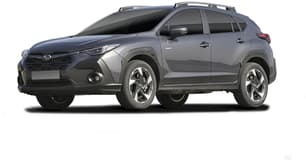
Among the many strange new car brands and names we're increasingly confronted with Subaru is an established and trusted beacon along with Honda, Hyundai, Mazda and Toyota. And Subaru’s Crosstrek SUV competes against rivals such as the Honda HR-V, Hyundai Kona, Mazda CX-30 and Toyota Corolla Cross.
So, what does the Crosstrek give you for your money and what’s different or better about the Crosstrek compared to those rivals?
We tested the mid-grade Crosstrek 2.0S and rediscovered what this small SUV does so well and what could probably be improved.
If you currently own a three-door Jimny and expect the XL to provide you with much beyond a more spacious second row (or luggage compartment overall), it might be best to hold on to what you’ve got.
And if you don’t own a Jimny and want one, there’s not much I reckon I’d be able to say to stop you if the resolve of anyone I know who’s ended up buying one is anything to go by.
If you’re a ‘get out on the weekend’ kind of person but you live a city Monday-to-Friday, it’s hard to look past the Jimny for simplicity, fun, and a competitive price.
Not to mention, of course, that it is also just so bloody cute.
The Crosstrek is good to drive with great ground clearance and an excellent all-wheel drive system for light off-road adventures. I’m also a fan of the styling and features for the money. But The letdowns comes in the form of limited boot space and cabin storage, a short warranty and pricey servicing. Still, it’s great to see Subaru has updated the car's safety systems, the most important part of any car.
There will be no prizes for a ‘spot the difference’ between the Jimny and the Jimny XL.
You may have spotted the extra doors (and the subsequent longer body, 3965mm over 3645mm, a 320mm increase according to the spec sheet), but did you spot the chrome accents in the Jimny’s grille?
That’s right, it’s not just the doors… it’s the doors and the grille.
Of course, some more changes naturally follow the new body style - it’s rear-most side windows are now much narrower, though the second-row windows do a lot to prevent losing any visibility, and the longer side silhouette looks a little more ‘grown up’.
Even then, the Jimny XL is shorter than a five-door Mini hatch by 58mm, and only 50mm longer than a Mazda MX-5.
The Jimny’s body elements still remain the same though, down to the 15-inch alloy wheels, plus the spare on the back. It’s also shares its 1725mm height and 1645mm width with the three-door, although its wheelbase is now 2590mm instead of 2250mm.
Inside, the rugged nature of the 4WD blends with a little bit of youthful modern design. The steering wheel is borrowed from other Suzuki models like the Swift, and the big dial housing has a fun retro vibe.
While SUVs tend to come in either a tall and boxy or coupe-like shape, the Crosstrek has a uniquely sleek and sporty wagon look that has stayed much the same over three generations.
Also while the Crosstrek competes with the Honda HR-V, Hyundai Kona, Mazda CX-30 and Toyota Corolla Cross the Subaru is the most off-road suitable thanks in part to its high 220mm ground clearance
As if to signal those adventurous aspirations the Crosstrek has a more rugged appearance with robust-looking plastic guards and chunky roof rails.
Inside the Crosstrek looks so much the same as most other new Subarus it's hard to work out which one you’re in. The materials are dark and soft, there is not much in the way of glitzy trimmings but there’s a high quality feeling throughout.
If practicality to you means plenty of spaces to put things or a lot of little additional features, you’re going to be disappointed by the Jimny XL’s cabin. But if you see it more as a ‘could be hosed out if something goes horribly wrong’ type of thing, then I have good news for you.
Okay, don’t hose out your Jimny, but the hard-wearing basic materials are clearly here to accommodate mess. We’re talkin’ plastic, we’re talkin’ cloth, we’re talkin’... plastic. Yep, not much in the way of soft-touch or supple armrests, but you wouldn’t want to accidentally tear a leather seat with a tent peg, would you?
In terms of actual ergonomics and user-friendliness, the Jimny scores pretty well once you’re across some of the slightly odd elements.
Its front window controls are below the climate controls, rather than with the rear window controls, for example, which I assume is due to the second-row windows not being part of the original design.
There’s also not a huge amount of storage space, front or rear, for anything other than small items or the usual drink bottles.
Fortunately, the big change for the XL is noticeable. Being able to get in and out of the second row is now easier thanks to, you guessed it, doors!
And once you’re in there, even if you’re an adult, you’ll find yourself in a space that you could probably survive a road trip in, even if loading up a tiny ladder-frame SUV with more than two people for a long drive should at least attract some kind of fine or other minor punishment. You literally couldn’t have five people in the Jimny, though, as it’s only a four-seater.
If you needed a reminder of how tiny the Jimny is even in XL form, the luggage space is listed as 332 litres, which is less than a Hyundai i30 hatchback by 63 litres.
Oh, and that’s with the seats down. Up? You get 211L of luggage space, which is about as much as a Mini Hatch.
The Crosstrek is a small SUV but its low and sleek shape doesn’t do it any practicality favours in terms of exiting and entering or storage in the boot.
Boot capacity is 291 litres which is very small compared to its rivals which have capacities closer to 350 or 400 litres.
People space inside, however, is good, and even for a tall (189cm) person like me there’s plenty of space up front and behind my driving position.
Storage space is passable with three cupholders and thin door pockets and a decent-size console bin.
Given the Crosstrek’s adventurous intent, the cabin should be more reflective of that rugged aspiration.
What features does it come with, you ask? Not many - but that’s kind of the point in a mid-$30K off-roader, isn’t it?
While you can pick up a Jimny XL from $34,990 before on-road costs with a five-speed automatic, our four-speed auto here on test starts from $36,490.
The list of accessories and parts Suzuki offers for the Jimny is extensive and allows you to essentially build your perfect little weekend getaway ride, but here I’ll focus on the standard gear rather than listing every type of cargo rack or body protection you can add-on.
The Jimny XL comes with a 9.0-inch multimedia touchscreen, up from the three-door’s 7.0-inch unit, which also adds wireless Apple CarPlay and Android Auto.
It has a four-speaker sound system up from two in the standard Jimny, and it’s also the only Jimny that gets adaptive cruise control.
Just about everything else is standard Jimny fare - it’s got LED headlights, rear parking sensors and a reversing camera that does the job but isn’t crystal clear, a USB port and 12V outlets in the centre console and in the rear luggage compartment, plus physical dials and a digital display for the driver.
The Crosstrek range is divided into three petrol variants and two hybrids. With a list price of $43,990, our test Crosstrek 2.0S sits at the top of the petrols and second from the top of the line-up under the Crosstrek AWD Hybrid S flagship.
Standard features on our 2.0S include 18-in alloy wheels, roof rails, LED headlights and tail-lights, dual-zone climate control, push-button start, proximity unlocking , 10-speaker audio, wireless phone charging, Apple CarPlay and Android Auto, an 11.6-inch media touchscreen and leather-trimmed seats.
If you’re looking to save a few thousand dollars the 2.0R is almost as well equipped.
Is it worth stepping up to the hybrid? Not in my opinion. The hybrid is the 'mild' kind and doesn't offer a great deal in terms of real-world fuel savings. You can read more on fuel efficiency below.
The Jimny XL uses the same 1.5-litre, naturally aspirated four-cylinder engine as the original.
It only makes 75kW and 130Nm, and even though the Jimny is a relatively light SUV (actually, relatively light for a car in general), it still doesn’t quite feel like enough for hauling around 1200kg of 4X4 plus a person or two.
The Crosstrek 2.0S uses a 2.0-litre, four-cylinder, horizontally-opposed 'boxer' petrol engine which makes 115kW and 196Nm. A continuously variable transmission (CVT) with eight 'speeds’ isn’t the most exhilarating automatic but all Subaru now use CVTs.
The boxer engine has advantageous in terms of a lower centre of mass and helps deliver better driving feel thanks to more adept handling. Boxer engines also sound better to my ears with their throaty burble.
Suzuki claims the Jimny XL, with the four-speed automatic transmission as tested, should consume 6.9L/100km on the combined cycle - the manual uses a claimed 6.4L, both figures are the same as the three-door equivalents.
On test, with primarily inner-urban and city commute driving, I saw the XL use 9.4L/100km. Anyone frequenting stop-start traffic can expect similarly high figures and, even though many owners will see lower figures, achieving the claimed 6.9L would be a solid effort even on long highway drives.
The Crosstrek 2.0S's combined cycle (urban/extra-urban) fuel consumption is 7.2L/100km which aligns closely with our real-world test average of 8.7L/100km returned over mainly urban and city driving. That’s not bad, but given the price of fuel as well as the availability of EVs and excellent hybrids from other brands the Crosstrek is seriously behind the times.
Yes, yes, there is a hybrid Crosstrek, but it’s a mild-hybrid and the electric motor doesn't drive the wheels and doesn’t save much fuel. The hybrid Crosstrek has a claimed combined cycle consumption figure of 6.5L/100km, so there’s not much difference between the efficiency of the two. When you consider the price premium you need to pay it’s not worth stepping up into the hybrid.
The Jimny might be a little bit more work than you’re used to if you’re swapping out of a hatchback or small city SUV.
That’s not meant to sound like a scathing criticism, either, because despite its cutesy appearances and (whether intended or not) appeal to young inner-city types, the Jimny is a ladder-frame chassis off-roader. And it drives like one.
During my time with the Jimny XL, each Instagram story I posted would garner at least a couple of responses in the vein of ‘What’s it like?’ or ‘Should I buy one?’ from people in their late 20s and 30s who I’m 70 per cent sure wouldn’t care much for off-roading.
Most of my responses were probably disappointing to them, because it drives like a small 4X4 and if you’re going to get annoyed by steering corrections, vibrations and noise, it might not be for you.
But if the little Zuki’s off-road ability (or even just its irresistibly endearing looks) are appealing enough to you, the Suzuki is a fairly easy steer once it becomes second nature. In fact, its engaging nature is part of what makes the Jimny fun to drive.
Reacting to strong winds or changing road surfaces should be familiar to those who grew up driving older, more rudimentary cars, and even though there’s a fairly noticeable ‘dead’ spot in the centre of the Jimny’s steering, it means you’re able to more subtly adjust (quite regularly, you may find) the steering wheel to keep aligned in your lane.
The suspension can feel a little soft and ‘jostly’ - lean to the side while you’re stopped at an intersection and you’ll feel the Jimny lean too - it’s also a decent reason to be a little cautious with your speed around corners. The Jimny will let you know if you’re going too quickly.
Sure, the longer wheelbase of the XL should help with stability over the three-door, but the nature of the Jimny doesn’t exactly encourage you to find out how much more stable exactly. But it’s fortunately not so much bigger that it sacrifices its advantage over most other off-roaders.
Its ability to get around inner-city areas in the Jimny is a plus if you live urban but need something that can head off-road on weekends - the XL is still relatively small compared to anything else that’s intended for the trails. It feels perfectly comfortable in Melbourne’s laneways and underground car parks in the CBD… as long as you’re okay with how heavy the steering can feel at low speeds.
For trips out of the city where you’ll be getting the Jimny’s tyres a bit dirty (hopefully, it’s what it was built for), just know that the Jimny doesn’t feel its best at highway speed. Its 75kW is pushed to its limit, 130Nm doesn’t inspire great overtaking confidence, its steering and suspension don’t feel massively dialled-in, and the four-speed automatic transmission has a whine to it that’ll bring back memories of watching the V8 Supercars cut laps in 2002.
But like I said, if you’re not looking for a car that’ll use sensors to sit you in the dead-centre of your lane while a leather seat massages your back, the Jimny’s simple nature is endearing, and most of the time quite fun.
As a side note, CarsGuide’s off-road expert Marcus Craft has published an in-depth off-road test of the Jimny XL, and gave it a thumbs up as a capable vehicle for tricky trails - it’s worth reading or watching if you’re considering the Jimny as an adventure companion.
I’ve never met a new Subaru that wasn’t good to drive, apart from that time a friend sent me his 30-year old Brumby minus brakes. But even that was fun, until it was time to stop… Anyway, in my view the Crosstrek is better than its rivals in multiple areas except one, which I’ll get to in a moment.
The Crosstrek 2.0S is comfortable to sit in and its ride and handling balance is exceptional for a vehicle in this class. Honestly, the ride quality, body control and steering outshines the HR-V, Kona, CX-30 and Corolla Cross in my view.
A big call out has to go to the Crosstrek's all-wheel drive system, which is exceptional. I have tested this vehicle in some pretty adventurous settings and the kind of terrain it can devour would frighten its rivals.
But the one area that lets the experience down is the CVT auto. I feel this way about this type of transmission in any car and I’m not alone. CVTs provide smooth acceleration and deceleration but if you’re hoping for an engaging, sporty experience you’ll be left wanting.
That said, my wife also drove the car and thought it was perfect for city traffic. And I agree, it’s just on the motorway where you might notice the lack of oomph when overtaking.
Visibility is good and you sit quite high for a little SUV. That small size makes it easy to park and manage in the city’s tighter spaces.
While the Jimny’s safety features are fairly rudimentary and the XL hasn’t been specifically tested, there are some good points to the Jimny that might help potential owners decide if it’s the right decision for them.
First, the standard three-door Jimny was crash tested in 2019 and scored three stars, primarily due to its lack of active safety features.
That lack of safety features remains for the Jimny XL, requiring drivers to be alert and react to hazards of their own volition, but if the XL’s occupant protection is anything like the three-door version (which scored 73 per cent for adult occupant protection and 84 per cent for children), it should do a decent job of keeping passengers safe in most nasty situations.
The XL comes with front, side and curtain airbags, ABS, electronic braking assist, stability control, traction control, hill hold and descent control, AEB, lane departure warning, weaving alert and rear parking sensors.
It’s missing some active gear like lane keep assist, blind spot monitoring or driver monitoring.
Part of the reason we're testing the Crosstrek is because it was updated with more safety tech and equipment towards the end of last year. This safety boost means the Crosstrek continues to boast a maximum five-star ANCAP rating.
The big change was to the 'Eyesight' sensor system with better traffic sign recognition and enhanced AEB systems. An emergency vehicle stop system has also been added to bring the car to a halt if the driver becomes unresponsive.
The rest of the Crosstrek’s features carry over including AEB, lane-keeping assistance, front and rear cross-traffic alert (with braking) and blind-spot warning.
For child seats there are two ISOFIX points and three top tether anchor mounts across the second row.
There is a spare where but it's a temporary type which will get you to a repair place.
The Jimny XL’s covered by Suzuki’s five-year/unlimited kilometre warranty, with intervals every 12 months or 15,000km, whichever comes first.
The services range from costing $349 to $589, but average out at $453 per service. You’ll spend $2265 servicing your Jimny XL over its first five years, assuming you do it by the books (as they’re currently written).
Subaru’s five year united kilometre warranty is becoming less appealing as other brands offer seven or even 10 years of coverage.
Servicing is recommended every 12 months/15,000km and a capped schedule is pricey relative to its competitors at more than $2400 over five years or about $400 on average per service.
The brand is represented by a long-established and stable network of close to 130 dealers covering metro, rural and regional locations across every state and territory.