What's the difference?
Subaru is entering uncharted territory.
The Uncharted is the brand’s first electric small SUV and a bold new direction, as the Japanese maker enters one of the most hotly-contested and now sought-after new segments in the Australian car market.
There is no shortage of new options calling out to Australian buyers and with a broad range of price-tags, designs and on-board tech it’s never been a more difficult time to enter this space.
So what does the Subaru Uncharted do differently, and is it worthy of your consideration? We took one for a week to find out.
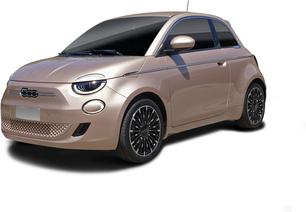
You wouldn’t know it to look at it, but this is a brand-new — as in really and truly all-new — Fiat 500.
That has got to be a big deal for fans of Fiat’s pint-sized city car, with a genuinely all-new 500 about rare as spotting Halley’s Comet soaring over Turin. The last time was way back in 2007, by the way, and that car will remain on sale alongside this new one for the foreseeable.
But that’s not the only surprise. This 500 is also entirely electric, properly modern inside, and it has actual technology in its cabin and on its safety list.
Fiat reckons this is a big reset for the 500. And that there will never be another all-new petrol model again.
So, how does this new 500e stack up against the recent flood of small EVs, predominantly from China?
Let’s go find out.
The Uncharted follows the Subaru promise of offering compelling all-wheel drive and a capable driving experience at a reasonable price, but only if you compare it to its traditional rivals.
The trouble for Subaru is that this part of the market has moved on, and EV buyers now have a different set of expectations relative to its usual point-of-difference.
In that sense, this is a good electric Subaru - but is it objectively a good electric car? With the circa-$60K pricing, that’s a harder argument to make.
A fun, funky EV which will no doubt appeal to lovers of Italian style, but also one which struggles a little on the range and price front.
Still, there’s no doubt that electrification has improved the Fiat 500 formula.
The Uncharted continues to shift Subaru into new styling territory, sharing its panelled, grille-free face and two-line light signatures with the other two Subaru EVs, the Solterra and Trailseeker.
It is notable that Subaru has chosen a distinct design language for its electric cars, which is a change from the blocky and busy designs adorning its familiar combustion nameplates like Forester or Outback.
For what it’s worth, I think the Uncharted is a striking car with its wide stance, huge wheels and coupe-style tailgate. The burnt orange colour of our car also helps it to stand out from the crowd. Hard to do in a world of new wacky designs from rivals unafraid to push the envelope.
Inside will be familiar if you’ve been in any car on this e-TNGA platform which Subaru co-opts from Toyota.
There’s a squircle steering wheel, modern layered dash, screens which fill the space, and a lot of hardware which will feel familiar to Toyota owners, but not so much Subaru drivers.
This includes the rotary shifter in the centre console, indicator stalks and even the screens and software. It feels a bit less Subaru than some repeat buyers might expect, but I don’t think it’s foreign enough to scare people off.
It looks, well, it looks like a Fiat 500.
It’s actually bigger in every dimension than an ICE cinquecento, but it doesn’t really look like it, which is a good thing.
The 17-inch wheels look great, and big against the very small Fiat, and I like the hidden doorhandles, which make the already smooth-looking 500’s flanks look a little smoother still. But I can take or leave the little DRLs up front that are meant to act as little illuminated eyebrows for the headlights, which come over a bit too cutesy.
But I think the highest compliment I can pay it is that it looks like a regular Fiat 500 — one of the most successful reincarnations of a timeless design ever — and not some modern, eco-friendly version that would have killed the look.
In the cabin, however, it’s definitely a more modern affair, with the big screen, the horizontal push-button gear selector, and the nifty push-button door openers.
Still, it’s all pretty familiar Fiat 500, only a little nicer, even if some of the plastics are far too hard and scratchy for a vehicle this expensive.
There are five colours available: Ice white, Onyx black, Rose gold, Ocean green and Celestial blue.
The Uncharted is a comfortable place to be, with nicely bolstered seats, and Subaru has nailed the basics of ergonomics with dials for the climate and volume controls, some shortcut buttons and consistent labelling for the array of steering wheel controls.
The digital instrument cluster, perched atop the dash, might not be to everyone’s taste. It leads to a slightly odd situation where if you’re a certain height, the top of the steering wheel might obstruct your view. It was okay for me, but felt a bit like the steering wheel was sitting in my lap.
The software, while functional, doesn’t offer the depth or innovation of many of this car’s rivals. Some of these things are gimmicks, others, like pet modes and deeper efficiency analysis screens are quite useful.
As it is, it offers an uninspired interface with built in navigation and some basic sub-menus. Hardly a stand-out in an era of fun, customisable software not just from Chinese rivals, but from others, too.
The trade-off is a modern-feeling interior which is also easy to use, surprisingly rare in this segment.
In terms of cabin space and storage, the front doors have two large bottle holders each, and there are two cupholders with spring-loaded ridges in the centre console.
The console features dual wireless chargers, although they could do with a more rubberised surface, as your phone may move in the corners, particularly if you have a hard-finish case. An annoying oversight.
Beneath the bridge-style console, there is a carpeted storage area which is also home to your power outlets, and the centre console, while not very deep, offers a trick lid which can tilt-open in both directions.
Visibility is good for the driver, too.
The back seat offers a good amount of space for adults in the outboard positions. I fit behind my own driving position at 182cm tall with a few inches of knee room, and a little bit of headroom, although there’s an intrusion into the space for the sunroof’s roller cover, so it’s worth considering if you need that as an option if you’re regularly going to have taller passengers.
While the synthetic leather-clad seat trim continues, the centre position feels less useful, because the distance between the end of the seat base and the centre console severely limits legroom.
On the amenity front, the stand-out is the rear heated seats. Other than that there’s the expected array of adjustable air vents, dual USB-C ports, pockets on the backs of the front seats, and large bottle holders in each door.
My main criticism of the Uncharted’s interior is that it doesn’t feel anywhere near as large on the inside as the car looks and feels from the outside. This is not helped by dark headliner, chunky door cards, and heavy window tinting in the rear.
The boot is also not enormous at 403 litres. With some trickery, I could fit the full three-piece CarsGuide luggage set, with the floor set to its lowest of two positions. Underneath there is a small additional storage space where you can fit some charging cables alongside the inflator kit.
There’s no spare wheel, which is a strike against this EV’s Subaru go-anywhere credentials, and there’s also no frunk with the under-bonnet space taken up by high-voltage and battery cooling hardware.
The 500e is 29mm taller, 61mm longer and 56mm wider than the current ICE Fiat 500 (now 1529mm, 3631mm and 1683mm respectively), and it rides on a longer wheelbase, too .
That means more front-seat room and head room, but there’s still not oodles of space in the four-seat cabin, and especially in the back, where things are pretty tight.
I’m 175cm tall, and my head touches the ceiling in the back, and if I had another full-size human in the back with me, I’d want it to be someone I know well, because we’d be well and truly aquatinted by the time we got to our destination.
The front seats are more accomodating, but there is a strange tightness to the pedal area for the driver. It’s so tight, in fact, that when you rest your left foot, you have to be careful not to accidentally clip the brake pedal when driving.
The boot is a small 185 litres, too. But you’re not buying this for practicality perks, are you?
Like any car entering such a tightly contested segment, the Uncharted needs to impress on price. This is something Japanese brands have struggled to do in the face of an array of more affordable rivals, particularly from China.
The Uncharted comes in one highly-specified variant, which starts from $59,990, before on-road costs.
It sounds expensive and compared to some potential rivals, like the BYD Atto 3, Jaecoo J5 and Leapmotor B10 it is. If you just want an electric car, you can certainly have one up to $15,000 cheaper.
Dig into the details, though, and Subaru has played strategy with the pricing. It makes the Uncharted one of the most cleverly priced Japanese electric cars yet.
You see, not only does this car offer all-wheel drive, as per the Subaru brand promise, it also offers over 500km of driving range, which is a rare combination.
This makes it a more affordable way into all-wheel drive when you compare it to the Kia EV3 GT-Line, but it also offers more driving range than contemporaries from Europe, like the Volvo EX30.
The problem for Subaru is that it has ignored the wider market, hoping buyers will only be cross-shopping the most established nameplates.
For around this sixty-grand mark, you can get into some notable players like the strong-selling BYD Sealion 7, new MG S6 and smash-hit Zeekr 7X, all of which are a size up.
At least the single trim level on offer is pretty impressive, with spec highlights including LED light signatures, big 20-inch alloy wheels and full synthetic leather interior trim.
It even gets electrically-adjustable front seats with heating, a heated steering wheel and heated outboard rear seats.
The multimedia suite includes a 14-inch touchscreen with wireless Apple CarPlay and Android Auto, matching dual wireless phone chargers (very trendy) and a 7.0-inch digital instrument cluster.
The only option, for now, is the panoramic sunroof with electrically closing cover, which comes in at an additional $1200.
The 500e is not cheap by modern small EV standards — we’re looking at you, China — but it does arrive in one well-equipped trim level, called La Prima, with paint the only available option.
It's also, quite shockingly for anyone who has driven an ICE Fiat 500 lately, stacked with some truly high-tech kit.
There’s heated seats for the first time ever, for example, and there’s 10.25-inch central screen with Apple CarPlay and Android Auto, and wireless charging.
There’s a digital driver display, too, plus there’s faux-leather on the seats and dash, a panoramic glass sunroof and fancy push-button front doors (though with a mechanical back-up lever hidden in the door pockets should something go pear shaped).
Outside, you’ll find 17-inch alloys, as well as LED lightning all around, including the DRLs, and there’s keyless entry and push-button start, too.
But, and it’s a significant but, the 500e lists at $52,500 before on-roads , which — when you consider its size, battery and range — really edges it into the premium EV space.
A similar-sized EV from China can be had for under $40k, which means you are going to have to really love the 500e to drop that extra $15k or so.
Power output is impressive from this car’s dual-motor all-wheel drive system. The Uncharted is front-biased, featuring a 167kW/286Nm motor on the front axle, and an 88kW/169Nm motor on the rear axle. The two combine for a 252kW total output, which makes this one of the most powerful Subarus you can buy.
As a point of difference from its Toyota brethren, the Uncharted features a software-emulated version of Subaru’s signature X-Mode for a little bit of extra off-road ability. It also has slightly less ground clearance compared to the Crosstrek, at 211mm as opposed to 220mm.
A single front-mounted electric motor delivers the power here, with 87kW and 220Nm on offer. Enough, Fiat says, to knock off 100km/h in 9.0 seconds. But it does feel quicker than that in real life, thanks to the way electric vehicles deliver their power.
There’s the usual EV single-speed gearbox, too, with power sent to the front wheels.
The Uncharted has a 74.7kWh battery pack which grants it a WLTP-certified 522km of driving range.
The car I sampled was predicting around 500km of range in the real world according to the trip computer, which is impressive for an EV with all-wheel drive and a battery capacity of less than 80kWh, speaking to solid energy efficiency.
Officially, this is 16kWh/100km, but my car, which was primarily driven around town with some small freeway stints, performed even better, showing 14.1kWh/100km on the dash.
Owing to its e-TNGA platform, the Uncharted doesn’t have the most impressive charging specs. On a fast DC charger it is limited to 150kW. This should deliver a 10-80 per cent charge in a little over half an hour, but it’s still a lot slower than some competitors, which slash that charge time, in some instances, in half.
The slower AC charging is impressive at 22kW although an AC charger with an output above 11kW is rare in Australia.
The Uncharted also features a vehicle-to-load system, allowing you to use its large battery to power household appliances.
The Fiat 500e’s 42kWh battery provides a smallish 311km driving range on paper, but when we got in it was more like 290km at 96per cent charged. A city car, then, rather than a long-distance hauler.
When it does come time to charge, you’re set up for 85kW DC fast charging which should take you from zero to 80 percent in 35 minutes.
To drive, the Uncharted proves where Japanese automakers still maintain an advantage over many of their rivals.
The overwhelming feeling in this car is one of balance. Weight is managed very nicely by the suspension, which isn’t too soft like a lot of Chinese cars, and not too hard like some Korean cars or the Tesla Model Y.
The steering feels organic and direct, as opposed to overly software-assisted, and feedback from the pedals and road feels more like a traditional combustion car than a new-age EV.
There’s also a focus on the touchpoints being familiar, leading to a car which won’t be too much of a leap into the future for many.
It comes with some drawbacks. There’s no true single pedal driving mode despite several levels of regenerative braking. If you’ve driven an EV with single pedal mode this might be disappointing as it is quite easy to get used to.
The giant 20-inch wheels also feel a bit at odds with this EV’s supposed go-anywhere attitude. It feels like any rutted tracks are best avoided, limiting your off-road ambitions to just gravel trails and the sheer size of them is perhaps the only blemish on ride quality.
In addition, the slim rubber has an effect on cabin ambiance. This isn’t the quietest EV I’ve driven when it comes to road noise.
All that said, once you get the uncharted on some twisty roads it leaps out and shines. It’s alarmingly rapid when you stomp on the accelerator, making its power outputs feel the part, and its capable Dunlop tyre package and well-calibrated all-wheel drive system give the power-down a civilised silence as opposed to some of the wheelspin wackiness of some of this car’s Chinese rivals.
It is deeply capable in the corners, attacking them with poise and grip, with the traction system also keeping the power at sane levels.
It’s not quite as athletic or quick as its premium cousin, the Lexus RZ which I also drove recently, but still one of the more impressive EVs in this small SUV segment as an overall package.
This is the probably the best-driving example of the Fiat 500 I’ve ever climbed into. Sure, it’s not quite as engaging as self-shifting a perky little manual, but it’s smoother, easier and more comfortable, and a whole lot better than ICE vehicles fitted with Fiat's odd dual-logic automatic gearbox.
The EV transition genuinely suits the little Fiat, admittedly sapping a little character, but also thoroughly modernising the drive experience, with smooth, constant acceleration, sharp-enough steering and a ride that’s mostly settled, only really becoming crashy over the bigger road imperfections.
The small dimensions here also help the EV reincarnation. Yes, it’s heavier than you might expect, weighing in at 1290kg (tare), with the batteries adding several hundred kilograms to the equation, but the 500e still doesn’t feel overly heavy, with the little Fiat remaining pretty light on its feet.
There are three drive modes on board, including the catchy Sherpa mode (because it will help get you where you’re going), which, when you’re running low on battery, kills the climate control and anything else it needs to preserve range and get you home.
But you can’t shake the feeling that the 500e is a little expensive for such a specialist tool. It’s unashamedly a city car, but one that will cost you more than $50k, and which doesn’t feel quite premium enough in the cabin to justify that asking price.
The other impressive thing about the drive experience is how well calibrated the safety systems are, yet another advantage of buying Japanese.
Despite the Uncharted having the full array of active safety kit (albeit, with Toyota software as opposed to Subaru’s usual EyeSight system) including high-speed auto braking, lane keep assist, blind-spot monitoring and even extras like traffic sign recognition, none of it interferes with the rather good driving experience.
Even routine offenders in rivals, like lane keep and driver monitoring are well-tuned.
The Uncharted wears a maximum five-star ANCAP safety rating to the 2025 standards. It has eight airbags including a knee and front cabin centre airbag.
There’s a heap of active safety stuff on board (again, unusual for a 500), with active cruise control, traffic sign recognition, front, rear and side parking sensors, blind-spot monitoring, AEB with pedestrian and cyclist detection, and more.
Still, the 500e only secured a four-star ANCAP safety rating, scoring just below the five-star cut off in Adult Occupant Protection, Child Occupant Protection and Safety Assist, with a lack of a centre airbag not helping.
Subaru covers the Uncharted with the usual, but now behind-the-pace five year and unlimited kilometre warranty. The high-voltage battery is covered by a separate eight-year and 160,000km promise.
Servicing is required once a year or 15,000km which is annoyingly frequent for an EV, but it is relatively cheap, especially for a Subaru, averaging just $196.84 for the first five visits, covering the life of the warranty.
Subaru has around 140 dealers across Australia, covering every state and territory including capital cities as well as key regional and rural centres.
The fly in Fiat’s ointment is its ownership proposition, with a three-year, 150,000km warranty now way below par in Australia these days, even if the battery is covered for the standard eight years.
Servicing is every 12 months or 15,000kms, and will cost $250 a pop for the first eight years, which is commendably cheap.