What's the difference?
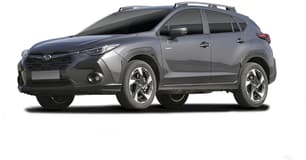
Among the many strange new car brands and names we're increasingly confronted with Subaru is an established and trusted beacon along with Honda, Hyundai, Mazda and Toyota. And Subaru’s Crosstrek SUV competes against rivals such as the Honda HR-V, Hyundai Kona, Mazda CX-30 and Toyota Corolla Cross.
So, what does the Crosstrek give you for your money and what’s different or better about the Crosstrek compared to those rivals?
We tested the mid-grade Crosstrek 2.0S and rediscovered what this small SUV does so well and what could probably be improved.
GWM’s second attempt at launching the Ora brand in Australia seems much better planned than the first.
While the electric Ora hatchback wasn’t expensive, divisive styling and some messy ergonomics plagued what felt like an undercooked model both in terms of dynamics and packaging.
So this, the 2026 GWM Ora 5 SUV, is ‘take two’.
It arrives with similar pricing but updated tech, more features and an Australian ride and handling tune.
Can this ensure GWM’s cutesy electric car brand is taken seriously and help it catch up to its cousins Haval, Tank and Cannon?
We drove a Flamingo Pink example from inner-Melbourne out into the scenic Yarra Valley for its Australian launch to find out.
The Crosstrek is good to drive with great ground clearance and an excellent all-wheel drive system for light off-road adventures. I’m also a fan of the styling and features for the money. But The letdowns comes in the form of limited boot space and cabin storage, a short warranty and pricey servicing. Still, it’s great to see Subaru has updated the car's safety systems, the most important part of any car.
While the Ora 5 still has a relatively divisive design that will turn off a chunk of those looking for a small electric SUV, the improvements made when compared to the hatch launched years ago make it worth a second look.
The interior is much more user-friendly, there are more features and a more sensible variant line-up, and the ride and handling localisation means you might actually want to drive it out of the city on occasion.
Regardless, the Ora 5 needs to be a lot more competitive than the Ora hatch was, because the market is so much busier with affordable rivals now. Fortunately, the value proposition is indeed much better than before, especially given the Ultra is only $3000 more than the Lux.
While SUVs tend to come in either a tall and boxy or coupe-like shape, the Crosstrek has a uniquely sleek and sporty wagon look that has stayed much the same over three generations.
Also while the Crosstrek competes with the Honda HR-V, Hyundai Kona, Mazda CX-30 and Toyota Corolla Cross the Subaru is the most off-road suitable thanks in part to its high 220mm ground clearance
As if to signal those adventurous aspirations the Crosstrek has a more rugged appearance with robust-looking plastic guards and chunky roof rails.
Inside the Crosstrek looks so much the same as most other new Subarus it's hard to work out which one you’re in. The materials are dark and soft, there is not much in the way of glitzy trimmings but there’s a high quality feeling throughout.
GWM is being pretty bold in calling the Ora 5’s design ‘timeless’ in its press materials.
The brand’s head designer says the Ora 5 isn’t shouting for attention, but I’m going to disagree. While I don’t think being attention-grabbing is a bad thing, the retro-leaning vibe the Ora hatch gave off a few years ago remains strong here on the 5 SUV.
We’re told much of it was inspired by nature - the wheels inspired by clovers, the lights by water drops, the body by smooth pebbles and the tail-lights by a sunrise - but it still looks a little alien from a couple of angles, mostly the rear.
The proportions are however better than the hatch, and from the side it gets away with looking a little like an attempt at a Porsche Cayenne.
The big thing you have to give GWM props for is including three properly vibrant colours (Cute Cyan, Flamingo Pink and Emerald Green) in the range, even though anything but Pepper White is a $595 option. Mystic Grey and matt Crystal Black complete the six options.
Inside, the Ora 5’s unique design feels distant, as the interior looks much like the vast majority of small Chinese SUVs. A focus on the large main touchscreen, a layout of phone holder, cupholders and the armrest in a minimalist central console, and the almost-lack of buttons are all hallmarks of the genre.
Only small touches like apparently Mini-inspired climate controls or the cat-shaped magnet (the Ora was called Funky Cat in China) holding the vanity mirror cover up really give it away as an Ora, aside from the exclamation mark logo on the steering wheel.
The Crosstrek is a small SUV but its low and sleek shape doesn’t do it any practicality favours in terms of exiting and entering or storage in the boot.
Boot capacity is 291 litres which is very small compared to its rivals which have capacities closer to 350 or 400 litres.
People space inside, however, is good, and even for a tall (189cm) person like me there’s plenty of space up front and behind my driving position.
Storage space is passable with three cupholders and thin door pockets and a decent-size console bin.
Given the Crosstrek’s adventurous intent, the cabin should be more reflective of that rugged aspiration.
The Ora 5 takes a noticeable step up over the previous Ora hatchback in terms of interior ergonomics, bringing it up to a decent standard.
The seats are more easily adjustable to find a decent driving position, the tech is a lot easier to navigate, and there are a couple of inclusions that put the Ora 5 a nose ahead of rivals.
As mentioned, the layout is fairly unimaginative in terms of design, but it does work practically in that there aren’t many elements of the interior to get in the way.
More buttons would of course be welcome, as using the touchscreen while on the move can be particularly fiddly. The upside is the software itself is more sensible in terms of menus, it just has small buttons. There is, mercifully, an always-on shortcut bar even while phone mirroring.
Android users will also be pleased to know there’s wireless Android Auto from launch in the Ora 5, rather than needing to wait for an update as some did when the Ora hatch launched.
USB-C ports and small storage slots are present front and rear, though single-zone climate means everyone needs to agree on one temperature (or be subjected to the driver’s decision).
There’s also only one vent in the rear, though the space itself is decently roomy, with the sunroof in the Ultra providing a nice amount of light. A central fold-down armrest would, however, be welcome.
Behind the rear seat is a 362L boot and underneath it lies an extremely welcome inclusion: a space-saver spare tyre.
GWM said it added the spare locally due to the heavy influence of the Australian market and the regular disappointment when only a repair kit is included.
The Crosstrek range is divided into three petrol variants and two hybrids. With a list price of $43,990, our test Crosstrek 2.0S sits at the top of the petrols and second from the top of the line-up under the Crosstrek AWD Hybrid S flagship.
Standard features on our 2.0S include 18-in alloy wheels, roof rails, LED headlights and tail-lights, dual-zone climate control, push-button start, proximity unlocking , 10-speaker audio, wireless phone charging, Apple CarPlay and Android Auto, an 11.6-inch media touchscreen and leather-trimmed seats.
If you’re looking to save a few thousand dollars the 2.0R is almost as well equipped.
Is it worth stepping up to the hybrid? Not in my opinion. The hybrid is the 'mild' kind and doesn't offer a great deal in terms of real-world fuel savings. You can read more on fuel efficiency below.
The good news is that the Ora 5 SUV kicks things off with a fairly competitive price, $33,990 drive-away.
That’s for the entry-grade Lux, though a slightly upgraded variant called the Ultra comes in at $36,990. Still pretty good value for a small electric SUV.
The list of standard features is decent, with a large 14.6-inch multimedia touchscreen and wireless phone mirroring, a 10.25-inch driver display and synthetic leather upholstery with electric seat adjustment for the driver.
There are also 18-inch wheels, auto LED headlights and LED tail-lights, rain-sensing wipers and tinted privacy glass for the rear windows.
The Ultra’s extra $3000 makes both front seats electrically adjustable, while adding seat ventilation and heating, wireless phone charging, ambient lighting, a panoramic sunroof, and three extra speakers for nine in total.
Weirdly, single-zone climate control is standard for both variants despite the touchscreen having a set of controls for each passenger.
It’s priced just above the relatively new BYD Atto 2 small SUV ($31,990 before on-roads) or the even-more-recently arrived MG4 Urban ($31,990 drive-away) hatch that have slightly smaller batteries and somewhat fewer features. It undercuts the Jaecoo J5 EV ($36,990 drive-away) and Leapmotor B10 ($37,888 before on-roads).
The Crosstrek 2.0S uses a 2.0-litre, four-cylinder, horizontally-opposed 'boxer' petrol engine which makes 115kW and 196Nm. A continuously variable transmission (CVT) with eight 'speeds’ isn’t the most exhilarating automatic but all Subaru now use CVTs.
The boxer engine has advantageous in terms of a lower centre of mass and helps deliver better driving feel thanks to more adept handling. Boxer engines also sound better to my ears with their throaty burble.
The Ora 5 uses a fairly tried and true propulsion method for budget-friendly EVs, that being a single motor mounted at the front axle.
This one has 150kW and 260Nm, the same for both variants, and feels just lively enough to avoid being branded sluggish.
The Crosstrek 2.0S's combined cycle (urban/extra-urban) fuel consumption is 7.2L/100km which aligns closely with our real-world test average of 8.7L/100km returned over mainly urban and city driving. That’s not bad, but given the price of fuel as well as the availability of EVs and excellent hybrids from other brands the Crosstrek is seriously behind the times.
Yes, yes, there is a hybrid Crosstrek, but it’s a mild-hybrid and the electric motor doesn't drive the wheels and doesn’t save much fuel. The hybrid Crosstrek has a claimed combined cycle consumption figure of 6.5L/100km, so there’s not much difference between the efficiency of the two. When you consider the price premium you need to pay it’s not worth stepping up into the hybrid.
An hour and a half drive through Melbourne into the Yarra valley saw the Ora 5 use 16.1kWh/100km, according to the trip computer.
At that rate, the claimed 435km range from the Ora 5’s 58.3kWh battery feels a little optimistic, but we did plenty of driving out of the city’s EV-range-friendly confines.
DC fast-charging is maxed at 120kW, and should take about 30 minutes from 10 to 80 per cent.
I’ve never met a new Subaru that wasn’t good to drive, apart from that time a friend sent me his 30-year old Brumby minus brakes. But even that was fun, until it was time to stop… Anyway, in my view the Crosstrek is better than its rivals in multiple areas except one, which I’ll get to in a moment.
The Crosstrek 2.0S is comfortable to sit in and its ride and handling balance is exceptional for a vehicle in this class. Honestly, the ride quality, body control and steering outshines the HR-V, Kona, CX-30 and Corolla Cross in my view.
A big call out has to go to the Crosstrek's all-wheel drive system, which is exceptional. I have tested this vehicle in some pretty adventurous settings and the kind of terrain it can devour would frighten its rivals.
But the one area that lets the experience down is the CVT auto. I feel this way about this type of transmission in any car and I’m not alone. CVTs provide smooth acceleration and deceleration but if you’re hoping for an engaging, sporty experience you’ll be left wanting.
That said, my wife also drove the car and thought it was perfect for city traffic. And I agree, it’s just on the motorway where you might notice the lack of oomph when overtaking.
Visibility is good and you sit quite high for a little SUV. That small size makes it easy to park and manage in the city’s tighter spaces.
First impressions on an unfortunately wet day from behind the Ora 5’s wheel are that it does feel much improved compared to the Ora hatch.
The biggest change under the skin appears to be the result of local tuning, undertaken by former Holden engineer Rob Trubiani.
The Ora 5 handles small bumps and rough roads better than the hatch did, while settling over bigger imperfections relatively quickly.
Even with questionable tyres on wet roads, the Ora 5 remained steady under quick, sharp cornering and wouldn’t understeer as the hatch did.
While it’s not brimming with dynamic prowess, the Ora 5 now feels capable of taking on Australian roads without frustrating its driver.
The steering feel, response and feedback aren’t anything to write home about, but do at least result in accurate cornering, and there is the option of adjusting the steering weight.
The Ora 5’s power delivery feels about right for its class and, even though it won’t rocket past anyone during an overtake, it’s more than enough for the city driving it’ll regularly be doing.
The advanced driver assist safety systems (ADAS), too, are a lot better programmed than expected. In highway driving and along twisting semi-rural roads, the Ora 5’s ADAS systems were all left on without much unnecessary intervention.
Part of the reason we're testing the Crosstrek is because it was updated with more safety tech and equipment towards the end of last year. This safety boost means the Crosstrek continues to boast a maximum five-star ANCAP rating.
The big change was to the 'Eyesight' sensor system with better traffic sign recognition and enhanced AEB systems. An emergency vehicle stop system has also been added to bring the car to a halt if the driver becomes unresponsive.
The rest of the Crosstrek’s features carry over including AEB, lane-keeping assistance, front and rear cross-traffic alert (with braking) and blind-spot warning.
For child seats there are two ISOFIX points and three top tether anchor mounts across the second row.
There is a spare where but it's a temporary type which will get you to a repair place.
ANCAP hasn’t completed an assessment of the Ora 5 SUV yet so, for now, the model remains unrated.
GWM says it has built the car to a standard it expects should be awarded five stars, though we won’t have the answer to that until late 2026.
Seven airbags and a pretty comprehensive list of features including door-open warning and rear cross-traffic alert should mean the Ora 5 fares well for at least the on-paper assessment.
The Ora 5 SUV also has a space-saver spare, and one of its seven airbags is a centre airbag, both things that are sometimes neglected in more affordable models.
All safety features are also standard for both variants, including the surround-view camera, so points for GWM there.
Subaru’s five year united kilometre warranty is becoming less appealing as other brands offer seven or even 10 years of coverage.
Servicing is recommended every 12 months/15,000km and a capped schedule is pricey relative to its competitors at more than $2400 over five years or about $400 on average per service.
The brand is represented by a long-established and stable network of close to 130 dealers covering metro, rural and regional locations across every state and territory.
GWM’s seven-year unlimited kilometre warranty is on the better side of average for mainstream brands, with the battery getting eight years, also unlimited.
But it’s the seven years of roadside and seven years capped-price servicing that make it a strong offering, especially when each service is just $195. That’s every 12 months or 15,000km.