What's the difference?
Are you the kind of person who doesn’t mind standing out? You like to go against the flow?
Well, if so, you might be exactly the kind of person who buys the all-new Renault Symbioz, the French brand’s new small SUV.
“It stands out in a sea of same-same SUVs,” is how Renault Australia General Manager Glen Sealey sums up the Symbioz.
The problem for Renault, is that it is a very big sea it finds itself in the middle of. The small SUV segment is the second biggest part of the local new car market in 2026, behind only mid-size SUVs and ahead of utes.
And it is full of well-known and popular models including the best-selling Chery Tiggo 4 Pro, Hyundai Kona, GWM Haval Jolion, Jaecoo J5, Mazda CX-30, MG ZS, Toyota Corolla Cross and the list goes on.
Certainly from a looks perspective the Symbioz stands out. But it also stands out for other reasons, such as being a bit more expensive than many of its rivals and because it is the last French brand left in the Australian market following the decline of Citroen and Peugeot.
Sealey said he expects the Symbioz to be the best-selling Renault model in Australia, and it arrives in the middle of a major product overhaul that will see six new or updated models arrive in the span of 18 months.
But does the Symbioz really have what it takes to stand out from the pack and win over those not afraid to try something different, or will it be lost in a vast sea of SUVs?
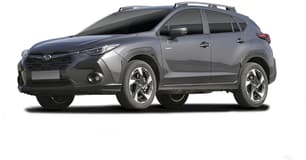
Among the many strange new car brands and names we're increasingly confronted with Subaru is an established and trusted beacon along with Honda, Hyundai, Mazda and Toyota. And Subaru’s Crosstrek SUV competes against rivals such as the Honda HR-V, Hyundai Kona, Mazda CX-30 and Toyota Corolla Cross.
So, what does the Crosstrek give you for your money and what’s different or better about the Crosstrek compared to those rivals?
We tested the mid-grade Crosstrek 2.0S and rediscovered what this small SUV does so well and what could probably be improved.
There’s certainly a lot to like about the Renault Symbioz. It may cost more than its direct competition, but it looks, feels and drives with an edge on many of its rivals. And the integration of the Google system will no doubt appeal to some, especially a younger audience which craves the latest tech.
But the extra cost coupled with the image problem French cars have had in Australia - justified or not - will make it a hard sell. The small SUV market is dominated by the big name brands and cut-price models - and the Symbioz is neither.
Renault Australia has no ambition for this to out-sell the Tiggo 4 Pro and Kona, but even attracting modest sales in such a highly competitive segment will be a hard slog.
If you’re willing to make an unconventional choice, though, you will likely enjoy your time with this little French alternative.
Note: CarsGuide attended this event as a guest of the manufacturer, with accommodation and meals provided.
The Crosstrek is good to drive with great ground clearance and an excellent all-wheel drive system for light off-road adventures. I’m also a fan of the styling and features for the money. But The letdowns comes in the form of limited boot space and cabin storage, a short warranty and pricey servicing. Still, it’s great to see Subaru has updated the car's safety systems, the most important part of any car.
The Symbioz effectively replaces the Captur in the local range and brings with it the French firm’s latest design language; which debuted on the recently launched Scenic.
Certainly, compared to some of the more conservative and simple models in the small SUV contest the Renault stands out. It has the look and feel you expect from a European car, on the outside and in the cabin.
One of the reasons for this is Renault Australia is offering seven colours, but only Flame Red is standard rather than the typical white and the other more muted hues cost an additional $900.
In terms of its size and where it fits into Renault’s slightly crowded SUV line-up, the Symbioz is 4412mm long, while the all-electric Scenic E-Tech is 4470mm, the more rugged Duster is 4345mm and the Megane E-Tech is 4200mm. So they’re all quite close, but thanks to unique designs and powertrains (and the fact the Duster isn’t designed to be a Renault), they fit together to form a cohesive line-up for you to choose from.
While SUVs tend to come in either a tall and boxy or coupe-like shape, the Crosstrek has a uniquely sleek and sporty wagon look that has stayed much the same over three generations.
Also while the Crosstrek competes with the Honda HR-V, Hyundai Kona, Mazda CX-30 and Toyota Corolla Cross the Subaru is the most off-road suitable thanks in part to its high 220mm ground clearance
As if to signal those adventurous aspirations the Crosstrek has a more rugged appearance with robust-looking plastic guards and chunky roof rails.
Inside the Crosstrek looks so much the same as most other new Subarus it's hard to work out which one you’re in. The materials are dark and soft, there is not much in the way of glitzy trimmings but there’s a high quality feeling throughout.
There are two elements that really stand out inside the Symbioz when it comes to practicality and technology, and how they are integrated.
The first element is that Renault has partnered with Google and this new model features the latest Google Automotive Services (GAS) which includes integrated Google Maps as well as access to the Google Play Store for downloading apps, but does so much more. Google Assistant is offered by default but you can also upgrade (via an over-the-air update) to Gemini, the tech giant’s artificial intelligence (AI).
This means with a simple ‘Hey Google’ voice command you can search for not only an address but anything you might need when you’re behind the wheel. So, if you are driving and want to stop for a coffee, you can ask Google Assistant or Gemini to find you a suitable spot to stop.
We were able to sample both systems and there is a clear difference between the two, with Gemini able to provide more detailed answers. But you have the freedom to choose if you want AI in your car or not, and can simply decline to update and stick with Assistant.
The second stand out feature is the amount of physical switchgear used throughout. Despite the switch to Google, Renault has stuck with physical controls for all the key functions - climate control, stereo, etc - which adds to the cost but makes for a much easier and safer driving experience.
While it may be a small SUV in size, Renault’s designers have created a surprisingly spacious and well-considered interior.
Up the front there are plenty of small item storage spaces, with an emphasis on small. But what they lack in size they make up for in quantity. There is a small ledge ahead of the stubby gear selector, with the wireless charging pad hidden underneath it. There are two cupholders and a small lidded console box as well, plus small door pockets.
In terms of space for people, up front the seats are comfortable and roomy, while in the rear the back of the driver and passenger seats have been heavily sculpted out to create a good amount of kneeroom.
As for the boot, Renault claims it is one of the best in the segment thanks to the back seats being on a slider, which allows you to trade-off rear passenger space for more cargo capacity. It means the mild hybrid has between 563-695L depending on the rear seat position, while the full hybrid is smaller, between 460-592L; with the difference attributed to the different position of the spare tyre.
The fact both models include a temporary spare tyre is notable in itself, as it’s something increasingly rare in this segment and very much a welcome addition in Australian conditions.
The Crosstrek is a small SUV but its low and sleek shape doesn’t do it any practicality favours in terms of exiting and entering or storage in the boot.
Boot capacity is 291 litres which is very small compared to its rivals which have capacities closer to 350 or 400 litres.
People space inside, however, is good, and even for a tall (189cm) person like me there’s plenty of space up front and behind my driving position.
Storage space is passable with three cupholders and thin door pockets and a decent-size console bin.
Given the Crosstrek’s adventurous intent, the cabin should be more reflective of that rugged aspiration.
There are three variants of Symbioz available from launch, with two different powertrains to choose from - the Techno with a mild hybrid and conventional hybrid available in either the Techno or Esprit Alpine trim.
The Techno mild hybrid kicks off the range at $36,990, plus on-road costs, then the Techno hybrid starts at $42,990 and the Esprit Alpine hybrid caps the line-up at $45,990.
That positions the Symbioz roughly $5000 more than its main rivals in the small SUV segment, the Hyundai Kona and Toyota Corolla Cross, which both start at around $37,000 for their entry-level full hybrids.
However, that means it is at the more premium end of the market, well above the likes of the Chery Tiggo 4 Pro, Jaecoo J5 and MG ZS, which all start well below $30,000.
The most direct rivals to the Symbioz are the slightly more premium options, such as the Honda HR-V (from $32,990) and Mazda CX-30 (from $34,360), so against those the price comparison is better.
They come fairly well-equipped for the asking price, featuring 18-inch alloy wheels for the Techno models and 19-inch rims for Esprit Alpine, plus a wireless smartphone charger, heated steering wheel, automatic climate control and auto headlights. There’s also a 10.25-inch digital driver display and 10.4-inch central multimedia touchscreen connected to a six-speaker sound system, with Apple CarPlay and Android Auto included, as well as Google Automotive Services.
The Esprit Alpine adds a nine-speaker Harman Kardon sound system, performance seats that are heated and electronically adjustable, red white and blue stitching on the steering wheel plus a power tailgate and chrome exterior trim.
The Crosstrek range is divided into three petrol variants and two hybrids. With a list price of $43,990, our test Crosstrek 2.0S sits at the top of the petrols and second from the top of the line-up under the Crosstrek AWD Hybrid S flagship.
Standard features on our 2.0S include 18-in alloy wheels, roof rails, LED headlights and tail-lights, dual-zone climate control, push-button start, proximity unlocking , 10-speaker audio, wireless phone charging, Apple CarPlay and Android Auto, an 11.6-inch media touchscreen and leather-trimmed seats.
If you’re looking to save a few thousand dollars the 2.0R is almost as well equipped.
Is it worth stepping up to the hybrid? Not in my opinion. The hybrid is the 'mild' kind and doesn't offer a great deal in terms of real-world fuel savings. You can read more on fuel efficiency below.
As mentioned earlier, Renault is offering two powertrains - a mild hybrid and a conventional hybrid. Remarkably, despite this being 2026, this is the first time Renault has ever offered a hybrid powertrain in Australia.
It’s a decent hybrid option too, making a respectable 116kW and 265Nm from its 1.8-litre four-cylinder petrol engine and electric motor.
Meanwhile, the mild hybrid features a 1.3-litre four-cylinder petrol engine and makes a more modest 104kW and 245Nm.
The Crosstrek 2.0S uses a 2.0-litre, four-cylinder, horizontally-opposed 'boxer' petrol engine which makes 115kW and 196Nm. A continuously variable transmission (CVT) with eight 'speeds’ isn’t the most exhilarating automatic but all Subaru now use CVTs.
The boxer engine has advantageous in terms of a lower centre of mass and helps deliver better driving feel thanks to more adept handling. Boxer engines also sound better to my ears with their throaty burble.
Renault Australia management was keen to push the convenience of a traditional hybrid, which requires no outside charging and is therefore easier to use - even if that means it can’t match the efficiency of a plug-in hybrid.
According to the company, the so-called ‘multimodal hybrid gearbox’ is the key to its efficiency. On paper it’s a four-speed automatic, but it’s integrated with the engine, motor, starter and generator, which means the engine and electric motor can both drive the front-wheels, while also helping the Symbioz return a claimed 4.7L/100km.
The battery is quite small at just 1.4kWh battery, but there is an ‘E-Save’ button that allows you to prioritise the petrol engine if you want to hold on the silent power for later.
With a 48-litre fuel tank and the 4.7L return, the Symbioz has a theoretical driving range of more than 1000km on a single fill.
As for the mild hybrid, it gets a more conventional seven-speed dual-clutch transmission and has a claimed fuel economy rating of 6.4L/100km.
It has the same fuel tank, so its theoretical range is 750km, which is still a good return but obviously not as attention grabbing as the full hybrid.
The Crosstrek 2.0S's combined cycle (urban/extra-urban) fuel consumption is 7.2L/100km which aligns closely with our real-world test average of 8.7L/100km returned over mainly urban and city driving. That’s not bad, but given the price of fuel as well as the availability of EVs and excellent hybrids from other brands the Crosstrek is seriously behind the times.
Yes, yes, there is a hybrid Crosstrek, but it’s a mild-hybrid and the electric motor doesn't drive the wheels and doesn’t save much fuel. The hybrid Crosstrek has a claimed combined cycle consumption figure of 6.5L/100km, so there’s not much difference between the efficiency of the two. When you consider the price premium you need to pay it’s not worth stepping up into the hybrid.
If you’re going to pay a premium for your non-conformist small SUV, one of the perks should be an above-average driving experience and thankfully the Symbioz delivers in this regard.
It’s not that it channels the iconic Renault Sport hot hatches of the past, or even sets a new dynamic benchmark for the class, but amid the sea of more-affordable models the Symbioz feels more composed on the road.
It’s responsive to your inputs as the driver and inspires confidence that not all of its rivals do. A big part of that is likely down to the tyres, with Renault avoiding the trap of cheaper, less impressive rubber that detracts from some of its competitors and instead offer Continental tyres on the Techno and Michelin rubber on the Esprit Alpine.
The ride is firmer than average, which helps with the responsiveness but means you can feel bumps in the road a bit more sharply than some, although it’s never uncomfortable.
It’s worth noting that we did see a trip computer fuel economy figure below the claimed 4.7L/100km, but an extended stretch of our drive was on motorways, which obviously helps keep that number down.
I’ve never met a new Subaru that wasn’t good to drive, apart from that time a friend sent me his 30-year old Brumby minus brakes. But even that was fun, until it was time to stop… Anyway, in my view the Crosstrek is better than its rivals in multiple areas except one, which I’ll get to in a moment.
The Crosstrek 2.0S is comfortable to sit in and its ride and handling balance is exceptional for a vehicle in this class. Honestly, the ride quality, body control and steering outshines the HR-V, Kona, CX-30 and Corolla Cross in my view.
A big call out has to go to the Crosstrek's all-wheel drive system, which is exceptional. I have tested this vehicle in some pretty adventurous settings and the kind of terrain it can devour would frighten its rivals.
But the one area that lets the experience down is the CVT auto. I feel this way about this type of transmission in any car and I’m not alone. CVTs provide smooth acceleration and deceleration but if you’re hoping for an engaging, sporty experience you’ll be left wanting.
That said, my wife also drove the car and thought it was perfect for city traffic. And I agree, it’s just on the motorway where you might notice the lack of oomph when overtaking.
Visibility is good and you sit quite high for a little SUV. That small size makes it easy to park and manage in the city’s tighter spaces.
There is some mixed news on the safety front with the Symbioz. Starting with the positives, it has all the modern safety systems you should expect, including driver attention monitoring, autonomous emergency braking and lane keeping assist. And generally those systems work pretty well and feel like they have been properly calibrated, certainly better than many small SUV rivals.
But if you really don’t like those systems, Renault has included a button labelled ‘Perso’ which allows you to customise the safety settings you want on or off at the press of that single button. So even though they are required to default to on whenever the car turns on, it doesn’t require navigating the menu to turn them off.
However, the bad news on the safety front is the Symbioz has not been rated by ANCAP but has a four-star crash test score from Euro NCAP. This was from a 2024 test, when the Symbioz went on sale in Europe, and was a result of missing points in several areas, notably some specific occupant protection (the driver’s chest protection was rated as “weak”) with no centre airbag or knee airbags for the driver or front passenger.
While short of the top score from the safety body, it is important to put the result into context and four stars does not mean the Symbioz should be considered unsafe in any way.
Part of the reason we're testing the Crosstrek is because it was updated with more safety tech and equipment towards the end of last year. This safety boost means the Crosstrek continues to boast a maximum five-star ANCAP rating.
The big change was to the 'Eyesight' sensor system with better traffic sign recognition and enhanced AEB systems. An emergency vehicle stop system has also been added to bring the car to a halt if the driver becomes unresponsive.
The rest of the Crosstrek’s features carry over including AEB, lane-keeping assistance, front and rear cross-traffic alert (with braking) and blind-spot warning.
For child seats there are two ISOFIX points and three top tether anchor mounts across the second row.
There is a spare where but it's a temporary type which will get you to a repair place.
The Symbioz is covered by Renault’s standard five-year/unlimited km warranty, which was fine a few years ago but when more affordable models are offering seven years and longer, it feels like a missed opportunity for the French firm.
The company offers ‘Assured Servicing Pricing’ which covers the first five years or 150,000km - whichever comes first. Intervals are every 12 months/30,000km and cost $2715 for the hybrid and $2695 for the mild hybrid.
Renault, which is looked after by an independent distributor in Australia, has 52 dealerships spread across the country.
Subaru’s five year united kilometre warranty is becoming less appealing as other brands offer seven or even 10 years of coverage.
Servicing is recommended every 12 months/15,000km and a capped schedule is pricey relative to its competitors at more than $2400 over five years or about $400 on average per service.
The brand is represented by a long-established and stable network of close to 130 dealers covering metro, rural and regional locations across every state and territory.