What's the difference?
The Dacia Duster, a well-liked small SUV in Europe, has been available in overseas markets for about 15 years and it’s now here, albeit rebadged as the Renault Duster.
At a time when people increasingly want to escape the modern-day rat race, vehicles such as the Duster offer a family- and budget-friendly way of achieving just that.
A new small 4x4 that actually might be somewhat capable off-road and with a manual gearbox? How refreshing.
But is the Duster a legitimate rival for something like the Suzuki Jimny?
Read on.
We’re entering the second half of 2026 and the rollout of new Chinese brands in Australia shows no sign of slowing.
The latest is Forthing, a brand from China’s massive Dongfeng Motor Group which has joint ventures with Nissan, Honda and Stellantis.
Forthing's first model in Australia is called the Taikon 5, a mid-size SUV offered in both electric (EV) and range-extender hybrid (REEV) guises.
Although customer deliveries have just begun, the rollout has been bumpy. Forthing is currently in the middle of a trademark dispute with Porsche over the Taikon name.
Porsche alleges Taikon is too similar to Taycan.
While this dispute is ongoing, Forthing is publicly referring to the car as the Electric and Range Extender Hybrid.
Forthing is hoping to have a resolution by the end of 2026, but if Porsche is successful in its opposition, the company may need to rename the car.
The Renault Duster 4x4 Evolution (manual) is a driver’s car. Lots of fun for day-to-day duties and a real visceral experience if you like to have a few laughs on loose-dirt and gravel tracks. And it’s adequately capable for off-roading adventures. It also has more than its fair share of cheeky charm.
Obviously it’s not anywhere near the most capable off-road vehicle available. That’s not what it’s intended to be. But it’s one of the most fun to drive on- and off-road.
And for $36,490 (excluding on-road costs), you’ll still have cash enough for a set of all-terrain tyres and some accessories.
Forthing remains something of an unknown quantity in Australia, but this first look at the Taikon 5 on local roads is promising.
It’s a modest mid-size SUV that’s priced accordingly and if you’re not a car person this will likely be enough to get people into a showroom.
Compared to most of its rivals it’s surprisingly pleasant and nice to drive, which is not something you can say about many first attempts.
Note: CarsGuide attended this event as a guest of the manufacturer with travel and meals provided.
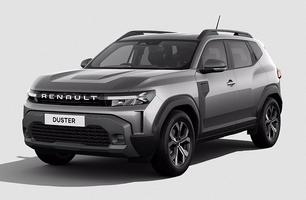
From the outside, the Duster 4x4 Evolution has that special ‘something’ that draws your eye. It’s unassuming, yet somehow eye-catching.
It’s a chunky little AWD with ‘Renault’ across the front grille and its raised stance gives the Duster a rugged presence.
Hard angles and nifty touches, such as the concealed rear door handles on the C-pillar, add to its funky exterior.
The Duster’s interior continues the minimalist theme with hard plastic surfaces everywhere – including the dash and door armrests – and black and grey cloth upholstery, all amid a neat but uncluttered layout.
The 10.1-inch multimedia touchscreen , angled slightly towards the driver, dominates up front and caps off what is an unpretentious, functional cabin.
Outside, the Taikon 5 is inconspicuous to the point of anonymity. If you told me it was a new model from BYD, Chery, GWM or Leapmotor, I’d believe you.
The EV and REEV versions of this car look identical and the only way to tell them apart is the badging on the tailgate. Yes, that means the EV has a fuel filler cap that doesn’t open and serves no purpose.
Beyond the Forthing lettering on the tailgate, nothing identifies the car as a Forthing. Perhaps that will come in time, once more models arrive, but for now it’s a bland look.
Take the front. The angular LED daytime running lights and headlight set-up is cliche and overdone, plus the honeycomb grille is tacky. It's not helped by the prominent charge flap smack-bang in the middle of the front bumper.
Inside, the car takes the same all-too-similar approach of hanging everything off a central touchscreen.
The 14.6-inch touchscreen is large and prominently mounted, but elsewhere the dashboard already looks dated and cheap. It’s not helped by the exaggerated circular air vents that scream Audi or Mercedes-Benz knock-off, or the large silver panels on the steering wheel.
The interior in Evolution trim matches the Duster’s no-nonsense adventure-focussed approach. It’s spartan but user-friendly.
The front seats are manually adjustable and the cloth upholstery looks like it’s hard-wearing and likely able to cope with the utter messiness of life.
I had trouble getting my phone to work via the 10.1-inch multimedia unit, but otherwise I have few complaints about the system as it’s easy enough to operate. There’s a wireless-charging pad below the screen. There are also two USB-C charging ports up front and two for rear-seat passengers, as well as two 12-volt sockets one in the front and another in the rear cargo area.
There is a mix of physical buttons and on-screen controls to operate various in-cabin functions, such as air-con.
For storage there is a glove box, a deep centre console, two cupholders, and a small shelf for your pocket clutter.
The second-row seats are roomy enough for two adults or three teens across the row and while passengers there have access to two USB-C charging ports and air vents, there’s no fold-down centre armrest.
The rear cargo area is accessed via a manual tailgate and is claimed to offer 358 litres of cargo volume when the rear seat is in use and 1424 litres when the second-row seat is stowed away.
Payload in the Duster Evolution 4x4 is listed as 503kg. The cargo area has a light, cargo hooks and a 12V socket. This Duster has a 215/70 R16 spare stored underfloor.
Surprisingly standard across the Taikon 5 line-up is ventilation and a massage function for the driver’s seat. This is good value for money, plus the massage feels strong.
The driver’s seat also offers 10 ways of electric adjustment and most people should find a comfortable driving position. You sit high, which SUV buyers prefer for the commanding view.
The steering wheel doesn’t reinvent the wheel (pardon the pun). It’s conventional and straightforward, which is no bad thing. All the buttons are clearly labelled and do exactly what they say.
Behind it, the digital instrument cluster is unremarkable and clearly displays the critical information, including a digital speedometer, odometer and remaining range.
You’re able to cycle through several informative pages. Oddly, the up and down buttons on the steering wheel adjust the cluster’s brightness.
The 14.6-inch central touchscreen multimedia system is large, however it’s tilted too far back and picks up reflections as a result.
The interface is simple and there isn’t much to get lost in, which makes the occasional lag when opening apps and sub-menus harder to excuse.
Wireless Apple CarPlay and Android Auto are standard and the connection held up over our short driving loops.
The drive modes and vehicle settings live in the touchscreen, but the climate control gets its own bank of physical dials and touch-sensitive buttons. The latter is great to see given so many carmakers are burying it in the touchscreen.
Elsewhere in the cabin there is a fancy-looking and Volvo-esque crystal-style gear selector, a wireless phone charger (Exclusive only), two cupholders, an open storage area under the centre console, a decently sized centre console box, as well as a glovebox.
In the second row there’s enough space to get comfortable. At a leggy 182cm, I had plenty of legroom behind my own driving position and headroom is okay, though the panoramic glass sunroof in the top-spec Exclusive trim eats into it.
The virtually flat floor means getting three adults across the rear bench isn’t out of the question, though there’s little bolstering in the seat back and base, so you’ll slide around in the corners.
Second-row amenities include central console-mounted air vents, a singular USB-A port, as well as a fold-down armrest with cupholders.
There are ISOFIX child seat anchorage points on the two outboard rear seats and top tether points on all three.
The Exclusive comes with a power tailgate. It beeps and opens slowly, but eventually the job gets done.
Boot space is 480L with the rear seats upright, expanding to 1480L with them folded. The boot area is fairly spacious and there’s a flat load floor.
Depending on the variant there’s an underfloor compartment that’s big enough to store some charging cables.
The EV Exclusive comes with a space-saver spare wheel, which is critical if you do long-distance drives in rural and regional areas. Disappointingly it doesn’t feature in the entry-level EV Luxury which makes do with a tyre repair kit, despite having the space to fill.
All versions of the REEV also have a tyre repair kit, but this makes more sense as the space is taken up by the rear-mounted electric motor.
The 2026 Renault Duster is available as a 4x2 (automatic) or 4x4 (with a six-speed manual) in two trim levels – the Evolution and the Techno – with a choice of a turbocharged 1.3-litre four-cylinder engine (for the 4x2) or a turbocharged 1.2-litre mild-hybrid three-cylinder engine (for the 4x4).
Our test vehicle, the 4x4 Evolution, has a manufacturer suggested retail price of $36,490, excluding on-road costs.
Standard features include a 10.1-inch multimedia touchscreen (with wireless Apple CarPlay and Android Auto), a wireless smartphone charger, 7.0-inch digital instrument cluster, six-speaker Arkamys sound system, dual-zone climate control, 17-inch alloy wheels, Continental Cross Contact 215/65 R17 tyres and a 215/70 R16 spare.
There’s also a range of accessories available including Rhino Rack and Thule storage platforms and racks.
Exterior paint choices include the no extra cost 'Solid White' as well as 'Khaki Green', 'Pearlescent Black', 'Terracotta', 'Cedar Green', 'Sandstone' and 'Shadow Grey'. All metallic or premium paint adds $750 to the Duster’s price.
Both the EV and REEV are offered in two trim levels called Luxury and Exclusive. They are priced as follows:
All prices are drive-away
That pricing undercuts the likes of the BYD Sealion 6, Leapmotor C10, Geely EX5 and Starray EM-i, as well as the Jaecoo J7 PHEV.
The entry-level Luxury grade gets the following as standard:
That’s a fair amount of standard equipment for the asking price, but stepping up to the top-spec Exclusive adds:
Although the EV and REEV versions of the Taikon 5 are virtually identical in terms of specifications, there are some small differences.
The EV has a proper start-stop button, the REEV doesn’t and instead turns on and off when you unlock and lock the car. Additionally the EV has an automatic mode for the climate control which the REEV misses out on.
The Duster 4x4 Evolution has a 1.2-litre three-cylinder turbo-petrol engine with a 48V mild-hybrid system (producing 96kW at 4500rpm and 230Nm at 2250rpm) matched to a six-speed manual gearbox.
As I said earlier, a new small 4x4 SUV with off-road capability and a manual gearbox is refreshing.
This Duster has an all-wheel drive system and the little 1422kg SUV can do the 0-100km/h sprint in a claimed 11.94 seconds.
While the Forthing Taikon 5 EV and REEV may look virtually identical, what is lurking under the bonnet is rather different.
The EV has a single, front-mounted electric motor that produces 150kW and 340Nm.
The REEV instead has a rear-mounted electric motor, making it rear-wheel drive. It produces 120kW and 240Nm, which is 30kW and 100Nm less than the EV.
It’s paired with a 1.5-litre naturally aspirated four-cylinder engine that’s capable of producing up to 75kW. It acts purely as a generator and never drives the wheels.
Official combined cycle (urban/extra-urban) fuel consumption is 5.7L/100km.
On test, we recorded 6.7L/100km but we did do a half-day of light off-roading.
This Duster 4x4 has a 55-litre fuel tank so, going by that on-test fuel figure, you could reasonably expect a driving range of about 820km out of a full tank.
The turbocharged 1.2-litre mild-hybrid three-cylinder engine requires 95 RON premium unleaded petrol.
Both versions of the Taikon 5 have a lithium iron phosphate (LFP) battery.
The EV has a 64.4kWh unit that’s good for up to 427km of WLTP electric range, whereas the REEV has a smaller 31.2kWh unit good for up to 170km of WLTP electric range.
For the EV that’s fairly standard for the segment, but with the REEV the battery pack is much larger than many of its similarly priced rivals.
You can’t forget the REEV also has a petrol engine that’s fed by a 43L fuel tank. This allows for a WLTP total range of up to 937km.
Both versions have a Type 2/CCS port on the front bumper, allowing for AC and DC charging.
The EV has a peak AC charging rate of 11kW and a peak DC charging rate of 80kW. The latter is mediocre, but it allows for a 30 to 80 per cent charge to occur in 30 minutes.
The REEV has a peak AC charging rate of 6.6kW and a peak DC charging rate of 40kW. Despite being slower, a 30 to 80 per cent changer using the latter is still claimed to take only 30 minutes.
My kids are learning to drive in a manual because I reckon being able to drive a manual vehicle remains an important skill to have. I only own manual cars at this point in time and it’s nice to see new cars with manual gearboxes haven’t been done away with just yet.
This all-wheel drive adventure machine is light at 1422kg and punchy, working through a turbocharged 1.2-litre mild-hybrid three-cylinder engine (producing 96kW at 4500rpm and 230Nm at 2250rpm) and a six-speed manual gearbox.
It’s sporty, with precise steering, crisp throttle response and nicely controlled ride and handling. And it’s a whole lot of fun to drive on sealed surfaces.
Throwing it around corners at (legal) speed is a barrel of laughs and driving on fast loose-dirt tracks is damn good for rally-style hilarity, all with the gruff backing track of this little AWD’s tractable petrol engine. Driving the 4345mm long, 2069mm wide and 1650mm high Duster feels like you’re punching a go-kart around a track, in a good way.
The Duster’s suspension deserves a mention here because this package, including an independent multi-link set-up at the rear, yields a firm but well-balanced overall feel.
Its tight turning circle makes it supremely easy to accomplish quick manoeuvres without fuss and it’s also a cinch to park.
Visibility from the driver’s seat is somewhat reduced through different angles to the rear and back along the vehicle’s side, but you get used to that. It doesn’t help that the camera view is muddy looking on the screen.
Those niggles aside, did I mention it’s fun to drive?
It’s not too shabby in low-speed off-road scenarios, either. The Duster is similar to Subaru’s Crosstrek and XV or the Jimny, in that this Renault’s intended use is not as a hardcore rock-crawling beast, it’s not engineered for that sort of thing.
The Duster's all-wheel drive system is well calibrated and quietly effective at detecting wheel-slip and delivering a smooth response. Driven with care, this AWD SUV is capable of off-roading at a level that will surprise some.
It has a 4x4 terrain control system with five modes – 'Auto', 'Eco', 'Mud & sand', 'Snow' and 'Off-road' – as well as a hill descent control system. None of these are engineered to turn the Duster into an off-highway mongrel but they ensure it's able to cope with mild to less-mild off-roading.
The Duster’s ground clearance (212mm) and off-road angles (31-degree approach and 36-degree departure) make it better suited to tackling off-road terrain of the light-to-moderate variety rather than door-sill deep mud holes and the like.
For reference, the Suzuki Jimny has 210mm of ground clearance and approach and departure angles of 37 and 49 degrees. The Crosstrek has 220mm of ground clearance, and approach and departure angles in the off-road-focussed Wilderness of 23.5 and 25.5 degrees.
But it’s still very capable if driven with consideration and well within the limits of its physical dimensions and off-road traction control.
Light off-roading (well-maintained gravel roads and dirt tracks in dry conditions) is fine because that’s well within the Duster’s capabilities and it results in little to no wear and tear on the vehicle.
While the Duster can handle short bursts on firm-packed sand (which I test here), sand-driving puts extra stress on any vehicle, and AWDs don’t have a lot of ground clearance, so they’re prone to bellying out on tall crests in between deeper wheel ruts on a beach.
My advice? Avoid anything beyond a well-maintained dirt track in dry weather and don’t take on any ‘4WD/ high ground clearance only' tracks, prolonged sand-driving or rock-crawling. Anything more rigorous than that and you risk damage to the vehicle’s underbody at a minimum, and mechanical damage and personal injury at worst. You’ve been warned.
The Duster’s off-road capabilities could easily be further enhanced with a set of decent light truck all-terrain tyres but, be aware, even aggressive rubber won’t turn it into a gung-ho off-roader.
For the record, it has unbraked trailer towing capacity of 750kg and braked towing capacity of 1500kg. Maximum towball download is listed as 75kg.
A bonus for Duster owners is that it can be kitted out for adventure via either Renault’s range of accessories – including all-weather floor mats, roof box, roof racks etc – or through Australia’s aftermarket industry.
The EV’s front-mounted electric motor is adequate, rather than quick. It’s enough to keep up with urban traffic.
Because it’s front-wheel drive with full torque available from a standstill, don’t be surprised by a touch of wheelspin if you bury the accelerator.
When taking off harder the electric motor can make prominent whirring sounds, but this kind of feedback is nice as an eerily quiet car can feel disconcerting.
In the REEV, the 1.5-litre petrol engine only ever acts as a generator, so it drives like an EV. Its electric motor sits on the rear axle, which makes it quieter from the driver’s seat and rear-wheel drive. In practice the lower outputs blunt it and it feels slower than the EV.
There’s still enough off the line. You only notice the deficit at higher speeds.
There are a total of four EV/hybrid modes to choose from, including EV-only, EV priority, hybrid and fuel only. They all do exactly what its name suggests.
Due to the limited driving program at the launch, I didn’t get to fully experience the extent of how the REEV powertrain operates under every circumstance. For example, I couldn’t drive it with a low battery charge and have it solely rely on the engine.
When the engine fires up to charge the battery, it stays quiet and in the background. If you're not paying attention you wouldn’t know it’s on.
Both versions of the Taikon 5 offer two levels of regenerative braking. There’s no one-pedal mode, meaning you need to use the brake pedal to come to a stop.
What’s surprising is the way it drives. Its rivals can drive like a dog’s breakfast and while the Taikon 5 isn’t class leading, the dynamics are better than you’d expect.
What I mean by this is the steering has some sense of what’s happening with the tyres when you turn the wheel. There are three settings to choose from and the most natural is Sport mode, which is the firmest.
There's no Australian-specific suspension tune, but it’s still generally compliant and comfort oriented. Unlike many of its rivals though, it’s not overly soft and floaty.
In terms of noise, vibration and harshness (NVH) the Taikon 5 is a generally quiet car, even at higher speeds. However, we noticed some plastic trim rattles and creaks, which isn’t ideal given they're brand new.
The Renault Duster 4x4 Evolution (manual) does not have an ANCAP safety rating because it has not been tested.
Standard safety gear includes six airbags, AEB, driver attention alert, lane-keep assist, lane departure warning, traffic sign recognition, rear parking sensors and a reversing camera.
The Duster range does not have adaptive cruise control (only regular ol’ cruise control) or rear cross-traffic alert.
The rear seat has two ISOFIX points and three top-tether child-seat anchorage points.
At this stage the Forthing Taikon 5 hasn’t received an ANCAP safety rating and is therefore unrated for now.
The following safety equipment is standard across the line-up:
Stepping up to the Exclusive brings front parking sensors, as well as a high-definition surround-view camera.
On the road, the Taikon 5 is a welcome relief from the bings, bongs and chimes that plague many of its rivals.
That’s partly because it goes without a driver attention monitoring system. This is the culprit of many bings and bongs in rival vehicles.
The only safety gripe is the lane-keep assist can be a touch hands-on and yank at the wheel if you get too close to the painted lines.
A five-year/unlimited-kilometre warranty with five years of roadside assistance applies to the Duster. That's average for the mainstream market.
Servicing appointments are set at 12 months/30,000km intervals, whichever occurs soonest.
Capped price servicing applies to the first five services with a total cost calculated at $2475 for the all-wheel Duster, with an average per-service cost of $495, which is getting up there for a car in this price bracket.
Renault has more than 70 dealerships across Australia.
The Forthing Taikon 5 is covered by a seven-year, 200,000km warranty, while the high-voltage battery is covered for eight years, 200,000km.
There’s 12 months of roadside assistance which can be extended out to five years provided you service within the Forthing dealer network, when required.
Logbook servicing with the REEV is required every 12 months or 15,000km, whereas with the EV it’s every 12 months or 20,000km.
Forthing is offering five years of capped-price servicing. With the EV it’s $1815 and the REEV it’s $2605 which works out to $363 and $521, respectively, per year.
Forthing is still scaling its dealer network in Australia and it currently has 20 sites operational. The company plans to have a total of 35 by the end of 2026.