What's the difference?
No good deed goes unpunished.
Porsche, a brand synonymous with petrol-guzzling sports cars, tried to do the right thing and make a nearly wholesale switch to electric vehicles by the end of the decade. The problem was, while this made governments happy, it didn’t sit well with customers.
Porsche’s all-electric Macan is enduring a torrid 2026, with sales down over 75 per cent now that all the petrol-engined options are gone.
But that hasn’t stopped the German brand trying again with an all-electric Cayenne. However, there are some key differences that mean this latest electric Porsche won’t suffer the same fate.
Namely, the petrol-powered and hybrid versions aren’t going anywhere and new versions are rumoured to be coming in the not-too-distant future.
For now though, we have this all-new electric Cayenne - so how does it stack up to its predecessors as the sports car brand’s big SUV? And will it be second time lucky for Porsche’s electric transition? Based on two rather unorthodox days of test driving, the verdict might surprise you…
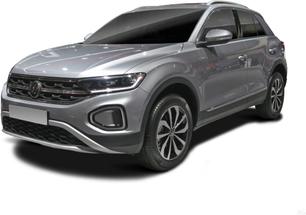
For a small SUV that technically starts under the $40,000 mark, the 2024 Volkswagen T-Roc has a fair bit going for it.
It’s still in its first generation, but updates have made some parts of the T-Roc feel properly up to speed. And the parts that haven’t? Well, maybe that’s not such a bad thing.
We’re driving the mid-spec Style 110TSI, which sits above the base CityLife, but below the R-Line. Then of course, there’s the wicked R variant.
But is this a Euro that could replace your trusted Japanese small SUV?
There is a lot riding on this new Cayenne Electric, it is the sales leader for the German brand and if it suffers the same sales decline as the Macan, that will be a big concern for Porsche.
The good news is it’s an impressive all-rounder, with an incredible breadth of capability. But so is the electric Macan.
Going electric hasn’t diminished its trademark Porsche elements, and instead has amplified them in many respects. The speed is nothing short of staggering in the Turbo, but across the range the on and off-road driving ability is impressive.
Plus it has the kind of spacious, well-considered and premium appointed cabin you should expect for a luxury SUV.
There are two key differences that could see it succeed where the Macan has faltered. Unlike the Macan, Porsche’s decision to give Cayenne buyers the option to stick with internal combustion if they prefer, is likely to ensure it remains a popular member of its line-up for years to come.
And while the Macan was perhaps too much, too soon, the Cayenne arrives at a time when Australians are embracing electric cars more than ever before. Although the luxury and performance end of the EV market is growing more slowly than the mainstream.
As for the pick of the range, as mind-blowing as the Turbo is, the truth is (like pretty much every Porsche model) the entry-level Cayenne is arguably the pick of the bunch. It has all the performance you’ll reasonably need and offers a good blend of capability and luxury for the lowest price.
Note: CarsGuide attended this event as a guest of the manufacturer with travel, accommodation and meals provided.
So that’s the T-Roc, a bit of Euro style that’s still priced to take the fight to some small SUVs from Japan or Korea.
Is it the cheapest style-forward small SUV you can get? No, but it’s far from the expensive end of things.
Plus, if you can resist ticking some option boxes, it beats some value-focused rivals and looks good doing it.
If the feeling of a sturdy fit-out and a confidence inspiring drive is important to you, I reckon the T-Roc should be an entry on your shopping list.
For all the positives of continuing to offer the previous generation Cayenne alongside the new one, it does come with some downsides too. The most obvious is unmissable design differences between the older generation and this newer one.
This new electric version has the same basic silhouette of the previous Cayenne, but the details give it a distinctive look. Being electric it needs to cut through the air as efficiently as possible, so this new model is longer and lower than the internal combustion versions.
The details of the design also give it a sharper, more modern look too. Not that the previous Cayenne suddenly looks old and outdated, but if you stick with petrol power you will be sacrificing the latest styling.
Another surprising design element with this new model is an optional off-road package, which includes a unique front bumper for greater off-road clearance and approach angle. It’s unlikely that too many Cayenne Electric owners will head deep into the bush, but for those who want to, the unique bumper will help them go further.
However, it does create a rather unusual look, as it has quite a pronounced undercut, or what I referred to as an ‘overbite’ that definitely doesn’t look as well-proportioned as the standard bodykit.
Inside, for all the hype around Porsche performance, one of the brand’s standout features has always been interior design.
This new Cayenne looks really interesting inside, with curved screens for the digital instrument display and the multimedia system, as well as the option to add a third screen in-front of the passenger.
The overall level of fit and finish, the detail and quality of the materials is exactly what you’d expect from a premium brand and an SUV at this price point.
The T-Roc subtly stands out without being garish, avoiding becoming part of the highway or suburban camouflage without relying on extreme design decisions.
For example, the LED daytime running lights that wrap around the shapes below the LED 'I.Q' headlights where vents would otherwise be on the R performance variant are quite cute.
In fact, the whole front end of this small SUV has a friendly look, even if there’s nothing specific that’s particularly exciting about it.
This 'Petroleum Blue Metallic' colour is a $700 option, but anything other than white costs extra.
However, the black roof two-tone look is a standard for the Style, as are the black mirror caps and its 18-inch alloys.
There are roof rails up top, tinted privacy windows for rear passengers and for the rear window and a sloping roofline at the rear that adds a touch of ‘sport’ to the silhouette along with a small spoiler at the top.
As for the space and practicality, once again Porsche showcases that it’s not a one-trick pony brand. As fast as the Cayenne Electric is - and is very fast - the designers have also ensured it is a genuinely spacious vehicle for a family.
The second row space is good, enough to take two adults in comfort and easily accommodate three kids.
The SUV is obviously the more practical of the pair, with the Coupe losing some rear headroom.
As for the boot, space varies between 781L for the Cayenne SUV and 747L for the S and Turbo SUVs, while the Coupe looks sleeker but comes at the expense of cargo capacity, dropping to 534L for the Coupe and Coupe S and just 500L for the Coupe Turbo.
The technology integration is well-considered too. One highlight is the new curved central multimedia screen, which has a palm rest that extends out from the centre fascia to make it more ergonomic to use the screen.
The intuitive menu, as well as the physical controls for the volume and climate control, plus the ability to integrate the smartphone apps, means the key non-driving functions are incredibly easy-to-use, even on the move.
Integrated into that palm rest is a large centre console space between the front seats, which has both wireless smartphone charging as well as four USB-C ports and two cupholders. It means there is plenty of small item storage space to go with all the room for people.
Inside the T-Roc is a bit of an interesting dichotomy.
Some of what’s in here is ‘old-gen’ Volkswagen stuff, but it still holds up today against even some recently introduced models.
The dichotomy is that while it’s very usable and slick, some of its materials and surfaces let it down a touch.
The good points are that the cabin tech is a perfect level of physical and digital. The buttons and controls are easy to use and feel solid and even though the climate controls could be more physical, they’re still good as far as touch panel style controls go.
The older VW gear is arguably better than a lot of what’s found in newer models where some use of touchscreens and haptic panels has drawn negative feedback from customers.
The multimedia software managed via the 8.0-inch touchscreen is more simple and sensible than the new version, plus the Digital Cockpit Pro display for the driver is clear and, importantly, customisable. It’s a similar cockpit system that used to seem quite impressive in high-end Audis.
But what doesn’t feel very high-end is some of the plastic and the decisions around function in the rest of the space.
The leather on the seats is not a cheap option box to tick at $3450, but it feels a little cheap to the touch. It’s a tad hard and even has a bit of a rough look to it.
That option also makes them heated and electrically adjustable, though, which is welcome in winter. Otherwise, cloth seats without the optional leather or heating would be absolutely fine, and that means you get a storage space under them, too.
This central space between the driver and front passenger, too, is a little awkward with the cupholder placement. It’s behind the shifter meaning a tall bottle will be in the way and it’s got slightly odd sizing for bottles or cups with nothing to stop them wobbling.
I am, however, a fan of the angled-away phone slot under the climate controls to minimise phone screen visibility (and distraction) and the traditional shifter itself is welcome.
Look up, and (in our test car) there’s an optional ($2000) panoramic sunroof there. It’s yours if you want it, and it does have an electric blind, but some Japanese and Korean cars at this price point get that as standard.
An average-sized adult will find the second row is spacious enough and relatively comfortable. There’s an armrest, dual-directional vents and two USB-C ports.
Behind that, boot space is generous at 445L with the seats up thanks to an adjustable floor, which is very useful for tall items and even manages to fit a space saver spare tyre under it.
It’s a total of 1290L with the split-fold seats down, too, though they’re not super flat with the adjustable floor down.
Starting with the basics, there are two different variants of the new Cayenne - the SUV and Coupe - and three trim grades to choose from - the entry-level model (known only as ‘Cayenne’), the sportier S and the flagship Turbo.
A major factor in the sales decline of the Macan is undoubtedly the rising cost of the car, which leapt up as much as $30,000 on some variants. So Porsche has been more careful with how it has positioned the Cayenne.
The new electric Cayenne is still a more expensive proposition, with the standard Cayenne SUV starting at $167,700 ($173,500 for the Coupe), which is over $20,000 more expensive than the equivalent petrol-powered model. It should be noted that that doesn’t factor in the increased performance and level of standard equipment, which includes air-suspension across the entire electric range.
Moving up the range, at $193,000 (Coupe - $194,500) the Cayenne S Electric is only just over $8000 more than its petrol alternative but the $259,800 (Coupe - $272,000) Turbo is actually more than $40,000 cheaper than the Turbo E-Hybrid. So it is not as simple as saying the electric Cayenne costs more across the board.
However, this isn’t the only one of the key differences between Porsche’s Macan and Cayenne strategy. The Cayenne petrol and hybrid models are here to stay for the foreseeable future. Rather than being completely replaced by the electric version, Porsche has learned its lesson and is giving customers more choice.
Officially Porsche hasn’t confirmed a new-generation of Cayenne petrol/hybrids, but all signs point to a new version coming in the next few years to carry on internal combustion power deep into the 2030s.
Porsche Australia also knows that the competitiveness of our very crowded market means extra equipment is a good idea. So all Australia-bound Cayenne Electrics come relatively well equipped, and more so than most overseas markets. For example, all local examples are fitted with air suspension as standard.
For the Cayenne, standard equipment includes:
For the extra money - aside from extra performance we’ll detail later - the Cayenne S adds:
The Cayenne Turbo adds even more performance as well as:
Adaptive sports seats with 18-way adjustment
The specific Style test vehicle being reviewed here is priced at $38,890, before on-road costs. But it's worth noting a new example of the Style will cost you $39,790 at the time of writing, as its price has since ours was 'delivered'.
While the Style features some older VW fitout, it comes with a decent list of features.
A set of 18-inch wheels, self-levelling headlights (with cornering function), some cute LED DRLs plus chrome highlights with black contrast trim are the best way to spot a Style from the outside.
Inside, there’s an 8.0-inch touchscreen for multimedia paired to the driver’s 'Digital Cockpit Pro' display.
The multimedia screen is last-gen VW gear, but that’s not a bad thing.
There’s also dual-zone climate control with an allergen filter, ambient lighting, a six-speaker sound system, wireless phone charger and wireless Android Auto and Apple CarPlay.
There are a few options on our test car that nudge the price up quite quickly, like the metallic paint, leather upholstery, sunroof, plus the keyless entry or ‘Easy open and close package’.
All this brings the total price as-tested to $45,640, before on-roads.
The good news is you don’t need to tick all, or any, of those options for this to still be a compelling option.
As mentioned earlier, there are three initial Cayenne Electric variants and each offer a different powertrain option. All are dual-motor, all-wheel drive but the power levels vary greatly depending on what you spend.
The standard Cayenne Electric comes with 300kW (325kW on Overboost), which is enough for this five-seat, family friendly SUV to launch 0-100km/h in just 4.8 seconds, which is genuinely impressive.
However, stepping up to the Cayenne S raises the power level to 400kW (490kW on Overboost) and drops the 0-100km/h time to 3.8 seconds.
Finally there’s the Cayenne Turbo, with up to 850kW of power and a claimed 0-100km/h capability of just 2.5 seconds. Which is borderline crazy for such a big SUV.
It is worth explaining that the 850kW claim for the Cayenne Turbo is only available for short bursts of performance when you activate Overboost, and the ‘standard’ output for the two electric motors is 630kW, which may sound like a lot less but is actually more than enough to make the Cayenne Turbo feel fast anytime you need more performance.
The engine in the T-Roc - as with most Volkswagens - does what it says on the tin. Essentially, a 110TSI means there’s 110kW of turbocharged VW happening, in this case a 1.4-litre four-cylinder that also makes 250Nm of torque.
It’s paired to an eight-speed torque converter, which will be music to the ears of those who have been scorned by older VW dual-clutches.
It drives the front wheels only, and there’s no hybridisation or 48-volt system.
The Cayenne is Porsche’s third electric model, after the Taycan and Macan, and it shows. The brand has taken battery production in-house for the Cayenne, producing the 106kWh unit at its own factory in Eastern Europe.
Range is rated at 542km for the Cayenne, 571km for the Cayenne S and 537km for the Cayenne Turbo.
Thermal efficiency is the key selling point for Porsche, as it unlocks not only the peak performance but also the repeatability that allows the Cayenne to launch so quickly over and over again. It’s notable, that unlike most other EVs that get slower the more time you extract peak performance out of them, Porsche was happy for us to undertake multiple acceleration runs in the same vehicle.
But that’s not the only trick Porsche has up its sleeve. It will be introducing inductive charging with the Cayenne. This means you’ll be able to buy a charging pad you can place on the floor in your garage, and simply drive it, park on top of it and the Cayenne will charge wirelessly.
This has the potential to be a game-changer for EV buyers as it removes the need to plug in to replenish the batteries, making life even easier for owners. It’s not available in Australia at the time of publication, but the company says it will be available from the fourth quarter and all Australian-delivered models, even those sold now, will be able to be retrofitted to take advantage of the technology.
A lack of electrification in a relatively small engine and a traditional drivetrain shouldn't scare you too much, in this case.
Combined cycle fuel consumption is a claimed 6.3L/100km. On test in mostly urban areas or for spirited driving we saw the fuel use rise a little higher than that but not by as much as you might think.
After a mix of primarily urban, some highway and a stint of dynamic test driving, the trip computer admitted to a figure of 8.1L/100km.
Porsche Australia invited us to drive the new Cayenne Electric in Port Lincoln, South Australia. While a picturesque part of the country, it seemed like an unlikely venue to test drive a new Porsche, as it’s typically Ford Ranger/Toyota HiLux country.
But one of the reasons Porsche launched the Cayenne Electric in regional South Australia was because they had managed to find a small airstrip we could use to fully explore the acceleration potential.
Even some operator error, which meant my launch was using ‘just’ the 630kW, the acceleration was sickeningly fast and had me hitting more than 170km/h in just 200m. With the full 850kW unleashed the Cayenne is actually faster 0-100km/h than Porsche’s hero sports car, the iconic 911 Turbo S.
That alone is a remarkable achievement, but Porsche had a few more reasons for taking us to Port Lincoln. After a drive on some sealed roads, which demonstrated the SUV's on-road composure, we found ourselves heading off-road… more off-road than I thought possible (or at least sensible) in a Porsche.
After surviving some of the gnarliest rocky roads, we found ourselves in some stunning sand dunes. We were driving the Cayenne S with the optional off-road package but the only other modification was to let down the tyres.
Carving through sand dunes like you’re in the Dakar Rally is likely to be a rare job for the Cayenne Electric, but the fact it is capable is immensely impressive and helps to demonstrate the breadth of capability that this electric SUV has.
But Porsche wasn’t finished showing off just how multi-talented the Cayenne is.
They had a Cayenne Turbo attached to a trailer, carrying the previously beaten 911 Turbo S, to prove that it can live up to its claimed 3500kg towing capacity.
Towing a nearly $600k sports car with a $260k SUV is an expensive way to demonstrate the point, but the Cayenne didn’t miss a beat. Certainly the battery was dropping more rapidly than it was unladen, but the electric Cayenne underlined that it can do everything the petrol versions can manage (at least over a short distance).
The T-Roc is essentially a previous-generation Golf-turned-small SUV in terms of its platform, and that’s a great thing for anyone who likes driving.
The Golf 7.5 was a benchmark for everyday driving as far as hatchbacks are concerned, and even though the current Mk8 might be a bit more up to date, the T-Roc’s use of the platform it rides on is practical and fun.
It’s not as nimble as a Golf, but the T-Roc in front-drive Style guise, with a responsive turbocharged engine and no all-wheel drive system weighing it down, is not only more dynamically capable than most rivals, it’s also easy to access that capability.
The 1.4-litre engine feels well-tuned for its two modes accessible through the shifter - calm but not lazy in ‘Drive’ and eager but not thrashy in ‘Sport’.
It works well with the transmission on the move, picking right gears fairly accurately, though there are paddles behind the wheel for those who prefer to take charge.
The drive modes are also more customisable than just those on the shifter, with 'Individual' selections for steering and drivetrain able to be used rather than the standard 'Eco', 'Normal' or 'Sport' full-system modes.
While the steering wheel itself is a little thick and the feedback, while adequate, isn’t the most telling, it’s accurate and inspires confidence in cornering.
The T-Roc handles turn-in and exits well, even soaking up bumps and not becoming unsettled when braking.
Its safety systems are relatively subtle, and the active cruise control is well sorted, though the automatic braking at car park speeds can be overzealous. Something I’ve experienced in VW Group models several times over the years.
The main culprit for the T-Roc was a shrub beside my driveway that, while not touching the car, would set off the automatic braking system. Still, better than letting the car roll back if there was a proper obstacle or someone who could be hurt in the way.
Aside from that, the Volkswagen T-Roc is fun and easy to drive, and the work that’s gone into that puts its price into perspective a little more.
There are more expensive cars available that are less impressive, some even disappointing.
As for safety, the Cayenne Electric is as well equipped as you should expect a car at this price to be. There are all the features that have become the norm, including speed limit warning, autonomous emergency braking, lane keeping assist, etc.
But it’s not the fact that it has all the safety features that’s impressive, it’s the level of calibration. Yes, the speed limit warning will go off if you speed, but generally the other safety systems were very well-behaved and understated during our drive.
However, the only caveat with that is our drive was almost entirely in regional areas, so we should reserve final and definitive judgement until we get it into the urban environment.
As for its safety rating, the Cayenne was crash tested by Euro NCAP in December 2025 and awarded a maximum five-star score. It is unlikely ANCAP will crash test such an expensive model here, so expect the same rating to carry over barring something unusual.
In 2017, ANCAP gave the T-Roc five stars for safety. For most people, that says enough, plus the list of features the SUV comes with is fairly comprehensive even in the Style.
While its rating is getting on in years, the only real downside to the T-Roc’s age when it comes to safety is it only having six airbags - front and side for the front passengers, plus curtain airbags for front and rear passengers.
But the list of tech isn’t lacking, with driver fatigue detection, pedestrian monitoring, parking bay and parallel parking assistance, pedestrian monitoring, side assist, rear cross-traffic alert and lane assist.
The Cayenne Electric is covered by Porsche’s usual three-year/unlimited kilometre warranty, and the battery gets eight years of coverage.
Both of these are fairly standard by historical terms, but with so many luxury brands - including Audi, BMW, Lexus and Mercedes-Benz - all now offering five years of coverage, it does leave Porsche lagging behind.
Servicing intervals are every 12 months or 15,000km, whichever comes first, which is standard for an internal combustion engine vehicle.
Porsche doesn’t offer capped-price servicing, so prices may vary from dealer to dealer. However, the brand does sell a special EV-focused ‘Porsche Scheduled Maintenance Plan’ that costs $1995 for three years, $3695 for four years and $3995 for five years of servicing.
Volkswagen’s five-year/unlimited kilometre warranty is pretty standard for a premium-leaning brand, with VW also offering roadside assistance for the warranty period.
In terms of servicing, VW offers care plans of three years or five years, covering servicing for $1515 or $2770 respectively. That's an average of $505 or $554 per workshop visit.
Otherwise, servicing costs at 12-month/15,000km intervals can cost from $470 for some to $1104 to the biggest service if you don’t go with the locked-in package.