What's the difference?
No good deed goes unpunished.
Porsche, a brand synonymous with petrol-guzzling sports cars, tried to do the right thing and make a nearly wholesale switch to electric vehicles by the end of the decade. The problem was, while this made governments happy, it didn’t sit well with customers.
Porsche’s all-electric Macan is enduring a torrid 2026, with sales down over 75 per cent now that all the petrol-engined options are gone.
But that hasn’t stopped the German brand trying again with an all-electric Cayenne. However, there are some key differences that mean this latest electric Porsche won’t suffer the same fate.
Namely, the petrol-powered and hybrid versions aren’t going anywhere and new versions are rumoured to be coming in the not-too-distant future.
For now though, we have this all-new electric Cayenne - so how does it stack up to its predecessors as the sports car brand’s big SUV? And will it be second time lucky for Porsche’s electric transition? Based on two rather unorthodox days of test driving, the verdict might surprise you…
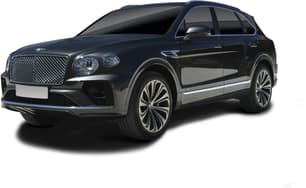
Yes, you can drive your Bentley and keep your family. It's called compromise, or the Bentayga, Bentley's SUV.
The Bentayga my family has been living with is the Azure grade which promises to be even more comfortable and pleasant than the rest of the range.
Comfort is important and we'll cover the Bentayga's lavish details in time, but our mission first and foremost is to find out if the Bentayga makes a good family SUV.
There is a lot riding on this new Cayenne Electric, it is the sales leader for the German brand and if it suffers the same sales decline as the Macan, that will be a big concern for Porsche.
The good news is it’s an impressive all-rounder, with an incredible breadth of capability. But so is the electric Macan.
Going electric hasn’t diminished its trademark Porsche elements, and instead has amplified them in many respects. The speed is nothing short of staggering in the Turbo, but across the range the on and off-road driving ability is impressive.
Plus it has the kind of spacious, well-considered and premium appointed cabin you should expect for a luxury SUV.
There are two key differences that could see it succeed where the Macan has faltered. Unlike the Macan, Porsche’s decision to give Cayenne buyers the option to stick with internal combustion if they prefer, is likely to ensure it remains a popular member of its line-up for years to come.
And while the Macan was perhaps too much, too soon, the Cayenne arrives at a time when Australians are embracing electric cars more than ever before. Although the luxury and performance end of the EV market is growing more slowly than the mainstream.
As for the pick of the range, as mind-blowing as the Turbo is, the truth is (like pretty much every Porsche model) the entry-level Cayenne is arguably the pick of the bunch. It has all the performance you’ll reasonably need and offers a good blend of capability and luxury for the lowest price.
Note: CarsGuide attended this event as a guest of the manufacturer with travel, accommodation and meals provided.
The Bentley Bentayga Azure may look a bit awkward and it surely isn't great value for money, but it is a true Bentley and a very good family SUV that not only provides terrific practicality but superb performance and comfort.
For all the positives of continuing to offer the previous generation Cayenne alongside the new one, it does come with some downsides too. The most obvious is unmissable design differences between the older generation and this newer one.
This new electric version has the same basic silhouette of the previous Cayenne, but the details give it a distinctive look. Being electric it needs to cut through the air as efficiently as possible, so this new model is longer and lower than the internal combustion versions.
The details of the design also give it a sharper, more modern look too. Not that the previous Cayenne suddenly looks old and outdated, but if you stick with petrol power you will be sacrificing the latest styling.
Another surprising design element with this new model is an optional off-road package, which includes a unique front bumper for greater off-road clearance and approach angle. It’s unlikely that too many Cayenne Electric owners will head deep into the bush, but for those who want to, the unique bumper will help them go further.
However, it does create a rather unusual look, as it has quite a pronounced undercut, or what I referred to as an ‘overbite’ that definitely doesn’t look as well-proportioned as the standard bodykit.
Inside, for all the hype around Porsche performance, one of the brand’s standout features has always been interior design.
This new Cayenne looks really interesting inside, with curved screens for the digital instrument display and the multimedia system, as well as the option to add a third screen in-front of the passenger.
The overall level of fit and finish, the detail and quality of the materials is exactly what you’d expect from a premium brand and an SUV at this price point.
You'd think of all automotive brands Bentley, with its beautiful swooping and powerful saloons, would be able to floor us with something just exquisite in SUV form. But right from the 2012 concept the Bentayga has struggled to stun the world with its design.
So, while there are Bentley family traits all over the Bentayga, from the intricate headlights and mesh grille, to the oval tail-lights and body which squats over the rear wheels, the overall design looks awkward to my eyes.
To me it appears the boxy design with the tall, flat roofline and elevated ride height favours practicality over the sleekness possessed by a lower, more coupe-like SUV.
I favour dark coloured clothes because it hides my shapes, creases and bulges, but these are the things you want to see in a car and our Bentley's 'Onyx Black' paint, despite being a beautiful colour with a blue hue added, make it a featureless blob in the sunlight.
A lighter shade or something outlandish like a turquoise or yellow would look amazing, and even better, upset your neighbours.
Let's look at the interior design which is lavish with all the quilted leather and Mulliner customisation, but lacks the modern look of many contemporary cabins with its smallish media screen and busy mosaic of buttons.
I like the little chrome plungers for the air vents, the winged styling to the dashboard and the stitched leather upholstery, but it's easy to spot parts that are shared by other members of the Volkswagen Group (which owns Bentley).
For example, there are the indicator and wiper stalks, as well as the steering wheel buttons, all from Audi. Surely Bentley should have its own crafted parts?
The interior colour scheme on our Bentayga is 'Beluga' (black) and 'Camel' (tan) and the Mulliner option split the colours with a cream tone.
From a family perspective the tan and black will hide dirt, although the cream will struggle. It's possibly the best leather on the planet, however, coming from cattle living high enough that their hides are unblemished by insect stings.
As for the space and practicality, once again Porsche showcases that it’s not a one-trick pony brand. As fast as the Cayenne Electric is - and is very fast - the designers have also ensured it is a genuinely spacious vehicle for a family.
The second row space is good, enough to take two adults in comfort and easily accommodate three kids.
The SUV is obviously the more practical of the pair, with the Coupe losing some rear headroom.
As for the boot, space varies between 781L for the Cayenne SUV and 747L for the S and Turbo SUVs, while the Coupe looks sleeker but comes at the expense of cargo capacity, dropping to 534L for the Coupe and Coupe S and just 500L for the Coupe Turbo.
The technology integration is well-considered too. One highlight is the new curved central multimedia screen, which has a palm rest that extends out from the centre fascia to make it more ergonomic to use the screen.
The intuitive menu, as well as the physical controls for the volume and climate control, plus the ability to integrate the smartphone apps, means the key non-driving functions are incredibly easy-to-use, even on the move.
Integrated into that palm rest is a large centre console space between the front seats, which has both wireless smartphone charging as well as four USB-C ports and two cupholders. It means there is plenty of small item storage space to go with all the room for people.
Being shaped like a bus does nothing for the Bentayga's beauty but makes it spacious for cargo and roomy for people.
With its large doors and elevated ride height (the car can be lowered for easier access) it's great for families.
Our Bentayga is a five-seater, which is fine for my little family of four, but there are four- and seven-seat configurations available, too.
Second row legroom is exceptional, even for me at 189cm tall, and sitting behind my own driving position there's still plenty of room.
Headroom is also outstanding throughout. We could be a family that loves top hats, on our way to the top hat championships, and not have to remove our top hats. That's how good headroom and hat room is.
Sun blinds in the second row are vital in Australia, and the electric ones in the Bentayga raise and lower quickly, not just offering protection but also more privacy.
Storage is good throughout with big door pockets and five cupholders.
It seems the cabin space eats into the cargo area because the boot isn't overly large at 484 litres with all seats in place.
Buttons in the cargo area allow the rear of the car to be raised and lowered to make it easier to hoist items in the boot.
For devices there's a wireless phone charger up front along with USB ports in both rows.
Starting with the basics, there are two different variants of the new Cayenne - the SUV and Coupe - and three trim grades to choose from - the entry-level model (known only as ‘Cayenne’), the sportier S and the flagship Turbo.
A major factor in the sales decline of the Macan is undoubtedly the rising cost of the car, which leapt up as much as $30,000 on some variants. So Porsche has been more careful with how it has positioned the Cayenne.
The new electric Cayenne is still a more expensive proposition, with the standard Cayenne SUV starting at $167,700 ($173,500 for the Coupe), which is over $20,000 more expensive than the equivalent petrol-powered model. It should be noted that that doesn’t factor in the increased performance and level of standard equipment, which includes air-suspension across the entire electric range.
Moving up the range, at $193,000 (Coupe - $194,500) the Cayenne S Electric is only just over $8000 more than its petrol alternative but the $259,800 (Coupe - $272,000) Turbo is actually more than $40,000 cheaper than the Turbo E-Hybrid. So it is not as simple as saying the electric Cayenne costs more across the board.
However, this isn’t the only one of the key differences between Porsche’s Macan and Cayenne strategy. The Cayenne petrol and hybrid models are here to stay for the foreseeable future. Rather than being completely replaced by the electric version, Porsche has learned its lesson and is giving customers more choice.
Officially Porsche hasn’t confirmed a new-generation of Cayenne petrol/hybrids, but all signs point to a new version coming in the next few years to carry on internal combustion power deep into the 2030s.
Porsche Australia also knows that the competitiveness of our very crowded market means extra equipment is a good idea. So all Australia-bound Cayenne Electrics come relatively well equipped, and more so than most overseas markets. For example, all local examples are fitted with air suspension as standard.
For the Cayenne, standard equipment includes:
For the extra money - aside from extra performance we’ll detail later - the Cayenne S adds:
The Cayenne Turbo adds even more performance as well as:
Adaptive sports seats with 18-way adjustment
Reviewing every type of car on the market provides a pretty good perspective, but when it comes to Bentleys we enter a realm where value-for-money often isn't as crucial as it is for more mainstream options.
The same goes for the price. Bentleys are among the most expensive cars in the world. So if, like me, you flinch at the thought of paying more than half a million dollars for an SUV, it may not be the car for us right now.
With that I can tell you the Bentley Bentayga Azure's list price is $475,000 and our car with all of its options comes to $515,000.
That's more money than any SUV from Mercedes-Benz and BMW costs. Even Range Rover can't quite reach that mark.
Only the likes of Aston Martin's DBX 707 and Lamborghini's Urus can match the price.
There are always bigger fish, though, and Rolls Royce's Cullinan swims in at $700,000, making the Bentayga's price seem quite reasonable.
Let's look at the standard features.
Coming standard on the Bentayga Azure are the prettiest LED headlights in the world. There are LED tail-lights, too, as well as a proximity key, roof rails and a panoramic glass roof, plus a hands-free tailgate.
Inside there's the 10.9-inch media screen, sat nav, wireless Apple CarPlay and wireless Android Auto.
The diamond quilting to the door trims is also standard and so are the Bentley sports pedals.
Many of these features are standard on lower grades in the Bentayga range, but the point in choosing the Azure is that many of the optional bundles on offer are fitted as standard here.
So, while leather upholstery is of course standard the 'Colour Specification' package gives you a choice of all interior colour combinations and an extended choice of hide colours.
The 'City Specification' brings extra safety tech like rear cross-traffic alert and a top view camera.
The 'Front Seat Comfort' specification adds 20-way power front seats, ventilation and massage as well as comfort headrests.
The 'Touring Specification' brings adaptive cruise control, a head up display, lane keeping assistance and 'Night Vision'.
And then the 'Sunshine Package' adds electric sun blinds, which are great for kids in the back.
Despite the multitude of standard packages there's plenty left to option on the Azure.
Our car was fitted with about a dozen options including piano black veneer ($5884), 22-inch alloy wheels ($4733), rear privacy glass ($2617), LED welcome lights ($2238), self-levelling wheel centre caps ($1208), a heated acoustic windscreen ($1094), luggage management for the boot ($937) and a heated steering wheel ($543).
Then there's Mulliner, Bentley's in-house customisation division which will personalise your Bentley.
The Mulliner custom features on our Bentayga Azure include the addition of an extra colour in the leather upholstery ($13,492), 'Honeycomb' stitching on the steering wheel ($5391) and contrasting stitching on the quilted areas of leather trim ($2688).
Best family features would have to be the privacy glass, temperature control in the second row and the rear sun blinds.
The second row also comes with a removable tablet which can be used to adjust the climate control, sunroof and media settings among other functions.
In the hands of children this is every parent's nightmare and there's a 100 percent chance of the tablet being lost forever, possibly on the motorway between Sydney and Canberra.
As mentioned earlier, there are three initial Cayenne Electric variants and each offer a different powertrain option. All are dual-motor, all-wheel drive but the power levels vary greatly depending on what you spend.
The standard Cayenne Electric comes with 300kW (325kW on Overboost), which is enough for this five-seat, family friendly SUV to launch 0-100km/h in just 4.8 seconds, which is genuinely impressive.
However, stepping up to the Cayenne S raises the power level to 400kW (490kW on Overboost) and drops the 0-100km/h time to 3.8 seconds.
Finally there’s the Cayenne Turbo, with up to 850kW of power and a claimed 0-100km/h capability of just 2.5 seconds. Which is borderline crazy for such a big SUV.
It is worth explaining that the 850kW claim for the Cayenne Turbo is only available for short bursts of performance when you activate Overboost, and the ‘standard’ output for the two electric motors is 630kW, which may sound like a lot less but is actually more than enough to make the Cayenne Turbo feel fast anytime you need more performance.
When Bentley stopped putting its W12 into the Bentayga this year I was unsurprised yet sad. The world is moving toward tighter fuel emissions but the twin-turbo petrol V8 in this Azure is still a beast.
The 4.0-litre turbo-petrol V8 is from the Audi family and I love it as much for its plentiful torque and superb acceleration as the deep rumble of its exhaust.
Making 404kW and 770Nm the V8 can lift and throw the 2.5-tonne Bentayga to 100km/h from a standstill in 4.5 seconds and onto a top speed of 290km/h. I reckon you could get it to 300km/h with the wind behind you.
Drive goes to all four wheels via an eight-speed transmission and a Torsen-type centre differential.
Default drive balance is 40/60 front to rear, with up to 70 per cent of power able to be sent to the front wheels and up to 85 per cent to the rear axle.
I don't think you'll be astounded to hear this powertrain uses a lot of fuel? Let's go there...
The Cayenne is Porsche’s third electric model, after the Taycan and Macan, and it shows. The brand has taken battery production in-house for the Cayenne, producing the 106kWh unit at its own factory in Eastern Europe.
Range is rated at 542km for the Cayenne, 571km for the Cayenne S and 537km for the Cayenne Turbo.
Thermal efficiency is the key selling point for Porsche, as it unlocks not only the peak performance but also the repeatability that allows the Cayenne to launch so quickly over and over again. It’s notable, that unlike most other EVs that get slower the more time you extract peak performance out of them, Porsche was happy for us to undertake multiple acceleration runs in the same vehicle.
But that’s not the only trick Porsche has up its sleeve. It will be introducing inductive charging with the Cayenne. This means you’ll be able to buy a charging pad you can place on the floor in your garage, and simply drive it, park on top of it and the Cayenne will charge wirelessly.
This has the potential to be a game-changer for EV buyers as it removes the need to plug in to replenish the batteries, making life even easier for owners. It’s not available in Australia at the time of publication, but the company says it will be available from the fourth quarter and all Australian-delivered models, even those sold now, will be able to be retrofitted to take advantage of the technology.
Bentley says the Bentayga Azure with the V8 petrol engine will use an average of 11.4L/100km over a combination of open and urban roads.
But what happens if you live in the suburbs not far from the city and drive the Azure every day to do the school drop offs and trips to the shops and then take in some fun country roads? You use an average of 22.8L/100km according to the car's trip computer.
This is still not as high as I was expecting. I've driven V6-powered SUVs which use more than this under the same conditions.
That said, even when using as much fuel as Bentley says you should, an 85-litre fuel tank is only going to deliver an approximate 745km driving range.
As for safety, the Cayenne Electric is as well equipped as you should expect a car at this price to be. There are all the features that have become the norm, including speed limit warning, autonomous emergency braking, lane keeping assist, etc.
But it’s not the fact that it has all the safety features that’s impressive, it’s the level of calibration. Yes, the speed limit warning will go off if you speed, but generally the other safety systems were very well-behaved and understated during our drive.
However, the only caveat with that is our drive was almost entirely in regional areas, so we should reserve final and definitive judgement until we get it into the urban environment.
As for its safety rating, the Cayenne was crash tested by Euro NCAP in December 2025 and awarded a maximum five-star score. It is unlikely ANCAP will crash test such an expensive model here, so expect the same rating to carry over barring something unusual.
The Bentley Bentayga doesn't have a safety rating as like many extremely high-end cars it hasn't been assessed by ANCAP or Euro NCAP.
That said, the Azure grade comes standard with an armoury of safety tech including AEB (with turn assistance), lane keeping assistance, blind-spot warning, rear cross-traffic alert, evasive steering assistance, and adaptive cruise control.
Front and rear parking sensors are standard (and the most relied-upon feature I use daily), while exit warning saved my child and myself more than a few times from leaping out into the traffic on the school run.
The Cayenne Electric is covered by Porsche’s usual three-year/unlimited kilometre warranty, and the battery gets eight years of coverage.
Both of these are fairly standard by historical terms, but with so many luxury brands - including Audi, BMW, Lexus and Mercedes-Benz - all now offering five years of coverage, it does leave Porsche lagging behind.
Servicing intervals are every 12 months or 15,000km, whichever comes first, which is standard for an internal combustion engine vehicle.
Porsche doesn’t offer capped-price servicing, so prices may vary from dealer to dealer. However, the brand does sell a special EV-focused ‘Porsche Scheduled Maintenance Plan’ that costs $1995 for three years, $3695 for four years and $3995 for five years of servicing.
The Bentayga is covered by Bentley's three-year/unlimited-kilometre warranty. Servicing is recommended every 12 months or 16,000km.
The good news is all new Bentley's have five years regular servicing included in the cost of the vehicle.