What's the difference?
No good deed goes unpunished.
Porsche, a brand synonymous with petrol-guzzling sports cars, tried to do the right thing and make a nearly wholesale switch to electric vehicles by the end of the decade. The problem was, while this made governments happy, it didn’t sit well with customers.
Porsche’s all-electric Macan is enduring a torrid 2026, with sales down over 75 per cent now that all the petrol-engined options are gone.
But that hasn’t stopped the German brand trying again with an all-electric Cayenne. However, there are some key differences that mean this latest electric Porsche won’t suffer the same fate.
Namely, the petrol-powered and hybrid versions aren’t going anywhere and new versions are rumoured to be coming in the not-too-distant future.
For now though, we have this all-new electric Cayenne - so how does it stack up to its predecessors as the sports car brand’s big SUV? And will it be second time lucky for Porsche’s electric transition? Based on two rather unorthodox days of test driving, the verdict might surprise you…
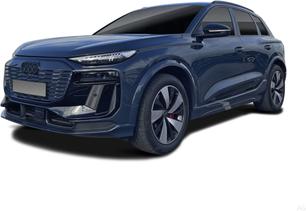
Sharing the same Volkswagen Group PPE platform as its main rival, the Porsche Macan 4S, the newly launched Audi SQ6 e-tron has promised both efficiency and performance.
Is it a combination that can be achieved in real life? My family of three have been testing it out this week to find out for you.
There is a lot riding on this new Cayenne Electric, it is the sales leader for the German brand and if it suffers the same sales decline as the Macan, that will be a big concern for Porsche.
The good news is it’s an impressive all-rounder, with an incredible breadth of capability. But so is the electric Macan.
Going electric hasn’t diminished its trademark Porsche elements, and instead has amplified them in many respects. The speed is nothing short of staggering in the Turbo, but across the range the on and off-road driving ability is impressive.
Plus it has the kind of spacious, well-considered and premium appointed cabin you should expect for a luxury SUV.
There are two key differences that could see it succeed where the Macan has faltered. Unlike the Macan, Porsche’s decision to give Cayenne buyers the option to stick with internal combustion if they prefer, is likely to ensure it remains a popular member of its line-up for years to come.
And while the Macan was perhaps too much, too soon, the Cayenne arrives at a time when Australians are embracing electric cars more than ever before. Although the luxury and performance end of the EV market is growing more slowly than the mainstream.
As for the pick of the range, as mind-blowing as the Turbo is, the truth is (like pretty much every Porsche model) the entry-level Cayenne is arguably the pick of the bunch. It has all the performance you’ll reasonably need and offers a good blend of capability and luxury for the lowest price.
Note: CarsGuide attended this event as a guest of the manufacturer with travel, accommodation and meals provided.
When it comes to a performance electric SUV, the Audi SQ6 e-tron is a fine example and showcases a masterclass in design. It drives and handles beautifully, even if it’s not as fun as I expected.
The technology looks amazing and I'm sure the little bumps we experienced will be ironed out with a software update.
The SQ6 will suit a smaller family best but the decent driving range and fast charging capabilities means regional families might like it too.
For all the positives of continuing to offer the previous generation Cayenne alongside the new one, it does come with some downsides too. The most obvious is unmissable design differences between the older generation and this newer one.
This new electric version has the same basic silhouette of the previous Cayenne, but the details give it a distinctive look. Being electric it needs to cut through the air as efficiently as possible, so this new model is longer and lower than the internal combustion versions.
The details of the design also give it a sharper, more modern look too. Not that the previous Cayenne suddenly looks old and outdated, but if you stick with petrol power you will be sacrificing the latest styling.
Another surprising design element with this new model is an optional off-road package, which includes a unique front bumper for greater off-road clearance and approach angle. It’s unlikely that too many Cayenne Electric owners will head deep into the bush, but for those who want to, the unique bumper will help them go further.
However, it does create a rather unusual look, as it has quite a pronounced undercut, or what I referred to as an ‘overbite’ that definitely doesn’t look as well-proportioned as the standard bodykit.
Inside, for all the hype around Porsche performance, one of the brand’s standout features has always been interior design.
This new Cayenne looks really interesting inside, with curved screens for the digital instrument display and the multimedia system, as well as the option to add a third screen in-front of the passenger.
The overall level of fit and finish, the detail and quality of the materials is exactly what you’d expect from a premium brand and an SUV at this price point.
The SQ6 has a distinct look compared to the other mid-size SUVs in Audi’s stable with panelling that lacks some of the severe pleating of its cousins, instead incorporating swoopy lines and a more pronounced moulding around the base of the car.
The sporty S styling is seen in the large 21-inch alloy wheels and red calipers but the customisable light designs inside and out really make this stand out.
The interior is sumptuously styled with Nappa leather and suede upholstery and trims, and sports front seats, while the use of displays in the dashboard makes the SQ6 feel like a spaceship.
However, the main panel curves towards the driver and it still feels accessible and intimate for a cockpit. The cabin looks as expensive as what you’d want it to look like at this price point.
As for the space and practicality, once again Porsche showcases that it’s not a one-trick pony brand. As fast as the Cayenne Electric is - and is very fast - the designers have also ensured it is a genuinely spacious vehicle for a family.
The second row space is good, enough to take two adults in comfort and easily accommodate three kids.
The SUV is obviously the more practical of the pair, with the Coupe losing some rear headroom.
As for the boot, space varies between 781L for the Cayenne SUV and 747L for the S and Turbo SUVs, while the Coupe looks sleeker but comes at the expense of cargo capacity, dropping to 534L for the Coupe and Coupe S and just 500L for the Coupe Turbo.
The technology integration is well-considered too. One highlight is the new curved central multimedia screen, which has a palm rest that extends out from the centre fascia to make it more ergonomic to use the screen.
The intuitive menu, as well as the physical controls for the volume and climate control, plus the ability to integrate the smartphone apps, means the key non-driving functions are incredibly easy-to-use, even on the move.
Integrated into that palm rest is a large centre console space between the front seats, which has both wireless smartphone charging as well as four USB-C ports and two cupholders. It means there is plenty of small item storage space to go with all the room for people.
The cabin's primary objective seems to be one of passenger comfort. Everything you touch feels soft under hand and while seat padding is on the firmer side, all but the rear middle seat is comfy on a longer journey because of their extra functions.
The rear-row back rest has two recline positions and the seat beds offer long under-thigh support. The middle seat bulges up, and coupled with the compromised legroom, it won't be a nice seat for an adult.
The front row offers the best legroom and there is enough space in the rear for my six foot three brother to squeeze into (somehow) but I wouldn't want to be in the rear for a longer journey if you're super tall.
Access is good for each row with wide door apertures and seats that aren't positioned too high. There will be no groans getting in and out of the SQ6.
Up front the glovebox and middle console shoulder most of the storage burden but there is a handy flip-down drawer at the driver's knee for a wallet and a centre console with the charging stuff but it is an awkward space that could have been better utilised. Things tend to move around in there if not secured.
In the rear there are a couple of net map pockets, storage bins and a total of four drink holders but that's about it. The other amenities back there soften the lack of storage options as you get directional air vents, climate control, heated outboard seats and a couple of USB-C ports.
The technology on a whole looks amazing and the touchscreen multimedia display is responsive and logically laid out. You'll be able to figure it out quickly and I like that important functions, like climate control, and shortcuts are pinned to the screen as it makes it easier to access them when on the go. The Audi voice assistant can be activated by 'Hey Audi' if you don't want to fiddle with screens on the road.
The wireless Apple CarPlay was simple to set up but at the beginning of the week it did tend to get booted whenever the climate or massage functions were activated. This was annoying as you'd have to reselect CarPlay and jump back into whatever app you were in and when you're using the Map app, it feels disjointed. However, this sorted itself out by the end of my week.
On the whole, all the screens and their functions are user friendly but there were a couple of gremlins that needed a car restart to fix. Randomly, my volume became useless and the touchpad/buttons on the steering wheel stopped working.
I do like a normal button over touchpad controls as I find them more responsive but the touchpad controls on the driver's door were really easy to use and I like the family-friendly option of being able to individually apply the child-lock to the rear doors.
Rounding out the cabin is the large 526L boot which offers a level loading space and the ability to adjust the height via the adaptive S air-suspension from buttons in the rear.
The rear row has a 40/20/40 split, which opens up storage options again and there is a deep under-floor storage pocket that houses the tyre repair kit. A handsfree-powered tailgate comes standard, which I always appreciate and the massive frunk (64L) takes care of all of the cable storage.
Starting with the basics, there are two different variants of the new Cayenne - the SUV and Coupe - and three trim grades to choose from - the entry-level model (known only as ‘Cayenne’), the sportier S and the flagship Turbo.
A major factor in the sales decline of the Macan is undoubtedly the rising cost of the car, which leapt up as much as $30,000 on some variants. So Porsche has been more careful with how it has positioned the Cayenne.
The new electric Cayenne is still a more expensive proposition, with the standard Cayenne SUV starting at $167,700 ($173,500 for the Coupe), which is over $20,000 more expensive than the equivalent petrol-powered model. It should be noted that that doesn’t factor in the increased performance and level of standard equipment, which includes air-suspension across the entire electric range.
Moving up the range, at $193,000 (Coupe - $194,500) the Cayenne S Electric is only just over $8000 more than its petrol alternative but the $259,800 (Coupe - $272,000) Turbo is actually more than $40,000 cheaper than the Turbo E-Hybrid. So it is not as simple as saying the electric Cayenne costs more across the board.
However, this isn’t the only one of the key differences between Porsche’s Macan and Cayenne strategy. The Cayenne petrol and hybrid models are here to stay for the foreseeable future. Rather than being completely replaced by the electric version, Porsche has learned its lesson and is giving customers more choice.
Officially Porsche hasn’t confirmed a new-generation of Cayenne petrol/hybrids, but all signs point to a new version coming in the next few years to carry on internal combustion power deep into the 2030s.
Porsche Australia also knows that the competitiveness of our very crowded market means extra equipment is a good idea. So all Australia-bound Cayenne Electrics come relatively well equipped, and more so than most overseas markets. For example, all local examples are fitted with air suspension as standard.
For the Cayenne, standard equipment includes:
For the extra money - aside from extra performance we’ll detail later - the Cayenne S adds:
The Cayenne Turbo adds even more performance as well as:
Adaptive sports seats with 18-way adjustment
The launch of the flagship SQ6 e-tron brings the Q6 line up to three before a high-performance RS hits our shores sometime in the future. However, this new variant is priced at $151,400 before on-road costs and that's a hike of $28,900 over the mid-spec Q6 e-tron quattro.
Is it worth the jump? Mostly because this model has almost every feature that is found as an at-cost extra or pack for the other variants but it does miss out on a ventilation function for the front seats and at this stage Audi is saying it's not available to add, which is odd for a top model grade.
With the motor outputs and performance tweaks, the SQ6 competes in the world of the Porsche Macan 4S as they are mechanically related but you can pick up the 4S for $149,300 MSRP and the SQ6 can't match it's torque output of 820Nm.
The most exciting thing about the Q6 range in general is the technology and the SQ6 is no different. The dashboard is a visual feast for the eyes with a 14.5-inch multimedia display, an 11.9-inch digital instrument cluster, and a 10.9-inch touchscreen for the front passenger.
There is wired/wireless Apple CarPlay and Android Auto, built-in satellite navigation and because the system is run by Android Automotive there are a whole bunch of downloadable apps like Spotify, YouTube and Amazon Alexa voice assistant on top of the connected Audi App. These apps are accessible from the passenger display, which means they can scroll the news or watch a video on a longer trip.
There is also the upgraded 3D Bang & Olufsen surround sound system, a colour augmented reality head-up display (the screen is basically a dynamic 3D setup) and three-zone climate control.
Charging is taken care of with four USB-C ports (2/2), a 12-volt socket that moonlights as an actual cigarette lighter (complete with an nearby ashtray) and a wireless charging pad with its own 'arm' that secures your phone.
The LED lights at the rear can be customised with different light signatures which are downright cool and the front LED lights also have animated individual pixels that do a little light show when you turn on the car (to the delight of my child).
Other highlights include front sports seats with heat and massage functions, wine-red Nappa leather upholstery and black suede trims, a heated steering wheel, panoramic sunroof, heated rear outboard seats, and a handsfree powered tailgate.
Audi also includes three charging cables and a one-year subscription for Chargefox public charging stations for free, as well as installing an at-home 7kW charger, which is a nice way of making a new owner feel valued.
As mentioned earlier, there are three initial Cayenne Electric variants and each offer a different powertrain option. All are dual-motor, all-wheel drive but the power levels vary greatly depending on what you spend.
The standard Cayenne Electric comes with 300kW (325kW on Overboost), which is enough for this five-seat, family friendly SUV to launch 0-100km/h in just 4.8 seconds, which is genuinely impressive.
However, stepping up to the Cayenne S raises the power level to 400kW (490kW on Overboost) and drops the 0-100km/h time to 3.8 seconds.
Finally there’s the Cayenne Turbo, with up to 850kW of power and a claimed 0-100km/h capability of just 2.5 seconds. Which is borderline crazy for such a big SUV.
It is worth explaining that the 850kW claim for the Cayenne Turbo is only available for short bursts of performance when you activate Overboost, and the ‘standard’ output for the two electric motors is 630kW, which may sound like a lot less but is actually more than enough to make the Cayenne Turbo feel fast anytime you need more performance.
The SQ6 is a fully electric all-wheel drive and has two motors, one located on each axle. Together they produce up to 380kW of power and 580Nm of torque, which means this can do a 0-100km/h sprint in just 4.3 seconds when the launch control is activated.
There are three regenerative braking levels and a one-pedal mode which can be selected by sliding the gear-selector into 'B' otherwise the other two modes can be selected via the paddles on the steering wheel. You'll get the best efficiency when B is selected but it does take a beat to get used to and if you time your stops right, it can function as a proper one-pedal action.
The Cayenne is Porsche’s third electric model, after the Taycan and Macan, and it shows. The brand has taken battery production in-house for the Cayenne, producing the 106kWh unit at its own factory in Eastern Europe.
Range is rated at 542km for the Cayenne, 571km for the Cayenne S and 537km for the Cayenne Turbo.
Thermal efficiency is the key selling point for Porsche, as it unlocks not only the peak performance but also the repeatability that allows the Cayenne to launch so quickly over and over again. It’s notable, that unlike most other EVs that get slower the more time you extract peak performance out of them, Porsche was happy for us to undertake multiple acceleration runs in the same vehicle.
But that’s not the only trick Porsche has up its sleeve. It will be introducing inductive charging with the Cayenne. This means you’ll be able to buy a charging pad you can place on the floor in your garage, and simply drive it, park on top of it and the Cayenne will charge wirelessly.
This has the potential to be a game-changer for EV buyers as it removes the need to plug in to replenish the batteries, making life even easier for owners. It’s not available in Australia at the time of publication, but the company says it will be available from the fourth quarter and all Australian-delivered models, even those sold now, will be able to be retrofitted to take advantage of the technology.
The SQ6 has a lithium-ion battery with a large 100kW capacity and can accept up to 270kW on DC power, which is excellent. There are two Type 2 charging ports (on either side of the car) and one has a CCS enhancement which means you can charge this from 10 to 80 per cent capacity in as little as 21 minutes on a 270kW ultra-rapid DC charger.
It is more common to see a 50kW DC charger though and that charge time sits closer to an hour and 20 minutes.
On a home 7.4kW charger, you'll get the same percentage after 15 hours, perfect for an overnight recharge.
With a claimed WLTP driving range of up to 568km and energy consumption between 17.5 and 18.6kWh/100km, the daily commute and odd family road trip is more than covered with this model.
My average consumption popped out at 18.1kWh based on the trip computer and that’s a good result for how hard I’ve pushed it over country roads, in the city and on the highway.
Porsche Australia invited us to drive the new Cayenne Electric in Port Lincoln, South Australia. While a picturesque part of the country, it seemed like an unlikely venue to test drive a new Porsche, as it’s typically Ford Ranger/Toyota HiLux country.
But one of the reasons Porsche launched the Cayenne Electric in regional South Australia was because they had managed to find a small airstrip we could use to fully explore the acceleration potential.
Even some operator error, which meant my launch was using ‘just’ the 630kW, the acceleration was sickeningly fast and had me hitting more than 170km/h in just 200m. With the full 850kW unleashed the Cayenne is actually faster 0-100km/h than Porsche’s hero sports car, the iconic 911 Turbo S.
That alone is a remarkable achievement, but Porsche had a few more reasons for taking us to Port Lincoln. After a drive on some sealed roads, which demonstrated the SUV's on-road composure, we found ourselves heading off-road… more off-road than I thought possible (or at least sensible) in a Porsche.
After surviving some of the gnarliest rocky roads, we found ourselves in some stunning sand dunes. We were driving the Cayenne S with the optional off-road package but the only other modification was to let down the tyres.
Carving through sand dunes like you’re in the Dakar Rally is likely to be a rare job for the Cayenne Electric, but the fact it is capable is immensely impressive and helps to demonstrate the breadth of capability that this electric SUV has.
But Porsche wasn’t finished showing off just how multi-talented the Cayenne is.
They had a Cayenne Turbo attached to a trailer, carrying the previously beaten 911 Turbo S, to prove that it can live up to its claimed 3500kg towing capacity.
Towing a nearly $600k sports car with a $260k SUV is an expensive way to demonstrate the point, but the Cayenne didn’t miss a beat. Certainly the battery was dropping more rapidly than it was unladen, but the electric Cayenne underlined that it can do everything the petrol versions can manage (at least over a short distance).
Outside of the initial acceleration thrill, I have to say that the SQ6 sort of drives like a lot of the other Audi SUVs I’ve sampled. Which is fine because it’s dynamic and handles beautifully on the highway or city but it’s just not as fun as what I was hoping it would be. The power will satisfy everyone though.
The different driving profiles and adaptive S air suspension really personalises the on-road experience when you want it and my favourite profile is Dynamic as the suspension and steering feels more performance focused, which I prefer.
Ride comfort is up there with the best and you won’t really be bothered by the bumps in the road, even with the stiffer suspension, but road noise does creep in at higher speeds.
The visibility all round is good despite thicker pillars but the rear visibility is narrow even before a car seat or passengers are back there. A digital rearview mirror would have been handy here.
Just something interesting to note is that when you accelerate from a full stop, there can be a small lurch as if it’s rolled backwards or the brakes have held a tad too long. It’s so quick when it happens that it’s not annoying but it is noticeable in stop/start traffic.
The SQ6 is really simple to park and navigating small car parks feels like a dream. The dimensions are forgiving and the 360-degree camera system is top notch.
As for safety, the Cayenne Electric is as well equipped as you should expect a car at this price to be. There are all the features that have become the norm, including speed limit warning, autonomous emergency braking, lane keeping assist, etc.
But it’s not the fact that it has all the safety features that’s impressive, it’s the level of calibration. Yes, the speed limit warning will go off if you speed, but generally the other safety systems were very well-behaved and understated during our drive.
However, the only caveat with that is our drive was almost entirely in regional areas, so we should reserve final and definitive judgement until we get it into the urban environment.
As for its safety rating, the Cayenne was crash tested by Euro NCAP in December 2025 and awarded a maximum five-star score. It is unlikely ANCAP will crash test such an expensive model here, so expect the same rating to carry over barring something unusual.
The SQ6 is covered by a maximum five-star ANCAP safety rating from testing done in 2024, and features nine airbags which includes side chest airbags for the second row but it’s more common to see those just on the first row so it's nice to see on a family car.
There’s a host of safety equipment included but standouts are the emergency call capability, and safe exit assist which will delay your door from opening if it detects a car or cyclist which is a handy feature if you have a kid that throws open their door like mine.
Other equipment includes driver attention warning and alert, blind-spot monitoring, tyre-pressure monitoring, intelligent seatbelt warning, adaptive cruise control with stop/go function, lane departure warning, lane keeping assist, emergency lane keeping, park assist, front/rear parking sensors, 360-degree camera system, rear cross-traffic alert, and traffic sign recognition.
There is auto emergency braking (AEB) with forward collision warning, car, pedestrian, cyclist and junction turning assist which is operational from to five to 250km/h.
There are ISOFIX child seat mounts on the rear outboard seats and three top-tether anchor points but two seats will fit best. Front passenger space might get cosy when a rearward facing child seat is installed but I had no issue fitting my big booster seat this week.
The Cayenne Electric is covered by Porsche’s usual three-year/unlimited kilometre warranty, and the battery gets eight years of coverage.
Both of these are fairly standard by historical terms, but with so many luxury brands - including Audi, BMW, Lexus and Mercedes-Benz - all now offering five years of coverage, it does leave Porsche lagging behind.
Servicing intervals are every 12 months or 15,000km, whichever comes first, which is standard for an internal combustion engine vehicle.
Porsche doesn’t offer capped-price servicing, so prices may vary from dealer to dealer. However, the brand does sell a special EV-focused ‘Porsche Scheduled Maintenance Plan’ that costs $1995 for three years, $3695 for four years and $3995 for five years of servicing.
The SQ6 is covered by Audi’s five-year/unlimited kilometre warranty and the battery is covered by an eight-year or up to 160,000km warranty, which are all standard terms for the class.
Audi also offers six years of complimentary roadside assistance and a servicing program for six years that costs $2080, which is competitive, and servicing intervals are at every two years or 30,000km.
Audi includes the installation of a 7.4kW AC home charger, three charging cables and a one-year Chargefox public charging subscription with this model.