What's the difference?
The icon is electric. Well, kind of.
This is the new Porsche 911 Carrera GTS, which ushers in a facelift for the brand’s most famous model — and it’s one that introduces a pretty major change.
That faint whistling you hear is most likely the distant wails of the Porsche purists, because this new 911 is now a hybrid.
Yes, the Carrera GTS features Porsche’s clever T-Hybrid engine, which is the brand’s take on electrifying the world’s most famous sports car.
It’s faster than the model it replaces, but it also fundamentally alters the formula that has made the 911 the world’s most iconic sports car.
The question is, does it alter it for the better?
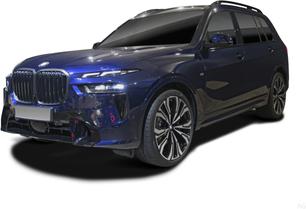
Large family-friendly luxury SUVs tend to be handsome in design but somewhat restrained. Until now. BMW has introduced a major facelift for its flagship SUV, the six- or seven-seat X7. Emphasis on face.
The new X7 adopts the striking but controversial front-end from the new 7 Series sedan, but the big, bold SUV is hiding some rather significant changes under the skin. Aside from a beefier diesel that now comes with mild hybrid tech, there’s also a redesigned cabin, massively upgraded tech, more standard features, oh, and a price increase.
The more things change, the more they stay the same. The t-hybrid might be an entirely new propulsion system for the 911, but the net result is unchanged – power, poise and performance on tap.
Note: CarsGuide attended this event as a guest of the manufacturer, with travel, accommodation and meals provided.
When lined up against its direct rivals, the expensive X7 xDrive40d represents reasonable value for money.
It has a unique and bold look and a sumptuous, visually striking and well-appointed interior that has acres of space for family, friends, or for ferrying frequent flyers to the airport.
That wallop of performance from the big beefy diesel is the cherry on the top. This is how you do a mid-life update.
This facelift debuts a revolutionary exterior design that has completely reshaped the 911.
Just kidding. If it ain’t broke and all that. The front air vents and exhaust have changed, the former now an active intake system that deploys via vertical flaps, but elsewhere it’s largely evolution over revolution.
Instead, Porsche has focused most of the updates in then cabin. In here, you’ll find a new digital instrument panel, they’ve changed some of the levers and the steering wheel.
In true Porsche fashion, though, this new 911 mimics the older versions in that it's one of the more intuitive cabins you’ll ever sit in. Everything feels as though it’s exactly where it should be, and all feels entirely centred on the driver.
There’s quite a bit that’s interesting about the X7’s design. Especially looking at it front on.
BMW certainly took a bold step when it introduced its toothy grille design for the X7 and the 4 Series range.
But the Bavarian brand has made some even braver design moves recently by introducing a blocky front-end with split headlights on its new-gen 7 Series flagship sedan. That look has now found its way onto the face of the updated X7.
As with the 7 Series, it won’t be to everyone’s taste. But you can’t deny it has a lot of presence.
The tail-lights have been tweaked and look good, but the sheer size of the X7 - it’s 5.2 metres long and 1.8 metres tall - means there’s no disguising the fact that it is a big, boxy SUV.
Inside the update ushers in significant design changes. The old dash and cowl is gone in favour of the ‘Curved Display’ that connects the instrument cluster and multimedia.
New slimline air vents, LED backlit ‘X7’ graphics on the passenger side of the dash, and a new gear shift toggle that replaces the old shifter elevate the cabin and give it a much more modern vibe than the old X7 - one that’s in keeping with the excellent iX electric SUV.
This probably falls under the ‘next question, please’ umbrella, given that, while the Porsche 911 is known for a lot of things, vast acres of space with loads of practicality perks just ain’t a part of its portfolio.
The new 911 measures a not-insubstantial 4533mm in length, 1852mm width and around 1294mm in height, and it rides on a 2450mm wheelbase. Luggage space is a paltry 135 litres under the bonnet, plus whatever else you can fit in your pockets.
There’s seating for four, should you not like the people you’re squeezing back there very much, but really the 911 is best enjoyed as a two-seat proposition – which is why you can also delete the backseat, should you wish.
It also weighs a minimum 1595kg, or up to 1745kg, but Porsche says the hybrid tech only adds about 50kg to the total kerb weight.
Regardless of the price point, a three-row SUV needs to be super practical and capable of family duties.
And if you want a BMW X5 but need a lot more space, this is the next logical step.
Let’s start in the front row. As mentioned, the new X7 gains the screen and tech set-up from other new BMW models like the iX and updated 3 Series. The Curved Display combines a 12.3-inch digital instrument cluster with digital speedo and a 14.9-inch multimedia screen.
You can customise the cluster layout and move things around on the multimedia screen, too. The latter is a touchscreen but you can also find what you need via the 'iDrive' controller in the console.
I have had some experience with this system in the iX and while it’s not without its flaws, it is a top notch system. There’s a lot to wrap your head around, but the use of app icons helps. And you can swipe through to your chosen screen.
It took far too long to work out how to find the trip computer, something that should be much easier to access, as well as a couple of other functions. And the climate controls are housed in the digital screen. I would always prefer a separate space with buttons for air-con.
But the graphics and displays - including the excellent head-up display - are excellent.
Other tech you get with the X7 includes the BMW’s 'Digital Key', which is an app that allows iPhone users to lock and unlock their car remotely, and BMW ID driver profile.
If you buy this car, just allow yourself some time to familiarise yourself with all that tech.
Elsewhere up front there’s a lovely new three-spoke steering wheel, and cute touches like the metal air vent toggles, black and metal touches and the choice of inserts.
The front seats are luxurious and comfortable and offer loads of side and thigh support. They have memory functions, too. There’s no shortage of headroom up front, either.
Storage-wise, the door will fit the largest of bottles, as well as other items thanks to generous door bins, while the central lidded box is also sizeable.
What about that second row?
The X7 xDrive40d usually comes standard with seven seats, but our test car was fitted with the $1500 captain’s chair option which drops seating capacity down to six people.
If you need the extra seating this is not the option for you, but it is great for families with bigger kids, and it would make for an excellent airport transfer car.
The seats are unbelievably comfortable and can be adjusted to suit your preference. They also have ISOFIX points and armrests.
Rear seat occupants have access to their own climate controls, air vents, USB ports, cupholders and ample door storage.
There is a massive amount of occupant space as well - stretch those legs out and enjoy it!
One of the X7’s selling points is that it is a genuine three-row SUV. That third row is not just for occasional use for very small children, like so many seven-seat SUVs. That row can be used every day.
Even with my six foot stature, I could easily climb in and out of the third row. That’s made even easier thanks to the mechanical seat functions.
Just hit the lever at the top of the second row seat and the motor moves the seat forward and up to ensure there’s a big enough aperture to get in and out of the rear seats.
You can also raise and lower the third row electronically via buttons on the boot wall - and they stow flush into the boot floor. Neat!
Once in the third row, there’s air vents, USB ports, bottle holders and storage and quite comfortable seats with more than enough leg and head room.
There’s even a third row section of the sunroof, operated from the second row. Lots of clever touches that people who use the third row will appreciate.
The boot has a few cool features, too, including a split tailgate.
You can even sit on the lower section - it can handle a load of up to 250kg - a perfect place to sit and watch the polo.
You can lower the suspension to aid loading larger items, and the X7 comes with a space-saver spare wheel.
Capacity is 300 litres with all seats in place, and I easily fit a pair of smaller suitcases in with that configuration. It increases to 2120L with the two rear rows folded.
Yikes. Perhaps I wasn’t paying close enough attention, because the Porsche 911 range now suddenly seems very expensive.
In fact, it inspired some research. Some 10 years ago, in 2015, the Porsche 911 range kicked off at around $208,000. Today, though, you’re looking at more like $280,500 for the entry-level 911, and if you want this bahn-storming Carrera GTS, you’re looking at more like, deep breath, $381,200, before on-road costs.
If you want four-wheel drive, a cabriolet roof, or both, the price climbs from there, with the GTS range topping out with the Carrera 4 GTS Cabriolet listing at $437,900.
Now in Germany’s defence, the Porsche has gotten progressively faster and more powerful over the years, and that’s true again with the T-Hybrid version, but we’ll come back to the tech stuff in a second.
Outside, it rides on staggered alloys (21 inch at the rear, 20 inch at the front), and there are standard matrix LED headlights, vertical-mounted active cooling flaps, and you can have it as a hard top, a Targa roof or as a full Cabriolet.
The biggest updates (apart from the driving stuff, of course, occur in the cabin, where the 911 has now push-button start, and introduces a new digital dashboard, which defaults as a digital version of the old analogue setup. The screen is 12.6 inches, and there’s a second 10.9-inch screen in the centre cabin which does your phone streaming.
There’s also a BOSE Surround Sound System, 14-way adjustable comfort seats, and digital radio.
We are way out of Kluger and Sorento territory with the BMW X7. This is a bus for cashed-up families.
The upper-large SUV was introduced in mid-2019, but as part of the mid-life update, BMW has changed up the model grades. There are still two, but the xDrive30d and M50i have been replaced by the diesel-powered xDrive40d M Sport, and the performance-focused V8 petrol-powered M60i.
For the purpose of this review, we drove the 40d M Sport, which gets a power boost over the outgoing 30d - more on that in a bit.
As a result of the significant update, BMW has increased pricing on both grades. For the xDrive40d, it now starts at $174,900, before on-road costs, which represents an increase of more than $30,000 over the old 30d.
If you’re after a bigger dollop of performance, the M60i will cost you $205,900.
While the xDrive40d pricing seems steep, it undercuts a couple of other big luxury diesel SUVs including the Mercedes-Benz GLS400d ($179,500 BOC) and the Toyota LandCruiser-based Lexus LX F Sport ($176,091 BOC).
The most affordable diesel-powered version of the new-generation Range Rover starts from $226,806, so in that regard, the X7 40d is the best value in its class!
As well as the updated powertrain and in-car tech, the X7 xDrive 40d now comes with a hefty standard features list including metallic paint, 22-inch wheels, the M Sport pack, five-zone climate control, Harman Kardon 16-speaker sound system, a drive recorder, comfort seats, ‘Comfort Access’, roof rails, electric sunblinds, panoramic glass sunroof, digital radio, a head-up display, ambient lighting, wireless Apple CarPlay and Android Auto, and leather interior.
Our test car was fitted with a number of options that pushed the price to just under $185,000. The extras included huge 23-inch alloy wheels ($3500), BMW Individual 'Dravit Grey' body paint ($2400), a trailer tow hitch ($2500) and second row captain’s chairs ($1500).
Note that if you opt for that tow hitch, you’ll lose the ability to open the hands-free tailgate with a kick motion.
A new (or at least, massively altered) 3.6-litre petrol engine has been developed for this T-Hybrid, which combines with two electric motors to produce a total 398kW and 610Nm. It’s only available with Porsche’s very good eight-speed Porsche Doppelkupplung (PDK) automatic, largely because the brand admits it would be… well… unpleasant to drive as a manual.
Now, there is lots of magic at work here, and I don’t want to bore you, but the Porsche setup sees a lightweight 1.9kWh battery placed basically in the middle of the front axle, and a 12-volt battery now behind the front seat. Then, a tiny e-motor lives as part of the gearbox (it’s just 55mm long) and delivers up to 150Nm at low speeds to supplement the petrol engine.
It’s joined by what Porsche calls an “electric exhaust gas turbocharger”, which essentially removes the spooling time from the turbo, delivering instant power.
The aim of the game here is excitement, not efficiency, and the launch-control-aided spring to 100km/h takes just 3.0 seconds. And it somehow feels, and sounds, faster.
The latter being important, with Porsche aware that if the new powertrain didn’t sound good, "nobody would like it”.
The X7 xDrive40d is powered by a 3.0-litre, in-line six-cylinder turbo-diesel engine, that gets a boost in power - it pumps out 259kW of power and 720Nm of torque - 64kW/100Nm more than the 30d.
It now also comes with 48-volt mild hybrid tech, which uses an electric motor integrated in the eight-speed automatic transmission.
It drives all four wheels via BMW’s 'xDrive' all-wheel drive system and it is fitted with air suspension for a cushy ride. Towing capacity is rated at 3.5 tonnes braked or 750kg unbraked.
If you are keen on off-roading in the X7, it has a 221mm ground clearance, and a fording depth of 500mm, but maybe best to keep it on the tarmac.
Porsche in Australia is yet to lock in local fuel use for the Carrera GTS T-Hybrid, but international testing has it at 10.5-10.7L/100km, C02 emissions of between 239-244g/km.
Those aren’t exactly Toyota Prius numbers. But again, that was never Porsche’s intention. The electric power on offer here is intended to improve acceleration, not fuel use.
It’s fitted with a 63-litre fuel tank, which should deliver a driving range of around 600km per tank.
According to BMW, the official combined cycle fuel figure for the X7 40d is 8.0 litres per 100 kilometres.
Our fuel figure after nearly a week of mixed city, freeway and country driving was 9.0L/100km, which isn’t too far off the mark.
It has an 80 litre fuel tank and an approximate driving range of 1000km.
Porsche did just about the Porschiest thing to ever Porsche in launching the 911 Carrera GTS T-Hybrid, in that we piled into cars in Melbourne, drove the many, many hours (well, it feels that long, at least) to the Phillip Island race circuit, beat the hell out of the cars on track and on the drag strip for several hours, then trundled back out on the road and drove them back to Melbourne.
The subliminal messaging here is pretty clear. This new 911 might have a new powertrain, but it can still deliver the road-track-road experience without breaking a sweat — or, more importantly, without breaking any expensive bits.
So let’s do this in order, shall we? On the road, this new 911 is every bit as sweet as it has ever been. Comfortable, quiet enough when you want it to be, and — save some road noise from those big wheels – quiet enough to let you forget you're driving something with one of Peter Dutton’s nuclear reactors hidden beneath its svelte metal work.
Mind you, that T-Hybrid powertrain will happily remind you of its presence every time you press the accelerator in anger, the exhaust erupting into life and the 911 genuinely rocketing into the future, but stay gentle with your inputs and this hybrid 911 is a genuinely comfortable, genuinely liveable daily driver.
Its split personality appears when you rumble out onto a race track though, where you quickly discover the electrified, and electrifying, Porsche is properly, properly rapid, both in a straight line or around Phillip Island’s fast and flowing circuit.
It’s so rapid, in fact, that it feels most closely related to a performance EV, like the Taycan. Of course it is louder and more engaging, but that’s the best way I can think of to describe the instant power on offer here. There’s no ICE-like lags or lumps in the way that 398kW and 610Nm finds its way to the tyres and into the tarmac. Instead it’s just this constant, savage flow of power that never seems to let up.
Porsche says this new powertrain is about 50kg heavier, but you’d need to be plugged into the race track like its the Matrix to ever feel it, with the T-Hybrid feeling lithe, grippy and athletic, aided by near-perfect steering, the best automatic gearbox in existence, and exactly zero roll through the body. In fact, the only thing that really moves when cornering hard in this new 911 is the driver, and I genuinely got out after several laps with a sore neck from trying to stay vertical.
Downsides? Well, it’s faster in a straight line (it will be some 7.0m further down the road after 2.5sec when compared to the older GTS) and faster around corners (8.7sec faster around the Nurburgring than its predecessor), but there’s something delightfully analogue about the outgoing car, which also manages to feel more aggressive under heavy acceleration, too, owing to the little ebbs and flows of power, and after driving both back-to-back, I still can’t decide which one I like more.
With a big plush SUV like this, you’d expect a comfortable ride. And for the most part, the X7 delivers that, while offering more than a bit of grunt, as well.
The X7’s height ensures a high driving position, and there’s plenty of glass for decent visibility.
Propelling a 2.5-tonne SUV could be a struggle for a lesser engine, but the meaty diesel offers ample torque and the mild hybrid set-up helps to reduce initial turbo lag significantly - that means it is responsive from a standing start.
I wouldn't have thought a vehicle of this size and shape was capable of a 5.9-second 0-100km/h time, but here we are.
As a result of all that torque and power, overtaking is a breeze - providing there is enough room on the other side of the road for both cars to fit.
That size and heft have an impact on cornering and dynamics. You simply can’t carve through tight corners in this car, but with that said, it’s more entertaining than you’d think.
Steering feel is weighted on the heavier side and it’s as sharp as it needs to be in a car like this. It would be weird if the steering was too pointy.
Ride quality is top notch - as it should be - and while the massive optional 23-inch wheels and low profile tyres mean you’ll notice potholes and the like, it largely soaks up imperfections with ease.
That level of refinement extends to the hushed ride, too. The cabin is a quiet and serene place to spend time - but not quite to the same degree as a 7 Series.
Parking in tight spots is a challenge, and manoeuvring in narrow streets could take a while, too. But you could tell that just by looking at the X7.
This 911 arrives without an avalanche of active safety kit, but the key stuff is covered. There are airbags up front for the driver and passenger, side impact protection including thorax and curtain airbags, auto emergency braking (AEB) with pedestrian detection, a surround-view camera with parking lines, lane change assist, lane keeping assist, adaptive cruise control and a driver fatigue monitor.
The X7 has size on its side when it comes to occupant protection, but it also comes with a decent level of safety gear as standard.
Features include auto emergency braking (AEB) with pedestrian and cyclist detection, a safe exit assist function to avoid 'dooring', and an advanced lane keeping aid, ‘Parking Assistant Professional’, ‘Trailer Assistant’, and hill descent control.
The X7 is yet to be crash tested by the local safety authority, ANCAP, or by Euro NCAP.
The 911 Carrera GTS is covered by a pretty underwhelming three-year, unlimited-kilometre warranty, with servicing required every 12 months or 15,000kms. We don’t have the hybrid service pricing yet, but as guide, the last 911 split the services into minor and major, and charged either $785 or $1285 for each.
After copping a bit of flack from motoring media and buyers, BMW finally increased its warranty terms last year from three years to an industry standard five-year, unlimited kilometre warranty on its vehicles, including the X7.
Rather than a set servicing schedule, BMW offers condition-based servicing which is when the vehicle’s computer alerts the owner that it requires a service.
BMW doesn’t offer capped-price servicing, but does have a pre-paid 'Service Inclusive Package' with terms ranging from three years/40,000km to five years/80,000km and beyond.
A five-year basic package for the X7 costs $2800, which is not too bad considering the positioning of this model.