What's the difference?
“If this is to be our end, then I would have them make such an end as to be worthy of remembrance.”
King Theoden may have been talking about the men and women of Rohan in The Lord of the Rings, but he could have just as easily been talking about the team behind the Porsche 718 Boxster.
It’s been nearly 30 years (yes, that long) since the Boxster joined the Porsche line-up as the more affordable sports car alternative to the 911, but now it’s facing a dramatic change that will make it a very different beast.
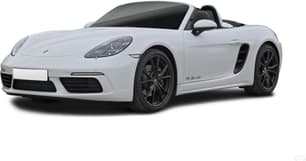
Porsche has committed to an electric future for the 718 but before it does so, there was one more petrol-powered version to create, this one, the 718 Spyder RS. It stands to be the final 718 to have an internal combustion engine, but could also be the best.
The 718 Spyder RS is the Boxster version of the previously released Cayman-based GT4 RS. So it takes every element of the sports car and turns it up to 11. This is faster, more powerful, lighter and more dynamic than the Boxster has ever been.
This is the new Tesla Model Y L, of course, but before we even start I need to ask you a very important question.
How often, honestly, do you use all seven seats in your seven-seater? Or if you only have five seats, how often is there a human in every single one?
Rarely, if ever?
Yep, me too. So stick around, because this is, by far, the best family SUV seating layout. And one where there’ll finally be no fighting over who gets stuck with the dodgy seat.
And as a result, the six-seat Tesla Model Y L might just be among the best all-electric SUV offerings around.
If this is to be the end of the 718 as we know it, then it is an end to be remembered. Porsche has produced something special in the Spyder RS, a sports car that can compete with the 911 on any stretch of road - which is something so few cars can claim. The focus on performance has driven the entire concept of the car, but all the elements work in harmony, with form and function coming together.
If you like the five-seat Model Y, then you'll like the six-seat L version even more. I think this the best example of Tesla's electric SUV to date, and the cabin layout just makes a lot of sense, and would suit plenty of families who don't need to squeeze someone into a compromised middle seat.
Note: The author, Andrew Chesterton, is a co-owner of Smart As Media, a content agency and media distribution service with a number of automotive brands among its clients. When producing content for CarsGuide, he does so in accordance with the CarsGuide Editorial Guidelines and Code of Ethics, and the views and opinions expressed in this article are solely those of the author.
As the pinnacle of not only the current 718 range, but potentially the entire combustion engine era of the Boxster, Porsche has pulled out all the stops for the Spyder RS.
This includes major changes to the design, but none are purely for aesthetic reasons and instead are driven by the search for performance; and the fact they make the 718 look tougher, meaner and more purposeful than ever before is just a bonus.
It’s a comprehensive redesign that starts at the bumper with a new front lip spoiler to enhance downforce. Then there’s a pair of NACA ducts on the lightweight bonnet to improve brake cooling without compromising aerodynamic drag. The lightweight front fenders include wheel arch vents to stop any potential for front-end lift at high speeds.
And the fenders aren’t the only component that’s gone on a diet, there’s a lighter exhaust, lighter wheels, lighter bonnet, lighter roof, lighter door panels and even lighter carpets on the inside. All up, the Spyder RS tips the scales at 1400kg, which is 40kg lighter than a standard 718 Boxster.
If it’s still not light enough, you can opt for the optional 'Weissach Package' (which was fitted to our test car), which brings even lighter 20-inch forged magnesium wheels and carbon-fibre reinforced plastic for a range of parts including the front luggage compartment, rollover bars and ducktail spoiler on the Gurney flap – plus some cosmetic enhancements.
And we still haven’t even touched on the biggest design change yet - the rear half of the car. Starting with the roof, which Porsche actually calls a ‘sunshield’ and ‘weather guard’ because it’s a stripped down version of what the brand usually uses, to save weight and let the glorious engine noise into the cabin uninterrupted.
But it’s also necessary because the entire rear engine cover has been redesigned to accommodate the larger engine that Porsche has installed in the Spyder RS, a 4.0-litre six-cylinder instead of the usual turbocharged four-cylinder ‘boxer’ engines.
While the Spyder RS looks great with the roof/sunshield on or off, frankly the removal process is much too complicated and requires repeated viewings of a YouTube tutorial to still get it wrong.
While owners will (likely) eventually get the hang of it, it will always be a clunky and awkward process and that’s just the price of being so focused on performance, which you can accept or not.
Inside that ethos of performance over practicality continues, with sports seats, an Alcantara-wrapped steering wheel and even the previously mentioned lightweight carpet floor mats.
It’s a purposeful, rather than luxurious, cabin, but that perfectly suits the nature of the Spyder RS. Our test drive included several long stretches behind the wheel and at no stage did it feel uncomfortable or impractical, despite its stripped-down design.
Spoiler alert - it looks a lot like a five-seat Model Y, doesn’t it, albeit a slightly bigger one. And you’d have to be a bigger Tesla head than me to immediately spot the differences at a glance.
The wheelbase is longer, the rear doors are bigger as are the rear 3/4 panels and the roof line is higher, helping with headroom in the third row.
Still, safe to say if you like the look of the five-seat Model Y, you’ll like this one. And if you hate it, well, good luck.
The alloys are 19-inch and shaded by the aerodynamic caps and there are light bars front and rear which debuted on the updated five-seat Model Y when it arrived mid-last year.
The bigger changes are inside, of course. I promise we’ll get to the second and third rows in the Practicality section, but let’s talk about the look and feel first.
There’s a love/hate relationship with Tesla’s stripped-back aesthetics, and I’m probably somewhere in the middle. I like the airiness of the space in the cabin, and I think it feels nicely put together, and I really dig the contrasting fabric used on the doors and dash which add a little visual interest to the cabin.
But I hate using the central screen to select a gear and I hate not being able to see how fast I’m going without turning my head. A head-up display would work wonders in the Model Y L cabin.
One area where the 718 range is starting to show its age quite dramatically is the in-car technology. While Porsche’s native system is relatively user-friendly, the lack of wireless Apple CarPlay or Android Auto in any capacity is deeply out-dated; and was frustrating for this Android using reviewer.
Given the age of the current 718 platform, and the impending arrival of the new model, it’s understandable that the multimedia system didn’t get an overhaul, but for a $350K car it does feel a bit behind the times.
In practical terms the Spyder RS is a bit of a struggle if you plan to go away with it. We managed to get a small suitcase and backpack in the under bonnet storage, but that was at capacity. While the addition of the larger engine removes any meaningful rear storage space.
Captain’s chairs are simply a more luxurious version of second-row seating. With that there is no argument and the heated and cooled chairs that occupy the second row of the Model Y L are pretty good examples of them.
Space, both knee and headroom, is ample, and you can adjust each seat individually if you want to grant a bit more space to any third row occupants. Armrests deploy at the push of a button — as do the two hidden cupholders — and it really is easy to settle in and get comfy.
The third row is a bit more hit and miss. I’m 175cm and found I had enough legroom and headroom, but the big plastic mouldings that emerge from each side of the Model Y (which house a cupholder) are a miss. They end up pushing you into the seat next to you, and I can foresee a lot of arm rubbing with anything like two adults back there.
Also confusing is how to actually get out of it. You can fold the seat in front of you flat, but then you have to climb over it. I found it easier to just walk out between the seats.
There are another two USB-C ports in the rear row and you get air vents but no temperature controls.
The Model Y L stretches 4969mm in length, 1668mm in height and 2129mm in width, which is roughly 18cm longer and 4.5cm taller than the five-seat model. The extra space doesn’t sound like that much, but start dropping rows and you find a heap of storage space.
Both the second and third row stow electronically from the boot, but with them in place you’ll find 420 litres of storage in the double-layer boot. Drop the third row, and that number grows to 1076 litres. With the third row folded there is a massive 2423 litres of space. The frunk serves up another 116 litres.
There’s also room (and the ISOFIX attachment points) for four child seats.
The bad news is, the Spyder RS costs just over $200,000 more than the entry-level 718 Boxster, which is not a small sum of money. The good news is, for that $200K, Porsche has overhauled the 718 from nose-to-tail and enhanced it in nearly every aspect.
There’s a raft of mechanical changes that we’ll get to later on, to help justify the $334,200, plus on-road costs, asking price, but from a specification perspective there are some notable inclusions.
For starters it comes with the 'Porsche Communication Management' (PCM) multimedia system, which includes in-built navigation and Bluetooth connectivity, as well as a 110-watt sound system.
But Australian delivered cars get an even higher level of standard equipment than other countries, with LED headlights including 'Porsche Dynamic Light System' (PDLS), cruise control, digital radio, rear 'ParkAssist' with reversing camera, 'Light Design Package', tyre fit set and windscreen with grey top tint, plus a no-cost optional Bose Surround Sound System all included.
It may be $200K more than 718 but compared to a 911, it actually makes a pretty compelling value argument. A 911 Cabriolet Carrera S starts at $342,700 (plus on-road costs), making that Spyder RS $8500 cheaper and a genuine alternative to its ‘big brother’.
Then, when you compare it against similar mid-engine European sports cars, such as the Maserati MC20 (from $510,000) or McLaren Artura (from $477,310) the Porsche looks like a bargain; relatively speaking, of course.
The Model Y L sits smack bang between the $68,900 Long Range AWD and the $89,400 Performance, setting you back $74,900, before your on-road costs. It’s also the only three-row option in the Tesla family.
Aside from people movers, we’re not swimming with options in the three-row electric space, either. The Kia EV9 will get it done from $97,000, the Hyundai IONIQ 9 starts from around $120K and the Volvo EX90 is more expensive again (from $124,990).
Anyway, in Tesla land, the Model Y L rides on 19-inch alloy wheels, has a glass roof, automatic wipers and Tesla’s smartphone access key, as well as the little credit-card swipe.
Inside, there’s a 16.0-inch central screen that handles everything. And I mean everything. It's your gear selector, your speedometer, and everything else, too. There’s no Apple CarPlay or Android Auto, but you can access things like Spotify and podcasts through the in-built apps and the on-board navigation system is a good one, too.
All of that pairs with a 19-speaker sound system, and there are dual wireless charge pads. All three rows of seats are heated, while the first and second row get ventilation, too.
A second 8.0-inch touchscreen in the middle row then handles things like the seat heating or cooling, music and games to amuse the kids. And the Model Y L also debuts V2L, or Vehicle to Load, for Tesla in Australia, using a connector in the external charger.
The key stat for the engine is the cylinder count. Gone are the four cylinders and instead it’s a return to Porsche’s iconic flat-six.
Specifically, the same 4.0-litre six that Porsche uses in its 911 GT3, which is a lot of engine to squeeze into the middle of this lightened sports convertible.
In order to keep the 718 in its place (beneath the 911), Porsche has slightly detuned the engine, so it makes 368kW/450Nm (compared to 375kW/460Nm in the 911 GT3), but the German brand has never worried about a kilowatt contest and instead prefers to focus on driveability and the other elements that make a drive great.
To that end the combination of air-intakes next to the headrests and the lightweight stainless steel exhaust (which gets titanium tips on the Weissach Package) helps the Spyder RS sound like a Carrera Cup racing car when you really wind it up to its 9000rpm redline.
Not that the performance isn’t spectacular, though, with Porsche claiming it takes the Spyder RS just 3.4 seconds to run 0-100km/h, only 10.9 seconds to get from 0-200km/h and will hit a top speed of 308km/h.
The engine is paired to a seven-speed dual-clutch auto transmission (or PDK in Porsche-speak) that the company claims has “short-ratios”, but with peak power not hitting until 8400rpm and peak torque from 6750rpm, you don’t have to rush the ratio changes.
The Model Y L gets Tesla’s dual-motor AWD powertrain, with two electric motors producing a total 378kW and 590Nm. That’s enough, Tesla says, to knock off the sprint to 100km/h in five seconds flat.
Porsche says the 4.0-litre engine in the Spyder RS uses 13.0L/100km, which is a big number for what is a relatively small car. But that engine is highly-tuned and built for performance not efficiency, so it’s something owners will need to accept.
Our test drive included some long highway stretches, as well as some spirited driving and urban commuting, so a good mix across all conditions, and we saw consistent returns around the 15-16L/100km range.
It has a 64-litre tank, which means a theoretical driving range of around 490km, assuming you can hit the official claim.
Tesla is always a little vague when it comes to the size of its batteries, but reports point to the Model Y L carrying a 84Wh (useable) NMC battery.
Whatever the specifics, the range is strong, with Tesla promising a 681km driving range on the WLTP combined (urban/extra-urban) cycle.
It’s also set up for 250kW DC fast charging, which should see you take on 288km in 15 minutes, according to Tesla.
I’m only giving it a nine out of 10 because perfection is hard for any car to achieve, but the 718 Spyder RS goes as close as any car I’ve driven. This is a masterpiece of modern sports car design, pushing the 718 closer to the 911 than ever before, which is something Porsche has clearly tried to avoid so as to not tarnish the image of its flagship.
But with the 911’s 4.0-litre flat-six in the middle of the 718, plus its more compact dimensions, the lightweight nature of the Spyder RS and the raft of chassis and handling enhancements, this really does leave you questioning ‘do I really need a 911?’
The steering is fantastically direct, the chassis responds to every input with precision and feedback and the braking is strong and consistent. Which helps because that engine is so good it launches you with ferocity and a glorious noise (as good as anything on the market today) whenever you squeeze down on the accelerator.
The highest praise I can give the Spyder RS is not that it was a dream to drive on winding, challenging roads, but that it was just as enjoyable on a trip to the shops or cruising down the freeway. Any drive in this car is a genuine pleasure.
Honestly, it feels like the Tesla Model Y has grown up. I didn’t love earlier iterations of this car and I found the Performance to be fast but lacking any emotional fizz.
This one, though, feels solid and composed, and the power on tap (of which there is ample) is more about effortless progress than it is attempting to offer sports car excitement.
The steering is now nicely weighted and feels direct enough without being too sharp, and the cabin is well insulated, with often the slightly off-putting sort of rubbing noise the steering wheel makes when you turn it the only intrusive sound.
One drawback is a ride that definitely errs on the side of firm. This Model Y L gets electronic damping designed to iron out some of the more jagged stuff, but it still feels brittle in places, and you can definitely feel some sharpness in the cabin. Now, to be fair, it’s not too firm for me, but it might be for you.
Another is a bizarre turning circle which constantly reminds you you’re driving a big bus, especially when you try to complete a tight three-point turn.
But despite its stretched dimensions, I found the Model Y L easy to drive and park in the city, and once you're up to speed with Tesla's operating system (there's no Apple CarPlay or Android Auto), then the screen is pretty easy to use, too.
This is another area where the 718 is showing its vintage, with very little in the way of active safety features. There’s the required stability control, as well as airbags for driver and passenger, plus the previously mentioned reversing camera. But that’s it, there’s no autonomous emergency braking, no lane-keeping assist or even adaptive cruise control.
While that may sound shocking to some, there’s never a moment where you feel unsafe in the 718. It feels incredibly stable and responsive on the road, as the onus falls back upon the driver to pay attention and make smart choices.
There’s no ANCAP rating for the 718, or any Porsche, so it is a question of putting your faith into Porsche’s in-house safety measures.
The Model Y L gets the same maximum five-star ACNAP safety rating as the rest of the Model Y range, with nine airbags (up from seven in the five-seat model), and things like AEB (Auto Emergency Braking), lane-keeping assist, 'Forward Collision Warning' and blind-spot monitoring all along for the ride.
Interestingly, the curtain airbags from the five-seat version haven't been replaced, with coverage still only extending to the second row. New airbags have instead been added for third-row occupants.
One more analogue quirk of the Tesla Model Y L is the thick B-pillar, which does a good job of almost completely obscuring driver-side blind-spot checks (for those of us who still like to do those manually).
It’s difficult to give the Spyder RS a clear score here because Porsche is cagey on the details. The public dealer websites indicate annual oil maintenance is required, with additional servicing every two years or 15,000km.
How much that will cost is unclear, as despite the rest of the 718 range having publicly available prices, there were no such details for the Spyder RS (or even its Cayman sibling, the GT4 RS).
For reference, the 'standard' 718 requires oil maintenance ($895) for the first annual service and an inspection ($1500) the year after. Those costs continue to alternate annually out to eight years/120,000km.
Tesla warranty is a these-days-underwhelming five years and unlimited kilometres, while the high-voltage battery is covered for eight years or (a wildly specific) 192,000km.
There’s also five years' of roadside assistance, including puncture repair (a good thing, given the lack of a spare wheel). I also couldn’t find a puncture repair kit and later research suggests Tesla sells them, rather than provides them as standard.
Tesla servicing is condition-based, so there’s no fixed schedule, with a summary on the car’s touchscreen providing a record of when vehicle maintenance was last carried out and prompts for when they should be performed next.
In the absence of a combustion powertrain the emphasis is on things like wheel rotation, balancing and alignment, brake fluid testing, air-con servicing, camera precision, radiator cleaning and high-voltage battery maintenance.
Expecty a ‘Vehicle Health Check’ to come in under $300 with ‘General Diagnosis’ at around $270 per hour.