What's the difference?
Is there a class of vehicle more overlooked in Australia than the humble light van?
While the pragmatic and often hatchback-based small van is dwarfed in size and sales by the popular ute as the commercial vehicle of choice here, the case is completely reversed in Europe, where light commercial vans dominate city streets, favoured for their compact nature and relative fuel efficiency.
What is it about Australia which makes the ute more successful? Is it just our history of locally producing them? Do you really even need one, or are the Europeans on to something?
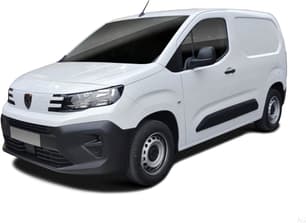
I spent a week reacquainting myself with the freshly facelifted 2025 Peugeot Partner to find out.
The ninth-generation Toyota HiLux is not really a new HiLux in the true sense of the word, but there’s enough going on with it to have generated plenty of excitement in the ute-loving public.
This ‘new’ HiLux, in essence, is an update but it’s an update with substance: the HiLux now sports a new retro design, new interior layout, new suspension tune (softer rated springs and dampers for improved on-road comfort) – and it even has an electric park brake now.
So, with no major mechanical upgrades, is this HiLux enough of an improvement over past iterations to warrant your attention?
It might not be the most modern looking or feeling small van, but amongst its competitors, the Partner stands out for its relative value and load-lugging capabilities.
It’s somewhat fun to drive but now feels a bit plain on the inside, and could benefit from a few extra options and features to make it more comfortable and maybe even a little more customisable.
Still, I think the Peugeot Partner will fit the needs of many primarily city-based small businesses or tradies who want to work out of a compact and easy-to-drive van instead of an unwieldy and often overkill dual-cab ute.
The Toyota HiLux SR5 now feels nicer and more modern inside and out and it no longer lags behind some other utes – even some of the cheaper ones – in terms of comfort, refinement and all-round driveability.
Toyota has in the past been guilty of sometimes doing the bare minimum when it comes to producing a ‘new’ vehicle – especially LandCruisers or HiLuxes – but this time even though this HiLux is definitely not a new model, the exterior revamp and interior refresh have added more than enough to the HiLux package to keep fans and new buyers happy.
This is the best HiLux so far.
The Partner’s recent update brings with it a new, more contemporary face, with the ‘claw’ style light fittings clasping a body-coloured panel in place of the usual grille fitting. It also updates all the badgework to match the French brand’s passenger car range.
Thanks to these upgrades, as well as the fetching colour and Premium body-matching highlights, it looks pretty schmick at a distance, but up close you can start to tell the Partner’s relative age.
It simply doesn’t look as contemporary or coherent in its design as the much newer ground-up fifth-generation Caddy or third-generation Renault Kangoo with which it competes.
A big part of this is due to the Partner being based on a much older platform which is shared across a lot of Stellantis brands. It started life as the third-generation Citroen Berlingo in 2018, and needs to warp its look overseas to fit the Fiat Doblo, Toyota Proace and Vauxhall Combo (although the Partner is the only version sold in Australia).
As a result, up close you can see its somewhat pieced together brand identity bits and boxy, upright bodywork.
There are some odd touches, like the plastic bumper at the front not matching the gloss black highlights or body coloured bumper at the rear, and the contemporary badgework finished in a matt grey adds yet another texture and colour to the mix.
The theme continues inside, with a huge plastic dash piece jutting into the cabin space. Here, the bits from Peugeot’s passenger car range have been integrated, including the cool 'squircle' steering wheel, digital dash elements and the multimedia screen.
In the centre, the electric shifter part from cars like the current 2008 small SUV has been embedded in the sea of plastic.
It technically matches the brand identity, but it doesn't stop the Partner’s interior from feeling a bit cobbled together, rather than the more unified corporate identity which is so well executed in the VW Caddy, which is almost hard to tell apart from a Golf.
The software is another area the Partner could use some work. It’s fairly simple and straightforward to use, but the layout isn’t very customizable, both for the multimedia suite and digital dash.
Again, the Caddy runs rings around Peugeot in this department, with its more impressively-featured and nicer-looking software it shares with other VW Group passenger cars.
There are also little areas which feel like they’re behind the pace for a top-spec variant. The steering wheel is hard plastic without even the option for a softer wrap, for example, and the Caddy offers an alternate optional synthetic leather seat trim for an operator willing to dish out a little extra cash.
This HiLux is 5320mm long (with a 3085mm wheelbase), 1885mm wide and 1865mm high. No change there.
It does, however, have a new distinctive front end incorporating a revised design, which includes LED headlights, retro-style ‘Toyota’ brand across the front, and honeycomb-style mesh grille.
Initially I wasn’t keen on the HiLux’s revised front end, but it looks a lot better in the metal than it does in photos and it has grown on me.
This ute’s profile remains the same as before, but the rear end has also been given a sly slap and tickle, giving it a squared-off look.
The interior has also undergone a glow-up – there’s a real 250 Series LandCruiser look and feel to this cabin – and it now has a 12.3-inch touchscreen multimedia system rather than the old 8.0-inch unit.
It still has plenty of hard plastic surfaces but, overall, the HiLux interior doesn’t look or feel anywhere near as old as it used to.
While it remains definitely a HiLux, the new look brings this Toyota ute closer to its rivals, such as the Ford Ranger, in terms of contemporary styling.
So design-wise the Partner might barely hit the brief when it comes to matching it up with Peugeot passenger car design, but one area where it manages to shine is in-cabin storage.
There’s lots on offer, massive bottle holders and pockets in the doors, storage areas galore in the big plastic dash, with trays in the centre and passenger side, as well as behind the multimedia screen and under the shifter.
There are a set of non-variable bottle holders cut out of the top of the dash, as well as hidden storage compartments under both front passenger seats.
I should mention at this point the Partner has a three-across front bench, although actually putting three people in there will be quite the squeeze, especially given the centre of the dash juts quite far into the cabin area, leaving the centre occupant with nowhere to put their knees.
Maybe it will suit a child in a pinch if you plan to have this as a small business vehicle which may need to be dual-purpose from time to time.
There’s also a fold-down rotating table thing in the backrest of the centre position, designed to be used with a laptop. Another feature of the Partner’s dash is physical toggles and buttons for the climate controls, which are increasingly rare in favour of touch-based menus.
In terms of load area dimensions, the Partner LWB offers 3.9 cubic metres (excluding the bulkhead) and dimensions come in at 2167mm long, 1527mm wide (1229 between the arches) and 1243mm tall. This should accommodate two Euro-sized palettes.
Loading and securing should also be relatively breezy thanks to sliding doors on both sides, a barn door rear which hinges out of the way for forklift loading, and no less than 10 tie down rings.
It also scores decent LED lighting in the roof, so you can see what you’re doing in a poorly lit warehouse, or when using the load area at night.
As for capacities, the Partner LWB has a payload of 898kg. It claims a 950kg braked towing capacity (not much more than the unbraked of 740kg) although in reality 740 seems to be closer to the limit thanks to the 74kg towball download rating.
How does this compare to the Caddy? I was surprised to find the Caddy 5 in equivalent LWB form has a smaller load area (3.7 cubic metres) and a significantly lower payload of 695kg.
However, it can tow slightly more (up to a claimed 1500kg - however has a 75kg max towball download). Additionally, the Partner isn’t able to be fitted with a tailgate to replace the barn doors (an option which some buyers may prefer on the Caddy).
A full size spare wheel is present on all variants to keep you on the road.
The HiLux cabin is very familiar – you know where everything is and how to use it and that’s reassuring – but besides some minor changes and the introduction of an electric park brake the most noticeable change is that aforementioned new 12.3-inch unit.
Apple CarPlay is easy to get working via the multimedia system, and the screen is now big enough and clear enough to operate with ease.
Beyond that, there are plenty of durable hard plastic surfaces, numerous storage spaces, a reasonable number of charging points up front – two USB ports as well as a wireless charging pad and two 12V sockets and a 240V socket inside the centre console.
The driver’s seat is power-adjustable and comfortable without ever being at risk of being described as “plush”.
The rear seat is on the wrong side of squeezy across the shoulders and is best suited to accommodating three children, three jockeys or two adults.
People seated back there have access to two USB-C ports, bottle holders in each door and a dual cupholder in the fold-down centre armrest.
In terms of packability for touring, the SR5’s tub is 1550mm long (1100mm between the wheel arches), 1520mm wide and the load space itself is 490mm deep. Load height is 830mm.
There is nothing extra-special going on in the SR5’s tub – no marine-grade carpet, LED strip lighting, or hidden storage compartments – but it does have four tie-down points.
In terms of practicality, the HiLux, while it does have a barebones approach, still holds its own against the likes of the Ford Ranger.
Given the uniquely European nature of a van like this, it makes sense the remaining options offered to us are only from French and German makers.
In fact, this Peugeot Partner is one of just three left for you to choose from. Starting from $39,990, before on-roads (for a Pro SWB), the Partner goes into battle against its Gallic nemesis, the Renault Kangoo, and the defending small van champion in the form of VW’s popular fifth-generation Caddy.
Unlike its rivals, though, the Partner range is automatic only and exclusively powered by a three-cylinder, turbo-petrol engine (if you exclude the electric ePartner).
This immediately gives it a leg up, as in its most affordable form, it already undercuts the base manual Caddy (TSI220 SWB - $40,990) and most affordable automatic Kangoo (SWB auto - $41,990) although the Renault holds onto the most affordable price-tag in the segment if you’re happy shifting yourself, at $38,990 for its SWB manual.
The specific version we’re looking at for this review is the Premium LWB, which wears a price-tag of $45,990 and adds an additional 350mm to its length over the SWB.
Standard kit on Premium versions includes items otherwise missing on the Pro, like 16-inch alloy wheels instead of steel wheels, LED headlights instead of halogen, push-start ignition instead of turn-key, dual-zone climate instead of single-zone as well as body-coloured highlights, rails and door handles in place of plain plastic fittings.
Standard items across the range include a 10-inch central touchscreen with wireless Apple CarPlay and Android Auto, a digital instrument cluster, cloth seat trim, a 180-degree reversing camera, a digital rear vision mirror to make up for the standard windowless barn doors, a glaze-finish bulkhead to separate the cabin and load area, as well as an array of active safety items we’ll explore later.
The fetching blue scheme our car was painted in comes at an additional $690, and from there you can modify further with an array of factory options.
Key among them are a choice of windows for each sliding door ($486 each) or the barn door ($503), a metal cargo barrier to protect the bulkhead ($1146), an LED cargo light kit ($350), roof racks ($536) or a more comprehensive roof kit ($2610).
Additionally, long-wheelbase versions can be equipped with a cargo bay floor kit ($894), wall protection kit ($960) or the rubber floor mat which our van had ($600).
A complete towing set-up will set you back $1045 for the towbar and $510 for the wiring harness.
From a base of nearly $50K then, you can easily add a few thousand to the price once you start ticking boxes, but it is important to note not every commercial van, even ones a size up, offer this level of factory customisation.
This gives the Partner deeper (and warranty-covered) customisation for various trade purposes straight from the factory.
For what it’s worth, I matched our test car in the configurator and ended up with a final price of $52,429 with drive-away pricing set to Sydney.
Out of curiosity, I also priced up a VW Caddy Cargo LWB petrol auto with as close as I could get to the same equipment as this Partner Premium, and was surprised to find I had to tick a lot more option boxes to get LED headlights, alloy wheels (although the Caddy alloys are larger at 17-inches), premium paint, colour matching body panels, keyless entry with push-start and a rubber floor mat.
The total price for the spec-matching Caddy came in at $57,952 drive-away in Sydney.
The SR5 sits in the middle of the HiLux line-up. This version – with a six-speed manual gearbox – has pricing starting at $63,990 before on-road costs. Our test vehicle has Toyota’s premium interior pack ($2500) and premium paint ($675).
Standard features include a 12.3-inch touchscreen multimedia system (with wireless Apple CarPlay and Android Auto plus wireless charging), eight-speaker stereo, dual-zone climate control, and 18-inch alloy wheels.
Other features include high-grade LED headlights, a “comfort-oriented” leaf-spring rear suspension tune, larger front brake discs, power-folding, heated exterior mirrors, an integrated tow-bar, as well as LED tail-lights and LED rear fog lights.
Exterior paint choices include 'Glacier White', 'Frosted White', 'Ash Slate', 'Eclipse Black', Feverish Red' and 'Sunglow'. Some – like 'Stunning Silver' on our test vehicle – cost $675.
The HiLux offers reasonable value for money when cross-shopped against the likes of Ford Ranger, especially the XLT (approx. $64,000) or Sport (approx. $72,000) variants.
There is just one combustion engine option in the Partner range, a three-cylinder 1.2-litre turbocharged petrol unit producing 96kW/230Nm which drives the front wheels via an eight-speed automatic transmission.
The only alternative to this is the E-Partner which sports a 100kW/260Nm electric motor instead.
The three-cylinder petrol is a perky unit sourced from Peugeot’s passenger car line-up, although the Partner range doesn’t quite offer the VW Caddy’s breadth of options; the choice of a 1.5-litre four-cylinder petrol or a 2.0-litre diesel in two states of tune.
This SR5 has a 2.8-litre four-cylinder turbo-diesel engine, producing 150kW at 3400rpm and 420Nm at 1400-3400rpm and a six-speed manual gearbox; the six-speed auto SR5 gets 500Nm at 1600-2800rpm and auto HiLuxes also have the 48-volt mild-hybrid technology onboard.
This is a proven engine-and-gearbox combination, with plenty of lowdown torque, and it’s more than a match for the likes of Ranger and D-Max/BT-50 in terms of overall performance.
This SR5 has part-time four-wheel drive and a rear diff-lock.
One of the key downsides of the Peugeot’s Euro-compliant turbo-petrol engine is it requires mid-shelf 95RON fuel, which could be a blow to those who want to drill down on running costs.
Claimed fuel consumption on the official combined (urban/extra-urban) cycle is decent, at 6.3L/100km. Ours spent the week mainly urban commuting and landed closer to the official urban number of 7.3L/100km with a total of 7.2L/100km over a few hundred kilometres.
The 60-litre fuel tank should allow for roughly 950km of driving range at the official consumption. More like 830km using our test figure.
Official fuel consumption for the manual is listed as 7.1L/100km on a combined cycle. The auto is 7.4L/100km.
Fuel consumption on this test was 9.1L/100km, which is pretty good because I have done a lot of low-range 4WDing.
The SR5 has a 80-litre fuel tank so, going by that fuel figure, you could reasonably expect a driving range of about 879km out of a full tank
One thing which I always like about these little European vans for trades is they’re usually very humane and easy to drive compared to a dual-cab or a van in a larger market segment.
They tend to offer closer to the feel of a passenger car, with some of the little luxuries which are missing in big hollow diesel units like some form of refinement and less noise.
The Partner is no different, and shone in some ways I did not expect.
The brand has done a good job of making it feel like a Peugeot passenger car from a touch-point perspective with the dash elements and the small chuckable steering wheel.
It also has a swift steering ratio, making even this LWB version feel nimble and agile for darting around corners and down tight laneways just as I’m sure its French creators envisaged.
The peppy three-cylinder engine helps the hatch-like feel. It offers a punchy turbo surge and a satisfyingly gruff soundtrack, which makes this little commercial offering quite fun to drive.
The ride is also remarkably smooth for a commercial vehicle, even completely unladen. Car-like suspension handles the bumps and potholes of the city environment well, which could make this a good choice for delivery drivers who will spend a lot of time in urban environments, and maybe are less concerned about getting so close to the GCM rating.
However, it’s not quite as polished as the Caddy, which won me over big time when the fifth generation version arrived in 2022.
The Peugeot can suffer from significant bouts of turbo lag, and its eight-speed transmission can be occasionally jerky from a stand-still, making for the odd awkward moment at T-junctions and roundabouts where this van takes a second to get going again.
Additionally, some of the fun, refined feeling wears away over time as you constantly come into contact with the hard plastic trims of the interior, and the scratchy urethane steering wheel.
This can get a bit jarring over a full day of driving. It’s for this reason VW puts a leather-bound steering wheel in even basic versions of the Caddy these days.
The software also leaves a lot to be desired, with minimal customisation and laggy interfaces.
Sure, the reality is you’ll spend most of your time working with Apple CarPlay or Android Auto which worked perfectly in my time with the car, but it would be nice to have more customisation for the dash and a few nicer menus for the multimedia screen.
All in all, then, it’s a nice little van to drive, and is excellent at urban duties, but it has a slightly industrial character which will eventually catch up with you after a long day behind the wheel.
The Caddy is better in pretty much every way behind the wheel, but then it also costs over $5000 more in equivalent spec and can't carry as much stuff.
As mentioned, there have been no major mechanical upgrades to the HiLux, but it does now have electric power steering (rather than the hydraulic assistance it’s had in the past). Result? There’s a smoother, more precise feeling to the steering, with a nice weight and balance to it, on sealed and unsealed surfaces.
The HiLux, with a listed kerb weight of 2215kg and a turning circle of 12.6m, is not an insubstantial vehicle but, at the same time, it’s not unwieldy either and manages to feel quite nimble on and off the road.
On sealed surfaces it yields a surprisingly high level of ride and comfort. It’s actually quite compliant, controlled and somewhat refined. That’s largely because this SR5 has multi-purpose suspension on board rather than the heavy-duty suspension, which is on lower-spec, work-focussed HiLux variants for load-carrying duties.
This set-up is intended to offer a softer ride on road – and it does – but off-road it's a different story. Even on minor imperfections (small potholes, minor corrugations and the like) on dirt tracks it tends to thump and bump in and out and it doesn't offer such a comfortable all-round ride as you might be hoping.
I didn’t have much weight onboard – vehicle-recovery gear, a first-aid kit, four Maxtrax and an air compressor – and it will, of course, settle down with more of a load but I was expecting the multi-purpose suspension to be better than it was at soaking up a track’s lumps and bumps – it’s not terrible, but it is noticeable.
However, in terms of pure off-road effectiveness, the HiLux is impressive.
It's never been an underperforming 4WD, it’s simply never been as refined or as comfortably capable as others, such as the Ranger, but it is much more comfortably capable now than it used to be.
There is plenty of power and torque in this HiLux and while this six-speed manual version has 80Nm less than the auto version, it uses what it has really well. The 2.8-litre is a tractable engine and works well as part of an effective powertrain that is well suited to low-range 4WDing. There is a heap of torque at low revs, which is great for low-speed, technical off-roading.
Low-speed throttle response is also impressive, offering nice control when you need it.
I have driven auto HiLuxes in the past and the auto is very clever and it may be your better bet, but I like the manual.
Ground clearance is listed as 224mm and while the HiLux doesn’t have any trouble clearing most jagged rock steps or tree roots you’ll likely encounter on a weekend trip, I didn’t have the opportunity to seriously scrutinise the 700mm wading depth because our testing area was pretty dry. Next time.
Off-road angles – 29-degree approach and 26-degree departure (no rampover is listed) – all check out, even though they are a little shallower than the Rugged or the Rogue variants, they are fine for light-to-moderate 4WDing.
The off-road traction control system in this HiLux is well calibrated and if you do need more dirt-grabbing ability, then this ute does have a rear diff lock.
The only real off-roading weaknesses in the HiLux package are the tyres (Dunlop Grandtrek A/T 31, 265/60R18 110H). They’re not well suited for anything more than light to moderate 4WDing. If you’re planning anything rougher than a well-maintained dirt road in dry weather then consider replacing the showroom tyres with a set of decent all-terrain tires, light-truck construction preferably and away you go.
In terms of towing capacity the SR5 is rated to tow 750kg unbraked, and 3500kg braked.
Payload is a listed 900kg, Gross Vehicle Mass is 3090kg and Gross Combined Mass is 6300kg (a 450kg increase).
While nothing mechanical has changed onboard this vehicle, the combination of 4WD set-up, driver-assist tech, rear diff lock, as well as structural modifications (such as thicker steel in the ladder-frame chassis, a stiffer roll-bar, and reinforced side rails) and suspension tweaks (including retuned dampers and re-rated coil springs at the front, and new dampers and softer spring rates on the live-axle rear) all works well together in this current HiLux package.
The HiLux has now drawn closer to the Ranger in terms of comfortable capability, if not matched it.
The Partner is covered by a par-for-the-course five year and 200,000km warranty which applies to the rest of its light commercial range, paired with five years of roadside assistance.
The Partner requires servicing once every 12 months or 15,000km.
When it comes to pricing, you can package the car up with either a two- or four-year service plan (priced at $400 or $1000, respectively) which Peugeot claims can save you up to $437 compared to a-la-carte servicing.
The HiLux has a five-year/unlimited kilometre warranty.
Service intervals are scheduled for every six months or 10,000km and cost $395 per service.
Toyota Australia has about 300 dealerships across the country.
This type of warranty is pretty standard among the HiLux's rivals so the Toyota ute does remain competitive, in terms of these ownership costs.