What's the difference?
Unveiled globally in 2022 before arriving here in late 2024 as a plug-in hybrid GT, the Peugeot 408 has been a niche player for the long-established French brand with less than 100 examples finding homes here last year.
But 2025 marked the transition to a new ‘plug-less’ mild-hybrid powertrain for the mid-size crossover-style SUV with the hope it may take a bigger swing at segment heavyweights.
We spent a week with the current 408 GT Premium Hybrid to see if its efficiency-focused petrol-electric set-up has what it takes to win a spot on your upscale five-seat SUV shopping list.
Can you believe the 1 Series is already in its fourth generation? It might not look incredibly like it, because this new car looks a little like the third.
But it’s been more than half a decade since the F40 1 Series debuted, so BMW decided it was already time for a new kid on the block. Meet the F70.
It’s just landed in Australia and it promises new-gen tech and features compared with its predecessor. We checked out BMW’s new baby at its Australian launch to find out if it delivers.
The Peugeot 408 GT Hybrid delivers heaps of standard equipment and safety tech for what is now a much more competitive price. It’s also super fuel-efficient, which is right for these turbulent times, offers thoughtful practicality and the wagon-fastback-crossover-SUV look is striking. The price paid for miserly economy is a peaky small-engine powertrain and the ownership promise isn’t exactly class-leading. That said, it deserves consideration in its new, even more competitive under $60K mid-size SUV segment.
A brief dalliance with the 1 Series has left me impressed, if wanting to spend more time with it to get a better assessment of the day-to-day liveability of BMW’s entry-level model.
It’s a compelling offering if you’re after a premium small car, and even without the performance of the M135, the 118 is feature-packed.
Keeping pricing competitive should help the 1 Series buck the trend of buyers opting for small SUVs, but ultimately it’s just refreshing to see BMW putting effort into keeping a hatchback relevant (and up-to-date).
Note: CarsGuide attended this event as a guest of the manufacturer, with meals provided.
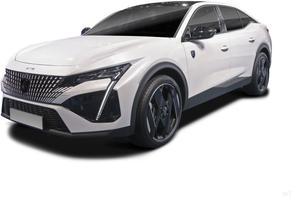
Peugeot Design Director Matthias Hossann has been guiding the brand’s look and feel since 2020 and the result is a recognisable approach across the range with enough flexibility to give each model its own personality.
Recurring themes include the dramatic, fan-like grille with body-colour elements, narrow angled LED daytime running lights (DRLs) slicing through the outer edges of the nose and sinister tapered headlights set into the front corners.
The rear end maintains the visual drama with a stacked, angular treatment sectioning off the ‘Claw Effect’ LED tail-lights (the Peugeot brand mark is a Lion), chamfered mid-section and chunky bumper.
And among what increasingly feels like a mass of same-same newcomers the 408’s sloping turret and high, wide haunches give the car a distinctively sporty fastback look.
The interior is classy and clean although the almost uniformly grey colour palette is unrelenting.
The two-tier dash adds visual interest and a combination of sweeping curves and clean, straight lines around the cabin lift the tone. Nappa leather trim with the ribbed seat centre panels using perforated hide also looks classy.
But then we come to the ‘iCockpit’ instrument display and steering wheel combination. It’s based on the idea that reducing the size of the steering wheel and lowering its position while flattening its top and raising the location of the instrument binnacle is a better solution than the traditional look-through-the-steering wheel approach.
It doesn’t work for everyone and it doesn’t work for me. As noted in previous Peugeot reviews, after more than a decade in existence various members of the CarsGuide editorial staff continue to struggle with the arrangement, while others love it.
For me, the wheel feels too low, yet the top of it obscures the lower part of the instrument panel. While it may work well for others I see it as the answer to a question no one was asking.
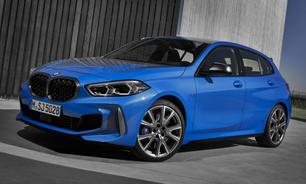
The 1 Series has worn many faces over the generations and, like a lot of BMW designs that depart from tradition, this one might need to grow on some people.
That’s not to say there’s not a lot to like about the F70, but as BMW evolves its design language some changes might ruffle feathers - a lack of the iconic ‘angel eye’ headlight style being one.
But there’s still a kidney grille up front, with new design elements, plus those headlights that have a new vertical light signature are now sleeker than before, giving the new 1 a different ‘character’.
But from the rear, there are baby 3 Series Touring vibes, and it’s hard to find anything that might upset purists - there’s even the 'Hoffmeister kink' at the c-pillar. That’s the way the window angles back towards the front at the bottom.
Inside, the 1 Series has some proper sporty elements, even in the 118, that reference the M development that went into it.
There’s M-coloured stitching up over the dash fabric, for example, and illuminated aluminium panels with M-coloured lighting.
The steering wheel, wrapped in leather, is also an M feature, plus sporty seats are even present in the 118.
The interior is an overall cleaner look, in part thanks to the proliferation of features accessible by touchscreen, but BMW is refraining from going full ‘Tesla’ and removing all the buttons from the cabin.
At close to 4.7m long, around 1.9m wide and a bit less than 1.5m tall with a 2790mm wheelbase, the 408 sits in the middle of the typical mid-size five-seater footprint.
Ample room in the front, although the lower section of the two-tier dash protrudes a fair way towards the driver and front passenger and the centre console is broad so it feels snug rather than airy.
Storage includes generous door bins with room for larger bottles, a lidded (and illuminated) bin between the seats that doubles as a centre armrest, two cupholders in the console with an oddments tray ahead of them and a decent glove box with an extra pocket built into the lid.
Switching to the rear, sitting behind the driver’s seat set for my 183cm position, there’s loads of leg- and headroom and enough width for three adults when required and more than enough for a trio of up to mid-teenage kids. Centre rear is less of a short-straw position, too, thanks to a relatively low and flat central tunnel.
The lack of a fold-down rear centre armrest is a miss mainly because it means there are no cupholders in the rear. But there are decent door bins with a space for smaller bottles, netted map pockets on the front seatbacks and a storage cubby at the back of the front centre console.
Speaking of which, individual air vents in the back of that console are a welcome addition.
The boot is large for the class at 508 litres (VDA) with the rear seat upright and 1583 litres with the 60/40 split-folding backrest folded down. The power tailgate (with foot sensor and pedestrian detection) also makes life easier.
Other thoughtful touches include four load tie-down anchors, a netted pocket on the right-hand side, elasticised straps on the left-hand side, specific lighting and a pair of bag hooks.
Power and connectivity options include two USB-C sockets, a 12-volt outlet and a wireless phone charging pad in the front, another two USB-Cs in the back and a second 12V plug in the boot. So no problems with charging capacity for phones and other devices.
Maximum braked trailer towing capacity is a useful 1300kg (750kg unbraked) but we have to put a big black mark against provision of a repair/inflator kit rather than a physical spare. Not good enough for the Aussie market.
Yes, a brand like BMW would probably find it hard to do away with buttons for things like drive modes and things like volume controls or car settings.
Even though a lot of them are shortcuts to a touchscreen menu, it means not needing to scroll or hunt for important driving-based features and options on the 10.25-inch screen.
Even the climate controls are permanently available on the screen so that there’s minimal distraction.
For most non-essential features, however, BMW’s Operating System 9 is a far cry from the easy-to-use iDrive system of just a few years ago, the media control wheel that fell easily to hand and navigated a simple multimedia system of only a few sub-menus.
Fortunately, the screen and everything in the cabin is within reach of the driver, so there’s no awkward leaning or stretching to do anything mid-drive.
The cabin’s physical space is otherwise nicely laid-out, the phone charger pad is out of the way, cupholders fit most receptacles nicely and the door card can hold two regular water bottles plus other small items.
There’s even a small storage ‘shelf’ under the central vents, and near the wireless charger are two USB-C ports and a 12-volt plug.
The ergonomics of the driving position and steering wheel are well-sorted, and seat adjustment and height feels good for both engaged or relaxed driving positions.
Behind that, the second row could be more spacious, even though I managed to fit my 178cm frame behind my own seating position just fine.
There’s not a lot of room to move or stretch out, so most adults will probably find the back seat suitable for short trips only.
Behind that, there’s 380 litres of boot space, or 1200L with the seats folded down.
The previous plug-in version of the current 408 Hybrid was a 1.6-litre, turbo-petrol, four-cylinder paired with a relatively large electric motor and cost-of-entry sat at $67,990, before on-road costs.
A shift to this car’s mild-hybrid powertrain, built around a 1.2-litre, turbo-petrol, three-cylinder engine matched up with an appreciably smaller battery and electric motor coincided with a 15 per cent ($10,000) price reduction to $57,990, BOC.
Convenience or consequence? Either way, it’s opened up a new competitive set with the focus shifting from the likes of the Lexus NX, Mazda CX-60 PHEV and Volvo XC60 to a fresh batch of sub-$60K rivals.
Think Honda CR-V e:HEV RS ($59,900, drive-away), Hyundai Tucson AWD 1.6 Hybrid Premium ($58,350, BOC), Kia Sportage GT-Line HEV FWD ($57,370, BOC), Nissan X-Trail Ti e-Power 5 seat AWD ($58,215, BOC), Subaru Forester AWD Hybrid Touring ($55,990, BOC) and the Toyota RAV4 XSE Hybrid AWD ($59,015, BOC).
Suddenly the Peugeot’s included features list sits in a new context and aside from the performance and safety tech we’ll get to shortly, standard equipment highlights include dual-zone climate control air, full-grain Nappa leather seat trim, a leather-trimmed (heated) steering wheel, Alcantara door trim, 3D satellite navigation and 10-speaker 690-watt Focal audio (with digital radio) as well as wireless Android Auto and Apple CarPlay.
Then there’s power-adjustable driver (eight-way) and front passenger (six-way) seats that are also heated with a ‘multi-point’ massage function, keyless entry and start, a 10-inch digital 3D instrument panel, a 10-inch multimedia touchscreen, auto LED matrix headlights, eight-colour ambient lighting, chrome trimmed pedals, a power tailgate, heated power-folding exterior mirrors, a panoramic glass sunroof, 19-inch alloy wheels, auto rain-sensing wipers and more.
Then you can add over-the-air updates, access to remote services via the ‘MyPeugeot’ app and ‘Ok Peugeot’ voice recognition.
That’s an impressive basket of fruit for an under-$60,000 car.
The 1 Series isn’t much more expensive than before, despite a decent uptick in kit.
At $56,500 before on-roads for the entry grade 118, it’s less than $2000 pricier than its predecessor. It’s about the price of a VW Golf GTI or Subaru WRX, but trades engine power for badge power, as well as a series of features you’d expect from a premium small car.
A 10.25-inch multimedia touchscreen and 10.7-inch driver display are standard, with wireless phone charging, electric heated seats in Veganza synthetic leather, adaptive suspension and plenty of sporty styling thanks to the M Sport pack.
There’s a few more helpful features for keen drivers, even in the 118. Adaptive LED headlights with high beam assist, a head-up display, BMW’s 'Parking Assist Plus' function, speed limit recognition and tyre pressure monitoring.
The 1 Series also has keyless entry and start, an automatic tailgate, plus some standard stuff like a 40/60 split-fold rear seat and (unfortunately) a tyre repair kit under the boot floor rather than a spare tyre.
Then there’s the M135 xDrive, the hot hatch of the pair.
It starts at $82,500 and comes with extras like a massage seat for the driver, a heated steering wheel, a Harman/Kardon sound system, racier styling and a black roof, plus performance goodies like a bigger engine.
The M135 is a bit more expensive than before though, by almost $6000, and comparable rivals like the Audi S3 remain in the mid-$70K range.
Two options packs are available, with the 118's $5000 Enhancement Pack adding Metallic paint, 19-inch M alloys, a heated steering wheel, a sunroof, massaging front seats, a Harman/Kardon sound system and Driving Assistant Professional.
There's also an M Sport Package Pro able to be added to either variant, which adds sportier M styling, a black roof for the 118, and M Sports seats for the front row. This pack costs $2462 for the 118 or $2700 for the M135 xDrive.
Two options packs are available, with the 118's $5000 Enhancement Pack adding Metallic paint, 19-inch M alloys, a heated steering wheel, a sunroof, massaging front seats, a Harman/Kardon sound system and Driving Assistant Professional.There's also an M Sport Package Pro able to be added to either variant, which adds sportier M styling, a black roof for the 118, and M Sports seats for the front row. This pack costs $2462 for the 118 or $2700 for the M135 xDrive.
The Peugeot 408 Hybrid is powered by a 1.2-litre, turbo-petrol, three-cylinder engine producing 100kW at 5500rpm and 230Nm at 1750rpm.
This compact, all-alloy, direct-injection unit works in concert with a single 15.6kW/51Nm 48-volt electric motor integrated into the six-speed dual-clutch auto transmission and energised by a 0.9kWh lithium-ion battery.
Drive goes to the front wheels only and Peugeot claims a 0-100kmh sprint time of 9.4 seconds.
The two 1 Series variants have rather different running gear.
The 118 comes with a 1.5-litre three-cylinder turbo petrol engine that drives the front wheels via a seven-speed dual-clutch transmission (DCT).
It makes 115kW and 230Nm, and BMW says it’ll hit 100km/h in 8.5 seconds.
That’s in comparison to the beefier 2.0-litre four-cylinder unit in the M135, also turbocharged, but driving all four wheels via a similar seven-speed DCT.
It makes 233kW and 400Nm, and it’ll crack 100km/h in 4.9 seconds according to the Bavarian brand.
The 408 Hybrid’s official fuel consumption figure for the combined (urban/extra-urban) cycle is 4.5L/100km, the 1.2L turbo triple emitting 102g/km of CO2 in the process.
And it’s important to point out those official (ADR 81/02) numbers for the 408’s consumption and emissions are better than any of the direct competitors we’ve called out in the ‘Price & Features’ section above.
Over a week of mainly city and suburban running with some freeway sections thrown in, we recorded an on-test average of 6.0L/100km. Impressive for a mid-size crossover weighing in at a bit over 1.4 tonnes.
Brim the 52-litre tank with minimum 95 RON premium fuel (ethanol blends not recommended) and using our real-world figure you can expect a handy driving range in excess of 860km.
BMW says the 118 will sip 6.4 litres of recommended 95 RON fuel for every 100km covered, with its 49-litre tank the same as the M135’s.
In that variant, fuel use increases to 7.8L/100km, as does recommended fuel quality to 98 RON.
We didn’t get a chance to test fuel consumption properly on the launch, so keep an eye on a future review for that, but given the relatively high claim even for the 118, we’d expect the 1 Series isn’t the most frugal drinker.
Even with the assistance of an electric motor in the transmission and a turbo on the engine, a 1.2-litre, petrol three-cylinder powering a more than 1.4-tonne five-seat car is always going to be an interesting equation.
And in practice, although the small triple’s peak torque (230Nm) is available from just 1750rpm it lacks the smoothness of larger capacity mild- and full-hybrid combinations. Especially at slower speeds, the powertrain feels relatively edgy and agitated.
Outright acceleration is fine (claimed 0-100km/h acceleration is 9.4sec) with decent mid-range pulling power for confident overtaking or decisive lane changing (a 15.6kW/51Nm boost from the motor playing its part) and the dual-clutch auto is a more polished example of what can be a fractious device.
But engineering and tuning for maximum fuel-efficiency has an impact on driveability. For example, we noticed the air-conditioning system’s output softened at standstill, which led to some mild window fogging in stop-start traffic on a particularly humid morning. Haven’t seen that for a while.
The strut front, torsion beam rear suspension delivers a compliant ride and responsive handling in classic Peugeot fashion. The steering in particular points accurately and provides good road feel.
We’ve covered the intricacies of the i-Cockpit instrument and steering wheel configuration in the Design section as its shortcomings (for me, anyway) are more ergonomic than dynamic.
The car is relatively quiet, thanks in part to sound-dampening acoustic glass and the Michelin e.Primacy tyres (205/55) which also grip persistently if you decide to slice through your favourite set of corners. Push the engine harder and it’s revvy note and exhaust rasp will start to make their presence felt.
Regenerative braking is helpful and the physical brakes (ventilated discs and the front and solid rotors at the rear) are nice and progressive.
The front seats are firmer than the Peugeot norm but remain comfy enough and they provide enough side support to keep you well located.
Despite the swoopy fastback design, all-around vision is surprisingly good and an overall length under 4.7m, an acceptable 11.2m turning circle, a clear reversing camera and a 360-degree camera view make parking straightforward.
The launch drive for the 1 Series included some outer-suburban Melbourne traffic, a stint of highway driving down towards the Mornington Peninsula, and a semi-rural road loop for each variant before the return journey.
So, noting that we didn’t quite get the chance to really work out what it might be like to live with the 1 Series day-to-day, first impressions showed good signs.
Both variants still drive much like you’d expect from even a front-drive BMW, let alone the AWD M135, but the chassis and suspension seem like they’d be good counterparts on a daily drive.
In the M135, communication and compliance seemed well-balanced with each other for even some particularly rough surfaces, and after torrential rain there were some potholes that would properly upset most cars that didn’t faze the 1 Series too much.
The 118 seemed to let a little more road noise into the cabin, but that might have been a symptom of different road surfaces.
The steering is accurate, but the feel in both is a little heavier than needed, especially with the thick-rimmed BMW steering wheel that you’ll know about if you’ve driven anything from Munich in recent years.
It’s a very easy car to drive fast, especially with the combination of 233kW, 400Nm, and all-wheel drive at the M135’s disposal.
The chassis and tyres work quite well together to not only hold a corner at impressive speed, but also keep the car stable so that traction isn’t an issue when launching out.
There’s also the joy of hearing a turbo spool and flutter under load, which is hard to deny as a draw for petrolheads.
The 408 has a maximum five-star ANCAP rating from assessment in 2022 with active crash avoidance tech including Auto emergency braking (AEB) with pedestrian and cyclist detection, junction assist and backover detection, adaptive cruise (with stop & go), lane departure warning and lane keep assist, blind spot monitoring, traffic sign recognition, a 360-degree camera view, rear cross-traffic alert, forward collision warning, driver fatigue monitoring and tyre pressure monitoring as well as front and rear parking sensors.
If a crash is unavoidable there are six airbags onboard (front, front side and side curtain) but a front centre bag is notable for its absence.
On the upside, an active bonnet helps protect impacted pedestrians from striking hard engine parts under the bonnet and multi-collision brake minimises the chances of subsequent impact after an initial crash.
For child seats there are three top tether points across the second row with ISOFIX anchors in the outer positions.
There’s plenty of active safety in the new 1 Series, new kit includes an updated 'Driving Assistant Plus', BMW calls it.
It features all the driving assist functions like lane departure warnings and rear cross-traffic alert, but the M135 gets a higher-spec version with extras like front cross-traffic alert, side collision prevention, and evasion assist.
This can be added to the 118 for $5000 in the Enhancement Package, but it seems a bit stiff to put safety features behind a paywall alongside items like a sunroof and a high-end audio system.
Mercifully, the 1 Series’ active safety systems are all pretty unobtrusive. There are very few ‘bings and bongs’ as we’ve come to call them, and any warnings are generally subtle.
There’s a quick way to turn most of them off via a physical button near the gear selector, and its adaptive cruise control is well tuned for urban, highway and rural driving.
Otherwise, the third-gen 1 Series scored five stars with ANCAP in 2019, so we will wait and see if its successor maintains that score.
It’s also got six airbags including front and side, as well as curtain airbags covering both rows.
Peugeot covers the 408 with a five-year/unlimited kilometre warranty, which is perilously close to sub-par in 2026 with an increasing number of brands at seven, eight and up to 10 years conditional. The battery warranty at eight years/160,000km matches the market.
Roadside assistance is included for five years, service is recommended every 12 months/15,000km and pre-paid servicing is offered across three-, four- or five-year plans, with the latter at $2070.
That’s a not insubstantial average of $414 per workshop visit, which Peugeot says will save you $893 compared to pay-as-you-go over the five years.
For reference, a Toyota RAV Hybrid service for any of the first five years is $260, although pricing steps up after that period.
Peugeot has a well established network of 31 dealers mainly covering major cities and key rural areas, primarily on the east coast. Currently, no presence in Tassie or the Northern Territory, while Perth and Adelaide are the only representation in WA and SA.
BMW’s got a fairly standard five-year/unlimited kilometre warranty.
The brand also uses a condition-based servicing system, which uses the multimedia to alert the owner when maintenance is required.
There are servicing packages which remove some of that uncertainty, in the 1 Series’ case a five-year, 80,000km pack costs $2210.