What's the difference?
MG has a knack for bucking market trends. The MG3 hatch currently makes up more than a quarter of the brand’s sales at a time when the ‘light car’ category is in gradual decline. Electric cars are too expensive? Here comes the MG4 for less than $40K.
So is this, the MG5, here to resuscitate the sedan? A market segment that’s on the way to flatline here in Australia (aside from the Tesla Model 3's relatively niche appeal)?
If it does, it’s going to do it the same way MG has before. Low pricing. Both MG5 variants come in at less than $30K drive-away and convincingly undercut rivals… but at what cost?
MG delivers a strong value proposition with its small sedan, but it largely only comes with the essential safety features needed to be sold in Australia.
Does the MG5 bring enough to the table to be worth considering without common active safety features like lane-keep assist or rear cross-traffic alert? Let’s find out.
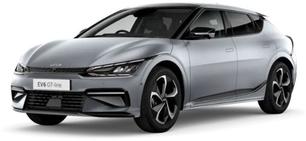
Kia’s EV6, launched in 2021, was an early signal from Kia that its talk of rearranging car-buyers’ perceptions was more than an idle boast.
Sure, the South Korean brand had gone from budget also-ran a couple of decades ago to a brand that represents reliability and quality in a very short space of time.
But a brand that was technically innovative and EV-savvy? Or capable of family cars with supercar performance? Let’s wait and see, we all said.
And now the latest member of the all-electric EV6 family has arrived, and with it Kia’s big chance to prove its point, as well as convince us that its flagship products are worthy of a six-figure price-tag.
With shattering straight-line performance and all the hallmarks of a thoroughly modern take on the electric vehicle concept (including all-wheel-drive and electronic control of everything from the suspension to the rear differential) the EV6 GT makes the technical statement it needs to.
But does it have the quality, the specification and the overall appeal to justify a price-tag that was unimaginable in a South Korean car until very, very recently?
The fact is that technical merit is not enough – never has been – when it comes to making a macro price-point shift in the minds of consumers.
Any model seeking to reset the value proposition of an entire brand needs to be more than the sum of its parts. But does the EV6 GT achieve that rare distinction? That’s what we’re here to find out.
The MG5 works well as a budget-friendly small car, and it’s genuinely good to drive.
Some small let-downs in terms of packaging don’t detract from this car in any major way, but the lack of active safety is a concern considering the features most of its rivals offer.
If it’s on your shopping list, make sure you know what else is on offer in terms of safety before you lock in the MG5 for the savings.
A hundred thousand dollars used to be big money. And for a family SUV, it still is. But don’t make the mistake of confusing the Kia badge with pedestrian motoring. The EV6 GT is proof that Kia can make high performance cars that work, and make the most of modern EV tech in the process.
We’re a bit disappointed in the real-world range of the car, and there’s no doubt the vast majority of drivers neither need nor want a car as focussed as this one. But as an example of how a modern, digital electric car can feel more like an old-school analogue performance car, the GT is Exhibit A. And for those of us for whom it’s about the journey, not the destination, this is indeed good news as EVs continue to take over the world.
Note: CarsGuide attended this event as a guest of the manufacturer, with meals provided.
The MG5’s styling might be a little divisive, with the overall shape and look of the small sedan sitting somewhere between its direct rivals, like the Hyundai i30 Sedan, and aspirational models like the Mercedes CLA.
In this Essence variant, the grey insert for the grille gives the front a darker, more aggressive look, though the way the grille mesh weaves makes it look a little like moustache hair.
The large ‘intake-style’ design at the sides gives it a sportier look than its outputs have perhaps earned - not to say the MG5 is sluggish - and following those around to the side of the car leads to a fairly minimalistic and tidy silhouette.
Here, probably most notable is the rather tall gap between the tyres and wheel arches.
The rear, with that sloped-up roofline, transitioning into a gentle lip spoiler, flanked by those lights, is where CLA fans might have the most to say about the MG5’s design.
Notably, the exhaust vents at the bottom are fake. The real exhaust exit is hidden well underneath.
Perhaps the most poignant element of the GT’s design is that Kia has lavished lots of Australian input into the final product.
Like Kias before it, the EV6 GT benefits from plenty of Nth-degree local suspension tuning which, given the way some imports buck and crash on Aussie roads, is commendable and clever.
It’s also interesting that Kia has remained committed to this approach, especially since the new GT features the brand’s 'Electronically Controlled Suspension' (ECS) the first for an all-electric Kia.
By looking at real-time road speed, cornering forces, braking and acceleration forces and the actual road surface, the ECS can tailor the dampers’ behaviour to maximise dynamics, grip and ride quality. For some carmakers that would be enough, so full marks to Kia for taking the next step with local calibration input.
Perhaps the other design element of note is the fact that Kia sees the GT as not just a high performance family car, but also a vehicle that it is happy to describe as 'track worthy'.
And even with the straight-line speed involved, that’s a big statement for any car weighing north of 2.1 tonnes. Testing at the infamous Nurburgring in German underlines Kia’s determination to give the GT the smarts to handle a track day.
The use of high-performance Michelin tyres backs this up when a conventional EV tyre would improve range but at the expense of grip in corners.
To further underline how serious Kia is about that claim, the GT features a completely different steering set-up to lesser EV6 models.
The GT gets a variable ratio steering rack with a faster ratio than the other EV6s and variable levels of power assistance to improve feel. There’s even additional bracing on the GT to stiffen the body and make full use of that sportiness.
Another big part of any track-day car revolves around the braking system, and to that end Kia has fitted the GT with huge brakes.
The knock-on effect, of course, has been the requirement to fit 21-inch wheels for rotor clearance as well as a new front suspension system that features a double ball-joint design to complete the clearance for the 380mm front discs. Four-piston front calipers are also part of the GT braking package, identifiable by the bright green hardware.
In specific detail terms, other design standouts include the sequential LED indicators, flush-folding door handles, solar glass, intelligent headlight system and 64-colour ambient interior lighting.
If there’s a design disappointment it’s that the GT looks pretty much like any other EV6.
Yes, the 21-inch wheels and tyres are pretty easy to spot, but from the front, only a slightly different grille, lower bumper and matrix headlights give the game away.
That doesn’t make it an unattractive car (by any means) but it doesn’t automatically mean onlookers will know you’ve spent the extra gold for the extra performance.
And over in the Swing-and-a-Miss column is the synthetic soundtrack Kia has chosen for the GT. There are three different, selectable background noises linked to motor speed, but, to us, they simply sound like three different stages of wheel-bearing failure.
Some newer brands to Australia, often MG’s compatriots from China, get some of the ergonomic or tech basics wrong as they focus more on an impactful first impression. Fortunately, MG doesn’t do that, for the most part.
Inside the MG5 is a cabin that looks more expensive than it is, but has some useful features to back it up without the superfluous add-ons.
Aside from the lack of physical climate controls - an annoying cost-saving or interior-tidying trend embraced by brands from budget to bougie - the MG5’s interfaces and ergonomics are pretty sensible.
Accessibility ticks for the steering wheel buttons being few and large enough to use without needing to look, as well as the lack of a panel of buttons and switches in the centre console. Looking at you, BMW.
The screen is also functionally sound, with obvious menu layouts and fairly large buttons as touch points, so it doesn’t feel like trying to operate a tablet while you’re driving.
It does, again, lose points for the climate control situation, which weirdly features a temperature slider as a colour gradient rather than numerical temperatures.
No wireless phone charger means needing space for a plugged-in phone, which the MG5 has just enough of, though similarly ‘just enough’ is the size of the cupholders, which won’t fit a big water bottle.
In the rear, there’s space enough for an adult to sit comfortably behind another adult, though it’s not the place for long journeys.
Strangely, there’s only one central vent control in the rear so only one passenger gets cool air or heat, plus there isn’t a great deal of storage. No armrest or cupholders for rear passengers, either.
Also noteworthy is the single-piece rear seat, which means if longer items need to be transported in the 401-litre boot, the whole rear seat must be folded down and the MG5 temporarily becomes a two-seater.
Under the boot floor is a space-saver spare, though, so bonus points for a more useful addition than a simple repair kit.
Perhaps the biggest practicality hurdle is the car’s range. At an optimum 424km, it’s okay but not stellar. And if those kilometres are highway ones, you can forget about 424km; it’ll be a fair bit less than that.
Meantime, the long wheelbase of the basic EV6 platform means there’s lots of legroom in the rear, making the car a comfy four-seater (the rear-centre seating position is decidedly last place) with enough knee space for adults in the rear.
The cabin is dotted with USB and charging points and there’s wireless charging in the double-layer centre console. There’s a also a bottle-holder in each door, map pockets in the front seat-backs, a luggage net and retractable cargo cover.
Kia’s insistence that the GT be capable of track-day work means the headrests on the front seats allow for a helmet to be worn, while the lack of power adjustment for the front seats mean they can be mounted closer to the floor.
Even so, the sunroof gobbles up precious headroom, and the cabin is a bit tight in that direction even without a helmet.
The digital dash and head-up display is clear and legible and the menu system contained within the touchscreen has a positive action and is logically laid out. Only the gear selector makes us wonder with its dim indicator lights that are hard to discern in some ambient light conditions.
The silver steering wheel buttons are also a bit hard to fathom when light reflects off them. The starter button is also not where you instinctively look for it.
MG has managed to cram quite a bit into the MG5 for less than $25K drive-away in its Vibe entry-level variant.
More specifically, you’re forking out $24,990 to head off from the dealership in one, even with its missing active safety features, but we’ll come back to that.
In Vibe specification, the MG5 comes with 16-inch alloy wheels, auto LED headlights, a reversing camera and a tyre pressure monitor, while inside you’ll find a 10.0-inch touchscreen with Apple CarPlay and Android Auto capability (both wired) with four speakers for the sound system, as well as a push-button start, synthetic leather seats and three different selectable steering modes.
Stepping up to the Essence, which we’re testing here, costs $28,990 drive-away and adds a sunroof, a six-speaker sound system, electric seat adjustment for the driver, steering wheel paddle shifters - for a reason we’ll return to - and turns the rear-view camera into a surround-view parking camera.
The Essence is also visibly different on the outside thanks to slightly larger 17-inch alloys, auto-fold (when locked) side mirrors, and a grey grille insert rather than body-coloured.
On that, you can have white or yellow as no-cost paint colours in either MG5 variant, but metallic red, blue, black or grey are all $700 options.
The elephant in the room, of course, is that price-tag which is just a posh meal for two shy of the magic $100K, at $99,590, before on-road costs. Of course, EVs aren’t cheap to purchase in the first place, but then neither are cars with supercar performance. And the Kia is arguably both those things.
And let’s not forget that it’s also possible to spend a lot more than $100,000 and not go anywhere near as fast as the Kia does. At which point, the whole car falls into place.
This is also a car that is very well equipped, making that price-tag a little easier to swallow. You get techy gear like LED matrix headlights, acoustic and solar glass (laminated in the front doors) no less than seven USB charge ports, digital radio, twin 12.3-inch screens, a head-up display (with augmented reality function) Apple CarPlay and Android Auto, heated front and rear seats, and Kia’s 'Sounds of Nature' ambient noise generator.
What’s missing? Cars with this much performance often have carbon-ceramic brakes. But to be honest, the savage regeneration potential of the GT means it doesn’t really need them.
Power front seats would seem to be AWOL as well, but as we’ll explain later, the manual seats are there to save weight and free up headroom. The lack of an electrically adjustable steering column is a bit harder to explain away.
Six figures is a bit of a sticker-shock when you first encounter it, but when you dig deeper, like all EVs, the picture changes the more you know.
Both versions of the MG5 come with a 1.5-litre four-cylinder engine that drives the front wheels, but the similarities mostly end there.
In the entry-level Vibe, that engine is naturally aspirated and makes 84kW and 150Nm - similar to the MG3. Power is transferred to the front wheels via a continuously variable transmission (CVT).
In our Essence variant the engine is turbocharged and makes a suitably higher 119kW and 250Nm, driving the front wheels via a seven-speed dual-clutch automatic transmission.
A purely electric car, the EV6 GT is all-wheel-drive courtesy of having one electric motor across the front axle, and a second motor driving the rear wheels.
Add it all up and at maximum power, you have 430kW/740Nm at your disposal.
It’s worth remembering those numbers are precisely the same power and torque as that produced by the last of the locally made muscle-cars, HSV’s final, 6.2-litre, supercharged V8 F-Series line-up back in 2015.
Compared with the non-GT versions of the EV6, that output is almost double the 239kW of the EV6 AWD Dual Motor.
There’s no multi-ratio transmission (just a single-speed arrangement) but there is an electronically operated rear differential to make the most of the 270kW contributed by the rear electric motor.
There’s also a Drift mode built into the car which, as well as courting controversy from the authorities, manages to shift 100 per cent of torque to the rear wheels at small steering inputs to allow the car to be driven sideways.
As the car exits the turn in question, some torque is shuffled forwards to the front wheels to pull the vehicle straight.
A set of paddle shifters control not the gearbox ratios (there are none) but instead the rate of regeneration on deceleration, and turned up to its maximum, can make the Kia a one-pedal car once you get the hang of it.
The GT also features drive models, which tailor the car’s behaviour in terms of steering feel and aggressiveness, suspension firmness, throttle sensitivity and even the stability control’s intervention threshold.
There’s also a steering-wheel mounted GT button which ramps all those settings up to DEFCON 3, placing them at their most dynamic calibrations in the interests of an exciting drive.
In fact, the GT button is the only way to get the full 430kW of power, too.
In the other drive modes, the spare Kilowatts are stored away for you, just waiting for that GT button to be pressed.
The naturally aspirated Vibe's official combined cycle fuel economy figure is 5.7 litres per 100km, while the turbocharged Essence drinks a little more at 5.9L/100km.
For comparison, Toyota claims its non-hybrid Corolla Sedan will sip 6.0L/100km, while a Mazda3 Sedan claims 6.1L/100km. Not bad, then, if you can keep it near MG’s claim.
During our testing, with a mix of city, suburban, highway, and rural driving, the MG5 Essence burned through 95 RON premium fuel at a rate of 9.1L/100km, checked at the pump, though I wouldn't expect this to be representative of normal, calmer day-to-day driving.
Like the other electric Kias on sale now, the EV6 GT has a Lithium-ion battery with a capacity of 77.4 kWh. Located under the floor, the battery-pack accounts for no less than 479 of the GT’s 2185kg.
The on-board charger can handle 10.5kW and takes about seven-and-half hours to go from 10 per cent to 100 per cent charge.
Using a 50kW fast charger, you’re looking at 73 minutes to go from 10 to 80 per cent charge and if you can find a 350kW fast charger, that time drops to just 18 minutes.
On a full charge, Kia claims a combined range of 424km which is okay, but not exactly stellar. That range will also fall pretty quickly if you start to use the awesome stomp on offer.
And let’s not forget that, in running-cost terms, the GT is front-loaded. That is, the car itself costs more, but it’ll be cheaper to run over the years.
Meantime, as oil-based fuels cost more and renewable electricity becomes more prevalent, the financial and environmental running cost of an EV starts to fall.
Okay, so the jury is still out in terms of the environmental impacts of a 77-plus kWh battery, and if the power you’re using is not the green variety, things change again. It’s a moving target, to be sure.
Either way, Kia claims energy consumption of 20.6kWh per 100km which is higher than many EV rivals but reflects the dual motors and even elements like the 21-inch performance tyres (Pirelli Pilot Sports) rather than the lower-resistance EV-specific tyres of most others.
The GT is also a bit of a hero when it comes to regeneration during braking. The car is capable of producing 0.6G from regeneration alone, and as much as 320kWh of regenerated energy during full braking.
Perhaps the biggest surprise about the MG5 is that it’s quite good to drive. And not just ‘for an MG’ or ‘for a car from China’. It’s actually good.
The turbocharged engine takes a moment to get going, and the dual-clutch can be a little hesitant off the mark.
The combo of the two means sometimes you need to plan your take off ahead of time - but in its above-3000rpm sweet spot, the Essence has a good bit of urgency to it.
That’s fortunately paired with a combination of comfortable suspension and a composed chassis, with well-weighted steering.
On urban roads and with a little awareness of the slow take-off, the MG5 is capable and well-suited to small roads, though it can be a little frustrating in stop-start traffic.
On the other hand, outside the confines of city driving, the small sedan is more dynamic than you might expect, able to get up to speed and comfortably overtake on highways, as well as handle corners on twisty roads confidently.
Potholes and rough sections of road don’t rattle the MG5 as much as you might expect from a car in this segment, though road noise can be a intrusive on coarse roads - of which Australia has many.
Dare I say it - the MG5 is rather fun.
Let’s cut to the – literal – chase: Acceleration. Any car with a nought to 100km/h time of 3.5 seconds is a serious performer, but even then, the first time you launch the GT, the sheer ferocity of the car’s response will surprise you.
It’s more like being shot out of a cannon than leaving the start-line, thanks to that instant torque, but the Kia also does it incredibly easily and fuss-free.
Where a lot of truly powerful cars struggle with grip, scrabbling and fighting against the traction control as they battle to get moving, the Kia simply takes off for the horizon.
There’s little squat, no loss of grip and just a seamless supply of Newton-metres. Your grandmother could launch this car as hard and fast as Lewis Hamilton could.
But where a lot of electric cars offer similar levels of traction and acceleration, the EV6 GT adds a whole new dimension.
Where much of the competition becomes a victim of its own kerb mass and the weight shift that comes with it, the Kia is an altogether more dynamic contraption, putting to the sword the theory that EVs are for straight-line stuff only.
The big, sticky Michelin tyres and the beautifully considered damper calibrations (the local experts’ work) combined with the quick steering rack and better-than-average steering feel and feedback, means the GT can not only be driven quickly around corners, it can also maintain its composure (and pace) even on a patchy, lumpy surface.
Where its velocity and steering angle suggests it should start sliding, it doesn’t. Where a corner-exit bump and lots of throttle would make other cars lift a front wheel, the Kia almost senses the road before it and tailors its damper responses.
In fact, that ability to predict the road surface is closer to reality than you might think. While the GT’s adjustable suspension remains passive (or reactive) rather than truly active (seeing into the future) the algorithms that control the dampers are smart enough to look at steering angle, speed, throttle position as well as examine the road surface in ultra-quick real time and adopt a posture that irons out the worst and keeps the wheels on the road.
Talking to the engineers who achieved this feat reveals a lot about what goes into making a two-tonne, high-horsepower car behave itself. As in, hundreds of passes over the same piece of road with full instrumentation on board and the brain power to interpret that data.
But if a car with so much roll stiffness can also offer the ride composure that this one does on 21-inch tyres, then those hundreds of passes have been well worth the effort.
As per Kia’s claim of track-readiness, we also got the chance to drive the EV6 GT at the tight, twisting, narrow Haunted Hills hillclimb circuit in Victoria’s Gippsland.
Frankly, the Kia simply has too much power for this track and we reckon it’s better left in Sport rather than GT mode where the power is a little softer and the car is not as fervent in chasing torque from the front axle to the rear and back again to dial out sliding.
It would be a different matter on a faster, flowing circuit like Phillip Island, but at Haunted Hills, driving the GT was a bit like trying to land a four metre shark in a three metre tinny.
Either way, however, the car’s on-road encouragement and dynamic poise is enough to convince us that this is one of the first EVs to actually speaks the same language as the enthusiast driver. And you can pretty much thank the Aussie suspension engineers for that.
Here’s the bit that might turn potential owners off the MG5. Or here aren’t the bits, more accurately.
The MG5 comes with a short list of safety features that amount to the minimum standard for a car to be sold in Australia.
That is, six airbags, autonomous emergency braking (AEB), anti-lock brakes (ABS) and electronic stability control (ESC).
MG also lists hill-hold under its safety features, as well as its active cornering brake control and auto door unlock and activation of hazard lights in case of an accident.
There are also ISOFIX and seat tether points for the outer rear seats.
The reverse camera in the Vibe is replaced by a surround-view camera in the Essence, though the visual quality of the feed leaves a bit to be desired.
Crucially, it’s missing a host of safety features that would be standard, or at least optional on a rival like the Toyota Corolla Sedan or Mazda3 Sedan, like steering assist, a pre-collision safety system, pedestrian detection, active cruise control and even lane departure alert.
Rear cross-traffic alert and blind-spot monitoring? Nope.
MG Australia CEO Peter Ciao told CarsGuide not long ago it’s about keeping the price of the car accessible for more customers, which means you’ll have to make your own call regarding whether it’s safe enough for you.
To that, ANCAP hasn’t crash tested the MG5, but if it did we wouldn’t expect it to score any higher than three stars.
While we don’t know how it would hold up in the area of crash protection, it lacks too much of the active safety gear that ANCAP expects of a maximum five- or even four-star car.
As a high-tech product of a forward looking company, it’s no surprise to learn that the EV6 GT is loaded with the latest safety tech, including driver aids.
Those include autonomous emergency braking (with identification function), blind-spot dentification, lane-keeping assist, multi-collision braking, active speed-limit assist, on-board tyre pressure monitoring, and front and rear parking sensors.
Seven air-bags are fitted, including full-length side bags and a centre-side air-bag to prevent head clashes between passengers in a side-impact.
There’s also a 3D surround camera system, active cruise-control and an indicator-triggered monitor to provide a display of whatever is lurking in the traditional blind-spot over the driver’s shoulder.
Even the car’s headlights have been designed with safety in mind, with a bright LED light source for the driver, but also an intelligent high-beam system that is aimed at reducing the risk of dazzling oncoming vehicles.
Essentially, the front-mounted camera on the GT can spot approaching vehicles and modify the output of individual LEDs within the high-beam cluster to manipulate the shape and spread of the lights’ beam, avoiding blinding the oncoming driver while still providing maximum illumination everywhere else.
The electronically operated rear differential is also being touted by Kia as a safety measure by being able to improve high-speed stability as well as reduce wheelspin on super slippery surfaces.
While the rest of the EV6 range was ANCAP tested last year and scored the full five stars, that rating doesn’t apply to the GT variant thanks to the specific front seats.
MG offers a seven-year/unlimited kilometre warranty on the MG5 as with all its models - even electric cars. That also comes with roadside assist for the duration of the warranty, though only 160,000km is covered by the warranty if the car is used for commercial purposes.
Servicing prices for the MG5 range from $266 or $272 for the Vibe or Essence, respectively, up to $581 or $661 for the most expensive of the seven 10,000km/12-month scheduled services.
The total cost of servicing the Vibe over its seven years under capped-price servicing comes to $2661, or about $380 average per service. For the Essence, that bumps up to $2764 or an average of about $394 per service.
Like all modern EVs, the Kia should be cheaper to maintain than conventional cars purely because there are fewer moving parts.
Energy costs will come down to where you charge from and whether you have access to home solar panels.
The warranty is typically Kia-good, though, with seven years and unlimited kilometres on the basic car and seven years and 150,000km on all high-voltage components.
Kia offers a three-year, five-year and seven-year servicing plan at $733, $1371 and $2013, respectively.
Service intervals are every 12 months or 15,000km, whichever comes first.