What's the difference?
If you're after a hot hatch with a boot, you can't have one because it wouldn't be a hatch anymore.
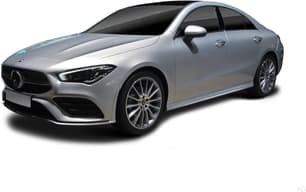
What you can have is this little beast - the new, second-generation Mercedes-AMG CLA 45 S, a small coupe-style sedan sharing its high-performance DNA with the hot as bubbling lava A 45 S hatch.
Packing 300kW – that's just over 420hp – and 500Nm its 2.0-litre engine is claimed to be the most powerful series production turbo four ever made.
And Australian deliveries are scheduled for early 2020, with a likely price tag in the mid-$90k bracket.
Mercedes-AMG invited us to the car's global launch in Madrid, Spain, where we got behind the wheel on road and track.
This is the new Tesla Model Y L, of course, but before we even start I need to ask you a very important question.
How often, honestly, do you use all seven seats in your seven-seater? Or if you only have five seats, how often is there a human in every single one?
Rarely, if ever?
Yep, me too. So stick around, because this is, by far, the best family SUV seating layout. And one where there’ll finally be no fighting over who gets stuck with the dodgy seat.
And as a result, the six-seat Tesla Model Y L might just be among the best all-electric SUV offerings around.
The Mercedes-AMG CLA 45 S is more glorious madness from the hot-rodders in Affalterbach. A design and engineering master-class putting a slightly more mature spin on the fast and furious small AMG formula. But only slightly. It's brilliantly outrageous.
If you like the five-seat Model Y, then you'll like the six-seat L version even more. I think this the best example of Tesla's electric SUV to date, and the cabin layout just makes a lot of sense, and would suit plenty of families who don't need to squeeze someone into a compromised middle seat.
Note: The author, Andrew Chesterton, is a co-owner of Smart As Media, a content agency and media distribution service with a number of automotive brands among its clients. When producing content for CarsGuide, he does so in accordance with the CarsGuide Editorial Guidelines and Code of Ethics, and the views and opinions expressed in this article are solely those of the author.
Claimed to blaze from 0-100km/h in 4.0 seconds the second-generation CLA 45 has the performance credentials of a mid-engine supercar, wrapped in a relatively unassuming three-box body. And while it might look mild-mannered from a distance, this devil's differences are in the detail.
Like it's A 45 sibling the CLA 45 S features AMG's now signature Panamericana grille with 12 vertical louvres, a winged front spoiler treatment, extra aero bits around the front air intakes and 'Power Dome' bumps in the bonnet.
The side skirts are wider, and the 19-inch twin five-spoke rims are standard. While at the back the diffuser treatment is more pronounced than the hatch, but the fat 90mm exhaust pipes are the same, and the lip spoiler is on the boot lid rather than the roof.
The interior is virtually identical to the hatch, the biggest difference being the four-door coupe's frameless doors.
A combination of Merc's 'Artico' faux leather and 'Dinamica' microfibre trim is accented with racy yellow highlights, with a nappa leather and Dinamica AMG Performance wheel and sports pedals completing the picture.
And the twin widescreen MBUX instrument and media display boasts AMG-specific read-outs on everything from gear selection, warm-up menu, car set-up, a G-metre, race timer and engine data. The standard 'Track Pack' even includes specific circuit layouts and data.
Spoiler alert - it looks a lot like a five-seat Model Y, doesn’t it, albeit a slightly bigger one. And you’d have to be a bigger Tesla head than me to immediately spot the differences at a glance.
The wheelbase is longer, the rear doors are bigger as are the rear 3/4 panels and the roof line is higher, helping with headroom in the third row.
Still, safe to say if you like the look of the five-seat Model Y, you’ll like this one. And if you hate it, well, good luck.
The alloys are 19-inch and shaded by the aerodynamic caps and there are light bars front and rear which debuted on the updated five-seat Model Y when it arrived mid-last year.
The bigger changes are inside, of course. I promise we’ll get to the second and third rows in the Practicality section, but let’s talk about the look and feel first.
There’s a love/hate relationship with Tesla’s stripped-back aesthetics, and I’m probably somewhere in the middle. I like the airiness of the space in the cabin, and I think it feels nicely put together, and I really dig the contrasting fabric used on the doors and dash which add a little visual interest to the cabin.
But I hate using the central screen to select a gear and I hate not being able to see how fast I’m going without turning my head. A head-up display would work wonders in the Model Y L cabin.
At just under 4.7m long (248mm longer than the A 45 S hatch), a bit under 1.9m wide, and fraction over 1.4m tall the A 45 S in the dimensional bullseye for a compact four-door.
The CLA A 45 S driver is presented with the same sleek 'MBUX' widescreen display found in the Mercedes-Benz A-Class, and storage runs to two cupholders in the centre console, a lidded bin/armrest between the seats (including twin USB ports), decent door pockets with room for bottles and a medium-size glove box.
In a swap to the rear, sitting behind the driver's seat set to my (183cm) position, I enjoyed adequate knee and foot room, although headroom isn't as generous.
A centre fold-down armrest incorporates two cupholders, again there are generous pockets in the doors with room for bottles, and adjustable ventilation outlets are set into the back of the front centre console is a welcome inclusion. No map pockets on the racy, hard shell sports front seats, though.
There are three belted positions across the rear, but the adults using them for anything other than short journeys will have to be good friends and flexible. Best for two grown-ups, and three kids will be fine.
Boot volume is a healthy 460 litres (VDA), expanding further with the 40/20/40 split-folding rear seat down. There are tie-down hooks, a 12-volt outlet and elasticised storage pockets either side of the load space to further enhance useability. But beware, the Merc-AMG CLA 45 S is a no-tow zone.
Captain’s chairs are simply a more luxurious version of second-row seating. With that there is no argument and the heated and cooled chairs that occupy the second row of the Model Y L are pretty good examples of them.
Space, both knee and headroom, is ample, and you can adjust each seat individually if you want to grant a bit more space to any third row occupants. Armrests deploy at the push of a button — as do the two hidden cupholders — and it really is easy to settle in and get comfy.
The third row is a bit more hit and miss. I’m 175cm and found I had enough legroom and headroom, but the big plastic mouldings that emerge from each side of the Model Y (which house a cupholder) are a miss. They end up pushing you into the seat next to you, and I can foresee a lot of arm rubbing with anything like two adults back there.
Also confusing is how to actually get out of it. You can fold the seat in front of you flat, but then you have to climb over it. I found it easier to just walk out between the seats.
There are another two USB-C ports in the rear row and you get air vents but no temperature controls.
The Model Y L stretches 4969mm in length, 1668mm in height and 2129mm in width, which is roughly 18cm longer and 4.5cm taller than the five-seat model. The extra space doesn’t sound like that much, but start dropping rows and you find a heap of storage space.
Both the second and third row stow electronically from the boot, but with them in place you’ll find 420 litres of storage in the double-layer boot. Drop the third row, and that number grows to 1076 litres. With the third row folded there is a massive 2423 litres of space. The frunk serves up another 116 litres.
There’s also room (and the ISOFIX attachment points) for four child seats.
The new CLA 45 is launching in the premium S variant only (a 'base' non-S version is offered in other markets). The outgoing model was tagged at $93,800, before on-road costs, prior to its discontinuation in January this year, and Mercedes-Benz Australia has hinted strongly that a price increase is likely. So, expect a list price in the mid-$90k range.
We'll cover active and passive safety tech in the safety section, and although final Australian specification is yet to be confirmed you can expect the stand ard features list to include the 19-inch alloys, 'Artico' faux leather and 'Dinamica' microfibre trim upholstery, the 'MBUX' widescreen cockpit display (two 10.25-inch digital screens) and 'MercedesMe' voice recognition, heated and electrically-adjustable sports front seats, auto adaptive LED headlights, LED tail-lights and DRLs, keyless entry and start, auto-dimming rear-view mirror, dual-zone climate-control, sat-nav, multi-function sports steering wheel, active cruise control, rain-sensing wipers, Active Parking Assist' (with ultrasonic proximity sensors front and rear), rear privacy glass, plus premium audio with digital radio, as well as Apple CarPlay and Android Auto.
The Model Y L sits smack bang between the $68,900 Long Range AWD and the $89,400 Performance, setting you back $74,900, before your on-road costs. It’s also the only three-row option in the Tesla family.
Aside from people movers, we’re not swimming with options in the three-row electric space, either. The Kia EV9 will get it done from $97,000, the Hyundai IONIQ 9 starts from around $120K and the Volvo EX90 is more expensive again (from $124,990).
Anyway, in Tesla land, the Model Y L rides on 19-inch alloy wheels, has a glass roof, automatic wipers and Tesla’s smartphone access key, as well as the little credit-card swipe.
Inside, there’s a 16.0-inch central screen that handles everything. And I mean everything. It's your gear selector, your speedometer, and everything else, too. There’s no Apple CarPlay or Android Auto, but you can access things like Spotify and podcasts through the in-built apps and the on-board navigation system is a good one, too.
All of that pairs with a 19-speaker sound system, and there are dual wireless charge pads. All three rows of seats are heated, while the first and second row get ventilation, too.
A second 8.0-inch touchscreen in the middle row then handles things like the seat heating or cooling, music and games to amuse the kids. And the Model Y L also debuts V2L, or Vehicle to Load, for Tesla in Australia, using a connector in the external charger.
The A 45 S's all-new 2.0-litre (M139) engine is claimed to be the most powerful series production turbo four ever made, pumping out 310kW at 6750rpm and a monumental 500Nm, peaking between 5000-5250rpm. . That's up from an already impressive 280kW/470Nm on the out-going model.
It's an all-alloy, closed deck design fed by a combined direct and port fuel-injection system, with a single, twin-scroll turbo featuring low-friction roller bearings for quick spool up.
It's transversely mounted, but compared to the previous model has been spun 1 80-degrees on its vertical axis so the turbo's near the firewall and the intake system sits at the front to simplify and shorten ducting on the intake and exhaust sides.
The cylinder linings are treated with Merc's patented 'Nanoslide' coating, which delivers an ultra-hard, mirror-like surface for less friction and greater durability. And 'Camtronic' variable valve control sits on the exhaust side.
Drive goes to all four wheels via an eight-speed 'AMG Speedshift DCT 8G' dual-clutch auto, with manual shift paddles attached to the steering wheel.
The Model Y L gets Tesla’s dual-motor AWD powertrain, with two electric motors producing a total 378kW and 590Nm. That’s enough, Tesla says, to knock off the sprint to 100km/h in five seconds flat.
Claimed fuel economy to the combined cycle NEDC (New European Driving Cycle) standard is 8.1L/100km, the engine emitting 186g/km of CO2 in the process. Figures for the Australian (ADR 81/02) standard will be issued at the time of the car's local launch in early 2020.
Stop-start is standard, minimum fuel requirement is 98 RON premium unleaded, and you'll need 51 litres of it to fill the tank.
Our combination of furious hot-lapping on the circuit and relatively enthusiastic open road driving on the launch program means we'll wait until we test the car on home soil to log a real world average.
Tesla is always a little vague when it comes to the size of its batteries, but reports point to the Model Y L carrying a 84Wh (useable) NMC battery.
Whatever the specifics, the range is strong, with Tesla promising a 681km driving range on the WLTP combined (urban/extra-urban) cycle.
It’s also set up for 250kW DC fast charging, which should see you take on 288km in 15 minutes, according to Tesla.
Mercedes-AMG invited us to the Jarama race circuit just outside Madrid in Central Spain, and the twisting B-roads nearby, to sample its latest pride and joy.
In the AMG tradition the engine is assembled by hand, by one technician. And hats off to the spanner twirlers, they do a great job. It's a spectacular unit. Torque delivery is shaped to mimic a naturally aspirated engine, with the maximum figure arriving between 5000-5250rpm.
But that's not to say it's hollow in the mid-range. Around 90 per cent of that peak number is available from below 3000rpm and low-end throttle response is brilliantly crisp and linear, helped in no small part by roller bearings on the turbo for a quicker spool up.
Merc-AMG claims 4.0 seconds for the sprint from 0-100km/h, which is supercar fast and with drive going to all four wheels entertainment is the name of the game.
The eight-speed dual-clutch auto is positive and sharp, especially in manual mode where shifts flick through in much less than the blink of an eye.
And as the A 45 S beefs up the A-Class on the outside, it's the same underneath the skin with body reinforcement including an alloy sheering plate under the engine, a front strut tower brace, extra reinforcement between side members and A-pillars, and diagonal struts on the front and rear of the underbody.
So, the strut front, four-link rear suspension has an extra stiff platform to hang from, and the three-mode 'Ride Control' active damping can transform the ride from soft and compliant to tightly buttoned down.
The speed-sensitive, electromechanical steering is specifically tuned for this car, and it points accurately with good road feel and pleasantly firm weight in Sport and Sport+ modes.
Rubber is Michelin Pilot Sport 4 S, and it grips hard. On the fast and technical Jarama circuit they performed flawlessly, helping the A 45 S transform its prodigious power into maximum forward velocity without fuss.
The icing on the dynamic cake is 'AMG Dynamic Select' with six modes from 'Comfort' to 'Race' adjusting the engine, transmission, steering, suspension, and exhaust.
On top of that 'AMG Dynamics' uses the ESP and torque vectoring (by braking) to vary the level of stability and slip through four levels from 'Basic' up to 'Master'.
We played with all the toys including 'Race Start' and a 'Drift Mode' made possible by a new rear axle featuring two multi-disc clutches - one for each rear wheel.
Torque is split variably between front and rear axles with a default setting of 50/50 rising to around 70 per cent to the rear when pushing hard. Drive is also continuously managed across the rear axle, and like a swan gliding across the lake all the action happens seamlessly out of sight, turning you into a track hero in the process.
The first-gen A45's exhaust was a mass of pops, bangs and crackles, while this car's more rasping and rorty exhaust note is controlled by a flap in the system adjusted by engine speed and load. It's also amplified by the 'AMG Real Performance Sound' system, which puts some actual engine and exhaust noise (nothing is synthesised) through the speakers.
Open road ride comfort in the softest setting is surprisingly good, with rough surfaces unsettling the car only slightly despite the big 19s and high-performance rubber. Body control is S and S+ settings is spot-on, the car feeling planted, predictable and ultra-responsive on tight, twisting backroads.
Braking power is professional grade with six-piston calipers at the front and single piston rear, on vented and perforated rotors all around. Even following session after session on the track there wasn't a hint of fade.
Honestly, it feels like the Tesla Model Y has grown up. I didn’t love earlier iterations of this car and I found the Performance to be fast but lacking any emotional fizz.
This one, though, feels solid and composed, and the power on tap (of which there is ample) is more about effortless progress than it is attempting to offer sports car excitement.
The steering is now nicely weighted and feels direct enough without being too sharp, and the cabin is well insulated, with often the slightly off-putting sort of rubbing noise the steering wheel makes when you turn it the only intrusive sound.
One drawback is a ride that definitely errs on the side of firm. This Model Y L gets electronic damping designed to iron out some of the more jagged stuff, but it still feels brittle in places, and you can definitely feel some sharpness in the cabin. Now, to be fair, it’s not too firm for me, but it might be for you.
Another is a bizarre turning circle which constantly reminds you you’re driving a big bus, especially when you try to complete a tight three-point turn.
But despite its stretched dimensions, I found the Model Y L easy to drive and park in the city, and once you're up to speed with Tesla's operating system (there's no Apple CarPlay or Android Auto), then the screen is pretty easy to use, too.
Although final Australian spec is yet to be finalised, you can expect a host of active safety tech including ABS, BA, EBD, stability and traction controls, a reversing camera (with dynamic guidelines), 'Active Brake Assist' (Merc-speak fo AEB), 'Adaptive Brake', 'Attention Assist', 'Blind Spot Assist', 'Cross-wind Assist', 'Lane Keep Assist', a tyre pressure warning system, the 'Pre-Safe' accident anticipatory system, 'Traffic Sign Assist' and 'Adaptive Highbeam Assist'.
If all that fails to prevent an impact you'll be protected by nine airbags (front, pelvis and window for driver and front passenger, side airbags for rear seat occupants and a driver's knee bag), and the 'Active Bonnet' automatically tilts to minimise pedestrian injuries. A first-aid kit and hi-vis vests in the boot are thoughtful additions.
The A-Class was awarded a maximum five ANCAP stars in 2018, and for smaller occupants there are three child restraint/baby capsule top tether points across the back seat, with isofix anchors on the two outer positions.
The Model Y L gets the same maximum five-star ACNAP safety rating as the rest of the Model Y range, with nine airbags (up from seven in the five-seat model), and things like AEB (Auto Emergency Braking), lane-keeping assist, 'Forward Collision Warning' and blind-spot monitoring all along for the ride.
Interestingly, the curtain airbags from the five-seat version haven't been replaced, with coverage still only extending to the second row. New airbags have instead been added for third-row occupants.
One more analogue quirk of the Tesla Model Y L is the thick B-pillar, which does a good job of almost completely obscuring driver-side blind-spot checks (for those of us who still like to do those manually).
The Mercedes-AMG range is covered by a three year/unlimited km warranty, which, like Audi and BMW lags behind the mainstream market where the majority of players are now at five years/unlimited km, with some at seven years.
On the upside, Mercedes-Benz Road Care assistance is included in the deal for three years.
Service is likely to be scheduled (as per the out-going CLA 45) for 12 months/20,000km (whichever comes first) with pricing available on an 'Up-front' or 'Pay-as-you-go' basis.
For the first-gen CLA 45 pre-payment delivers a $500 saving with the first three services set at a total of $2950, compared to $3650 PAYG. Fourth and fifth services are also available for pre-purchase.
Tesla warranty is a these-days-underwhelming five years and unlimited kilometres, while the high-voltage battery is covered for eight years or (a wildly specific) 192,000km.
There’s also five years' of roadside assistance, including puncture repair (a good thing, given the lack of a spare wheel). I also couldn’t find a puncture repair kit and later research suggests Tesla sells them, rather than provides them as standard.
Tesla servicing is condition-based, so there’s no fixed schedule, with a summary on the car’s touchscreen providing a record of when vehicle maintenance was last carried out and prompts for when they should be performed next.
In the absence of a combustion powertrain the emphasis is on things like wheel rotation, balancing and alignment, brake fluid testing, air-con servicing, camera precision, radiator cleaning and high-voltage battery maintenance.
Expecty a ‘Vehicle Health Check’ to come in under $300 with ‘General Diagnosis’ at around $270 per hour.