What's the difference?
When it comes to choosing a family car, sedans are often overlooked for their long-legged wagon or beefy SUV cousins.
They're a bit of a forgotten hero but they'll always hold a piece of my heart for their practicality and (often) sexier kerb-side appeal.
If you can get used to your body cracking like a glow stick when you get in and out of them, the sedan may make a comeback!
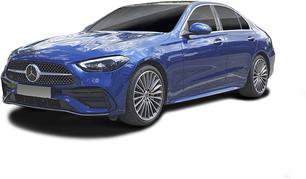
The new Mercedes-Benz C-Class, in entry-level C200 form, has definitely tempted my family to consider a sedan in the future – it looks stately and refined but the driving experience also makes it fun.
Let's see what else it did right and if there was anything that could be improved.
Did I mention, I'm fond of sedans... ?
The Renault Megane RS is still here, in case you were wondering.
You may have let it slip your mind in recent times, because there’s been a lot of action in the hot hatch scene with the release of the new-generation Ford Focus ST, a fond farewell to the VW Golf R, and consistent talk of the upcoming Toyota Corolla GR hot hatch.
The Megane RS is more than just ‘here’, though. The RenaultSport Megane hatch range has expanded in recent times, and we’ve just spent some time with the Trophy model which first arrived in Australia late in 2019.
It is certainly keeping its presence known in 2020 Renault Megane RS Trophy spec, which represents the most powerful and fastest version of the standard model range before you get to the rip-snorting (and eye-wateringly expensive) Trophy R.
So what’s it like? Read on and you’ll find out all about it.
The Mercedes-Benz C-Class C200 is such a stylish sedan and I would totally have one. The driving performance, luxurious features and practical size made it a winning combo for my family. The price point is definitely up there but you do get a high-end build for the cash. I've seen bigger boots in other sedans and not being able to fit a third child seat will limit some families, but this still easily earns an 8.5/10 from me.
My son really loved this one. The ambient lighting was the highlight for him and he thought it looked like a "space car" inside. He gave it a 9/10.
If the Renault Megane RS Trophy is your dream car let me say this: there’s no overarching reason that I’d say you shouldn’t go ahead and buy it.
But with so much amazing competition in this part of the market, it’s hard to put it ahead of its rivals. And it’s going to be even harder for it to stay high on the contenders list as more new metal arrives in the coming years.
The C200 is a sleek and elegant steed.
Initially, you may think this is just a standard Merc showcase. There's the nice big badge on the pronounced nose. Beautiful sleek lines in the body... but it's the attention to detail that make this feel special.
There's a repeated badge motif in the grille and a cute cursive Mercedes logo tucked into the corner of the windscreen. The puddle lights on the doors project the badge at night time and you can often spot a badge etched into the LED lights.
However, it's the interior that's the highlight for me and I feel like it's a big step up from previous models I've been in.
Our model has the grey 'Artico' synthetic leather trim (says grey but it's really white) and a lovely mix of piano black and shiny chrome inserts that are set against soft touchpoints throughout.
The quality of the build oozes through every stitch and join. Don't even get me started on the cool customisable ambient lighting system inside, which makes this feel like you're on the set of Tron and really elevates the interior.
It's quite fun to build one of these in Mercedes' online configurator. You can customise your trims to make it feel like your own and their blue paintwork options are great (I do love a blue car).
The Megane RS Trophy’s dimensions don’t really communicate just how chunky it really is. At 4364mm long on a 2670mm wheelbase, 1875mm wide and 1435mm tall, it is pretty conventional in terms of size for the segment.
But it packs a lot of style into that size. I for one love those broad hipped wheel-arches, the signature LED headlights and chequered flag lighting signature at the bottom of the bumper, and the bright, eye-catching colours available really just ram the message home that this isn’t your average Megane.
I could happily leave behind the red flecks on the wheels, which look a bit too blingy and not quite ‘lightweight racing-spec’ to me. But they obviously appeal to a certain buyer - maybe someone who wants a bit more drive-by flair, as opposed to track-day talking points.
The Trophy model builds upon the Cup variant, using the same chassis and hardware under the skin, and therefore running the brand’s 4Control four-wheel steering and a mechanical Torsen limited slip diff. More on that in the driving section below.
Exterior design and styling are one thing - but you probably spend more time sitting inside your car than just admiring it from a distance. How does the interior of the RS Trophy stack up? Check out the interior images to make up your own mind.
I'm not going to lie – there are sedans out there that have an almost limo-like space inside but the C200 isn't one of them.
It's not small by any means and all occupants enjoy the comforts of decent legroom and headroom but it's not cavernous considering the specs (1437mm high/1820mm wide/4751mm long).
The optional panoramic sunroof does cut into the headroom for back seat passengers, which is something to consider if your family is very tall.
The storage is maybe a tad leaner-than-average for a car of this size. The glove box and middle console aren't massive but will suffice.
The cupholders up front can be removed if you need extra storage space for larger items and back seat passengers enjoy retractable cupholders in the armrest.
The way the front doors curve out creates a larger than normal storage bin and drink bottle holder – which help make up the difference. There is a dedicated phone pocket, to tuck it out of the way.
The boot space is 455 litres (VDA), which isn't as large as some others on the market but it was plenty big enough for my family's needs.
There's a handy under-floor storage pocket for smaller items, like the puncture repair kit, because you don't get a spare tyre in this.
When it comes to ease of use, my six-year-old loved not needing my help to get into his seat and he still enjoyed a decent view out of the wide back window.
The amenities in each row are good but not class-defining. Still, creature comforts have be well-thought through.
Front occupants enjoy heated seats and fantastic lumbar and under thigh support. Dual-zone climate control sorts out the temp, and the cool circular air vents that make loud audible 'clicks' when manoeuvred give the interior a jet cockpit vibe.
While I've never had an issue opening or closing a sedan boot, the powered lid was a nice feature to have this week.
The tech throughout is great and intuitive to use. The massive 11.9-inch touchscreen multimedia system is cool and is easy to use once you become acclimatised to Mercedes system.
The customisable digital instrument panel makes the driving experiences feel individualised.
The interior is a chilled out space with gentle scrolling touchpads taking the place of most 'push' buttons and dials.
Think of each surface as being a bit like a touchscreen tablet in how you operate it. I was a little worried the touchpads would be laggy but they're very responsive.
There's only one USB port in the whole car, which limits charging for other passengers but I did enjoy the easy connectivity of the wireless Apple CarPlay.
The electric heated front seats are a nice touch but I was amused by the 'kinetic' function on both. It's what you might call a 'massage' function on another car but here they don't really work. It's best to think of them as a way to do some (very) gentle stretching on a long trip.
The 360-degree camera view is super clear and crisp but the dynamic guidelines (which tilt the camera angle) are a bit too dynamic for my liking and I relied mostly on the bird's eye view to park.
As I've mentioned, the ambient lighting system creates a stellar atmosphere inside. I've often wondered why other car manufacturers haven't jumped on that bandwagon because it's a relatively cheap way of creating wow factor. And it generates massive wow factor in here.
The Megane RS Trophy’s cabin carries over some of the design cues from the exterior. It looks and feels like a hot hatch should.
There’s a lovely part-Nappa leather, part-Alcantara steering wheel with paddle shifters and a ‘centre line’ marker - but some may lament the lack of a flat-bottom to the wheel, which is a current trend in the “trust me I’m actually very sporty” breed of cars.
The manually adjustable seats are very supportive though they are a bit firm, so those wishing for ultimate comfort over long distance trips might be left wanting. But there is good adjustment to the seats, and they’re heated, too.
There are some nice elements to the cabin including soft plastics on the dashboard, but the lower plastics - below the eye-line - are quite hard and not very pleasant. However, the inclusion of ambient lighting does distract from that, and add a bit of flair to the cabin.
The portrait-style media screen is fine most of the time, though it does take some learning. The menus aren’t as intuitive as you might hope, with a mix of on-screen buttons and off-screen touchpad-style controls that can be difficult to hit when you’re driving. We also had a couple of instances of glitching while using Apple CarPlay and Android Auto smartphone mirroring.
Storage is okay. There are shallow cupholders between the seats, a covered centre console bin, as well as a storage section in front of the gear selector that’s big enough for a wallet and phone, and bottle holders in the doors.
In the rear seat there’s enough space for someone my size (182cm) to sit behind their own driving position, albeit with limited knee room and toe room. Headroom is good, and there are dual ISOFIX child-seat anchor points and three top-tethers for baby seats.
You’ll find a pair of small door pockets, two map pockets, and rear-seat directional air vents, which is nice. There’s a flip-down arm-rest with cupholders, too, and unlike some other high-price hatches with ambient lighting up front, the Megane gets LED light strips on its rear doors, too.
The boot space is good in the Megane RS Trophy, with luggage capacity claimed at a healthy 434 litres. On test, the car fit all three CarsGuide suitcases (124L, 95L and 36L) with room to spare. Speaking of spare (ahem), there isn’t one: it comes with a repair kit and tyre pressure monitoring, but no spare wheel of any kind.
Herein lies the rub. There are four models for the C-Class sedan and ours is at the bottom of the pack.
But don't let its position fool you in thinking it'll be cheap because this model starts at $78,900... and that's before you start adding the option packs.
Our model is fitted with the 'Vision Package' which adds a host of features – like a panoramic sunroof, head-up display and heated front seats, to name just a few. This adds about $3000 to the price tag.
This also has the optional 'Sport Package' which adds 19-inch AMG alloy wheels and rear privacy glass, among other things, for an extra $1300.
Unfortunately, even without all of those options, this is still one of the most expensive 'entry-level' sedans in the luxury class!
The Renault Megane RS Trophy has a list price of $52,990 for the six-speed manual, or $55,900 for the six-speed dual-clutch auto model, as tested here. Those costs are RRP/MSRP, and don't include on-roads.
Standard equipment for this range-topping ‘regular’ RS model includes 19-inch ‘Jerez’ alloy wheels with Bridgestone Potenza S001 tyres, an active valve exhaust system, Brembo brakes, LED headlights with LED daytime running lights, rear fog lights, front/rear/side parking sensors, semi-autonomous parking system, reversing camera, auto locking, smart key card and push-button start, and steering column-mounted paddle shifters.
There’s also auto headlights, auto wipers, dual zone climate control, an auto dimming rearview mirror, heated front seats with manual adjustment, a nine-speaker Bose sound system with subwoofer and amplifier, an 8.7-inch touchscreen media system with aux port, 2x USB ports, Bluetooth phone and audio, Apple CarPlay and Android Auto, sat nav, the brand’s RS Monitor track timing software, and a 7.0-inch TFT colour screen for the driver with configurable modes and digital speedo.
You can find a run down of the safety tech and equipment fitted in the safety section below.
Options available include an electric sunroof ($1990), and there is also the choice of a few metallic paint colours: Diamond Black and Pearl White metallic are both $800, while the Signature Metallic Paint colours - Liquid Yellow and Orange Tonic as you see here - are $1000. Only Glacier White will cost you no extra.
Wondering where it sits among its closest rivals? If you’re thinking about a Ford Focus ST (from $44,690 - manual or auto), Hyundai i30 N (from $41,400 - manual only), the outgoing VW Golf GTI (from $46,690 - auto only), or the mighty Honda Civic Type R (from $51,990 - manual only) the Megane RS Trophy is expensive. Only the VW Golf R Final Edition ($57,990 - auto only) is dearer… unless you’re thinking of comparing to the likes of a Mercedes-AMG A35 ($69,300).
The C200 has a 1.5-litre, four-cylinder, turbo-petrol engine with an integrated starter-generator.
What's that, you ask? So, glad you did. It's basically an electric battery that also acts as your starter... or alternator.
It smooths out vibrations from the engine and generates some power from braking. Making this a very mild hybrid. Note the 'mild'.
Is it powerful? Surprisingly, yeah. It has a maximum output of 165kW and 300Nm of torque. Combine that with the starter-generator and we have a powerful little engine that can push the C200 from 0-100km in 7.3 seconds, while still feeling like there's power in reserve.
The nine-speed auto transmission is damn smooth and there's no clunky gear changing at any speed. It's got great pick-up, too, for when you need to overtake or zip across traffic.
Engine specs matter if you’re talking about performance hatchbacks, and the Megane RS Trophy is no exception.
It has a 1.8-litre four-cylinder turbo-petrol engine that punches hard for its size, with 221kW of power (at 6000rpm) and 420Nm of torque (at 3200rpm). That’s for the six-speed dual-clutch automatic transmission, as was fitted to our test car. If you buy the six-speed manual, you miss out on a bit of grunt - it has 400Nm (at 3200rpm) and the same peak power.
In auto spec the RS Trophy “300” offers higher figure vs the Sport and Cup “280” models (205kW/390Nm), and more engine performance per litre of capacity than the Focus ST (2.3-litre: 206kW/420Nm), Golf GTI (2.0-litre: 180kW/370Nm; TCR 2.0-litre: 213kW/400Nm), and even the Golf R (2.0-litre: 213kW/380Nm).
All Megane RS models are front-wheel drive (FWD/2WD) and no Megane RS is all-wheel drive (AWD). The Trophy and Cup models both get 4Control four-wheel steering, which is an interesting aspect of the drive experience. More on that below.
There are multiple drive modes to choose from, including Comfort, Neutral, Sport, Race and the configurable Perso mode. These can alter engine, transmission, throttle, traction control, exhaust noise, fake engine sound and steering sharpness - but not suspension, because the dampers aren’t adaptive units.
The official combined cycle fuel figure is 6.9L/100km. Real world testing saw my figure at 7.2L, which was awesome for the heavy driving I did this week on a combo of urban and open-roads.
The light regen braking probably helps this coast comfortably into being a very efficient sedan for its size.
Minimum fuel requirement is 95 RON premium unleaded and you'll need 66 litres of it to fill the tank.
Driving range using the official consumption figure is around 950km, and 915km using our real-world number.
The claimed official combined fuel consumption for the Megane RS Trophy is 8.0 litres per 100 kilometres. That’s for the EDC auto model as tested. The manual is said to use 8.3L/100km.
You might achieve that if you drive gently, though over my testing - which incorporated hundreds of kilometres of highway and country road driving, as well as a few spirited stints and some urban snarls - I saw a return of 10.8L/100km at the pump.
The Megane RS requires 98RON premium unleaded, and the fuel tank capacity is 50 litres.
The steering feels solid and concise. The tyres seem like they're glued to the road, making winding roads downright fun to tackle. Oh, and the sharp 11 metre turning circle is wonderful.
The handling makes this your best friend in a car park. The lower ground clearance did elicit some unladylike grunts when I parked on a hill, but otherwise the wide door apertures makes it easy to get in and out of.
The only thing I would note is the low-profile ground clearance. Just be aware of your speed and angle when you handle car park ramps or road bumps in this. They are not your friends.
The Megane RS Trophy has the ingredients to be an all-time legendary hot hatch, but they don’t work together well enough for it to be a truly great car to drive.
That is, they don’t work together on public roads. I didn’t get a chance to sample the RS Trophy at the track, and I’m sure that may well alter some of my opinions. But this was a review focused around everyday driving first and foremost, because - unless you’ve got quite a fleet of cars - you’ll be spending a lot of time in mundane motoring in your Megane RS, too.
Other hot hatches in the segment manage to combine big power and torque with immense traction and steering prowess. The Megane RS used to, as well.
But this new version seemingly has some issues harnessing the grunt, and the 4Control four-wheel steering system simply isn’t as rewarding as it should be.
I had several instances where the traction on slippery surfaces was lacking, while even in the dry I noticed distinct torque steer and the Bridgestone tyres struggled to cope under hard acceleration. That’s despite the fact the Trophy gets a mechanical LSD.
Further, that four-wheel steering actually makes it pretty hard to judge the behaviour of the car at times, with an artificial feel to it that just doesn’t do it justice. There will be some who say that the four-wheel steering - which can angle in the rear tyres to help you pivot in corners more adeptly - is excellent. But I’m not one of them. I really found it hard to predict this car’s behaviour. I never really gelled with it.
At the very least there’s a non-interventional lane keeping assist system, which emits a pulsing sound through the speakers rather than actively vibrating or adjusting the steering.
The ride is unapologetic in its firmness – although, if you’re across the history of RS Megane models, that is to be expected for a Trophy chassis. It can be tiring on longer road trips especially if the surface isn’t great.
While it is extremely fast in a straight line - 0-100km/h is claimed at just 5.7 seconds - it wasn’t as quick through corners as I was expecting it might be, and that comes down to its four-wheel steering mostly, along with a lack of usable traction at times. It simply isn’t as connected to the road as the previous RSs have been.
It was also a bit laggy then lurchy at lower speeds when taking off from a standstill, such is the nature of the dual-clutch in stop-start situations.
To put it bluntly, I didn’t enjoy this car anywhere near as much as I thought I might. It just isn’t as pure a driving machine as I’ve come to expect from the RS brand. Perhaps I should aim to try it on a track!
The safety sheet is well-stocked and has the usual suspects you want in a family car, like: AEB with car, pedestrian, cyclist and junction turning assist (effective speed 7.0-90km/h); forward and back-over collision warning, lane keeping assist, lane departure warning and emergency lane keeping assist, as well as, blind-spot monitoring.
I quite like the 'Active Distance Assist' which helps to automatically slow your vehicle speed to keep a set distance to the car in front in stop-start traffic.
Perfect for those busy city commutes. And if you're not confident on parking, this also has a 'Park Assist' feature.
It's nice to see that this has nine airbags, which include a driver's knee airbag and the newer front centre airbag.
This has a maximum five-star ANCAP safety rating which is nice and new from testing done in 2022.
There are ISOFIX child seat mounts on the outboard rear seats and three top tether anchor points but because of the narrower rear seat, you'll only comfortably fit two side-by-side.
It was super easy to fit my seats and there's a good amount of room for front passengers when a 0-4 rearward facing child seat is installed.
The Renault Megane has not been awarded an ANCAP crash test rating, but the regular (non-RS) model scored five stars against EuroNCAP criteria back in 2015.
The RS Trophy (manual or automatic) comes fitted with adaptive cruise control with speed limiter, auto emergency braking (AEB) at speeds between 30km/h and 140km/h, blind spot monitoring, lane departure warning with audio alert, reversing camera, surround parking sensors and semi-autonomous parking.
Missing is rear cross-traffic alert, front cross-traffic alert, rear AEB, pedestrian detection and cyclist detection.
The C200 comes with a five-year/unlimited km warranty, which is standard for the market.
There are multiple servicing options and on the five-year plan, the services average $1090 annually, which is quite expensive.
Servicing intervals are pretty good at every 12 months or a longer than usual 25,000km, whichever comes first.
The Renault Megane RS range is covered by a five-year/unlimited kilometre warranty, which adds some peace of mind for owners.
Further, the service intervals are generous, at 12 months/20,000km - though the brand states the Megane RS is actually “subject to adaptive servicing requirements” as the oil condition sensor may trigger a service check requirement prior to the standard intervals.
Unlike other Renault models with a five-year capped price servicing plan, the Megane RS is only covered for three years/60,000km. The service costs for the EDC dual-clutch auto models are higher than the manual versions, due to replacement transmission oil being needed (adding $400 to the first service).
The costs for the first three services are: $799 (12 months/20,000km); $299 (24 months/40,000km); $399 (36 months/60,000km). Consumables beyond those service intervals include: every 24 months or 20,000km - air filter replacement ($49) and pollen filter replacement ($63); every 48 months or 60,000km - accessory belt replacement ($306). Spark plugs are included at no cost, due every 36 months/60,000km.
The car is backed for up to four years of roadside assistance when serviced within the Renault dealership/service network.