What's the difference?
When it comes to choosing a family car, sedans are often overlooked for their long-legged wagon or beefy SUV cousins.
They're a bit of a forgotten hero but they'll always hold a piece of my heart for their practicality and (often) sexier kerb-side appeal.
If you can get used to your body cracking like a glow stick when you get in and out of them, the sedan may make a comeback!
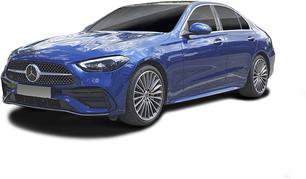
The new Mercedes-Benz C-Class, in entry-level C200 form, has definitely tempted my family to consider a sedan in the future – it looks stately and refined but the driving experience also makes it fun.
Let's see what else it did right and if there was anything that could be improved.
Did I mention, I'm fond of sedans... ?
There is nothing quite like a car company occasionally building a car that could be considered a risk. And there are all kinds of risks in the car business - the market isn't ready for that car, people don't identify your brand with this or that type of vehicle, the list goes on. And it's long. It's very easy for me to sit on the sidelines and say, "Pft, what were they thinking?" Few cars land on your driveway without years of thinking having already gone into their development.
The Kia Stinger is the kind of car that would have caused lots of thinking and plenty of hand-wringing at Kia HQ in Korea. Not because it was a bad idea - it wasn't. Not because it's a bad car - it is, in fact, the opposite. And not because SUVs have already changed the way we look at cars - Kia has done well out of that.
It's just that Kia has never produced a car like the Stinger. A five-door coupe-sedan, rear-wheel drive and with a focus on driver dynamics. Most of us know very well how the Stinger GT burst on to the scene in a blaze of well-deserved glory. It's not all about the GT, though. There's a whole range of Stingers and just below that very accomplished sports sedan is the Stinger GT-Line.
The Mercedes-Benz C-Class C200 is such a stylish sedan and I would totally have one. The driving performance, luxurious features and practical size made it a winning combo for my family. The price point is definitely up there but you do get a high-end build for the cash. I've seen bigger boots in other sedans and not being able to fit a third child seat will limit some families, but this still easily earns an 8.5/10 from me.
My son really loved this one. The ambient lighting was the highlight for him and he thought it looked like a "space car" inside. He gave it a 9/10.
The Stinger GT-Line is a great machine. It looks good, feels good to drive and while it's not the cheapest large sedan, it's also not a Camry. With a strong European vibe, it's a nice bridge between boring-dependable and out-of-reach European. Boasting a strong link to Europe in its chassis DNA, it has it all apart, maybe, from the badge.
But Kia has a habit of doing unexpected things and the Stinger was a bold move worth making just for the halo effect of having such a cool car in the range. It has done good things for the company's reputation, as though the rest of the range isn't proof already.
The C200 is a sleek and elegant steed.
Initially, you may think this is just a standard Merc showcase. There's the nice big badge on the pronounced nose. Beautiful sleek lines in the body... but it's the attention to detail that make this feel special.
There's a repeated badge motif in the grille and a cute cursive Mercedes logo tucked into the corner of the windscreen. The puddle lights on the doors project the badge at night time and you can often spot a badge etched into the LED lights.
However, it's the interior that's the highlight for me and I feel like it's a big step up from previous models I've been in.
Our model has the grey 'Artico' synthetic leather trim (says grey but it's really white) and a lovely mix of piano black and shiny chrome inserts that are set against soft touchpoints throughout.
The quality of the build oozes through every stitch and join. Don't even get me started on the cool customisable ambient lighting system inside, which makes this feel like you're on the set of Tron and really elevates the interior.
It's quite fun to build one of these in Mercedes' online configurator. You can customise your trims to make it feel like your own and their blue paintwork options are great (I do love a blue car).
The Stinger looks fantastic. I know the car has its detractors, but there's a massive Euro influence here that sits well in my visual cortex. It's maybe not as ooh-aah as the A5 or the outgoing BMW 4 Series Gran Coupe, but the Stinger can and should be mentioned in the same breath. It looks terrific, even if it is a bit fussier in the details.
From the signature grille, the low beltline, big wheels and sports coupe roofline, it looks sleek and sophisticated.
Inside is a bit more conventional, with some real classic touches such as circular air vents, conventional-looking gear selector and a flat-bottomed steering wheel. It's cool, clean and, with the big new screen, a bit more techy-looking than before. There are lots of nice materials and the odd rogue one, but it's a good cabin that feels well put-together.
I'm not going to lie – there are sedans out there that have an almost limo-like space inside but the C200 isn't one of them.
It's not small by any means and all occupants enjoy the comforts of decent legroom and headroom but it's not cavernous considering the specs (1437mm high/1820mm wide/4751mm long).
The optional panoramic sunroof does cut into the headroom for back seat passengers, which is something to consider if your family is very tall.
The storage is maybe a tad leaner-than-average for a car of this size. The glove box and middle console aren't massive but will suffice.
The cupholders up front can be removed if you need extra storage space for larger items and back seat passengers enjoy retractable cupholders in the armrest.
The way the front doors curve out creates a larger than normal storage bin and drink bottle holder – which help make up the difference. There is a dedicated phone pocket, to tuck it out of the way.
The boot space is 455 litres (VDA), which isn't as large as some others on the market but it was plenty big enough for my family's needs.
There's a handy under-floor storage pocket for smaller items, like the puncture repair kit, because you don't get a spare tyre in this.
When it comes to ease of use, my six-year-old loved not needing my help to get into his seat and he still enjoyed a decent view out of the wide back window.
The amenities in each row are good but not class-defining. Still, creature comforts have be well-thought through.
Front occupants enjoy heated seats and fantastic lumbar and under thigh support. Dual-zone climate control sorts out the temp, and the cool circular air vents that make loud audible 'clicks' when manoeuvred give the interior a jet cockpit vibe.
While I've never had an issue opening or closing a sedan boot, the powered lid was a nice feature to have this week.
The tech throughout is great and intuitive to use. The massive 11.9-inch touchscreen multimedia system is cool and is easy to use once you become acclimatised to Mercedes system.
The customisable digital instrument panel makes the driving experiences feel individualised.
The interior is a chilled out space with gentle scrolling touchpads taking the place of most 'push' buttons and dials.
Think of each surface as being a bit like a touchscreen tablet in how you operate it. I was a little worried the touchpads would be laggy but they're very responsive.
There's only one USB port in the whole car, which limits charging for other passengers but I did enjoy the easy connectivity of the wireless Apple CarPlay.
The electric heated front seats are a nice touch but I was amused by the 'kinetic' function on both. It's what you might call a 'massage' function on another car but here they don't really work. It's best to think of them as a way to do some (very) gentle stretching on a long trip.
The 360-degree camera view is super clear and crisp but the dynamic guidelines (which tilt the camera angle) are a bit too dynamic for my liking and I relied mostly on the bird's eye view to park.
As I've mentioned, the ambient lighting system creates a stellar atmosphere inside. I've often wondered why other car manufacturers haven't jumped on that bandwagon because it's a relatively cheap way of creating wow factor. And it generates massive wow factor in here.
This is really a four-seater car. While there is good legroom in the rear, the falling roofline, small door aperture and huge transmission tunnel box you in a bit, almost rendering the middle seat useless for all but the shortest of folks. You do get your own air vents, though, which is generous.
The low roof also means limited headroom, made a little worse by the standard sunroof. I had room but taller people might brush the headlining. There are two cupholders front and rear for a total of four and each door has a bottle holder.
The boot is a modest-for-this-size 406 litres, rising to 1114 litres with the seats down. Access to the boot is good if not spectacular; the hatch opens wide but a slightly narrow aperture means loading and stowing flat packs and things like that could be a struggle.
Herein lies the rub. There are four models for the C-Class sedan and ours is at the bottom of the pack.
But don't let its position fool you in thinking it'll be cheap because this model starts at $78,900... and that's before you start adding the option packs.
Our model is fitted with the 'Vision Package' which adds a host of features – like a panoramic sunroof, head-up display and heated front seats, to name just a few. This adds about $3000 to the price tag.
This also has the optional 'Sport Package' which adds 19-inch AMG alloy wheels and rear privacy glass, among other things, for an extra $1300.
Unfortunately, even without all of those options, this is still one of the most expensive 'entry-level' sedans in the luxury class!
As is the custom at this time of the year, the Stinger scored a mild update for that minty-fresh taste at the dealer. Not much has changed in the looks department (good) and the most obvious tweak is the brand-spanking new media system already seen in the brilliant new Sorento.
The GT-Line is one of two four-cylinder variants of the Stinger, priced at $57,230 or $60,690 driveaway, a solid $7000 more than the 200S and it's $730 more than the MY20. It's also uncomfortably close to the 330S, which has the delicious twin-turbo V6, but obviously a lower equipment level.
For your money you get 19-inch alloy wheels, a 15-speaker stereo, dual-zone climate control, camera package that includes a reversing camera, side cameras and front camera, keyless entry and start, front and rear parking sensors, active cruise control, powered heated and ventilated front seats, sat nav, automatic LED headlights, head up display, leather seats and wheel and even more besides. It's a lot, which is fair given the price.
The 15-speaker stereo is run by the excellent new media system on the excellent new 10.25-inch touchscreen. It's great to look at, has some really cool ideas in it (including the hilarious soundscapes list which includes, for some reason, a noisy cafe environment), DAB and Apple CarPlay and Android Auto.
The C200 has a 1.5-litre, four-cylinder, turbo-petrol engine with an integrated starter-generator.
What's that, you ask? So, glad you did. It's basically an electric battery that also acts as your starter... or alternator.
It smooths out vibrations from the engine and generates some power from braking. Making this a very mild hybrid. Note the 'mild'.
Is it powerful? Surprisingly, yeah. It has a maximum output of 165kW and 300Nm of torque. Combine that with the starter-generator and we have a powerful little engine that can push the C200 from 0-100km in 7.3 seconds, while still feeling like there's power in reserve.
The nine-speed auto transmission is damn smooth and there's no clunky gear changing at any speed. It's got great pick-up, too, for when you need to overtake or zip across traffic.
Under the GT-Line's bonnet is Kia's Theta II 2.0-litre four-cylinder turbocharged engine. It's the same as before, with a stout 182kW and 353Nm. Driving the rear wheels is an eight-speed automatic from the Hyundai-Kia empire.
It's pretty rapid, knocking out the 0-100km/h spring in just six seconds, a mere 1.1 seconds slower than its faster sibling's 4.9 for the benchmark.
The official combined cycle fuel figure is 6.9L/100km. Real world testing saw my figure at 7.2L, which was awesome for the heavy driving I did this week on a combo of urban and open-roads.
The light regen braking probably helps this coast comfortably into being a very efficient sedan for its size.
Minimum fuel requirement is 95 RON premium unleaded and you'll need 66 litres of it to fill the tank.
Driving range using the official consumption figure is around 950km, and 915km using our real-world number.
Kia's claimed combined cycle figure is 8.8L/100km. As the Stinger goes without trickery like stop-start or mild hybridness, it's no surprise that my week with it yielded an indicated 10.4L/100km, which isn't bad for a 1750kg sports sedan that was not molly-coddled and also spent some time in a resurgent case of crap traffic in Sydney.
It also drinks standard unleaded, which is a nice touch.
The steering feels solid and concise. The tyres seem like they're glued to the road, making winding roads downright fun to tackle. Oh, and the sharp 11 metre turning circle is wonderful.
The handling makes this your best friend in a car park. The lower ground clearance did elicit some unladylike grunts when I parked on a hill, but otherwise the wide door apertures makes it easy to get in and out of.
The only thing I would note is the low-profile ground clearance. Just be aware of your speed and angle when you handle car park ramps or road bumps in this. They are not your friends.
I have driven and loved the Stinger GT. It's tremendous fun, goes like a rat running away from a cut snake, which itself is being chased by a mongoose with its bottom on fire, and it handles like a proper sports sedan.
The GT-Line is obviously not that quick, but it's not slow, either. But it does take a bit of the GT's DNA and delivers a driving experience eerily reminiscent of an E90 BMW 3 Series. That seems like an out-of-date reference, but it was a beautiful car to drive with a lovely balance of ride and handling.
The steering has good feel and you know what's going on underneath the front wheels. You sit towards the centre of the car, also a BMW trademark. Turn the wheel and the car goes with you, despite its bulk, and it's happy to dance a bit with its limited-slip diff.
The 2.0-litre turbo does a good job in most conditions but you feel it coming up short when you're hustling it. It's never breathless, but the torque deficit to the turbo six is clear. If you've not driven the faster Stinger, you may not notice, but there's a touch of lag in the 2.0 that contributes to the idea it's working hard to move the big sedan.
But back off a little and it becomes a fluid, fun drive. In town it's firm but very comfortable, gently bumping rather than crashing into potholes. The rear suspension is a complicated five-link set-up that costs money and eats into boot space but delivers the goods.
Given its length the Stinger is a bit tough to manoeuvre in tight spaces and its 11.2m turning circle isn't too flash either, but you soon get used to it.
The safety sheet is well-stocked and has the usual suspects you want in a family car, like: AEB with car, pedestrian, cyclist and junction turning assist (effective speed 7.0-90km/h); forward and back-over collision warning, lane keeping assist, lane departure warning and emergency lane keeping assist, as well as, blind-spot monitoring.
I quite like the 'Active Distance Assist' which helps to automatically slow your vehicle speed to keep a set distance to the car in front in stop-start traffic.
Perfect for those busy city commutes. And if you're not confident on parking, this also has a 'Park Assist' feature.
It's nice to see that this has nine airbags, which include a driver's knee airbag and the newer front centre airbag.
This has a maximum five-star ANCAP safety rating which is nice and new from testing done in 2022.
There are ISOFIX child seat mounts on the outboard rear seats and three top tether anchor points but because of the narrower rear seat, you'll only comfortably fit two side-by-side.
It was super easy to fit my seats and there's a good amount of room for front passengers when a 0-4 rearward facing child seat is installed.
The Stinger ships with an impressive safety package that includes seven airbags, ABS, stability and traction controls, high- and low-speed forward AEB with pedestrian and cyclist detection, intersection assist, lane-keep assist, steering assist, driver attention alert, high- and low-speed forward collision warning, front cross traffic alert and rear cross traffic alert.
You get two ISOFIX points and three top-tether anchors.
The Stinger scored five ANCAP stars in 2017.
The C200 comes with a five-year/unlimited km warranty, which is standard for the market.
There are multiple servicing options and on the five-year plan, the services average $1090 annually, which is quite expensive.
Servicing intervals are pretty good at every 12 months or a longer than usual 25,000km, whichever comes first.
Kia's ground-breaking seven year/unlimited kilometre warranty along with roadside assist for the first 12 months. Each time you service your car at Kia, you get an extension on your roadside assist for up to eight years.
Perhaps the only thing that makes you go, "Oh, what?" about the Stinger is the 12 months (Good)/10,000km (Oh...) service intervals. That's pretty common with Kia's turbo engines but is a little inconvenient. Then there's the cost - prices range from $312 to $685, which adds up to $3459 over the first seven services. If you stay under 10,000km/year, that's not bad going at under $500 per year for servicing, but if you're a high-miler, it will add up.
The servicing isn't outrageous - and the prices are capped - but it's not cheap, either.