What's the difference?
Half a decade on, the current-generation Mazda 3 has weathered a world of change.
Cheap cars have vanished. Electric vehicles are commonplace and the small car class it belongs to has been decimated by SUVs. Big names like the Ford Focus, Holden Astra and Mitsubishi Lancer are history.
But while it looks identical to the car unveiled at the 2018 LA Auto Show, today’s Mazda 3 has also evolved, albeit gently.
Let’s see how competitive the latest and improved (as well as more expensive) version is.
If you’re after a small performance-focused hatch or small SUV, there’s no shortage of solid offerings from semi-premium and premium brands like Audi, BMW, Cupra, Mercedes-Benz, Volkswagen and more.
Another high-end brand dipping its toes in the segment is Lexus. Yes, Lexus. The Japanese luxury brand that’s famous for reliable and comfortable cars like the ES and RX.
It might be surprising that Lexus could build something like the LBX Morizo RR, but let’s not forget the many go-fast models in its back catalogue - the LFA supercar, the LC coupe and drop-top, IS F and GS F sedans and the RC F coupe.
At the urging of famed Toyota Motor Corporation (Lexus’ parent company) Chairman Akio Toyoda, Lexus has birthed a firecracker based on its humble, yet fun, LBX small SUV.
Akio has had a hand in developing the Morizo RR as well. Hence the name. Akio is head road tester for the carmaking giant, and a seasoned racer in his spare time. He uses the ‘Morizo’ alias when racing. The ‘RR’ stands for ‘rookie racer’.
Using the same powertrain found in Toyota’s GR Yaris and Corolla hot hatch cousins, the LBX has a lot of promise. But has Lexus done enough to bother those largely European rivals?
Given how effortlessly it traverses the mainstream and premium small car classes, the Mazda 3 might be the best value small car on the planet.
With racy styling, sports car handling, classy interior presentation and impressive, intelligent efficiency, there’s plenty to sink your teeth into here.
Poor rear vision, a dark back-seat area and smallish boot aside, it doesn’t have any glaring faults.
In a world overrun with SUVs, props to Mazda for evolving the small car so brilliantly to mask a half-decade of existence. Continuous improvements have made the 2024 G25 Evolve SP Vision an essential small car shortlist proposition, regardless of price.
Lexus has managed to combine two cars in one. A fast, impossibly fun back-road blaster perfect for weekends on your favourite winding roads, and a competent, compact city SUV that will easily handle urban runabout duties every day of the week.
It’s this duality that struck me the most. I would happily live with the Lexus LBX Morizo RR.
If you need a bit of space, maybe look elsewhere. But if you’re passionate about dynamic driving, and value comfort and a premium experience, this little rocket is hard to beat.
Note: CarsGuide attended this event as a guest of the manufacturer, with accommodation and meals provided.
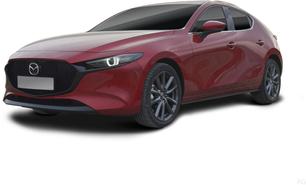
How is it that the current Mazda 3 is already five years old? This hatchback is still stunning, the sort of car you look back at when walking away.
The shape is sleek and almost coupe-like, with a shark-like nose, cab-backward-style long bonnet, upswept shoulder line and a fastback silhouette.
More importantly, it’s the way the light dances across the sculptured sides that draw the eyes in. Bereft of clutter, it makes you wish all mainstream manufacturers had the courage to be so daring.
We’ve said it before – the 'BP'-generation Mazda 3 (Axela in Japan) is the brand’s boldest C-segment hatch since the 1993 'BA' 323 (Astina/Lantis/323F).
But there’s a price to pay for such timeless beauty…
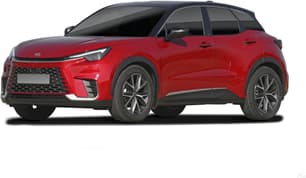
The regular LBX is a spunky little car with a lot of road presence. I’ve been a fan of the exterior design since first seeing one in the metal. Short overhangs, nuggety proportions, well designed tail-lights and a pert rear end - it all works for me.
For the Morizo RR, Lexus has wisely exercised some restraint when it comes to exterior flourishes. It is nowhere near as wildly styled as the Yaris GR, for example. And that makes sense. This is, after all, a Lexus.
It’s a smart move, too. It’s subtle but still has intent.
The Morizo RR gains styling tweaks unique to the grade including 19-inch forged aluminium wheels, red brake calipers, a different front and rear bumper design, a rear spoiler, air intakes front and rear and a dual exhaust.
Inside, the main differences are the inclusion of red stitching, sports seats, some unique inserts, and the use of synthetic suede on the centre console, dash and doors.
The LBX interior design is functional and premium with nice materials throughout.
There is a price to pay for all this quasi-coupe styling flair, and that’s a comparatively snug-feeling interior, though you’d never call it cramped.
Actually, the Mazda 3 is no less spacious than most of its competition in all but one area, with enough room even for 200cm drivers, along with sufficient shoulder width and ceiling height to match.
If you’re really tall, maybe that missing sunroof isn’t such a bad thing, after all.
Sat so low-down on cushy, enveloping front seats that offer plenty of comfort and support, this is the anti-SUV. Maybe Mazda should have called this the MX-3.
Sporty and spot-on, the driving position is a laid-back affair, with an emphasis on better ergonomics, as emphasised by the thoughtful placement of switchgear that’s all within easy reach, ahead of a beautifully flowing and layered dash. Proudly Japanese in flavour, it brings to mind functional minimalism.
Drilling into some of the 3’s finer interior details, the analogue-look digital instrumentation is super-legible, ultra-classy and gorgeously lit at night. As previously mentioned, the dials and surrounding air vents are reminiscent of the later Porsche 944 and 968.
It’s not just all for the sake of aesthetics, either.
Yes, it’s lovely, but the thinned-rim three-spoke steering wheel feels great to grip, with nifty little paddle shifters that are a delight to prod.
Same goes for the physical volume knob and climate-control buttons, sidestepping the need to get distracted and frustrated by virtual sub-menus.
And having a conventional gear lever with old-school Tiptronic-style shifts suits the 3’s athletic vibe.
Plus, forward vision is A-OK, ventilation is faultless, storage is better than you might expect, and the fit and finish is as good if not better than any of this 3’s German premium opponents.
Out back, the split-fold rear backrest is set at a comfortable angle, the cushion is well padded, and you’re provided with USB ports, air vents, and an armrest with two cupholders. More thoughtfulness.
But while knee room is fair, rear headroom isn’t great if you’re tall or wear a beehive, as the falling ceiling line reveals.
Vision out is limited by that rising window line and fat pillars. Getting in and out of the back requires some contortionist moves. And the small windows mean it can be gloomier in the back than a Smiths album.
Finally, at just 295 litres, the 3’s cargo capacity is disappointing. Sure, it eclipses the Corolla hatch’s 217L cubby, but other rivals are far larger back there.
At least the floor is wide and flat and there are 60/40-split backrests for cabin access for longer items.
Note that a space-saver spare wheel lurks underneath. Mazda argues there’s always the closely-related CX-30 if you need (slightly) more space (317L).
Meanwhile, at the other end of the 3…
The LBX is a compact little SUV so if you’re after something to fit a family of four, look elsewhere. But if you don’t need the space, it’s a great city car.
Up front it’s easy to find the right driving position thanks to all of the adjustability of the seat and steering wheel.
Those sports seats are supportive and hug the body, but not too much as some of Lexus’ European rivals do. They’re also very comfortable - almost edging firm but never uncomfortable.
The Lexus multimedia system is functional and has an easy-to-navigate menu set-up, but lacks any pizzazz. Better graphics would help with engagement.
Storage wise, there’s a wireless charger slot at the bottom of the centre stack, a cupholder with a narrow slot for another device next to it, and a deep but narrow secure central storage bin with another cupholder.
You might not fit big bottles into the door bins as it’s pretty tight.
I wasn’t sure about Lexus’ one-touch interior and exterior door handles when they first rolled them out, but I now think it adds a classy point of difference to its rivals.
That second seating row is tight, especially for taller folk. I had just enough legroom (but plenty of toe room) sitting behind my 183cm (6'0") driving position, but I wouldn’t want to sit back there for a long road trip. Headroom, however, is ample. My noggin didn’t even scrape the headliner. You’d struggle to fit three adults back there but a couple of kids should be fine.
Amenities include a pair of USB-C ports and two map pockets, but the rear row lacks any adjustable air vents or a fold-down centre arm rest. And the bottle holders in the rear doors won’t fit much at all.
The rear row folds 60/40 and if you need to haul lots of luggage or shopping, you’ll definitely need to lower that rear row because the boot is small.
Lexus says it can swallow 266 litres, which is tight. There’s no spare wheel of any kind, just a tyre repair kit.
Mazda has rationalised the MY24 3 range, with fewer grades and no more manuals, sadly.
The pretty little piece of automotive industrial design you see here is the mid-range Evolve SP Vision, which sounds less like a car and more like a posh hairdryer from Vidal Sassoon.
Priced from $36,520 before on-road costs (or about $41K drive-away before you start haggling), this Mazda 3 is a sporty and well-equipped alternative to the likes of the speedy Hyundai i30 N-Line Premium, spacious Kia Cerato GT Turbo, new Subaru Impreza AWD 2.0R and evergreen Toyota Corolla ZR. All cost roughly the same money.
The thing is, do Mazda’s upmarket aspirations mean the 3 possesses the ride quality and chic to embarrass at times substantially more expensive hatchbacks with premium pretensions? We’re talking rivals like the BMW 1 Series, Mercedes-Benz A-Class, Peugeot 308 and VW Golf, here.
Stay with us, because we reckon you might be surprised by how far the 3 has come since its humble 323 predecessors.
Anyway, this version comes with most of the good gear, including a full suite of driver-assist safety tech like front and rear Autonomous Emergency Braking (AEB), blind-spot alert, lane-keep assist and adaptive cruise control, as well as keyless start and walk-away lock, powered driver’s seat with memory, 360-degree camera views, a head-up display, digital radio, sat-nav, auto tilt/folding exterior mirrors, dual-zone climate control, Bluetooth phone/audio connectivity and 18-inch alloys.
Oh, and for 2023, an upgraded version introduces a smartphone charger and wireless for the Apple CarPlay/Android Auto function, along with USB-C port access front and rear.
What’s missing at the Evolve SP Vision’s price point? Some mainstream rivals offer leather and a sunroof, available respectively in the more-expensive GT Vision, from $40,000, and flagship Astina grades, from nearly $42,500.
Still, that’s quite a lot of small car for the money, given the quality of the presentation and design. Speaking of which…
The regular Lexus LBX line-up consists of three hybrid grades (Luxury FWD, Sports Luxury FWD and AWD) running from $47,550 to $56,990, before on-road costs.
Naturally the Morizo RR takes its place as the flagship of the LBX line-up and is priced accordingly. It will cost you $76,490 which is close to $20K more than the entry grade.
Purely looking at SUVs, rivals could include the BMW X1 M35i ($92,300) or Volkswagen T-Roc R ($64,290), while performance hatchback competitors might include the Mercedes-AMG A35 ($87,900) or VW Golf R ($70,990). Either way, the Lexus sits somewhere between the two, but closer in price to the VWs.
There are other offerings that cost quite a bit more than the Lexus.
For that money you get leather-accented sports seats, aluminium pedal trims, 19-inch forged alloy wheels, a 9.8-inch multimedia touchscreen, wireless Apple CarPlay and Android Auto, sat nav, a 12.3-inch digital driver display, dual-zone climate control, a powered tailgate and heated front seats.
Other gear includes a 13-speaker Mark Levinson premium audio system (with a sub-woofer), five USB-C ports, access to 'Lexus Connected Services', synthetic suede trim, auto power-folding and dimming exterior mirrors, an auto-dimming interior rear view mirror, eight-way power driver’s seat adjustment, rain-sensing wipers and keyless entry and start.
Two-tone paint will set you back an extra $1750.
On top of the long safety features list (see the Safety section), there’s nothing obvious missing from the features list. Lexus has always offered sharp value-for-money and that remains the case with the Morizo RR.
When you think about it, shoehorning a big torquey engine in a light and agile small car is a recipe for fun. Ford did just that with the Escort RS2000 in the 1970s… and Mazda’s now an expert at it, too.
The engine in question is the G25, a 2.5-litre four-cylinder naturally aspirated twin-cam petrol engine, delivering 139kW of power at 6000rpm and 252Nm of torque at 4000rpm.
As this Evolve SP Vision hatch tips the scales at 1415kg, it makes for a healthy, and consequently very lively, power-to-weight ratio of over 98kW/tonne.
That’s if you decide to use all the available revs, which the six-speed torque-converter auto makes great use of.
Driving the front wheels, it offers a 'Sport' mode to extend the revs even more, which is keeping in line with this Mazda’s sporty character.
Less so is the company’s decision to ditch the old multi-link independent rear suspension system a few years back for a more prosaic torsion beam arrangement. We’ll get to how that affects ride and handling in a moment.
Powering the LBX Morizo RR is an excellent 1.6-litre turbocharged three-cylinder petrol engine, which is the same unit found in the Toyota GR Corolla and Yaris hot hatches.
The Lexus loses some power and torque compared with those models so the outputs are 206kW and 390Nm. The Toyota cousins offer 221kW/400Nm each.
This engine is paired with an eight-speed torque converter automatic transmission and it has electrically controlled all-wheel drive with a Torsen limited-slip differential.
You can race from zero to 100km/h in just 5.2 seconds.
Mazda claims the G25 averages 6.6L/100km on the combined cycle… for a carbon-dioxide emissions rating of 154g/km. On a 51L tank, that gives a potential distance of over 940km!
Driven good and hard in our hands, we managed 7.5L/100km, which isn’t bad given the speed and conditions it was subjected to.
Plus, the Mazda’s happy on 91 RON 'standard' unleaded petrol.
While the hybrid versions of the LBX are known for their fuel efficiency, it’s less of a focus for the Morizo RR performance model.
It has an official combined (urban/extra-urban cycle) fuel figure of 9.2 litres per 100 kilometres, which is more than twice the figure of the hybrid.
CO2 emissions sit at 209g/km and the LBX has a 50-litre fuel tank. You will need to fill up on the expensive stuff though as the Morizo RR requires 98 RON fuel. Theoretical range between fills is around 540km.
Ask yourself. What do you want from a new small car?
Since the first Familia of the early 1960s, Mazda’s been at it constantly, through the 1300 and 323 eras and into the modern age of the 3.
The Hiroshima brand knows its stuff. Space, practicality, comfort, ease, reliability and affordability. But a small car has to offer more, specifically in the way it makes the owner feel.
That’s why, while the Focuses, Lancers, Astras and Pulsars are gone, the 3’s still here. And it isn’t just the lush visuals inside and out that are, well, sensory-rich.
As older Alfa Romeo owners know, there’s something special about an engine that sounds alive, and the moment you push the 3’s starter, it purrs into life. That’s the first clue.
Slot the refreshingly old-school lever into Drive, and the G25 leaps into action, and, if you need it to, will keep pulling forward strongly, engine buzzing, like it’s on a mission.
That describes the torquey urge of this big 2.5L four, paired perfectly with the sensibly-geared auto.
We miss Mazda’s magnificent manual immensely, but the 3’s instant response reflects its favourable circa-100kW/tonne power-to-weight ratio.
And, as we’ve harped on in the past, the twin-cam unit’s extra oomph beyond 4000rpm delivers muscular high-speed responses akin to a good turbo – or a great old-school Alfa. You can keep your laggy dual-clutch transmissions, Europe.
Now, sweet, smooth and speedy performance is one thing, but having the chassis tuned with precise and fluid steering for tactile handling, and confident roadholding, backed by nuanced driver-assist and traction controls, are another.
There is a consistent and unifying control to the 3’s linear and forgiving dynamics, reminiscent of past masters like the Focus (and today’s brilliant Peugeot 308) that makes it a joy to drive enthusiastically through fast corners, with the knowledge that it won’t suddenly snap-oversteer and bite an unalert driver back.
For a Mazda, the ride is quiet enough, but there is still some droning transmitted through the cabin, via the Bridgestone Turanza (215/45) tyres, on coarse-chip bitumen surfaces.
And while suspension comfort is pretty impressive for the most part, larger bumps reveal the torsion beam’s limitations, as the car can occasionally thud over them in a way that we remember the multi-link rear end wouldn’t.
Anyway, what we’re saying is that, overall, the 3 Evolve SP Vision is an immersive and interactive driving experience that is right up there with the best of them.
Brawny performance, exquisite agility and a refinement that, collectively, have eluded every small Mazda in living memory until this generation’s 2019 debut. This 3’s right on the money. Still.
I had high expectations for the LBX Morizo RR and I’m pleased to say they were met.
What a phenomenally capable little car.
Lexus is at pains to point out that its mechanical cousins - the Toyota GR Corolla and Yaris - are motorsport bred and therefore more raw and hardcore.
The premium brand knows it needs to be able to attract new buyers with a car like this, while also satisfying its loyal base.
Lexus did this by building a hot hatch (okay, it’s an SUV) that you can easily live with day to day.
I spent an enjoyable few hours behind the wheel of the Morizo RR on a stunning Autumn day in Victoria’s Yarra Ranges driving on some incredible roads. The twists, bends, undulations and more showcased how tight this car is.
First up that engine is an absolute gem, and I don’t miss the extra kilowatts found in the Toyota models. There’s very little turbo lag and the LBX picks up pace quickly but in a focused, fun manner.
The engine note is also a delight to behold, especially when you push it hard. Although on coarse chip roads a fair bit of road noise creeps in, to the point that it's boomy.
The transmission is a perfect pairing for the engine, too, offering slick shifts without holding gears unnecessarily. I didn’t miss the manual box found in the Toyotas, either. But the paddle shifters and a true manual mode (it won’t shift unless you flick the paddle) adds to the experience.
The brakes are strong but not too pinchy and the steering is as sharp as you’d hope, while offering just enough weight.
Then there’s the grip. The all-wheel drive system “automatically distributes the front-rear torque according to road conditions and grip”, according to Toyota.
That AWD grip always inspires confidence during dynamic driving in a car like this and the LBX sticks to the tarmac like nobody's business. Despite some damp sections of road higher up the ranges, no slip was detected. It feels glued to the road.
If that’s not enough, the Lexus surprises with its compliant and even comfortable ride quality. Many hot hatches (or hot SUVs) have a firm ride due to a chassis set-up geared to performance driving.
Somehow Lexus has ensured the damping settings shield the occupants from the worst bumps. Only deep potholes make their presence felt.
And that’s the beauty of this car. It feels so beautifully engineered, with a clear focus on performance, but it’s not a brutal experience. You never feel like you could easily lose control in this thing. You can punt it into a tight bend and feel confident it will stay the course.
Tested way back when this generation was new in early 2019, the Mazda 3 scored a maximum five-star ANCAP crash-test rating.
On the driver-assist front you’ll find front and rear AEB (with a working range of 40km/h to 200km/h) with pedestrian and cycle detection available between 10-80km/h, while the 'Forward Collision Warning' operates from 40-200km/h.
Blind-spot monitoring, lane departure warning, lane-keep assist, 'Forward Obstruction Warning', rear and front 'Cross-Traffic Alert', 'Secondary Collision', auto high beams, breakaway pedals, adaptive cruise control (with full stop/go functionality and cruising/traffic support), parking sensors front/rear, 360-degree round-view monitor, reverse camera, traffic sign recognition, driver monitor and tyre-pressure monitors are also included.
The lane-keep support systems work between 55-200km/h.
Seven airbags – front, side, curtain and a driver’s knee bag – are fitted, along with anti-lock brakes with 'Electronic Brake-force Distribution', 'Emergency Brake Assist', stability control, traction control, hill-start assist are also fitted, seat-belt pretensioners, and two rear-seat ISOFIX points as well as three top tethers for child seat straps.
ANCAP awarded the hybrid versions of the LBX a maximum five-star rating in 2024, but the turbo-petrol Morizo RR is unrated.
The standard safety list is lengthy and includes auto emergency braking with pedestrian (day/night), cyclist (day/night) and motorcyclist (day) detection, intersection collision avoidance, adaptive cruise control, emergency steering assist, lane trace assist with lane departure warning, speed sign detection, blind spot monitoring, rear cross-traffic alert, safe exit assist, Lexus 'Emergency Driver Stop' (automatically decelerates the car within its lane if the system detects the driver has become incapacitated), front and rear parking sensors, a reversing camera with camera washer and seven airbags including a front centre bag.
Mazda offers a five-year/unlimited kilometre warranty, with five-years roadside assistance… and that’s nothing special nowadays.
Service intervals are at 12 months or every 15,000km.
A fixed-price service scheme is available, averaging out to $434 annually over the first five years. Mazda shows pricing right up to 16 years and 240,000km on its website.
Lexus covers the LBX Morizo RR with its five-year, unlimited kilometre warranty and capped-price servicing for five years at a cost of $695 a service.
The schedule for servicing is tight at every six months or 10,000km, whichever occurs first, so you’ll be at the dealership a bit with this one. These are the same servicing terms as the GR Corolla and Yaris.
Lexus’s 'Encore' owner benefits program includes some cool stuff, too, like a valet parking service at certain venues, and you can even swap your Lexus for a different model for a set amount of time with the On Demand service.
Lexus Encore also offers exclusive access to events and venues, as well as special offers at hotels and restaurants.