What's the difference?
Driving a whopping great SUV down the straight on a race track at more than 200km/h sounds like fun, but it actually feels a bit wrong, like entering a baby elephant in a dog show.
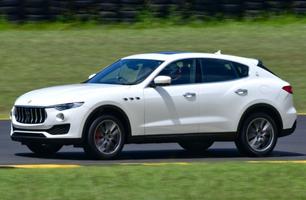
These are strange times, of course, and the Maserati Trofeo Levante is a suitably strange vehicle - stylish, classy, expensively appointed family hauler that also has the heart and soul of a race car.
Indeed, while performance SUVs are an increasingly commonplace vehicle, the Levante - which was actually getting along in the tooth as a model before this significant upgrade - has higher performance credibility than most.
That's because it has a big Ferrari V8 driving all four of its wheels and delivering a properly supercar-like 433kW and 730Nm.
It's not what you might call a typical Maserati buyer's car, but then only those who know what the Trofeo badge stands for - shouty insanity, basically - will be interested in this end of town. It is a lot of car, but is it worth the large load of money on the sticker ($330,000)?
In the realm of family friendly mid-size SUVs, few names have the same reputation as Mitsubishi’s Outlander.
While this new one looks almost identical to the previous version, it’s hiding some serious, Australian-flavoured changes under the skin.
But in a segment now full of not only upgraded mainstream rivals, but also new cut-price alternatives from China, does such a modest upgrade to the Outlander do enough to deserve your consideration in such a crowded market?
We went to its Australian launch to find out.
Maseratis are built for a fairly specific niche buyer; someone with a lot of money, someone slightly older and certainly someone who likes the finer things in life and appreciates Italian style, quality and heritage.
They are not, typically, the kind of buyers who want to tear around race tracks like fiends in big, shouty SUVs. But apparently there is a niche within the niche of Maserati fans who do, and they are willing to invest big dollars in vehicles wearing the Trofeo badge, like this Levante.
It might seem a slightly strange creation, a track-mad SUV with a screaming Ferrari engine, but surprisingly, it really does work.
Mitsubishi has leaned into its strengths with this Outlander update, spending its money in subtle areas to upgrade what was already a widely appealing mid-size SUV.
The local tuning has made a notable difference to the refinement and comfort of this version, while subtle updates to the software and interior trim help to refine things even further.
If you’ve had an Outlander before, you’ll love this one, although it doesn’t help the brand to challenge new players on the value front. This leaves you with the decision of whether to pick a brand with the reputation and network of Mitsubishi, or roll the dice on a far more affordable new player.
For what it’s worth, it’s genuinely tough to pick a sweet spot here. I think the best picks are at either end of the spectrum, with the ES being outstanding value, and the Exceed being particularly plush.
Note: CarsGuide attended this event as a guest of the manufacturer, with travel, accommodation and meals provided.
While the other two Maseratis to get the Trofeo treatment - the Ghibli and Quattroporte sedans - are undeniably lovely, the Levante is not quite as pretty.
Admittedly, for an SUV, it looks very good, and the Trofeo touches - that big, nostrilled bonnet, the red gills on the sides, the carbon, the badges - really do lift its game to another level.
Overall, though, the Levante has just never felt beautiful enough to me to be a Maserati. These guys really do style well, as you'd expect from a premium Italian brand, but making an SUV sexy is beyond even them.
I'll grant you, it does look good from front on, but at the rear they just seem to have run out of ideas.
Credit is due for feeling properly special inside, however.
Blink and you’ll miss the changes. Actually, squint and you still might miss them. Aside from the eye-catching new 20-inch wheels on the Exceed and Exceed tourer grades and the new ‘Moonstone Grey’ paint colour, it’s hard to tell the new Outlander apart from its predecessor.
Look closer and there’s new lower garnish designs front and rear, a tweaked grille and a smoked appearance for the rear tail-light clusters.
It’s very subtle stuff, but Mitsubishi has chosen to spend its time and money on upgrades on unseen areas.
For example, the bonnet is now steel rather than aluminium, which helps with noise insulation (and also has the side-effect of removing the high-speed ‘fluttering’ effect the aluminium bonnet had on the previous version), there’s additional sound insulation throughout the car, and cladding in the transmission tunnel to make the cabin a quieter place.
Back on the topic of appearance, though, the dash and console has also been tweaked a little. For example, the new screen looks a bit more contemporary, with a much smaller bezel and more attractive software. The console has been rearranged to move the bottle holders to one side of the electronic gear shifter, which makes for a larger centre console.
High-grade leather seat trims also now have alternate patterns, but the range follows the same trims, from cloth on the ES and LS, while the Aspire gets a microsuede and synthetic leather blend, while the Exceed and Exceed Tourer get the ‘high-grade semi-aniline’ leather trim.
If you've got to move five people in a genuine hurry, the Levante is a pleasant way to go about it.
There's plenty of head and shoulder room, the seats, while firm in the front, are pleasant to the touch and supportive and there's a 580-litre boot with an electric tailgate and split-folding seats.
The boot feels properly spacious, too, with a 12-volt power outlet and four tie-down points. You won't, however, find a spare wheel out there, so serious off-roading is out (although it probably was already if you look at those expensive wheels).
There are huge door pockets with room for bottles and two big cup holders in the front. The centre-console bin looks lovely, it's all carbon fibre, but is quite small.
There are also three USB points, one in the front and two in the rear, and Apple CarPlay and Android Auto connectivity.
The previous Outlander was already known for having a spacious and versatile cabin, and this continues for the new car with a few small tweaks.
The width and satisfying seat positioning continue, and seats in all grades are generous and comfortable, but particularly the leather seats on the Exceed and Exceed Tourer grade we tested.
Adjustability is good in all positions, and the digital instrument cluster has an attractive dual-dial layout and functional display options. While not the best in class, it’s far better than many rivals.
The touchscreen’s new software is meant to be faster, but I found it a bit laggy still, although the integration of Google’s API into the navigation suite is an excellent tweak, making it relevant and useful for much longer.
The tweaks to the centre console make the area more space efficient and useful, but the new cupholders seem strangely shallow, potentially causing large bottles to tip. The tweaked centre console box is nice and large, and the wireless charger is nice and accessible, although its surface is not quite rubbery enough to stop your phone from leaving the charging area in the corners.
The back seat is noticeably stadium – you sit a fair bit higher than in the first row, which eats into headroom in cars equipped with a sunroof for adults. However, width is good, as is the seat comfort.
The rear doors open nice and wide, which should make fitting a child seat easy enough, and the floor is surprisingly flat, too, which makes the middle position more useful.
The third row, which I sampled in an Aspire grade, is both hard to get into and tight once you’re in there. The second row can slide forward on a rail, offering just enough room for me, at 182cm tall, to fit back there, with my knees hard up against the seat in front, and my head nearly touching the roof.
It is for this reason Mitsubishi calls seven-seat versions ‘5+2’. Good for kids, maybe, but not adults for any extended period of time.
The boot is enormous with two rows in use (485 litres in five-seat versions, or 478 litres in seven-seaters), and for this update, the space now has a wider aperture that should make loading objects easier. Space with seven seats up is 163L. Five-seaters get a full-size spare under the floor, while seven-seaters get a space saver.
Braked towing capacity is a middling 1600kg for petrol-powered variants. The brand says not many Outlander buyers are focused on towing as a key capability for the mid-sizer.
I'm sorry, but $330,000 for an SUV, of any kind? Personally I can't see the value, but then personally, as we'll discuss below in the Design section, I can't see the attraction.
This is one of the most expensive SUVs money can buy, well above things like Range Rover Sport SVR ($239,187) or even Porsche Cayenne Turbo Coupe ($254,000), although a pricier Ferrari one is surely on the way.
You'd want a lot for that, and the way it drives and sounds, thanks to that Ferrari engine, accounts for quite a few dollars.
There's also an undeniably high-quality feel to everything you touch on the car, inside and out, and a vast quantity of carbon fibre everywhere as well.
Other highlights include the 21-inch machine polished wheels, an 8.4-inch touchscreen with Navigation and DAB radio, full matrix LED headlights, and incredible Pieno Fiore natural leather, “the best the world has ever seen”, as Maserati says.
The lovely if firm front seats are heated and ventilated, sporty and 12-way adjustable, with Trofeo logos stitched into the headrests. The rooflining is lovely Alcantara, the steering wheel is sporty and features carbon-fibre shift paddles, ad the stereo system is Harman Kardon Premium and has 14 speakers.
And even the rear seats are heated. It feels expensive, and it should. But still, $330K?
Let’s get the bad news out of the way first: prices are up across the whole Outlander range.
The increases are modest, contained to between two to three thousand dollars across this mid-size SUV’s sprawling eight-variant range.
It sounds like an overwhelming number of versions but the Outlander is split across five grades in front- or all-wheel drive, with either five or seven seats.
Check out our pricing table below for the detailed prices before on-road costs:
Traditional rivals in the 5+2 mid-size SUV category include this model's platform-mate Nissan X-Trail (from $38,025 - $59,265) and the Honda CR-V ($41,900 - $59,900), with the Hyundai Santa Fe ($53,000 - $72,500) and Kia Sorento ($50,880 - $84,660) being a price-bracket above.
The biggest issue is the Outlander is facing increased competition from models like Chery’s Tiggo 7 (as a five-seater), which can be had for as low as $29,990 drive-away! Even the most expensive version of the Tiggo 8 (seven-seater) in plug-in hybrid form costs the same as a mid-grade Outlander, at $49,990 (d/a).
Options like this put the choice back in your hands. You can choose a brand with the heritage and support network of Mitsubishi, or you can go with the value of a new player yet to put those runs on the board.
Although it has an almost identical visage to the previous car, there are some major upgrades hidden below the metal. Sure, there’s a tweaked equipment list, but importantly, there’s a completely revised ride and handling tune, which was developed by Mitsubishi right here in Australia using local expertise.
It’s a similar program to the successful ones undertaken by Kia and Hyundai in recent years to improve the handling of their cars, and Mitsubishi in Japan was impressed enough with the depth of the changes that most of them have been adopted to the global tune for the car.
On the topic of standard equipment, LED interior lights and the 12.3-inch digital dash have been made standard across the range, there is now seat ventilation to join the seat heating for the front two positions in the top Exceed and Exceed Tourer grades, while the upper mid-spec Aspire grade scores front seat heating and a heated steering wheel.
The 12.3-inch multimedia screen has also been upgraded, featuring a smaller bezel and more processing power for a faster response rate, as well as a tweaked software suite with a new layout. This screen also hosts wireless Apple CarPlay and Android Auto across the range.
In addition, there’s also the introduction of the Mitsubishi Connect phone app, which features a range of safety and security features, as well as the ability to remotely control things like the ignition, climate system, navigation and locking system.
Across the range the audio system has also been upgraded to an eight-speaker Yamaha-developed system, with the top-spec Exceed Tourer grade scoring a 12-speaker Yamaha system with up to 1650W of power.
The interior now uses higher-quality materials, according to the brand, with extended upholstery across the range. The top-spec Exceed Tourer also scores a new brown interior colour.
A 360-degree parking camera is now standard across the range, and the safety suite also includes the driver monitoring system and traffic sign recognition system as also used in the Triton.
The plug-in hybrid version, which is what the Outlander is arguably most famous for, is not yet available, but Mitsubishi tells us it will arrive in a few months time, at very least before the end of 2025, and it, too, will carry an Australian-developed ride and handling tune.
This will be the last time Maserati gets a proper Ferrari engine like this a 3.8-litre twin-turbo V8 shouty monster, which is good for 433kW and 730Nm.
The future, as is the case everywhere, is going to be more electric and less noisy. For now, anyone who can should enjoy this V8 masterpiece, which drives all four wheels through Maserati's Q4 on-demand all-wheel drive system via a limited-slip rear differential and uses an eight-speed automatic transmission.
Its claimed 0 to 100km/h time is 3.9 seconds, which puts it in what used to be super-car territory, and is still very quick indeed, while top speed is an unimaginable 304km/h.
The petrol-powered Outlander soldiers on with a drab non-turbo, non-hybrid 2.5-litre four-cylinder engine, mated to a continuously variable automatic transmission.
The brand calls this combination “proven” and it’s hard to argue given it hasn’t cropped up with any major reliability issues in the pre-facelift car.
Still, it produces a middling 135kW/244Nm, not as punchy as many turbo options, and nowhere near as efficient as hybrid alternatives.
Those seeking a more powerful fuel-sipping option may want to wait for the PHEV version arriving later this year.
The official claimed fuel economy for the Maserati Levante Trofeo is 13.5 litres per 100km, but good luck with that.
A more realistic number would probably sit somewhere above 17 litres per 100km, and we would have easily exceeded 20 litres while driving it like lunatics around a track.
But you just paid $330K for an SUV, what do you care about fuel economy?
As a result of its relatively old-school sounding powertrain, fuel consumption isn’t at the forefront of the petrol-powered Outlander, with official consumption ranging between 7.5L/100km for the lightest five-seat ES 2WD version, to 8.1L/100km in the heaviest, top-spec Exceed Tourer AWD.
C02 emissions are also on the high side, which the brand will no doubt be off-setting with the new PHEV version which will offer even more emissions-free driving range than before.
One benefit of this long-serving engine, though, is it can be fed entry-level 91RON unleaded, better for the back pocket. The petrol-powered Outlander has a 55-litre fuel tank.
We got to drive all three Trofeo-fettled Maseratis on track at Sydney Motorsport Park, and before that on the road, where the Levante felt very pleasant, and pleasantly expensive at all times.
As you might expect, a vehicle with 433kW is difficult to fully appreciate on public roads, although there was the occasional and exciting change to give it a quick, loud blat between gears.
It only takes hearing that engine note, and feeling that torque surge, a few times to see why someone might fall in love with this car, or at least this engine.
Out on the track, the rear-driven Ghibli and Quattroporte, which share the Levante's engine, were surely the more fun and frenetic things to drive, but there were those who chose the Levante as their best of the three, even for circuit driving.
There's no doubt that its on-demand all-wheel-drive system, which is biased towards the rear but asks the front wheels for help when required, made it feel the most planted, and the safest, through fast and slow bends.
There's a definite sense that its engine is being asked to work the hardest, though, to push all that bulk through the air (although its brakes never seemed to fade, which is impressive with more than two tonnes of SUV to stop).
While the big, deafening V8 is willing and keen to rev all the way to 7000rpm (where it bangs on the redline waiting for your upshift, if you're driving in manual mode - I do like that), it started to make large sucking sounds towards the top of each gear, as if it was desperately trying to get more oxygen in.
It genuinely sounded different to the other two Trofeo cars, which is odd, but perhaps they just weren't as near their limits. That bulk also slowed it slightly in terms of top speed down the straight, but it still exceeded 220km/h with ease.
What should be said is that I was genuinely shocked at how good the Levante Trofeo was around a track. So much so I asked to have a second go, just to make sure I wasn't going mad.
Sure, it makes no sense to me personally, and I don't know why anyone needs an SUV that's good on a track, but if you do, I can recommend the Levante for sure.
That hugely enjoyable engine is just too much fun, although it's even better in a sedan like the Ghibli...
The Australian team had a significant amount of input on the driving dynamics of this new Outlander, but does it make a big difference behind the wheel?
We were granted the chance to drive the old one alongside the new version to find out, and the changes are significant.
Overall, the character of the car hasn’t been fundamentally altered. This is still a somewhat plush and soft-around-the-edges family SUV, but redeveloped new suspension parts and even very minor, nerdy modifications like the thickness of sway bars have added up to a much more pleasant vehicle to spend an extended amount of time in.
The first thing you’ll notice is the retuned steering. Mitsubishi’s engineers tell us the tweaked feedback was all down to the software in the rack, and it’s a big difference, upping the firmness of the steering at low speeds, keeping the vehicle on track with more confidence while heading straight, and also removing a slight twitchiness with sudden adjustments.
Next is the cabin ambiance. The new Outlander is a relatively quiet place to be thanks to the extra insulation throughout. It combines with the new steering to give the car much more of a sense of heft than before. The engine is reduced to a distant thrum, and the road is damped away for the most part. Mitsubishi says the 20-inch wheels are a particular hit with buyers, which to me is a shame because I’m willing to bet it’s particularly comfy on the lower-grade tyres.
Elsewhere, the Outlander has a softer initial response to bumps thanks to retuned shocks, and the reduced width of the front sway bar makes for less ‘head toss’ for front seat occupants.
Does it make a significant difference? Yes. The new Outlander is all-round better balanced and better suited to our road conditions. It might not have the sophistication of more expensive options, and it still might be a tad off what the also balanced-and-comfortable RAV4 offers, although it will be interesting to get one back to see how it compares to rivals in a like-for-like test.
Just expect a much more comfort-oriented option than some rivals. These changes don’t make the Outlander as fun to drive as a Mazda CX-5 or a Skoda Kodiaq. For example, while the 2.5-litre engine and CVT combo provides a surprisingly urgent initial response, it's a dull, rubbery power application from there on.
Maserati's safety offering on the Levante includes six airbags, a reversing camera and 360-degree overhead camera, parking sensors front and rear, adaptive cruise control and Blind Spot Detection, Forward Collision Warning Plus, Pedestrian Detection, Lane Keep Assist, Active Driver Assist and Traffic Sign Recognition.
There is no ANCAP rating for the Levante as it's not been crash tested here.
The Outlander has a robust array of active safety kit, with all the key gear like autonomous emergency braking, lane support, blind-spot monitoring and rear cross-traffic alert available across the range. Traffic sign recognition and driver attention monitoring is now available from the new Triton, however it is also worth noting some relatively minor items are only available on higher grades.
The ES and LS grades miss out on adaptive high beams, traffic jam assist and steering assist (although they maintain lane departure warning and lane-keep assist).
Mitsubishi is hoping the updated Outlander will qualify for a continued five-star ANCAP safety rating held by the pre-facelift model.
During our drive we also found the lane-keep and driver attention software (which was much-derided at the launch of the Triton) was reasonably well behaved, with the brand saying it had had significant software tweaks over time to make it less invasive. We’ll need to save our final verdict on this system for when we spend an extended time behind the wheel.
Maserati offers a three-year, unlimited kilometre warranty, but you can choose to buy 12-month or two-year warranty extensions, and even a sixth or seventh-year drive-train warranty extension.
When much, much cheaper Japanese and Korean cars are offering seven and even 10-year warranties, this is so far off the pace that such a fast vehicle should be embarrassed. And if you're buying something Italian, a better, longer warranty would seem like a must. I'd be negotiating at sale for them to throw the longer warranty offer in.
Maserati says servicing for the Ghibli has a "ball park costing of $2700.00 for the first three years of ownership" with a service schedule of every 20,000km or 12 months (whichever occurs first)
Also, "please note that the above is indicative only of the manufacturers basic routine service maintenance schedule and does not include any consumable items such as tyres, brakes etc or additional dealership charges such as environmental levies etc."
Mitsubishi continues to offer its near-industry-leading 10-year/200,000km warranty, conditional on the car being serviced at a Mitsubishi dealer. Otherwise, it reverts to a five-year/100,000km promise.
The 10 years of warranty is joined by 10 years of capped-price servicing required at 12 month or 15,000km intervals.
Prices are tame, varying between $320 and $680 per visit, for a total yearly average of $434. It’s not the cheapest yearly average out there, but most brands also don’t have capped price servicing extended this far, so it seems like a good deal regardless.