What's the difference?
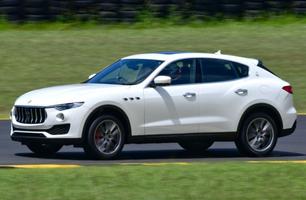
Driving a whopping great SUV down the straight on a race track at more than 200km/h sounds like fun, but it actually feels a bit wrong, like entering a baby elephant in a dog show.
These are strange times, of course, and the Maserati Trofeo Levante is a suitably strange vehicle - stylish, classy, expensively appointed family hauler that also has the heart and soul of a race car.
Indeed, while performance SUVs are an increasingly commonplace vehicle, the Levante - which was actually getting along in the tooth as a model before this significant upgrade - has higher performance credibility than most.
That's because it has a big Ferrari V8 driving all four of its wheels and delivering a properly supercar-like 433kW and 730Nm.
It's not what you might call a typical Maserati buyer's car, but then only those who know what the Trofeo badge stands for - shouty insanity, basically - will be interested in this end of town. It is a lot of car, but is it worth the large load of money on the sticker ($330,000)?
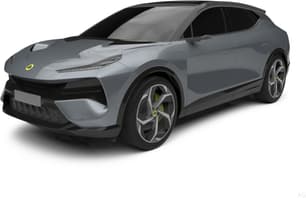
This is a Lotus - but it’s not like any Lotus you’ve ever known.
In fact, forget everything you know about Lotus, the British brand previously famous for small, lightweight sports cars is now evolving into something very different. Very, very different.
Under the control of Chinese automotive giant Geely since 2017, Lotus will shed its past and focus its future on all-electric, luxury vehicles like the Eletre we’re testing here.
The Eletre is a full-size luxury electric SUV designed to take on the likes of the Audi SQ8 e-tron, BMW iX and Mercedes-AMG EQE on the electric side, while also trying to lure buyers away from the likes of the Bentley Bentayga and Lamborghini Urus.
So, how does this radically different Lotus measure up to the brand’s reputation and stack up against its would-be competitors? Read on to find out…
Maseratis are built for a fairly specific niche buyer; someone with a lot of money, someone slightly older and certainly someone who likes the finer things in life and appreciates Italian style, quality and heritage.
They are not, typically, the kind of buyers who want to tear around race tracks like fiends in big, shouty SUVs. But apparently there is a niche within the niche of Maserati fans who do, and they are willing to invest big dollars in vehicles wearing the Trofeo badge, like this Levante.
It might seem a slightly strange creation, a track-mad SUV with a screaming Ferrari engine, but surprisingly, it really does work.
So, how does this radically different Lotus measure up to the brand’s reputation and stack up against its would-be competitors in the final summation? It doesn’t reset the benchmark in any area or stand out head and shoulders above its competition, but crucially for Lotus (and its overlords at Geely) it doesn’t feel behind its rivals.
For the Lotus diehards this is an unrecognisable addition to the brand’s legacy of great sports cars. But this new version of the brand is looking to reach fresh customers and the Eletre will likely grab their eye with its dramatic looks.
It’s a highly competitive luxury, performance SUV that should have anyone considering a similar sized Bentley, BMW, Mercedes, or even the Lamborghini taking it for a test drive. It has both elements - luxury and performance - that will appeal to those looking for something special.
While the other two Maseratis to get the Trofeo treatment - the Ghibli and Quattroporte sedans - are undeniably lovely, the Levante is not quite as pretty.
Admittedly, for an SUV, it looks very good, and the Trofeo touches - that big, nostrilled bonnet, the red gills on the sides, the carbon, the badges - really do lift its game to another level.
Overall, though, the Levante has just never felt beautiful enough to me to be a Maserati. These guys really do style well, as you'd expect from a premium Italian brand, but making an SUV sexy is beyond even them.
I'll grant you, it does look good from front on, but at the rear they just seem to have run out of ideas.
Credit is due for feeling properly special inside, however.
The design of an electric SUV is, by its very existence, interesting as it’s something a Lotus has never been before. This is the brand’s new flagship SUV, designed to take on the likes of everything from the Bentley Bentayga to the BMW iX and even the Lamborghini Urus, so it needs to make a statement.
The design is influenced by the Evija electric hypercar, which Lotus built to kick-start its Geely era, but goes a step further with its angular design. It certainly looks more closely related to the Lamborghini SUV than any Lotus you’ve seen before.
It’s different, it looks special and will likely turn heads, but to be blunt, if you’re a Lotus lover who has an affection for the Elise, Exige and the like then this really isn’t for you.
This is a modern evolution for Lotus, created to appeal to new customers with its edgy exterior design, utterly modern interior look and premium finish.
One disappointment is the way the plethora of safety sensors and cameras can disturb the lines of the car, making it look like an unfinished prototype from some angles.
If you've got to move five people in a genuine hurry, the Levante is a pleasant way to go about it.
There's plenty of head and shoulder room, the seats, while firm in the front, are pleasant to the touch and supportive and there's a 580-litre boot with an electric tailgate and split-folding seats.
The boot feels properly spacious, too, with a 12-volt power outlet and four tie-down points. You won't, however, find a spare wheel out there, so serious off-roading is out (although it probably was already if you look at those expensive wheels).
There are huge door pockets with room for bottles and two big cup holders in the front. The centre-console bin looks lovely, it's all carbon fibre, but is quite small.
There are also three USB points, one in the front and two in the rear, and Apple CarPlay and Android Auto connectivity.
The modern and premium design carries over into the cabin, with the model we were testing finished in grey leather and Alcantra with gold highlights. Which, along with the fact there’s leather and carpet inside, makes this feel more polished and luxurious than any previous Lotus.
But once you look beyond that you notice it’s not quite as practical as such a large SUV could be. Yes, there are a couple of cupholders in the centre console, but one is quite small and not practical for most cups/bottles.
There’s a small shelf for the wireless smartphone charging pad and the centre console box, but aside from that, there’s no other significant storage space in the front.
On the plus side the seats are comfortable and supportive, which is also true of those in the rear. The space in the rear is excellent, with plenty of head and knee room that will allow four adults to travel in comfort (adding a fifth to the middle seat would be a squeeze).
Those in the back also get access to the small screen that allows them to adjust not only the climate control but also the front seats. The rear seats also recline and there’s a pair of cupholders and USB-C ports.
The Lotus Eletre has a generous 688-litre boot, which is wide and deep. However, it comes at the expense of a spare tyre, with only a puncture repair kit provided.
I'm sorry, but $330,000 for an SUV, of any kind? Personally I can't see the value, but then personally, as we'll discuss below in the Design section, I can't see the attraction.
This is one of the most expensive SUVs money can buy, well above things like Range Rover Sport SVR ($239,187) or even Porsche Cayenne Turbo Coupe ($254,000), although a pricier Ferrari one is surely on the way.
You'd want a lot for that, and the way it drives and sounds, thanks to that Ferrari engine, accounts for quite a few dollars.
There's also an undeniably high-quality feel to everything you touch on the car, inside and out, and a vast quantity of carbon fibre everywhere as well.
Other highlights include the 21-inch machine polished wheels, an 8.4-inch touchscreen with Navigation and DAB radio, full matrix LED headlights, and incredible Pieno Fiore natural leather, “the best the world has ever seen”, as Maserati says.
The lovely if firm front seats are heated and ventilated, sporty and 12-way adjustable, with Trofeo logos stitched into the headrests. The rooflining is lovely Alcantara, the steering wheel is sporty and features carbon-fibre shift paddles, ad the stereo system is Harman Kardon Premium and has 14 speakers.
And even the rear seats are heated. It feels expensive, and it should. But still, $330K?
The Eletre is one of many electric vehicles to fall victim to the fluctuating market, receiving an enormous price cut before it officially went on sale in Australia.
The range was meant to start at $239,000, but the decision makers changed their minds and slashed it by a whopping $49,100 so the ‘entry-level’ Eletre is priced from $189,900, plus on-road costs.
The Eletre S, which is the subject of this review, also received a major price cut, dropping to $229,990 from its original $269,000, while the range-topping Eletre R is now priced from $279,990 rather than $315,000 as first announced by the brand.
As for what you get for that money, the Eletre comes standard with a range of premium equipment, befitting Geely’s aspirations for the Lotus brand. This includes matrix LED headlights, two-tone paint with a black contrasting roof, 20-inch alloy wheels, air suspension, keyless entry and start, a key card with NFC (Near-Field Communication) function, four-zone climate control, eight-way power adjustable front seats and heated front seats.
There’s also a KEF premium sound system, in-built eSIM card with 5G capability, a wireless charging pad as well as a 12.6-inch digital instrument panel and a 15.10-inch OLED central multimedia screen.
Stepping up to the Eletre S adds more goodies including 22-inch 10-spoke alloy wheels, an 'Active Aero Pack', 64-colour ambient lighting, automatic parking assist and a 23-speaker KEF 3D surround sound system.
At the top of the range, the Eletre R gets a more potent dual-motor powertrain, two-speed transmission, unique 22-inch alloys and a 'Quartz' interior theme.
This will be the last time Maserati gets a proper Ferrari engine like this a 3.8-litre twin-turbo V8 shouty monster, which is good for 433kW and 730Nm.
The future, as is the case everywhere, is going to be more electric and less noisy. For now, anyone who can should enjoy this V8 masterpiece, which drives all four wheels through Maserati's Q4 on-demand all-wheel drive system via a limited-slip rear differential and uses an eight-speed automatic transmission.
Its claimed 0 to 100km/h time is 3.9 seconds, which puts it in what used to be super-car territory, and is still very quick indeed, while top speed is an unimaginable 304km/h.
As mentioned earlier, there are three Eletre models, with the base model and S sharing the same powertrain, while the R gets a unique set-up.
The Eletre and Eletre S punch out a very healthy 450kW/710Nm from the dual motors that provide all-wheel drive traction. Despite being a full-size SUV, the two 450kW models are able to run 0-100km/h in only 4.5 seconds.
The Eletre R gets more powerful motors that make a staggering 675kW/985Nm, and crucially also get a two-speed transmission, which helps with acceleration. Lotus claims it has enough performance for the Eletre R to launch from 0-100km/h in just 2.9 seconds, a hugely impressive time for such a big and luxurious vehicle.
The official claimed fuel economy for the Maserati Levante Trofeo is 13.5 litres per 100km, but good luck with that.
A more realistic number would probably sit somewhere above 17 litres per 100km, and we would have easily exceeded 20 litres while driving it like lunatics around a track.
But you just paid $330K for an SUV, what do you care about fuel economy?
Despite the different powertrains, all three Eletre models have the same 111kWh battery but the driving range varies across each one.
The entry-grade model has a claimed WLTP range of between 535-600km, the Eletre S drops to 490-535km and the Eletre R can travel between 410-450km on a single charge.
On test we found those claims to be optimistic, certainly on the higher end, and especially if you head out of the urban environment and don’t maximise the regenerative braking to keep the battery topping up.
We got to drive all three Trofeo-fettled Maseratis on track at Sydney Motorsport Park, and before that on the road, where the Levante felt very pleasant, and pleasantly expensive at all times.
As you might expect, a vehicle with 433kW is difficult to fully appreciate on public roads, although there was the occasional and exciting change to give it a quick, loud blat between gears.
It only takes hearing that engine note, and feeling that torque surge, a few times to see why someone might fall in love with this car, or at least this engine.
Out on the track, the rear-driven Ghibli and Quattroporte, which share the Levante's engine, were surely the more fun and frenetic things to drive, but there were those who chose the Levante as their best of the three, even for circuit driving.
There's no doubt that its on-demand all-wheel-drive system, which is biased towards the rear but asks the front wheels for help when required, made it feel the most planted, and the safest, through fast and slow bends.
There's a definite sense that its engine is being asked to work the hardest, though, to push all that bulk through the air (although its brakes never seemed to fade, which is impressive with more than two tonnes of SUV to stop).
While the big, deafening V8 is willing and keen to rev all the way to 7000rpm (where it bangs on the redline waiting for your upshift, if you're driving in manual mode - I do like that), it started to make large sucking sounds towards the top of each gear, as if it was desperately trying to get more oxygen in.
It genuinely sounded different to the other two Trofeo cars, which is odd, but perhaps they just weren't as near their limits. That bulk also slowed it slightly in terms of top speed down the straight, but it still exceeded 220km/h with ease.
What should be said is that I was genuinely shocked at how good the Levante Trofeo was around a track. So much so I asked to have a second go, just to make sure I wasn't going mad.
Sure, it makes no sense to me personally, and I don't know why anyone needs an SUV that's good on a track, but if you do, I can recommend the Levante for sure.
That hugely enjoyable engine is just too much fun, although it's even better in a sedan like the Ghibli...
The challenge for Lotus, and its competitors, is to make its cars stand out from the pack despite the increasing similarities in performance brought on by electric powertrains.
Whereas in the past we could have assessed the difference between a Lotus-built V8 compared to a BMW manufactured V8 or even a Mercedes-Benz V12, these days all the electric models produce the same quiet, effortless punch.
So, it creates a generic driving experience in some regards, when what you’re hoping for at this end of the market is something special and different. And it’s important to note I don’t use the term ‘generic’ in a negative sense, but simply the Eletre has similar driving characteristics to the electric models from BMW, Mercedes-AMG and others.
Where it does give a hint to Lotus’ heritage is in its handling, where the combination of the air suspension with adaptive dampers, torque vectoring (by braking) and the British brand’s decades of experience combine to create a surprisingly direct and responsive SUV.
You won’t mistake it for an Emira, Exige or Elise, but the Eletre does have dynamic ability a cut above your average luxury SUV.
Maserati's safety offering on the Levante includes six airbags, a reversing camera and 360-degree overhead camera, parking sensors front and rear, adaptive cruise control and Blind Spot Detection, Forward Collision Warning Plus, Pedestrian Detection, Lane Keep Assist, Active Driver Assist and Traffic Sign Recognition.
There is no ANCAP rating for the Levante as it's not been crash tested here.
Another major change for this new era is massive upgrades in terms of safety technology. The Eletre is packed with an array of cameras and sensors to help you avoid an accident.
There are 34 in total - four Lidar, six radar, seven HD cameras and 12 ultrasonic sensors. This all feeds a raft of features, including 'Highway Assist', which makes the Eletre the first Lotus to drive itself.
However, as part of the price cut, the Lidar hardware is removed from the entry-level model from the MY25 built examples onwards. However, if you option the Highway Assist package, they are fitted again in order for the system to work.
Standard on all Australian models is the 'Lotus Pilot Pack' which includes all the safety items that have become so common in recent years, including adaptive cruise control, autonomous emergency braking, rear cross-traffic alert, blind-spot monitoring, driver monitoring and traffic sign information.
Neither ANCAP nor Euro NCAP have tested the Eletre, as the safety authority rarely tests such expensive vehicles.
The airbag count is seven - front, front side, side curtain and far side (front centre) - and there are three top tether point and two ISOFIX positions for child seats across the second row.
Maserati offers a three-year, unlimited kilometre warranty, but you can choose to buy 12-month or two-year warranty extensions, and even a sixth or seventh-year drive-train warranty extension.
When much, much cheaper Japanese and Korean cars are offering seven and even 10-year warranties, this is so far off the pace that such a fast vehicle should be embarrassed. And if you're buying something Italian, a better, longer warranty would seem like a must. I'd be negotiating at sale for them to throw the longer warranty offer in.
Maserati says servicing for the Ghibli has a "ball park costing of $2700.00 for the first three years of ownership" with a service schedule of every 20,000km or 12 months (whichever occurs first)
Also, "please note that the above is indicative only of the manufacturers basic routine service maintenance schedule and does not include any consumable items such as tyres, brakes etc or additional dealership charges such as environmental levies etc."
As for its ownership credentials, Lotus doesn’t offer capped price servicing, so you’ll need to discuss the on-going maintenance costs for your Eletre.
On the plus side, the new model is covered by a five-year/150,000km warranty for the car, with an eight-year/200,000km warranty for the battery.