What's the difference?
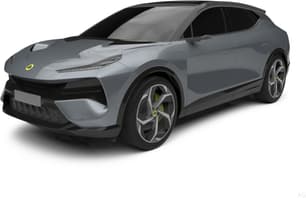
This is a Lotus - but it’s not like any Lotus you’ve ever known.
In fact, forget everything you know about Lotus, the British brand previously famous for small, lightweight sports cars is now evolving into something very different. Very, very different.
Under the control of Chinese automotive giant Geely since 2017, Lotus will shed its past and focus its future on all-electric, luxury vehicles like the Eletre we’re testing here.
The Eletre is a full-size luxury electric SUV designed to take on the likes of the Audi SQ8 e-tron, BMW iX and Mercedes-AMG EQE on the electric side, while also trying to lure buyers away from the likes of the Bentley Bentayga and Lamborghini Urus.
So, how does this radically different Lotus measure up to the brand’s reputation and stack up against its would-be competitors? Read on to find out…
This is the new Tesla Model Y L, of course, but before we even start I need to ask you a very important question.
How often, honestly, do you use all seven seats in your seven-seater? Or if you only have five seats, how often is there a human in every single one?
Rarely, if ever?
Yep, me too. So stick around, because this is, by far, the best family SUV seating layout. And one where there’ll finally be no fighting over who gets stuck with the dodgy seat.
And as a result, the six-seat Tesla Model Y L might just be among the best all-electric SUV offerings around.
So, how does this radically different Lotus measure up to the brand’s reputation and stack up against its would-be competitors in the final summation? It doesn’t reset the benchmark in any area or stand out head and shoulders above its competition, but crucially for Lotus (and its overlords at Geely) it doesn’t feel behind its rivals.
For the Lotus diehards this is an unrecognisable addition to the brand’s legacy of great sports cars. But this new version of the brand is looking to reach fresh customers and the Eletre will likely grab their eye with its dramatic looks.
It’s a highly competitive luxury, performance SUV that should have anyone considering a similar sized Bentley, BMW, Mercedes, or even the Lamborghini taking it for a test drive. It has both elements - luxury and performance - that will appeal to those looking for something special.
If you like the five-seat Model Y, then you'll like the six-seat L version even more. I think this the best example of Tesla's electric SUV to date, and the cabin layout just makes a lot of sense, and would suit plenty of families who don't need to squeeze someone into a compromised middle seat.
Note: The author, Andrew Chesterton, is a co-owner of Smart As Media, a content agency and media distribution service with a number of automotive brands among its clients. When producing content for CarsGuide, he does so in accordance with the CarsGuide Editorial Guidelines and Code of Ethics, and the views and opinions expressed in this article are solely those of the author.
The design of an electric SUV is, by its very existence, interesting as it’s something a Lotus has never been before. This is the brand’s new flagship SUV, designed to take on the likes of everything from the Bentley Bentayga to the BMW iX and even the Lamborghini Urus, so it needs to make a statement.
The design is influenced by the Evija electric hypercar, which Lotus built to kick-start its Geely era, but goes a step further with its angular design. It certainly looks more closely related to the Lamborghini SUV than any Lotus you’ve seen before.
It’s different, it looks special and will likely turn heads, but to be blunt, if you’re a Lotus lover who has an affection for the Elise, Exige and the like then this really isn’t for you.
This is a modern evolution for Lotus, created to appeal to new customers with its edgy exterior design, utterly modern interior look and premium finish.
One disappointment is the way the plethora of safety sensors and cameras can disturb the lines of the car, making it look like an unfinished prototype from some angles.
Spoiler alert - it looks a lot like a five-seat Model Y, doesn’t it, albeit a slightly bigger one. And you’d have to be a bigger Tesla head than me to immediately spot the differences at a glance.
The wheelbase is longer, the rear doors are bigger as are the rear 3/4 panels and the roof line is higher, helping with headroom in the third row.
Still, safe to say if you like the look of the five-seat Model Y, you’ll like this one. And if you hate it, well, good luck.
The alloys are 19-inch and shaded by the aerodynamic caps and there are light bars front and rear which debuted on the updated five-seat Model Y when it arrived mid-last year.
The bigger changes are inside, of course. I promise we’ll get to the second and third rows in the Practicality section, but let’s talk about the look and feel first.
There’s a love/hate relationship with Tesla’s stripped-back aesthetics, and I’m probably somewhere in the middle. I like the airiness of the space in the cabin, and I think it feels nicely put together, and I really dig the contrasting fabric used on the doors and dash which add a little visual interest to the cabin.
But I hate using the central screen to select a gear and I hate not being able to see how fast I’m going without turning my head. A head-up display would work wonders in the Model Y L cabin.
The modern and premium design carries over into the cabin, with the model we were testing finished in grey leather and Alcantra with gold highlights. Which, along with the fact there’s leather and carpet inside, makes this feel more polished and luxurious than any previous Lotus.
But once you look beyond that you notice it’s not quite as practical as such a large SUV could be. Yes, there are a couple of cupholders in the centre console, but one is quite small and not practical for most cups/bottles.
There’s a small shelf for the wireless smartphone charging pad and the centre console box, but aside from that, there’s no other significant storage space in the front.
On the plus side the seats are comfortable and supportive, which is also true of those in the rear. The space in the rear is excellent, with plenty of head and knee room that will allow four adults to travel in comfort (adding a fifth to the middle seat would be a squeeze).
Those in the back also get access to the small screen that allows them to adjust not only the climate control but also the front seats. The rear seats also recline and there’s a pair of cupholders and USB-C ports.
The Lotus Eletre has a generous 688-litre boot, which is wide and deep. However, it comes at the expense of a spare tyre, with only a puncture repair kit provided.
Captain’s chairs are simply a more luxurious version of second-row seating. With that there is no argument and the heated and cooled chairs that occupy the second row of the Model Y L are pretty good examples of them.
Space, both knee and headroom, is ample, and you can adjust each seat individually if you want to grant a bit more space to any third row occupants. Armrests deploy at the push of a button — as do the two hidden cupholders — and it really is easy to settle in and get comfy.
The third row is a bit more hit and miss. I’m 175cm and found I had enough legroom and headroom, but the big plastic mouldings that emerge from each side of the Model Y (which house a cupholder) are a miss. They end up pushing you into the seat next to you, and I can foresee a lot of arm rubbing with anything like two adults back there.
Also confusing is how to actually get out of it. You can fold the seat in front of you flat, but then you have to climb over it. I found it easier to just walk out between the seats.
There are another two USB-C ports in the rear row and you get air vents but no temperature controls.
The Model Y L stretches 4969mm in length, 1668mm in height and 2129mm in width, which is roughly 18cm longer and 4.5cm taller than the five-seat model. The extra space doesn’t sound like that much, but start dropping rows and you find a heap of storage space.
Both the second and third row stow electronically from the boot, but with them in place you’ll find 420 litres of storage in the double-layer boot. Drop the third row, and that number grows to 1076 litres. With the third row folded there is a massive 2423 litres of space. The frunk serves up another 116 litres.
There’s also room (and the ISOFIX attachment points) for four child seats.
The Eletre is one of many electric vehicles to fall victim to the fluctuating market, receiving an enormous price cut before it officially went on sale in Australia.
The range was meant to start at $239,000, but the decision makers changed their minds and slashed it by a whopping $49,100 so the ‘entry-level’ Eletre is priced from $189,900, plus on-road costs.
The Eletre S, which is the subject of this review, also received a major price cut, dropping to $229,990 from its original $269,000, while the range-topping Eletre R is now priced from $279,990 rather than $315,000 as first announced by the brand.
As for what you get for that money, the Eletre comes standard with a range of premium equipment, befitting Geely’s aspirations for the Lotus brand. This includes matrix LED headlights, two-tone paint with a black contrasting roof, 20-inch alloy wheels, air suspension, keyless entry and start, a key card with NFC (Near-Field Communication) function, four-zone climate control, eight-way power adjustable front seats and heated front seats.
There’s also a KEF premium sound system, in-built eSIM card with 5G capability, a wireless charging pad as well as a 12.6-inch digital instrument panel and a 15.10-inch OLED central multimedia screen.
Stepping up to the Eletre S adds more goodies including 22-inch 10-spoke alloy wheels, an 'Active Aero Pack', 64-colour ambient lighting, automatic parking assist and a 23-speaker KEF 3D surround sound system.
At the top of the range, the Eletre R gets a more potent dual-motor powertrain, two-speed transmission, unique 22-inch alloys and a 'Quartz' interior theme.
The Model Y L sits smack bang between the $68,900 Long Range AWD and the $89,400 Performance, setting you back $74,900, before your on-road costs. It’s also the only three-row option in the Tesla family.
Aside from people movers, we’re not swimming with options in the three-row electric space, either. The Kia EV9 will get it done from $97,000, the Hyundai IONIQ 9 starts from around $120K and the Volvo EX90 is more expensive again (from $124,990).
Anyway, in Tesla land, the Model Y L rides on 19-inch alloy wheels, has a glass roof, automatic wipers and Tesla’s smartphone access key, as well as the little credit-card swipe.
Inside, there’s a 16.0-inch central screen that handles everything. And I mean everything. It's your gear selector, your speedometer, and everything else, too. There’s no Apple CarPlay or Android Auto, but you can access things like Spotify and podcasts through the in-built apps and the on-board navigation system is a good one, too.
All of that pairs with a 19-speaker sound system, and there are dual wireless charge pads. All three rows of seats are heated, while the first and second row get ventilation, too.
A second 8.0-inch touchscreen in the middle row then handles things like the seat heating or cooling, music and games to amuse the kids. And the Model Y L also debuts V2L, or Vehicle to Load, for Tesla in Australia, using a connector in the external charger.
As mentioned earlier, there are three Eletre models, with the base model and S sharing the same powertrain, while the R gets a unique set-up.
The Eletre and Eletre S punch out a very healthy 450kW/710Nm from the dual motors that provide all-wheel drive traction. Despite being a full-size SUV, the two 450kW models are able to run 0-100km/h in only 4.5 seconds.
The Eletre R gets more powerful motors that make a staggering 675kW/985Nm, and crucially also get a two-speed transmission, which helps with acceleration. Lotus claims it has enough performance for the Eletre R to launch from 0-100km/h in just 2.9 seconds, a hugely impressive time for such a big and luxurious vehicle.
The Model Y L gets Tesla’s dual-motor AWD powertrain, with two electric motors producing a total 378kW and 590Nm. That’s enough, Tesla says, to knock off the sprint to 100km/h in five seconds flat.
Despite the different powertrains, all three Eletre models have the same 111kWh battery but the driving range varies across each one.
The entry-grade model has a claimed WLTP range of between 535-600km, the Eletre S drops to 490-535km and the Eletre R can travel between 410-450km on a single charge.
On test we found those claims to be optimistic, certainly on the higher end, and especially if you head out of the urban environment and don’t maximise the regenerative braking to keep the battery topping up.
Tesla is always a little vague when it comes to the size of its batteries, but reports point to the Model Y L carrying a 84Wh (useable) NMC battery.
Whatever the specifics, the range is strong, with Tesla promising a 681km driving range on the WLTP combined (urban/extra-urban) cycle.
It’s also set up for 250kW DC fast charging, which should see you take on 288km in 15 minutes, according to Tesla.
The challenge for Lotus, and its competitors, is to make its cars stand out from the pack despite the increasing similarities in performance brought on by electric powertrains.
Whereas in the past we could have assessed the difference between a Lotus-built V8 compared to a BMW manufactured V8 or even a Mercedes-Benz V12, these days all the electric models produce the same quiet, effortless punch.
So, it creates a generic driving experience in some regards, when what you’re hoping for at this end of the market is something special and different. And it’s important to note I don’t use the term ‘generic’ in a negative sense, but simply the Eletre has similar driving characteristics to the electric models from BMW, Mercedes-AMG and others.
Where it does give a hint to Lotus’ heritage is in its handling, where the combination of the air suspension with adaptive dampers, torque vectoring (by braking) and the British brand’s decades of experience combine to create a surprisingly direct and responsive SUV.
You won’t mistake it for an Emira, Exige or Elise, but the Eletre does have dynamic ability a cut above your average luxury SUV.
Honestly, it feels like the Tesla Model Y has grown up. I didn’t love earlier iterations of this car and I found the Performance to be fast but lacking any emotional fizz.
This one, though, feels solid and composed, and the power on tap (of which there is ample) is more about effortless progress than it is attempting to offer sports car excitement.
The steering is now nicely weighted and feels direct enough without being too sharp, and the cabin is well insulated, with often the slightly off-putting sort of rubbing noise the steering wheel makes when you turn it the only intrusive sound.
One drawback is a ride that definitely errs on the side of firm. This Model Y L gets electronic damping designed to iron out some of the more jagged stuff, but it still feels brittle in places, and you can definitely feel some sharpness in the cabin. Now, to be fair, it’s not too firm for me, but it might be for you.
Another is a bizarre turning circle which constantly reminds you you’re driving a big bus, especially when you try to complete a tight three-point turn.
But despite its stretched dimensions, I found the Model Y L easy to drive and park in the city, and once you're up to speed with Tesla's operating system (there's no Apple CarPlay or Android Auto), then the screen is pretty easy to use, too.
Another major change for this new era is massive upgrades in terms of safety technology. The Eletre is packed with an array of cameras and sensors to help you avoid an accident.
There are 34 in total - four Lidar, six radar, seven HD cameras and 12 ultrasonic sensors. This all feeds a raft of features, including 'Highway Assist', which makes the Eletre the first Lotus to drive itself.
However, as part of the price cut, the Lidar hardware is removed from the entry-level model from the MY25 built examples onwards. However, if you option the Highway Assist package, they are fitted again in order for the system to work.
Standard on all Australian models is the 'Lotus Pilot Pack' which includes all the safety items that have become so common in recent years, including adaptive cruise control, autonomous emergency braking, rear cross-traffic alert, blind-spot monitoring, driver monitoring and traffic sign information.
Neither ANCAP nor Euro NCAP have tested the Eletre, as the safety authority rarely tests such expensive vehicles.
The airbag count is seven - front, front side, side curtain and far side (front centre) - and there are three top tether point and two ISOFIX positions for child seats across the second row.
The Model Y L gets the same maximum five-star ACNAP safety rating as the rest of the Model Y range, with nine airbags (up from seven in the five-seat model), and things like AEB (Auto Emergency Braking), lane-keeping assist, 'Forward Collision Warning' and blind-spot monitoring all along for the ride.
Interestingly, the curtain airbags from the five-seat version haven't been replaced, with coverage still only extending to the second row. New airbags have instead been added for third-row occupants.
One more analogue quirk of the Tesla Model Y L is the thick B-pillar, which does a good job of almost completely obscuring driver-side blind-spot checks (for those of us who still like to do those manually).
As for its ownership credentials, Lotus doesn’t offer capped price servicing, so you’ll need to discuss the on-going maintenance costs for your Eletre.
On the plus side, the new model is covered by a five-year/150,000km warranty for the car, with an eight-year/200,000km warranty for the battery.
Tesla warranty is a these-days-underwhelming five years and unlimited kilometres, while the high-voltage battery is covered for eight years or (a wildly specific) 192,000km.
There’s also five years' of roadside assistance, including puncture repair (a good thing, given the lack of a spare wheel). I also couldn’t find a puncture repair kit and later research suggests Tesla sells them, rather than provides them as standard.
Tesla servicing is condition-based, so there’s no fixed schedule, with a summary on the car’s touchscreen providing a record of when vehicle maintenance was last carried out and prompts for when they should be performed next.
In the absence of a combustion powertrain the emphasis is on things like wheel rotation, balancing and alignment, brake fluid testing, air-con servicing, camera precision, radiator cleaning and high-voltage battery maintenance.
Expecty a ‘Vehicle Health Check’ to come in under $300 with ‘General Diagnosis’ at around $270 per hour.