What's the difference?
Lexus has finally brought a plug-in hybrid to the Australian market with the RX450h+, and we’ve been testing the second-from-the-top Sports Luxury grade to see how it stacks up.
Promising a blend of electric efficiency and the high-end comfort Lexus is known for, this large SUV steps into a competitive segment. But does it deliver on both fronts?
Would you consider a European-made small SUV with a terrific turbo engine from one of our all-time favourite hot hatches, a reliable torque-converter auto, ample room for five plus luggage, and all from under $40K?
You’d be at the very least a bit curious, right?
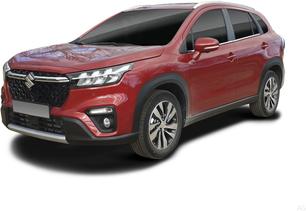
Behold the latest Suzuki S-Cross! Okay. It’s been around the sun nearly a dozen times. And you can clock its age in a couple of key areas.
But this crossover from the class of 2013 is not even close to being the oldest-in-show (stand up, Mitsubishi ASX). And, as our testing revealed, the S-Cross can still teach far newer rivals like the Kia Seltos, Mazda CX-30, Haval Jolion and Subaru Crosstrek a thing or two.
Because thoughtful design is timeless. Time, then, to crack open the S-Cross.
The new Lexus RX450h+ Sports Luxury is packed with a wealth of premium features and strikes a solid balance between refinement and practicality. There are enough thoughtful touches that make everyday driving a little easier.
You’ll get the most out of the plug-in hybrid powertrain if you’re able to charge it regularly; ideally every day. That might not always be practical for busy people on the go, but overall, the RX450h+ manages to blend efficiency with Lexus’ signature comfort and quality.
Back in the day, you’d hear people say they’d never buy an all-new car, but instead get the last of the old model that would have had all the bugs ironed out.
If this sort of homespun logic makes sense, then maybe the latest S-Cross might just be the perfect SUV car for you.
Not only has it been in production for years, there is nothing fundamentally wrong with it. Indeed, for performance, packaging and ease, it does plenty that's right. Thoughtful design is timeless.
But there are newer alternatives that look way fresher (particularly inside) yet cost the same or less, and offer more, including updated driver-assist safety.
Still, you can do a lot worse than take an S-Cross for a test drive.
The RX isn’t breaking new ground with its plug-in hybrid design, but it still delivers that signature Lexus understated refinement.
The strong, flowing body lines, 21-inch alloy wheels and updated 'spindle grille' all give it presence without screaming for attention.
And in a segment where boxy and bulky designs tend to dominate, the RX’s swoopy silhouette helps it stand apart in all the right ways.
Inside, the cabin feels considered and luxurious. There's a heavy use of premium materials, including the leather and suede upholstery, plush soft-touch surfaces and the big, crisp displays that make the space feel modern and high-end.
The panoramic sunroof brings in loads of natural light, too, which is especially welcome given the dark headliner that might otherwise feel a little heavy.
If I have one gripe, it’s the thin steering wheel, which doesn’t quite match the otherwise solid, tactile feel of the rest of the interior. But overall, the cabin is a space that feels luxurious and well-executed. It's quietly confident, just like the RX.
It took Suzuki not one, not two, but three goes before the stylists succeeded in making the S-Cross look good.
The original was like an early Nissan Dualis clone, but all droopy faced, so they grafted on an aggressively toothy face back in 2016 that only a gargoyle’s mother could love.
At least this latest version – said to have been designed in Italy, no less – no longer looks like Frankenstein’s monster.
Released during 2022, the blockier nose, squared-off profile and restyled posterior are meant to make the S-Cross seem larger than its more-successful (and prettier) Vitara sibling, which uses the same platform, by the way.
Not a bad makeover job as far as big facelifts go, then, especially considering the Suzuki’s windscreen, doors and roof remain as before.
The RX cabin is thoughtfully laid out and impressively practical, with a premium feel that doesn’t come at the cost of everyday usability.
Up front, there’s plenty of space for driver and passenger, yet the stepped dash design brings a sense of intimacy. The electric front seats are seriously comfortable, with four-way lumbar support and extra adjustment functions that make this an easy choice for long drives.
Storage options are generous, too. There’s a clever dual-opening centre console, large glove box, multiple phone-sized shelves, map pockets and a couple of cup- and drink holders in each row.
Charging is taken care of by four USB-C ports, one USB-A port and a wireless charging pad.
Tech is up-to-date and well-integrated. The upgraded 14-inch media display looks crisp, supports wireless Apple CarPlay and Android Auto, and is paired with a revamped 12.3-inch digital instrument cluster and a colour head-up display.
The cluster’s new layout is modern and much easier to read than the previous offering. The digital rear view mirror also earns its keep when the cabin’s packed with passengers or gear.
One of my favourite touches? The seat controls on the side of the front passenger seat. It makes quick work of moving the seat forward, especially helpful when you’ve got a kid clambering in with a school bag full of projects.
Access to the rear row is easy, but the stadium-style seating, where you're perched noticeably higher than those in the front, won’t be for everyone.
That said, the rear seats are plush and padded, though they lack side bolsters, which rear passengers might notice during cornering.
Legroom is generous and the hardened kickplates are a dream to clean when your child’s treating the seatbacks like a climbing wall.
My eight-year old gives the back seat a glowing review, thanks to its creature comforts, including rear climate control, directional air vents, seat heating/ventilation on the outboard seats, two USB-C ports and retractable sun-blinds, which are a crowd favourite in our household.
There are three top-tether anchor points, and the bench is wide enough to fit three child seats, though bulky booster seats might be tricky due to the raised seating height.
At the back, the boot is well set up for families, offering electrically folding rear seats, a 12-volt socket, flat loading floor, and a hands-free powered tailgate.
Under the floor, there’s a small compartment for your charging cables (Lexus throws in two!) and a usable 612L of capacity when all seats are in use. One downside, though, is the lack of a spare tyre as you just get a tyre repair/inflation kit.
It might be an old interior, but at least Suzuki got the fundamentals right in the first place, while also bothering to update the electronics for it to at least seem more contemporary.
Basics first. In typical SUV fashion, entry and egress are excellent, via tall and wide doors with corresponding apertures. There’s a pleasing sense of space for taller occupants, especially in terms of leg and head room.
Once sat in the driver’s seat, the mid-last-decade looking dashboard is instantly familiar and completely non-intimidating.
Concise and surprisingly elegant analogue dials (now with an auxiliary digital speedo, at last) sit ahead of the driver, along with a reach-and-height-adjustable steering column that allows for people of all shapes and sizes to find the right position. Deep windows provide extensive vision and let lots of light inside, too.
Finished in what looks like stitched leather and chainmail-inspired inserts, the front seats in this Plus grade are wide enough for comfort yet bolstered enough for some support through corners.
We rate them, though driver-lumbar and front-passenger height adjustments are disappointingly absent.
Years ago, reviews lambasted manufacturers for providing “too many buttons”, but after an endless succession of touchscreens housing most (if not all) audio, climate and vehicle control access, we miss the days of the button-fest.
If you do too, the S-Cross obliges with array of climate-control switches and driver-assist buttons located around the driver for fast and definite access.
On the other hand, while Suzuki’s new 9.0-inch touchscreen does a fine job housing other vital vehicular and multimedia functions, it drops the ball with no volume knob.
The alternative looks like a slide control but relies on clumsy pushing. Fail. Luckily the steering-spoke-sited toggles do the same job far better, at least for the driver.
Kudos, too, for the effective and intuitive multimedia system, that packs a lot in a small-ish space. The excellent surround/aerial-view camera rates a mention, as well as wireless Apple CarPlay that hardly ever drops out.
Nobody is going to mistake the extensive plastic trim and other finishes as premium, but it isn’t horrendous, doesn’t inflict occupants with the cheap off-gas stink often found in bargain-basement brands, and absolutely nothing rattled or squeaked in our time with the Suzuki.
Storage is also impressive, from the large glove box and deep centre bin/armrest to bottle-gobbling pockets on all four doors. Cups are also well-catered for.
However, betraying the S-Cross’ age are the AWOL wireless charging, head-up display (at this price… ), USB-C outlets and configurable instrumentation.
Moving on to the rear seat reveals a family-friendly environment as far as space is concerned, with adequate comfort provided by the (slightly) reclinable backrest and (fixed) cushion. The windows lower all the way down and the folding centre armrest has a cupholder, too.
But while you’ll find a single map pocket and overhead grab handles, there are no USB ports (at all), nor overhead reading lights or rear-facing air vents.
Never mind. At least the rear backrest reclines (a tiny bit) for added comfort, while further back, boot capacity is a useful 430 litres.
The load area is flat and wide and a space saver spare wheel is located underneath the boot floor.
The backrest has a 60/40 split and the floor can be positioned in different locations. Volume jumps to 1230L with the backrests dropped.
If you rate space, practicality and ease above modernity, then, the S-Cross still holds up remarkably well. Just keep in mind that its interior will appear dated compared newer and flashier competition.
There are four variants in the RX range, and we’re testing the 450h+ Sports Luxury AWD, which sits just below the flagship and packs in plenty of premium kit for its $123,500, before on-road costs, price tag.
That makes it slightly more affordable than its main PHEV rivals; the BMW X5 xDrive50e (from $125,885 MSRP) and the Volvo XC90 Ultra (from $124,466 MSRP).
The Volvo does offer seven seats to the Lexus’ five, which may matter for larger families, and both rivals also outdo the RX on electric-only driving range - 65km in the RX compared with 77km in the Volvo XC90 and a generous 101km in the BMW X5.
Still, the RX fights back with a seriously stacked features list. Highlights include a panoramic sunroof, 10-way powered front seats with heating and ventilation, electrically folding rear seats (also heated and ventilated in the outboard positions), and a heated, power-adjustable steering wheel. Sound is taken care of by a premium 21-speaker Mark Levinson surround system.
Technology has had a solid upgrade with the 14-inch touchscreen multimedia display, 12.3-inch digital instrument cluster, digital rearview mirror, colour head-up display, live traffic navigation, wireless Apple CarPlay and Android Auto, 4G connectivity, four USB-C ports, one USB-A port and a fast wireless charging pad.
There’s also access to the 'Lexus Connected Services' app, allowing you to remotely lock or unlock the vehicle, pre-set the cabin temperature via three-zone climate control, configure driver profiles and even use your phone as a digital key.
Practical features include keyless entry and start, rain-sensing wipers, dusk-sensing LED headlights, rear sun-blinds, intelligent seatbelt reminders for the first two rows, a child presence alert and a hands-free powered tailgate. However, due to the plug-in hybrid system there’s no spare tyre, just a tyre repair kit.
As we’ve established, the base S-Cross Turbo front-wheel drive (dubbed 2WD in SUV-speak) starts from $39,990 (all prices are drive-away), while the Plus version tested here costs $42,490 drive-away.
But, just a couple of years back, the pre-facelift S-Cross version kicked off from about $10K less. And, before that, much the same car could be had for mid-$20K.
Suzuki doesn’t make it easy for itself, does it.
At least the S-Cross comes with a decent rollcall of kit, including dual-zone climate control, a 7.0-inch touchscreen, DAB+ digital radio, satellite navigation, wired Apple CarPlay/Android Auto, front fog lights, keyless entry/start, heated front seats, electrically folding and heated exterior mirrors, rear privacy glass and 17-inch alloy wheels.
'Autonomous Emergency Braking' (AEB), lane keep assist, a blind-spot monitor, rear cross-traffic alert, front and rear parking sensors, automatic LED headlights with high beam assist, adaptive cruise control and a reverse camera headline the standard safety items. More on those in the Safety section below.
For a $2500 premium, the S-Cross Turbo Plus ushers in a larger (9.0-inch) touchscreen, wireless Apple CarPlay/Android Auto, a 360-degree surround-view camera, leather trim and polished alloys.
This lines up with the all-wheel drive (AWD) Prestige AllGrip equivalent, though it misses out on the latter’s panoramic sunroof.
Price and equipment-wise, the Plus matches rival mid-grade 2WDs like the Toyota Corolla Cross GXL, Nissan Qashqai ST+, Mazda CX-30 G20 Touring, Kia Seltos Sport+ and Mitsubishi Eclipse Cross Aspire.
Just keep in mind, all are substantially newer generationally than the S-Cross, even though it did go under the scalpel a couple of years back.
Under the bonnet the RX450h+ Sports Luxury runs a plug-in hybrid powertrain that pairs a 2.5-litre four-cylinder petrol engine with a CVT auto and dual electric motors - one on each axle. Together, they produce a total of 227kW of power, though Lexus doesn’t quote a combined torque figure.
Still, it’s quick off the mark for a large SUV, with a 0-100km/h time of 6.5 seconds. There’s more than enough grunt for daily driving and overtaking, even if it doesn’t quite match the outright power of its key PHEV rivals.
Here’s where the S-Cross definitely does not show its age, because Suzuki sure knows how to engineer a great engine. And automatic transmission, too. Take note, rivals.
Of course, we’re talking about the long-lived 'BoosterJet' powertrain, as found in the terrific Swift Sport hot hatch.
In this case, the 1.4-litre twin-cam, direct-injection, turbo-petrol four-cylinder engine delivers 103kW at 5500rpm and 220Nm of torque between 1500-4000rpm. Tipping the scales at 1260kg, this results in a power-to-weight ratio of 82kW per tonne.
Not huge numbers, granted, but this little firecracker certainly punches above its weight in the seamless way performance is served up, helped out by the intelligent spread of ratios from the standard six-speed torque-converter automatic transmission, with paddle shifters included. Sadly, no manual gearbox is available.
The plug-in hybrid system brings solid efficiency, with claimed fuel use of just 1.3L/100km. In real-world conditions (mostly urban driving with regular recharging) I managed a respectable 4.8L/100km, which makes a strong case for the hybrid set-up.
The fuel tank holds 55 litres and it's worth noting Lexus recommends using a minimum of 95 RON unleaded petrol to fill it.
Using our real-world economy figure you can expect a range in excess of 1100km between fills.
The RX450h+ is fitted with a relatively small 18.1kWh lithium-ion battery, supporting an NEDC electric-only range of up to 65km.
While that’s fine for short daily trips, it’s shorter than you'd ideally want in a family SUV of this size and it lags behind rivals like the BMW X5 and Volvo XC90 in this department.
Charging is simple enough. The RX uses a Type 2 charging port and accepts up to 7.0kW on AC power, which means a full charge takes around 7.5 hours, perfect for overnight top-ups. Lexus also includes an at-home charging cable and second adapter cable as standard, which is a thoughtful touch.
Suzuki reckons the S-Cross will average 5.9L/100km on the combined cycle, though keep in mind that it requires expensive 95 RON premium unleaded petrol.
As far as carbon dioxide emissions are concerned, that translates to between 138 and 145 grams/km.
We managed about 7.7L/100km – and this included some very spirited performance testing with the air-con always on, against the trip computer’s more-accurate-than-expected 7.4L.
With a 47-litre fuel tank, expect a range of about 790km between refills.
The RX450h+ delivers power that’s pert and prompt, with genuine bursts of acceleration that make driving fun. It’s always ready to go and there's no lag in stop-start traffic - which gives it a lively, dynamic feel around town.
The transition between petrol and electric power is seamless; you hardly notice the switch, which makes for a smooth, refined driving experience. The cabin is impressively quiet, even on the highway, making long trips comfortable and peaceful.
Regenerative braking isn’t adjustable and is subtle enough that many won’t notice it which is likely a plus for fans of traditional internal combustion engines who are making the PHEV leap.
The adaptive variable suspension adds a sporty edge to handling, letting you confidently take corners at speed. There’s some body roll but the RX never feels top-heavy or unsettled.
The steering carries the weight of the SUV but remains well-balanced and responsive. Overall, it’s a well-tuned machine that’s a pleasure to drive.
Maneuverability is a strong suit, too, thanks to a tight 11.8-metre turning circle and a clear, easy-to-use 360-degree camera system. Parking is easy-as-pie, which a lot of drivers will appreciate.
So, if you’ve read this far down, you might have been pleasantly surprised by the S-Cross' spacious and practical interior, ease of operation and decent equipment levels.
Yet the main event lives under the bonnet.
Let’s start with the performance. Throttle response is instant and lag-free, allowing for strong acceleration right from the get go. No jerkiness, no delays, no hiccups.
On the move, the S-Cross' power delivery continues to impress, feeling smooth and slick across the rev range. The finely-tuned torque-converter auto – rather than a CVT continuously variable transmission or dual-clutch – must surely play a role in this Suzuki's effortlessly consistent performance.
Where the turbo engine really shines, though, is at higher speeds, with ample power and torque still left in reserve for when you need to overtake or pull away in a hurry.
Delightfully muscular yet super creamy to boot, the BoosterJet remains one of the best internal combustion engine choices available in any small or medium-sized SUV, regardless of price and positioning.
If only Suzuki put a little more love into the S-Cross’ dynamics.
As with the AWD model, the S-Cross 2WD features electric rack and pinion steering, while its suspension consists of a MacPherson strut-style design up front and a torsion beam rear-end arrangement.
While easy and precise, with a tight-ish turning circle for easy urban manoeuvrability, the steering feels too light after all that delicious oomph on offer, especially at higher speed.
This is doubly disappointing, because the chassis is quite firmly set-up, meaning the S-Cross offers sharp yet controlled handling that allows it to be hustled quickly and confidently through fast corners.
We suspect the high-quality Michelin 215/55R17 tyres help. And, speaking of rubber, road noise is fairly subdued out on the open road.
Criticisms? Unlike in the AWD version, the 2WD seems a little skittish at speed on gravel. It’s a good thing the well-modulated driver-assist systems are at the ready. Unlike in so many other SUVs, including in MGs and Havals, their intervention isn’t too zealous or ill-judged.
Also, the Suzuki’s ride around town can be a bit stiff, but never harsh, over smaller-frequency bumps and surface irregularities.
Still, our overall impression is that the eager S-Cross feels far newer to drive than its birth date suggests. That turbo powertrain must take the credit for much of that.
The RX earned a maximum five-star ANCAP safety rating in 2022, scoring highly across all protection categories: 90 per cent for adult protection, 89 per cent for child protection, 89 per cent for vulnerable road users, and 93 per cent for safety assist systems.
Standard safety gear includes eight airbags (dual front, front side, curtains, front centre, and driver’s knee) plus a comprehensive suite of driver aids. Standout features include emergency call functionality, child detection alert, side exit assist, front and rear collision warnings, park assist and emergency steering assist.
Additional tech covers blind-spot monitoring, driver attention monitoring, tyre pressure monitoring, daytime running lights, LED cornering lights, rear cross-traffic alert, lane departure alert, lane keeping assist, traffic sign recognition, and intelligent seatbelt warnings for the front two rows.
Visibility and parking are enhanced by a 360-degree camera system and front/rear parking sensors, while adaptive cruise control adds comfort on longer drives.
The rear seats have two ISOFIX mounts plus three top tether anchors, accommodating child seats safely. Autonomous emergency braking is active from 5.0 to 80km/h for pedestrians, cyclists, and backover and up to 180 km/h for cars.
While the pre-facelift S-Cross from 2013 to 2022 managed a maximum five-star crash-test score, no ANCAP rating information is available for the current JYB series.
There is a decent amount of safety gear as standard, though, including autonomous emergency braking (AEB), lane departure warning, blind-spot monitoring, rear cross-traffic alert, 'Weaving Alert' (a driver-drowsiness warning prompt), front/rear parking sensors, adaptive cruise control (with full-stop functionality) and auto high beams.
Note that while the adaptive cruise control brings you to a halt, there’s no traffic-follow function as found in newer systems, betraying the S-Cross’ advancing years.
Plus, Suzuki does not supply information about the AEB and other driver-assist tech’s operating parameters.
Also fitted in every S-Cross are seven airbags (dual front, dual front side, curtain and driver’s knee), electronic stability control, anti-lock brakes with electronic brake-force distribution and brake-assist.
The rear seats contain a trio of child-seat tether anchorages, as well as an outboard pair of ISOFIX attachments.
The RX comes with a five-year, unlimited-kilometre warranty, which matches its key rivals but isn’t exactly class-leading by today’s standards.
Servicing is handled via a capped-price program, with each service costing $695. The intervals are well spaced at every 12 months or 15,000km, whichever comes first.
This Sports Luxury grade also includes a three-year complimentary 'Lexus Encore' membership, granting access to a handy phone app and member benefits at partners like Westfield and Ampol. On top of that, you get 24/7 roadside assistance for added peace of mind.
Suzuki offers an industry-average five-year/unlimited kilometre warranty and roadside assistance.
Service intervals are every 12 months or 10,000km, while basic capped-price servicing is available, with pricing ranging from a low of $329 per service up to a high of $539 for the first five years/50,000km. The average of $397 isn't particularly cheap.