What's the difference?
If you’re after a small performance-focused hatch or small SUV, there’s no shortage of solid offerings from semi-premium and premium brands like Audi, BMW, Cupra, Mercedes-Benz, Volkswagen and more.
Another high-end brand dipping its toes in the segment is Lexus. Yes, Lexus. The Japanese luxury brand that’s famous for reliable and comfortable cars like the ES and RX.
It might be surprising that Lexus could build something like the LBX Morizo RR, but let’s not forget the many go-fast models in its back catalogue - the LFA supercar, the LC coupe and drop-top, IS F and GS F sedans and the RC F coupe.
At the urging of famed Toyota Motor Corporation (Lexus’ parent company) Chairman Akio Toyoda, Lexus has birthed a firecracker based on its humble, yet fun, LBX small SUV.
Akio has had a hand in developing the Morizo RR as well. Hence the name. Akio is head road tester for the carmaking giant, and a seasoned racer in his spare time. He uses the ‘Morizo’ alias when racing. The ‘RR’ stands for ‘rookie racer’.
Using the same powertrain found in Toyota’s GR Yaris and Corolla hot hatch cousins, the LBX has a lot of promise. But has Lexus done enough to bother those largely European rivals?
Can it be possible that, between 1959 and 2023, there have only been four distinct generations of Mini?
Besides the 1959 British Motor Corporation (BMC) original, it’s just been a trio of hatchback versions under BMW stewardship – the R50 of 2001, 2006’s R56 and the 2014 F56.
Now, in 2024, that number has suddenly jumped to six.
The F56 has morphed into the lightly restyled and solely petrol-powered F66 Cooper range in F66 three-door (3DR) and coming F65 five-door (5DR) hatchback guises like before.
Meanwhile, the completely new and electric-only J01 Cooper 3DR joins the fold, along with its J05 Aceman 5DR crossover spin-off.
Despite their shared name and similar styling inside and out, the British-built Cooper and electric Cooper from China are two different cars. You can read all about the latter in another review, as this is about the petrol-powered Cooper range.
More of a thorough makeover and less of a total redesign, has it changed enough? Let’s find out.
Lexus has managed to combine two cars in one. A fast, impossibly fun back-road blaster perfect for weekends on your favourite winding roads, and a competent, compact city SUV that will easily handle urban runabout duties every day of the week.
It’s this duality that struck me the most. I would happily live with the Lexus LBX Morizo RR.
If you need a bit of space, maybe look elsewhere. But if you’re passionate about dynamic driving, and value comfort and a premium experience, this little rocket is hard to beat.
Note: CarsGuide attended this event as a guest of the manufacturer, with accommodation and meals provided.
The new petrol Cooper range very gently evolves the upmarket Cool Britannia cliché BMW invented with the R50 back in 2001 and fostered with every iteration since.
More of the same, only slightly updated and just improved enough to justify trading the old one in. If this appeals to you, then go for it. This is the best petrol version yet. Probably.
But the Cooper’s real spark literally and metaphorically lies within the EV version.
Two very different Minis indeed.
Note: CarsGuide attended this event as a guest of the manufacturer, with meals provided.
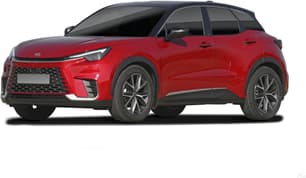
The regular LBX is a spunky little car with a lot of road presence. I’ve been a fan of the exterior design since first seeing one in the metal. Short overhangs, nuggety proportions, well designed tail-lights and a pert rear end - it all works for me.
For the Morizo RR, Lexus has wisely exercised some restraint when it comes to exterior flourishes. It is nowhere near as wildly styled as the Yaris GR, for example. And that makes sense. This is, after all, a Lexus.
It’s a smart move, too. It’s subtle but still has intent.
The Morizo RR gains styling tweaks unique to the grade including 19-inch forged aluminium wheels, red brake calipers, a different front and rear bumper design, a rear spoiler, air intakes front and rear and a dual exhaust.
Inside, the main differences are the inclusion of red stitching, sports seats, some unique inserts, and the use of synthetic suede on the centre console, dash and doors.
The LBX interior design is functional and premium with nice materials throughout.
You’ve got to hand it to BMW.
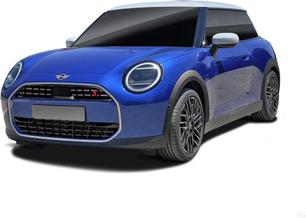
The new nose and triangular tail-light treatment on the 2013-vintage midsection look as if they were designed to all go together back in the day.
You could even mistake it for the previous Cooper EV, though side-by-side that’s less likely, since the latter ditches the upright windscreen for a more raked item, clamshell bonnet opening, horizontal bumper shutlines for shorter and more-angled ones, plastic wheel arch surrounds and pull-out door handles for flush units.
The wheels are further apart, the overhangs shorter and the lower-side surfacing broken up by an artful sheetmetal crease.
The overall length at 3876mm, width at 1744mm and height at 1432mm have increased by 55mm, 17mm and 18mm respectively over the old model, but the 2495mm wheelbase stays the same.
And that’s not all.
The LBX is a compact little SUV so if you’re after something to fit a family of four, look elsewhere. But if you don’t need the space, it’s a great city car.
Up front it’s easy to find the right driving position thanks to all of the adjustability of the seat and steering wheel.
Those sports seats are supportive and hug the body, but not too much as some of Lexus’ European rivals do. They’re also very comfortable - almost edging firm but never uncomfortable.
The Lexus multimedia system is functional and has an easy-to-navigate menu set-up, but lacks any pizzazz. Better graphics would help with engagement.
Storage wise, there’s a wireless charger slot at the bottom of the centre stack, a cupholder with a narrow slot for another device next to it, and a deep but narrow secure central storage bin with another cupholder.
You might not fit big bottles into the door bins as it’s pretty tight.
I wasn’t sure about Lexus’ one-touch interior and exterior door handles when they first rolled them out, but I now think it adds a classy point of difference to its rivals.
That second seating row is tight, especially for taller folk. I had just enough legroom (but plenty of toe room) sitting behind my 183cm (6'0") driving position, but I wouldn’t want to sit back there for a long road trip. Headroom, however, is ample. My noggin didn’t even scrape the headliner. You’d struggle to fit three adults back there but a couple of kids should be fine.
Amenities include a pair of USB-C ports and two map pockets, but the rear row lacks any adjustable air vents or a fold-down centre arm rest. And the bottle holders in the rear doors won’t fit much at all.
The rear row folds 60/40 and if you need to haul lots of luggage or shopping, you’ll definitely need to lower that rear row because the boot is small.
Lexus says it can swallow 266 litres, which is tight. There’s no spare wheel of any kind, just a tyre repair kit.
The previous Mini 3DR featured a messy and quite overbearing dashboard design from 2013 that’s aged about as well as Robin Thicke’s videos from that year.
In contrast, the new model's is far simpler and less protruding, dramatically boosting the sense of space and light.
That said, all four occupants still sit low, with an upright windscreen ahead and beside high window sills. There’s an oversized, circular screen in the middle of a pared-back dash and a neat row of toggle switches below. It’s still pure Mini in theme.
As before, there’s enough space for even the tallest people up front, reflecting the British icon’s German packaging, with plenty of head and legroom, as well as ample width. It’s only when you jump from the EV to the petrol Cooper that you realise this feels noticeably narrower.
All Coopers regardless of fuel share the 240mm (9.4-inch) central OLED display. It might seem like visual overload at first glance, with so much going on, but after a brief period of familiarisation, the touchscreen becomes a cinch to decipher and navigate. The colour-coded driving modes, pleasingly slick screen swipe action and ultra-crisp graphics are especially noteworthy.
Revel, too, in the twist engine starter and toggle gear selector actions, that also save space and are super natural to operate. This is button-lite dashboard de-cluttering done right.
As with the previous model, the Mini’s driving position has you sitting upright, but it’s comfortable enough on the S’ sports seats we sampled this on, and everything is within reach. There’s sufficient storage. The ambient mood lighting is fun. And kudos for the deployment of animal-free materials. In fact, the Cooper’s fresh textures are quite remarkable.
We’re less fond of the glass roof with no sunlight block; there are blind spots due to the thick side pillars; and some of the lower-placed plastics do not seem $60K’s worth in a supermini this expensive.
Rear-seat access isn’t graceful, with a narrow aperture to squeeze past and a slow-moving electric seat to wait for, but that should surprise nobody given this car’s size. There’s enough space for two adults and not much else really. It’s pretty basic back there.
And even further back, Mini quotes just 210 litres VDA of luggage capacity, rising to 725L with the twin backrests dropped.
Don’t forget, though, that no spare wheel exists. Just an ever-fiddly tyre repair kit.
Meanwhile, at the other end of the Cooper…
The regular Lexus LBX line-up consists of three hybrid grades (Luxury FWD, Sports Luxury FWD and AWD) running from $47,550 to $56,990, before on-road costs.
Naturally the Morizo RR takes its place as the flagship of the LBX line-up and is priced accordingly. It will cost you $76,490 which is close to $20K more than the entry grade.
Purely looking at SUVs, rivals could include the BMW X1 M35i ($92,300) or Volkswagen T-Roc R ($64,290), while performance hatchback competitors might include the Mercedes-AMG A35 ($87,900) or VW Golf R ($70,990). Either way, the Lexus sits somewhere between the two, but closer in price to the VWs.
There are other offerings that cost quite a bit more than the Lexus.
For that money you get leather-accented sports seats, aluminium pedal trims, 19-inch forged alloy wheels, a 9.8-inch multimedia touchscreen, wireless Apple CarPlay and Android Auto, sat nav, a 12.3-inch digital driver display, dual-zone climate control, a powered tailgate and heated front seats.
Other gear includes a 13-speaker Mark Levinson premium audio system (with a sub-woofer), five USB-C ports, access to 'Lexus Connected Services', synthetic suede trim, auto power-folding and dimming exterior mirrors, an auto-dimming interior rear view mirror, eight-way power driver’s seat adjustment, rain-sensing wipers and keyless entry and start.
Two-tone paint will set you back an extra $1750.
On top of the long safety features list (see the Safety section), there’s nothing obvious missing from the features list. Lexus has always offered sharp value-for-money and that remains the case with the Morizo RR.
For the duration of the original BMC/BLMC/Leyland/Austin/Rover era, the Mini was often the cheapest new car around. We’re talking bare bones motoring here, for the people.
Obviously, BMW bothers with no such democratic notion today.
The new Cooper comes in two models differentiated by engine size – the C with a 115kW 1.5-litre three-cylinder turbo and S with a 150kW 2.0-litre four-cylinder turbo. Both are carryover units, and automatic only, sadly.
Which helps explain why the base C Core starts from a steep $41,990 (all prices are before on-road costs). Much the same car cost $10K less just five years ago.
The Core includes climate control air-conditioning, an OLED circular touchscreen, a head-up display, a reverse camera, parking sensors, wireless Apple CarPlay/Android Auto, DAB+ digital radio, a smartphone charger, ambient lighting, a heated steering wheel, 17-inch alloy wheels and a basic cruise control set-up.
You’ll need to step up to the $44,990 Cooper C Classic for adaptive cruise control, a surround-view monitor, interior camera, 'augmented reality' satellite navigation, front seat warmers, seven rather than four colour choices, 18-inch alloys, a glass roof and more.
'Sun Protection Glazing' for the latter, along with a Harmon/Kardon premium audio system, John Cooper Works (JCW) sports seats with electric adjustment and memory, fancier interior materials and a broader palette of options are part of the Cooper C Flavoured package from $47,990.
Meanwhile, the more-powerful Cooper S auto bypasses Core and kicks off with the Classic from $49,990, Favoured from $52,990 and the JCW Sport from $54,990.
The latter includes a JCW body/interior styling, steering wheel and stripes, along with adaptive suspension, paddle shifters and uprated brakes.
Going for the 5DR Cooper equivalents adds $2000 to the price.
All up, then, with drive-away pricing, the Cooper before options is priced between $47,000 and $63,000.
Obvious rivals are the Audi A1, Fiat/Abarth 500, Citroen C3 and even Suzuki Swift Sport, though alternatives with a retro bent and driver focus might also be in BMW’s crosshairs, including the Toyota GR86, Subaru BRZ, Mazda MX-5, Ford Mustang and Nissan Z.
Powering the LBX Morizo RR is an excellent 1.6-litre turbocharged three-cylinder petrol engine, which is the same unit found in the Toyota GR Corolla and Yaris hot hatches.
The Lexus loses some power and torque compared with those models so the outputs are 206kW and 390Nm. The Toyota cousins offer 221kW/400Nm each.
This engine is paired with an eight-speed torque converter automatic transmission and it has electrically controlled all-wheel drive with a Torsen limited-slip differential.
You can race from zero to 100km/h in just 5.2 seconds.
Compared to the previous model, the new one brings more performance to the table.
The Cooper C uses BMW’s 1.5-litre three-cylinder turbo petrol engine, and pumps out 115kW of power at 6500rpm and 230Nm of torque from 1500rpm to 4600rpm. Previously it was 100kW and 220kW.
With a power-to-weight ratio of 91.3kW per tonne, it’s enough for a zero to 100km/h time of 7.7 seconds (previously 8.1s), on the way to a 225km/h top speed.
Mounted transversely, it drives the front wheels via a seven-speed dual-clutch transmission (DCT).
It’s still difficult to imagine Mini buyers not outraged by the manual’s disappearance. But don’t worry. There’s always the Suzuki Swift.
Stepping up to the Cooper S, you’ll find a 2.0-litre four-cylinder turbo-petrol unit delivering a useful 150kW at 6500rpm and 300Nm between 1450rpm and 4500rpm. It was 141kW/280Nm in the old version.
Boasting 117kW/tonne, this one needs just 6.6s to 100km/h and can achieve a 242km/h V-max.
Now known as the FAAR platform, it is an evolution of BMW’s UKL (Untere Klasse, German for ‘lower class’) modular architecture that debuted in the previous model.
Suspension is via MacPherson-style struts up front and a multi-link independent rear end.
While the hybrid versions of the LBX are known for their fuel efficiency, it’s less of a focus for the Morizo RR performance model.
It has an official combined (urban/extra-urban cycle) fuel figure of 9.2 litres per 100 kilometres, which is more than twice the figure of the hybrid.
CO2 emissions sit at 209g/km and the LBX has a 50-litre fuel tank. You will need to fill up on the expensive stuff though as the Morizo RR requires 98 RON fuel. Theoretical range between fills is around 540km.
The new Coopers enjoy a drink more than before. By almost half a litre per 100km more, in fact.
Rated at Euro6 and running on 95 RON premium unleaded petrol, the Cooper C averages 6.0L/100km (F56: 5.6), while the more-powerful Cooper S ups that to 6.3L/100km (F56: 5.8).
In terms of carbon dioxide emissions averages, this translates to 137 and 145 grams per kilometre, respectively. With a 44L fuel tank, the potential range-average is up to around 730km.
I had high expectations for the LBX Morizo RR and I’m pleased to say they were met.
What a phenomenally capable little car.
Lexus is at pains to point out that its mechanical cousins - the Toyota GR Corolla and Yaris - are motorsport bred and therefore more raw and hardcore.
The premium brand knows it needs to be able to attract new buyers with a car like this, while also satisfying its loyal base.
Lexus did this by building a hot hatch (okay, it’s an SUV) that you can easily live with day to day.
I spent an enjoyable few hours behind the wheel of the Morizo RR on a stunning Autumn day in Victoria’s Yarra Ranges driving on some incredible roads. The twists, bends, undulations and more showcased how tight this car is.
First up that engine is an absolute gem, and I don’t miss the extra kilowatts found in the Toyota models. There’s very little turbo lag and the LBX picks up pace quickly but in a focused, fun manner.
The engine note is also a delight to behold, especially when you push it hard. Although on coarse chip roads a fair bit of road noise creeps in, to the point that it's boomy.
The transmission is a perfect pairing for the engine, too, offering slick shifts without holding gears unnecessarily. I didn’t miss the manual box found in the Toyotas, either. But the paddle shifters and a true manual mode (it won’t shift unless you flick the paddle) adds to the experience.
The brakes are strong but not too pinchy and the steering is as sharp as you’d hope, while offering just enough weight.
Then there’s the grip. The all-wheel drive system “automatically distributes the front-rear torque according to road conditions and grip”, according to Toyota.
That AWD grip always inspires confidence during dynamic driving in a car like this and the LBX sticks to the tarmac like nobody's business. Despite some damp sections of road higher up the ranges, no slip was detected. It feels glued to the road.
If that’s not enough, the Lexus surprises with its compliant and even comfortable ride quality. Many hot hatches (or hot SUVs) have a firm ride due to a chassis set-up geared to performance driving.
Somehow Lexus has ensured the damping settings shield the occupants from the worst bumps. Only deep potholes make their presence felt.
And that’s the beauty of this car. It feels so beautifully engineered, with a clear focus on performance, but it’s not a brutal experience. You never feel like you could easily lose control in this thing. You can punt it into a tight bend and feel confident it will stay the course.
So far, similarities in design, packaging, dashboard presentation and suspension layout suggest that the electric Cooper and petrol Cooper would be like fraternal twins from behind the wheel.
But in reality, the petrol-powered Mini feels much the same as the previous model, whilst the EV is more akin to what we secretly wish the fantasy Tesla Model 1 would be like. From the future.
Now, we never had a chance to drive the Cooper C, but the closely-related (though larger and heavier) Countryman C sibling – complete with the same powertrain – proved to be a willing and feisty performer once on the go, after what seemed like protracted turbo and DCT lag.
Why the hell can’t Mini just offer manuals again?
The Cooper S, meanwhile, completely lived up to brand expectations, with the familiar, revvy snarl of BMW’s sophisticated 2.0-litre four-pot turbo providing punchy of throttle response and effortless cruising capability, though there’s still some initial acceleration hesitation.
Thankfully, the Mini’s steering is always alert, offering precision and agility by the bucketful, backed up a chassis that seems permanently glued to the road – even in the wet and wintry conditions we had to endure.
Yet, other than a ride quality that seemed better than any previous-gen Mini we’ve ever encountered and so genuinely surprised us, the Cooper S seemed a little… stale compared to the glorious SE EV we had just (reluctantly) surrendered.
A bit like having a favourite dish as leftovers for two nights in a row, it felt a bit passé in 2024, even when surrounded by that dazzling OLED dash and glitzy ambient lighting.
In every important metric – performance, handling, roadholding, ride quality, packaging and (particularly) refinement – the battery-powered Cooper is the more vibrant and alive option. And truer to the vision of the original’s creator, Alec Issigonis, as a result.
ANCAP awarded the hybrid versions of the LBX a maximum five-star rating in 2024, but the turbo-petrol Morizo RR is unrated.
The standard safety list is lengthy and includes auto emergency braking with pedestrian (day/night), cyclist (day/night) and motorcyclist (day) detection, intersection collision avoidance, adaptive cruise control, emergency steering assist, lane trace assist with lane departure warning, speed sign detection, blind spot monitoring, rear cross-traffic alert, safe exit assist, Lexus 'Emergency Driver Stop' (automatically decelerates the car within its lane if the system detects the driver has become incapacitated), front and rear parking sensors, a reversing camera with camera washer and seven airbags including a front centre bag.
There are no crash-test ratings for the 2024 Cooper at the time of publishing.
The previous F56 managed four out of five stars with ANCAP.
On the driver-assist tech front are AEB, lane departure warning, lane keep assist, blind-spot monitoring, rear cross-traffic alert with braking, rear-collision prevention, driver-attention monitor, tyre-pressure monitor, auto high beams and an exit warning.
However, at the time of publishing, no AEB operating parameter data was available.
Other safety features include adaptive cruise control with automatic speed-limit assistance from Classic-grade and up, anti-lock brakes, electronic stability and traction controls and nine airbags (front/side/head and interaction centre-front airbags).
A pair of child seat tether latches and twin ISOFIX latches are fitted within the rear seats.
Lexus covers the LBX Morizo RR with its five-year, unlimited kilometre warranty and capped-price servicing for five years at a cost of $695 a service.
The schedule for servicing is tight at every six months or 10,000km, whichever occurs first, so you’ll be at the dealership a bit with this one. These are the same servicing terms as the GR Corolla and Yaris.
Lexus’s 'Encore' owner benefits program includes some cool stuff, too, like a valet parking service at certain venues, and you can even swap your Lexus for a different model for a set amount of time with the On Demand service.
Lexus Encore also offers exclusive access to events and venues, as well as special offers at hotels and restaurants.
Like all Minis, the Cooper comes with a five-year/unlimited kilometre warranty and five years of roadside assistance.
There are no set service intervals, as the car’s onboard computer will alert the driver based on condition and wear/tear. That said, we recommend going every 12 months or 10,000km, just to be on the safe side.
Mini also promotes several prepaid service plans on its Australian website. According to BMW, “… both new and used Mini owners can upgrade to a MINI Service Inclusive plan for 5-years/80,000km (whichever comes first).”