What's the difference?
What’s the closest thing we have to a modern-day Holden Statesman/Caprice?
If, like General Motors, you obliterate Australia’s Own from existence altogether, you’re left with time-honoured rivals also made in this country, like the Ford Fairlane, Chrysler by Chrysler and Toyota’s Crown and Avalon.
But they’re also all in history’s dustbin (well, the American ones, anyway), leaving the humble Camry as the sole living nameplate with any connection to Australian manufacturing.
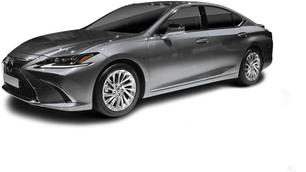
And since the Lexus ES is a close relative, we’re going to take a fresh look at the latest version, with a view of it as a bit of a survivor of a bygone era – where aspirational vehicles were created from normal family sedans.
Just like the Fairlane, Crown and of course, the Caprice.
Launched in mid 2018 but facelifted in 2021, we test the ultimate version of the seventh-generation ES, the 300h Sports Luxury – or SL, if we’re to make yet another tenuous connection to long-gone Holdens.
Let’s go!
Electrified utes are growing in popularity in Australia and carmakers have been paying attention.
While the BYD Shark 6 plug-in hybrid (PHEV) ute is by far the best-selling as it stands, there hasn’t really been any electric ute to go up against the poorly received LDV eT60, until now.
South Korea’s KGM (formerly known as SsangYong) has just launched the Musso EV, which is a purely electric dual-cab ute. It’s unrelated to the existing, turbo-diesel Musso and is more closely related to the current car-based Actyon and Torres SUVs.
Read along to see how this ute stacks up against its growing set of competitors.
There’s no denying the Sport Luxury is imposing, spacious, plush, chock-full of kit, efficient, speedy and pleasingly relaxing up to a point.
But its interior is also dated and true ride comfort can be elusive beyond smooth roads for this top-of-the-line version to make the grade as a proper luxury sedan.
The ES 300h feels more like an aspirational Toyota than a Lexus for the (wealthier) masses, especially after recent triumphs like the latest NX and RX SUVs. The Camry DNA is difficult to disguise, as the amused strangers who sat in our test car uninvited thinking it was their Camry highlights.
Sure, the hybrid is no Chevy V8, but in many other ways, the Sport Luxury seems like the modern successor to the Holden Caprice experience.
Despite having the Musso name, this electric ute is a completely different beast which is much more lifestyle-oriented than the older and unrelated turbo-diesel Musso workhorse.
There really isn’t much competition out there right now in the electric ute space but this makes a compelling case, especially for those looking in the fleet space. It has an appealing price, adequate range, SUV-like comfort and decent payload capacity.
Historically, cars like the ES appeal to an older and more conservative demographic, who value imposing, conspicuously-expensive looking sedans offering the luxury of space. This is the Cadillac model and our Lexus embodies it.
Which is why hire company operators snap such vehicles up. Great for airport-hotel-airport runs.
But it’s weird, given how much of Lexus’ design language is in the ES’ elaborate nose and tail treatments, how generically Toyota this looks. Certainly, our test car’s 'Sonic Quartz' white paint job does not help.
Just to reinforce this perception, two strangers were fully sat inside our unlocked test Lexus before they realised it wasn't their actual car parked nearby – a white Camry of course.
How they laughed. But if I had paid over $80K for my ES, I certainly wouldn't be amused.
You’ll either love or hate the exterior design of this ute. I’m not the biggest fan as the front is busy and likely won’t age well.
Regardless, you can’t deny that it stands out, especially with the yellow paint of our test car.
It’s hard to call this ute a Musso as it’s very clearly an Actyon or Torres from the B-pillar forwards. It’s like a Frankenstein as the rear tub section doesn’t look like it fits the aesthetic of this car.
Between the cabin and the tub area is a large slab of body colour with a rhino emblem, which looks tacky, plus there is an oversized grab handle section which serves no purpose.
At the back I like how ‘KGM’ is prominently embossed into the tailgate as no one will know what this vehicle is, at least for now.
However, I’m not convinced by the ‘X’ motif in the rear tail-lights. Like the split front LED headlight set-up with the full-width light bar, it looks too over-the-top for this kind of vehicle.
Inside, it's virtually identical to the Actyon and Torres.
While I like the look of the hexagonal steering wheel and the wraparound screen set-up combining the digital instrument cluster and touchscreen multimedia system, the copper dashboard trim looks out of place in a work-oriented type of vehicle. Good thing this is more of a lifestyle ute than something like a HiLux.
Pair this with the large amounts of glossy piano black around the gear selector and the window switches on the door cards, it’s a recipe for fingerprints, smudges and scratches.
The ES 300h may look like a gussied-up Camry on the outside, but there’s very little evidence of the Toyota inside the stretched cabin, with Lexus-specific seating, trim and dashboard.
However, if you’re familiar with the latest LS, NX or RX models, much of what you see is now dated, previous-gen tech, and that’s an issue in some key ways.
Let’s start with the SL positives, though.
Quiet and free from rattles, the interior is defined by its first-class fit and finish, and then closely followed by the vast length inside, with ample room up front to stretch out and relax in. The ES’ substantial width adds to the sense of spaciousness.
Ventilation is excellent, exemplary even, with strong and effective climate control all around the car. Great for very hot days.
The front seats provide practically infinite adjustment in most directions, and include a handy thigh-support extender that – like everything else inside – moves electrically.
Comfy and supportive, they do a fine job. Effective heated and vented cushions and backrests are further bonuses.
But let's call out the hard front headrests. They feel cheap. And the ES’ age now shows in other, eyebrow-raising ways for an $80K-plus machine.
The dash is a messy mix of now-dated Lexus styling cues – from the ugly asymmetrical centre console to the single circular instrumentation dial for speed and tachometer.
The original IS 200's analogue watch face theme was cool in '99. Today's iteration looks basic.
Storage seems poorly judged given the vastness of this sedan, provided for by cavities in the sub-sized centre armrest, glove box and door bins. Note that the latter cannot hold bottles.
Then, there’s the ill-conceived touchpad that requires brain-surgery precision when fingered to navigate the main display screen when driving (though now it's also a touchscreen, and not before time); after years of various iterations of this, it remains alien and confounding in the extreme to operate. Rest assured, it's been banished in newer-gen Lexuses.
Also annoying is the infernal ‘please obey all traffic regulations’ voice warning, just like you find in a Yaris; the limited and easily-flummoxed voice-control tech and the dated and low-fi graphics for the needlessly complicated sat-nav system.
We relied on CarPlay because the in-built item endlessly let us down. Chuck them all out.
However, there are upsides to a dated interior, because even though this is a confusing and at-times intimidating button-fest, it’s still preferable to the today's everything-behind-a-touchscreen mania.
Give us physical switches and buttons every time, like the ES. Yes, the Lexus also has them replicated within the central display, but the point is, the driver has a choice.
You shouldn't be shocked to learn that the Sports Luxury impresses most as a sumptuously comfortable back-seat experience.
Rear access is easy, the passengers can adjust the front seat, climate control and audio systems via handily-sited switches (meaning they're replicated thrice in some instances).
Limo luxury amenities include individually-reclinable and heated outboard seats that are downright sumptuous, blinds for all glass (electric for the rear window), a lined centre bin, face-level air vents, two USB ports, a 12V outlet, generously-sized elbow rests on the doors, overhead lighting and door pockets are also included.
This is tailored as an airport/hotel shuttle and very comfortable doing so.
No folding backrest, though, meaning the boot – though not small at 454 litres – lacks the load-through facilities now common in most other sedans, including the Camry.
Under the flat floor is a space-saver spare with the words ‘SPACE MISER MKIII’ emblazoned across it. Classy.
In summary, the ES’ interior is one of two parts – comfortable but dated up front, invitingly lush out back. Perfect for its intended station in life then.
You sit up high in the Musso EV’s driver’s seat, allowing for a clear and commanding view of the road ahead. This is something that buyers of these kinds of vehicles seek as it provides more confidence behind the wheel.
While the hexagonal steering wheel looks cool, it can take a while to get your head around it, especially when turning quickly. Thankfully there are plenty of physical buttons on the wheel for key functions, so it doesn’t entirely reinvent the wheel (pardon the pun…)
Ahead of the driver is a 12.3-inch digital instrument cluster which looks clear and bright. You can cycle through a range of informative pages and while this is good, I’d love to see more customisation and configurability.
The same can be said for the central touchscreen multimedia system. It’s a rather basic system, but that’s not a bad thing because it also means that it’s easy to use. Frustratingly however, the screen takes a while to boot up when you start the ute.
Even though the touchscreen is basic, the majority of owners will likely be using smartphone mirroring for the majority of their time behind the wheel. It’s for this reason that it’s disappointing there’s only the wired form of Apple CarPlay and Android Auto available.
On the flip side though, the wired connection is flawless and it actually charges your phone rather than overheating it like some wireless chargers do.
I’d love to see some more physical switchgear and buttons around the screen because you’re forced to use it for a number of key functions, like the climate control and volume.
Up front the Musso EV is fairly practical. There are two cupholders, plenty of phone slots, a large open section under the centre console, as well as dual bottle holders in the doors.
Moving to the second row you can tell this is a ute that’s based on an SUV. There’s much more space and thought put into the second-row comfort.
At a leggy 182cm I have plenty of room behind my own driving position. In the default position it’s a comfortable spot to be, however you can recline the backrest even further, although you sacrifice legroom as a result. You don’t get features like this in every ute.
In terms of second-row amenities there are two USB-C ports and air vents on the back of the centre console, a fold-down armrest with cupholders, as well as lots of seat-back pockets and bottle holders in the doors.
The tub of the Musso EV is where things get interesting. There’s a damped tailgate with two gas struts that allows for effortless opening and closing.
Once the tailgate is open, the space is decent but not standout for a dual-cab ute. The tub area measures in at 1345mm long, 1515mm wide (1100mm between the arches) and 510mmmm tall. This notably means a standard Australia pallet is a bit too wide for the tub.
Payload in the 2WD is up to 905kg which isn’t too bad for a dual-cab ute, however it drops to 805kg in the AWD.
Towing capacity is where this electric ute suffers the most. It has a braked towing capacity of only 1800kg, which is down considerably over the benchmark 3500kg many of its top-selling rivals can do. There’s also only a maximum towball down load of 180kg, which is limiting.
While this isn’t great, electric utes typically aren’t the most efficient for towing rigs. As a result this limits the Musso EV to more light-duty and lifestyle applications.
Disappointingly there’s no spare wheel at all in this ute. Instead you have to rely on a tyre repair kit which isn’t helpful if you have a proper puncture and not a slow leak.
The second-oldest Lexus nameplate after the LS flagship, Australia skipped the fifth-gen version from 2006 to 2012 altogether because it was ousted by the smaller, sportier and more-popular IS series.
However, the latter’s 2021 demise saw the situation flipped, with the ES retaking the mantle as the affordable Lexus sedan torchbearer, while also belatedly replacing the larger GS.
This all coincided more-or-less with a facelift later that year, which brought revised front-end styling, uprated safety, updated multimedia, extra kit and a beefier body, among other changes.
Plus, a (slightly) cheaper non-hybrid ES version returned, dubbed 250. Starting from $61,620 (all prices are before on-road costs), it uses the Camry’s 2.5-litre four-cylinder atmo petrol engine.
However, the 300h hybrid from about $2K more is the better seller, with its electric motor and battery pack assistance. Our test SL flagship kicks off from $78,180, and heaves with standard equipment.
On the safety front, the usual array of driver-assist tech is present, starting with Lexus’ pre-collision system that includes Autonomous Emergency Braking (AEB), blind-spot monitor, adaptive cruise control and lane-keep warning/assist. See the safety section for more.
The biggest change inside is the now-touchscreen-enabled 12.3-inch display, boasting a 360-degree view camera, Apple CarPlay, Android Auto, digital radio, a 17-speaker Mark Levinson audio system, CD player (!) and shockingly sub-par satellite navigation.
Beyond that, Sports Luxury buyers also score tri-beam LED headlights with adaptive high beams, an informative 8.0-inch driver display, a heated steering wheel, sunroof, powered heated/vented front seats (with memory setting for the driver), a wireless charger, head-up display, keyless entry/start, powered steering column (including retraction for easier access), active noise-control tech, rear privacy glass with sunshades, a powered boot lid with kick sensor, semi-aniline leather with a choice of walnut trims, tri-zone climate control, powered/reclining/heated outboard rear seats with centre armrest climate and audio controls, 18-inch alloys and performance (but not adaptive, crucially) dampers. More on that later.
All Lexus models also include an ‘Encore’ aftersales subscription program offering myriad offers and services including 'free' car rental.
Everything but the cliché sink, then, but is the 300h SL actually good value for money?
No rival can match the Lexus’ mix of sheer size, hybrid efficiency, spec generosity and aftersales support.
But around that $80K mark, the cheaper yet roomier Skoda Superb and smaller Volvo S60/V60 and VW Arteon 206TSI all feature all-wheel drive, as do the classy Audi A4/A5 quattros, while the rear-drive-biased BMW 3/4 Series, Genesis G70 and Alfa Romeo Giulia are far more focused on character and athleticism. Serious competition all.
And, as we found out, none can be mistaken for a Camry. Image is important at this level.
There are three trim levels in the local KGM Musso EV line-up.
Pricing starts at $60,000 drive-away for the 2WD trim, which is what we have here. While this is around $7000 more than the top-spec diesel-powered Musso, it’s around the same price as the popular BYD Shark 6 PHEV ute.
Electric dual-cab utes are thin on the ground right now, with the only notable rival being the lacklustre LDV eT60 which is priced at a hefty $92,990 before on-roads.
However, electric versions of the Toyota HiLux and Isuzu D-Max are due to launch over the next few years in Australia and will likely be priced similarly. In this respect, it makes the Musso EV seem like a bargain.
Do note however that this is based on car-like monocoque platform rather than more rugged ladder frame of many utes. While these models are not sold here in Australia (yet), the US-market, SUV-based Ford Maverick and Hyundai Santa Cruz are more logical competitors for this ute.
Standard kit includes 17-inch alloy wheels, LED headlights, dual 12.3-inch screens, wired Apple CarPlay and Android Auto and interior ambient lighting.
There are even niceties like eight-way power-adjustable front seats with heating and ventilation, plus heated outboard rear seats on all models which isn’t common in the ute space.
It’s disappointing there’s no wireless smartphone mirroring available across the line-up, especially in a brand-new car that was only revealed earlier this year.
A 2WD Black Edge trim is available that, as the name suggests, brings a range of blacked-out finishes. It’s priced from $62,000 drive-away.
At the top of the line-up is the AWD, which is priced from $64,000 drive-away. It’s configured identically to the base grade but gains an extra electric motor for more power and torque.
Doing duty in a cornucopia of Toyota products, the ES 300h’s A25A-FXS engine remains the same as the pre-facelift model, meaning it is a 2487cc (2.5-litre), double overhead cam, 16-valve Atkinson Cycle in-line four-cylinder petrol unit with variable valve timing.
In this application, it makes 131kW of power at 5700rpm and 221Nm of torque between 3600rpm and 5200rpm, and sends that through to the front wheels via an e-Continuously Variable Transmission (CVT) with a sequential shift facility offering artificially stepped 'ratios' for a more-conventional automatic transmission sensation.
A series/parallel full hybrid system, the engine is backed up by a permanent magnet synchronous electric motor, delivering 88kW and 202Nm, and is fed by a tiny 1.6kWh Nickel-metal hydride battery pack.
With only a couple of kilometres of pure-EV driving availability, and only under light throttle or when coasting along, the latter is recharged via the petrol engine as well as recaptured energy from the regenerative braking system. Combined power output is 160kW. No combined torque maximum is stated.
With an impressive power-to-weight ratio of 92kW/tonne, the 1740kg 300h needs 8.9 seconds to reach 100km/h, and maxes out at 180km/h.
To handle all that movement and mass, the steering is an electrically powered rack and pinion set-up, the front suspension consists of MacPherson-style struts and the rear suspension is made up of a multi-link arrangement.
Two-wheel-drive versions of the Musso EV are powered by a single, front-mounted electric motor producing 152kW and 339Nm. Yes, that makes this ute front-wheel drive.
It’s worth noting this is the exact same set-up as the KGM Torres EVX which has also just launched in Australia.
The all-wheel-drive version adds a second electric motor to the rear axle, bumping up total system outputs to 266kW and 630Nm.
Rated as Euro 6, the ES 300h requires a minimum brew of 95 RON premium unleaded petrol.
But that’s where the bad news stops, because over 626km of all sorts of driving in hot weather with the tri-zone climate control in full workout mode, we averaged an extremely commendable 5.6 litres per 100km. Well done, Lexus.
That’s against the official combined average of 4.8L/100km, which equates to just 109 grams per kilometre of carbon dioxide emissions. Not bad.
With the 50L tank brimmed, expect a real-world range of about 890km – or 1041km using the official average fuel consumption figure.
Either way, the 300h is mighty frugal for a 5.0-metre long and 1.8-tonne luxury machine. But cab and hire companies already knew that from their Camry hybrids, right?
All KGM Musso EVs have a BYD-sourced 80.6kWh lithium-iron phosphate (LFP) battery.
It allows for up to 420km of claimed range in the 2WD and up to 380km of claimed range in the AWD, both according to WLTP testing.
The official energy consumption is 23kWh/100m in the 2WD and 26kWh/100km in the AWD. However, in our largely unladen urban testing of the 2WD we saw an average of 20kWh/100km, which is fairly decent for a larger EV, but not outstanding.
Using this, the Musso EV 2WD has a theoretical range of 403km.
The Type 2 CCS combination charge port is on the passenger-side front wheel arch, which is great because it’s kerbside.
Maximum DC charging is 120kW, allowing for a quick charge from 10 to 80 per cent in 36 minutes, whereas maximum AC charging is 10.5kW, allowing for a 0-100 per cent charge in 10.5 hours.
Vehicle-to-load (V2L) is available through the use of an accessory which plugs into the charge port. This allows you to use the ute’s battery to power household appliances, among other things.
In the right conditions, the ES 300h is a big, squishy, comfy drive. At low speeds, for instance, thanks to an airtight cabin that does a great job isolating its pampered occupants from the outside world.
You cannot hear the car on start-up because the electric motor whirrs this Lexus off the line instantly, silently and effortlessly. And aided by all the surround-view cameras, the steering is light and direct enough to make parking a breeze. Automotive Valium to soothe your weary head after a long day.
Likewise, get the ES out on a smooth motorway and that relaxed feeling remains, with the 300h being right at home as it lopes along quietly and steadily. Cocooned in sumptuous leather and walnut, the adaptive cruise control gently rolling with the ebb and flow of traffic, it’s easy to zone out in here.
Find an empty stretch of road and you might also be impressed at how instantaneous the 300h’s throttle response is, leaping into action and piling on the speed without even breaking a sweat. This thing ain't slow!
Likewise, if you must hurry through a tight set of corners, the Lexus will remain composed and in control, without skipping a beat. Even the brakes seem well tuned and nicely modulated – something that many electrified vehicles struggle to achieve. It’s all so nice and easy.
So, what’s the catch?
First of all, while hushed when pussyfooting around, the illusion of posh sophistication is shattered once the accelerator pedal is prodded down hard, with the accompanying engine noise seeming incongruous.
Perhaps it’s because we’ve been lulled into an electric peace, but once the revs are up, no amount of sound-deadening will quell the mechanical roar.
And it's that same Camry hybrid symphony you've probably heard hundreds of times before, in the back of a taxi hurrying to the airport.
Except in the Lexus, it's far-more muffled. Like you're wearing headphones.
Then there’s the question of bonding. While the ES 300h will do what’s asked of it capably and without complaint, there is nothing to connect car with driver.
By this, we mean that the steering is remote and feels numb at all times, with little to no feedback. Enthusiasts will search for the short way home. This is the anti-Alfa Giulia - technically a rival.
Most people will not care about that, but on the Sport Luxury’s 18-inch wheel and 235/45R18 tyre package – while modest by today’s standards – the ride quality is less than ideal on anything but smooth roads.
The ES can easily cope with small-frequency surface irritations, but seems to lack sufficient suppleness dealing with larger bumps and pot holes.
There’s an underlying and often unyielding firmness that undermines this car’s luxury aspirations. We’d dial back the taut handling for more cushiness if we could. Or fit a decent set of adaptive dampers.
Plus, the Dunlop Sport Maxx tyres aren’t as quiet as we’d expect on some of our coarser bitumen surfaces.
Comfy on smooth roads, fast when you need it to be, fit enough to go exactly where you point it to without losing composure, and wonderfully economical even when driven like it’s been stolen, the 300h has much to offer from a driving point of view.
But you won’t be aching to drive it just for fun’s sake. And you’ll quickly learn which roads are less than perfect in your neck of the woods.
As previously mentioned, the Musso EV we tested is a front-wheel drive. Its electric motor doesn’t have the highest outputs, although like all electric motors, peak torque comes on tap from a standstill.
In everyday traffic the acceleration is decent, yet does not stand out when unladen. Load the ute up with stuff in the tub or hook a trailer on the back and it might struggle. Thankfully if you’re after more oomph there’s the all-wheel drive.
There are two drive modes available – Eco and Sport. The former dramatically nerfs initial acceleration to make progression feel naturally tapered and to ensure there’s no front-wheel slip, but as a result it can feel a little sluggish. The latter however gives you everything and can create some light front-tyre spin if you’re too eager with the throttle.
You’re able to select from a number of different regenerative braking modes which feeds kinetic energy back into the battery pack. None of them offer a one-pedal driving mode, meaning you’ll still need to use the brake pedal to come to a complete stop.
This mimics the braking experience of a hybrid vehicle, which likely feels more comfortable and natural for drivers of internal combustion engine (ICE) vehicles.
Once you get your head around the hexagonal steering wheel, the steering feel itself is on the lighter side, but it still feels direct. As a result, it’s fun to chuck this ute around.
However, you can’t escape just how big this ute is, especially when parking and doing three-point turns. It measures almost 5.2m long, which is slightly shorter than a Ranger but still not compact.
Unlike many traditional dual-cab utes, this electric ute is based on a monocoque chassis, rather than a body-on-frame chassis. Additionally, the rear suspension is a multi-link set-up rather than a leaf spring set-up.
As a result, this makes the driving experience more like an SUV that prioritises passenger comfort than a ute that prioritises outright payload and towing capacity.
Around town the ride is supple but still has a firm edge, especially over the rear, even when unladen.
Smaller-than-average 17-inch alloy wheels wrapped in chunky tyres with thick sidewalls smooth out some bigger bumps.
A nifty feature this ute has is self-leveling rear shock absorbers. It’s able to pump up the rear end when you’ve got a heavy load in the tub, or if you're towing a trailer, in order to create a flat ride height. This is great as you won’t be dazzling oncoming cars with your headlights.
From a noise, vibration and harshness (NVH) standpoint, this ute is largely quiet around town. Despite this, there’s an annoying pedestrian warning sound that plays under 33km/h and can intrude into the cabin.
At higher speeds there is a fair bit of road noise which is amplified by the lack of ambient engine noise. There can also be occasional wind noise buffeting from the bonnet flourishes.
Tested in 2018 under a less-strict regime, the ES delivers a maximum five-star ANCAP crash-test rating result. Back then, it scored especially strongly in Adult, Child and Vulnerable Road User categories, and quite well for Safety Assist tech.
There are 10 airbags in total (offering dual frontal, side chest, side head and front-occupant knee protection). The AEB system works between 10km/h and 180km/h, while the lane-tracing, lane-keep and emergency steering assist systems are operational from 50km/h to 200km/h.
Other driver-assist tech includes rear cross-traffic alert, blind-spot monitoring, adaptive cruise control with full stop/go and road-sign recognition and 'Intersection Assist' with 'Turning Assist'. The latter warns and brakes the car if the driver attempts to turn into oncoming traffic.
These are backed up by adaptive LED headlights with auto high beams, 360-degree view cameras, tyre pressure monitors and 'Lexus Connected Services' that can notify emergency services in an accident and track a stolen ES. An alarm with intrusion sensor is also fitted.
You’ll also find anti-lock brakes with brake-assist and electronic brake-force distribution, stability and traction control systems, three rear-seat child-seat tether anchorages and two ISOFIX latches, fitted to the outboard positions of the back bench.
The KGM Musso EV hasn’t been crash-tested by ANCAP or Euro NCAP.
As standard it receives eight airbags, autonomous emergency braking (AEB), blind-spot monitoring, front and rear cross-traffic alert, lane-keep assist, lane centring, adaptive cruise control, front and rear parking sensors, as well as a surround-view camera.
The safety systems all do a good job of staying out of the way when you’re driving, though the lane-keep assist can be a little too hands-on at points if the lane is narrow.
Here is where Lexus really excels nowadays.
Since the beginning of 2021, it caught up with most other manufacturers by offering a five-year, unlimited kilometre warranty with roadside assistance – up from four-years and 100,000km previously. Free towing and loan vehicles are provided for that period, too.
Service intervals are at 12 months or 15,000km, whichever comes first.
The ES offers three years and 45,000km of capped-price servicing, with each one costing $495 – as well as a free loan vehicle and car wash.
Plus, there’s also Lexus’ ‘Encore’ aftersales subscription program offering myriad offers and services.
The Musso EV is covered by a seven-year, unlimited-kilometre warranty as standard, whereas the high-voltage battery is covered by a 10-year, unlimited-kilometre warranty.
KGM is yet to confirm servicing intervals or pricing.
There are 66 KGM dealers and service centres around Australia. The majority are spread over the eastern seaboard, however, there is generous coverage in many regional areas.