What's the difference?
There are two ways to look at the Lexus CT200h; as either the cheapest model in the Japanese company’s range, or as a planet-saving hybrid.
Either way, the four-door, five-seat CT200h hatch – which has been updated for 2018 – differs from the rest of the Japanese luxury brand’s lineup for a number of different reasons.
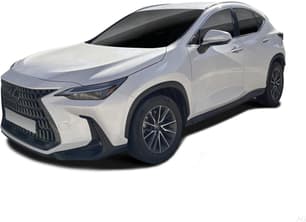
One of the great, unsung success stories over the last few years has been the Lexus NX.
Out since 2014, it turned Toyota's ailing luxury brand around, connecting with buyers gravitating towards luxury midsized SUVs like the BMW X3, Audi Q5, Mercedes GLC and Volvo XC60. Today, no school run is complete without them!
Now there's an all-new one. And, as Lexus' bestseller by far, any new NX is a big deal. The recipe is much the same – including petrol, turbo and hybrid versions – but with fresher and better ingredients. Plus, there's also a new plug-in hybrid flagship to really shake things up.
Is it time to cancel your order for that German, British or Swedish luxury midsized SUV? Keep reading to find out...
The cheapest Lexus of them all isn’t chasing badge snobs with the CT200h as blatantly as Mercedes-Benz, BMW and Audi do with their entry level cars… but it’s perhaps not quite the Lexus you’d expect it to be.
It has a lovely front-of-cabin, for example, but there’s a lot of last-gen Prius in plain sight in the rear of the cabin.
The hybrid powertrain, too, is noble in concept, but the day-to-day reality is that it’s not as nice to drive, especially town to town, as a regular petrol-powered car of similar size.
The foot brake, silly multimedia joystick and odd gearshifter also spoilt the party a bit.
Empty nesters who are looking for a nice city runaround with a tinge of greenwash about it will love it… and if the current Prius is anything to go by, the next CT will be a very good thing indeed.
The all-new NX is a massive step forward over its popular predecessor.
In every way, it is an improvement, with better refinement, comfort, performance, efficiency, safety and choice.
Indeed, look out, Audi, BMW, Mercedes and Volvo: the NX has finally come of age. If we were in the market for a luxury medium-sized SUV, we'd definitely have the Lexus on our shortlist, especially the incredibly efficient hybrids.
Europe, you've been warned.
There are some light external revisions for the latest update of the compact Lexus CT200h. New grey 17-inch alloys are unique to the Sport Luxury, along with a black roof treatment, new L-shaped LED driving lamps that match new-design LED tail-lamps, while Lexus designers have also added its new spindle grille to the brand’s smallest model.
It manages to be inoffensive, but it doesn't really reflect the brand's latest design language of 'real world concept cars' like the NX and the LC ranges.
Inside, a couple of new leather colour options are available for the CT200h, while the addition of the wide-format 10.3-inch screen to the top of the centre console is the single largest change. Interestingly, the steering wheel controls appear to have regressed a little from the previous model, no doubt brought about by the addition of the new driver aids.
UX, NX, RX, LX, RZ... Lexus' nonsensical naming strategy can be quite flummoxing.
Just remember that the NX sits above the smaller UX but below the larger RX in the brand's burgeoning SUV stable. It's also closely related to the wildly-popular Toyota RAV4 – though you'd never know by looking at them side-by-side.
At first it may look much like the old model, but the new NX has switched to the latest RAV4's advanced Toyota New Global Architecture, known as GA-K in Lexus' lexicon.
Basically, it allows for a vehicle that's between 20 and 30 mm larger than before, to help improve overall proportions. And with this considerably bigger canvas to work on, it also means that Lexus's stylists have had more freedom to evolve the brand's design language. Albeit at a glacial pace from an exterior point of view.
Starting from the front, the controversial 'spindle' grille has been toned down a bit and the headlights have a neat Lexus 'lightning rod' tick motif, while – looking at the side profile – a startlingly cab-backward shape gives it a surprisingly sleek silhouette.
The extra length and stretched wheelbase let the design to breathe more than before, bringing with it a more graceful and elegant aesthetic.
Finally – and this is a brand first – the new NX's rather nondescript rear has 'LEXUS' spelled out in letters, with no sign of the company logo.
The CT200h basically replicates a small hatchback in terms of interior size. It'll seat five, but if you try to put three adults across the back, they won't be particularly happy about it.
The roofline is quite low and the car’s waistline is high, which makes the glasshouse feel small. Room in the front is adequate, but only just for taller drivers; the sunroof, as fitted to our test example, takes away a good chunk of headroom, despite the CT200h standing just 5mm lower than a Corolla overall.
The seats themselves, too, are mounted just a touch high to be comfortable for taller drivers, while rear seaters will complain bitterly about being stuck behind my (184cm) driving position. However, my more diminutive wife pronounced herself very comfortable behind the wheel and in the passenger seat.
A nice, small steering wheel sits in front of a single-dial dash that sports two digital screens either side. The left-hand screen changes when you change the drive mode dial between Eco, Normal, and Sport. And there's also a full EV mode button in handy reach.
Two cupholders are line astern between driver and passenger, although storage is at a premium thanks to the size of the car. Climate and multimedia controls - and even an old-school CD player – flow right through underneath the centre console, which steals away valuable space. There are no extras like wireless charging bays, nor is there Apple CarPlay or Android Auto.
There are bottle holders in the door, but don't try and stash anything that's over one litre in size because it just won't fit.
It's quite an austere proposition for rear-seat passengers, with no bottle holders in the doors, no cup-holders and no charging points. There are fixed vents under the front seats and on the right side of the rear area, so it's not a complete desert, and there are ISOFIX mounts for two child seats in the rear.
Another practicality issue that's unique to the CT200h is the gear shifter. It operates as a spring-loaded joystick, and unless you're watching the dash indicator, it can be tricky to know which gear you're in. Other car makers have actually recalled cars with this style of transmission stick, and it's certainly something that you have to get used to.
Likewise, the old-school foot brake is certainly an anachronism in something like a Lexus.
Based on the previous generation Prius, the nickel-metal hydride battery for the CT is hidden underneath the rear seat, so it doesn't steal away too much boot room. However, the boot floor is still quite high, and the area is rather small at 375 litres with the seats up. There is 985 litres available when you drop the seats, but the aperture is short and narrow, so larger items will be a squeeze. There is a space-saver spare nestled away underneath the boot floor, too.
Another practicality note in the negative column is Lexus's insistence on the odd joystick control for its multimedia system. It's simply not very good. It’s imprecise when compared to a touchscreen, the action and feel of our test unit was very much less than premium, and it’s just awkward and clumsy to use. The CT is not the only Lexus to use it, but we wish the company would just see the light and ditch it all together.
For the really big design step-change, you'll need to step inside...
Hallelujah! Lexus has finally forsaken its weird, futuristic dash design elements for a simpler and far-more intuitive look that finally banishes unnecessary complication while still appearing progressive.
Somehow, there are now 33 fewer switches than before, aided by permanent virtual short-cut buttons on both of the touchscreens on offer.
Lexus has clearly been listening!
So, now, what we have here is an attractive, functional and superbly built interior (save for a couple of very-atypical Lexus rattles in these early production cars we drove), boasting quality materials that rate highly on all the important sensory metrics: lush to the touch, easy on the eyes and lovely to breathe in... and breathe out again!
Other plus points include a gorgeous steering wheel, attractive instrument dials, endless storage and climate control that's so effective it pretty much creates a microclimate within your personal space.
Brilliant seats, with ample adjustability, provide comfort and support even after hours ensconced within them, while the driving position is enhanced by thoughtful placement of most major controls - including the natty little gear lever and big old paddle shifters.
It's also worth pointing out a couple of surprise-and-delight features – starting with the 'e-latch' electric door handles, with sensors that delay opening if there are cyclists or pedestrians on approach to prevent striking them, as well as a manual override should the battery go flat.
There's more, like the wireless phone charger tray that also slides to reveal a hidden cubby area; centre-console lid that opens sideways FROM BOTH DIRECTIONS – what sort of sorcery is this?? – and optional digital rear-view mirror that works like X-ray vision in seeing through obstructions... handy for when back-seat passengers' beehives block the back view out.
However, after lavishing such intricate attention to detail, why does the instrument cluster's digital trip computer use the same cheap style and font as found in a lowly Yaris? It takes you completely out of the Lexus state-of-mind.
And, like me, you might lose your mind with the infuriatingly fiddly capacitive touch controls on models with the HUD. While it does provide a broad range of functionality that's displayed on the windscreen view, it's difficult to modulate accurately, and doesn't operate intuitively. Remnants of the fiddly old touchpad from the previous NX. Why can't Lexus just abandon such needless complexity? After a while I worked it out – but it's deeply distracting to use.
Oh well. At least the rear seat area is an improvement over the old NX, with more space, comfort and convenience features. Entry/egress is easy, with wide apertures that ought to make fitting in child seats less of a chore than before.
Most adults should find sufficient leg, knee, shoulder and head room back there, though a trio of adults might result in a very tight fit.
Rear facing air vents (with climate control functionality on higher grades), 12V power outlets, twin USB ports and a wide centre armrest with cupholders are included.
Further back, there's a handy (though not class-leading) 520 litres of luggage space regardless of powertrain, expanding to 1411L when the rear backrests are folded. Access is easy thanks to the wide door and flat floor, where a bit of extra storage and even space for the cargo blind are provided. Thanks, Lexus.
Note, though, that runflat tyres take the place of any spare wheel – a bummer if you're out on deserted country road late at night with no help in sight.
The 1.8-litre petrol-electric CT200h comes in three different flavours – the Luxury, the F-Sport as tested here, and the Sport Luxury. The range now kicks off at $40,900 (up $2150) and peaks at $56,900 with the Sport Luxury (up $810).
The F-Sport may be a little lacking in the actual ‘sport’ department, but it’s is pretty flush with flash kit, including not one but three motors (one petrol and two electric), auto lights and wipers, a wide 10.3-inch multimedia system, leather seats, dual-zone climate control and new 17-inch alloys.
At $50,400 plus on-roads, the F-Sport has jumped in price by $1960, but it’s gained a host of new gear, including a new driver aid system that adds auto emergency braking (AEB), pedestrian-detecting pre-collision warning system, lane departure warning with steering assistance and adaptive cruise control.
There are also LED headlights and taillights, as well as revised styling for the front and rear bumpers.
The CT will be cross-shopped against other premium tiddlers like the Mercedes-Benz A-Class, Audi’s A3 and the BMW 1 series. Comparing it like-for-like in the hybrid category, there’s the top spec Toyota Prius i-Tech, while Nissan’s Leaf could theoretically be lumped in both on price and on environmental grounds.
Like most Lexuses, this second-generation NX is spoiling us for choice, with four quite different models to choose from, ranging from just over $60,000 for the base four-cylinder NX 250 2WD (which means front-wheel drive in this instance), to $90,000 for the debuting NX 450h+ plug-in hybrid all-wheel drive (AWD)... and all before on-road costs, of course.
Within these are three grades: Luxury, Sports Luxury and F Sport, as well as a pair of equipment bundles. And, as always, the price you pay depends on how high-tech you want your NX to be.
Keep in mind that all feature a lofty level of standard safety equipment, including eight airbags (with a front centre item fitted as well), autonomous emergency braking (AEB) with intersection assist and pedestrian and daytime cyclist detection, lane-keep and steering assist, blind-spot monitoring, adaptive cruise control, road sign recognition, front/rear cross-traffic alert and Safe Exit Assist – which won't allow doors to open if passing cyclists or pedestrians are in danger of being struck.
Kicking things off is the Luxury grade in the entry-level NX 250 from $60,800 and NX 350h from $65,600.
It includes LED lights with auto high beams, keyless entry and start, a 9.8-inch touchscreen, 'Hey, Lexus!' always-on voice command, satellite navigation, Apple CarPlay/Android Auto support, digital radio, a power-adjustable steering column, electrically-actuated front seats with heating, dual-zone climate control, a powered tailgate and 18-inch alloy wheels running on runflat tyres.
Given that key competitors like the base BMW X3 sDrive2.0i and GLC 200 cost nearly $15,000 and $20,000 more respectively, you can see how serious Lexus is about dominating this segment.
Stepping up to the NX 350h Sports Luxury grade from $73,100 brings tri-beam LED adaptive headlights, leather upholstery, ritzier cabin materials, a 14.0-inch touchscreen, 20-inch alloys, head-up display, wireless smartphone charging, ventilated front seats, ambient lighting, surround-view cameras and a 17-speaker audio system upgrade.
For a racier look and feel, there's the F Sport grade, which scores most of the Sport Luxury fittings (minus the audio/speakers upgrade and digital rear-view mirror) and then adds adaptive dampers, sports suspension, extra configurable driving modes, a unique body kit and alloy wheel design, sports seats and blacked-out cabin trim.
The F Sport, too, begins from $73,100 in the NX 350h, and this also happens to be the price of the non-hybrid, performance-focused NX 350 F Sport with a turbo and AWD.
Speaking of which, the NX 350h hybrid is available with AWD as well, adding $4800 on all grades, brandishing two electric motors (one per axle) rather than having a mechanical drive shaft, as per the NX 350 F Sport turbo AWD. With this level of choice, little wonder, then, that Lexus expects around half of all buyers to go hybrid.
Finally, there's the NX 450h+ F Sport AWD plug-in hybrid electric vehicle (PHEV – the first Lexus or Toyota with this tech in Australia), starting from $89,900. This undercuts all of its European rivals, including the $95,700 Mercedes-Benz GLC 300e, $102,001 Range Rover Evoque R-Dynamic HSE PHEV and $104,900 BMW X3 30e PHEV.
Buyers seeking popular goodies like a panoramic sunroof, kick-motion powered tailgate, power-folding rear seats, heated rear seats, heated steering wheel, 17-speaker audio upgrade, digital rear-view mirror and parking assist can find some or all of these bundled up into varying 'Enhancement Packs' according to grade, offered across the range from between $3000 and $6000.
Since early 2021, Lexus has also matched Mercedes-Benz in lifting its warranty to five years/unlimited kilometres, and also offers capped-price servicing at $495. There's also the brand's 'Encore' aftersales subscription program offering myriad offers and services.
No NX is lacking in equipment or features compared to its direct, corresponding luxury medium SUV rival, and matches most for technology.
The 1.8-litre twin-cam petrol engine makes a relatively low 73kW and 142Nm, while a 60kW, 207Nm electric motor that’s also connected to the front wheels chips in its share.
Combined, the system produces 100kW, while the torque figure translates to around the 150Nm mark. That juicy 207Nm doesn’t come into play, sadly, given that the petrol engine – which is built to run cooler than a traditional Otto cycle engine, and therefore more efficiently – does most of the work.
Throw in a transaxle for the electric motor and a power inverter, and things are getting complex. However, if the Prius is any indication, the CT200h’s drivetrain is durable and relatively serviceable, with batteries estimated to last ten years or longer.
Here is where the NX shines, with clear options that provide very obvious benefits according to wants, needs and budgets. And there are even fundamental differences compared to the RAV4 powertrain, further justifying that premium 'L' badge experience.
Let's divide these into petrol and petrol-electric hybrid models, with petrols first.
The NX 250 is powered by a 2487cc 2.5-litre naturally aspirated direct-injection twin-cam four-cylinder engine, producing a healthy 152kW of power at a heady 6600rpm, and 243Nm of torque from 4000rpm to 5000rpm.
Drive is sent to the front wheels only, via an eight-speed torque-converter automatic. Tipping the scales at 1705kg, it's the lightest NX on offer, and thus delivers 89.1kW per tonne.
The NX 350 turbo version, meanwhile, uses a somewhat different four-cylinder engine as well as a variation of the eight-speed auto. A 2393cc 2.4-litre turbo unit, it pumps out 205kW at 6000rpm and 430Nm from a low 1700-3600rpm. It's also AWD only, which adds kilos. That said, coming in at 1860kg, its power-to-weight ratio is a stirring 110.2kW/tonne.
Moving to the series/parallel hybrids, both the expected-bestselling NX 350h and the intriguing new NX 450h+ PHEV are based on that 2487cc 2.5-litre four-cylinder atmo unit, tuned this time to offer 140kW and 136kW (at 6000rpm) and 239Nm/227Nm (from 4300-4500rpm and 3200-3700rpm) in the NX 350h and NX 450h+ respectively.
The NX 350h uses either a single synchronous permanent magnet 134kW/270Nm electric motor in the front-drive version, or two electric motors (adding a 40kW/121Nm generator on the rear, double wishbone axle) to create the AWD alternative. Their combined total power rating is 179kW. The NX 450h+ ups that to 227kW.
None are light, however. While the NX 350h 2WD weighs a reasonable 1810kg, the twin-motor AWD system bumps that up to 1870kg, while the NX 450h+ is a portly 2050kg. Result? The power-to-weight ratio for all three are 98.9kW/tonne, 95.7kW/tonne and 110.7kW/tonne – almost identical to that of the NX 350 turbo.
The hybrids' gearbox in question is an 'e-CVT' electronic continuously variable transmission, working with a lithium-ion high-voltage battery, while the NX 450h+'s EV drive's battery is an 18.1kWh unit.
So, no prizes for guessing which one is the most frugal...
Here’s the odd thing – over 220km of largely highway driving, I couldn’t get the CT200h under a dash-indicated 10.4 litres/100km, against a claimed combined fuel economy figure of 4.4L/100km.
I topped the tank off with 18 litres of fuel, which works out at a closer 8.8L/100km… but it still ain’t anything like 4.4.
Another owner I spoke to, though, said he regularly records high fives with his CT200h in mixed conditions.
It runs a 45-litre tank that’ll happily take 95 RON fuel.
All NXs require 95 RON premium unleaded petrol, and are emissions rated at Euro6b.
Not surprisingly, on the official combined run, thirstiest of the lot is the NX 350 turbo at 8.1L/100km (for a carbon dioxide emissions rating of 185 grams per kilometre), followed by the NX 250 at 6.9L/100km (158g/km).
The NX 350h cut that down to 5.0L/100km (113g/km for the FWD and 114g/km for AWD), while the NX 450h+, naturally, is the most economical by far, slashing that down to just 1.3L/100km, or 29g/km.
While we can't tell you what the NX 450h+ managed on test, the others didn't quite match their official numbers. Over several hundred kilometres, the NX 350 ranged from 9.3-11.3L/100km, the NX 250 7.5-9.3L/100km and the NX 350h from 5.7-6.8L/100km.
Note that the NX 450h+'s 18.1kW battery can only be charged using an AC outlet, meaning it'll need about 2.5hr to get the job done. Its EV-only range is about 70km on the WLTP score, or 87km using the less-realistic NEDC method.
At 55 litres, the fuel tank will allow the following combined average range between refills: 679km (NX 350 turbo), 797km (NX 250), 1100km (NX 350h) and a barely believable 4231km (NX 450h+, naturally).
If you've ever driven a Prius, then you'll be very familiar with the way that the CT drives. Based around a 73kW Atkinson cycle petrol engine which focuses on fuel efficiency rather than outright power, a 60kW electric motor (the pair combine to produce 100kW in total), a nickel-metal hydride battery array and a CVT gearbox, the CT200h – like the Prius – is a bit different to a regular hatch.
Under light throttle, the CT is quiet and moves along quite well, and you can even use full Electric Vehicle mode at speeds under 45km/h for a brief amount of time, (slightly less than two kilometres), and with a very gentle right foot.
The battery array is recharged via the petrol motor as well as regenerative braking (where heat energy is captured and directed back to the electric system) – but unlike a petrol-electric plug-in hybrid, there’s no way to stick a 240v cable into the CT to top up the battery.
It has the unusual whines and odd noises that you would associate with a partly electric car, but the petrol motor sounds just like a regular old four-pot petrol unit, and it’s running most of the time.
One issue with the drive of a hybrid is its ability, or the lack thereof, to get off the line in any sort of hurry. You really have to mash the throttle to get going, which takes some getting used to. There’s also some hesitation and un-Lexus like thumps from the drivetrain if you confuse it by almost stopping then taking off again.
The CT200h’s biggest bugbear is that the fourth generation Prius exists. Built on a more sophisticated newer-generation platform and with a more refined drivetrain, the new Prius is a great insight into how good the next CT will be – and what the shortcomings of the current one currently are.
The CT works well in high-traffic city environs, where a light throttle foot helps get the best out of the unusual drivetrain. Lots of lag from rest is an annoyance, as is an excess of CVT whine under hard efforts, but the CT200h pootles around town very well.
Its small size does play against it when it comes to keeping out road noise at freeway speeds, though the CT is superior to most other similarly sized cars in this regard. As an aside, its build quality is nothing short of amazing, with minimalist panel gaps, a tight interior and lashings of paint on every surface.
The previous NX looked better than it drove.
Based on the previous-gen RAV4, it failed to rise above such humble underpinnings, despite all the extra design, comfort and equipment features Lexus created to help it do just that.
Sure, there were some very appealing things going on, including attractive styling, an intriguing interior, sumptuous seats and lots of kit to play with, but the Toyota's noisy, fidgety and tiring DNA soon became apparent, especially compared to rival luxury midsizers. And some of the dashboard multimedia controls were just down-right madness.
Building on the latest RAV4's set of modern, competent components, however, has fundamentally changed the NX.
For starters, it's much quieter inside. Whether at idle, travelling at speed, or traversing some pretty rough patches of road, the NX at last rides like something you'd expect a Lexus should. And given how noisy and droney most of its European rivals also are on Aussie bitumen, it gives the Japanese contender a handy head-start.
The same applies to how enveloping the soft yet supportive seats are, how settled the suspension feels and how calm the experience is. No previous Lexus SUV has seemed so... refined. Even the really big, expensive ones.
From the driver's point of view, the steering is beautifully balanced, for precise yet reassuring control at speed. This varies according to which grade you're driving, but as a whole, while not sporty like a BMW's nor as fluid as, say, a Mazda CX-5's helm, the Lexus walks that line between easy and involving quite well.
Ditto the handling and roadholding. The lightest of the bunch – the petrol-powered NX 250 and NX 350 turbo – feel ripe and ready for a hustle along a curvy ribbon of road, coming across as taut enough for tight turns yet supple enough to soak up the many bumps and thumps thrown up at them.
Switching to the NX 350h hybrid, there's a greater sense of mass, whether driving the front-drive 2WD or even heavier AWD version. As such, it's still quite dynamic, but not as athletic as the petrol-only models.
In terms of performance, there are no duds – and that's no surprise, as the previous NX's powertrains were pretty sound as well.
Though simply a front-drive version of the RAV4 Edge's 2.5-litre unit, the NX 250 seems more muted than the Toyota's application, and yet is willing to rev hard to hit the power band necessary for it to feel alive. At higher speeds, sometimes the raspy engine can sound a tad noisy when extended, but it's never harsh or rough.
Moving on to the NX 350h, it feels like, well, a heavier and quieter RAV4, not unexpectedly. Silent at take-off speeds, the engine chimes in fairly unobtrusively, providing plenty of oomph along the way, while the CVT seamlessly slices through each (artificial) ratios. After the petrol versions, the steering does seem a little more remote, and you can feel the extra heft through turns, but – again – the basics underneath seem right.
Accelerating hard on the open road does reveal that typical Toyota hybrid engine roar and CVT flair, but only when the throttle is prodded hard. Driven normally, the NX 350h is as smooth, swift and sweet as you'd expect. And definitely in keeping with brand performance expectations.
Finally, there's the NX 450h+ F Sport. At over two tonnes, Toyota and Lexus' plug-in hybrid debutante is not a flyweight by any means, yet having all that extra low-down mass does result in a slightly different driving experience.
Take acceleration: having access to 227kW of power and torque together at very low revs equals lots of thrust right from the get-go. And while it's not sports-SUV rapid, there's certainly enough punch to justify the F Sport badge. Similarly, the low centre of gravity that the 18.1kWh battery pack provides seems to promote hunkered-down road-holding attitude through tight turns, with minimal body roll.
Regardless of which NX you're looking at, quibbles are few. Occasional road and tyre roar are still a little evident over some surfaces; the adaptive cruise control and lane-keep technologies could benefit from some local fine-tuning so they behave a little more nuanced in Australian conditions (and that applies to most luxury SUVs nowadays); and the optional head-up display's capacitive controls located on the steering wheel spokes are distracting, difficult to modulate and needlessly complicated. They're so annoying we'd even untick the Sport Luxury option box to avoid it.
If we had to choose a favourite among the new NXs, it would probably be the NX 350h F Sport, since its adaptive sports chassis provides the best compromise between agility and suppleness; the NX 350 turbo is probably the most fun to drive hard and fast, while the base NX 250 is thoroughly competent and sufficiently luxurious to scare most rivals.
Could this really be a medium-sized Lexus SUV we're talking about?
We're not saying that the latest NX is perfect, but it now provides a very compelling argument not to buy European.
Part of the update for 2018 is the addition of several driver aid systems, including AEB across the range, lane departure control with steering and adaptive cruise control.
The F-Sport also has reversing camera and eight airbags as standard, ensuring the maximum five-star ANCAP safety score it managed in 2017.
Being so new, there's no ANCAP rating for the latest NX range right now, but it is expected to score a five-star result just like its predecessor.
This is because there is plenty of safety for Lexus to crow about, including eight airbags (providing coverage to all outboard occupants, also taking in dual-front occupant knees and centre item to stop lateral head strikes), autonomous emergency braking (AEB) with intersection assist and pedestrian and daytime cyclist detection, lane-keep and steering assist, blind-spot monitoring, adaptive cruise control with stop/go functionality, auto high beams, road sign recognition, front/rear cross-traffic alert, reverse parking cameras, all-round parking sensors, tyre pressure monitors and Safe Exit Assist – which won't allow doors to open if passing cyclists or pedestrians are in danger of being struck.
There's also Intersection Turn Assist (ITA – providing early brake activation if required), Emergency Steering Assist (ESA – extra steering assistance to help keep the vehicle in its lane) and Emergency Driving Stop System as standard across the range – along with a digital rear-view mirror on some grades.
Anti-lock brakes with brake-assist and electronic brake-force distribution is also standard, along with stability and traction control systems. Lexus provides three rear-seat child-seat tether anchorages and two ISOFIX latches.
At the time of publication, there is no data on the NX's AEB operating range.
Lexus sells the CT with an unusual four-year/100,000km warranty, which includes roadside service coverage. The battery pack has an eight-year/160,000km warranty, while Lexus would like to see you back for a service every 12,500km or 12 months.
It’s not just about a warranty or a service interval with Lexus, though. For decades now, its customer service record has topped all industry measures, and everyone we know who has bought a Lexus with their own money has raved about the quality of the service received.
As well, it’s a level of service that’s provided across the range. It’s a tangible benefit of buying a CT200h.
Lexus now offers a five-year, unlimited kilometre warranty with roadside assistance.
Furthermore, NX 350h hybrid and NX 450h+ plug-in hybrid models also feature a 10-year, unlimited kilometre battery warranty.
Service intervals are at 12 months or 15,000km, whichever comes first.
The NX also includes three years and 45,000km of capped-price servicing, with each one costing owners just $495 – and that's highly competitive pricing for a luxury brand.
Plus, there's also Lexus' 'Encore' aftersales subscription program offering myriad offers and services.