What's the difference?
So, you’re after an affordable alternative to the increasingly expensive Toyota HiLux and Ford Ranger. You need it to be tough enough for work, but also big and comfortable enough to haul family every now and again.
It’s a common predicament, and one that's increasingly served by Chinese and Korean alternatives.
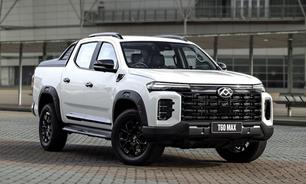
Today, we’re looking at LDV’s latest effort - the T60 Max Plus. While it looks like just another new variant from the outside, it’s hiding some significant changes underneath, and it takes its place at the top of the T60 range in 2024.
Could it be the right ute to fit your budget? Let’s take a look.
What new 4x4 dual-cab ute can you buy for $50K these days? Well, if you want to stick with the major players, $50K will only get you into base-model workhorses like the Ford Ranger XL 2.0L auto ($50,880), Toyota HiLux Workmate 2.4L auto ($50,420) or Isuzu D-Max SX ($50,700). And that's list pricing before on-road costs.
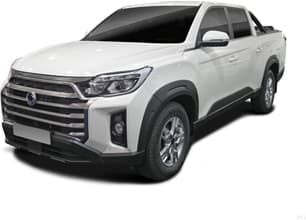
However, if you’re prepared to try something different, the same money can let you drive away in the top-shelf model of KGM SsangYong’s MY25 Musso range, which is a 4x4 dual-cab ute that's bursting with luxurious standard equipment.
We recently spent a week behind the wheel to determine if its comparative bargain pricing does not come at the expense of quality or performance.
The Max Plus brings a lot of welcome upgrades to the T60 range, particularly in its previously non-existent active safety suite, but it’s not all good news. There are still a few areas where this ageing ute could use a lot of polish.
Still, there’s something to be said for how refreshingly straightforward much of it is, and for the most part its specs and features are up to the task of competing with many more expensive alternatives.
The lack of an ANCAP rating and centre rear lap-sash seatbelt may be deal-breakers for some. However, the Musso offers a tantalising menu of luxurious standard features, in a refined, comfortable and capable package backed by a generous warranty. For $50K driveaway, it represents compelling value for money.
The T60 Max Plus takes the visage of a factory-kitted version of the existing T60 Plus. The most notable difference this time around is the unique gloss black grille design which features a new spot to hide the front radar array for the safety suite, alongside new gloss wheel designs and that huge sports bar fitting atop the tray.
To my eye at least the T60 looks a fair bit more rugged and industrial than most of its rivals, which with every iteration are looking more like passenger vehicles than work-ready utes. Still, there’s an aggressiveness to its contrast black trims and tall ride height which may appeal to some. For others it will be more function-over-form, with less bumper overhang than something like the SsangYong Musso and there’s something to be said for that, too, I suppose.
Inside is where this Max Plus version sets itself apart from the rest of the range with its abundance of screen real-estate, upgraded materials, and an almost EV-like centre console treatment.
It’s certainly more digital-feeling and contemporary than the rest of the T60 range, but it might lose some of the simple but rugged appeal of its interior as a result.
The screens look pretty slick, especially when you’re using phone mirroring to hide the otherwise clumsy stock software suite. It’s one thing to have nice big screens, it’s quite another to have slick, attractive, and customisable software to match.
Sadly, that’s not the case for the Max Plus, which offers one lacklustre look and feel for the dash cluster, paired with an array of confusing menus on the multimedia screen.
The XLV option adds 110mm to the wheelbase (3210mm) and 300mm to load tub length compared to the SWB Musso, so our test vehicle's external dimensions are about the same as a Ford Ranger dual-cab ute. Even so, its 12.2-metre turning circle is tighter than the Ford and only slightly larger than its shorter Musso sibling.
It exudes a high standard of finish and build quality throughout, including the latest lower-body-to-chassis mounts with enlarged volume and a redesigned profile which, according to SsangYong results in superior bump absorption. As a result, ride comfort has been improved.
The leather-accented interior has a refined look and feel consistent with its prestige positioning, with fine exposed stitching along seams and a tasteful mix of contrasting surfaces that include different shades of grey and splashes of piano black and satin chrome.
There are some benefits of the new interior design, and there are some disappointments too. These begin with the seating position, which is still miles off the ground in its lowest setting. This might give you a commanding view of the road, which has benefits, but it also makes you feel like you’re sitting on the T60 rather than in it.
The steering wheel is also only pitch adjustable rather than also offering telescopic adjustment, and even then its range of movement is extremely limited. For me, at 182cm tall, this meant the wheel blocked the top of the digital instruments, and I also felt like I was far too close to the roof. It’s an awkward seating position to say the least.
However, the new cabin layout has quite a bit of storage to play with. There are functional bottle holders and pockets in the doors, a decent glove box, and the new centre console offers a huge tray underneath with a removable dual cup holder insert, which also has two little cutaways for storing your keys. This area also hides some USB ports and a 12-volt outlet, for a nice cable-free interior if need be. The armrest console box offers even more space, and the wireless phone charger perched atop the console area is a welcome touch.
Less impressive is the strip of touch-based controls for the climate which sits underneath the multimedia screen. At least it has some controls which don’t require a screen sub-menu to navigate, but it simply doesn’t compare to having actual buttons and dials.
The most puzzling part of this equation is the lack of physical controls of any kind for the headlights, and no way for the passenger to adjust volume without needing to go one or two sub-menus deep. Inconvenient at best, potentially dangerously distracting at worst.
Again, some rivals get an edge here. The Musso’s multimedia suite looks comparatively old, but has heaps of physical buttons, while the GWM Ute Cannon splits the difference, maintaining buttons but gaining confusing menus. Both are better to use than the T60.
The back seat came as a surprise, as it offers pretty decent legroom for a full-sized adult, something quite rare in this ute segment. It also offers pockets on the backs of both front seats, dual adjustable air vents and a USB port on the back of the centre console, two small bottle holders in the doors, and a further two in a centre drop-down armrest. Underneath the seats there’s access points to small storage areas below.
The tray area seems reasonably well appointed with a pre-applied spray-in tub liner and four tie-down points at the extremes of the bed. The tub dimensions come in at 1485mm long, 1131mm wide (between the arches), and 530mm tall for the standard version. The Mega Tub variant extends the length to 1800mm. Payload for the tray is 840kg for the manual, 830kg for the auto, and 800kg for the Mega Tub.
Interestingly, despite its new coil-sprung rear, the T60 Max Plus maintains its 3000kg braked towing capacity, which isn’t the 3500kg industry standard, but is pretty close.
These specs mean the standard tray version is slightly larger than the Ssangyong Musso with a slightly higher payload, although it can tow 500kg less. It has a lower payload and a smaller tray than the GWM Ute, although it can tow about the same amount.
With its 2100kg kerb weight and 2980kg GVM, our test vehicle has an 880kg payload rating.
It’s also rated to tow up to 3500kg of braked trailer and with its big 6480kg GCM rating (or how much it can legally carry and tow at the same time), that means it can tow its maximum trailer weight while carrying its maximum payload.
The latter is an unusual capability for a dual-cab ute of this size, which offers great versatility for heavy load-hauling requirements in both work and recreational roles.
The longer XLV load tub has square internal dimensions of 1610mm in length and width, which combined with its 570mm depth results in 1262 litres (or more than 1.2 cubic metres) of load volume. Load-anchorage points are located at floor level in each corner.
The new assisted-tailgate operation, which SsangYong claims has a soft-opening and easy-close design, also needs some beefing-up as we found the level of assistance was not sufficient.
Cabin storage includes a single glovebox, plus small and large-bottle holders and a storage bin in each front door. The centre console has a small tray up front, two small-bottle/cup-holders in the centre and a storage box at the back with a padded lid that doubles as a comfortable driver’s elbow rest.
Rear seat passengers also get a small-bottle/cup-holder and storage bin in each door, plus two cup-holders in the fold-down centre armrest and storage pouches on each front seat backrest. The rear bench seat-base cannot be swung up and stored vertically to create more internal carrying space, like some rivals, but it does provide hidden storage underneath for soft items.
The Musso's rear doors are only 50mm shorter than the front, which ensures easy entry/exit and comfortable rear seating, even for people my height (186cm).
There are large assist handles on the A and B pillars and, when I'm seated in the second row behind the driver’s seat in my position, there’s still sufficient knee clearance and plenty of headroom.
This also applies to those seated in the slightly higher centre position, where they’ll also appreciate the minimal height of the transmission hump that allows both feet to sit together behind the centre console.
However, like all dual-cab utes short of a full-size US pick-up, shoulder room for three adults across the back seat is marginal and only tolerable for short trips.
Our only gripes are the lack of a lap-sash seatbelt for the centre rear passenger (there’s only a lap-belt), which remains a glaring safety omission that should have been addressed years ago.
The T60 Max Plus is the new top-spec version of one of Australia’s most affordable new utes. From the outside it looks very similar to the Max Luxe which sits below it, but hides re-worked suspension, an overhauled interior, and some extra safety kit behind its tweaked grille.
It also continues to be available as a manual at $48,411, an automatic at $50,516 and as an extended ‘Mega Tub’ version at $52,092. LDV deals in drive-away pricing, and you’ll note these prices are roughly equivalent to low-grade versions of the industry leading utes like the Ford Ranger and Toyota HiLux.
The T60 is more likely, however, to compete with other low-cost ute options, like the GWM Ute Cannon also from China (from $52,990 in equivalent XSR form) or the SsangYong Musso from Korea (from $49,500 in equivalent Ultimate form).
Standard equipment is reasonably impressive, with 18-inch gloss black alloys, LED headlights, a sports bar out the rear, spray-in tub liner, a locking tailgate (for the first time), and an abundance of gloss black highlight trims to separate it from lesser models in the range.
On the inside the highlight of the overhauled design is the dual 12.3-inch screens which make up a dash-spanning digital suite. It comes with new-ish software which looks the part at a distance, although I was a little dismayed to discover it had limited functionality, only one ugly theme for the dash cluster, and minimal customisation.
You also score (very) synthetic leather seat trim with power adjust for the driver and front passenger, and an expanded array of soft-touch surfaces throughout. It looks modern and plush from a distance, but feels less impressive once you’re actually inside.
If you want a ute which does a better job of feeling more like a luxurious passenger car, the SsangYong Musso leans into this aspect harder, and if you want something that's bit more accessorised for the rough stuff the GWM Cannon XSR looks more the part. Ultimately it feels as though this new top-spec T60 is left in something of an awkward middle ground between the two.
Of course, the new safety equipment and suspension do add something to the T60 formula, but we’ll talk more about these later in the review.
Our test vehicle is the Musso XLV Ultimate Luxury Pack, which comes standard with the same 2.2-litre four-cylinder turbo-diesel and six-speed automatic transmission shared by other Musso models, for only $50,500 drive-away or $49,500 drive-away for ABN holders.
Our example also has the Indian Red metallic paint option, which adds another $595 to the price.
The list of standard Ultimate features (before you add the Luxury Pack) is impressive, starting with 18-inch black alloy wheels with 255/60R18 tyres and a full-size alloy spare. There's also HID headlights, LED daytime running lights and new vertical LED front fog lights, front and rear parking sensors, 360-degree ‘birds-eye’ and reversing cameras, heated door mirrors and assisted tailgate operation.
There's more luxury in touch-sensing front door locks and a walk-up welcome system that ensures the door mirrors unfold and puddle lamps illuminate as the driver approaches with the keys. Likewise, as the driver moves away from the vehicle, the doors and tailgate lock automatically.
The Luxury Pack adds a new dual-zone climate control hub with full touchscreen control, powered sunroof and premium leather seating, with powered front buckets that offer heating/cooling and adjustable lumbar support/base cushion rake. The outer rear seating positions are also heated.
This is in addition to a height/reach-adjustable and heated leather-rimmed steering wheel with multi-function controls, 12.3-inch digital LCD driver’s instrument cluster and 12.3-inch touchscreen for the six-speaker multimedia system with Apple CarPlay/Android Auto connectivity, two USB-C ports and two 12-volt sockets. And there’s more, so you could say it’s fully loaded even before you put something in the tub.
The T60 Max range lays claim to one of the most powerful 2.0-litre four-cylinder diesel engines - a bi-turbo unit producing 160kW/500Nm with peak torque arriving from 1500rpm.
It is mated to either a six-speed manual, or an eight-speed ZF-sourced torque converter automatic transmission.
It has a 2H, 4H, and 4L selector (alongside an automatic setting for the Plus Max), and is equipped with a rear differential locker (which can only operate below 30km/h).
For those looking to venture well beyond the tarmac the T60 Max Plus has a 27-degree approach angle, a 24-degree departure angle, 220mm of ground clearance, and a 19-degree rampover angle. Wading depth is 550mm, and it has a 12.7-meter kerb-to-kerb turning circle.
The quiet and refined 2.2-litre inline four-cylinder turbo-diesel produces 133kW at 4000rpm and (for the XLV) 420Nm of torque between 1600-2600rpm.
The smooth-shifting Aisin six-speed torque converter automatic provides the option of sequential manual shifting, plus three drive modes comprising Eco, Power and Winter. It also has overdrive on the fifth and sixth gears for fuel-efficient highway driving.
The part-time, dual-range 4x4 drivetrain has an auto-locking rear differential that automatically locks and unlocks in response to changing traction requirements.
The official combined fuel consumption of the diesel-only Max Plus is 9.3L/100km for the manual or 8.9L/100km for the automatic.
With over 500km of testing with plenty of freeway miles, our automatic example produced an as-tested number of 9.3L/100km.
KGM SsangYong claims a combined average consumption of 9.0 litres per 100 kilometres and the dash readout was showing 10.1 at the end of our 317km test, which comprised the usual mix of suburban, city and highway driving.
Our own figure, calculated from fuel bowser and tripmeter readings, was higher again at 11.0 which, while not the thriftiest we've tested, is still not bad for a ute weighing more than two tonnes in mostly urban driving, of which about one third of our test distance was hauling a near-maximum payload.
So, based on our figures, you could expect a ‘real world’ driving range of around 680km from its 75-litre tank.
The T60 Max Plus has improved the formula in a few ways, but still feels a bit rudimentary in others.
The awkward seating position does provide quite a commanding view of the road, and makes it easy to gauge where the end of the bonnet is. This is useful parking in a city, but will also have benefits off the road. The 360-degree camera suite also helps with this manoeuvrability.
Interestingly the steering is quite good. This Max Plus is the only variant to score a fully electric power steering rack, as opposed to the lesser power assisted steering rack. It’s initially alarmingly light, but it also makes the T60 a breeze to steer unlike some utes in this class, and I was surprised to find it still had a sufficient amount of feel to give it confidence in the corners.
Yes, this is one of the most powerful 2.0-litre diesels, but it doesn’t feel particularly overwhelming to drive. The transmission, too, despite the brand bragging about its ZF sourcing, feels a bit transparent and rudimentary lumping through the gears with a degree of clumsiness. Still, it’s predictable and does what it says on the tin.
The same goes for the 4H and even ‘automatic’ 4x4 settings, which I found was surprisingly quick to activate if you started slipping on mud or wet tarmac.
Another less than impressive trait is the amount of sound produced. Supposedly this Pro Max version has additional sound deadening over the other variants, and yet the clatter of the diesel engine proved a constant in the cabin at freeway speeds or any time you needed to accelerate hard.
This particular version of the T60 should also feature an improved ride compared to its relations thanks to swapping the leaf sprung rear suspension out for coils, but I was surprised to find it was still quite stiff. No doubt this inherent hardness is down maintaining the same towing capacity. It makes it a bit jiggly when you drive it over the regular sort of road imperfections and corrugations. One wonders what the point of having coil spring suspension is at all if it’s going to feel more or less the same as leaf sprung alternatives.
One area that was particularly pleasing to me was the way the new active safety equipment wasn't overly invasive. There were a few moments where the lane keep tech intervened a bit too hard, but it’s pretty hands off as far as the rest of the systems go.
Overall then it does what it says on the tin, and is surprisingly easy to steer, although it doesn’t really excel at anything, which can be a hard sell in an environment where many utes are more passenger car like than ever.
Drivers of most heights and widths can find a comfortable driving position, thanks to a combination of multiple powered seat adjustments, a height/reach adjustable steering wheel, nicely-positioned elbow rests on either side and a large left footrest ideal for big Aussie boots.
The turbo-diesel’s 1000rpm-wide peak torque band between 1600-2600rpm, combined with well-matched ratios in the six-speed auto, ensure good response in the 40-80km/h speed range often encountered during city and suburban driving. However, we could not detect a noticeable change in response when switching between the Eco and Power drive modes.
The unladen ride quality is commendable, given its supple four-coil suspension and longer XLV wheelbase. Combined with nicely-weighted speed-sensitive steering (light at parking speeds, firmer at highway speeds) and responsive braking, it’s enjoyable to drive in urban environments.
It also has impressively low engine, tyre and wind noise, particularly at highway speeds where the refined drivetrain only needs 1700rpm to maintain 110km/h. These attributes create a pleasant cabin environment and low-stressed cruising.
We forklifted 650kg into the load tub, which with our crew of two equalled an 830kg payload that was only 50kg less than its 880kg legal limit. The rear coil springs compressed 70mm, which allowed the rear axle to engage with large cone-shaped jounce rubbers mounted on the chassis rails above it.
These rubbers not only provide a second stage of support when hauling heavy payloads, but also eliminate the jarring thuds of traditional hard-nosed rubber bump-stops when the suspension uses up all its travel.
The Musso made light work of hauling this payload up our 13 per cent gradient, 2.0km set climb at 60km/h, self-shifting back to third gear and 2500rpm to easily reach the summit.
Engine braking on the way down, in a manually selected second gear, wasn’t as strong as the auto transmission over rode our manual selection when the engine reached 3700rpm on overrun (4500rpm redline) and shifted up to third gear.
These engine-protecting measures are increasingly common in utes and vans, which can spring a surprise when you’re leaning on the engine to assist with braking on a steep descent and the auto suddenly shifts up a gear and the vehicle starts running away from you.
Even so, the Musso’s quartet of disc brakes were more than capable of keeping speeds in check for the remainder of the descent.
Perhaps one of the biggest pieces of new equipment on the T60 Max Plus is the more competitive array of safety equipment than before. It includes auto emergency braking, lane keep assist with lane departure warning, and adaptive cruise control. It also gains a set of front parking sensors to add to its 360-degree parking camera suite.
Technically the LDV T60 range maintains a maximum five-star ANCAP rating, but it dates back to 2017 and is thus about to expire. It has a total of six airbags, consisting of dual front, side, and curtain.
No ANCAP rating but the active safety menu includes auto emergency braking (AEB), front collision and lane-departure warnings, trailer sway control, blind-spot monitoring, rear cross-traffic alert, front/rear parking sensors plus 360-degree/reversing cameras and more. There’s also driver and front passenger front and side (thorax) airbags plus curtain airbag protection for both rows of seating, along with three top-tethers and two ISOFIX child seat-anchorage points for the rear seat.
LDV continues to have a confusing array of ownership terms across its range. In the case of the T60, it’s seven years and 200,000km, with five years of roadside assist.
It is also one of the only brands on the market not offering any kind of capped-price service program, so it’s a mystery how much it will cost to run. Servicing is required once every 12 months or 15,000km.
It comes with a seven-year/unlimited kilometre warranty, which includes commercial use (which SsangYong claims is a unique offering in this segment) and seven years roadside assist.
Scheduled service intervals are 12 months/15,000km. Capped price for the first seven scheduled services up to seven years/105,000km totals $3238, or a reasonable average of $463 per year.