What's the difference?
The plug-in hybrid market is slowly but surely gaining traction in Australia, and Kia has thrown its hat into the ring with the flagship Sorento GT-Line PHEV AWD.
This top-spec seven-seat large SUV pairs family friendly practicality with the promise of lower emissions and petrol savings, at least, in theory.
So, is it the right blend of convenience, space and efficiency for busy families looking to dip a toe into electrification? That’s exactly what my family and I have been finding out.
Half a decade on, the current-generation Mazda 3 has weathered a world of change.
Cheap cars have vanished. Electric vehicles are commonplace and the small car class it belongs to has been decimated by SUVs. Big names like the Ford Focus, Holden Astra and Mitsubishi Lancer are history.
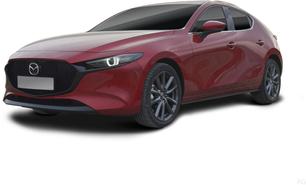
But while it looks identical to the car unveiled at the 2018 LA Auto Show, today’s Mazda 3 has also evolved, albeit gently.
Let’s see how competitive the latest and improved (as well as more expensive) version is.
The Kia Sorento GT-Line PHEV is a sumptuously equipped seven-seater that delivers comfort, tech and an easy-going drive. It presents well on the surface, and for the right buyer (one who can make the most of its plug-in capabilities ) it could be a smart, low-emissions option for family life.
But for all its polish, it doesn’t quite do enough to justify itself as the best Sorento in the range. The electric-only driving range isn’t especially generous, and the higher price tag , combined with its lower towing capacity, may leave some families wondering whether the diesel variant is the more practical choice.
It’s not a bad car by any means, but the flagship GT-Line PHEV feels more like a stepping stone than a standout.
Given how effortlessly it traverses the mainstream and premium small car classes, the Mazda 3 might be the best value small car on the planet.
With racy styling, sports car handling, classy interior presentation and impressive, intelligent efficiency, there’s plenty to sink your teeth into here.
Poor rear vision, a dark back-seat area and smallish boot aside, it doesn’t have any glaring faults.
In a world overrun with SUVs, props to Mazda for evolving the small car so brilliantly to mask a half-decade of existence. Continuous improvements have made the 2024 G25 Evolve SP Vision an essential small car shortlist proposition, regardless of price.
The Sorento looks exactly how a modern SUV should - confident, capable, and well-proportioned without feeling bulky. It wears its size well, delivering that commanding presence families often want in a seven-seater, without coming across as too aggressive.
I especially like the 19-inch alloy wheels as they suit the vehicle’s stance perfectly. I also like the striking LED lighting signatures front and rear, which really come to life after dark.
Step inside and the cabin strikes a neat balance between tech-forward and user-friendly. You’re greeted by dual 12.3-inch widescreen displays that make a strong first impression, but thankfully Kia hasn’t gone all-digital! You still get physical buttons and dials where they matter, making everything feel intuitive and easy to navigate.
Material quality is a highlight. There’s quilted Nappa leather upholstery, soft-touch surfaces throughout, and even a luxe suede headliner. These premium touches, coupled with the panoramic sunroof, lift the ambience and it's a cabin that feels genuinely upmarket, but not at the cost of family friendly functionality.
How is it that the current Mazda 3 is already five years old? This hatchback is still stunning, the sort of car you look back at when walking away.
The shape is sleek and almost coupe-like, with a shark-like nose, cab-backward-style long bonnet, upswept shoulder line and a fastback silhouette.
More importantly, it’s the way the light dances across the sculptured sides that draw the eyes in. Bereft of clutter, it makes you wish all mainstream manufacturers had the courage to be so daring.
We’ve said it before – the 'BP'-generation Mazda 3 (Axela in Japan) is the brand’s boldest C-segment hatch since the 1993 'BA' 323 (Astina/Lantis/323F).
But there’s a price to pay for such timeless beauty…
Space up front is generous, with excellent seat comfort thanks to wide seat bases, extendable under-thigh support and heating and ventilation. Getting in and out is easy, too, helped by wide door openings and a manageable 176mm ground clearance.
Storage throughout the cabin is thoughtful and abundant. Up front, there’s a large glovebox, a spacious centre console with a removable shelf, two cupholders, door bins with bottle holders, and a handy phone cubby beneath the dash.
The second row adds its own bottle holders and storage bins in each door, map pockets, four cupholders (including one cleverly placed on each door) and a removable floor shelf in front of the centre seat.
Even the third row isn’t forgotten, with a snack cubby and cupholder built into each wheel arch.
Tech-wise, the dual 12.3-inch displays look sharp, and the media system is intuitive and quick to respond. The instrument cluster isn’t particularly customisable, and I’m not a huge fan of the layout, but it displays the essentials clearly. You also get a head-up display, satellite navigation with over-the-air updates, and both wireless and wired Apple CarPlay and Android Auto.
Charging options are solid across all three rows, with multiple USB-C ports, a 12-volt socket in the second row and boot, and a wireless charging pad up front.
The second row offers ample legroom, though headroom is slightly reduced due to the panoramic sunroof. The lack of a transmission tunnel is a win for middle seat comfort, and the bench is wide enough to accommodate three child seats side-by-side. There are three top-tether points and ISOFIX anchors on the outboard seats.
Comfort and convenience features in the second row include heated outboard seats, device pockets, directional air vents, and the same handy storage and charging options mentioned earlier. My son especially loves the retractable sunblinds and the cupholders built into the door handles as they’re easy to reach and super practical. I am, however, disappointed that there’s no separate climate control zone for this row.
As for the third row, it’s best treated as a sometimes seat for adults. Access is more child-sized, and amenities are limited, but you do get directional air vents and a fan control, which are definitely appreciated.
Boot space is tight with all three rows in use, at just 175L, but that was still enough for the odd errand during the week. Fold the third row down and you get a much more usable 604L. Both rows fold completely flat, making it easy to slide in larger items, and the GT-Line includes a powered tailgate and a rare full-size spare wheel for extra convenience.
There is a price to pay for all this quasi-coupe styling flair, and that’s a comparatively snug-feeling interior, though you’d never call it cramped.
Actually, the Mazda 3 is no less spacious than most of its competition in all but one area, with enough room even for 200cm drivers, along with sufficient shoulder width and ceiling height to match.
If you’re really tall, maybe that missing sunroof isn’t such a bad thing, after all.
Sat so low-down on cushy, enveloping front seats that offer plenty of comfort and support, this is the anti-SUV. Maybe Mazda should have called this the MX-3.
Sporty and spot-on, the driving position is a laid-back affair, with an emphasis on better ergonomics, as emphasised by the thoughtful placement of switchgear that’s all within easy reach, ahead of a beautifully flowing and layered dash. Proudly Japanese in flavour, it brings to mind functional minimalism.
Drilling into some of the 3’s finer interior details, the analogue-look digital instrumentation is super-legible, ultra-classy and gorgeously lit at night. As previously mentioned, the dials and surrounding air vents are reminiscent of the later Porsche 944 and 968.
It’s not just all for the sake of aesthetics, either.
Yes, it’s lovely, but the thinned-rim three-spoke steering wheel feels great to grip, with nifty little paddle shifters that are a delight to prod.
Same goes for the physical volume knob and climate-control buttons, sidestepping the need to get distracted and frustrated by virtual sub-menus.
And having a conventional gear lever with old-school Tiptronic-style shifts suits the 3’s athletic vibe.
Plus, forward vision is A-OK, ventilation is faultless, storage is better than you might expect, and the fit and finish is as good if not better than any of this 3’s German premium opponents.
Out back, the split-fold rear backrest is set at a comfortable angle, the cushion is well padded, and you’re provided with USB ports, air vents, and an armrest with two cupholders. More thoughtfulness.
But while knee room is fair, rear headroom isn’t great if you’re tall or wear a beehive, as the falling ceiling line reveals.
Vision out is limited by that rising window line and fat pillars. Getting in and out of the back requires some contortionist moves. And the small windows mean it can be gloomier in the back than a Smiths album.
Finally, at just 295 litres, the 3’s cargo capacity is disappointing. Sure, it eclipses the Corolla hatch’s 217L cubby, but other rivals are far larger back there.
At least the floor is wide and flat and there are 60/40-split backrests for cabin access for longer items.
Note that a space-saver spare wheel lurks underneath. Mazda argues there’s always the closely-related CX-30 if you need (slightly) more space (317L).
Meanwhile, at the other end of the 3…
There are five grades in the Sorento line-up, and this week we're behind the wheel of the flagship GT-Line PHEV AWD. This is the most expensive Sorento you can buy, with a price tag of $84,660 before on-road costs — about $15,000 more than the equivalent petrol or diesel GT-Line variants.
That’s a hefty premium, but when you stack it up against other plug-in hybrid rivals, like the (albeit-premium) Volvo XC90 Ultra Recharge which starts at $124,466 or the BMW X5 xDrive50e with its $125,885 MSRP price tag, the Sorento PHEV starts to look like a more affordable entry point to electrified family motoring.
As the range-topper, the GT-Line doesn’t skimp on equipment. You get all the luxury touches like, heated and ventilated power front seats with memory functionality, heated rear outboard seats, a heated steering wheel, wireless Apple CarPlay and Android Auto, a panoramic sunroof, six USB-C ports and two 12-volt sockets, and a 12-speaker premium Bose sound system.
It also features quilted Nappa leather upholstery, customisable ambient lighting, dual 12.3-inch displays for multimedia and instrumentation, digital radio, Bluetooth connectivity and Kia’s clever Passenger Talk function, which lets the driver’s voice reach the third row through the speakers (a feature many parents will quietly cheer for).
There’s no shortage of thoughtful family focused features either, including rear window shades for the second row, a powered tailgate (operable via the driver’s seat or key fob), remote smart parking assist, one-touch sliding second-row seats, a third row that folds flat, and dedicated fan control in the rear.
The biggest question, though, is whether all of this plus the new plug-in hybrid powertrain is enough to justify the price jump.
Mazda has rationalised the MY24 3 range, with fewer grades and no more manuals, sadly.
The pretty little piece of automotive industrial design you see here is the mid-range Evolve SP Vision, which sounds less like a car and more like a posh hairdryer from Vidal Sassoon.
Priced from $36,520 before on-road costs (or about $41K drive-away before you start haggling), this Mazda 3 is a sporty and well-equipped alternative to the likes of the speedy Hyundai i30 N-Line Premium, spacious Kia Cerato GT Turbo, new Subaru Impreza AWD 2.0R and evergreen Toyota Corolla ZR. All cost roughly the same money.
The thing is, do Mazda’s upmarket aspirations mean the 3 possesses the ride quality and chic to embarrass at times substantially more expensive hatchbacks with premium pretensions? We’re talking rivals like the BMW 1 Series, Mercedes-Benz A-Class, Peugeot 308 and VW Golf, here.
Stay with us, because we reckon you might be surprised by how far the 3 has come since its humble 323 predecessors.
Anyway, this version comes with most of the good gear, including a full suite of driver-assist safety tech like front and rear Autonomous Emergency Braking (AEB), blind-spot alert, lane-keep assist and adaptive cruise control, as well as keyless start and walk-away lock, powered driver’s seat with memory, 360-degree camera views, a head-up display, digital radio, sat-nav, auto tilt/folding exterior mirrors, dual-zone climate control, Bluetooth phone/audio connectivity and 18-inch alloys.
Oh, and for 2023, an upgraded version introduces a smartphone charger and wireless for the Apple CarPlay/Android Auto function, along with USB-C port access front and rear.
What’s missing at the Evolve SP Vision’s price point? Some mainstream rivals offer leather and a sunroof, available respectively in the more-expensive GT Vision, from $40,000, and flagship Astina grades, from nearly $42,500.
Still, that’s quite a lot of small car for the money, given the quality of the presentation and design. Speaking of which…
Powering this GT-Line variant is a plug-in hybrid system that pairs a 1.6-litre turbocharged four-cylinder petrol engine with a small electric motor and battery. Combined, the system delivers up to 195kW of power and 350Nm of torque, which is plenty to get this sizeable SUV moving with confidence.
It’s a part-time all-wheel-drive set-up with a lock mode for extra traction when needed, and it’s paired with a smooth-shifting six-speed automatic transmission.
Around town and on the highway, the power delivery feels seamless and refined, with the electric motor doing a nice job of smoothing out stop-start driving.
One key trade-off, however, is towing capacity. While the diesel Sorento can tow up to 2000kg braked, the PHEV’s figure drops to just 1010kg. That’s a significant reduction and could be a deal-breaker for families who regularly tow a camper, trailer or boat.
When you think about it, shoehorning a big torquey engine in a light and agile small car is a recipe for fun. Ford did just that with the Escort RS2000 in the 1970s… and Mazda’s now an expert at it, too.
The engine in question is the G25, a 2.5-litre four-cylinder naturally aspirated twin-cam petrol engine, delivering 139kW of power at 6000rpm and 252Nm of torque at 4000rpm.
As this Evolve SP Vision hatch tips the scales at 1415kg, it makes for a healthy, and consequently very lively, power-to-weight ratio of over 98kW/tonne.
That’s if you decide to use all the available revs, which the six-speed torque-converter auto makes great use of.
Driving the front wheels, it offers a 'Sport' mode to extend the revs even more, which is keeping in line with this Mazda’s sporty character.
Less so is the company’s decision to ditch the old multi-link independent rear suspension system a few years back for a more prosaic torsion beam arrangement. We’ll get to how that affects ride and handling in a moment.
The Sorento GT-Line PHEV offers a WLTP-rated electric-only driving range of up to 57km - not huge, but enough to cover most daily commutes or school runs without dipping into the petrol tank.
When driven as intended and regularly charged, it’s capable of a combined fuel consumption figure as low as 1.6L/100km and this is paired with a 67-litre fuel tank. That means you could go a seriously long time between fill-ups if you’re topping up the battery daily.
In my week of testing, which included a mix of highway stints and urban errands, the trip computer reported an average of 7.2L/100km.
That’s well above the official figure, but still pretty reasonable considering the type of driving I was doing.
Charging is simple enough. The Sorento uses a Type 2 charging port, and on a standard 3.3kW AC charger, the 14kWh battery can be charged from 15 to 95 per cent in about three hours and 26 minutes.
Kia includes a portable AC charger with this grade, which is a handy bonus for charging at home or on the go.
Mazda claims the G25 averages 6.6L/100km on the combined cycle… for a carbon-dioxide emissions rating of 154g/km. On a 51L tank, that gives a potential distance of over 940km!
Driven good and hard in our hands, we managed 7.5L/100km, which isn’t bad given the speed and conditions it was subjected to.
Plus, the Mazda’s happy on 91 RON 'standard' unleaded petrol.
The Sorento PHEV hits most of the right notes when it comes to power delivery and gear shifts. Occasionally, there's a slight hesitation between whether the engine or electric motor should take the lead - like a dance partner who’s just a touch out of step. It’s noticeable, but not disruptive.
Most of the time, the transition between power sources is smooth, and there’s more than enough grunt for overtaking or merging confidently.
The suspension has a springy, soft edge to it and you’ll feel some movement over bumps but it’s never harsh or uncomfortable. It corners surprisingly well for a large SUV, with responsive, albeit lighter, steering. Body roll is present if you push into tight bends, but that's par for the course in a seven-seater.
Regenerative braking is subtle, almost too subtle. There’s not much feedback, and it can feel a bit heavy underfoot in stop-start traffic. It’s not a deal-breaker, but worth noting if you’re expecting the more pronounced regen feel you get in some other hybrids or EVs.
The cabin remains quiet at both urban and highway speeds, making it easy to hold a conversation across all three rows. Visibility is generally good, though the thicker pillars take a little getting used to. The digital rearview mirror is a great touch when the back seats are loaded with people or gear.
Parking is refreshingly simple thanks to a crisp 360-degree camera and front and rear sensors. One of my favourite features is the remote smart parking, which lets you move the car forwards or backwards via the keyfob, a lifesaver in tight parking spots. Just don’t teach your eight-year-old how to use it ...
Ask yourself. What do you want from a new small car?
Since the first Familia of the early 1960s, Mazda’s been at it constantly, through the 1300 and 323 eras and into the modern age of the 3.
The Hiroshima brand knows its stuff. Space, practicality, comfort, ease, reliability and affordability. But a small car has to offer more, specifically in the way it makes the owner feel.
That’s why, while the Focuses, Lancers, Astras and Pulsars are gone, the 3’s still here. And it isn’t just the lush visuals inside and out that are, well, sensory-rich.
As older Alfa Romeo owners know, there’s something special about an engine that sounds alive, and the moment you push the 3’s starter, it purrs into life. That’s the first clue.
Slot the refreshingly old-school lever into Drive, and the G25 leaps into action, and, if you need it to, will keep pulling forward strongly, engine buzzing, like it’s on a mission.
That describes the torquey urge of this big 2.5L four, paired perfectly with the sensibly-geared auto.
We miss Mazda’s magnificent manual immensely, but the 3’s instant response reflects its favourable circa-100kW/tonne power-to-weight ratio.
And, as we’ve harped on in the past, the twin-cam unit’s extra oomph beyond 4000rpm delivers muscular high-speed responses akin to a good turbo – or a great old-school Alfa. You can keep your laggy dual-clutch transmissions, Europe.
Now, sweet, smooth and speedy performance is one thing, but having the chassis tuned with precise and fluid steering for tactile handling, and confident roadholding, backed by nuanced driver-assist and traction controls, are another.
There is a consistent and unifying control to the 3’s linear and forgiving dynamics, reminiscent of past masters like the Focus (and today’s brilliant Peugeot 308) that makes it a joy to drive enthusiastically through fast corners, with the knowledge that it won’t suddenly snap-oversteer and bite an unalert driver back.
For a Mazda, the ride is quiet enough, but there is still some droning transmitted through the cabin, via the Bridgestone Turanza (215/45) tyres, on coarse-chip bitumen surfaces.
And while suspension comfort is pretty impressive for the most part, larger bumps reveal the torsion beam’s limitations, as the car can occasionally thud over them in a way that we remember the multi-link rear end wouldn’t.
Anyway, what we’re saying is that, overall, the 3 Evolve SP Vision is an immersive and interactive driving experience that is right up there with the best of them.
Brawny performance, exquisite agility and a refinement that, collectively, have eluded every small Mazda in living memory until this generation’s 2019 debut. This 3’s right on the money. Still.
The Sorento PHEV shares its five-star ANCAP safety rating with the rest of the Sorento range, based on testing conducted in 2020. It comes with seven airbags, although it’s worth noting that the curtain airbags don’t extend to the third row, which is a disappointing oversight in a family focused seven-seater.
That said, the GT-Line PHEV still brings a solid suite of safety tech. A standout is the blind-spot view monitor, which displays a live video feed of your blind spots in the instrument panel whenever you indicate and it’s one of those features you quickly grow to rely on! There’s also emergency call functionality, a digital rear-view mirror, and safe exit assist to help avoid incidents with passing traffic when opening doors.
A welcome update is those notorious Kia speed limit beeps and alerts can now be easily silenced via the steering wheel. It’s a small thing, but it makes a big difference to the overall driving experience.
Standard safety features include blind-spot monitoring, rear occupant alert, forward collision warning, rear cross-traffic alert, lane-keeping assist and lane departure warning, driver attention alert, intelligent seatbelt reminders (six seats), front and rear fog lights, and LED daytime running lights.
Autonomous emergency braking (AEB) is also standard, with vehicle detection from 5.0 - 75km/h, and pedestrian, cyclist and reverse AEB support from 5.0 - 85km/h.
For child seat installation, there are three top-tether anchor points and two ISOFIX mounts in the second row. That’s enough flexibility for most families, though it would be nice to see more child-restraint coverage further back.
Tested way back when this generation was new in early 2019, the Mazda 3 scored a maximum five-star ANCAP crash-test rating.
On the driver-assist front you’ll find front and rear AEB (with a working range of 40km/h to 200km/h) with pedestrian and cycle detection available between 10-80km/h, while the 'Forward Collision Warning' operates from 40-200km/h.
Blind-spot monitoring, lane departure warning, lane-keep assist, 'Forward Obstruction Warning', rear and front 'Cross-Traffic Alert', 'Secondary Collision', auto high beams, breakaway pedals, adaptive cruise control (with full stop/go functionality and cruising/traffic support), parking sensors front/rear, 360-degree round-view monitor, reverse camera, traffic sign recognition, driver monitor and tyre-pressure monitors are also included.
The lane-keep support systems work between 55-200km/h.
Seven airbags – front, side, curtain and a driver’s knee bag – are fitted, along with anti-lock brakes with 'Electronic Brake-force Distribution', 'Emergency Brake Assist', stability control, traction control, hill-start assist are also fitted, seat-belt pretensioners, and two rear-seat ISOFIX points as well as three top tethers for child seat straps.
The Sorento is backed by Kia’s seven-year/unlimited-kilometre warranty, which keeps the Sorento competitive in a market that is slowly starting to offer seven/year plus terms as standard.
You’ll also benefit from capped-price servicing for up to seven years or 70,000km, with an average cost of $764 per visit. That’s on the pricier side, especially when compared to some rivals.
Service intervals are every 12 months or 10,000km, whichever comes first, so if you’re someone who racks up the kilometres quickly, that could mean more frequent trips to the service centre than you’d like.
It’s also worth noting that the GT-Line PHEV requires a minimum of 95 RON premium unleaded petrol, which is something to factor into your ongoing running costs, particularly if you're already trying to offset fuel usage with regular charging.
Mazda offers a five-year/unlimited kilometre warranty, with five-years roadside assistance… and that’s nothing special nowadays.
Service intervals are at 12 months or every 15,000km.
A fixed-price service scheme is available, averaging out to $434 annually over the first five years. Mazda shows pricing right up to 16 years and 240,000km on its website.