What's the difference?
Kia’s newest addition is either an overpriced mistake or the logical next step for a brand looking to move up in the world.
It’s called the EV9 GT, and much like the many ‘GT’ variants that have gone before it, this one is packing plenty of performance. It’s also loaded with creature comforts, enough to push it into the same league as the luxury car establishment.
But it also takes Kia to new heights in terms of price, which were already pushing boundaries. And it comes at a time when electric vehicles are in hot demand, but at the other end of the price spectrum.
So is this the case of the right car at the wrong time, or simply the next step in Kia’s evolution?
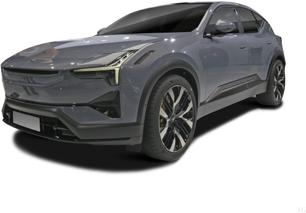
If you know anything about superheroes, you'll know the biggest and best are always born out of adversity. And while it might not be wearing a cape (though the big rear roof spoiler makes it look a bit like Superman in flight), Polestar is very much hoping its new electric SUV will be the hero it has been waiting for.
Cursed to commence life in Australia with the good but compromised Polestar 2, which launched as a lift-back sedan (remember those?), and which felt a lot like a repurposed internal-combustion engine (ICE) vehicle inside, complete with a bulky transmission tunnel that cut rear-seat legroom in half, it has long felt like the second wave of Polestar vehicles would be the one to put the brand on the map.
That wave has at last broken in Australia, with the Polestar 3 finally here. It's a large SUV (good start), but it promises not to drive like one (even better). And in the Long Range Single Motor guise we've tested here, it promises to travel more than 700km on a full charge.
So, is this the vehicle that will kick off the Swedish brand's run in Australia?
Whether you think the EV9 GT is an over-priced mistake or the logical next step for a brand looking to move up in the world will depend on your point-of-view.
Kia has certainly extended the appeal of the EV9 range, but possibly in the wrong direction. Certainly the wrong direction if the goal is to add significantly more sales.
A cheaper alternative to the $97,000 EV9 Air would likely be a more popular choice from the point-of-view of Australian families considering replacing their diesel-powered SUVs with something that doesn’t rely on the chaotic fuel market.
But that’s not really who the EV9 GT will appeal to. Instead, from the point-of-view of someone looking at a more expensive European option, whether it be an Audi Q8 e-tron, BMW iX or something else, the EV9 GT may be appealing in a very different way - assuming that they aren't driven by what badge is on the front.
Kia has certainly evolved beyond its ‘cheap and cheerful’ image or buying primarily for its long warranty. These days Kia is a mainstream brand, but whether it has enhanced its reputation enough to attract buyers willing to spend more than $130,000 will be decided in the showroom.
With the kind of driving range, dynamics and comfort that could convince even the EV doubtful to give it a crack, the Polestar 3 – and specifically this Long Range Single Motor – feels like it was worth waiting for.
Surprisingly, given the price premium and flagship nature of the GT, there isn’t a lot to separate it from the slightly less expensive GT-Line.
It’s only when you look closer you notice subtle touches, like the ‘digital grille’, an illuminated section of the front of the car that extends the lighting signature when you start the car. The other obvious difference is the unique and huge set of 21-inch alloy wheels at each corner. The black design is offset by bright green brake calipers, which is a unique colour for the GT.
This signature fluro green colour is also on the seat trim, including contrasting stitching, as well as the GT badge on the (three-spoke) steering wheel that engages the most potent version of the electric motors.
I think the Polestar 3 looks great – big, but not looming, and still somehow svelte enough to look sporty.
The brand takes a unique approach to marrying design and aerodynamics, with a lip at the edge of the bonnet that allows for airflow. But it doesn't look like a purely functional element.
Instead it accentuates what Volvo would call the 'Thor's Hammer' (but I think Polestar calls them 'Twin Blade') headlights, which are mirrored below with black venting.
In fact, looking at the 3 front-on is a bit like looking into a reflection in a crystal-clear lake, with the lighting signature perfectly reflected in the lower half of the front end.
If it sounds like I'm waxing lyrical, it's because I am. I think the Polestar 3 is among the best looking vehicles in its segment and one of the better looking SUVs, period.
Inside, though, it's a study in minimalism, which while very neat and tidy, makes it feel a little less luxe than you might expect from a vehicle at this price point. In fact, at a quick glance, it doesn't look that far removed from the relatively cheap-as-chips MG4's cabin.
The materials are thoughtful and lovely, though. Leather-like materials are used sparingly, replaced by what Polestar calls "Bio-Attributed MicroTech Charcoal with Repurposed Aluminium Deco". A far easier way to describe it, though, would be as reminiscent of a wetsuit.
Elsewhere, it's a fairly pared-back affair, with just the huge portrait-style central screen and the landscape driver screen grabbing your attention. Dig deeper, and there are some really nice, gentle details, like the ambient interior lighting that illuminates a little strip along the door panel, including the Bowers & Wilkins logo. A similar line of light spans the entire dash, too.
And I love the metallic-look panel along the dash which, one can only assume, is the 'Repurposed Aluminium Deco'.
In terms of practicality, space and usability, the EV9 GT does a lot to justify its price tag, with a cabin the equal of anything the luxury brands offer, at least in terms of the level of equipment available.
The sporty seats have adjustable side bolsters to either hug you tight for dynamic driving or open up and let you get comfortable for relaxed commutes. The front seats are heated and ventilated and also include a two-way power adjustable leg rest, for even greater support.
Those in the second row are treated to two 'captains' chairs with heating and ventilation as well, plus a massage function and the leg rest, which creates a ‘business class’ vibe for the lucky passengers.
The second-row occupants also get sun blinds (albeit manual), separate air-conditioning controls and access to USB-C charging ports in the backs of the front seats.
Accommodation in the third row is a little tight, but if the second row compromises legroom slightly you’re able to fit six occupants in relative comfort.
Those in the front get their own sunroof but there’s a second, larger sunroof to bring light into the passenger section.
In terms of the multimedia system, it’s run through the twin 12.3-inch digital screens, which are housed in a single panel to create the impression it is one large display. This is the usual Kia system, which is very easy to navigate and has both Apple CarPlay and Android Auto integration, if you prefer.
As a major plus, there are physical buttons for the climate control and a power/volume scroll wheel for the sound system. There’s also an on/off button for the car, which is a small feature but another welcome, user-friendly touch.
As for the boot, well, with all six seats in use there’s only 333 litres of space, which isn’t massive, but that’s why Kia sells the Carnival. For an SUV with seven occupants, 333L is alright.
If you only need five seats you can liberate a more generous 828L, which is really good. It’s a nice, roomy and open cargo space.
If you really need to carry a lot of stuff and not many people, you have 2393L with the second and third row seats stowed.
On top of this, there’s a small 52L frunk, which isn’t very big but it’s a good spot to stash the charging cable. Which oddly is not where Kia actually stores it, instead there is a small bag/box which is just velcroed to the boot floor.
Given the EV9 is a purpose-built electric vehicle, why is the charging cable not stored in a more integrated manner? It’s only a small detail, and Kia isn’t alone in doing this, but I still find it odd that carmakers haven’t found a better way to deal with the EV cable yet, especially when the frunk makes so much sense as a permanent storage spot.
Polestar has done a solid job of disguising the dimensions of the Polestar 3, because while it looks sleek and sporty it's still a big boat, stretching a sizeable 4900mm in length, 1968mm in width and 1618mm in height.
That size is most noticeable in the back seat, which is properly cavernous, helped further by a fully flat floor which lends even more airiness. Sitting behind my own 175cm driving position there's plenty of headroom and tons of knee room, giving the Polestar 3 official adult-friendly status.
The ISOFIX attachment points are located beneath two pop-off plastic covers, which makes fitting a child-seat base super easy. This is something I wouldn't have cared about at all exactly 22 weeks ago, but now I care a lot, and this was among the fastest and easiest systems I've used.
Happily, there is no major back seat compromise, either. The pews are comfortable and supportive, with the window seats separated by a pull-down divider home to two pop-out cupholders.
There are twin USB ports for rear-seat riders, too, as well as air vents with temperature controls, and – thanks to that Plus Pack – rear seat heating.
There's storage aplenty, too, with a total 597 litres in the boot with the rear seats in place, and 1411 litres with them folded flat, including a handy 90-litre hidden storage spot under the boot floor. Up front, there's a soft-bag-ready 32-litre frunk.
Starting at $129,250 before on-road costs, the EV9 GT is the most expensive model Kia has ever offered in Australia.
Whether by accident or design it takes Kia into uncharted territory and legitimately has the brand competing with European alternatives. For example, the Volvo EX90 (from $124,990) is cheaper, as is a Polestar 3 (from $118,420) while the Audi Q8 e-tron (from $140,090) and BMW iX (from $142,900) are within $15,000.
That means that, perhaps for the first time ever, Kia will be cross-shopped against Europe's finest. Does it live up to that expectation?
Well, to help justify the price, the EV9 GT gets a more powerful motor, electronically controlled suspension and is loaded with technology and creature comforts inside.
This includes a standard six-seat layout, a 14-speaker Meridian Premium sound system, Kia Connect Telematics, in-built satellite navigation with 10 years of live traffic information and map updates, wireless phone charging and ambient mood lighting. But there is much, much more, as we’ll detail throughout the review.
So if you’re looking for an affordable EV to help take some financial pressure off, unless you’re stepping down from something European and very expensive, this won’t likely help.
But, if you’re looking for an upgrade in that $130k-$150k price range, and are ‘badge agnostic’ for that price, then maybe the EV9 GT is right for you.
But no matter which way you look at it, this is an expensive Kia and it will be a real test for how far it has come if it can find buyers willing to spend this much on the brand once famous for cars $100,000 cheaper.
I'm going to get this out of the way early. I am a touch surprised with the pricing on the Polestar 3 range.
With Tesla having now stepped on a million metaphorical rakes, and with a leader now slightly less popular than actual skunk musk, the stage seemed set for a rival brand to steal its crown, and its customers.
But I can't see too many making the leap from the $60K-$70K Tesla Model Y to the $118,420 asking price of the admittedly bigger Polestar 3 Long Range Single Motor - which is the cheapest way into the brand's large SUV.
Instead, Polestar will be taking aim at brand's like BMW, Mercedes-Benz, Porsche and Cadillac, leaving its Chinese corporate cousins (think Zeekr and Geely) to chip away at Tesla's market share.
So, premium product, then. But do you get premium stuff?
Ours gets the 20-inch 'aero' alloys, but you can spec those up to 22-inch wheels if you don't like your spine very much, along with Brembo brakes. Plus there's is LED lighting all around, a big glass roof and retractable door handles.
Inside, the Long Range gets heated front seats, triple-zone climate control, wireless device charging, and a big 14.5-inch central screen with Apple CarPlay and Android Auto (run by Google built-in) joined by a second 9.0-inch driver information screen above the steering wheel.
Our car was also equipped with what Polestar calls the 'Plus Pack', a cool $9.0K on top, which adds things like a 25-speaker Bowers & Wilkins for Polestar stereo (replacing the standard 10-speaker set-up) , a head-up display, heating for the rear seats, steering wheel and wiper blades as well as soft-close doors.
The as-tested price for our car, by the way, is $131,640, before on-road costs.
What’s under the bonnet, well technically underneath the front and back of the SUV, is what really separates the GT from the rest of the EV9 range.
The GT gets more powerful motors, boosting performance to 374kW of power and 740Nm of torque, which is a 92kW and 40Nm upgrade over the EV9 GT-Line.
Kia claims the GT can sprint 0-100km/h in just 4.5 seconds, nearly a full second faster than the GT-Line, and will keep going all the way to 220km/h. That’s really fast for such a big SUV, some might even say unnecessarily fast for a family-focused SUV, but given the asking price, adding extra performance is a logical move.
The Long Range Single Motor tag hints at what's powering this Polestar 3, with a single, rear-axle mounted (so, rear-wheel drive) motor producing 220kW/490Nm and a fairly sedate sprint from zero to 100km/h of 7.8 seconds.
The GT gets the same 99.8kWh battery as the GT-Line, but Kia claims the new flagship has a slightly longer driving range, but only 510km compared to 505km.
In the real world, the car’s own trip computer read around 480km when we collected it, but suggested with maximum efficiency (air-con off, driven in Eco mode, etc) we could reach more than 500km.
Energy consumption is rated 21.7kWh, but the EV9 GT was showing 24.2kWh on the trip computer.
According to Kia, it can take up to 350kW of DC fast charging, which means a theoretical charging time from 10-80 per cent of just 24 minutes. Using a 50kW charger will extend that time to 83 minutes.
Again, in the real-world, using an Evie public charger we were able to add 42.1kWh in just under 34 minutes on a 75kW charger, taking the battery from 40 to 77 per cent.
How far is far enough before you'd consider an EV? Because I've got to say, if I owned the Polestar 3, I'd probably have to plug it in once a week, if that.
A sizeable 111kWh lithium-ion battery provides the charge here, and unlocks a claimed WLTP driving range of 706km. Now, it's worth pointing out these numbers are rarely realistic. For example, WLTP testing is conducted with the climate control switched off, but a real-world result of 600km or more, depending on how you drive, is still a large number.
The battery is the same as in the dual-motor variant, but this RWD car is lighter and less powerful, and it has a lower top speed (180km/h), reducing its energy usage to 17.6kWh-20.3kWh/100km (from 19.6-21.8kWh/100km).
The Polestar 3 has a 400V architecture, meaning hyper-fast charging speeds are out of the question. Instead, it's capped at a maximum 250kW (still more than most public chargers in Australia can produce) which means a 10-80 per cent charge in 30 minutes.
At home, an 11kW charger will take more like 11 hours, or an estimated 16 hours using a regular 7.0kW wallbox.
According to Canstar Blue, the average price per kW for residential power in NSW at the moment is about $0.34. So, using my admittedly questionable maths skills, it would cost around $37 to take your Polestar 3 from empty to full at home.
On paper the EV9 GT sounds great if you’re into performance - 374kW and 740Nm is a lot for any type of car, even a big SUV. There’s no questioning that the EV9 GT is very, very fast, with that near-instant surge forward when you squeeze the accelerator in ‘GT’ mode.
But it is probably worth questioning the value of such a powerful and fast electric SUV, given the EV9 is clearly focused on being family friendly rather than a track weapon. To be perfectly candid, I rarely used the ‘GT’ mode because it just doesn’t suit the vast majority of driving conditions you’ll find yourself in driving an electric SUV.
I mean, you’ll never have an excuse for dropping the kids off at school late, but you’ll also likely rarely find yourself in a situation where you need to launch 0-100km/h in 4.5 seconds too. Obviously the performance is nice to have and helps to justify the asking price, but in day-to-day driving it doesn’t really make a significant difference to the EV9 experience.
Because, when you don’t unleash all that performance, you find yourself in a very quiet and refined SUV. The cabin is well insulated from the outside world, so you do get a sense of luxury, which is a major positive.
The electronically controlled suspension does a nice job of providing a comfortable and relaxed ride even on the big 21-inch alloys. It also does a good job, most of the time, of hiding the weight of such a big, electric SUV, so the chassis and suspension development team have done a great job.
The digital mirrors were also helpful during this test. The first time I tested an EV9 with them I found them a bit odd to use, as the angle you’re looking at on the screen isn’t the actual perspective of the situation. But this time around I quickly adapted to them and can see the merits of such technology.
The Polestar 3 is that rarest of beasts – a big and sumptuous SUV that's genuinely engaging to drive.
This is going to sound odd given we're talking about 2.5-tonnes of Swedish metal but I reckon the fact it's not lightning-fast makes it more fun to drive. It somehow (and yes, this is a crazy thing to say) gives off Mazda MX-5 vibes, in the sense that, while some EVs feel utterly scientific in the way they accumulate speed, this rear-drive Polestar feels fun, perky and like you're actually driving it.
Don't get me wrong, there's more than enough power on offer here to get the 3 up and moving, especially the way it accelerates from low to mid speeds, but it's more than powerful enough to feel like you can push it a little bit harder without risking a visit to the undertaker.
The ride is good, too, leaning into its sporty nature without vibrating your eyeballs through suspensions stiffness, and the steering is direct and predictable. Speaking of which, you can dial up the sportiness of the accelerator (responsiveness) and steering (weight), too.
I also like the three-stage brake regeneration (off, medium and full 'one-pedal' driving) accessed through a permanent button at the base of the screen, and I prefer that it isn't as brutal as it can be in other vehicles. The cabin is also impressively quiet, though how much of that is owing to the Plus Pack's upgraded stereo arriving with active noise cancellation is a mystery.
There is no shortage of weight on board, though, and get too aggressive with the steering wheel and you'll get that disconcerting top-heavy tipping feeling so common with big SUVs.
I'm not convinced by the Polestar 3's software, either, with a couple of weird warnings popping up during my time with the car. The first warned that the driver assistance systems had failed, and told me to book a service, and the second even weirder issue is it liked to warn me there was "no valid key detected" despite it being in the centre console, and that "restart would not be possible".
Neither warning seemed accurate, to be fair, as the safety one went away on its own after a while and I had no problem starting the car.
The EV9 GT has everything Kia can include from a safety perspective. That includes airbag coverage for all three rows (including a centre airbag between the front passengers), ISOFIX and top tethers for all four rear seats and Matrix LED intelligent front lights.
There’s also all the usual active safety systems, including autonomous emergency braking, lane keeping assist, safe exit warning, intelligent speed limit assist, driver attention warning, blind spot monitoring and 'Highway Drive Assist 2 with Lane Change Assist'.
That latter system, the ‘Drive Assist’ is good in theory, but Kia, like parent company Hyundai, still has some work to do on better calibrating and integrating some of these active safety elements. Yes, it’s great they have added the ability to mute the annoying speed limit sign recognition chime, but the Highway Drive Assist is still too jerky and adds a lot of unnatural weighting to the steering that makes freeway driving require more attention at times, rather than relieving the pressure on the driver.
This isn’t something specific to the EV9 either, it’s pretty typical across both the Kia and Hyundai range. While these systems are difficult to get right, it can be done, so a bit more work is needed to make it feel more seamless.
But overall, the EV9 GT comes loaded with all the safety equipment, both passive and active, that you should demand from a family-focused SUV, so credit to Kia for that.
The Polestar 3's safety story is a good one, and it begins with nine airbags covering all seating rows. The grille of the 3 is home to what the brand calls its 'SmartZone', which is where it hides the cameras, sensors and radars necessary for its AEB (with cyclist and pedestrian detection), cross-traffic alert with braking, blind spot alert with steer assist, lane departure warning and assist and active cruise control. The list goes on and on.
In the cabin, two infrared cameras monitor the driver, while four motion-sensing radars scan the rest of the interior for left-behind pets or children.
It scored the full five stars in Euro NCAP testing, and scored the highest child occupant protection rating of any passenger car tested by Euro NCAP in nine years.
The EV9 is covered by the usual seven-year, unlimited kilometre warranty, albeit with the battery only covered for seven years/150,000km.
Service internals are 12 months or 15,000km, whichever comes first, and Kia offers pre-paid servicing plans from three to seven years. The three year plan will set you back $723, five years $1379 and seven years $2038.
That means the average cost actually increases the longer you’re covered, but even over seven years your yearly average is only $291 in maintenance.
One major positive for the brand’s owners is Kia has grown to 147 dealers nationally, with coverage across both metro and urban areas, with all service centres able to work on EVs. That means you’ll get the same ease-of-service whether you buy a petrol, diesel or electric Kia.
Another tick for the Polestar here. While I advocate for longer warranties (kudos to brands like Nissan, MG and Mitsubishi), the 3's five-year, unlimited-kilometre warranty and eight-year, 160,000km battery warranty is on par with its premium competitors.
The first five years or 100,000km of servicing is on the house, too (it's required every two years or 30,000km after that) and five years' roadside assistance is thrown in, as well.