What's the difference?
For the first time in Australia, the mid-sized Hyundai Tucson is being offered with a hybrid powertrain – which combines its spritely turbo-powered engine with a fuel efficiency-improving electric motor. And it might be enough to swing you to becoming a hybrid fan.
The new powertrain makes the Tucson a proper competitor against Australia’s darling, the Toyota RAV4 but the Nissan X-Trail e-Power and Kia Sportage remain strong rivals.
This week I’m family-testing the mid-spec Elite Hybrid with the N Line option pack to see how the newly updated Tucson handles family life.
The EX30 Cross Country is the new adventure-focussed top-shelf variant in Volvo’s small electric SUV line-up.
This five-seat compact crossover has a dual-motor electric set-up, all-wheel drive, raised suspension, more ground clearance than a regular EX30 and an exterior that more than hints at its off-road aspirations.
But just how much potential does this Cross Country have as an all-wheel drive adventure machine?
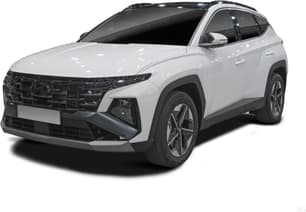
The updated Hyundai Tucson Elite Hybrid N Line offers families space, features and easy-enough handling for everyday stuff and the occasional weekend adventure pursuits.
The price point is higher than the previous non-hybrid model but you get a lot of bang for your buck and my family was comfortable this week.
There’s a lot to like about the Volvo EX30 Cross Country. It’s an impressive AWD EV. Nice to drive, comfortable and offering the extra driver confidence an AWD system brings.
It also looks good, has a decent stack of features onboard and has plenty of appeal for owners, especially in terms of servicing costs.
As an EV tourer, it has a reasonable driving range and offers enough in terms of AWD flexibility to appeal to those people who may like the idea of an all-electric adventure machine.
But it is small, has a limited scope of off-road capability and pricing is ranging upward for what it offers.
The Hyundai Tucson has seen a minor facelift on the exterior but most of the changes are in the cabin.
The N Line pack means that you get 19-inch alloy wheels over the standard 18-inch version as well as extended body panelling instead of black plastic trims. There is N Line badging across the car too, but N Line option pack does limit you to just four exterior colour choices.
The front features new stacked LED DRLs which tie in with the fang-like design of the rear LEDs. The origami-styled panelling looks more severe than the previous model which helps it stand out in a class that’s heavy on rivals.
The cabin features a completely reconfigured dashboard and now sports a large curved display panel that houses those upgraded tech screens and a new 6.6-inch climate control panel.
The centre console has been redesigned to look like it’s floating and now adds an extra-large storage cubby underneath it.
The upgraded interior makes the Tucson a leader for the mid-sized SUV segment and is very pleasant to spend time in.
This Cross Country is 4233mm long (with a 2650mm wheelbase) 1850mm wide, and 1567mm high. It has a listed kerb weight of 1910kg.
It’s a slick-looking compact SUV with more than its fair share of hints at its off-road aspirations including raised suspension so it perches higher off the deck than its regular EX30 stablemates (190mm of ground clearance). It has dark coloured front and rear body panelling, dark wheel-arch extensions (built to cop any loose gravel or dirt while all-wheel driving on well-maintained bush tracks), and if you get on the ground to check, front and rear skid-plates.
Quirky touches include an impression on the front bumper section of a topographical map depicting the highest mountain range in Sweden (as well as the apparent co-ordinates to that location), and interesting doodles under the lid of the front boot (what I like to call the 'froot' whereas as you might call it the frunk for front trunk).
Overall, the Cross Country has a spartan-style cabin. No, I don’t mean there are swords and shields and oiled-up blokes in loin cloths here – just that there’s a clear, basic layout that leans more towards functional than flashy.
It also has a fixed-in-place panoramic glass roof that has no sliding cover built into the ceiling and I’m not a big fan of having my noggin exposed all of the time.
The cabin up front is spacious with plenty of head- and legroom on offer. You also won’t jostle for elbow room either when you have a passenger.
The seats are comfortable with their heat function but you might still get fatigue on longer trips as you only get adjustable lumbar on the drivers side and it's simple at best.
The back seat has really good space for the class and no matter the passenger, they were comfortable back there. The seats in the rear are well-padded and access to this row is good for sliding in a child seat as the door aperture is wide.
Other amenities are average with directional air-vents, a single reading light, and a fold-down armrest. My seven-year-old son found the window sills to be quite high, so he didn’t get the view he wanted.
The individual storage is excellent for the class with the redesign as you get a dedicated storage shelf in front of the front passenger and a massive cubby that easily fits a handbag underneath the mid-sized centre console.
There are two cupholders and two drink bottle holders per row but the rear storage bins are skinny. The rear row also gets map pockets but again, these are shallow.
The upgraded technology is a must have and the new multimedia system is easy to use once you spend time with it and looks great with its graphics. The system has built-in satellite navigation, over-the-air updates and wireless connectivity for Apple CarPlay and Android Auto.
Connecting the CarPlay is simple and maintains a strong connection.
Charging options are great with two USB-C ports per row and the front also gets a wireless charging pad and a 12-volt socket to choose from. The centrally located position of the charging pad is handy and the liner grippy - so no phone movement.
Rounding out the practicality is the boot, which has a wide aperture and a loading space level with 582L of capacity available with all seats in use, which is good for the class.
The back row has a 60/40 split but don’t fold flat – they sort of spring up a bit, which might annoy when you do a big Bunnings run.
There is a 12-volt socket, a space-saver spare tyre underneath the floor and you get a powered tailgate in this model – which I always like.
Inside, the driver misses out on a digital instrument display but the centrally-located, vertically-mounted 12.3-inch touchscreen multimedia system offers wireless Apple CarPlay and Android Auto as well as pretty much every control and gauge you could wish for and, as driver, you quickly get used to checking that screen for your current speed etc.
It also offers a way to open the glove box (that sits below the screen) and quick ways to switch off driver-assist aids, such as 'Lane Departure Warning' and the 'Driver Alert System', which could otherwise be a bit annoying. Unfortunately, you have to switch off those systems every time you get back in the car.
The screen is where you’re also able to cycle through drive modes, vehicle settings and the like. The front seats are power-adjustable set-ups and they are heated but not ventilated. There is plenty of durable plastic inside the cabin as well as a denim-like 'tailored wool blend' seat upholstery and soft-touch surfaces.
In terms of space, well, as befitting a compact SUV, there’s not a lot of it for gear or people. The aforementioned glove box is small, there’s no centre console (only sliding cupholders above, and a narrow receptacle below with a wireless charging pad) plus the door pockets are thin and shallow.
And second-row passengers don’t fare too well, either. It’s squeezy back there – even for a Hobbit-sized bloke like me – and there are few amenities.
No fold-down armrest with cupholders, no directional air vents and that panoramic glass roof doesn’t have a sliding cover so those in the front and back cop the full brunt of the summer sun. I can vouch for the ouch too because I had this Cross Country during record-high summer temps in NSW and my gigantic forehead (due to a hairline that keeps creeping rearward) suffered a roasting. That’s about the only circumstance – no sunroof cover and extreme heat – in which it’s okay for someone to wear a hat while driving.
In terms of storage, with both rows in use, there’s a listed 318L of volume in the rear cargo area and 1000L when the second row is stowed away. The rear cargo area has a light and bag hooks and there’s a charging cable and tyre-repair kit in the shallow underfloor storage space.
It’s well worth noting that this vehicle, despite being marketed as an all-wheel drive vehicle with adventure potential, doesn’t have any spare tyre onboard.
At the front of the Cross Country, there is seven litres of cargo volume in what I call the 'Froot' (front boot) rather than the 'Frunk' (front trunk).
There are now six variants for the Hyundai Tucson with the release of the hybrid powertrain and all six have the choice of being either a front-wheel-drive or all-wheel drive with either the petrol engine or hybrid powertrain. And every grade gets the option of adding the N Line style pack. So, there is no excuse for not getting the combo you actually want now.
The model on test is the mid-spec Elite Hybrid with the N Line option pack and its priced from $55,100 before on-road costs. That positions it towards the top end of the market but you get an SUV that's more feature-heavy than most of its rivals.
The standard equipment for the upgraded Elite Hybrid N Line now includes dual 12.3-inch technology screens, wireless Apple CarPlay and Android Auto, as well as a 6.6-inch climate control touchpad.
Other equipment includes a powered driver’s seat, heated front seats, suede/leather upholstery, dual-zone climate control, wireless charging pad, digital radio, four USB-C ports, keyless entry, push-button start, space-saver spare wheel and a powered tailgate.
The Kia Sportage SX hybrid is more affordable at $45,950 MSRP but unlike the Elite Hybrid it misses out on wireless connectivity for phone charging and phone integration apps.
The Toyota RAV4 XSE AWD is priced from $52,585 MSRP but misses out on the newer and bigger technology screens that the upgraded Elite Hybrid has.
The Nissan X-Trail Ti 4WD e-Power is the closest rival in terms of price ($55,090 MSRP) and available features.
The Volvo EX30 Cross Country is top-of-the-range in the three-variant EX30 range and it has a manufacturer suggested list price of $69,990. It’s the best variant in the range if you’re keen to travel beyond the bitumen. For reference, at time of writing, the 2026 Volvo EX30 Single motor Extended range Plus is $59,990, before on-road costs, and the Extended Range Ultra is $66,290, excluding on-roads.
Standard features include a 12.3-inch touchscreen multimedia system (with wireless Apple CarPlay and Android Auto, and over-the-air software updates), wireless charging, AWD, three driving modes, a Harman Kardon stereo with front sound-bar, a 360-degree camera view, semi-autonomous parking assist and 19-inch alloy wheels.
It also has LED headlights and tail-lights, a digital key (Bluetooth phone unlocking), heated steering wheel, power tailgate and a fixed panoramic glass roof (but no sliding cover).
In terms of off-road-specific features it has a 'Performance' drive mode (which optimises all-wheel drive), 'Hill Descent Control' and front and rear skid plates.
Exterior paint options include 'Cloud Blue', 'Crystal White', 'Onyx Black', 'Vapour Grey' and 'Sand Dune'.
For reference, vehicles that you might consider rivals in the same realm as the Cross Country – such as the Kia EV3 (about $63,950 MSRP for a top-spec GT-Line), Zeekr X (about $64,900 MSRP for the top-of-the-range all-wheel drive variant), and Skoda Enyaq (about $65,990 MSRP for the 85 Sportline) – are a few grand cheaper while packing as much, if not more, features onboard and managing to look and feel more premium than the Volvo. The Cross Country's price is creeping up for a vehicle that is quite spartan inside. More about that soon.
The Elite Hybrid N Line model features a hybrid powertrain that combines an electric motor with a 1.6-litre four-cylinder turbo-petrol engine. They combine to produce 172kW of power and 367Nm of torque. Which is more than enough to make the mid-sized Tucson feel spirited.
This particular variant is AWD and uses a six-speed automatic transmission, which can over rev at times but is mostly smooth with its gear changes.
The EX30 Cross Country has a twin-motor electric set-up, producing a combined 315kW and 543Nm. It has a single-speed transmission and a 69kWh battery.
Drive modes include 'Standard', 'Performance' (taps into all-wheel drive and is the preferred mode for light off-roading) and 'Range' (defaults to rear-wheel drive to get most out of battery).
It does not have any off-road driving modes (like Sand, Mud or Snow) but it does have 'Hill Descent Control'.
Claimed 0-100km/h time is just 3.7 seconds.
The official combined cycle fuel consumption figure is a low 5.3L/100km, and my real-world usage came out at 6.0L after doing a lot of open-road driving where hybrids tend to be at their least efficient, so that is an excellent result.
The Tucson hybrid is the second best for fuel usage after the Toyota RAV4 hybrid, which sits at 4.8L/100km for combined usage. Overall, the new hybrid powertrain has proven itself to be pretty frugal.
Based on the official combined fuel cycle and 53L fuel tank, expect a theoretical driving range of up to 981km, which is great for a family road tripper.
Official combined cycle (urban/extra-urban) energy consumption is listed as 19.1kWh/100km. On this test, I recorded 18.4kWh/100km, which is impressive, especially considering I took this Volvo on some tracks that pushed the limit of its capabilities.
For reference, the 2026 Subaru Solterra AWD Touring has claimed energy use of 16.0kWh/100km, but I've yet to test it to gauge its real-world energy consumption, under pressure in tough (for an AWD) conditions.
The EX30 Cross Country has a 69kWh battery and according to Volvo can be charged from 10 to 80 per cent in as little as 30 minutes on a fast 175kW DC charger.
It took me about 18 hours to get it from 20 to 80 per cent on a household socket (16 amp/3.6kW).
It has a listed driving range of 417km (WLTP) on a full charge. Official driving range is “up to 417km (WLTP)”.
The new hybrid powertrain offers respectable power delivery that makes the Tucson feel zippy in the city and a relaxed cruiser on the open road.
There can be some over-revving when you’re trying to get up to speed and the accelerator and brake feel touchy at first until you get used to them.
On the hybrid side of things the Elite Hybrid has regenerative braking and there are moments of pure EV mode but it kicks in seemingly when it feels like it. When it is on, there’s practically no engine noise but when it's off, the cabin still remains fairly quiet.
My family went off the paved stuff this week and hit muddy and gravel roads on our quest to find a cool picnic spot, and the Elite Hybrid impressed with how it handled the different terrains. It’s not an off-roader but you can still do mini adventures.
The Tucson is mid-sized and has a very clear reversing camera with front and rear parking sensors, so it’s not too hard to manoeuvre or park.
The real negative feedback is that on three separate occasions, our test car randomly shifted into neutral while driving and to clarify, this did not occur while trying to shift into or out of 'drive' but while on the road, already in drive.
The first time it happened, I thought I had somehow bumped the column shifter but on the other two occasions, I happened to be watching my husband drive and he didn’t touch the shifter.
This is probably just a fault on out test car and not indicative of the model in general but it wasn't fun.
This compact, all electric SUV has a ton of power and torque from the get-go. It’s impressive on almost all surfaces and it really is fast.
It has listed kerb weight of 1910kg and a turning circle of 11m, and this is a highly manoeuvrable vehicle.
The driving position is at best low and sporty, and there’s adequate visibility, even though it is pinched in places, especially looking back towards the rear of the vehicle.
This is a smooth and refined compact SUV that's nice to drive on- and off-road.
The Cross Country punches well above its weight in terms of power and torque and throttle response is great. It even errs on the side of too energetic, but steering is precise, the transmission is slick and the brakes have plenty of bite.
You’re able to change driving characteristics on the main screen by cycling through the drive modes (Standard, Range and Performance). Performance is a key mode when you hit the dirt because that fully engages and optimises the all-wheel drive system to give you that sure-footedness on looser surfaces.
Range is aimed at optimising the vehicle’s energy efficiency and Standard is not too bad for general day-to-day driving conditions.
When you do get off road, it handles minor corrugations well. It also deals with deeper, more severe potholes reasonably well. It’s pleasantly surprising that it stays so settled and composed while you're going through some lumpy and bumpy stuff.
The Cross Country is not an off-road animal as such, it can handle things when the road surface becomes more traction-compromised than you may normally face. But with limited ground clearance (even if it’s 19mm higher off the ground than the regular EX30 for a total of 190mm) the Cross Country is not a rock-crawling beast.
It doesn't have any off-road driving modes, however it does have hill descent control. But that's really for mild inclines and downhills where it has to hold a safer speed than it may otherwise achieve.
In terms of dimensions, it's not that well set up for off-roading. You don't want to take this anywhere near four-wheel drive only terrain. But having said that, it is more than capable of handling light to moderate off-road conditions – mild corrugations, some deeper potholes here and there, loose gravel, loose stones, those sorts of things.
In fact, there's no reason why you can't drive this vehicle on well-maintained tracks in dry conditions to your favourite campsite in a national park, even if it's a bit slippery.
The suspension set-up – Macpherson strut front, multi-link rear – is well suited to on-road driving. And while the Cross Country tends to feel a bit firm in places, it remains composed and settled when things become lumpier and bumpier, say, for instance on dirt tracks and gravel roads.
Its raised suspension (compared to the regular EX30) is on the firm side of things and it become a little jittery when the road becomes more corrugated and less well-maintained. But otherwise it is mostly well settled, well composed and ride and handling is nicely controlled.
This Volvo’s towing capacity is 1600kg.
Its all-season tyres – Goodyear EfficientGrip Performance SUV (235/50R19) – are on 19 inch rims and that’s not a package well suited to off-roading of any kind, really. There’s always the option of swapping them for some all terrain tyres on an 18-inch rim and that combination would instantly make this Cross Country even better for mild to moderate off-roading.
FINALLY! Hyundai has listened to the people.
They have found a workaround for the annoyingly intrusive beeping alerts associated with the traffic sign recognition and speed alert tech. Yes, they still alert unless you turn them off and yes, you still have to turn the damn thing off every time you get in the car, but you not longer have to access five to six menu pages to do so. Hurrah.
The Hyundai Tucson Elite Hybrid N Line has a robust safety features list and includes equipment like blind spot monitoring, driver attention monitoring, safe exit warning, rear occupant alert, forward collision warning, LED daytime running lights, rear cross-traffic alert, lane keeping aid, traffic sign recognition, intelligent seatbelt warning, adaptive cruise control, a reversing camera, and front/rear parking sensors.
Our test model misses out on lane departure alert and the lane keeping aid is too intrusive for every day driving. It gets to the point where you wonder who is driving, you or the car.
The Hyundai Tucson has a maximum five-star ANCAP safety rating from testing done in 2021 and the hybrid variants are covered by this as well. It has seven airbags, including, the newer front centre airbag.
The Tucson has two ISOFIX child seat mounts and three top-tethers.
Auto emergency braking (AEB) is standard and features car, pedestrian, cyclist and junction assist detection which is operational from 5.0 – 80km/h (85km/h for car) but it's usual to see a higher top speed for the car detection (usually 180km/h).
The Volvo EX30 Cross Country has the maximum five-star ANCAP rating from testing in 2024.
It scored 35.27 out of 40 (88%) for Adult Occupant Protection, 42.03 out of 49 (85%) for Child Occupant Protection, 50.36 out of 63 (79%) for Vulnerable Road User Protection, and 14.48 out of 18 (80%) for Safety Assist (includes AEB, driver monitoring and lane support system).
As standard, it has seven airbags and a comprehensive suite of driver-assist tech including AEB (with pedestrian, vehicle, large animal and cyclist detection), 'Lane Departure Warning' (intrusive in operation, but easy to switch off), a 'Driver Alert System' (also over-reactive but easy to switch off), adaptive cruise control, hill descent control, a 360 degree camera view (with a 3D view) and a tyre pressure monitoring system.
As mentioned, it’s missing any real off-road driving modes but then again, the Cross Country isn’t built to tackle anything too rough and tumble.
There is a ISOFIX child seat attachment on each outer seat in the second row and top-tether anchor points on all second-row seatbacks.
Hyundai offers the Tucson with a five-year/unlimited km warranty and the battery is covered by an eight-year/160,000km warranty which is pretty standard for the class now.
You can pre-purchase servicing for up to five years and the breakdowns are as follows.
Three years or up to 30,000km for $1240 (average $413 per service).
Four years or up to 40,000km for $1700 (average $425 per service).
Five years or up to 50,000km for $2040 (average $408 per service).
The five-year pricing is comparable to its rivals and not outrageous for the class.
Servicing intervals could get annoying if you put a lot of kilometres on your car as they sit at every 12 months or 10,000km, whichever occurs first.
The Volvo EX30 Cross Country is covered by a five-year/unlimited km warranty (with roadside assistance included) and an eight-year/160,000km warranty applies to the battery set-up.
A five-year/150,000km servicing plan applies and is free – and that is well worth noting here. While free/complimentary servicing is not unheard of in the EV space – it's offered with Audi e-tron, Polestar 4 (Long Range AWD), Genesis (GV70), BYD (Sealion 7) and more – the fact Volvo offers it on a variant that may spend at least some time on unsealed roads is commendable.
Servicing appointments are set for every 24 months/30,000km, whichever occurs soonest.
Volvo Group Australia has more than 40 dealerships as well as numerous Volvo-approved workshops across the country.