What's the difference?
For the first time in Australia, the mid-sized Hyundai Tucson is being offered with a hybrid powertrain – which combines its spritely turbo-powered engine with a fuel efficiency-improving electric motor. And it might be enough to swing you to becoming a hybrid fan.
The new powertrain makes the Tucson a proper competitor against Australia’s darling, the Toyota RAV4 but the Nissan X-Trail e-Power and Kia Sportage remain strong rivals.
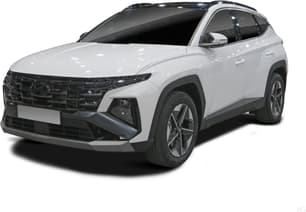
This week I’m family-testing the mid-spec Elite Hybrid with the N Line option pack to see how the newly updated Tucson handles family life.
There's a hell of a lot riding on the shoulders of the Hyundai Elexio, which is shaping as the brand's best shot to date at taking on Made In China models like the BYD Sealion 7 and Tesla Model Y.
While the Ioniq family sits atop the EV tree at Hyundai, the Elexio is a very different proposition. It's priced more sharply (the brand is quick to point out that it's only about $8 a week more expensive than a Sealion 7 on a novated lease), and it's the first Hyundai vehicle offered in Australia that's produced in the brand's Chinese factory through its Beijing Hyundai joint venture.
In short, it feels a lot like Hyundai is ready to take on BYD at their own game in Australia.
So, is the Elexio the pick of the Made In China bunch?
The updated Hyundai Tucson Elite Hybrid N Line offers families space, features and easy-enough handling for everyday stuff and the occasional weekend adventure pursuits.
The price point is higher than the previous non-hybrid model but you get a lot of bang for your buck and my family was comfortable this week.
The Elexio doesn't really push any boundaries in terms of its exterior design, its powertrain, or its battery. It doesn't drive itself. It doesn't look like a spaceship. And apart from some interior quirks, it's all pretty familiar in the way it goes about its business.
And I think maybe that's the point. Maybe that's what people are really looking for. Because Hyundai says this will be its best-selling EV in the country. And on our short test, we can't find too many reasons to disagree.
Note: CarsGuide attended this event as a guest of the manufacturer, with accommodation and meals provided.
Note: The author, Andrew Chesterton, is a co-owner of Smart As Media, a content agency and media distribution service with a number of automotive brands among its clients. When producing content for CarsGuide, he does so in accordance with the CarsGuide Editorial Guidelines and Code of Ethics, and the views and opinions expressed in this article are solely those of the author.
The Hyundai Tucson has seen a minor facelift on the exterior but most of the changes are in the cabin.
The N Line pack means that you get 19-inch alloy wheels over the standard 18-inch version as well as extended body panelling instead of black plastic trims. There is N Line badging across the car too, but N Line option pack does limit you to just four exterior colour choices.
The front features new stacked LED DRLs which tie in with the fang-like design of the rear LEDs. The origami-styled panelling looks more severe than the previous model which helps it stand out in a class that’s heavy on rivals.
The cabin features a completely reconfigured dashboard and now sports a large curved display panel that houses those upgraded tech screens and a new 6.6-inch climate control panel.
The centre console has been redesigned to look like it’s floating and now adds an extra-large storage cubby underneath it.
The upgraded interior makes the Tucson a leader for the mid-sized SUV segment and is very pleasant to spend time in.
I don't want to sound boring, but the thing I really like about the Elexio exterior package is there's nothing too challenging about it. Some of the Hyundai Ioniq cars can be a bit more polarising (and, in the case of the Ioniq 6, a lot more polarising) but there's none of that going on here.
It feels very clean, fairly timeless and like it's going to age pretty well. In short, it looks like a familiar family SUV with only really the full-width light bar, the cubed headlights and a bit of an architectural flourish at the rear three-quarter – which actually reminds me a bit of the Kia EV5 – giving it a more modern edge.
The wheels are 20 inches, there are only a handful of fairly predictable colours and it all just feels really familiar. But, as I mentioned, things do get a bit more out-there in the cabin.
Let's start with the good. I really like the fit and finish. It all feels very high quality and the materials used are lovely, including the velvet-like fabric in the door panels. I also like the square-edged steering wheel.
But the not so good? Now, the central screen looks great, but it controls everything – and I do mean everything. Apart from the steering-wheel controls, I couldn't locate a single physical button in the cabin.
The cabin up front is spacious with plenty of head- and legroom on offer. You also won’t jostle for elbow room either when you have a passenger.
The seats are comfortable with their heat function but you might still get fatigue on longer trips as you only get adjustable lumbar on the drivers side and it's simple at best.
The back seat has really good space for the class and no matter the passenger, they were comfortable back there. The seats in the rear are well-padded and access to this row is good for sliding in a child seat as the door aperture is wide.
Other amenities are average with directional air-vents, a single reading light, and a fold-down armrest. My seven-year-old son found the window sills to be quite high, so he didn’t get the view he wanted.
The individual storage is excellent for the class with the redesign as you get a dedicated storage shelf in front of the front passenger and a massive cubby that easily fits a handbag underneath the mid-sized centre console.
There are two cupholders and two drink bottle holders per row but the rear storage bins are skinny. The rear row also gets map pockets but again, these are shallow.
The upgraded technology is a must have and the new multimedia system is easy to use once you spend time with it and looks great with its graphics. The system has built-in satellite navigation, over-the-air updates and wireless connectivity for Apple CarPlay and Android Auto.
Connecting the CarPlay is simple and maintains a strong connection.
Charging options are great with two USB-C ports per row and the front also gets a wireless charging pad and a 12-volt socket to choose from. The centrally located position of the charging pad is handy and the liner grippy - so no phone movement.
Rounding out the practicality is the boot, which has a wide aperture and a loading space level with 582L of capacity available with all seats in use, which is good for the class.
The back row has a 60/40 split but don’t fold flat – they sort of spring up a bit, which might annoy when you do a big Bunnings run.
There is a 12-volt socket, a space-saver spare tyre underneath the floor and you get a powered tailgate in this model – which I always like.
At just over 4.6m long, just under 1.9m wide, and just under 1.7m tall, the Elexio fits snuggly between the smaller Kona Electric and Bigger Ioniq 5 among Hyundai's electric family. In family vehicle terms, it's marginally shorter than the brand's petrol and hybrid-powered Tucson.
But owing to the magic of EVs and their flat floors, the Elexio feels massively spacious in the backseat. I'm 175cm, and had no trouble getting comfortable behind my own driving position, with plenty of leg and headroom.
Tech is pretty strong, too. There are twin wireless charging pads up front, a total five USB-C ports, and a household style plug (which car companies call Vehicle to Load) located in the boot.
There's storage in the doors and centre console, including a storage drawer, and cupholders up front and in the pulldown divider that deploys over the middle seat in the back.
But the weirdest thing is the driver screen, which is the only straight-ahead access the driver has to things like speed or navigation directions. It's a very cool 3D-effect display, but it utterly disappears if you're wearing polarised sunglasses.
That's actually pretty common with all head-up displays, but they usually are projected above a traditional driver's binnacle. In the Elexio, it's the disappearing screen or nothing.
To be fair, the central screen also displays speed and crucial information, but I hate having to turn my head to look at it. It's my least-favourite thing about Teslas, and if you're wearing polarised sunglasses, the Elexio ends up feeling a lot like that.
I do love that there is an actual control to select Drive, Reverse or Park, and I adore the addition of a physical stop/start button, too.
There's also an auto-opening boot which reveals a 506-litre space with the rear seats in place, and 1540 litres with the 60/40 split rear seats folded flat. Keep in mind there's no spare tyre taking up space, though. You'll be leaning on the repair kit should you get a flat.
There are now six variants for the Hyundai Tucson with the release of the hybrid powertrain and all six have the choice of being either a front-wheel-drive or all-wheel drive with either the petrol engine or hybrid powertrain. And every grade gets the option of adding the N Line style pack. So, there is no excuse for not getting the combo you actually want now.
The model on test is the mid-spec Elite Hybrid with the N Line option pack and its priced from $55,100 before on-road costs. That positions it towards the top end of the market but you get an SUV that's more feature-heavy than most of its rivals.
The standard equipment for the upgraded Elite Hybrid N Line now includes dual 12.3-inch technology screens, wireless Apple CarPlay and Android Auto, as well as a 6.6-inch climate control touchpad.
Other equipment includes a powered driver’s seat, heated front seats, suede/leather upholstery, dual-zone climate control, wireless charging pad, digital radio, four USB-C ports, keyless entry, push-button start, space-saver spare wheel and a powered tailgate.
The Kia Sportage SX hybrid is more affordable at $45,950 MSRP but unlike the Elite Hybrid it misses out on wireless connectivity for phone charging and phone integration apps.
The Toyota RAV4 XSE AWD is priced from $52,585 MSRP but misses out on the newer and bigger technology screens that the upgraded Elite Hybrid has.
The Nissan X-Trail Ti 4WD e-Power is the closest rival in terms of price ($55,090 MSRP) and available features.
The Elexio arrives with just the one grade for now, the Elite, and the pricing is a bit weird. It lists at $61,990, but is actually being offered for significantly less than that at launch, with a special $59,990 drive-away deal in place until around the end of March.
There is a cheaper Elexio grade coming sometime in quarter two this year, and it will be $58,990. But I reckon you can expect a sharp drive-away deal there, too, at least at launch.
How does that stack up? I think we have to go on permanent pricing, rather than any special offers, and that puts the Elexio above its main rivals in the BYD Sealion 7 ($54,990 for the Premium), the Tesla Model Y ($58,900 for the Premium Rear-Wheel Drive) and the Xpeng G6 ($54,800 for the Standard Range). Though the cheaper Elexio variant will help to narrow that gap.
There are significantly cheaper electric SUVs that fall into the mid-size category, too. Like the Geely EX5 and Leapmotor C10, both of which are less than $50k on the road.
Anyway, for now the Elite arrives with 20-inch alloys, cube-style LED projector lights, an auto-opening boot and Hyundai’s Digital Key, which allows you and up to 14 other people to use their phone as the key.
Inside, there’s leather seating that’s powered for driver and passenger and heated and ventilated up front. There’s also dual-zone climate, twin wireless charging pads and a household-style power point to power your devices.
Where it gets really interesting, though, is with its cabin tech, which is seriously bleeding edge. The entire dash, from in front of the passenger to pretty much the edge of the steering wheel, is dominated by a 27-inch screen that actually gives the passenger more real estate than the driver.
It's impressive stuff, with high-res games for the passenger to play (including the super-sharp Space Invaders), but there's also wireless Apple CarPlay and Android Auto, twin wireless charging pads, and a relatively small head-up display (only located within the binnacle) for the driver.
The Elite Hybrid N Line model features a hybrid powertrain that combines an electric motor with a 1.6-litre four-cylinder turbo-petrol engine. They combine to produce 172kW of power and 367Nm of torque. Which is more than enough to make the mid-sized Tucson feel spirited.
This particular variant is AWD and uses a six-speed automatic transmission, which can over rev at times but is mostly smooth with its gear changes.
There’s just the one powertrain on offer here — with a front-mounted electric motor, so front-wheel drive, that produces 160kW and 310Nm. That makes the Elexio feel spritely enough, but it’s no rocket ship.
The official combined cycle fuel consumption figure is a low 5.3L/100km, and my real-world usage came out at 6.0L after doing a lot of open-road driving where hybrids tend to be at their least efficient, so that is an excellent result.
The Tucson hybrid is the second best for fuel usage after the Toyota RAV4 hybrid, which sits at 4.8L/100km for combined usage. Overall, the new hybrid powertrain has proven itself to be pretty frugal.
Based on the official combined fuel cycle and 53L fuel tank, expect a theoretical driving range of up to 981km, which is great for a family road tripper.
Delivering the driving power is an 88.1kWh LFP battery, which Hyundai says equates to a WLTP driving range of 546kms.
The Elexio’s E-GMP platform is a 400-volt architecture, which does limit DC fast charging to around 120kW – the Ioniq 5, for example, will charge in excess of 230kW.
Hyundai says you’ll go from 10 to 80 per cent in around 38 minutes plugged into our fastest chargers. AC home charging is capped at 10kW.
The new hybrid powertrain offers respectable power delivery that makes the Tucson feel zippy in the city and a relaxed cruiser on the open road.
There can be some over-revving when you’re trying to get up to speed and the accelerator and brake feel touchy at first until you get used to them.
On the hybrid side of things the Elite Hybrid has regenerative braking and there are moments of pure EV mode but it kicks in seemingly when it feels like it. When it is on, there’s practically no engine noise but when it's off, the cabin still remains fairly quiet.
My family went off the paved stuff this week and hit muddy and gravel roads on our quest to find a cool picnic spot, and the Elite Hybrid impressed with how it handled the different terrains. It’s not an off-roader but you can still do mini adventures.
The Tucson is mid-sized and has a very clear reversing camera with front and rear parking sensors, so it’s not too hard to manoeuvre or park.
The real negative feedback is that on three separate occasions, our test car randomly shifted into neutral while driving and to clarify, this did not occur while trying to shift into or out of 'drive' but while on the road, already in drive.
The first time it happened, I thought I had somehow bumped the column shifter but on the other two occasions, I happened to be watching my husband drive and he didn’t touch the shifter.
This is probably just a fault on out test car and not indicative of the model in general but it wasn't fun.
Ok, let's skip to the good part quickly. I really like the way the Elexio drives. Honestly, Hyundai (and, to be fair, Kia, Porsche, Polestar, Tesla, some German brands and Leapmotor with the new B10, amongst others I'm surely forgetting) are restoring my faith in how an EV can feel from behind the wheel.
It turns out they don't have to feel soft and saggy and come with a light sense of seasickness as standard. They can be engaging, connect you to the car and to the road below, and attack corners with some athleticism, too.
And so it is with the Elexio, which – to be fair – has a spec sheet that reads a bit like a bedtime story, such is the lack of excitement in the numbers. A two-tonne-plus, front-wheel-drive family SUV that produces less power than a Toyota Camry doesn't exactly quicken the pulse.
And it's true that the flat-footed acceleration on offer won't knock your cap off (though it feels perfectly perky enough to get you up and moving). But the numbers don't tell the whole story here.
A sports car this ain't, but its driving nature perfectly suits the ethos of the car. The ride can feel a little harsh at times, but irons out most road imperfections to the point that you notice them, but they're not uncomfortable.
The steering is direct without being overly aggressive –though I prefer the sportiest setting with the heavier feel – and the body roll is minimal, too.
In fact, you can push the Elexio harder than you might think along twister roads, with plenty of confidence-inspiring stability and without too much complaint from the tyres. Because there's not a huge amount of power underfoot, and this is going to sound absolutely crazy, but it gave me (much-heavier) Mazda MX-5 vibes, in the sense that you can really feel like you're driving it without feeling like you're going to get yourself in too much trouble.
FINALLY! Hyundai has listened to the people.
They have found a workaround for the annoyingly intrusive beeping alerts associated with the traffic sign recognition and speed alert tech. Yes, they still alert unless you turn them off and yes, you still have to turn the damn thing off every time you get in the car, but you not longer have to access five to six menu pages to do so. Hurrah.
The Hyundai Tucson Elite Hybrid N Line has a robust safety features list and includes equipment like blind spot monitoring, driver attention monitoring, safe exit warning, rear occupant alert, forward collision warning, LED daytime running lights, rear cross-traffic alert, lane keeping aid, traffic sign recognition, intelligent seatbelt warning, adaptive cruise control, a reversing camera, and front/rear parking sensors.
Our test model misses out on lane departure alert and the lane keeping aid is too intrusive for every day driving. It gets to the point where you wonder who is driving, you or the car.
The Hyundai Tucson has a maximum five-star ANCAP safety rating from testing done in 2021 and the hybrid variants are covered by this as well. It has seven airbags, including, the newer front centre airbag.
The Tucson has two ISOFIX child seat mounts and three top-tethers.
Auto emergency braking (AEB) is standard and features car, pedestrian, cyclist and junction assist detection which is operational from 5.0 – 80km/h (85km/h for car) but it's usual to see a higher top speed for the car detection (usually 180km/h).
There’s a long list of safety stuff aboard the Elexio, including nine airbags and just about every active safety system you can imagine.
They seem better tuned than some of Hyundai's competitors too, without being too overzealous. That said, overspeed warnings remain an auto industry scourge.
Particularly clever is a system Hyundai calls 'Forward Collision-avoidance Assist 2', which shows just how far modern AEB (or autonomous emergency braking) systems have come.
Once, and not so long ago, a vehicle could automatically apply the brakes if it sensed a collision ahead. Hyundai's system, though, not only works in both directions, but also detects pedestrians and cyclists as well as cars, and works when you're pulling out of a junction and it detects fast-moving oncoming traffic. It also detects traffic coming in either direction when you're travelling straight through an intersection, and when you're changing lanes.
The Hyundai Elexio wears a full five-star ANCAP safety rating, though one stamped 'tested in 2024'. The data was actually taken from the crash-test result of the related Kia EV5.
Hyundai offers the Tucson with a five-year/unlimited km warranty and the battery is covered by an eight-year/160,000km warranty which is pretty standard for the class now.
You can pre-purchase servicing for up to five years and the breakdowns are as follows.
Three years or up to 30,000km for $1240 (average $413 per service).
Four years or up to 40,000km for $1700 (average $425 per service).
Five years or up to 50,000km for $2040 (average $408 per service).
The five-year pricing is comparable to its rivals and not outrageous for the class.
Servicing intervals could get annoying if you put a lot of kilometres on your car as they sit at every 12 months or 10,000km, whichever occurs first.
The Elexio is covered by Hyundai’s new seven-year, unlimited-kilometre warranty, provided you service with Hyundai. If you don’t, then it's five years of coverage.
Service intervals are a pretty luxurious 24 months or 30,000kms, and Hyundai’s service plans will see you paying $779 at the two-year mark, and another $1118 at the four-year mark, which puts your annual cost at around $475.
I'd say that's about average, with the happily extended service intervals counterbalanced by slightly higher servicing costs than you might find with some competitors.