What's the difference?
The first time I drove the Hyundai Nexo it was in a place called Goyang in South Korea.
Goyang was a place of pure contrast. The old Korea clashed with the new as you walked through ancient seafood markets toward the towering Hyundai Motorstudio, an ultra-modernist expression of design, perched like a steel battleship above a simultaneously crumbling and rapidly modernising city.
Part museum, part design expo, part car dealership of the future, it was as though the whole place was a metaphor for the breakneck pace at which megacorp Chaebols like Hyundai were advancing Korea at a faster rate than its populace could keep up with.
The brand’s Nexo SUV is the same in a lot of ways. It’s a mid-size SUV that might be popular right now, but it contains the technology of the future wrapped in a digestible format for the masses.
Of course, it’s the future from a certain point of view. VW would argue EVs alone are set to drive our brave zero emissions future, but Hyundai is of a different mind.
What you’re looking at here, or so Hyundai’s representatives tell us, is the ultimate replacement for diesel. Long range, high load capacity, and an ultra-fast refuelling time are part of the hydrogen fuel cell promise. One that promises to out-do many of Australia’s qualms with EVs.
A statement of the future it may be, but what’s the Hyundai Nexo actually like as a car? We went to its Australian launch to find out
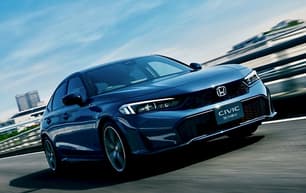
I’m just going to cut to the chase here. This Honda Civic hybrid is a good car. A great one, even.
But for some reason, nobody is really buying it. And it’s not just because it’s not an SUV – it has been outsold in its segment this year by the the BMW 1 Series, the Mercedes A-Class, the MG4 EV, and the VW Golf. Premium and non-premium alike, they’ve all got the little Honda licked.
So, what’s going on? A CarsGuide investigation is required. Stick around and we’ll try to figure this out together.
If nothing else the Nexo is a brilliant experiment to prove there can be more than one solution for a zero-emissions future. A lot of this depends on the power grid being more sustainable, but the most pressing issue for end-consumers, and Hyundai itself when it comes to FCEV technology, is the rollout of a more robust refuelling network.
At the end of the day, the thought of having an electric car with the range and refuelling ease of a petrol one is a much easier sell than the tall retail prices and compromises that come with an EV for every-day Australians. In a way, then, the Nexo is functionally an ideal blend of the old and the new.
You can’t buy one yet, but as this SUV will lay the groundwork for hydrogen’s future, we’ll be watching it with a keen eye.
Talk about your new-car unsung heroes – I can't believe Honda's not selling more of these. So, if you can get over the price, and you worry it might be too small for you, I encourage you to check the Civic out. The back seat and boot are both bigger than you might expect, and the drive experience leaves most SUVs in the rear view mirror.
Like Toyota’s Prius, the Hyundai Nexo is not only a technology leader for the brand, but it also debuted many of its current exotic design elements long before they arrived on any mainstream model.
A little larger than a Tucson, the Nexo has a dramatic honeycombed grille which maintains a paint finish, topped off with a strip of LED lighting which Hyundai says was to give it a distinctive look at night.
All its lighting is LED to fit with its avant-garde design, although when seen from the side or the rear it could be any mid-size SUV.
There’s something sensible about that. The Nexo isn’t the kind of car which will polarise buyers because of its design alone.
Hidden away are very neat design elements, like functional air dams on the front guards and rear spoiler fitment, and hidden wiper blades under the bonnet cladding and tucked under the rear spoiler.
There is also intricate pattern-work on the light fittings, making for an admirable overall attention to detail befitting such an interesting, if typically shaped, SUV.
Inside, and Hyundai points out that the Nexo was the first of its cars to get the 'bridge' centre console which now appears on the Santa Fe, Palisade, and Kona EV.
It’s an impressive design element, really lifting the cabin ambiance on all the vehicles it appears on, although the plethora of buttons smattered across its face is reminiscent of older Porsche models, and not necessarily in a good way. It can be tough for first-time or occasional users to find the button they’re looking for.
The Nexo was also one of the first Hyundai models to score the impressive dual screen layout, consisting of a 7.0-inch digital instrument cluster, and a 12.3-inch multimedia touchscreen.
Trim options for our market consist of a two-tone cream or a navy blue leather-appointed upholstery.
Again, there are attention-to-detail elements here, with interesting grain designs across the dash-topper and door cards, with many of the fittings appearing in silver rather than black to add a touch of futuristic flair.
Hyundai promises sustainable 'bio-based' plastics are used extensively in the interior, leading to a 12kg reduction in CO2 emissions during the production process.
There are also vegetable oil-derived paints used in the cabin, and fibres made using corn and sugarcane waste material. Nice to have some real eco bragging rights on something a lot cheaper than a BMW i8.
Beauty. Eye. Beholder. All that. But I reckon this Civic looks fantastic. Low-slung and sporty. The perfect antidote to all those bland, beige SUVs currently doing the rounds.
New as part of the most recent refresh is the front-end treatment, a new front bumper, more body-coloured flourishes and new designs for the 18-inch alloys.
I think it looks sleek, premium and purposeful, and not at all boring.
Inside, though, it’s a little less adventurous, though I do adore some of the little design touches, like the perforated metal effect that spans the dash.
The central screen is pretty small by modern standards, and you don't want to push too hard on some of the touch points, like the gloss-black highlights on the doors, which feel flimsy, flexible and pretty cheap.
Now, the screen. Does UX design count in the overall design section? Let's say that it does. I haven’t really experienced less intuitive and user friendly cabin tech lately.
For example, I couldn't figure out (though I must admit I didn't resort to owner's manual) how to get Apple CarPlay to load automatically, if you can.
Instead I had to select my phone, cycle through several screens of approval, and then select my phone again, every single time I got in the car. I had a similar issue using Google maps, which simply wouldn't connect at all for me.
Good tech is easy and intuitive. This wasn't.
Being a mid-size SUV, the Nexo will possess many of the practicality attributes today’s buyers are searching for.
It has a similar right height and seat positioning to a Tucson, so it’s really bang-on for the market, and headroom despite a standard sunroof is excellent. Adjustability is also good with telescopic adjust for the wheel and 10-way electrical adjust for the seats.
As is typical for Hyundai there are some great storage areas, with a large centre console box, a single large bottle holder and odd little storage tray, a huge cutaway underneath the console bridge (which houses the wireless charger and USB ports).
There are also large door bins, although these proved not so great for holding bottles as the door design and speakers limit the height of objects that can be placed there.
There’s also an odd little pop-out bottle holder on the passenger side, I assume to make up for the fact that there isn’t a second one in the centre.
The back seats had a good amount of room, behind my own (182cm/6'0" tall) driving position my knees had plenty of airspace, although the presence of a 'transmission tunnel' which eats space for the middle seat was puzzling given this car is strictly front-drive only.
Amenities for rear passengers include pockets on the backs of the front seats, a single 12V power outlet, and dual adjustable air vents. There are also small single bottle holders in the doors.
Boot space comes in at a competitive but not stellar 461-litres (VDA), or 1466L with the seats down. This is okay for the mid-size segment, although the loading lip and boot floor is quite high due to the presence of under-floor batteries.
There is also no spare wheel for the Nexo, with only a small amount of room for a tyre repair kit.
The Honda Civic measures 4569mm in length, 1802mm in width and 1415mm in height, and as you've no doubt already noticed, it's not an SUV, rather a liftback-style sedan.
But if you feel like you need an SUV to move a family, I beg to differ. While the middle seat in the second row is too tight for adults (owing largely to the intrusive raised tunnel that runs through the middle of the cabin), the two window seats can absolutely fit adult humans. I'm 175cm, and had absolutely no issue sitting behind my own driving position.
But the biggest surprise is the boot, which opens to reveal a flat and wide storage space that can swallow 409 litres (VDA) of luggage. In real terms, that's more than enough for our pram and the assorted knick-knacks that go with it on a baby day out.
Unfortunately, though, there’s no spare. Instead you’ll find yourself wrestling with a hateful repair kit should you get a puncture, and you don't want to wait for roadside assist.
There's also twin USB ports in the back, as well as air vents, along with twin cupholders in the pulldown divider.
Sadly, if you’re a private buyer and not a fleet customer, you can’t actually buy a Hyundai Nexo. At least, not yet.
The brand is currently rolling this interesting SUV out amongst special interest fleet buyers, and our test drive comes as the first 20 examples are handed over to the ACT government which is also celebrating the opening of a new refuelling station in the territory.
Hyundai is leasing Nexos out to early fleet adopters for a set (and undisclosed) monthly fee for the time being but promises it will consider taking private orders once the refuelling network is more established and its usage is better understood.
We’ll get back to you on price if and when it becomes more available to private customers. Don’t expect it to be cheap.
We took a look at the Nexo’s Korean retail price, where it starts from the equivalent of A$83,645 before on-road costs and in Korea’s more forward-thinking case, tax benefits.
Thankfully though, as a “technology leader” for the brand, Hyundai’s local division has chosen to import the car with every possible spec item from the factory.
This includes a dual-screen layout with a 7.0-inch digital dash as well as a 12.3-inch multimedia touchscreen with built-in navigation, Apple CarPlay, and Android Auto connectivity, fully leather-appointed interior trim, heated and ventilated power adjustable front seats, heated steering wheel and outboard rear seats, dual-zone climate control, 19-inch alloy wheels, a sunroof, fully LED head- and tail-lights, an eight-speaker audio system, smart parking assist with remote function, flush door handles with keyless entry and push-start ignition. That’s a lot of stuff. If this were my fleet car, I’d be pretty happy.
Rivals? The only electric cars with anywhere near an equivalent range are the Tesla Model 3 ($86,325), Mercedes-Benz EQC ($141,400), and Audi E-Tron ($137,100), but as it is with these models you’re faced with high retail prices and long recharging times from anything but an ultra-fast DC station.
There’s also the Prius-shaped-and-sized Toyota Mirai kicking around. It’s also an FCEV and also available to limited fleets.
Ah, so we may have hit the first Honda hurdle. Ours is the entry-level e:HEV L, and it’s a cool $49,900, drive-away. The top-spec LX is $55,900, on the road.
To put that into perspective, Toyota's two Corolla sedan hybrid grades are about $36K and $39K, drive-away, at the moment. The admittedly non-hybrid Golf starts at $39,990, on the road.
The German premium brands are still more expensive, but I think that might be at least part of the Honda’s problem. It now occupies a space between mainstream and premium, which might also be something of a no-man’s land.
Still, the entry-level L is decently equipped, with 18-inch alloy wheels wrapped in quality Michelin Pilot Sport rubber, all-LED lighting all around and key-less entry.
Inside, there’s synthetic leather and fabric seats, dual-zone climate, a 9.0-inch central touchscreen with Apple CarPlay and Android Auto, but also with Google built-in that provides mapping and updates and a 12-speaker Bose stereo.
Both Civic variants also arrive with a three-year subscription to 'Honda Connect', which gives you remote access to your car to lock or unlock it, pre-heat or cool the cabin, or set a geofence alert if your teenagers are borrowing it, that sort of stuff.
But… there are no full-leather seats, there's no sunroof, no wireless charging and you have to open the boot yourself.
The lack of all that doesn’t feel overly premium.
The Nexo’s hydrogen system is not really a drive component. It generates power for the electric motor, which is similar to the one that appears in the Kona EV.
Like other EV models, it’s a permanent magnet synchronous motor mounted on the front axle, producing 120kW/395Nm.
The hydrogen system is a grid of catalyst membranes which are essentially used like a giant battery to chemically combine oxygen sourced from outside the car with pressurised hydrogen.
This reaction generates two bi-products: electricity and water, the latter of which exits the Nexo’s tailpipe.
The hydrogen system is capable of generating 135kW, just over the motor’s total output so there is always power to spare.
Powering the car’s auxiliary systems, and acting as a buffer to store excess and regenerated energy, is a hybrid-sized 1.56kWh lithium-ion battery under the boot floor.
The Civic range is an all-hybrid affair, which in this case is what Honda calls its 'two-motor hybrid', which pairs a 2.0-litre petrol engine with two electric motors, one being an electric generator, and the other being the actual propulsion motor which sends power to the wheels. Expect a total 135kW and 315Nm, which is sent to the front wheels via a CVT auto.
The Nexo drinks compressed hydrogen. It has 6.33kg worth of hydrogen storage tanks which grant it a generally EV-beating 666km of range.
One of the key benefits of the hydrogen system is that it refuels in roughly the same time as it takes to fuel a diesel car, using a pressurised hose in a similar manner to an LPG vehicle.
The trouble is hydrogen is hard to source at a pump in Australia. There is one refuelling station at Hyundai’s Macquarie Park HQ in NSW, another just opened in the ACT, and a third one owned by Toyota which is about to open at its Altona, VIC HQ.
The fleet of 20 cars handed over to the ACT government will use the new pump, which for the first year will be providing free hydrogen as the system is evaluated.
Overall costs for the hydrogen after that time will depend on where it is sourced from. As Australia is uniquely positioned to generate compressed hydrogen (with an abundance of renewable energy idle time which can be stored in places like the ACT) the cost will come down over time.
Right now, though, the brand estimates somewhere to the tune of $15 a kilo for an end-consumer, or about $90 to fill the Nexo.
Finally, a benefit for the eco-conscious, Hyundai pitches the Nexo as a product which actually leaves the air cleaner after generating energy, although there are some caveats.
The first is that the membrane requires use of platinum – a rare earth metal, and the second is hydrogen requires a lengthy, power-intensive and complex process to generate in a usable form.
In the ACT government’s case this is less of a problem, as it will use 100 per cent renewably sourced idle energy to process the gas.
Honda says you can expect 4.2L/100km on the combined (urban/extra-urban) cycle, but we found the fuel use was a still impressive 5.5L or so, admittedly mostly in the city.
The 40-litre tank drinks 91 RON 'standard' fuel, meaning its cheapish to fill up, and — using Honda’s numbers at least — should deliver a 950km driving range.
Yesterday, 91 RON was about $1.80 per litre meaning you can theoretically get from Melbourne to Sydney for around $75.
To drive the Nexo is essentially no different to an electric car. It uses the same permanent magnet motor, the same regenerative braking, and the same buffer battery system.
This means a very quiet and smooth drive. It’s not quite the unleashed performance of a Tesla, but then that’s not really the point of the Nexo which leans into the comfort of the whole experience.
The drive and hydrogen reaction is entirely a silent process, although the Nexo emits a pleasant choral tone at low speed to alert passers by of its presence, same as the Kona EV.
Despite that strong torque number, the Nexo isn’t inclined to spin the wheels, and for balance reasons, Hyundai actually de-tuned the motor slightly to make it gentle off-the-line.
When it comes to corners the comfort is again emphasised, with very light and linear steering. The chassis is rigid enough to feel under control, although the comfort suspension tune will have it tilting around a little more than, say, a Tucson.
The ride is also far more forgiving than Hyundai’s sportier petrol range, with the Nexo undulating over bumps and corrugations with ease.
As is usual with Hyundai models, the safety systems aren’t too invasive, making the Nexo a friendly companion on the freeway, and the soft interior trimmings add to its near-luxurious feel.
The ACT government reps who will be receiving this car are of the mind that anybody that drives it will become an advocate for electrification, and I’m inclined to agree with them.
For most people it’s better in every way from behind the wheel when compared to a petrol car.
First things first – I really, really like the way this Honda drives. There's a finesse, a confidence, in the drive experience that's sometimes missing from the new brands when they first arrive in Australia.
In short, it feels like it was engineered by people who really know what they're doing. That's the easiest way to describe it.
If you're used to driving older-fashioned hybrid systems you might be used to a bit of shuddering harshness when the engine kicks in, but that's simply not the case here.
Instead, the transition is seamless, with the Honda Civic making the choice for you and largely leaving you out of the process entirely.
Where the powertrain does let itself be more known is under heavier acceleration, with engine thrum seriously invading the cabin, without much in the way of flat-footed performance to accompany it.
But the magic of the Civic drive experience is in its balance. It's not a performance car, but there's real driver engagement to be found in the way it rides and handles. Equally, though, it's never uncomfortable, striking the balance between road-holding confidence and comfort really well.
Happy in the city, happy on a twisting road - this is not one of those smaller cars that leaves the drive experience as a secondary factor. It feels like it really has the driver at heart.
Despite being so low volume, the Nexo has a maximm five-star ANCAP rating and comes with the full array of active safety items from any other high-spec Hyundai model.
Included is radar-based auto emergency braking which works up to freeway speeds with pedestrian and cyclist detection, lane keep assist with lane departure warning, blind spot monitoring with collision avoidance, rear cross traffic alert, adaptive cruise control, driver attention alert, auto high beam assist, and a top-down reversing camera.
Also featuring is a blind-spot camera which appears in the instrument cluster when the indicator is applied.
The Nexo of course features the expected traction, stability, and brake controls, and has the regular suite of six airbags for the event of an actual collision.
The big safety news surrounding the Civic is that its eight airbags are joined by 'Honda Sensing', which packages up every safety system you can possibly imagine — forward collision warning, lane keeping, adaptive cruise, AEB – and delivers them as standard across the range.
But the bigger news is that, refreshingly, none of it is overly intrusive. Even the speed limit warning, which – as in most cars – always gets the speed wrong, just flashes gently on the driver display, rather than binging and bonging through the cabin.
The Civic Hybrid scored a full five-star ANCAP safety rating, with the score based on crash testing in Europe through Euro NCAP.
Ownership is a tough one, because, well, you simply can’t own one.
Either way Hyundai says the Nexo’s hydrogen drivetrain carries no warranty implications, meaning if you could own one (as Koreans can), it would still be covered by the brand’s five year/unlimited kilometre warranty.
In terms of servicing, the Nexo requires a visit once a year, although like a pure EV there are few items that actually need attention at one of these visits.
A top-up of coolant is only required about once every six years, and various filters need to be cycled out. Other than that, it’s just your usual wear and tear items like brakes and tyres.
As Hyundai leases the current vehicles out, it will be taking care of servicing for the initial batch.
The Honda is covered by a five-year/unlimited-kilometre warranty, and servicing is every 12 months or 10,000km.
There is a capped-price servicing program, called 'Low Price Servicing', which means your first five services are $199, but don't cover things like brake pads and tyres.